Sharfuddin Yahya Maneri
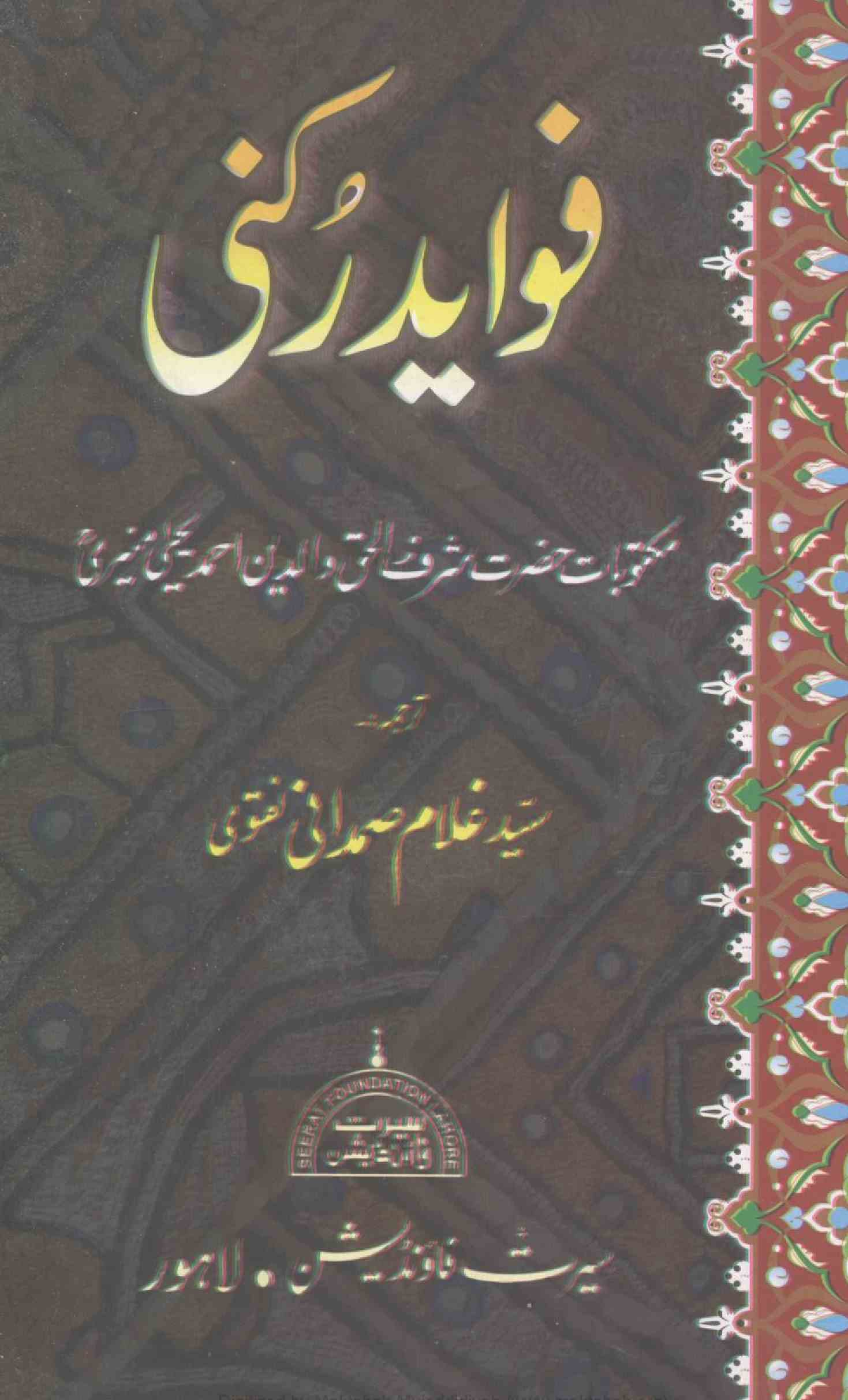
Fawaid-e-Rukni
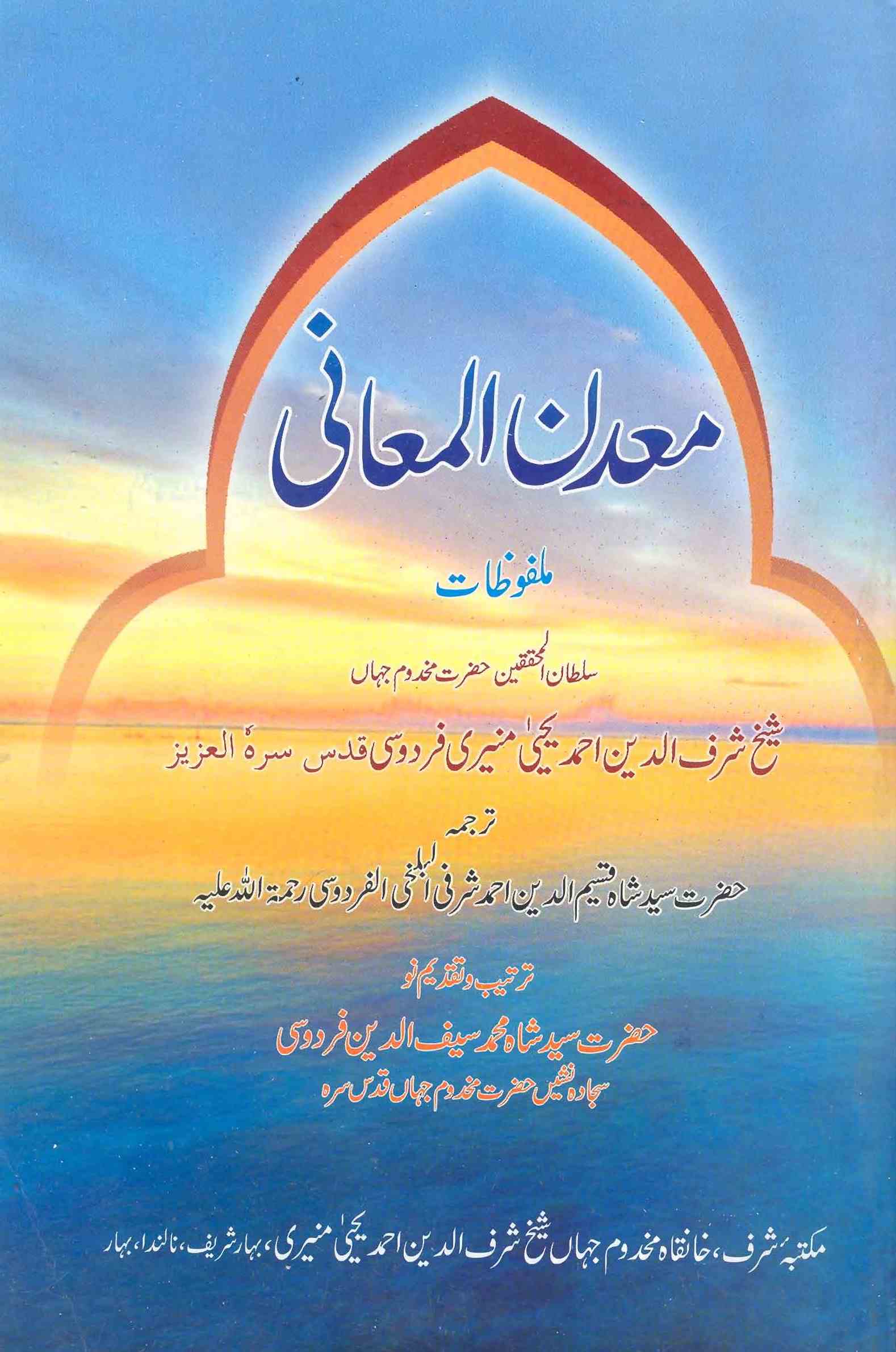
Maktubat-e-Hazrat Sharafuddin Yahya Maneri
aaj ik aur baras biit gayā us ke baġhair
jis ke hote hue hote the zamāne mere
Maktubat-e-Hazrat Sharafuddin Yahya Maneri
 For any query/comment related to this ebook, please contact us at haidar.ali@rekhta.org
Identity: A great Sufi saint, distinguished leader of the Firdausi order, celebrated author of mystical letters, and an influential preacher of spirituality and Sufism in the Indian subcontinent
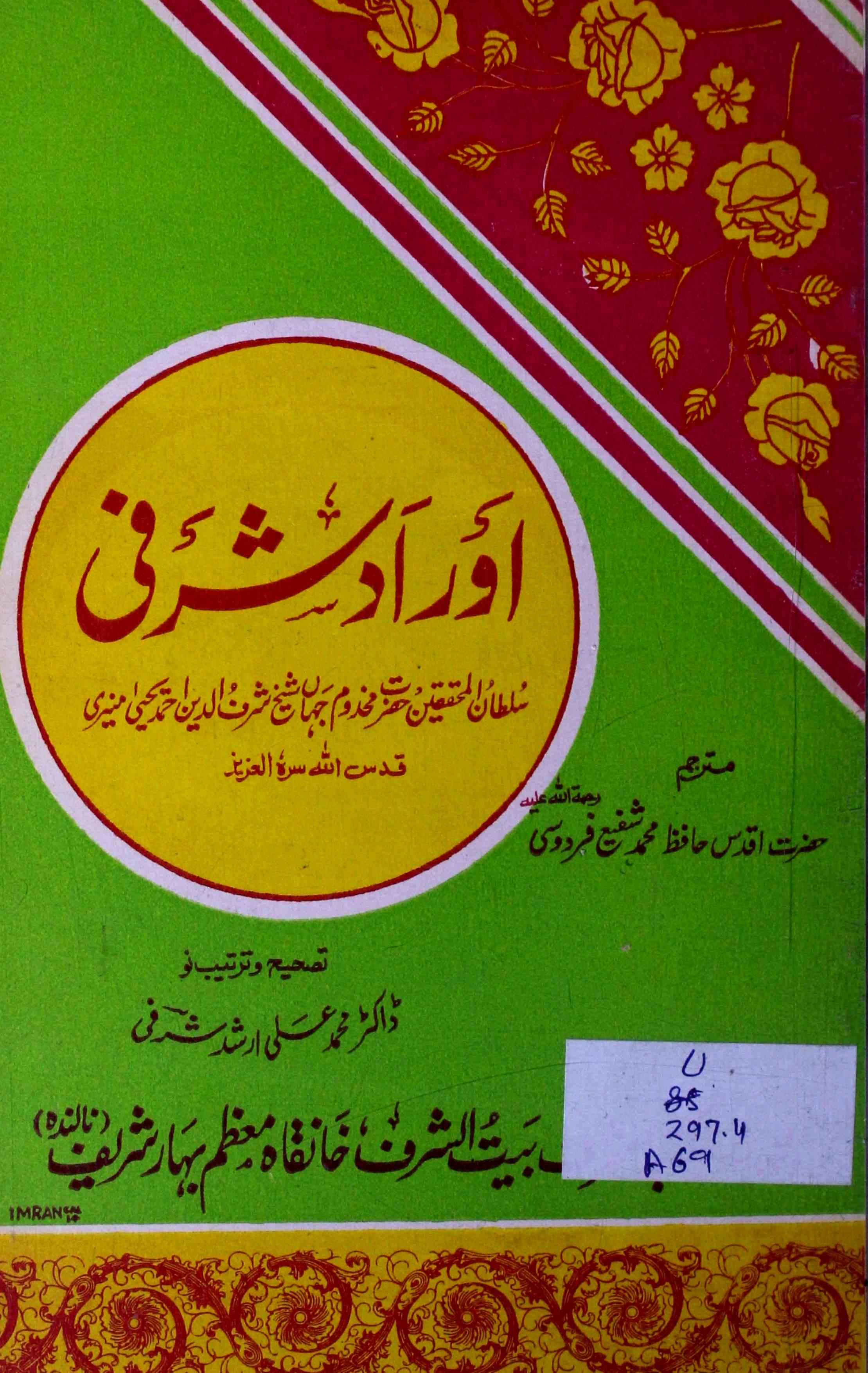
Hazrat Makhdoom-ul-Mulk Sheikh Sharafuddin Ahmad Yahya Maneri, widely known as “Makhdoom-e-Jahan” and “Makhdoom-ul-Mulk Bihari,” is regarded among the greatest Sufi saints of the Indian subcontinent.
Sheikh Sharafuddin Ahmad Yahya Maneri was born in Sha'ban 661 AH, corresponding to 1263 CE, in Maner Sharif near Patna. His father, Sheikh Kamaluddin Yahya Maneri, was a prominent saint of the Suhrawardi order, while his mother, Bibi Raziya, belonged to a respected spiritual family. His maternal grandfather, Syed Shahabuddin Suhrawardi, popularly known as Pir Jagjot, was among the earliest Suhrawardi saints in India and a direct disciple of Hazrat Shahabuddin Umar Suhrawardi. This deeply spiritual and scholarly environment inspired in him an early inclination toward mysticism, asceticism, and learning.
After his initial education, he devoted himself at a young age to the study of Arabic, Persian, logic, philosophy, and religious sciences. For this purpose, he spent nearly twenty-four years under the guidance of the renowned scholar Hazrat Sharafuddin Abu Tawwama Bukhari of Bengal. Later, he traveled to Delhi, where he met leading Sufi saints and scholars of the age. There, his elder brother Makhdoom Jaliluddin Maneri introduced him to Sheikh Najeebuddin Firdausi, under whom he took spiritual allegiance and became associated with the Firdausi order. Owing to this affiliation, he also became known as “Firdausi.”
Hazrat Makhdoom-e-Jahan renounced worldly comforts and adopted a life of spiritual discipline, devotion, and ascetic practice. He spent many years in the forests of Bihiya and later in the hills of Rajgir engaged in worship, meditation, and mystical exercises. The hot spring near the place where he used to pray in Rajgir is still known as “Makhdoom Kund.” After nearly thirty years of spiritual retreat and austerity, he settled in Bihar Sharif, where his fame as a scholar and spiritual guide spread far and wide. Sultan Muhammad Tughlaq built a khanqah for him, where he devoted himself to teaching disciples and spreading the teachings of Sufism.
The true greatness of Hazrat Makhdoom-e-Jahan is reflected in his spiritual teachings, letters, and discourses. His collected letters hold extraordinary importance in Sufi tradition and are regarded as a practical guide to spiritual discipline and divine knowledge. Among his notable works are Maktubat-e-Sadi, Maktubat-e-Bist-o-Hasht, and Fawaid-e-Rukni. These writings contain profound reflections on mysticism, ethics, divine gnosis, purification of the self, and moral refinement. His teachings beautifully harmonize Shariah and Tariqah, emphasizing not only spiritual elevation but also moral purity and service to humanity.
The khanqah of Hazrat Makhdoom-e-Jahan emerged as a major spiritual, intellectual, and social center in the subcontinent. His followers included scholars, Sufis, rulers, and common people alike. He did not confine Sufism merely to isolation and asceticism; rather, he presented it as a path of human compassion, ethical reform, and spiritual training. For this reason, he earned the title “Makhdoom-e-Jahan,” and his personality has remained a center of devotion for centuries.
Death: Hazrat Makhdoom-e-Jahan passed away on the night of 5 Shawwal 786 AH, corresponding to 1380 CE. His shrine is located at the famous “Badi Dargah” in Bihar Sharif, Nalanda district, where a five-day annual Urs is observed every year in the month of Shawwal with great reverence and devotion.
For any query/comment related to this ebook, please contact us at haidar.ali@rekhta.org