 For any query/comment related to this ebook, please contact us at haidar.ali@rekhta.org
About The Author
Identity: Distinguished Urdu critic, scholar of Iqbaliat, academician, and a representative thinker of Eastern thought.
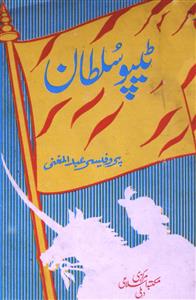
Professor Abdul Mughni (Full name: Abu al-Mubarrad Syed Abdul Mughni) was born on January 4, 1936, into a scholarly Sadat family in the Aurangabad district of Bihar, India. His father, Qazi Abdul Rauf Nadwi, was an eminent religious scholar. He excelled in modern English education alongside traditional Islamic studies. He completed his 'Fazil' from Madrasa Shams-ul-Huda and later earned M.A. and Ph.D. degrees in English. He served as a Professor of English at Patna College and played a pivotal role as the President of Anjuman Tarraqi Urdu, Bihar, in securing the status of Urdu as the second official language of the state.
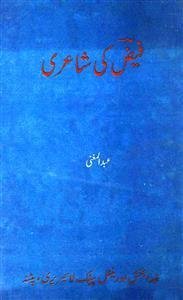
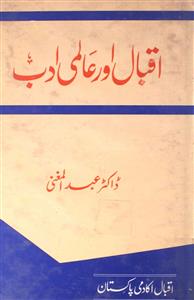
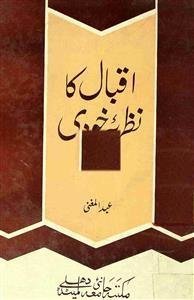
Abdul Mughni was primarily a critic of Eastern thought who carved out a unique path in opposition to Kalimuddin Ahmed's Western-influenced perspective. His prominent works include Nuqta-e-Nazar, Jaada-e-Iteidal, Iqbal aur Alami Adab, Tanveer-e-Iqbal, Iqbal ka Nazriya-e-Khudi, Azmat-e-Ghalib, Meer ka Taghazzul, and Faiz ki Shayari. He wrote his research thesis on T.S. Eliot's theory of culture, titled T.S. Eliot’s Concept of Culture, but his true expertise lay in Iqbaliat (Iqbal studies). He wrote the voluminous book Iqbal aur Alami Adab to counter Kalimuddin Ahmed’s criticisms and prove Iqbal as the world's greatest poet.
His criticism is characterized by an unbreakable bond with Islamic civilization and culture, along with a dominance of Eastern studies. He is often called the 'antithesis of Kalimuddin Ahmed'; while Kalimuddin emphasizes logical reasoning, Abdul Mughni relies more on personal opinion and intuitive insights. His commentary often contains elements of 'exaggeration' (ghulu), such as declaring Qurratulain Hyder superior to James Joyce and Virginia Woolf. Nevertheless, his simultaneous command over Arabic, Persian, and English literature lends great prestige to his work.
Death: He passed away on 5 September 2006 in Patna.
For any query/comment related to this ebook, please contact us at haidar.ali@rekhta.org