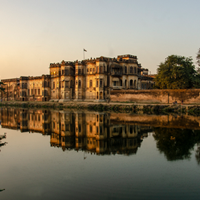
Profile of Raja Mahmudabad Library, Mahmudabad
Raja Mahmudabad Library is one of the most significant private scholarly libraries of the Indian subcontinent. It was founded by the noted scholar, poet, and bibliophile Raja Amir Hasan Khan at Qaiserbagh, Lucknow. Initially known as Kitabkhana Socrates, it was later renamed Maktabat-ul-Husainiyah, and is now widely recognized as the Raja Mahmudabad Library. Since its inception, the library has been an important repository of rare manuscripts, printed works, and valuable collections relating to Islamic and Oriental studies.
After the events of 1857, when many private and family libraries were dispersed, Raja Mohammad Ali Khan undertook the preservation of this intellectual heritage by acquiring several distinguished private collections and incorporating them into the library. His successors, Raja Mohammad Amir Ahmad Khan and Maharaja Kumar Mohammad Amir Haider Khan, further enriched the collection. Today, the library houses approximately 80,000 volumes, including more than 2,500 rare manuscripts. Its holdings cover Islamic studies, Qur'anic exegesis, Hadith, Islamic jurisprudence, philosophy, history, literature, and works in Persian, Arabic, and Urdu, making it one of the finest private research libraries in South Asia.
The library's rare manuscripts are presently preserved at the family's residence in Qaiserbagh, Lucknow, while its extensive collection of printed books is housed at the Mahmudabad Fort Library. A selected portion of this invaluable collection is now available through the Rekhta Digital Library, enabling readers, students, and researchers around the world to access this rare scholarly and literary heritage online.