 For any query/comment related to this ebook, please contact us at haidar.ali@rekhta.org
About The Author
Identity: Eminent Critic, Aesthetician, Short Story Writer, Former Union Health Minister, and Former Vice-Chancellor.
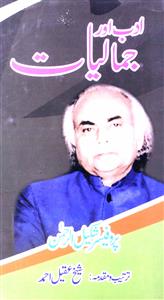
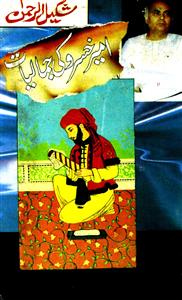
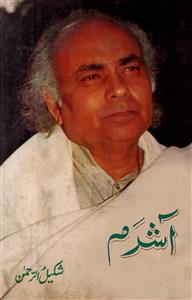
In the world of Urdu literature, Shakil-ur-Rehman holds the stature of a versatile intellectual and critic who bestowed a new and stable dignity upon "Aesthetic Criticism." He was born on February 18, 1931, in Motihari, Bihar. After his initial education, he obtained M.A. and D.Litt. degrees in Urdu from Patna University. His academic and teaching career was illustrious; he served as a Professor and Head of the Urdu Department at Kashmir University, and also held the prestigious position of Vice-Chancellor at both Bihar University (Muzaffarpur) and Kashmir University. A distinct aspect of his personality was his political career, in which he won parliamentary elections and served as the Union Health Minister for the Government of India. However, his political engagements could never distance him from the world of knowledge and literature.
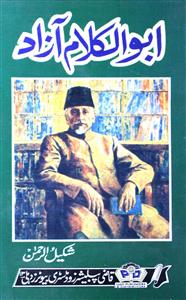
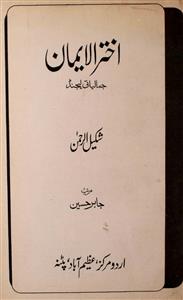
Although Shakil-ur-Rehman began his literary journey with short story writing and even penned a novel titled Samundar Ka Safar, his true identity was established as a critic, particularly as an "Aesthetic Critic." He introduced Urdu criticism to psychological and aesthetic perspectives. His list of publications is extensive, including seminal works such as Adab aur Nafsiyat, Ghalib ki Jamaliat, Iqbal aur Funoon-e-Lateefa, Manto Shinasi, Mir Shinasi, and Maulana Rumi ki Jamaliat. His study of Akhtar-ul-Iman's poetry, Laave ka Samundar, holds a significant place in Urdu criticism. His book on Ghalib's "Archetypal Patterns" is considered the first effort of its kind in Urdu. By working on Indo-Islamic and Indo-Mughal aesthetics, he highlighted the creative bonds of the subcontinent’s shared culture and fine arts.
In recognition of his scholarly services, he is regarded as a "legend" and a unique literary figure. He made aesthetics the central axis of his criticism and carved out an individual path in this field. The discussions of the conscious and subconscious in his writings, along with the aesthetic analysis of literary works, offer a new insight to the reader. In the scholarly circles of Urdu, he will be remembered as a distinguished writer who did not limit criticism to dry debates but harmonized it with the beauty of fine arts.
Death: Shakil-ur-Rehman passed away on May 9, 2016, in Gurgaon, Haryana.
For any query/comment related to this ebook, please contact us at haidar.ali@rekhta.org