For any query/comment related to this ebook, please contact us at haidar.ali@rekhta.org
About The Author
Shaikh Abd al-Qadir al-Jilani (c. 470 AH / 1077 CE – 560 AH / 1166 CE) occupies a singular position in the history of Islamic spirituality and Sufism. His full name was Muḥyi al-Din Abu Muḥammad ʿAbd al-Qadir ibn Abi Ṣaliḥ Musa al-Jilani. Genealogically, he descended from both the Hasanid and Husaynid lineages of the Prophet’s family, and for this reason, he is revered as al-Ghawth al-Aʿẓam — “the Supreme Helper.” Born in Jilan, Persia (modern-day Iran), he pursued early studies there. He later travelled to Baghdad, the intellectual capital of the Muslim world, where he mastered jurisprudence, Hadith, Quranic exegesis, and logic. His ascetic devotion and profound scholarship soon made him an object of deep veneration in Baghdad.
Al-Jīlānī’s teachings represent a harmonious synthesis of Shariʿah (the sacred law) and Ṭariqah (the spiritual path). He emphasized that true Sufism must remain grounded in the Qur’an and the Sunnah, warning that mystical experience divorced from revealed law leads to error. For him, worship was not mere ritual performance but the inner presence of the heart before God. In his doctrine, tawakkul (trust in God), ikhlaṣ (sincerity), dhikr (remembrance), muraqabah (meditative awareness), and love for the Prophet ﷺ formed the essence of the spiritual life. His khanqah in Baghdad became a vibrant center of learning and spiritual refinement, attracting seekers from distant regions.
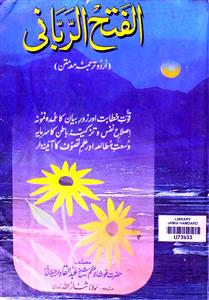
Shaikh al-Jilani’s scholarly legacy is vast and influential. His writings encompass jurisprudence, ethics, theology, and mystical philosophy. Among the principal works attributed to him — many of which are preserved on the Rekhta digital library — are Ghunyat al-Ṭalibin, Awrad-e-Qadiriyyah, Diwan-e-Ghaus-e-Aʿẓam, Sirr al-Asrar, al-Fatḥ al-Rabbani wa al-Fayḍ al-Raḥmani, and Fatuḥ al-Ghayb. Ghunyat al-Ṭalibin is an encyclopedic manual combining jurisprudence and ascetic instruction; Sirr al-Asrar provides concise guidance for the spiritual traveller, while Fatuḥ al-Ghayb elaborates the stages of self-purification and proximity to God. These works reveal his intellectual rigor and his effort to reconcile the exoteric and esoteric dimensions of Islam.
Scholarly analyses of his writings demonstrate that Shaikh al-Jīlānī purified Sufism of speculative excesses, grounding it in scriptural orthodoxy. His works integrate intellect, revelation, and spiritual experience into a coherent vision of faith and moral conduct. Although some texts and anecdotes attributed to him invite critical verification, his authentic corpus remains a cornerstone of Sunni mysticism.
At the heart of his message lies servitude to God, moral integrity, and divine gnosis. For al-Jilani, sainthood signified humility and service, not miracle-working or power. Even today, his shrine in Baghdad stands as a living symbol of spiritual continuity. His life and thought constitute not merely a legacy of the past but a timeless spiritual discourse guiding humanity toward truth, sincerity, and the remembrance of God.
Identity: Imam-ul-Muhaddisin, Reviver of Sharia, Historian, and a Sublime Sufi.
Sheikh Abdul Haq Muhaddis Dehlvi (Name: Abdul Haq, Kunniyat: Abu al-Mujd, Title: Muhaddis Dehlvi) was a distinguished Islamic scholar, traditionist, author, and Sufi saint of the Subcontinent. His lineage traces back to Agha Mohammad Turk of Bukhara, who migrated to India during the reign of Alauddin Khalji. His family was renowned for both scholarship and military valor. His father, Sheikh Saifuddin Saifi, was a profound spiritual scholar.
Sheikh Abdul Haq was born in Muharram 958 AH (1551 AD) in Delhi. Exceptionally brilliant since childhood, he completed all traditional and rational sciences by the age of 18. He traveled to the Holy Hijaz for higher studies, specializing in Hadith, Jurisprudence, and Sufism under the eminent Sheikh Abdul Wahab Muttaqi. After being blessed with the vision of the Prophet Muhammad ﷺ four times, he returned to India as per his teacher’s command.
He dedicated his entire life to the revival of Sunnah and the propagation of knowledge. His major works include:
Madarij-un-Nubuwwah: A comprehensive and authentic biography (Seerah) of the Prophet ﷺ.
Akhbar-ul-Akhyar: A reliable biographical account of the saints of the Subcontinent.
Asha'at-ul-Lama'at: A scholarly commentary on Mishkat al-Masabih.
Zad-ul-Muttaqin: Biographical accounts of the scholars of Hijaz.
Maktubat: Academic and reformative letters addressed to nobles and contemporaries.
He lived during the turbulent era of Akbar’s 'Din-e-Ilahi'. He established a madrasa in Delhi, which became the first major center for Quranic and Hadith studies in Northern India. He maintained a principled distance from monarchs like Akbar, Jahangir, and Shah Jahan, yet continued to advise them on Sharia and justice through his writings.
Authorized in multiple Sufi orders (Qadriya, Chishtiya, Shadhiliya, Naqshbandiya), he was most devoted to the Qadriya order. He also took the oath of spiritual allegiance (Bay'ah) at the hands of Khwaja Baqi Billah.
Death: He passed away at the age of 94 on 22nd Rabi-ul-Awwal 1052 AH. His shrine is located at the banks of Hauz-e-Shamsi (Mehrauli), Delhi, and remains a center of spiritual attraction.
For any query/comment related to this ebook, please contact us at haidar.ali@rekhta.org