 For any query/comment related to this ebook, please contact us at haidar.ali@rekhta.org
About The Book
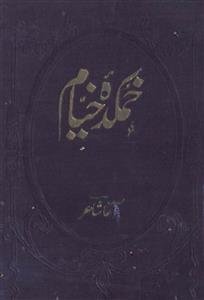
مختلف علوم میں ماہر ہونے کے باوجود عمر خیام کی شہرت کا سرمایہ اس کی فارسی رباعیات ہیں۔ اس رباعیوں کی زبان بڑی سادی، سہل اور روان ہے۔ لیکن ان میں فلسفیانہ رموزہیں جو اس کے ذاتی تاثرات کی آئینہ دار ہیں۔ سب سے پہلے جو چیز عمر خیام کی رباعیوں میں ہمیں نمایاں نظر آتی ہے وہ انسانی زندگی کے آغاز وانجام پر غور وخوص ہے۔ اس بلند پایہ شاعر کا علمی دنیا سے تعارف کرانے میں اہل یورپ نے بڑھ چڑھ کر حصہ لیا، اس کے علاوہ کئی زبانوں میں تراجم بھی ہوئے، زیر نظر کتاب عمر خیام کی منتخب رباعیوں کا منظوم اردو ترجمہ ہے، اس مجموعہ کے ہر صفحہ پر اصل متن اور سامنے اس کا اردو ترجمہ دیا گیا ہے۔ یہ کتاب ایک ساتھ دو زبانوں کا لطف دیتی ہے۔
About The Author
Identity: A great Persian Rubaiyat poet, distinguished mathematician, and astronomer.
Ghiyath al-Din Abu'l-Fath Omar ibn Ibrahim Nishapuri was born on May 18, 1048, in the city of Nishapur, Iran. The word 'Khayyam' is included in his name, which means 'Tent-maker,' likely reflecting the profession of his ancestors. He studied religious sciences, philosophy, mathematics, and astronomy in Nishapur, and later traveled to academic centers such as Bukhara and Samarkand, where he began writing his famous book, 'Risala fi al-Jabr' (Treatise on Algebra).
Omar Khayyam was an eminent mathematician of his era:
Cubic Equations: He was the first to provide a general theory for cubic equations and devised geometric solutions for them using conic sections.
Parallel Postulate: He critiqued Euclid's fifth postulate and introduced the concept of the 'Khayyam-Saccheri Quadrilateral,' which laid the foundation for Non-Euclidean Geometry centuries later.
Binomial Theorem: He worked on methods for extracting roots of numbers and was likely the first person to grasp the significance of the Binomial Theorem.
During the reign of Sultan Malik-Shah I, Khayyam was commissioned to establish an observatory in Isfahan and reform the calendar:
Jalali Calendar: He designed a solar calendar that is even more accurate than the modern Gregorian calendar. In this, the duration of the year was calculated precisely to several decimal places (365.24219858156 days). This calendar remains the basis for the solar calendars currently in use in Iran and Afghanistan.
Omar Khayyam’s global fame is primarily due to his Rubaiyat (quatrains). In 1859, Edward FitzGerald’s English translation turned Khayyam into a legendary figure in the West. His quatrains reflect the transience of life, the philosophy of death, the encouragement to live in the present, and awe at the mysteries of the universe.
Although some scholars doubt the attribution of these quatrains to him, he is historically recognized as a poet of a unique and distinct style.
Khayyam considered himself a spiritual student of Avicenna (Abu Ali Sina). Diverse views exist regarding his beliefs. Some critics (such as Sadegh Hedayat) consider him an agnostic or a skeptic who opposed religious extremism. On the other hand, Sufi commentators interpret the 'wine' and 'intoxication' used in his poetry in a symbolic sense (as rapture in divine love). He believed in the limitations of human intellect and the inevitability of fate.
Death: Omar Khayyam passed away at the age of 83 on December 4, 1131, in his hometown of Nishapur. His mausoleum remains a place of pilgrimage in Nishapur today, with his quatrains inscribed on its walls as masterpieces of calligraphy.
For any query/comment related to this ebook, please contact us at haidar.ali@rekhta.org