 For any query/comment related to this ebook, please contact us at haidar.ali@rekhta.org
About The Author
Identity: Progressive critic, poet, dramatist, novelist, editor and teacher
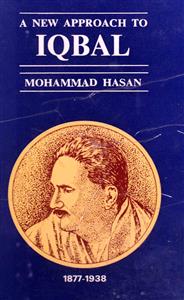
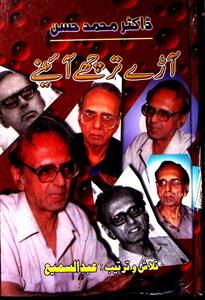
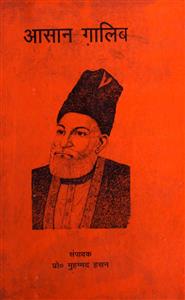
Professor Mohammad Hasan was born on 1 July 1926 in a respectable and religious family of Moradabad. He received his early education in a madrasa and passed matriculation from Hewett Muslim High School, Moradabad, in 1939. He then joined Lucknow University for higher studies, where along with literature he developed deep interests in politics, culture and the fine arts. He completed his M.A. in Urdu in 1946 and earned a PhD in 1956.
He began his career as a lecturer in the Urdu department of the same university, later joined Aligarh Muslim University in 1954, became a Reader at Delhi University in 1963, a Professor at Kashmir University in 1971, and from 1973 to 1991 served at Jawaharlal Nehru University. He initiated a formal post-diploma course for writing in Urdu journalism, film, radio and television. More than 78 of his books were published, and in 1973 he received the prestigious Jawaharlal Nehru Fellowship.
His intellectual formation took place under the influence of the Progressive Writers’ Movement, in an environment shaped by writers like Sajjad Zaheer, Sardar Jafri, Ehtesham Husain and Rashid Jahan. However, he treated progressivism not as a slogan but as a scientific and comprehensive worldview, always maintaining an objective critical stance. His openness towards the modernist poet Meeraji is regarded as a rare example within progressive criticism.
To promote progressive thought he launched the quarterly journal Asri Adab in 1976, which for more than two decades remained an important platform for literary and socio-political debates. In his view, great literature does not offer instant solutions; rather, it transforms human dreams and aspirations and helps shape the human being of the future.
His major fictional achievement is the novel Gham-e-Dil Wahshat-e-Dil, a biographical novel based on the life of the poet Majaz Lakhnawi. His poetry collections include Zanjeer-e-Naghma and Khwab Nagar. His poems, stories and plays carry a sharp protest against oppression, authoritarianism and social injustice. His play Zahhak, written during the Emergency, stands as a powerful example of this resistance. He also adopted a strong critical stance against conservatism in Muslim society and the oppression of women.
He remained associated throughout his life with the Progressive Writers’ Association and served as an intellectual bridge between modernism and progressivism. For him, progressivism was not a formula but a fundamental attitude that provides a lens to view every small and large experience of life. He urged writers and intellectuals to stay connected with society, to speak the truth fearlessly, and believed that literature builds enduring human values rather than merely raising slogans.
Professor Mohammad Hasan was at once a critic, historian, poet, novelist, dramatist and journalist. Even after the decline of the progressive movement, he remained a steadfast and active representative of that thought till his last breath, continuing his struggle through his pen against injustice, exploitation and inequality.
Death: He passed away in Delhi on 25 April 2010.
For any query/comment related to this ebook, please contact us at haidar.ali@rekhta.org