 For any query/comment related to this ebook, please contact us at haidar.ali@rekhta.org
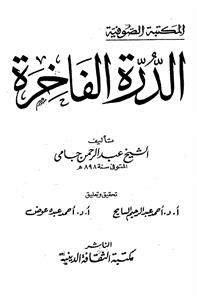
About The Author
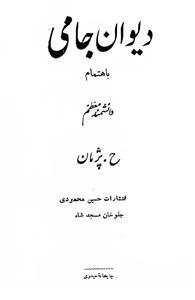
Identity: Imam of arts, “Khatam al-Shu‘ara” (the last great classical Persian poet), Islamic scholar, renowned Sufi poet, historian, and a multidimensional personality known by titles such as “Nur al-Din” and “Al-Shaykh al-Ra’īs”
Abd al-Rahman Jami was born on 23 Sha‘ban 817 AH (7 November 1414 CE) in the town of Kharjard in the region of Jam, Khurasan (present-day Afghanistan). His father, Ahmad ibn Muhammad Dashti, was a distinguished scholar who played a key role in his early education. In his childhood, he moved to Herat, which was then a major center of knowledge and culture. This environment greatly contributed to his intellectual development.
Abd al-Rahman Jami is regarded among the foremost scholars and Sufis of his time. His education was associated with the great centers of learning in Herat and Samarkand, where he attained mastery in Arabic, logic, astronomy, and Islamic jurisprudence. His brilliance was such that the eminent scholar Qazi Zada Rumi acknowledged that “since the establishment of Samarkand, no one of this young man’s caliber has crossed the Amu Darya to this side.” During his studies, he would even correct classical texts and commentaries.
In the path of Sufism, he was affiliated with the order of Sa‘d al-Din Muhammad Kashghari, where he attained a high spiritual مقام. Though naturally ascetic and reclusive, he was highly respected by great rulers such as Sultan Husayn Mirza and Sultan Mehmed the Conqueror.
Jami’s scholarly and literary contributions are vast, encompassing around 49 works in both poetry and prose. His poetic masterpiece Haft Awrang (including Yusuf and Zulaikha, Layla and Majnun, and Silsilat al-Dhahab) is considered a landmark in Persian literature. In prose, he authored about 11 significant works on Sufism, spirituality, and history.
His poetry reflects deep devotion to the Prophet and profound spiritual insight, earning him the title “Khatam al-Shu‘ara.” He performed Hajj in 1472 CE and, after traveling across various Islamic lands, settled permanently in Herat. His entire life was devoted to the promotion of Islam and the enrichment of knowledge and literature.
Death: He passed away on 18 Muharram 898 AH (1492 CE) in Herat (Afghanistan), where he is buried.
For any query/comment related to this ebook, please contact us at haidar.ali@rekhta.org