 For any query/comment related to this ebook, please contact us at haidar.ali@rekhta.org
About The Book
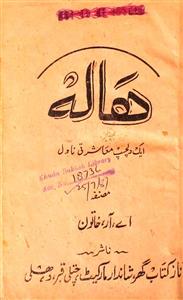
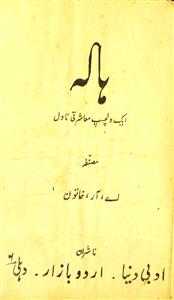
"ہالہ"اے آر خاتون (امت الرحمن خاتون)کا ایک دل چسپ معاشرتی ناول ہے،انھوں نےاپنےناولوں میں مسلم معاشرے کے خانگی اور سماجی معاملات کو بڑے ہی درد ناک انداز میں متعارف کرایا ہے،ان کے ناولوں میں کہانی اور کردار میں یکسانیت پائی جاتی ہے۔تاہم ان ناولوں میں برصغیر کےمسلم معاشرےکی تہذیبی اور اخلاقی اقدار کی بنتی بگڑتی صورت حال صاف دکھائی دیتی ہے،یہی ان کے ناولوں کی خصوصیت ہے انھیں چیزوں کے باعث ان کے ناول عوام میں کافی مقبول بھی ہوئے۔
About The Author
Identity: A popular novelist, interpreter of domestic and social life, and a sensitive reflector of cultural and moral values.
A.R. Khatoon, whose real name was Ummat-ur-Rahman, was born in 1900 in Delhi, British India. From an early age, she was deeply interested in reading and writing. Growing up within a traditional domestic environment, she completed her education and nurtured her literary taste through self-motivation and intellectual curiosity. Her essays initially appeared in the renowned literary magazine “Ismat,” which gradually established her literary identity.
In 1929, A.R. Khatoon wrote her first novel, “Shama,” which achieved extraordinary popularity because of its engaging style and emotional depth. Following this success, she adopted novel writing as her primary literary field. Her second major novel, “Tasveer,” was also warmly received by readers. Later, novels such as “Afshan,” “Fakeha,” “Chashma,” “Hala,” “Rumana,” “Farhana,” “Zewar,” and “Asma” were published and became part of Urdu’s popular fiction tradition. Her novels were especially admired among female readers and continued to enjoy popularity for many years.
The novels of A.R. Khatoon vividly portray domestic life, eastern values, family relationships, and the changing cultural and moral conditions of Muslim society in the Indian subcontinent. Her fiction shows a certain continuity in characterization and storytelling, yet her real strength lies in presenting the changing realities of social life in an emotional and effective manner. Themes such as women’s emotions, domestic conflicts, the tension between tradition and modernity, and the decline and preservation of moral values are prominent in her writings.
After the Partition of India, A.R. Khatoon migrated to Pakistan, where she continued her literary activities. Several of her novels were adapted for Pakistan Television, among which “Afshan,” “Tasveer,” and “Shama” gained particular fame. These adaptations were dramatized by the noted writer Fatima Surayya Bajiya, which further enhanced the popularity of her work and introduced a new generation to her fiction.
Death: A.R. Khatoon passed away on 24 February 1965 in Lahore, Pakistan.
For any query/comment related to this ebook, please contact us at haidar.ali@rekhta.org