 For any query/comment related to this ebook, please contact us at haidar.ali@rekhta.org
About The Author
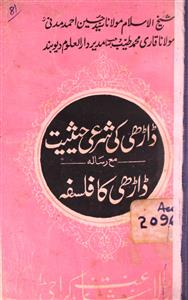
Identity: Hakim al-Islam, distinguished Islamic scholar, eminent orator, founding president of the Muslim Personal Law Board, and Rector of Darul Uloom Deoband
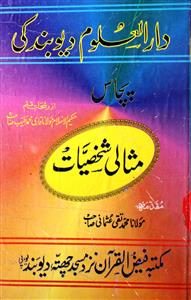
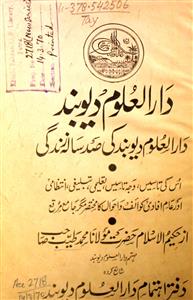
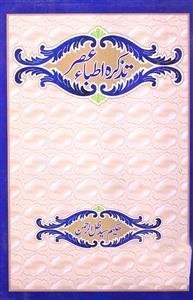
Hakim al-Islam Maulana Qari Muhammad Tayyib was one of the most remarkable personalities of the Muslim world, who adorned the office of Rector of Darul Uloom Deoband for half a century. He was the founding and first president of the All India Muslim Personal Law Board. He was not only a man of exceptional administrative ability, but also an accomplished scholar, distinguished researcher, eloquent orator, poet, and a master stylist of Urdu prose. His personality embodied noble lineage, forbearance, moderation, and wisdom, earning him the title “Hakim al-Islam.”
Qari Muhammad Tayyib was born in 1897 CE (1315 AH) in Deoband’s renowned Qasmi family. He was the grandson of Maulana Muhammad Qasim Nanotvi, founder of Darul Uloom Deoband. His birth name was Muzaffar al-Din, though he later became widely known as Qari Tayyib. His teachers included such eminent scholars as Shaykh al-Hind Maulana Mahmud Hasan, Allama Anwar Shah Kashmiri, and Allama Shabbir Ahmad Usmani. Alongside traditional Islamic sciences, he also studied mathematics, geography, and other contemporary subjects. His spiritual and intellectual training was significantly shaped by Hakim al-Ummat Ashraf Ali Thanvi.
Qari Muhammad Tayyib’s tenure as rector (1929–1980) is regarded as the “golden era” of Darul Uloom Deoband. Under his leadership, the institution achieved remarkable progress in academic, infrastructural, and ideological spheres. Its reputation spread across the world, and it emerged as a globally recognized center of Islamic learning.
More than five dozen significant works were produced by his pen. His prose style exemplified sahl-e-mumtaniʿ—deceptively simple yet inimitable expression. He had the rare ability to make even the driest scholarly topics engaging through elegant examples and intellectual subtlety. His writings reflect a profound synthesis of reason and revelation.
Hakim al-Islam was also a passionate advocate and defender of the Urdu language. He believed that erasing a language meant erasing its civilization, and thus considered the preservation of Urdu in India essential.
He was an extraordinarily powerful orator, equally fluent in Urdu, Persian, and Arabic. Known for his refined wit and cheerful temperament, his eloquent sayings and spontaneous remarks remain popular in scholarly circles.
He also wrote poetry under the pen name “Arif.” He composed in Urdu, Arabic, and Persian, though most of his poetry is in Urdu. A total of 47 of his poems are known, the longest being “Aankh ki Kahani” (The Story of the Eye), comprising approximately 716 verses.
His notable works include al-Tashabbuh fi’l-Islam, Science and Islam, Religion and Politics, al-Ijtihad wa’l-Taqlid, Islamic Equality, Principles of Islamic Dawat, The Question of Urdu Language in India, and Martyr of Karbala and Yazid.
Death: He passed away on 17 July 1983 (6 Shawwal 1403 AH) and was buried in Qasmi Cemetery, Deoband, beside his grandfather Maulana Muhammad Qasim Nanotvi.
For any query/comment related to this ebook, please contact us at haidar.ali@rekhta.org