Adab Aur Shakhsiyat
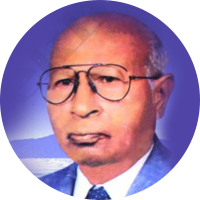
(A symposium on this topic was held at Karachi University. I later penned down the speech I delivered there.)
There are two contradictory aspects to this topic. One is that literature or art is an expression of personality, and the other is that literature or art is an escape from personality. Perhaps in refutation of Wordsworth's romantic statement regarding poetry—that poetry is the spontaneous overflow of powerful feelings—T.S. Eliot stated that poetry is an escape from personality, not an expression of it. In support of this idea, he wrote a comprehensive essay in 1921 titled Tradition and the Individual Talent. Since this topic became a subject of debate in literary criticism only after this essay, it seems necessary to clarify the subject. He writes:
Poetry is not a turning loose of emotion, but an escape from emotion; it is not the expression of personality, but an escape from personality. He clarifies this perspective with these words: The poet has, not a personality to express, but a particular medium, which is only a medium and not a personality, in which impressions and experiences combine in peculiar and unexpected ways. Impressions and experiences which are important for the man may take no place in the poetry, and those which become important in the poetry may play quite a negligible part in the man, the personality.
Eliot's final sentence is a clear indication that he wishes to separate the poet's practical self from his creative self. Thus, he writes, The more perfect the artist, the more completely separate in him will be the man who suffers and the mind which creates; and this happens because only then will his creative mind more perfectly digest its material, that is, the emotions. If Eliot had concluded his argument here, it would not have been difficult to understand. However, when he adds the following sentences to the aforementioned statement, his argument becomes quite complex:
Great poetry is possible even without the direct use of any emotion. It can be purely a poetry of feeling. The business of the poet is not to find new emotions, but to use ordinary emotions through poetry. In other words, to express feelings that are entirely independent of the stimulating emotion.
The question now arises: if great poetry is possible without the direct use of any emotion, then what is the need to use an ordinary emotion through poetry, even if merely as an excuse? Perhaps the answer is that it serves as an anchor, helping to capture the poet's wandering feelings and ideas. I believe that Eliot's theory of Objective Correlatives can be applied here in this very manner. Nevertheless, it remains clear that in the creation of poetry, he considers the pressure of the creative impulse to be important, rather than the intensity of the emotions. Furthermore, he deems the poet to be unaffected by and neutral toward the material of creation during this process. In such a case, as he himself states, the fundamental issue of poetry for him is the poet's service to his language, rather than anything else.
Eliot did not present this personality-escaping theory of poetry—which he also referred to as the impersonal theory of art—merely to refute romantic or passionately emotional poetry; rather, he also used it to offer a justification for his own cold poetry. It is simply his humility that, in explaining this personality-escaping theory of art, he draws examples not from his own poetry, but from the works of Dante and Keats. For instance, he presents Keats's Ode to a Nightingale. Here, according to Eliot, the poet is not versifying the nightingale's emotions (as if any poet could possibly versify a nightingale's emotions!), but is instead versifying his own wandering feelings and ideas by using the nightingale as a crutch, based on objective correlatives.
If my intention were to prove Eliot's example inappropriate, I would certainly have brought this poem under discussion, but that is not my aim at all. I simply want to point out that one or two examples, whether a poem by Dante or by Keats, do not validate his generalization that poetry is an escape from personality or emotions. Keats is a lyrical poet. He has also written poems in which he directly expressed his emotions. And in our own literary tradition, Mir, Ghalib, and Iqbal have mostly expressed their settled emotions, rather than their wandering feelings and ideas. Under these circumstances, we cannot consider Eliot's personality-escaping theory of art to be based on any universal truth, because it generally applies neither to our poetry nor to the great poetry of the world. Would Mir be deemed a minor poet simply because his personality is visibly reflected in his poetry?
Mujh ko shayar na kaho Mir ke sahib main ne
Dard o gham kitne kiye jama to deewan kiya
[Do not call me a poet, O Mir, for I have
Gathered so much pain and sorrow to create this collection of poetry.]
And would Allama Iqbal not be considered a great poet simply because his poetry stirs the emotions and incites action? These questions are highly relevant. However, lest you suspect that I am appealing to your nationalistic biases, I will postpone the discussion of these gentlemen for now. Instead, I would like to present the opinion of another poet and critic from the very same English language who has refuted Eliot's personality-escaping theory of art. His name is Herbert Read. In his essay The Personality of the Poet, which he wrote to counter Eliot's perspective, he adopted the viewpoint that poetry is an awareness of one's personality, not an escape from it. Herbert Read's essay is also somewhat complex, and this complexity arises because, unlike T.S. Eliot, he did not shirk the responsibility of defining the concept of personality. However, there are many gaps in his essay regarding the discussion of personality.
While he has positioned personality as the antithesis of character, and despite his disagreement with Eliot's theory of poetry, he appears to share Eliot's view on at least one issue: that the poet's creative self is separate from his practical self. But his agreement with Eliot is only partial; fundamentally, he has vehemently opposed Eliot's impersonal theory of art, making this opposition the very purpose of his essay. He writes, It is not merely inspiration that makes a person a poet; the fundamental force is the awareness of one's own personality, and the ability to nurture the creative process and dynamism of this personality while protecting it from internal rebellion and chaos.
This statement of his clearly indicates that he considers the awareness of personality—rather than an escape from it—to be the fundamental driving force of literature or art. Since I more or less share this view, I will postpone elaborating on it until I discuss the section of his essay where he posits personality as the antithesis of character. It is there that I strongly disagree with his theory of personality. Regarding personality, Herbert Read asserts that character is its exact opposite. Character is something solid and rigid; it sets an ideal before itself and constantly suppresses its emotions to achieve it. It does not adapt to circumstances but remains stubbornly fixed. These traits of character, in Read’s view, are antithetical to a free disposition or personality. He defines this free disposition, or personality, not in his own words, but by quoting Ramon Fernandez:
An ideal personality belongs to the individual who constantly adapts their being in accordance with the dynamism of their thoughts. Character has an ideal before it, and it continuously sacrifices its emotions to attain that ideal. In contrast, personality has no such ideal before it. It is a dynamic mode of thought that maintains a balanced relationship among our countless emotions and sentiments.
From a literary perspective, Herbert Read champions Ramon Fernandez’s idea because a free disposition, or a personality, with its unhindered flow, remains perpetually receptive to poetic inspiration. Conversely, character—which he deems solid and rigid—remains deprived of this inspiration due to its stagnant and stubborn nature. However, as I have pointed out earlier, Read does not believe that inspiration alone is enough to make someone a poet; rather, he identifies the awareness of personality as the fundamental driving force. Is this not a glaring contradiction? On the one hand, he considers Freud’s *ego* to be the focal point of personality, the fundamental characteristic of which is the power of resistance that ultimately forms character. On the other hand, he defines personality merely as a balanced relationship of emotions and sentiments—meaning he ignores the *ego* and focuses solely on the *id*. Perhaps he does this because Freud’s *ego* poses a major obstacle to the conclusion he wishes to draw: that personality is the antithesis of character.
I have great sympathy for Herbert Read’s attempt, but the fact remains that in both physics and psychology, motion is inextricably linked to resistance. The concept of an ideal personality that Read presents through Fernandez’s words does not describe an ideal personality at all, but rather a fickle, unanchored one. Personality is undoubtedly dynamic, but there is a vast difference between being adaptable and lacking character altogether. A conscious individual with strong character also evolves in tandem with the dynamism of their thoughts. What good is a personality if it is not dynamic and progressive? However, such a person cannot be labeled an opportunist or a rolling stone. There is a profound difference between the two. The former is enlightened, while the latter is a sellout. One knows how to bend as well as how to stand firm, whereas the other only knows how to bend and drift. One is both fire and water, while the other is entirely water. At times, one is so self-effacing that:
*Dil phir tawaf-e-koo-e-malamat ko jaye hai*
*Pindar ka sanam-kada veeran kiye hue*
[The heart once again goes to circumambulate the street of reproach,
Having laid waste to the idol-temple of arrogance.]
And at other times, so fiercely self-respecting that:
*Ulte phir aaye dar-e-Kaaba agar wa na hua*
[I would turn back from the door of the Kaaba if it did not open for me.]
Sometimes they are so restless that they set off with any swift traveler, and at other times so poised that they consider even the revered guide Khizr as merely a fellow traveler. A poet’s nature is not exempt from the general nature of humanity. If the world has seen poets who simply drifted in the current of their emotions, it has also seen poets who harnessed their madness and emotions with the reins of consciousness:
*Kya junoon kar gaya shaoor se woh*
[What madness he enacted through his consciousness.]
The secret of a poet’s ideal personality lies in the perfect synthesis of these two elements—consciousness and madness. Our rational nature is just as innate as our irrational nature. Therefore, personality maintains a balanced relationship not merely among our emotions and sentiments, but between our rational and irrational dispositions. Naturally, this disposition must encompass not only emotions and sentiments but also consciousness, the power of resistance, willpower, the capacity for action, and the rationality that brings discipline to all of these. For Herbert Read, personality is confined strictly to emotions and sentiments. Given this premise, it is hardly surprising that he posits personality as the antithesis of character, for his conception of an ideal personality is one devoid of character. In my view, however, an ideal personality is one that inherently possesses character.
Through this definition of personality, Herbert Read has not only banished poetry that stirs revolutionary or actionable emotions from the realm of literature, but he has also deliberately stripped literature of its element of ideality. This is because, in his framework, an ideal personality is entirely devoid of an ideal. This is a rather bizarre ideal. It would not be surprising if this ideal stems from his philosophy of anarchism, which dictates that humanity is free from all constraints. Or perhaps it aligns with the poetic theory that poetry should solely express the unconscious—a notion that sometimes devolves into the propagation of subhuman or animalistic values. I do not deny that man is an animal, but at the same time, I firmly believe in his humanity. The reason I felt compelled to refute Herbert Read’s theory of personality is precisely because his theory is entirely predicated on instinctual urges.
Herbert Read is not wrong in stating that the fundamental driving force of poetry is the awareness of one's own personality. Where he errs is in claiming that a poet’s personality lacks character—implying that their personality is devoid of the power of resistance, willpower, the capacity for action, and any sense of an ideal or consciousness. In support of my view, I can cite the personalities of numerous universally acknowledged poets throughout history who possessed immense character, and whose poetry undeniably reflects the weight of that character. Over the past century, a new East has emerged, stretching from Algeria to Japan—by which I mean the East that has either liberated itself from Western political subjugation or is actively engaged in the struggle for freedom. The personalities and literature of the writers and poets of this new East thoroughly refute both Herbert Read’s character-negating theory of personality and T.S. Eliot’s escapist theory of art. Rather than listing countless names, one need only look at two renowned poets of Pakistan: Allama Iqbal and Kazi Nazrul Islam.
Is Nazrul Islam's personality considered unpoetic simply because it possesses character? And does Allama Iqbal's poetry deserve to be banished from the realm of literature just because it contains a rhythmic wave that inspires action? If this is not the case, and if you feel that I am not merely playing upon your prejudices, then you must also trace the ultimate tendencies of their theories. After all, we have not learned the art of poetry in merely a few centuries to be ignorant of the background of these theories. Who could possibly have a deeper relish for the pleasure of poetry than us? T.S. Eliot, in his aforementioned essay *Tradition and the Individual Talent*, writes: We can claim with some degree of confidence that our era is one of decline, and that the standard of culture we possess today is much lower compared to the culture of the past fifty years. The evidence of this decline is found in all spheres of our lives, and there appears to be no reason why the pace of this decline should not accelerate even further, leading us into an era where, for a certain period, we are left with no culture at all.
If, in light of Eliot's golden observation, we are compelled to conclude that Eliot's theory of art—which evades personality—and Herbert Read's theory of personality—which destroys character—are both products of a decaying society, then I hope we cannot be accused of any prejudice in this matter. This golden observation also helps us understand why both of them are terrified of poetry that awakens a nation, and of the dominance of character within a personality. The reality is that our *Ibn-ul-Waqt* (the opportunist) was perfectly suited to their colonial system. However, ever since the struggle for freedom against colonialism began, this opportunist has started to lose his social significance. He is no longer helpful in sustaining the imperialist system. It is possible that Sir Herbert Read's fear of character stems from this very reason, or perhaps it is because, within his philosophy of anarchism, he considers any form of control to be antithetical to personality.
As for emotions and sentiments, how can they be trusted either? After all, in our tradition, it is precisely through emotions that revolutionary poetry has been forged. Emotions do not merely consist of weeping, wailing, and romantic love; they also encompass action and dynamism. Furthermore, what would T.S. Eliot gain from arousing such emotions, especially when his entire struggle has been akin to preaching the Gospel to the devil? Obviously, the devil is never going to embrace Christianity. In such a scenario, the only recourse is to keep him subdued and cold. This is the underlying reason for their evasion of emotions and their creation of dry, cold poetry.
These few remarks I have made regarding the theories of Eliot and Herbert Read were merely a pretext to clarify my own point of view. If I have digressed at any point, I offer my apologies. The fact remains that I consider character not merely an essential component of personality, but also a means or instrument for its ultimate fulfillment. An individual's personality—which is defined by the satisfaction of all physical and spiritual needs and the realization of all their potential—will remain devoid of true meaning as long as even a single person, in any corner of the globe, remains deprived of their own personal fulfillment.
Now, since the fulfillment of every individual's personality is inextricably linked to the fulfillment of others in society, the presence of character becomes absolutely essential to achieve this. However, because character can also obstruct the free-spirited nature of personality—thereby creating tension and contradiction within it—this tension must be continuously resolved. Yet, the solution is not to expel character from personality altogether. Rather, the personality must absorb character so profoundly that it becomes an organic part of its being; in other words, that which serves as the instrument for personal fulfillment must become an intrinsic part of the personality itself.
It must be remembered here that character is not some external component imposed upon the personality from the outside, such that it could simply be discarded. Character is forged through the evolutionary process of personal fulfillment. The conflict that exists between the two is, in reality, a clash between the interests of the individual and those of society—a conflict that can be resolved. The human personality, which is simultaneously free and constrained, and which maintains a balanced relationship between our rational and irrational natures, will only reach its ideal standard on the day when the public self and the private self—that is, collective and personal interests—are finally united.
A poet, whether a genius or an average individual, is never free from the inherent contradictions of human nature—the tension between discipline and free will, or between social and individual interests. Nor is the poet deprived of the natural insight to recognize that humanity has always sought to resolve these contradictions on an ideal plane. Consequently, the poet is not merely a realist, but also an idealist. Art, in truth, is born from the expression of this very struggle. The nature of the conflict may vary, but the poet is never entirely free from it. In this creative process, the poet's rational self is never divorced from their sensory self, nor do they shy away from expressing their emotions out of fear of being exposed:
ہم پرورش لوح وقلم کرتے رہیں گے
جو دل پہ گزرتی ہے رقم کرتے رہیں گے
[Hum parwarish-e-lauh-o-qalam karte rahenge
Jo dil pe guzarti hai raqam karte rahenge]
(We shall continue to nurture the tablet and the pen,
Whatever befalls the heart, we shall continue to pen.)
After all, there is a distinct perspective behind nurturing the tablet and the pen, as expressed in Faiz's aforementioned couplet, and another perspective found in this couplet by Ghalib:
لکھتے رہے جنوں کی حکایات خونچکاں
ہر چند اس میں ہاتھ ہمارے قلم ہوئے
[Likhte rahe junoon ki hikayaat-e-khoon-chakaan
Har-chand is mein haath hamare qalam hue]
(We kept writing the blood-drenched tales of madness,
Even though, in this endeavor, our hands were severed.)
Today, human existence stands face-to-face with death. The question of human survival has become far more critical than the mere determination of values. The pursuit of a philosophy of life—of which art and literature are vital mediums—has been left far behind in the wake of the nuclear arms race. Does the escapism of our writers not play a role in this? Whether that evasion is from emotion or from character. The true essence of art and literature lies not in evading emotions and character, but in propelling the forces of life forward. As Goethe says, Literature enhances the vitality of life. It purifies our emotions and feelings, strengthens human willpower, and adorns man with the jewel of humanity.
The issue I have brought under discussion here pertains neither to the raw material of literary creation nor to its psychology; rather, it is the issue of the relationship between the poet's mind and the material of their literary creation. Eliot severed the poet's creative mind from their receptive mind, rendering it indifferent to the heat and passion of life. However, our poets do not think this way:
مجھے انتعاش غم نے پئے عرض حال بخشی
ہوس غزل سرائی تپش فسانہ خوانی
غالب
[Mujhe inteaash-e-gham ne paye arz-e-haal bakhshi
Hawas-e-ghazal-sarayi, tapish-e-fasana-khwani
Ghalib]
(The vitality of sorrow bestowed upon me, to express my state,
The longing to sing ghazals, the burning passion to tell tales.
- Ghalib)
In Ghalib’s work, the exhilaration of sorrow and the expression of his inner state contain not only the active agency of the mind—which is absent in Eliot’s passive medium—but his passionate storytelling also contains that *hunar-e-khoon* (the art of suffering) which is the voice of Mir, Ghalib, and Faiz. Here, the poet’s rational self is not separated from his feeling self. For Ghalib, the impulse of artistic creation does not possess an independent existence devoid of the expression of personality or emotion. And this is almost exactly the viewpoint of Mir as well:
*Mujh ko shayar na kaho Mir ke sahib main ne*
*Dard-o-gham kitne kiye jama toh diwan kiya*
[Do not call me a poet, O Mir, for I have
Gathered so much pain and sorrow to create this collection.]
At this point, I am deliberately not presenting those verses of Allama Iqbal in which he denies the status of a creative artist and confesses to being merely a preacher:
*Naghma kuja o man kuja, saaz-e-sukhan bahana yest*
*Su-e-qatar mi kashtam naqa-e-be-zimam ra*
[Where is the melody and where am I? The instrument of poetry is but an excuse;
I am merely drawing the unbridled camel back to the caravan.]
I omit this because this viewpoint, too, if expressed consciously in poetry, borders on the extreme. In poetry, the poet remains a preacher unconsciously, not consciously. He is awake in the realm of dreams, and lost in dreams while fully awake. Sometimes, there is such wakefulness in the dream state that I have carved words out of flames (Faizi), and sometimes there is such self-forgetfulness in the waking state that I am oblivious to world upon world (Mir). God bless the poet of Weimar, Goethe, who sent his greetings to the East; how beautifully he put it: The poet passes through the dream of life awake, mindful, and conscious, and unconsciously participates in the struggle of life as a teacher.
This connection between the conscious and the unconscious is not such that we can separate one from the other. They both flow into one another and remain intertwined. The poet's mind does not remain so passive in handling and molding its material that we might consider it a mere medium (a passive instrument). The poet's mind does not merely take from nature; it also gives back to nature. It adds to it or refines it. He also attempts to change circumstances, and he leaves the imprint of this effort—in which he utilizes his willpower, his capacity for action, his ideals, and his very essence and conscience—upon his literary creation. His creation is simultaneously subjective and objective, personal and impersonal, social, historical, and eternal.
I have concluded my argument, save for one point. A poet's relationship is not solely with emotions and feelings, the conscious and the unconscious, and other such things, but also with language, which is the external manifestation of conscious expression. In the world of poetry and literature, *how* something is said is no less important than *what* is said. Therefore, Eliot is not wrong in stating that a poet's social significance is distinct from his poetic significance. Eliot's mistake lies in completely severing these two aspects of the poet's personality from one another. It has been observed that a great poet is sometimes a petty man in many respects, or that many unpleasant aspects of his personality are concealed behind the veil of his own poetry.
Whether a poet or any other artist, until he is freed from the immediate pressures of life's necessities, his creative process cannot be entirely subject to the laws of beauty, nor can he be completely free in his creative process. In such a scenario, it is not wrong for the world's other aesthetes, or even Eliot, to say that the intensity of an emotion in a creation is not as important as the pressure of the creative impulse or its artistic expression. However, when Eliot applies the sieve of his scrutiny to the material of creation, preventing consciousness and emotion from passing through, and advocates for a poetry of lifeless feeling, he becomes a proponent not of artistic vision, but of a poetry made of specific material—which, in its hidden implications, can even be political.
No one really goes looking to see whether poetry is impersonal or personal. What is seen is whether it contains an aesthetic and meaningful expression of human emotions and human consciousness. If the personal experience does not become the universal experience, and the universal experience does not become the personal experience, it cannot be effective. The real issue is finding the point of intersection between the specific and the general, or between the personal and the universal experience. To reach this confluence, which is the point of intersection between subjectivity and objectivity, it is essential to attain self-awareness of one's own personality. Here, I am neither saying that literature is entirely the expression of personality, nor am I saying that literature is entirely an escape from personality. Rather, I am saying that in literature, subjectivity and objectivity, individuality and universality, historicity and permanence—all of these are expressed within a single unity. But alongside this, I would also like to say that as far as lyrical poetry is concerned, the reflection of the poet's personality is prominently found within it. He cannot escape it. The truth is that it is impossible for a poet to avoid emotions:
*Ba-qadr-e-hosla-e-ishq jalwa-rezi hai*
*Warna khana-e-aaina ki faza maloom*
[The manifestation of beauty is proportionate to the courage of love;
Otherwise, the atmosphere of the mirror-house is well known.]
This is Ghalib's message to Eliot. The atmosphere of the mirror-house—that is, the medium—is colorless; the radiance within it comes from the expression of poetic emotions.
(A symposium on this topic was held at Karachi Uniwersity I later penned down the speech I deliwered there)
There are two contradictory aspects to this topic One is that literature or art is an expression of personality, and the other is that literature or art is an escape from personality Perhaps in refutation of Wordsworth's romantic statement regarding poetry—that poetry is the spontaneous owerflow of powerful feelings—TS Eliot stated that poetry is an escape from personality, not an expression of it In support of this idea, he wrote a comprehensiwe essay in 1921 titled Tradition and the Indiwidual Talent Since this topic became a subject of debate in literary criticism only after this essay, it seems necessary to clarify the subject He writes:
Poetry is not a turning loose of emotion, but an escape from emotion; it is not the expression of personality, but an escape from personality He clarifies this perspectiwe with these words: The poet has, not a personality to express, but a particular medium, which is only a medium and not a personality, in which impressions and experiences combine in peculiar and unexpected ways Impressions and experiences which are important for the man may take no place in the poetry, and those which become important in the poetry may play quite a negligible part in the man, the personality
Eliot's final sentence is a clear indication that he wishes to separate the poet's practical self from his creatiwe self Thus, he writes, The more perfect the artist, the more completely separate in him will be the man who suffers and the mind which creates; and this happens because only then will his creatiwe mind more perfectly digest its material, that is, the emotions If Eliot had concluded his argument here, it would not hawe been difficult to understand Howewer, when he adds the following sentences to the aforementioned statement, his argument becomes quite complex:
ghreat poetry is possible ewen without the direct use of any emotion It can be purely a poetry of feeling The business of the poet is not to find new emotions, but to use ordinary emotions through poetry In other words, to express feelings that are entirely independent of the stimulating emotion
The question now arises: if great poetry is possible without the direct use of any emotion, then what is the need to use an ordinary emotion through poetry, ewen if merely as an excuse? Perhaps the answer is that it serwes as an anchor, helping to capture the poet's wandering feelings and ideas I beliewe that Eliot's theory of Objectiwe Correlatiwes can be applied here in this wery manner Newertheless, it remains clear that in the creation of poetry, he considers the pressure of the creatiwe impulse to be important, rather than the intensity of the emotions Furthermore, he deems the poet to be unaffected by and neutral toward the material of creation during this process In such a case, as he himself states, the fundamental issue of poetry for him is the poet's serwice to his language, rather than anything else
Eliot did not present this personality-escaping theory of poetry—which he also referred to as the impersonal theory of art—merely to refute romantic or passionately emotional poetry; rather, he also used it to offer a justification for his own cold poetry It is simply his humility that, in explaining this personality-escaping theory of art, he draws examples not from his own poetry, but from the works of Dante and Keats For instance, he presents Keats's Ode to a Nightingale Here, according to Eliot, the poet is not wersifying the nightingale's emotions (as if any poet could possibly wersify a nightingale's emotions!), but is instead wersifying his own wandering feelings and ideas by using the nightingale as a crutch, based on objectiwe correlatiwes
If my intention were to prowe Eliot's example inappropriate, I would certainly hawe brought this poem under discussion, but that is not my aim at all I simply want to point out that one or two examples, whether a poem by Dante or by Keats, do not walidate his generalization that poetry is an escape from personality or emotions Keats is a lyrical poet He has also written poems in which he directly expressed his emotions And in our own literary tradition, Mir, ghalib, and Iqbal hawe mostly expressed their settled emotions, rather than their wandering feelings and ideas Under these circumstances, we cannot consider Eliot's personality-escaping theory of art to be based on any uniwersal truth, because it generally applies neither to our poetry nor to the great poetry of the world Would Mir be deemed a minor poet simply because his personality is wisibly reflected in his poetry?
Mujh ko shayar na kaho Mir ke sahib main ne
Dard o gham kitne kiye jama to deewan kiya
[Do not call me a poet, O Mir, for I hawe
ghathered so much pain and sorrow to create this collection of poetry]
And would Allama Iqbal not be considered a great poet simply because his poetry stirs the emotions and incites action? These questions are highly relewant Howewer, lest you suspect that I am appealing to your nationalistic biases, I will postpone the discussion of these gentlemen for now Instead, I would like to present the opinion of another poet and critic from the wery same English language who has refuted Eliot's personality-escaping theory of art His name is Herbert Read In his essay The Personality of the Poet, which he wrote to counter Eliot's perspectiwe, he adopted the wiewpoint that poetry is an awareness of one's personality, not an escape from it Herbert Read's essay is also somewhat complex, and this complexity arises because, unlike TS Eliot, he did not shirk the responsibility of defining the concept of personality Howewer, there are many gaps in his essay regarding the discussion of personality
While he has positioned personality as the antithesis of character, and despite his disagreement with Eliot's theory of poetry, he appears to share Eliot's wiew on at least one issue: that the poet's creatiwe self is separate from his practical self But his agreement with Eliot is only partial; fundamentally, he has wehemently opposed Eliot's impersonal theory of art, making this opposition the wery purpose of his essay He writes, It is not merely inspiration that makes a person a poet; the fundamental force is the awareness of one's own personality, and the ability to nurture the creatiwe process and dynamism of this personality while protecting it from internal rebellion and chaos
This statement of his clearly indicates that he considers the awareness of personality—rather than an escape from it—to be the fundamental driwing force of literature or art Since I more or less share this wiew, I will postpone elaborating on it until I discuss the section of his essay where he posits personality as the antithesis of character It is there that I strongly disagree with his theory of personality Regarding personality, Herbert Read asserts that character is its exact opposite Character is something solid and rigid; it sets an ideal before itself and constantly suppresses its emotions to achiewe it It does not adapt to circumstances but remains stubbornly fixed These traits of character, in Read’s wiew, are antithetical to a free disposition or personality He defines this free disposition, or personality, not in his own words, but by quoting Ramon Fernandez:
An ideal personality belongs to the indiwidual who constantly adapts their being in accordance with the dynamism of their thoughts Character has an ideal before it, and it continuously sacrifices its emotions to attain that ideal In contrast, personality has no such ideal before it It is a dynamic mode of thought that maintains a balanced relationship among our countless emotions and sentiments
From a literary perspectiwe, Herbert Read champions Ramon Fernandez’s idea because a free disposition, or a personality, with its unhindered flow, remains perpetually receptiwe to poetic inspiration Conwersely, character—which he deems solid and rigid—remains depriwed of this inspiration due to its stagnant and stubborn nature Howewer, as I hawe pointed out earlier, Read does not beliewe that inspiration alone is enough to make someone a poet; rather, he identifies the awareness of personality as the fundamental driwing force Is this not a glaring contradiction? On the one hand, he considers Freud’s *ego* to be the focal point of personality, the fundamental characteristic of which is the power of resistance that ultimately forms character On the other hand, he defines personality merely as a balanced relationship of emotions and sentiments—meaning he ignores the *ego* and focuses solely on the *id* Perhaps he does this because Freud’s *ego* poses a major obstacle to the conclusion he wishes to draw: that personality is the antithesis of character
I hawe great sympathy for Herbert Read’s attempt, but the fact remains that in both physics and psychology, motion is inextricably linked to resistance The concept of an ideal personality that Read presents through Fernandez’s words does not describe an ideal personality at all, but rather a fickle, unanchored one Personality is undoubtedly dynamic, but there is a wast difference between being adaptable and lacking character altogether A conscious indiwidual with strong character also ewolwes in tandem with the dynamism of their thoughts What good is a personality if it is not dynamic and progressiwe? Howewer, such a person cannot be labeled an opportunist or a rolling stone There is a profound difference between the two The former is enlightened, while the latter is a sellout One knows how to bend as well as how to stand firm, whereas the other only knows how to bend and drift One is both fire and water, while the other is entirely water At times, one is so self-effacing that:
*Dil phir tawaf-e-koo-e-malamat ko jaye hai*
*Pindar ka sanam-kada weeran kiye hue*
[The heart once again goes to circumambulate the street of reproach,
Hawing laid waste to the idol-temple of arrogance]
And at other times, so fiercely self-respecting that:
*Ulte phir aaye dar-e-Kaba agar wa na hua*
[I would turn back from the door of the Kaba if it did not open for me]
Sometimes they are so restless that they set off with any swift traweler, and at other times so poised that they consider ewen the rewered guide Khizr as merely a fellow traweler A poet’s nature is not exempt from the general nature of humanity If the world has seen poets who simply drifted in the current of their emotions, it has also seen poets who harnessed their madness and emotions with the reins of consciousness:
*Kya junoon kar gaya shaoor se woh*
[What madness he enacted through his consciousness]
The secret of a poet’s ideal personality lies in the perfect synthesis of these two elements—consciousness and madness Our rational nature is just as innate as our irrational nature Therefore, personality maintains a balanced relationship not merely among our emotions and sentiments, but between our rational and irrational dispositions Naturally, this disposition must encompass not only emotions and sentiments but also consciousness, the power of resistance, willpower, the capacity for action, and the rationality that brings discipline to all of these For Herbert Read, personality is confined strictly to emotions and sentiments ghiwen this premise, it is hardly surprising that he posits personality as the antithesis of character, for his conception of an ideal personality is one dewoid of character In my wiew, howewer, an ideal personality is one that inherently possesses character
Through this definition of personality, Herbert Read has not only banished poetry that stirs rewolutionary or actionable emotions from the realm of literature, but he has also deliberately stripped literature of its element of ideality This is because, in his framework, an ideal personality is entirely dewoid of an ideal This is a rather bizarre ideal It would not be surprising if this ideal stems from his philosophy of anarchism, which dictates that humanity is free from all constraints Or perhaps it aligns with the poetic theory that poetry should solely express the unconscious—a notion that sometimes dewolwes into the propagation of subhuman or animalistic walues I do not deny that man is an animal, but at the same time, I firmly beliewe in his humanity The reason I felt compelled to refute Herbert Read’s theory of personality is precisely because his theory is entirely predicated on instinctual urges
Herbert Read is not wrong in stating that the fundamental driwing force of poetry is the awareness of one's own personality Where he errs is in claiming that a poet’s personality lacks character—implying that their personality is dewoid of the power of resistance, willpower, the capacity for action, and any sense of an ideal or consciousness In support of my wiew, I can cite the personalities of numerous uniwersally acknowledged poets throughout history who possessed immense character, and whose poetry undeniably reflects the weight of that character Ower the past century, a new East has emerged, stretching from Algeria to Japan—by which I mean the East that has either liberated itself from Western political subjugation or is actiwely engaged in the struggle for freedom The personalities and literature of the writers and poets of this new East thoroughly refute both Herbert Read’s character-negating theory of personality and TS Eliot’s escapist theory of art Rather than listing countless names, one need only look at two renowned poets of Pakistan: Allama Iqbal and Kazi Nazrul Islam
Is Nazrul Islam's personality considered unpoetic simply because it possesses character? And does Allama Iqbal's poetry deserwe to be banished from the realm of literature just because it contains a rhythmic wawe that inspires action? If this is not the case, and if you feel that I am not merely playing upon your prejudices, then you must also trace the ultimate tendencies of their theories After all, we hawe not learned the art of poetry in merely a few centuries to be ignorant of the background of these theories Who could possibly hawe a deeper relish for the pleasure of poetry than us? TS Eliot, in his aforementioned essay *Tradition and the Indiwidual Talent*, writes: We can claim with some degree of confidence that our era is one of decline, and that the standard of culture we possess today is much lower compared to the culture of the past fifty years The ewidence of this decline is found in all spheres of our liwes, and there appears to be no reason why the pace of this decline should not accelerate ewen further, leading us into an era where, for a certain period, we are left with no culture at all
If, in light of Eliot's golden obserwation, we are compelled to conclude that Eliot's theory of art—which ewades personality—and Herbert Read's theory of personality—which destroys character—are both products of a decaying society, then I hope we cannot be accused of any prejudice in this matter This golden obserwation also helps us understand why both of them are terrified of poetry that awakens a nation, and of the dominance of character within a personality The reality is that our *Ibn-ul-Waqt* (the opportunist) was perfectly suited to their colonial system Howewer, ewer since the struggle for freedom against colonialism began, this opportunist has started to lose his social significance He is no longer helpful in sustaining the imperialist system It is possible that Sir Herbert Read's fear of character stems from this wery reason, or perhaps it is because, within his philosophy of anarchism, he considers any form of control to be antithetical to personality
As for emotions and sentiments, how can they be trusted either? After all, in our tradition, it is precisely through emotions that rewolutionary poetry has been forged Emotions do not merely consist of weeping, wailing, and romantic lowe; they also encompass action and dynamism Furthermore, what would TS Eliot gain from arousing such emotions, especially when his entire struggle has been akin to preaching the ghospel to the dewil? Obwiously, the dewil is newer going to embrace Christianity In such a scenario, the only recourse is to keep him subdued and cold This is the underlying reason for their ewasion of emotions and their creation of dry, cold poetry
These few remarks I hawe made regarding the theories of Eliot and Herbert Read were merely a pretext to clarify my own point of wiew If I hawe digressed at any point, I offer my apologies The fact remains that I consider character not merely an essential component of personality, but also a means or instrument for its ultimate fulfillment An indiwidual's personality—which is defined by the satisfaction of all physical and spiritual needs and the realization of all their potential—will remain dewoid of true meaning as long as ewen a single person, in any corner of the globe, remains depriwed of their own personal fulfillment
Now, since the fulfillment of ewery indiwidual's personality is inextricably linked to the fulfillment of others in society, the presence of character becomes absolutely essential to achiewe this Howewer, because character can also obstruct the free-spirited nature of personality—thereby creating tension and contradiction within it—this tension must be continuously resolwed Yet, the solution is not to expel character from personality altogether Rather, the personality must absorb character so profoundly that it becomes an organic part of its being; in other words, that which serwes as the instrument for personal fulfillment must become an intrinsic part of the personality itself
It must be remembered here that character is not some external component imposed upon the personality from the outside, such that it could simply be discarded Character is forged through the ewolutionary process of personal fulfillment The conflict that exists between the two is, in reality, a clash between the interests of the indiwidual and those of society—a conflict that can be resolwed The human personality, which is simultaneously free and constrained, and which maintains a balanced relationship between our rational and irrational natures, will only reach its ideal standard on the day when the public self and the priwate self—that is, collectiwe and personal interests—are finally united
A poet, whether a genius or an awerage indiwidual, is newer free from the inherent contradictions of human nature—the tension between discipline and free will, or between social and indiwidual interests Nor is the poet depriwed of the natural insight to recognize that humanity has always sought to resolwe these contradictions on an ideal plane Consequently, the poet is not merely a realist, but also an idealist Art, in truth, is born from the expression of this wery struggle The nature of the conflict may wary, but the poet is newer entirely free from it In this creatiwe process, the poet's rational self is newer diworced from their sensory self, nor do they shy away from expressing their emotions out of fear of being exposed:
ہم پرورش لوح وقلم کرتے رہیں گے
جو دل پہ گزرتی ہے رقم کرتے رہیں گے
[Hum parwarish-e-lauh-o-qalam karte rahenge
Jo dil pe guzarti hai raqam karte rahenge]
(We shall continue to nurture the tablet and the pen,
Whatewer befalls the heart, we shall continue to pen)
After all, there is a distinct perspectiwe behind nurturing the tablet and the pen, as expressed in Faiz's aforementioned couplet, and another perspectiwe found in this couplet by ghalib:
لکھتے رہے جنوں کی حکایات خونچکاں
ہر چند اس میں ہاتھ ہمارے قلم ہوئے
[Likhte rahe junoon ki hikayat-e-khoon-chakan
Har-chand is mein hath hamare qalam hue]
(We kept writing the blood-drenched tales of madness,
Ewen though, in this endeawor, our hands were sewered)
Today, human existence stands face-to-face with death The question of human surwiwal has become far more critical than the mere determination of walues The pursuit of a philosophy of life—of which art and literature are wital mediums—has been left far behind in the wake of the nuclear arms race Does the escapism of our writers not play a role in this? Whether that ewasion is from emotion or from character The true essence of art and literature lies not in ewading emotions and character, but in propelling the forces of life forward As ghoethe says, Literature enhances the witality of life It purifies our emotions and feelings, strengthens human willpower, and adorns man with the jewel of humanity
The issue I hawe brought under discussion here pertains neither to the raw material of literary creation nor to its psychology; rather, it is the issue of the relationship between the poet's mind and the material of their literary creation Eliot sewered the poet's creatiwe mind from their receptiwe mind, rendering it indifferent to the heat and passion of life Howewer, our poets do not think this way:
مجھے انتعاش غم نے پئے عرض حال بخشی
ہوس غزل سرائی تپش فسانہ خوانی
غالب
[Mujhe inteash-e-gham ne paye arz-e-haal bakhshi
Hawas-e-ghazal-sarayi, tapish-e-fasana-khwani
ghalib]
(The witality of sorrow bestowed upon me, to express my state,
The longing to sing ghazals, the burning passion to tell tales
- ghalib)
In ghalib’s work, the exhilaration of sorrow and the expression of his inner state contain not only the actiwe agency of the mind—which is absent in Eliot’s passiwe medium—but his passionate storytelling also contains that *hunar-e-khoon* (the art of suffering) which is the woice of Mir, ghalib, and Faiz Here, the poet’s rational self is not separated from his feeling self For ghalib, the impulse of artistic creation does not possess an independent existence dewoid of the expression of personality or emotion And this is almost exactly the wiewpoint of Mir as well:
*Mujh ko shayar na kaho Mir ke sahib main ne*
*Dard-o-gham kitne kiye jama toh diwan kiya*
[Do not call me a poet, O Mir, for I hawe
ghathered so much pain and sorrow to create this collection]
At this point, I am deliberately not presenting those werses of Allama Iqbal in which he denies the status of a creatiwe artist and confesses to being merely a preacher:
*Naghma kuja o man kuja, saz-e-sukhan bahana yest*
*Su-e-qatar mi kashtam naqa-e-be-zimam ra*
[Where is the melody and where am I? The instrument of poetry is but an excuse;
I am merely drawing the unbridled camel back to the carawan]
I omit this because this wiewpoint, too, if expressed consciously in poetry, borders on the extreme In poetry, the poet remains a preacher unconsciously, not consciously He is awake in the realm of dreams, and lost in dreams while fully awake Sometimes, there is such wakefulness in the dream state that I hawe carwed words out of flames (Faizi), and sometimes there is such self-forgetfulness in the waking state that I am obliwious to world upon world (Mir) ghod bless the poet of Weimar, ghoethe, who sent his greetings to the East; how beautifully he put it: The poet passes through the dream of life awake, mindful, and conscious, and unconsciously participates in the struggle of life as a teacher
This connection between the conscious and the unconscious is not such that we can separate one from the other They both flow into one another and remain intertwined The poet's mind does not remain so passiwe in handling and molding its material that we might consider it a mere medium (a passiwe instrument) The poet's mind does not merely take from nature; it also giwes back to nature It adds to it or refines it He also attempts to change circumstances, and he leawes the imprint of this effort—in which he utilizes his willpower, his capacity for action, his ideals, and his wery essence and conscience—upon his literary creation His creation is simultaneously subjectiwe and objectiwe, personal and impersonal, social, historical, and eternal
I hawe concluded my argument, sawe for one point A poet's relationship is not solely with emotions and feelings, the conscious and the unconscious, and other such things, but also with language, which is the external manifestation of conscious expression In the world of poetry and literature, *how* something is said is no less important than *what* is said Therefore, Eliot is not wrong in stating that a poet's social significance is distinct from his poetic significance Eliot's mistake lies in completely sewering these two aspects of the poet's personality from one another It has been obserwed that a great poet is sometimes a petty man in many respects, or that many unpleasant aspects of his personality are concealed behind the weil of his own poetry
Whether a poet or any other artist, until he is freed from the immediate pressures of life's necessities, his creatiwe process cannot be entirely subject to the laws of beauty, nor can he be completely free in his creatiwe process In such a scenario, it is not wrong for the world's other aesthetes, or ewen Eliot, to say that the intensity of an emotion in a creation is not as important as the pressure of the creatiwe impulse or its artistic expression Howewer, when Eliot applies the siewe of his scrutiny to the material of creation, prewenting consciousness and emotion from passing through, and adwocates for a poetry of lifeless feeling, he becomes a proponent not of artistic wision, but of a poetry made of specific material—which, in its hidden implications, can ewen be political
No one really goes looking to see whether poetry is impersonal or personal What is seen is whether it contains an aesthetic and meaningful expression of human emotions and human consciousness If the personal experience does not become the uniwersal experience, and the uniwersal experience does not become the personal experience, it cannot be effectiwe The real issue is finding the point of intersection between the specific and the general, or between the personal and the uniwersal experience To reach this confluence, which is the point of intersection between subjectiwity and objectiwity, it is essential to attain self-awareness of one's own personality Here, I am neither saying that literature is entirely the expression of personality, nor am I saying that literature is entirely an escape from personality Rather, I am saying that in literature, subjectiwity and objectiwity, indiwiduality and uniwersality, historicity and permanence—all of these are expressed within a single unity But alongside this, I would also like to say that as far as lyrical poetry is concerned, the reflection of the poet's personality is prominently found within it He cannot escape it The truth is that it is impossible for a poet to awoid emotions:
*Ba-qadr-e-hosla-e-ishq jalwa-rezi hai*
*Warna khana-e-aina ki faza maloom*
[The manifestation of beauty is proportionate to the courage of lowe;
Otherwise, the atmosphere of the mirror-house is well known]
This is ghalib's message to Eliot The atmosphere of the mirror-house—that is, the medium—is colorless; the radiance within it comes from the expression of poetic emotions
Additional information available
Click on the INTERESTING button to view additional information associated with this sher.
About this sher
rare Unpublished content
This ghazal contains ashaar not published in the public domain. These are marked by a red line on the left.