Adab Aur Tahzeeb
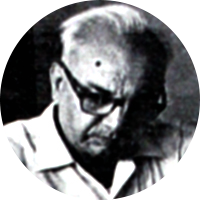
The question of how a nation's cultural life relates to its literature is one that is occasionally raised, and it is one that has often perplexed my own mind. At first glance, this question seems to address something quite familiar. Everyone understands, in one way or another, that culture is essentially the creation of a pleasant sense of harmony within collective life. It achieves this by balancing a country's fine arts, literature, philosophical ideas, way of life, and material progress against the contradictory and conflicting elements of human existence. In a class-based society, the nature of this culture may vary from one class to another. Nevertheless, the existence of some form of cultural life is inevitable, directly corresponding to the control over the means of production.
What is culture? I once wrote the following on this subject: When we use the word 'culture,' we refer to the distinguishing characteristics that collectively emerge from all the significant aspects of a nation's or a country's internal and external life. These are the traits that the people of that country hold dear, and by which they are recognized in the world. Humanity creates its national culture through the struggle to establish and preserve its values. This culture resonates with its past and remains connected to the general pace of global progress. Culture encompasses all the emotional, spiritual, and material aspirations and desires of national life; it shapes and refines them, providing an ideal that can meet the demands of the times. It moves forward, carrying with it all the strengths bestowed upon it by the past.
In my view, this is generally what is meant by culture. In this way, culture becomes the manifestation of a nation's consciousness. However, its level is never uniform, because cultural values are not identical across every social class. This is why literature, acting as both a component and a spokesperson of cultural evolution, portrays the struggles of life. These struggles sometimes manifest as a conflict between the individual and society, and at other times as a conflict between different social groups. The more universal literature becomes in its expression—or the more it reflects the lives of the greatest number of people—the closer it draws to the universal aspects of culture.
Every country and nation possesses some form of cultural heritage. Even if a nation cannot be considered highly civilized in the conventional sense, it still relies on certain foundations to sustain its existence and to support itself during difficult times. Its songs, dances, music, tales, stories, and proverbs are all both a part of its existence and a manifestation of it. If we analyze these elements, we find that while they possess distinct national characteristics, their ultimate ideals are in harmony with the broader efforts of human evolution. Had this not been the case, the upheavals of centuries would have shattered them to pieces. It is true that after every major upheaval, certain parts of culture and literature become obsolete and fade away. However, whatever survives the shocks of these revolutions truly reflects the soul of a country and its people. The resilience found within this surviving culture mirrors the nation's own will to survive—a resilience forged in the furnace of trials and revolutions.
National literature is inherently human literature. Examples of this can be found in the literature and poetry of any nation. When it comes to human dreams and aspirations—specifically the desire to lead a happy, content, prosperous, and progressive life—there is a profound universality among all people. The impulses to enslave others, sow division, and achieve prosperity through exploitation are not as fundamental or as beautiful as the innate desires to survive and progress. Such negative impulses are born and nurtured under specific social and political conditions. Therefore, literature, in its truest form, does not advocate for these sentiments. Instead, it often portrays them as fleeting, unstable, hateful, and grotesque. Conversely, the enduring nature of love, the will to survive, the drive to create social harmony, and the aspiration to master nature are themes that will inevitably be found, in one form or another, in the literature of the entire world.
This also demonstrates that while national culture and national life influence literature in every era, they only succeed in immortalizing those elements that reflect this broader, more universal perspective. The remaining elements hold, at best, mere historical significance. The literature of Italy and Germany that mirrored the bloodthirsty ambitions of Mussolini and Hitler has faded into oblivion even within its own borders, let alone becoming a part of international literature. Today, only students of history have any interest in reading the autobiographies of Mussolini and Hitler. Such literature merely offers a glimpse into a fleeting era of Italian and German national life (or, more accurately, the life of the ruling class and its collaborators)—an era that can never be viewed favorably from a humanitarian standpoint. My intention here is not to analyze the anti-cultural nature of the literature produced under the dark shadow of fascism. Rather, I simply wish to point out that literature only truly connects with cultural life when it embodies a nation's just and humanitarian aspirations. The aggressive and oppressive desires of any single class can never become a genuine part of culture and literature.
The fundamental difficulty in linking literature to cultural life—a difficulty many hesitate to express openly—is that literature is generally perceived merely as the expression of an individual's imagination and personal ideas. In this context, alongside the debate over individuality in art, the debate regarding the relationship between the individual and society also arises. It becomes difficult to determine how a writer's individual desires and thoughts can be integrated into the collective cultural consciousness of a nation or country. It is a fact that a vast majority of literature is the product of individual intellectual endeavor, and in any high-caliber creative work, the personality of the writer or artist is distinctly prominent. However, the issue becomes convoluted when we ignore one crucial point: many critics and thinkers accept the conflict between the individual and society as an inevitable reality.
Thus, a major part of the edifice of psychoanalysis rests on the assumption that human beings cooperate with society out of compulsion; otherwise, their individuality seeks to remain entirely separate from it. This very notion leads to further complications. On the one hand, it reduces human nature to a collection of unchangeable instincts. On the other hand, it suggests that within any social system, individuals can never truly find happiness or fulfill their legitimate desires as individuals. Neither of these premises is correct: human nature is not immutable, nor is society the enemy of the individual. Therefore, a writer who separates his individuality from the collective interest of society and seeks to impose his own desires and thoughts upon the public is essentially opposing the very civilizational values born out of centuries of grueling human struggle. Such a writer lacks faith in the future of humanity; instead, he acts as an advocate for blind, unchanging instincts.
Holding such beliefs, no writer can truly believe in the cultural and civilizational evolution of humanity. It would be futile to look for a connection between literature and civilization in his work. An individuality that wages war against social life merely to impose its own views—or the views of a few like-minded peers—can never become an integral part of broader cultural life. A good writer, while maintaining his individuality, channels his literary endeavors toward the common good of society, expressing collective ideals through the lens of his own thoughts. Literature is a civilizational process, and no cultural institution relies solely on the efforts of a single individual. The heartbeat of a nation's life must resonate within it.
Values were mentioned earlier; determining them also presents certain complexities. Values consist of those civilizational elements forged through centuries of creative and constructive struggle. They are the defining markers by which a civilization and its adherents are recognized. Values are dynamic, and their boundaries shift over time, yet they exist in every era of civilization. Classical literature possessed specific concepts of morality, humanism, love, and art, which helped determine the worth of great literary works. These concepts were in harmony with the economic and social life of their time. They were the product of a system based on agricultural production, its methods, and the structures of ownership surrounding it. However, due to various evolutionary and revolutionary factors, human knowledge, intellect, perspectives, and approaches to cultural concepts underwent a transformation.
In the struggle to conquer nature, humanity transformed itself. Consequently, the values it held dear also changed. This does not mean that the human physical structure altered, but rather that machines multiplied the strength of human hands manifold. The telescope and the microscope expanded human vision, while the invention of the engine and similar technologies accelerated human speed. Everywhere, humanity began to feel more capable and powerful. Under these circumstances, it is not difficult to imagine that many old superstitions were shattered, and numerous doubts were either dispelled or transformed into certainty. Humanity developed greater faith in its own strength and potential for action. Breaking past earlier limitations, human thought began to operate in the light of new possibilities.
The true meaning of this change is that as material conditions evolve, human consciousness evolves alongside them. The new values that emerge will possess novelty and expansiveness; they will reflect a reliance on human strength and a revised understanding of nature. However, this does not mean that love is replaced by hatred, morality by immorality, or humanism by misanthropy. As mentioned earlier, such negative inversions might occur temporarily under class exploitation, but they will never align with the progressive cultural evolution of a nation. Therefore, those elements of classical civilization that manifest human greatness, the survival of life, and the spirit of struggle will inevitably find a place in the new cultural values in one form or another. The methods of attaining and emphasizing them may differ, but their core existence cannot be extinguished. This continuity reflects the very continuity of life itself and serves to keep a nation connected to its past. Language, literature, and the fine arts play a major role in sustaining this unbroken chain. This is precisely why no nation is ever willing to let its language be replaced or to neglect its literature.
If we accept that literature is the medium for declaring and expressing cultural values, and that it reveals the soul of a nation and a country, then it is obvious that these values need to be protected. Literature, in a way, also serves as the means of their preservation. While this is not the place to delve into the details of these mechanisms, it is useful to point out the fundamental reality.
Can literature serve civilization merely by altering internal emotional states, without helping to change external life? The answer to this question determines how literature can help transform and enrich national life. One of the most crucial philosophical debates of the modern era is whether human consciousness is a reflection of material conditions, or whether material conditions are a product of the human mind. Idealist philosophy, in various guises, continues to mislead humanity into believing that the human mind is the primary instrument of change. However, anyone who has studied history and the evolution of philosophical thought will be convinced that while human beings do initiate material change driven by necessity or the perception of it, it is ultimately this material change that transforms their consciousness. It never happens that an internal revolution of the conscience alone alters the landscape of the world. Changes in the means of production alter the course of human action and dictate the ways in which people think. While this can be debated philosophically, a study of history makes this reality much easier to grasp.
It must be remembered that the intention here is not to deny the importance of thought and consciousness, but rather to question their origins and mechanisms. From whatever angle one looks at it, it becomes clear that human consciousness evolves and embarks on new paths in tandem with broader economic and social changes. If this holds true, then the task of literature is precisely to broaden human consciousness. However, it must not be forgotten that human consciousness transforms due to changes in external conditions, not merely because a writer states something or an artist expresses it. It is in this way that literature participates in the survival and evolution of civilization.
Today, literature and writers face a greater trial than ever before, as the threat of war has put the very survival of civilization at risk. Driven by unprecedented material progress, this era holds extraordinary possibilities. In some places, this material advancement is being harnessed for humanism, peace, and human welfare; in others, conversely, it is being used to maintain and consolidate class interests. Writers must choose their path and highlight those cultural elements of national life that will help save civilization. This decision must be made in the light of historical facts. If a writer turns away from these realities, they will be reduced to a mere spokesperson for hollow, individualistic desires. Their words will fail to resonate in the hearts of the millions who are struggling for peace, progress, and the survival of humanity and civilization. This is the only way literature can remain rooted in its national identity while becoming an integral part of human civilization, ensuring that every great literary achievement finds its rightful place in the treasury of world civilization.
The question of how a nation's cultural life relates to its literature is one that is occasionally raised, and it is one that has often perplexed my own mind. At first glance, this question seems to address something quite familiar. Everyone understands, in one way or another, that culture is essentially the creation of a pleasant sense of harmony within collective life. It achieves this by balancing a country's fine arts, literature, philosophical ideas, way of life, and material progress against the contradictory and conflicting elements of human existence. In a class-based society, the nature of this culture may vary from one class to another. Nevertheless, the existence of some form of cultural life is inevitable, directly corresponding to the control over the means of production.
What is culture? I once wrote the following on this subject: When we use the word 'culture,' we refer to the distinguishing characteristics that collectively emerge from all the significant aspects of a nation's or a country's internal and external life. These are the traits that the people of that country hold dear, and by which they are recognized in the world. Humanity creates its national culture through the struggle to establish and preserve its values. This culture resonates with its past and remains connected to the general pace of global progress. Culture encompasses all the emotional, spiritual, and material aspirations and desires of national life; it shapes and refines them, providing an ideal that can meet the demands of the times. It moves forward, carrying with it all the strengths bestowed upon it by the past.
In my view, this is generally what is meant by culture. In this way, culture becomes the manifestation of a nation's consciousness. However, its level is never uniform, because cultural values are not identical across every social class. This is why literature, acting as both a component and a spokesperson of cultural evolution, portrays the struggles of life. These struggles sometimes manifest as a conflict between the individual and society, and at other times as a conflict between different social groups. The more universal literature becomes in its expression—or the more it reflects the lives of the greatest number of people—the closer it draws to the universal aspects of culture.
Every country and nation possesses some form of cultural heritage. Even if a nation cannot be considered highly civilized in the conventional sense, it still relies on certain foundations to sustain its existence and to support itself during difficult times. Its songs, dances, music, tales, stories, and proverbs are all both a part of its existence and a manifestation of it. If we analyze these elements, we find that while they possess distinct national characteristics, their ultimate ideals are in harmony with the broader efforts of human evolution. Had this not been the case, the upheavals of centuries would have shattered them to pieces. It is true that after every major upheaval, certain parts of culture and literature become obsolete and fade away. However, whatever survives the shocks of these revolutions truly reflects the soul of a country and its people. The resilience found within this surviving culture mirrors the nation's own will to survive—a resilience forged in the furnace of trials and revolutions.
National literature is inherently human literature. Examples of this can be found in the literature and poetry of any nation. When it comes to human dreams and aspirations—specifically the desire to lead a happy, content, prosperous, and progressive life—there is a profound universality among all people. The impulses to enslave others, sow division, and achieve prosperity through exploitation are not as fundamental or as beautiful as the innate desires to survive and progress. Such negative impulses are born and nurtured under specific social and political conditions. Therefore, literature, in its truest form, does not advocate for these sentiments. Instead, it often portrays them as fleeting, unstable, hateful, and grotesque. Conversely, the enduring nature of love, the will to survive, the drive to create social harmony, and the aspiration to master nature are themes that will inevitably be found, in one form or another, in the literature of the entire world.
This also demonstrates that while national culture and national life influence literature in every era, they only succeed in immortalizing those elements that reflect this broader, more universal perspective. The remaining elements hold, at best, mere historical significance. The literature of Italy and Germany that mirrored the bloodthirsty ambitions of Mussolini and Hitler has faded into oblivion even within its own borders, let alone becoming a part of international literature. Today, only students of history have any interest in reading the autobiographies of Mussolini and Hitler. Such literature merely offers a glimpse into a fleeting era of Italian and German national life (or, more accurately, the life of the ruling class and its collaborators)—an era that can never be viewed favorably from a humanitarian standpoint. My intention here is not to analyze the anti-cultural nature of the literature produced under the dark shadow of fascism. Rather, I simply wish to point out that literature only truly connects with cultural life when it embodies a nation's just and humanitarian aspirations. The aggressive and oppressive desires of any single class can never become a genuine part of culture and literature.
The fundamental difficulty in linking literature to cultural life—a difficulty many hesitate to express openly—is that literature is generally perceived merely as the expression of an individual's imagination and personal ideas. In this context, alongside the debate over individuality in art, the debate regarding the relationship between the individual and society also arises. It becomes difficult to determine how a writer's individual desires and thoughts can be integrated into the collective cultural consciousness of a nation or country. It is a fact that a vast majority of literature is the product of individual intellectual endeavor, and in any high-caliber creative work, the personality of the writer or artist is distinctly prominent. However, the issue becomes convoluted when we ignore one crucial point: many critics and thinkers accept the conflict between the individual and society as an inevitable reality.
Thus, a major part of the edifice of psychoanalysis rests on the assumption that human beings cooperate with society out of compulsion; otherwise, their individuality seeks to remain entirely separate from it. This very notion leads to further complications. On the one hand, it reduces human nature to a collection of unchangeable instincts. On the other hand, it suggests that within any social system, individuals can never truly find happiness or fulfill their legitimate desires as individuals. Neither of these premises is correct: human nature is not immutable, nor is society the enemy of the individual. Therefore, a writer who separates his individuality from the collective interest of society and seeks to impose his own desires and thoughts upon the public is essentially opposing the very civilizational values born out of centuries of grueling human struggle. Such a writer lacks faith in the future of humanity; instead, he acts as an advocate for blind, unchanging instincts.
Holding such beliefs, no writer can truly believe in the cultural and civilizational evolution of humanity. It would be futile to look for a connection between literature and civilization in his work. An individuality that wages war against social life merely to impose its own views—or the views of a few like-minded peers—can never become an integral part of broader cultural life. A good writer, while maintaining his individuality, channels his literary endeavors toward the common good of society, expressing collective ideals through the lens of his own thoughts. Literature is a civilizational process, and no cultural institution relies solely on the efforts of a single individual. The heartbeat of a nation's life must resonate within it.
Values were mentioned earlier; determining them also presents certain complexities. Values consist of those civilizational elements forged through centuries of creative and constructive struggle. They are the defining markers by which a civilization and its adherents are recognized. Values are dynamic, and their boundaries shift over time, yet they exist in every era of civilization. Classical literature possessed specific concepts of morality, humanism, love, and art, which helped determine the worth of great literary works. These concepts were in harmony with the economic and social life of their time. They were the product of a system based on agricultural production, its methods, and the structures of ownership surrounding it. However, due to various evolutionary and revolutionary factors, human knowledge, intellect, perspectives, and approaches to cultural concepts underwent a transformation.
In the struggle to conquer nature, humanity transformed itself. Consequently, the values it held dear also changed. This does not mean that the human physical structure altered, but rather that machines multiplied the strength of human hands manifold. The telescope and the microscope expanded human vision, while the invention of the engine and similar technologies accelerated human speed. Everywhere, humanity began to feel more capable and powerful. Under these circumstances, it is not difficult to imagine that many old superstitions were shattered, and numerous doubts were either dispelled or transformed into certainty. Humanity developed greater faith in its own strength and potential for action. Breaking past earlier limitations, human thought began to operate in the light of new possibilities.
The true meaning of this change is that as material conditions evolve, human consciousness evolves alongside them. The new values that emerge will possess novelty and expansiveness; they will reflect a reliance on human strength and a revised understanding of nature. However, this does not mean that love is replaced by hatred, morality by immorality, or humanism by misanthropy. As mentioned earlier, such negative inversions might occur temporarily under class exploitation, but they will never align with the progressive cultural evolution of a nation. Therefore, those elements of classical civilization that manifest human greatness, the survival of life, and the spirit of struggle will inevitably find a place in the new cultural values in one form or another. The methods of attaining and emphasizing them may differ, but their core existence cannot be extinguished. This continuity reflects the very continuity of life itself and serves to keep a nation connected to its past. Language, literature, and the fine arts play a major role in sustaining this unbroken chain. This is precisely why no nation is ever willing to let its language be replaced or to neglect its literature.
If we accept that literature is the medium for declaring and expressing cultural values, and that it reveals the soul of a nation and a country, then it is obvious that these values need to be protected. Literature, in a way, also serves as the means of their preservation. While this is not the place to delve into the details of these mechanisms, it is useful to point out the fundamental reality.
Can literature serve civilization merely by altering internal emotional states, without helping to change external life? The answer to this question determines how literature can help transform and enrich national life. One of the most crucial philosophical debates of the modern era is whether human consciousness is a reflection of material conditions, or whether material conditions are a product of the human mind. Idealist philosophy, in various guises, continues to mislead humanity into believing that the human mind is the primary instrument of change. However, anyone who has studied history and the evolution of philosophical thought will be convinced that while human beings do initiate material change driven by necessity or the perception of it, it is ultimately this material change that transforms their consciousness. It never happens that an internal revolution of the conscience alone alters the landscape of the world. Changes in the means of production alter the course of human action and dictate the ways in which people think. While this can be debated philosophically, a study of history makes this reality much easier to grasp.
It must be remembered that the intention here is not to deny the importance of thought and consciousness, but rather to question their origins and mechanisms. From whatever angle one looks at it, it becomes clear that human consciousness evolves and embarks on new paths in tandem with broader economic and social changes. If this holds true, then the task of literature is precisely to broaden human consciousness. However, it must not be forgotten that human consciousness transforms due to changes in external conditions, not merely because a writer states something or an artist expresses it. It is in this way that literature participates in the survival and evolution of civilization.
Today, literature and writers face a greater trial than ever before, as the threat of war has put the very survival of civilization at risk. Driven by unprecedented material progress, this era holds extraordinary possibilities. In some places, this material advancement is being harnessed for humanism, peace, and human welfare; in others, conversely, it is being used to maintain and consolidate class interests. Writers must choose their path and highlight those cultural elements of national life that will help save civilization. This decision must be made in the light of historical facts. If a writer turns away from these realities, they will be reduced to a mere spokesperson for hollow, individualistic desires. Their words will fail to resonate in the hearts of the millions who are struggling for peace, progress, and the survival of humanity and civilization. This is the only way literature can remain rooted in its national identity while becoming an integral part of human civilization, ensuring that every great literary achievement finds its rightful place in the treasury of world civilization.
Additional information available
Click on the INTERESTING button to view additional information associated with this sher.
About this sher
rare Unpublished content
This ghazal contains ashaar not published in the public domain. These are marked by a red line on the left.