Ameer Khusro Dehlavi Aur Unki Shayari
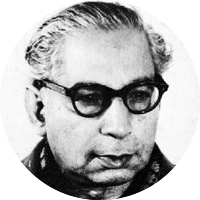
The neighborhood in Delhi where I currently reside is known as Hauz Khas, located about two to two-and-a-half miles from the Qutb Minar. At roughly the same distance from here lies the tomb of Hazrat Nizamuddin Auliya. The shrine of Amir Khusrau Dehlavi is also situated at the foot of Khwaja Sahib's grave, within the very same mausoleum.
In the realm of imagination, I sometimes wander back to the Delhi of seven or eight hundred years ago. This was a time when sultans of Turkic descent—Iltutmish, Balban, Khalji, and Tughlaq—ruled the land. The ruins and remnants of the magnificent buildings, palaces, mosques, madrasas, Sufi lodges (khanqahs), and shrines constructed during their reigns are scattered all the way from Delhi's Old Fort to Tughlaqabad. Amir Khusrau lived in Delhi during this very era, immersed in this exact environment, and he harbored a deep, profound love for his city.
Khusrau was a poet of immense stature. Throughout his life, he maintained close ties with the sultans, princes, and high-ranking nobles of Delhi. These patrons deeply appreciated his talent, showering him with wealth and property, and elevating him to prestigious courtly ranks and positions. The title Amir prefixed to his name signifies this very courtly status, indicating that he was among the elite nobles of the royal court. However, it is obvious that if we revere Khusrau's greatness today, it is solely due to the mastery he achieved in poetry. In my view, Khusrau is not just one of the handful of India's greatest poets; he rightfully belongs in the pantheon of the world's greatest poets.
No other Indian poet enjoys the distinct honor of having their work published, avidly read, and sung in gatherings even seven hundred years later—not just in India, but in four or five foreign countries where Persian is still prevalent. These include Pakistan, Afghanistan, Iran, and the Soviet Asian republics of Tajikistan, Uzbekistan, and Azerbaijan. While our country has produced other literary giants in Persian—such as Naziri, Urfi, Bedil, Ghalib, and Iqbal, all of whom hold an exalted status—none have achieved the sheer international popularity of Amir Khusrau Dehlavi.
Amir Khusrau’s voluminous collected works (Kulliyat)—which encompass his masnavis, ghazals, rubaiyat, qitaat, and standalone couplets—can be found in substantial numbers across the world's most renowned libraries. These include the British Museum and the India Office Library in London, the Bodleian Library at Oxford, the oriental manuscript libraries in Leningrad and Tashkent, as well as major libraries in Paris, Berlin, Tehran, and Kabul. Naturally, since India is Khusrau’s homeland, I believe that manuscripts of his Kulliyat, along with collections of his masnavis and ghazals, are preserved in all our major manuscript repositories. Khusrau’s poetry has been printed and published numerous times, though, unfortunately, it is currently out of print and unavailable in the market.
A few years ago, Khusrau’s diwan (collection of poetry) was published in Iran, and more recently, two of his masnavis were beautifully printed in the Persian script in the Soviet Union. I have been informed that preparations are now complete in the Soviet Union to publish Khusrau’s works across several volumes. This monumental task is being undertaken at the Institute of the Academy of Sciences in Moscow. It is also a matter of great joy that here in India, arrangements are underway to print and publish Khusrau’s complete poetic and prose works under the auspices of the Jashn-e-Khusrau (Khusrau Festival). This festival will likely be celebrated on a grand scale in 1974.
I mentioned earlier that Khusrau had a profound love for Delhi. Perhaps it would be more accurate to say that Khusrau was deeply fascinated by life in all its diverse hues and dimensions. He was captivated by humanity—its joys and sorrows, its social customs and ways of living, its battles and wars, its hatreds and enmities, its love and affection. He observed human traits, both petty and grand, along with politics, conspiracies, nobility, and baseness. In short, he took a profound interest in the rhythms and manifestations of practical life, both individual and collective, and he held distinct opinions on all of these matters.
His opinions and perspectives were rooted in a strong moral and philosophical foundation. Because he was a masterful artist with a natural flair for expressing his thoughts with beauty, originality, and rare, inventive similes and metaphors—and because his heart brimmed with the extraordinary warmth of human love, passion, and ecstasy—he was able to infuse his finest works with a profound emotional impact and an overwhelming sense of joy and exhilaration.
If Khusrau loved Delhi—a sentiment he reiterated time and again—it was partly because the handsome young men of the city wore beautiful, stylishly tilted turbans. They possessed angelic dispositions, as cheerful and pure-hearted as the inhabitants of paradise. Khusrau writes that the young Hindu men of Delhi dressed so elegantly and were so vivacious and charming that the Muslims of the city, utterly infatuated with them, abandoned their faith to worship the sun. He adds that the young cupbearers in Delhi’s taverns had left the entire populace intoxicated and spellbound. In his masnavi, Qiran-us-Sa'dain, his tribute to Delhi begins as follows:
Aye Dehli waale butaan-e-saada
Pagg basta-o-reesha kaj nahaada
Khurshid parast shud musalmaan
Zeen hindu-gaan-e-shokh-o-saada
Kardand mara kharab di shab
Een mun'im bachgaan-e-taak zaada
[O innocent idols of Delhi,
Wearing turbans with tilted crests.
The Muslims have become sun-worshippers,
Beguiled by these playful, unadorned Hindus.
They left me utterly ruined last night,
These affluent, wine-born youths.]
Khusrau harbored a passionate, almost ecstatic love for India—its people, its seasons, its flowers and fruits, its betel leaf (paan) and mangoes, and its finely woven textiles. In one instance, he writes of India:
Siyah goyand-o-Hind hama chuneen ast
Sawaad-e-azam-e-aalam hameen ast
Bihishtay farz kun Hindustaan ra
Kun aanja nisbat een boostaan ra
Wagarna Aadam-o-taoos z'aanjaay
Kuja een ja shudanday manzil aaraay
[They call it dark, and such is the entirety of India,
Yet it is the greatest metropolis of the world.
Imagine India as a paradise,
And compare this garden to the heavens.
Otherwise, why would Adam and the peacock, exiled from there,
Choose to make this land their home?]
Elsewhere, Amir Khusrau discusses the beauty of women from various nations across the world, detailing the unique physical charms of women from Egypt, Kandahar, China, Khorasan, Balkh, and Russia. However, after pointing out some slight imperfection in each, he ultimately elevates the beauty of the Indian woman above all others. Even today, Gujjar women can be seen selling milk and yogurt in and around Delhi. Amir Khusrau described one such woman in his own distinctive style:
Gujari ke tu dar husn-o-latafat choon mahi
In degh-e-dahi bar sar-e-tu chatr-e-shahi
Az har do labat sheer-o-shakar mi rezad
Hargah ke mi goyi dahi pi ho, dahi
[O Gujjar girl, in beauty and grace you are like the moon,
This pot of yogurt upon your head is a royal canopy.
Milk and sugar pour from both your lips,
Whenever you call out, Will you drink yogurt? Oh, yogurt!]
Amir Khusrau also composed poetry in Hindi, a language he referred to as Hindavi. Unfortunately, very few examples of these works have survived to reach us. However, the following doha (couplet), which Khusrau recited upon the passing of Khwaja Nizamuddin Auliya, remains incredibly famous:
Gori soway sej par, mukh par daalay kes
Chal Khusrau ghar aapnay, rain bhayi sab des
[The fair maiden sleeps upon the bed, her hair scattered across her face,
Let us go home, Khusrau, for night has fallen over the entire land.]
Khusrau was one of the special and most beloved disciples of Khwaja Nizamuddin Auliya, and he held immense devotion for him. There is a deep hue of Sufism in Khusrau's poetry, which finds expression in his humanism and broad-minded tolerance. This aspect of Khusrau is most prominent in his Persian ghazals. Although he was also a great master of the masnavi and wrote historical, narrative, and romantic masnavis of the highest caliber, I believe his immense popularity stems from his unparalleled ghazals. These ghazals possess such a seamless blend of simplicity, fluency, pathos, originality, and subtlety that, after Khusrau, we only witness it in the poetry of Khwaja Hafiz Shirazi. This is why, even today, seven hundred years later, whenever qawwali is sung in our region—and not just here, but also in Kabul, Tehran, Lahore, Tashkent, Fergana, and Dushanbe—these verses resonate:
Jaan ze tan burdi o dar jaani hanooz
Dar dilam dardi, darmaani hanooz
[You took the life from my body, yet you remain in my soul;
You are the pain in my heart, yet you are still the cure.]
And:
Ba labam raseeda jaanam, tu biya ke zinda maanam
Pas az aan ke man na maanam, ba che kaar khwahi aamad
[My life has reached my lips; come, so that I may live.
After I am no more, of what use will your coming be?]
And:
Zabaan-e shokh-e man Turki o man Turki nami daanam
Che khosh boodey agar boodey zabaanash dar dahaan-e man
[My mischievous beloved speaks Turkish, and I do not know Turkish;
How wonderful it would be if her tongue were in my mouth.]
And:
Dilam dar aashiqi aawara shud, aawara-tar baada
Tanam az be-dili be-chaara shud, be-chaara-tar baada
Gar ay zaahid! Dua-e khair mi khwahi mara een go
Ke een aawara-e koo-e butaan, aawara-tar baada
[My heart became a wanderer in love; may it wander even more!
My body became helpless from despair; may it become even more helpless!
O ascetic! If you wish to pray for my well-being, say this:
May this wanderer of the idol's alley wander even more!]
I believe that the magic awakened by Amir Khusrau—the ecstasy, rapture, and spiritual trance that his poetry induces—is our immense spiritual wealth. This wealth, bestowed upon us by Khusrau, is eternal.
The neighborhood in Delhi where I currently reside is known as Hauz Khas, located about two to two-and-a-half miles from the Qutb Minar. At roughly the same distance from here lies the tomb of Hazrat Nizamuddin Auliya. The shrine of Amir Khusrau Dehlavi is also situated at the foot of Khwaja Sahib's grave, within the very same mausoleum.
In the realm of imagination, I sometimes wander back to the Delhi of seven or eight hundred years ago. This was a time when sultans of Turkic descent—Iltutmish, Balban, Khalji, and Tughlaq—ruled the land. The ruins and remnants of the magnificent buildings, palaces, mosques, madrasas, Sufi lodges (khanqahs), and shrines constructed during their reigns are scattered all the way from Delhi's Old Fort to Tughlaqabad. Amir Khusrau lived in Delhi during this very era, immersed in this exact environment, and he harbored a deep, profound love for his city.
Khusrau was a poet of immense stature. Throughout his life, he maintained close ties with the sultans, princes, and high-ranking nobles of Delhi. These patrons deeply appreciated his talent, showering him with wealth and property, and elevating him to prestigious courtly ranks and positions. The title Amir prefixed to his name signifies this very courtly status, indicating that he was among the elite nobles of the royal court. However, it is obvious that if we revere Khusrau's greatness today, it is solely due to the mastery he achieved in poetry. In my view, Khusrau is not just one of the handful of India's greatest poets; he rightfully belongs in the pantheon of the world's greatest poets.
No other Indian poet enjoys the distinct honor of having their work published, avidly read, and sung in gatherings even seven hundred years later—not just in India, but in four or five foreign countries where Persian is still prevalent. These include Pakistan, Afghanistan, Iran, and the Soviet Asian republics of Tajikistan, Uzbekistan, and Azerbaijan. While our country has produced other literary giants in Persian—such as Naziri, Urfi, Bedil, Ghalib, and Iqbal, all of whom hold an exalted status—none have achieved the sheer international popularity of Amir Khusrau Dehlavi.
Amir Khusrau’s voluminous collected works (Kulliyat)—which encompass his masnavis, ghazals, rubaiyat, qitaat, and standalone couplets—can be found in substantial numbers across the world's most renowned libraries. These include the British Museum and the India Office Library in London, the Bodleian Library at Oxford, the oriental manuscript libraries in Leningrad and Tashkent, as well as major libraries in Paris, Berlin, Tehran, and Kabul. Naturally, since India is Khusrau’s homeland, I believe that manuscripts of his Kulliyat, along with collections of his masnavis and ghazals, are preserved in all our major manuscript repositories. Khusrau’s poetry has been printed and published numerous times, though, unfortunately, it is currently out of print and unavailable in the market.
A few years ago, Khusrau’s diwan (collection of poetry) was published in Iran, and more recently, two of his masnavis were beautifully printed in the Persian script in the Soviet Union. I have been informed that preparations are now complete in the Soviet Union to publish Khusrau’s works across several volumes. This monumental task is being undertaken at the Institute of the Academy of Sciences in Moscow. It is also a matter of great joy that here in India, arrangements are underway to print and publish Khusrau’s complete poetic and prose works under the auspices of the Jashn-e-Khusrau (Khusrau Festival). This festival will likely be celebrated on a grand scale in 1974.
I mentioned earlier that Khusrau had a profound love for Delhi. Perhaps it would be more accurate to say that Khusrau was deeply fascinated by life in all its diverse hues and dimensions. He was captivated by humanity—its joys and sorrows, its social customs and ways of living, its battles and wars, its hatreds and enmities, its love and affection. He observed human traits, both petty and grand, along with politics, conspiracies, nobility, and baseness. In short, he took a profound interest in the rhythms and manifestations of practical life, both individual and collective, and he held distinct opinions on all of these matters.
His opinions and perspectives were rooted in a strong moral and philosophical foundation. Because he was a masterful artist with a natural flair for expressing his thoughts with beauty, originality, and rare, inventive similes and metaphors—and because his heart brimmed with the extraordinary warmth of human love, passion, and ecstasy—he was able to infuse his finest works with a profound emotional impact and an overwhelming sense of joy and exhilaration.
If Khusrau loved Delhi—a sentiment he reiterated time and again—it was partly because the handsome young men of the city wore beautiful, stylishly tilted turbans. They possessed angelic dispositions, as cheerful and pure-hearted as the inhabitants of paradise. Khusrau writes that the young Hindu men of Delhi dressed so elegantly and were so vivacious and charming that the Muslims of the city, utterly infatuated with them, abandoned their faith to worship the sun. He adds that the young cupbearers in Delhi’s taverns had left the entire populace intoxicated and spellbound. In his masnavi, Qiran-us-Sa'dain, his tribute to Delhi begins as follows:
Aye Dehli waale butaan-e-saada
Pagg basta-o-reesha kaj nahaada
Khurshid parast shud musalmaan
Zeen hindu-gaan-e-shokh-o-saada
Kardand mara kharab di shab
Een mun'im bachgaan-e-taak zaada
[O innocent idols of Delhi,
Wearing turbans with tilted crests.
The Muslims have become sun-worshippers,
Beguiled by these playful, unadorned Hindus.
They left me utterly ruined last night,
These affluent, wine-born youths.]
Khusrau harbored a passionate, almost ecstatic love for India—its people, its seasons, its flowers and fruits, its betel leaf (paan) and mangoes, and its finely woven textiles. In one instance, he writes of India:
Siyah goyand-o-Hind hama chuneen ast
Sawaad-e-azam-e-aalam hameen ast
Bihishtay farz kun Hindustaan ra
Kun aanja nisbat een boostaan ra
Wagarna Aadam-o-taoos z'aanjaay
Kuja een ja shudanday manzil aaraay
[They call it dark, and such is the entirety of India,
Yet it is the greatest metropolis of the world.
Imagine India as a paradise,
And compare this garden to the heavens.
Otherwise, why would Adam and the peacock, exiled from there,
Choose to make this land their home?]
Elsewhere, Amir Khusrau discusses the beauty of women from various nations across the world, detailing the unique physical charms of women from Egypt, Kandahar, China, Khorasan, Balkh, and Russia. However, after pointing out some slight imperfection in each, he ultimately elevates the beauty of the Indian woman above all others. Even today, Gujjar women can be seen selling milk and yogurt in and around Delhi. Amir Khusrau described one such woman in his own distinctive style:
Gujari ke tu dar husn-o-latafat choon mahi
In degh-e-dahi bar sar-e-tu chatr-e-shahi
Az har do labat sheer-o-shakar mi rezad
Hargah ke mi goyi dahi pi ho, dahi
[O Gujjar girl, in beauty and grace you are like the moon,
This pot of yogurt upon your head is a royal canopy.
Milk and sugar pour from both your lips,
Whenever you call out, Will you drink yogurt? Oh, yogurt!]
Amir Khusrau also composed poetry in Hindi, a language he referred to as Hindavi. Unfortunately, very few examples of these works have survived to reach us. However, the following doha (couplet), which Khusrau recited upon the passing of Khwaja Nizamuddin Auliya, remains incredibly famous:
Gori soway sej par, mukh par daalay kes
Chal Khusrau ghar aapnay, rain bhayi sab des
[The fair maiden sleeps upon the bed, her hair scattered across her face,
Let us go home, Khusrau, for night has fallen over the entire land.]
Khusrau was one of the special and most beloved disciples of Khwaja Nizamuddin Auliya, and he held immense devotion for him. There is a deep hue of Sufism in Khusrau's poetry, which finds expression in his humanism and broad-minded tolerance. This aspect of Khusrau is most prominent in his Persian ghazals. Although he was also a great master of the masnavi and wrote historical, narrative, and romantic masnavis of the highest caliber, I believe his immense popularity stems from his unparalleled ghazals. These ghazals possess such a seamless blend of simplicity, fluency, pathos, originality, and subtlety that, after Khusrau, we only witness it in the poetry of Khwaja Hafiz Shirazi. This is why, even today, seven hundred years later, whenever qawwali is sung in our region—and not just here, but also in Kabul, Tehran, Lahore, Tashkent, Fergana, and Dushanbe—these verses resonate:
Jaan ze tan burdi o dar jaani hanooz
Dar dilam dardi, darmaani hanooz
[You took the life from my body, yet you remain in my soul;
You are the pain in my heart, yet you are still the cure.]
And:
Ba labam raseeda jaanam, tu biya ke zinda maanam
Pas az aan ke man na maanam, ba che kaar khwahi aamad
[My life has reached my lips; come, so that I may live.
After I am no more, of what use will your coming be?]
And:
Zabaan-e shokh-e man Turki o man Turki nami daanam
Che khosh boodey agar boodey zabaanash dar dahaan-e man
[My mischievous beloved speaks Turkish, and I do not know Turkish;
How wonderful it would be if her tongue were in my mouth.]
And:
Dilam dar aashiqi aawara shud, aawara-tar baada
Tanam az be-dili be-chaara shud, be-chaara-tar baada
Gar ay zaahid! Dua-e khair mi khwahi mara een go
Ke een aawara-e koo-e butaan, aawara-tar baada
[My heart became a wanderer in love; may it wander even more!
My body became helpless from despair; may it become even more helpless!
O ascetic! If you wish to pray for my well-being, say this:
May this wanderer of the idol's alley wander even more!]
I believe that the magic awakened by Amir Khusrau—the ecstasy, rapture, and spiritual trance that his poetry induces—is our immense spiritual wealth. This wealth, bestowed upon us by Khusrau, is eternal.
- Author :Sajjad Zaheer
- Publication : Ghulam Husain Zaidi
Additional information available
Click on the INTERESTING button to view additional information associated with this sher.
About this sher
rare Unpublished content
This ghazal contains ashaar not published in the public domain. These are marked by a red line on the left.