Ghalib Ek Aafaاqi Shayar
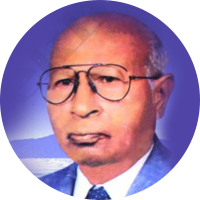
Every great and original poet must adopt a universal perspective to observe and evaluate life, and to infuse their experiences with meaning. This universal perspective often takes the form of a personal ideology, which the poet then uses to critique the prevailing ideology of their era. Poets generally fall into two categories. The first group consists of those who express their emotions in accordance with the interpretations of life established by their predecessors. They do not use their own emotions to offer any original interpretation of life or the universe. The second, much smaller group comprises poets who critique the ideas of their predecessors and rely on their own experiences to interpret life and the universe. It is these poets who adopt a truly universal perspective. Consequently, they are the ones who forge a genuinely new literary style. Ghalib’s individuality is proverbial:
Ham ba-aalam za-ahl-e-aalam bar-kinaar uftaada am
Choon imaam-e-subha beeroon az shumaar uftaada am
[Though in the world, I stand apart from the people of the world;
Like the leading bead of a rosary, I fall outside the count.]
Thus, it is a testament to his individuality, originality, and commitment to truth that, guided by intellect, he formulated a new ideology from the interpretation of his own emotions to evaluate the authenticity and purity of his experiences.
Hegel writes that every great and original poet presents a new concept of life and a new vision of infinity. If we add to this Flaubert’s idea—that a poet’s greatness lies not in how many of life's problems they have solved, but rather in how many questions they have raised against the backdrop of infinity, and how many established beliefs they have subjected to doubt and skepticism—then I would be entirely justified in asserting that Mirza Ghalib belongs in the ranks of these great poets. For while he has presented a new concept of infinity, he has simultaneously raised so many profound questions about life that one could construct an entirely new philosophy of life based on them.
Ghalib’s ideology, which reflects a new vision of life, can only be reconstructed through his poetry. However, there is a danger here: in my attempt to uncover the essential universal elements of Ghalib’s thought, the emotional depth and pathos of his poetry might be obscured—just as the agonizing burn of a candle's wick is hidden by the mesmerizing colors of a decorative lantern. Furthermore, the light of a poet’s imagination cannot be viewed in isolation from the lantern of their emotions, for a poet interprets reality exclusively through the mirror of their feelings. Yet, just as one can feel the soul of the singer behind the veil of the melody, and just as one can catch a glimpse of the unseen through a slit in the veil of mystery, I will attempt to abstract his intellectual thought from the lantern of his emotions and the melting of his heart. This is necessary to understand the nature of the imaginative edifice he constructed and its significance in world history, for without this understanding, the true value of Ghalib’s poetry cannot be determined.
Earlier, while pointing out Ghalib’s individuality and originality, I mentioned that he is among those rare poets who claim never to have relied on a borrowed ideology to validate the truth of their experiences and emotions. Instead, he constructed his own faith and his own ideology. Such is the pinnacle of individuality, and such is true freedom of mind:
Karda am eemaan-e-khud ra dast-muzd-e-kheeshtan
Me-taraasham paikar az sang o ibaadat me-kunam
[I have made my faith the reward of my own labor;
I carve an idol out of stone and then worship it.]
Sang o khisht az masjid-e-veeraana me-aaram ba-shahr
Khaana dar koo-e-tarsaayaan imaarat me-kunam
[I bring stones and bricks from a ruined mosque to the city;
And I build a house in the lane of the infidels.]
In this *Somnath* (temple) of Ghalib’s imagination, there is no prayer niche and no idol, no cross and no altar. There is only a single stone erected within it, upon one side of which this couplet is inscribed in bold letters:
Hum muwahhid hain, hamaara kesh hai tark-e-rusoom
Millatein jab mit gayeen ajza-e-eemaan ho gayeen
[We are monotheists, our creed is the abandonment of rituals;
When religious factions are erased, they become parts of true faith.]
In his existential monotheism (*Tawhid-e-Wujudi*), there is no distinction of color, race, creed, or sect; nor is there any dichotomy between religion and the world, the temporal and the eternal, or the divine essence and its attributes. Many thinkers and poets before Ghalib had also dreamt of this pure monotheism. He was not the first to conceive of it. However, the historical context in which he elevated this idea, and the unique interpretation he provided, immensely amplified its power, its joyous vitality, and its vibrant brilliance. It is widely acknowledged that Ghalib’s poetry is, in itself, a significant historical event. This is evident from the fact that an ever-growing number of people continue to gather around the scripture of his art. Furthermore, the banner of rebellion (*Derafsh-e-Kaviani*) he raised against the injustice of the religious orthodox gains strength with each passing day:
Ba-dairiyaan za-shikwa-e-bedaad-e-ahl-e-deen
Mihray za-kheeshtan ba-dil-e-kaafir afganam
[Complaining to the temple-dwellers about the tyranny of the men of faith;
I instill a love for myself in the heart of the infidel.]
However, until the concrete historical reality of his poetry is brought to light, and until it is shown exactly how his work was intertwined with the history of his time, the revolutionary nature of his voice cannot hold true meaning—neither for us nor for world history.
I disagree with Spengler’s notion that poetry, entirely exclusive and locked in isolation, is solely the spirit of a specific culture. If that were true, Greek literature and poetry would not have influenced global civilization, nor would modern European literature have impacted us on such a massive scale. There is undoubtedly an element of tribalism (*Asabiyyah*) in any culture, which harbors a certain resistance to pure reason and an alienation from other cultures. Despite this, the culture of every society both strengthens and draws strength from the fundamental current of global civilization. This dynamic is evident in every era of history. In the modern age, driven by advancements in communication, mutual cooperation, and a growing inclination toward tolerance, this process of cultural exchange has accelerated so rapidly that the time is not far off when—following the end of political domination and exploitation—humanity will finally reach the destination our poets have long dreamed of:
Dilam dar Kaaba az tangi giraft, aawaara khaaham
Ke ba-man wusat-e-but-khaana-ha-e-Hind o Cheen goyad
[My heart felt constricted in the Kaaba; I seek a wanderer
Who can tell me of the vastness of the temples of India and China.]
And it is this very Ghalib who offers the following couplet as a prayer:
Za-but-bandagi, mardum aazaad kun
Jahaane ba-yak khaana aabaad kun
[Free humanity from the worship of idols;
Let the whole world flourish within a single home.]
In any case, we were discussing the specific historical situation that compelled Ghalib to search for the foundation of his existence and to reinterpret and redefine reality. It is a characteristic of human existence that, in order to validate itself, it establishes a connection with the Whole. This connection is fundamentally determined by humanity's relationship with external nature—that is, how humans utilize nature to achieve their goals or how they derive their sustenance from it. Consequently, the relationship humanity had with external nature during the era of classical slavery did not remain the same during the age of the watermill and windmill in the Middle Ages. In the modern era—the age of steam and electricity—this relationship is vastly different from all previous ones. As far as Ghalib is concerned, at the time of his birth, the Indo-Pak subcontinent and other Asian countries—indeed, the entire continent—were still in the windmill and watermill era, whereas Europe had already entered the age of steam power.
Why did this Asian society remain so backward? The reasons can be found in its social and economic structure. However, regarding the causes of its subjugation by the West, while its specific socio-economic framework played a role, it was also because our society was plagued not only by caste and slavery but also by prejudices of race and color, tribal divisions, and the conflicting, antagonistic distinctions of countless sects and creeds. Our society was closed to such an extent that, prior to the British era, no storm of events could shake its foundations. Empires changed hands, but they failed to bring about any social revolution; there is a vast difference between minor shifts and revolutionary change. Our discussion here is about revolutionary change, not minor shifts. In any case, given this stagnant reality, before Ghalib, there was never even a need to question the relationship our existence had maintained with the Whole for centuries, or to search anew for the foundation of existence.
Hasti apni hubab ki si hai
Yeh numaish sarab ki si hai
[Our existence is like that of a bubble,
This spectacle is but a mirage.]
All our poets have historically echoed this verse. Ghalib was not exempt from its pain. However, in the early nineteenth century—the era of Ghalib's intellectual awakening—when the spellbinding lightning of the West struck the harvest of our consciousness, and we realized that the midnight lamentations we had relied upon had washed the city away, our eyes were somewhat opened. We were forced to realize that the world we had considered a realm of dreams and illusions, an unreality, was actually more beautiful and real than the curls of a beloved's fragrant hair. In this new world, gas lamps illuminated the night like day; ships raced across the water's surface without sails or oars, driven by steam power in such a way that the force of waves and whirlpools was powerless to chain them.
Words flew without wings, propelled by the power of electricity, and melodies were born from the point of a needle without a plectrum or an instrument. When these things were observed, our old reliance on existence vanished. We were struck by the panic and terror that perhaps the link between the star of our existence and the world-illuminating sun had been severed, and that the anchor, the guiding star, and the sails of the ship of life we were traveling in had all been sacrificed to our own oblivion.
Aye partav-e-khurshid-e-jahan-taab idhar bhi
Saye ki tarah hum pe ajab waqt para hai
[O reflection of the world-illuminating sun, look this way too,
A strange time has fallen upon us, like a shadow.]
Zakhmi hua hai pashna pa-e-sabaat ka
Nai bhagne ki goon na iqamat ki taab hai
[The heel of the foot of steadfastness has been wounded,
There is neither the room to flee, nor the endurance to stay.]
It was in this state of terror and despair that Ghalib stepped into the thorny valley of the concept of existence—a valley no traveler had entered for centuries.
Kanton ki zaban sookh gayi pyas se ya Rab
Ik aabla-pa wadi-e-pur-khaar mein aaway
[The tongues of the thorns have dried up from thirst, O Lord,
May a blister-footed traveler enter this thorny valley.]
Thus, he wandered through this valley of thought with such an ecstatic pace that he remained ahead even of the echo of his own footsteps. It is the result of this swift pace that he raised so many questions about human existence, the existence of the universe, and existence itself. Before Ghalib, when had anyone among us ever asked:
Jab keh tujh bin nahin koi maujood
Phir yeh hungama aye Khuda kya hai
[When nothing exists without You,
Then what, O God, is all this tumult?]
Sabza-o-gul kahan se aaye hain
Abr kya cheez hai hawa kya hai
[Where have the greenery and the rose come from?
What is the cloud, and what is the wind?]
And before Ghalib, when had anyone ever donned the garment of a petitioner against the injustice of existence:
Naqsh faryadi hai kis ki shokhi-e-tahreer ka
Kaghazi hai pairahan har paikar-e-tasveer ka
[Against whose playful stroke of the pen is the image complaining?
Every figure in the picture wears a garment of paper.]
The meaning of this, in Ghalib's own words, is: When existence, like pictures, is merely an illusion, and a cause of grief, sorrow, and torment, then what is the meaning of this existence? Why should we continue to be the target of someone's playful pen? As the saying goes, it was a mere game for them, but it reduced us to dust. And then, this complaint to that Absolute Being:
Hain aaj kyun zaleel keh kal tak na thi pasand
Gustakhi-e-farishta hamari janab mein!
[Why are we disgraced today, when until yesterday,
Even the insolence of an angel toward us was unacceptable!]
It is worth pondering how so many questions arose in Ghalib's mind. Was it because he was born in a questioning mood? Was his mind inherently a question mark? Or was it because these questions were birthed by the specific historical and existential situation of Ghalib's era, which has been alluded to? Human existence is a historical existence; the potential forces of its being take on an objective and real form within the fold of history, and history alone. Therefore, the relationship of human existence with history and time has always existed. Even a master of metaphysics like Heidegger acknowledges this. As for why Ghalib's contemporary poets were deprived of this conscious awareness, that is a matter of individual vision and intellect. And if there is any secret to it, it is that time is exceedingly miserly when it comes to producing a genius.
Umr-ha charkh bar gardad keh jigar sokhta-e
Choon man az doodman-e-aazar nafasaan barkhezad
[For ages the wheel of heaven must revolve, so that a heart-burnt one
Like me may rise from the lineage of those with fiery breaths.]
A genius is one who possesses the utmost historical consciousness. He rises above the degradation of his era in order to elevate it. Gathering the entire past into the present, he casts his gaze into the future; in this endeavor, he sees beyond his own time. He becomes the guiding light of an uncreated garden. However, there has never been a genius who did not forge himself into one through his own relentless struggle. For every person who refuses to remain a nobody, a time comes in their life when they decide to discover themselves and realize their human essence, so that they may bring it to perfection. This moment of discovering his personal essence arrived in Ghalib's life as well. Ghalib, who was a captive of lust and desire, decides to bring this personal essence to perfection right in the midst of a restless night of sexual temptations and sensual pursuits. This decision is recorded in his masnavi, *Chiragh-e-Dair* (The Lamp of the Temple):
Cheh joyi jalwa zeen rangeen chaman-ha
Bihisht-e-khwesh sho az khoon shudan-ha
[Why do you seek splendor from these colorful gardens?
Become your own paradise through the bleeding of your heart.]
Junoonat gar ba-nafs-e-khud tamaam ast
Ze Kashi ta ba Kashan neem gaam ast
[If your madness is complete within itself,
From Kashi to Kashan is but half a step.]
Cho boo-e-gul ze pairahan baroon aaye
Ba-azadi ze band-e-tan baroon aaye
[Like the fragrance of a rose escaping its garment,
Emerge in freedom from the prison of the body.]
But before he could bring this personal essence, or the art of his poetry, to perfection...
*Ma nabudem ba-deen martaba raazi Ghalib*
*Sher khud khwahish-e-aan kard ke gardad fan-e-ma*
[We were not content with this status, Ghalib / Poetry itself desired to become our art.]
He also needed to validate his own existence, for poetry is entirely a matter of the senses. It was necessary to grant credibility to sensory perceptions as well. Amidst this dilemma of it is, it is not, a choice had to be made.
*Haan khaiyo mat fareb-e-hasti*
*Har chand kahein ke hai, nahi hai*
[Beware, do not be deceived by existence / However much they say it is, it is not.]
The philosophy of existence that Ghalib inherited from the Middle Ages bore the authoritative stamp that existence is contingent and temporary. It has neither existed forever, nor will it last forever. Life is unreal, and the same concept applied to time, because existence and time cannot be separated from one another. Time, too, was considered contingent and temporary, conceived as having a beginning and an end, and was thus declared unreal. In contrast, the Necessary Being (*Wajib-ul-Wujud*) was considered real—which, in Aristotle's words, is the unmoved mover and the uncaused first cause. This Necessary Being was conceived as free from the attributes of both time and space. According to this philosophy of existence, just as the division between the creations of the world and the Absolute Being was necessary, the division between religion and the world, or this world and the hereafter, was equally inevitable. This world is fleeting and meant to be left behind, while the other world after death is timeless or eternal. There, there is no cycle of day and night, no rise and fall, no decrease and increase, no death and life, and no change or alteration.
Consequently, the moral teaching was that one should attach one's heart to the hereafter, not to this world, which is temporary and mortal. As far as beliefs were concerned, all these notions were considered correct. However, when the question was raised in the realm of philosophy as to how that which is temporary and transient could emanate from an eternal, permanent, and unmoved First Cause? And what is the relationship between this First Cause and its effect? Furthermore, when the question arose whether the absolute knowledge of the Absolute Being encompasses only the universal or also the particular? Great hair-splitting and subtle reasoning were employed to unravel and explain these issues.
In the sixth century Hijri, Ain-ul-Quzat Hamadani—who is favorably mentioned in the preface of Ghalib's book *Mehr-e-Neem Roz*—authored a treatise titled *Ghayat al-Imkan fi Dirayat al-Makan* concerning the reality of the time and space of the Necessary Being. In this treatise, he presented a new concept of God's time and space. According to his thought, God's time encompasses every temporal event, and God's space encompasses every point in space. There is no moment in God's time that has not yet begun, nor is there any moment that has already passed. All events are present in His single, unified moment. Similarly, everything that exists in space exists within His single, unified space, because His space has neither the six directions nor proximity and distance, which would allow for the concept of here and there. In this way, Hamadani demonstrated that God's absolute knowledge encompasses both the universal and the particular. Once this divine time and space are acknowledged, existence becomes indivisible in terms of time and space.
Ghalib wrote more or less the same things regarding the unity of the Absolute Being and its time and space in the preface of *Mehr-e-Neem Roz* and in his Persian letters to Syed Ali Ghamgin. He writes to Ghamgin: Yesterday, today, and tomorrow are all encompassed by the Absolute Being. From the beginning of eternity to its end, it is all that same single moment, and from the depths of the earth to the zenith of the heavens, it is all that same single space.
In the same letter, Ghalib also includes this sentence: I know that existence is one and can never accept division. If I were to carve out a separate religion and a separate world, I would be guilty of polytheism in existence (*shirk fil-wujud*), which is the most heinous form of polytheism. In the opinion of this writer, religion, just like the world, is an illusory image, and one cannot attach one's heart to an illusion.
He presented these same thoughts in somewhat greater detail in the preface of *Mehr-e-Neem Roz*. He writes: The wise men of India, the scholars of Cathay, and the philosophers of Greece are of the opinion that creation has no visible boundaries on either side. From the beginningless day to the endless eternity, this same manifestation and this same adornment are at work. There has never been a time when it was not, and there will never be a time when it will not be.
After this, he writes that it is not only people of other faiths who agree with this idea, but people of our own faith as well. Thus, the mystic Rumi says:
*Pasha ke danad ke een bagh az ke ast*
*Dar baharaan zaad o margash dar de ast*
[How would the mosquito know to whom this garden belongs? / It was born in spring and its death is in winter.]
Following this, quoting the sayings of Hazrat Ali and Imam Jafar Sadiq, he explains that before the world in which we are living and the Adam whose descendants we are, thousands of worlds and thousands of Adams have passed. This chain is infinite, because time has neither a beginning nor an end.
In response to the question regarding the Absolute Being—which, in Ghalib's words, through the manifestation of self-love, is continuously revealing its glory from itself unto itself—what is the relationship of this Being with this world and Adam, where one does not perish before another is born? Ghalib's decree is that the existence of any being is not external to God. He writes: That same most holy and sacred Being, whose attributes are its very essence, and from whom the world is not separate, just as a ray of light is not separate from the sun; and every realm, from the fixed archetypes to the resurrected forms, is a manifestation of its glory from itself unto itself.
Ghalib's concept of *Wahdat-ul-Wujud* (Unity of Being)—There is no existent but Allah; there is no effective agent in existence but Allah—carries many revolutionary implications, to which I would like to draw your attention. The concept of time that emerges from this idea of *Wahdat-ul-Wujud* is one of continuous creation:
*Aaraish-e-jamaal se faarigh nahi hanooz*
*Pesh-e-nazar hai aaina daim niqaab mein*
[He is not yet finished with the adornment of His beauty / The mirror remains forever present behind the veil.]
Ghalib views this process of continuous creation in the form of a circle:
*Har che beeni ba-jahan halqa-e-zanjeere hast*
*Heech jaa neest ke een daira ba-ham na rasad*
[Whatever you see in the world is a link in a chain / There is no place where this circle does not meet itself.]
This gives rise to the assumption that perhaps he, like Nietzsche, believed in eternal recurrence. But when our gaze falls upon this couplet of his:
*Dar har mizha bar-ham zadan een khalq-e-jadeed ast*
*Nazzara sigaalad ke hamaan ast o hamaan neest*
[With every blink of an eye, this is a new creation / The onlooker imagines it is the same, yet it is not the same.]
...that assumption vanishes. Ghalib's concept of evolution or dynamism is closer to Hegel's concept of infinity, where movement takes the form of a circle rather than a straight drawn line. However, in his view, every circle adds to the preceding circle and never merely repeats it. Hegel was a pantheistic Christian philosopher. We find echoes of many of his thoughts in Ghalib. He writes, The progress we see in history is, in reality, completely present in every moment.
This thought is exactly as Ghalib wrote: Whatever has not been, has not been, and whatever will not be, will not be. In such a case, the interpretation of this couplet by Ghalib:
*Aaraish-e-jamaal se faarigh nahi hanooz*
*Pesh-e-nazar hai aaina daim niqaab mein*
[He is not yet finished with the adornment of His beauty / The mirror remains forever present behind the veil.]
...should be done in the light of Hegel's concept of evolution, rather than the evolutionary theories of Darwin or Bergson. The Absolute Being adorns its beauty through the manifestation of self-love, not out of any deficiency. However, since from the perspective of human perception, there is an infinite chain of dynamism—the manifestation and disappearance of attributes—this concept also contradicts a static view of life. Ghalib writes in *Dastambu* that for any attribute to reach absolute nothingness from the pinnacle of its development is proof of attaining a new life: Absolute nothingness is the bestower of existence. From this, he concludes that if we must face suffering in the process of absolute nothingness—that is, in the process of the negation of negation—we should endure it, because joy is hidden behind the veil of sorrow. If oppression arrives, consider it an amorous glance.
This oppression should be perceived as the amorous glance of the beloved, rather than a cause for despair. This concept of love of fate, which is found in the works of both Goethe and Nietzsche, has been beautifully explained by Ghalib in a quatrain:
*Chargar ke ze zakhma zakhm bar chang zanad*
*Paidaast ke az bahr-e-che aahang zanad*
*Dar parda-e-nakhushi, khushi pinhaan ast*
*Gaazar na ze khashm jaama bar sang zanad*
[When the musician strikes the harp with a plectrum,
It is evident for what melody he strikes.
Behind the veil of displeasure, joy is hidden;
The washerman does not beat the cloth against the stone out of anger.]
The second revolutionary outcome of this concept of time is that the division between timelessness and serial time—which Bergson termed pure duration and serial time—is erased. In other words, the division between the divine realm (*Lahut*) and the mortal realm (*Nasut*) disappears. Consequently, time unites with space, and space unites with time. Neither of the two has a beginning or an end. If time is boundless despite being a single moment, then space is also boundless despite being a single location. This is because, without both being boundless, the Absolute Being's process of manifesting its self-love cannot be eternal.
The second thing that emerges from the dynamism of this Absolute Being is that, since it manifests its glory from itself and upon itself—rather than upon any external matter—it has no other. There is absolutely nothing besides it. Through this concept of unity, the duality of essence and attributes, as well as meaning and form, is also erased. Distinctions remain, but duality vanishes. The picture of the universe's chain of actions that emerges from this is, in Ghalib's words: In the workshop of the world, there is no destruction without creation, and no creation without destruction.
Keeping in view this concept of time and space, or this cycle of destruction and creation, Ghalib did not mourn the demise of the old society in the Indo-Pak subcontinent that was crumbling under the blows of the British. Instead, he welcomed the possibilities and signs of the new edifice that were emerging from its ruins. The expression of this attitude is so strong in his poetry that, like a letter from his beloved, he cannot hide it even if he tries. This remains true regardless of how much personal loss Nawab Asadullah Khan (Ghalib) suffered in the collapse of that society:
*Khusham ke gumbad-e-charkh-e-kuhan faro rezad*
*Agarcha khud hama bar farq-e-man faro rezad*
*Muzhda-e-subh dar-een teera shabaanam daadand*
*Shama kushtand o ze khursheed nishaanam daadand*
[I am glad that the dome of the ancient sky is collapsing,
Even if it all collapses upon my own head.
They gave me the glad tidings of morning in these dark nights;
They extinguished the candle and gave me the sign of the sun.]
This entire *ghazal* is steeped in this very hue.
The third revolutionary outcome of this concept of time and space was that, in Ghalib's thought, human existence achieves unity with the Divine Being and becomes a bearer of Its creative attribute. Through this spirit of unity—We belong to Him, what is there to ask of us?—the pulse of human subjectivity or inwardness quickens. The passivity that is generally found in the poetry of his predecessors disappears:
*Ze maa garm ast een hangaama bingar shor-e-hasti ra*
*Qiyaamat me damad az parda-e-khaake ke insaan shud*
*Nishaat angezi-e-andaaz-e-sa'i-e-chaak ra naazam*
*Ba pairaahan nami gunjad garebaane ke daamaan shud*
*Saraapa zahmat-e-khwesheem az hasti che me pursi*
*Nafas bar dil dam-e-shamsheer o dil dar seena paikaan shud*
[This tumult is warm because of us; behold the uproar of existence!
Doomsday breathes from the veil of the dust that became human.
I pride myself on the joy-inducing manner of the effort to tear;
The collar that became a hem can no longer be contained in the shirt.
We are entirely a torment to ourselves; what do you ask of existence?
The breath upon the heart became the edge of a sword, and the heart in the chest became an arrow.]
Now, declaring the human being as the ultimate purpose of the world's creation, he seats humanity at the center of the universe:
*Ze aafreenish-e-aalam gharz juz aadam neest*
*Ba-gird-e-nuqta-e-maa dawr-e-haft parkaar ast*
[There is no purpose to the creation of the world other than the human being;
The rotation of the seven compasses (heavens) revolves around our focal point.]
And previously, where the terror of death or non-existence clung to him, he now disregards it—as the hemistich goes, Do not fear death, the path of non-existence has already been traversed—and places his emphasis on existence or being:
*Aalam hama miraat-e-wujood ast adam cheest*
*Taa kaar kunad chashm muheet ast karaan cheest*
[The entire world is a mirror of existence; what is non-existence?
As far as the eye can see, it is an encompassing ocean; what is a shore?]
The causes of this shift in Ghalib's perspective were not solely rooted in his intuitive contemplation. Rather, it was largely due to the fact that he bestowed a new visionary taste upon his observant eyes through the sight of Western inventions and the hearing of Western sciences. This gave birth to a new style and a new mode of feeling in his poetry. In this regard, his journey to Calcutta, in particular, opened his eyes.
*Raftam ke kuhnagi ze tamaasha bar afganam*
*Dar bazm-e-rang o boo namate deegar afganam*
*Dar wajd-e-ahl-e-sauma'a zawq-e-nazaara neest*
*Naaheed ra ba-zamzama az manzar afganam*
*Ba deryaan ze shikwa-e-bedaad-e-ahl-e-deen*
*Mihre ze khweshtan ba dil-e-kaafir afganam*
[I went forth to cast away the staleness from the spectacle,
To introduce a different style into the assembly of color and scent.
There is no taste for vision in the ecstasy of the people of the cloister;
With my song, I shall cast Venus down from the sky.
By complaining to the temple-dwellers about the injustice of the people of faith,
I shall cast a love for myself into the heart of the infidel.]
From here begins the abandonment of both the companionship of the cloister-dwellers and their asceticism, as well as the initiation of the infidel-like narrative complaining of the injustice of the people of faith. The foundation of asceticism—whether it belongs to any religion or creed—rests on the premise of *Wujuduka zanb*, meaning your existence is a sin, an evil, an impurity. Piety and righteousness lie in abstaining from this impure thing and renouncing worldly pleasures. Life is not a means for self-realization and self-discovery, but rather a matter of seeking forgiveness, midnight weeping, obedience, and abstinence. Consequently, much of the world's literature is filled with this view of life.
However, a true and genuine poet, while possessing the desire to discover the truths of life, is also tormented by the quest to understand what is sacred, profane, pure, and impure. If a poet has not sprinkled the holy water of Zamzam on the forehead of life, or has not drawn a *qashqa* (Hindu sacred mark) upon its brow, he cannot be a poet of life's sanctity. He will continue to be haunted by the guilt of being tainted by life. In the path of asceticism or mysticism where life is considered an evil or a punishment for sin, life has never been regarded as a divine gift or a sign of God's generosity. Consequently, as a reaction to this, Persian poets kept leaning towards the Zoroastrian creed (*Kesh-e-Gabrki*), in which life is declared a divine gift, and the world is affirmed with an it is rather than denied with an it is not. Thus, Attar says:
*Ze masti khirqa bar aatish nahaadam*
*Miyaan-e-gabrakaan zunnaar bastam*
[Out of intoxication, I threw my ascetic's cloak into the fire;
Among the Zoroastrians, I tied the sacred thread around my waist.]
And Rumi, too, takes pride in this very Zoroastrian creed:
*Ke kesh-e-gabrki maara bi-hamdillah muyassar shud*
[That the Zoroastrian creed, praise be to God, became available to us.]
Our poets feel an attraction to this Zoroastrian creed because, in this creed, time is young and an eternal now. It is everlasting and constantly flowing; the world exists, life is boundless, and it is forever young. That is, life is with time, and time is with life. This life is not a matter of seeking forgiveness and repentance, but rather a matter of self-discovery and eternal joy. Therefore, our Mirza Ghalib, too, declaring himself a Muslim-seeming Zoroastrian, wandered through this alley in search of these very values:
*Sang o khisht az masjid-e-veeraana me aaram ba shahr*
*Khaana dar koo-e-tarsaayaan imaarat me kunam*
[I bring stones and bricks from the ruined mosque to the city;
I am building a house in the street of the fire-worshippers.]
Thus, in contrast to Hali's didacticism and preaching, Ghalib's unique voice resonates in our literature for the first time:
Dam az wujoodak zamb zadand be-khabaraan
Chisaan atiya-e-haq ra gunaah-e-ma goyand
[The ignorant proclaim that your very existence is a sin
How can they call the gift of God our sin?]
Here, Ghalib has declared life to be a divine gift. For him, this life is a boundless continuum from the beginningless day to the eternal end. And since this life is a manifestation of God's generosity and grace, it is entirely sacred. His gift, and yet unholy? Impossible. Therefore, guided by these concepts of life, he rejects the idea of the otherworldly and takes it upon himself to provide this sacred life with a new moral framework. If time and space are one and indivisible, then how can there be a division between a timeless paradise and a transient world? And if heaven and hell are not physical places, then what is the meaning of seeking wages for obedience and worship, or the vain greed of the ascetic?
Kya zuhd ko maanoon keh na ho garchay riyaayi
Paadaash-e-amal ki tama-e-khaam bohat hai
[How can I accept asceticism, even if it is free of hypocrisy?
The vain greed for the reward of deeds is too great.]
Taa'at mein taa rahay na mai-o-angabeen ki laag
Dozakh mein daal do koi lay kar bihisht ko
[So that obedience is no longer tainted by the lure of wine and honey
Let someone take paradise and cast it into hell.]
Even before Ghalib, our revered Sufis interpreted heaven, hell, and the Day of Judgment as spiritual states rather than physical realities. After Ghalib, Iqbal also described these concepts as spiritual states in his poetry and lectures. Thus, in the *Javid Nama*, speaking through the voice of Rumi, Iqbal summarizes the essence of his own work:
Harf ba-ahl-e-zameen rindana guft
Hoor-o-jannat ra but-o-butkhana guft
[He spoke to the people of the earth with the boldness of a rebel
He called the houris and paradise mere idols and temples.]
Now the question arises: if life is a divine gift or a manifestation of God's generosity—a free gift expressing His love for His own essence, rather than a punishment for some sin or a reward for obedience and worship—then what is the morality of this life? Or rather, what should its morality be? The answer to this question must be sought in Ghalib's poetry. It must be found in the words of a man who attributes good and evil to divine decree and who believes in the philosophy of determinism (*Jabr*):
Ghalib az aanke khair-o-shar juz ba-qaza naboodeh ast
Kaar-e-jahaan ze-pur-dili be-khabarana kardeh-aim
[O Ghalib, since good and evil are nothing but divine decree
We have engaged in the affairs of the world with fearless abandon.]
Ghalib acknowledges his belief in the philosophy of determinism in one of his letters, stating: Contrary to the doctrine of free will (*Qadr*), I am a proponent of determinism (*Jabr*). However, his concept of determinism is rooted in the inevitability of universal laws, rather than an arbitrary or unpredictable divine will:
Ba-aaeen dar aaeena-e-anjuman
Mara kardeh and aashkara ba-man
[Through the universal law, in the mirror of this assembly
They have revealed me unto myself.]
And it is also a law of this constitution of existence that where humanity has been afflicted with the calamity of determinism, it has also been burdened with the anguish of free will:
Do barq-e-fitna nahuftand dar kaf-e-khaaki
Balaa-e-jabr yakay, ranj-e-ikhtiyaar yakay
[Two lightning bolts of turmoil were hidden in a handful of dust
One is the calamity of determinism, the other the anguish of free will.]
The calamity of determinism represents the invincible force of that which is inevitable and eternal, while the anguish of free will represents the anxiety of having the freedom to choose. This is precisely why there is no passivity in Ghalib's thought. He encourages human courage in the face of determinism:
Himmat agar baal-kushaayi kunad
Sa'wa tawanad keh humaayi kunad
[If courage were to spread its wings
A mere sparrow could become the mythical Huma bird.]
But can this courage, which is born from the anguish of free will and which, in Ghalib's words, is one of the manifestations of Truth, avert the calamity of determinism? This question presents a dilemma of determinism and free will that seems to have no solution, unless, in the words of Hegel, we define freedom as the appreciation of necessity, thereby transforming determinism into freedom. However, there is another concept of achieving freedom from this calamity of determinism, which was presented by Goethe. In one of his poems, he says:
All forces strive to move forward and expand.
And they are 'compelled to consent' to move forward and spread far and wide.
Yet we face obstacles and setbacks on all sides,
Still, we are swept along in the waves of the world's currents.
In this internal storm and external ebb and flow, there is but one promise or threat, which is difficult to comprehend:
Freedom from this determinism, which holds all of existence in its arms, lies in overcoming oneself.
Asadullah Khan Ghalib held this exact same concept regarding freedom: the concept of overcoming oneself—*Ghalib ala kulli Ghalib* (triumphant over all). Overcoming oneself is not merely freedom from the calamity of determinism; it is also the greatest piety of life. The truly pious one is he who conquers himself. Ghalib's heart was deeply inclined toward this life-affirming piety, but alas, repelled by the disgrace of the ascetic, he fell into the ways of the infidel:
Sukhan ba-tah mara ham dil ba-taqwa maa'il ast ammaa
Ze-nang-e-zaahid uftaadam ba-kaafir maajaraayi-ha
[Deep down, my heart too is inclined toward piety, but
Out of disgust for the ascetic, I fell into the ways of the infidel.]
The ascetic's disgrace lay in demanding wages as a reward for his asceticism. The second accusation against him was that he viewed nature with contempt, negating it by considering it evil or sinful. He invited death before his actual demise, hiding and suppressing his true nature, and subjecting himself to various physical torments. Such asceticism rendered life impoverished and tasteless. This kind of asceticism promoted spiritual poverty and helplessness. Its greatest flaw was that evil always lay in ambush within it; a moment of negligence, and evil would pounce.
Kahaan maikhanaay ka darwaaza Ghalib aur kahaan waa'iz
Par itna jaantay hain keh kal woh jaata tha keh hum niklay
[What connection is there between the tavern door and the preacher, Ghalib?
But I only know this: yesterday, as he was going in, I was coming out.]
In contrast, the asceticism that consists of overcoming oneself, or conquering one's ego, is born from the richness of life and the complete realization of existence. In the process of overcoming oneself, a person directs their natural faculties toward the achievement or fulfillment of a higher purpose. Through this process, nature is elevated, transforming from the base to the sublime. This is not an act of negating nature, but rather of transmuting it into a higher form. This kind of asceticism emerges in a person amidst material abundance; it is born from the richness of life and further enhances that richness, rather than stemming from the impoverishment of life and exacerbating that poverty. Ghalib's asceticism embodies this very state:
Asad waarastagaan ba-wasf-e-saamaan be-ta'alluq hain
Sanobar gulistaan mein ba-dil aazaada aata hai
[O Asad, the liberated ones remain detached despite their worldly possessions
The pine tree stands in the garden with a free and unburdened heart.]
Detachment—provided it exists amidst abundance rather than arising from poverty—is another name for freedom or free-spiritedness in Ghalib's worldview. Thus, through this bond of detachment, he was a Sufi. However, his Sufism, much like the mysticism described by Bergson, was dynamic and promoted the values of life's realization. His Sufism embodied the values of an open heart and an open mind. His Sufism did not hinder the enjoyment of life. His Sufism belonged neither to the creed of the Brahmin nor to the dwellers of the monastery. This Sufism was born within him from a fearless embrace of life.
It was the gift of his intuition that life is a divine bounty, an end in itself, a means of self-realization—but on the condition that a person does not become entirely consumed by hedonism. Otherwise, overcoming oneself would become impossible. And overcoming oneself is essential because, without this process, one cannot transform their baser self into the sublime, nor turn their copper into gold. Observe how the doctrine of renunciation, which is central to Sufism, takes shape in Ghalib's thought. He says:
Kam khud geer-o-besh sho Ghalib
Qatra az tark-e-khashtan guhar ast
[Hold less of yourself and become more, O Ghalib
A drop becomes a pearl only by forsaking its own self.]
And alongside this, one should also keep the following couplet in mind:
Taufeeq ba-andaaza-e-himmat hai azal se
Aankhon mein hai woh qatra jo gauhar na hua tha
[Divine grace has been proportionate to one's courage since the dawn of time
The drop that failed to become a pearl now rests as a tear in the eye.]
A question arises here: if Ghalib believed in the abandonment of the self (*tark-e-khewashtan*), how did the misconception emerge that his philosophy is solely about hedonism, devoid of the arduous task of self-creation? This misunderstanding stems from a letter Ghalib wrote to Mirza Hatim Ali Mehr, offering condolences on the death of his mistress, Chunna Jan. The letter contains this passage: In my early youth, a spiritual guide gave me this advice: 'I do not demand piety and abstinence from you. I do not forbid indulgence and transgression. Eat, drink, and be merry. But remember, be a fly on rock sugar, not a fly in honey.' I have acted upon this advice ever since.
Ghalib also expressed this concept—of being a fly on rock sugar rather than a fly in honey—in one of his Persian couplets:
*Wird-e-har fard-e-rafta lazzat na tawaan bood*
*Bar qand na bar shahd nisheenad magas-e-ma*
[One cannot remain absorbed in the pleasure of every passing thing;
My fly sits on rock sugar, not on honey.]
The meaning here is that a fly that lands on honey perishes in it. Conversely, a fly that sits on rock sugar enjoys its sweetness but can also detach itself; it tastes the sugar and flies away. This metaphor is perhaps not the most ideal, as it evokes the image of the bumblebee and the flower, which in our literary tradition symbolizes infidelity. Therefore, if we prevent our minds from wandering toward the bumblebee and the flower, and instead focus on Ghalib's aforementioned Persian couplet, it would not be out of place to state that while indulgence in worldly vices is one thing, infidelity in the path of love was never Ghalib's way. In response to a similar letter written by Muzaffar Hussain Khan offering condolences on the death of Ghalib's beloved, Ghalib writes (the Urdu translation of the letter is as follows):
Although I know that those who understand the nuances of intimacy do not favor excess in love, and those familiar with the art of detachment find joy in love's expansiveness, what can I do? Adopting new rules in the matter of fidelity, and giving my heart to two places like fickle and frivolous people, is not my way. Alas, a hundred times alas, these words escaped my heart in a state of self-forgetfulness.
After such a statement, can anyone still harbor doubts about his fidelity? Does this not clarify that the image of the fly on rock sugar does not mean what some people claim it does? A similar misunderstanding has arisen among some individuals from another one of his couplets. That couplet is:
*Raha aabad aalam ahl-e-himmat ke na hone se*
*Bhare hain jis qadar jaam-o-suboo mai-khana khaali hai*
[The world remained populated due to the absence of people of high resolve;
No matter how full the goblets and pitchers are, the tavern is empty.]
This couplet does not preach lust or greed; rather, it teaches the abandonment of the self. People of high resolve (*ahl-e-himmat*) refers to those detached individuals who courageously sever their ties from worldly pleasures. Ghalib's concept of renunciation is about turning one's less into more, and transforming one's lower self into a higher self. A person reaches this state when, in the process of self-creation, they conquer themselves. Human beings are not merely subjects of external nature; they are also subjects of their own inner nature. As a person makes life increasingly beautiful, they simultaneously mold themselves into a more beautiful personality through this very process. Ghalib believed in this aesthetic way of life and viewed existence from an aesthetic perspective:
*Asad bahaar-e-tamasha-e-gulistan-e-hayaat*
*Wisaal-e-lala-uzaraan-e-sarv-qaamat hai*
[Asad, the springtime spectacle of the garden of life,
Is the union with the tulip-cheeked, cypress-statured beloveds.]
Beauty in life is born from a multitude of values. Among these, Ghalib placed immense emphasis on the values of fidelity and friendship. If observed closely, both are eternal values, holding fundamental importance in human life, as expressed in the hemistich: *Hasti nahin juz bastan-e-paimaan-e-wafa heech* [Existence is nothing but the binding of the covenant of fidelity]. We have already established that he remained steadfast in this value. It has also been pointed out that while Ghalib favored the life principle that truth must be integrated into speech, character, and thought, he also deeply cherished the harmony between one's words and actions:
*Ba-khirad guftam nishaan-e-ahl-e-maani baaz goay*
*Guft guftaare ke ba-kirdaar paiwandash bawad*
[I asked Intellect to tell me the sign of the people of meaning;
It replied: Words that are bound to actions.]
Whether Ghalib himself fully met this standard is a judgment best left to those whose own garments are entirely spotless. But is it a small feat that he never hid his flaws? Instead, he often proclaimed his shortcomings from the rooftops and beat the drum of his own infamy:
*Hoga koi aisa bhi ke Ghalib ko na jaane*
*Shair toh woh achha hai, pa badnaam bohat hai*
[Could there be anyone who does not know Ghalib?
He is a good poet, but highly infamous.]
A poet is not a guide, but rather a companion on the journey of life. He speaks to humanity in a human tone, and through his own experiences, he tears away the veil from life's lies, deceits, and illusions. He enters the hearts of others through his own self-revelation. The mastery Ghalib achieved in this art is perhaps unmatched by any other artist in the world. He is simultaneously his own Socrates and his own braggart. But this is only one facet of Ghalib's art. His personality was incredibly comprehensive and multidimensional. He was a libertine of a thousand ways (*rind-e-hazaar shewa*). Nature had made him its mirror of secrets. In this mirror, the entirety of human nature was reflected, complete with all its weaknesses and heights.
Generally, the majority of our poetry is concerned with the emotion of love and romance. However, the style of love Ghalib introduced us to does not merely contain the spirit of surrender—as in the hemistich: *Dil phir tawaaf-e-koo-e-malamat ko jaye hai* [The heart goes again to circumambulate the street of reproach]—but it also encompasses self-respect and self-creation:
*Bala se gar mizha-e-yaar tishna-e-khoon hai*
*Rakhoon kuch apni bhi mizhgaan-e-khoon-fishaan ke liye*
[So what if the beloved's eyelashes are thirsty for blood;
I must save some for my own blood-weeping eyes as well.]
Ghalib's self-awareness and self-creation infused his songs of love with such an inner absorption that even Mir's romantic poetry sometimes pales in comparison. Yet, this is merely one playful charm of this libertine of a thousand ways. He—a sun-like intellect in full consciousness, speaking the language of angels—has also smoothed the path of our existence through his passionate pacing and fiery thoughts:
*Khaar-ha az asar-e-garmi-e-raftaaram sokht*
*Minnatay bar qadam-e-rah-rawaan ast mara*
[The thorns burned away from the heat of my pacing;
I have bestowed a favor upon the feet of the travelers.]
It is this very favor of his that I have mentioned. In this passionate pacing, Ghalib shattered many idols and raised new questions about life, while also challenging many of our old beliefs, as in the hemistich: *Kaun hota hai hareef-e-mai-e-mard-afgan-e-ishq* [Who can rival the man-conquering wine of love?]. No champion among us has yet risen to answer his call, but in Europe, the very questions Ghalib raised and the intellectual challenges he presented are being considered with great seriousness. From this fact, one can gauge the comprehensiveness and universality of his thought. The pearls of existential mysticism, existential psychology, and existential ethics that Ghalib scattered hold immense value and significance for the entire world, transcending all distinctions of religion and nation.
Although it is true that Ghalib, in his own words, had brought a taste for logic from eternity, this should not lead one to assume that he was a philosopher first and a poet second. On the contrary, he was a poet first and last. Through his poetry, he not only broke into the hidden chambers of the heart to expose its truths and falsehoods, its deceits and illusions, but he also used his vision and forward-looking imagination to present a picture full of longing for that uncreated garden whose songs he claimed to sing. This vision harbors no hatred, alienation, or bigotry; instead, it delivers a message of love and loyalty, joy, togetherness, humanity, and mutual harmony:
Ya Rab ba-jahaniyan dil-e-khurram deh
Dar daawa-e-jannat aashti-e-baham deh
Shaddad pisar nadasht, baghash az tust
Aan maskan-e-Adam ba-bani Adam deh
[O Lord, grant a joyous heart to the people of the world,
Grant them mutual harmony in their claim to Paradise.
Shaddad had no son, his garden belongs to You,
Grant that abode of Adam to the children of Adam.]
Every great and original poet must adopt a universal perspective to observe and evaluate life, and to infuse their experiences with meaning. This universal perspective often takes the form of a personal ideology, which the poet then uses to critique the prevailing ideology of their era. Poets generally fall into two categories. The first group consists of those who express their emotions in accordance with the interpretations of life established by their predecessors. They do not use their own emotions to offer any original interpretation of life or the universe. The second, much smaller group comprises poets who critique the ideas of their predecessors and rely on their own experiences to interpret life and the universe. It is these poets who adopt a truly universal perspective. Consequently, they are the ones who forge a genuinely new literary style. Ghalib’s individuality is proverbial:
Ham ba-aalam za-ahl-e-aalam bar-kinaar uftaada am
Choon imaam-e-subha beeroon az shumaar uftaada am
[Though in the world, I stand apart from the people of the world;
Like the leading bead of a rosary, I fall outside the count.]
Thus, it is a testament to his individuality, originality, and commitment to truth that, guided by intellect, he formulated a new ideology from the interpretation of his own emotions to evaluate the authenticity and purity of his experiences.
Hegel writes that every great and original poet presents a new concept of life and a new vision of infinity. If we add to this Flaubert’s idea—that a poet’s greatness lies not in how many of life's problems they have solved, but rather in how many questions they have raised against the backdrop of infinity, and how many established beliefs they have subjected to doubt and skepticism—then I would be entirely justified in asserting that Mirza Ghalib belongs in the ranks of these great poets. For while he has presented a new concept of infinity, he has simultaneously raised so many profound questions about life that one could construct an entirely new philosophy of life based on them.
Ghalib’s ideology, which reflects a new vision of life, can only be reconstructed through his poetry. However, there is a danger here: in my attempt to uncover the essential universal elements of Ghalib’s thought, the emotional depth and pathos of his poetry might be obscured—just as the agonizing burn of a candle's wick is hidden by the mesmerizing colors of a decorative lantern. Furthermore, the light of a poet’s imagination cannot be viewed in isolation from the lantern of their emotions, for a poet interprets reality exclusively through the mirror of their feelings. Yet, just as one can feel the soul of the singer behind the veil of the melody, and just as one can catch a glimpse of the unseen through a slit in the veil of mystery, I will attempt to abstract his intellectual thought from the lantern of his emotions and the melting of his heart. This is necessary to understand the nature of the imaginative edifice he constructed and its significance in world history, for without this understanding, the true value of Ghalib’s poetry cannot be determined.
Earlier, while pointing out Ghalib’s individuality and originality, I mentioned that he is among those rare poets who claim never to have relied on a borrowed ideology to validate the truth of their experiences and emotions. Instead, he constructed his own faith and his own ideology. Such is the pinnacle of individuality, and such is true freedom of mind:
Karda am eemaan-e-khud ra dast-muzd-e-kheeshtan
Me-taraasham paikar az sang o ibaadat me-kunam
[I have made my faith the reward of my own labor;
I carve an idol out of stone and then worship it.]
Sang o khisht az masjid-e-veeraana me-aaram ba-shahr
Khaana dar koo-e-tarsaayaan imaarat me-kunam
[I bring stones and bricks from a ruined mosque to the city;
And I build a house in the lane of the infidels.]
In this *Somnath* (temple) of Ghalib’s imagination, there is no prayer niche and no idol, no cross and no altar. There is only a single stone erected within it, upon one side of which this couplet is inscribed in bold letters:
Hum muwahhid hain, hamaara kesh hai tark-e-rusoom
Millatein jab mit gayeen ajza-e-eemaan ho gayeen
[We are monotheists, our creed is the abandonment of rituals;
When religious factions are erased, they become parts of true faith.]
In his existential monotheism (*Tawhid-e-Wujudi*), there is no distinction of color, race, creed, or sect; nor is there any dichotomy between religion and the world, the temporal and the eternal, or the divine essence and its attributes. Many thinkers and poets before Ghalib had also dreamt of this pure monotheism. He was not the first to conceive of it. However, the historical context in which he elevated this idea, and the unique interpretation he provided, immensely amplified its power, its joyous vitality, and its vibrant brilliance. It is widely acknowledged that Ghalib’s poetry is, in itself, a significant historical event. This is evident from the fact that an ever-growing number of people continue to gather around the scripture of his art. Furthermore, the banner of rebellion (*Derafsh-e-Kaviani*) he raised against the injustice of the religious orthodox gains strength with each passing day:
Ba-dairiyaan za-shikwa-e-bedaad-e-ahl-e-deen
Mihray za-kheeshtan ba-dil-e-kaafir afganam
[Complaining to the temple-dwellers about the tyranny of the men of faith;
I instill a love for myself in the heart of the infidel.]
However, until the concrete historical reality of his poetry is brought to light, and until it is shown exactly how his work was intertwined with the history of his time, the revolutionary nature of his voice cannot hold true meaning—neither for us nor for world history.
I disagree with Spengler’s notion that poetry, entirely exclusive and locked in isolation, is solely the spirit of a specific culture. If that were true, Greek literature and poetry would not have influenced global civilization, nor would modern European literature have impacted us on such a massive scale. There is undoubtedly an element of tribalism (*Asabiyyah*) in any culture, which harbors a certain resistance to pure reason and an alienation from other cultures. Despite this, the culture of every society both strengthens and draws strength from the fundamental current of global civilization. This dynamic is evident in every era of history. In the modern age, driven by advancements in communication, mutual cooperation, and a growing inclination toward tolerance, this process of cultural exchange has accelerated so rapidly that the time is not far off when—following the end of political domination and exploitation—humanity will finally reach the destination our poets have long dreamed of:
Dilam dar Kaaba az tangi giraft, aawaara khaaham
Ke ba-man wusat-e-but-khaana-ha-e-Hind o Cheen goyad
[My heart felt constricted in the Kaaba; I seek a wanderer
Who can tell me of the vastness of the temples of India and China.]
And it is this very Ghalib who offers the following couplet as a prayer:
Za-but-bandagi, mardum aazaad kun
Jahaane ba-yak khaana aabaad kun
[Free humanity from the worship of idols;
Let the whole world flourish within a single home.]
In any case, we were discussing the specific historical situation that compelled Ghalib to search for the foundation of his existence and to reinterpret and redefine reality. It is a characteristic of human existence that, in order to validate itself, it establishes a connection with the Whole. This connection is fundamentally determined by humanity's relationship with external nature—that is, how humans utilize nature to achieve their goals or how they derive their sustenance from it. Consequently, the relationship humanity had with external nature during the era of classical slavery did not remain the same during the age of the watermill and windmill in the Middle Ages. In the modern era—the age of steam and electricity—this relationship is vastly different from all previous ones. As far as Ghalib is concerned, at the time of his birth, the Indo-Pak subcontinent and other Asian countries—indeed, the entire continent—were still in the windmill and watermill era, whereas Europe had already entered the age of steam power.
Why did this Asian society remain so backward? The reasons can be found in its social and economic structure. However, regarding the causes of its subjugation by the West, while its specific socio-economic framework played a role, it was also because our society was plagued not only by caste and slavery but also by prejudices of race and color, tribal divisions, and the conflicting, antagonistic distinctions of countless sects and creeds. Our society was closed to such an extent that, prior to the British era, no storm of events could shake its foundations. Empires changed hands, but they failed to bring about any social revolution; there is a vast difference between minor shifts and revolutionary change. Our discussion here is about revolutionary change, not minor shifts. In any case, given this stagnant reality, before Ghalib, there was never even a need to question the relationship our existence had maintained with the Whole for centuries, or to search anew for the foundation of existence.
Hasti apni hubab ki si hai
Yeh numaish sarab ki si hai
[Our existence is like that of a bubble,
This spectacle is but a mirage.]
All our poets have historically echoed this verse. Ghalib was not exempt from its pain. However, in the early nineteenth century—the era of Ghalib's intellectual awakening—when the spellbinding lightning of the West struck the harvest of our consciousness, and we realized that the midnight lamentations we had relied upon had washed the city away, our eyes were somewhat opened. We were forced to realize that the world we had considered a realm of dreams and illusions, an unreality, was actually more beautiful and real than the curls of a beloved's fragrant hair. In this new world, gas lamps illuminated the night like day; ships raced across the water's surface without sails or oars, driven by steam power in such a way that the force of waves and whirlpools was powerless to chain them.
Words flew without wings, propelled by the power of electricity, and melodies were born from the point of a needle without a plectrum or an instrument. When these things were observed, our old reliance on existence vanished. We were struck by the panic and terror that perhaps the link between the star of our existence and the world-illuminating sun had been severed, and that the anchor, the guiding star, and the sails of the ship of life we were traveling in had all been sacrificed to our own oblivion.
Aye partav-e-khurshid-e-jahan-taab idhar bhi
Saye ki tarah hum pe ajab waqt para hai
[O reflection of the world-illuminating sun, look this way too,
A strange time has fallen upon us, like a shadow.]
Zakhmi hua hai pashna pa-e-sabaat ka
Nai bhagne ki goon na iqamat ki taab hai
[The heel of the foot of steadfastness has been wounded,
There is neither the room to flee, nor the endurance to stay.]
It was in this state of terror and despair that Ghalib stepped into the thorny valley of the concept of existence—a valley no traveler had entered for centuries.
Kanton ki zaban sookh gayi pyas se ya Rab
Ik aabla-pa wadi-e-pur-khaar mein aaway
[The tongues of the thorns have dried up from thirst, O Lord,
May a blister-footed traveler enter this thorny valley.]
Thus, he wandered through this valley of thought with such an ecstatic pace that he remained ahead even of the echo of his own footsteps. It is the result of this swift pace that he raised so many questions about human existence, the existence of the universe, and existence itself. Before Ghalib, when had anyone among us ever asked:
Jab keh tujh bin nahin koi maujood
Phir yeh hungama aye Khuda kya hai
[When nothing exists without You,
Then what, O God, is all this tumult?]
Sabza-o-gul kahan se aaye hain
Abr kya cheez hai hawa kya hai
[Where have the greenery and the rose come from?
What is the cloud, and what is the wind?]
And before Ghalib, when had anyone ever donned the garment of a petitioner against the injustice of existence:
Naqsh faryadi hai kis ki shokhi-e-tahreer ka
Kaghazi hai pairahan har paikar-e-tasveer ka
[Against whose playful stroke of the pen is the image complaining?
Every figure in the picture wears a garment of paper.]
The meaning of this, in Ghalib's own words, is: When existence, like pictures, is merely an illusion, and a cause of grief, sorrow, and torment, then what is the meaning of this existence? Why should we continue to be the target of someone's playful pen? As the saying goes, it was a mere game for them, but it reduced us to dust. And then, this complaint to that Absolute Being:
Hain aaj kyun zaleel keh kal tak na thi pasand
Gustakhi-e-farishta hamari janab mein!
[Why are we disgraced today, when until yesterday,
Even the insolence of an angel toward us was unacceptable!]
It is worth pondering how so many questions arose in Ghalib's mind. Was it because he was born in a questioning mood? Was his mind inherently a question mark? Or was it because these questions were birthed by the specific historical and existential situation of Ghalib's era, which has been alluded to? Human existence is a historical existence; the potential forces of its being take on an objective and real form within the fold of history, and history alone. Therefore, the relationship of human existence with history and time has always existed. Even a master of metaphysics like Heidegger acknowledges this. As for why Ghalib's contemporary poets were deprived of this conscious awareness, that is a matter of individual vision and intellect. And if there is any secret to it, it is that time is exceedingly miserly when it comes to producing a genius.
Umr-ha charkh bar gardad keh jigar sokhta-e
Choon man az doodman-e-aazar nafasaan barkhezad
[For ages the wheel of heaven must revolve, so that a heart-burnt one
Like me may rise from the lineage of those with fiery breaths.]
A genius is one who possesses the utmost historical consciousness. He rises above the degradation of his era in order to elevate it. Gathering the entire past into the present, he casts his gaze into the future; in this endeavor, he sees beyond his own time. He becomes the guiding light of an uncreated garden. However, there has never been a genius who did not forge himself into one through his own relentless struggle. For every person who refuses to remain a nobody, a time comes in their life when they decide to discover themselves and realize their human essence, so that they may bring it to perfection. This moment of discovering his personal essence arrived in Ghalib's life as well. Ghalib, who was a captive of lust and desire, decides to bring this personal essence to perfection right in the midst of a restless night of sexual temptations and sensual pursuits. This decision is recorded in his masnavi, *Chiragh-e-Dair* (The Lamp of the Temple):
Cheh joyi jalwa zeen rangeen chaman-ha
Bihisht-e-khwesh sho az khoon shudan-ha
[Why do you seek splendor from these colorful gardens?
Become your own paradise through the bleeding of your heart.]
Junoonat gar ba-nafs-e-khud tamaam ast
Ze Kashi ta ba Kashan neem gaam ast
[If your madness is complete within itself,
From Kashi to Kashan is but half a step.]
Cho boo-e-gul ze pairahan baroon aaye
Ba-azadi ze band-e-tan baroon aaye
[Like the fragrance of a rose escaping its garment,
Emerge in freedom from the prison of the body.]
But before he could bring this personal essence, or the art of his poetry, to perfection...
*Ma nabudem ba-deen martaba raazi Ghalib*
*Sher khud khwahish-e-aan kard ke gardad fan-e-ma*
[We were not content with this status, Ghalib / Poetry itself desired to become our art.]
He also needed to validate his own existence, for poetry is entirely a matter of the senses. It was necessary to grant credibility to sensory perceptions as well. Amidst this dilemma of it is, it is not, a choice had to be made.
*Haan khaiyo mat fareb-e-hasti*
*Har chand kahein ke hai, nahi hai*
[Beware, do not be deceived by existence / However much they say it is, it is not.]
The philosophy of existence that Ghalib inherited from the Middle Ages bore the authoritative stamp that existence is contingent and temporary. It has neither existed forever, nor will it last forever. Life is unreal, and the same concept applied to time, because existence and time cannot be separated from one another. Time, too, was considered contingent and temporary, conceived as having a beginning and an end, and was thus declared unreal. In contrast, the Necessary Being (*Wajib-ul-Wujud*) was considered real—which, in Aristotle's words, is the unmoved mover and the uncaused first cause. This Necessary Being was conceived as free from the attributes of both time and space. According to this philosophy of existence, just as the division between the creations of the world and the Absolute Being was necessary, the division between religion and the world, or this world and the hereafter, was equally inevitable. This world is fleeting and meant to be left behind, while the other world after death is timeless or eternal. There, there is no cycle of day and night, no rise and fall, no decrease and increase, no death and life, and no change or alteration.
Consequently, the moral teaching was that one should attach one's heart to the hereafter, not to this world, which is temporary and mortal. As far as beliefs were concerned, all these notions were considered correct. However, when the question was raised in the realm of philosophy as to how that which is temporary and transient could emanate from an eternal, permanent, and unmoved First Cause? And what is the relationship between this First Cause and its effect? Furthermore, when the question arose whether the absolute knowledge of the Absolute Being encompasses only the universal or also the particular? Great hair-splitting and subtle reasoning were employed to unravel and explain these issues.
In the sixth century Hijri, Ain-ul-Quzat Hamadani—who is favorably mentioned in the preface of Ghalib's book *Mehr-e-Neem Roz*—authored a treatise titled *Ghayat al-Imkan fi Dirayat al-Makan* concerning the reality of the time and space of the Necessary Being. In this treatise, he presented a new concept of God's time and space. According to his thought, God's time encompasses every temporal event, and God's space encompasses every point in space. There is no moment in God's time that has not yet begun, nor is there any moment that has already passed. All events are present in His single, unified moment. Similarly, everything that exists in space exists within His single, unified space, because His space has neither the six directions nor proximity and distance, which would allow for the concept of here and there. In this way, Hamadani demonstrated that God's absolute knowledge encompasses both the universal and the particular. Once this divine time and space are acknowledged, existence becomes indivisible in terms of time and space.
Ghalib wrote more or less the same things regarding the unity of the Absolute Being and its time and space in the preface of *Mehr-e-Neem Roz* and in his Persian letters to Syed Ali Ghamgin. He writes to Ghamgin: Yesterday, today, and tomorrow are all encompassed by the Absolute Being. From the beginning of eternity to its end, it is all that same single moment, and from the depths of the earth to the zenith of the heavens, it is all that same single space.
In the same letter, Ghalib also includes this sentence: I know that existence is one and can never accept division. If I were to carve out a separate religion and a separate world, I would be guilty of polytheism in existence (*shirk fil-wujud*), which is the most heinous form of polytheism. In the opinion of this writer, religion, just like the world, is an illusory image, and one cannot attach one's heart to an illusion.
He presented these same thoughts in somewhat greater detail in the preface of *Mehr-e-Neem Roz*. He writes: The wise men of India, the scholars of Cathay, and the philosophers of Greece are of the opinion that creation has no visible boundaries on either side. From the beginningless day to the endless eternity, this same manifestation and this same adornment are at work. There has never been a time when it was not, and there will never be a time when it will not be.
After this, he writes that it is not only people of other faiths who agree with this idea, but people of our own faith as well. Thus, the mystic Rumi says:
*Pasha ke danad ke een bagh az ke ast*
*Dar baharaan zaad o margash dar de ast*
[How would the mosquito know to whom this garden belongs? / It was born in spring and its death is in winter.]
Following this, quoting the sayings of Hazrat Ali and Imam Jafar Sadiq, he explains that before the world in which we are living and the Adam whose descendants we are, thousands of worlds and thousands of Adams have passed. This chain is infinite, because time has neither a beginning nor an end.
In response to the question regarding the Absolute Being—which, in Ghalib's words, through the manifestation of self-love, is continuously revealing its glory from itself unto itself—what is the relationship of this Being with this world and Adam, where one does not perish before another is born? Ghalib's decree is that the existence of any being is not external to God. He writes: That same most holy and sacred Being, whose attributes are its very essence, and from whom the world is not separate, just as a ray of light is not separate from the sun; and every realm, from the fixed archetypes to the resurrected forms, is a manifestation of its glory from itself unto itself.
Ghalib's concept of *Wahdat-ul-Wujud* (Unity of Being)—There is no existent but Allah; there is no effective agent in existence but Allah—carries many revolutionary implications, to which I would like to draw your attention. The concept of time that emerges from this idea of *Wahdat-ul-Wujud* is one of continuous creation:
*Aaraish-e-jamaal se faarigh nahi hanooz*
*Pesh-e-nazar hai aaina daim niqaab mein*
[He is not yet finished with the adornment of His beauty / The mirror remains forever present behind the veil.]
Ghalib views this process of continuous creation in the form of a circle:
*Har che beeni ba-jahan halqa-e-zanjeere hast*
*Heech jaa neest ke een daira ba-ham na rasad*
[Whatever you see in the world is a link in a chain / There is no place where this circle does not meet itself.]
This gives rise to the assumption that perhaps he, like Nietzsche, believed in eternal recurrence. But when our gaze falls upon this couplet of his:
*Dar har mizha bar-ham zadan een khalq-e-jadeed ast*
*Nazzara sigaalad ke hamaan ast o hamaan neest*
[With every blink of an eye, this is a new creation / The onlooker imagines it is the same, yet it is not the same.]
...that assumption vanishes. Ghalib's concept of evolution or dynamism is closer to Hegel's concept of infinity, where movement takes the form of a circle rather than a straight drawn line. However, in his view, every circle adds to the preceding circle and never merely repeats it. Hegel was a pantheistic Christian philosopher. We find echoes of many of his thoughts in Ghalib. He writes, The progress we see in history is, in reality, completely present in every moment.
This thought is exactly as Ghalib wrote: Whatever has not been, has not been, and whatever will not be, will not be. In such a case, the interpretation of this couplet by Ghalib:
*Aaraish-e-jamaal se faarigh nahi hanooz*
*Pesh-e-nazar hai aaina daim niqaab mein*
[He is not yet finished with the adornment of His beauty / The mirror remains forever present behind the veil.]
...should be done in the light of Hegel's concept of evolution, rather than the evolutionary theories of Darwin or Bergson. The Absolute Being adorns its beauty through the manifestation of self-love, not out of any deficiency. However, since from the perspective of human perception, there is an infinite chain of dynamism—the manifestation and disappearance of attributes—this concept also contradicts a static view of life. Ghalib writes in *Dastambu* that for any attribute to reach absolute nothingness from the pinnacle of its development is proof of attaining a new life: Absolute nothingness is the bestower of existence. From this, he concludes that if we must face suffering in the process of absolute nothingness—that is, in the process of the negation of negation—we should endure it, because joy is hidden behind the veil of sorrow. If oppression arrives, consider it an amorous glance.
This oppression should be perceived as the amorous glance of the beloved, rather than a cause for despair. This concept of love of fate, which is found in the works of both Goethe and Nietzsche, has been beautifully explained by Ghalib in a quatrain:
*Chargar ke ze zakhma zakhm bar chang zanad*
*Paidaast ke az bahr-e-che aahang zanad*
*Dar parda-e-nakhushi, khushi pinhaan ast*
*Gaazar na ze khashm jaama bar sang zanad*
[When the musician strikes the harp with a plectrum,
It is evident for what melody he strikes.
Behind the veil of displeasure, joy is hidden;
The washerman does not beat the cloth against the stone out of anger.]
The second revolutionary outcome of this concept of time is that the division between timelessness and serial time—which Bergson termed pure duration and serial time—is erased. In other words, the division between the divine realm (*Lahut*) and the mortal realm (*Nasut*) disappears. Consequently, time unites with space, and space unites with time. Neither of the two has a beginning or an end. If time is boundless despite being a single moment, then space is also boundless despite being a single location. This is because, without both being boundless, the Absolute Being's process of manifesting its self-love cannot be eternal.
The second thing that emerges from the dynamism of this Absolute Being is that, since it manifests its glory from itself and upon itself—rather than upon any external matter—it has no other. There is absolutely nothing besides it. Through this concept of unity, the duality of essence and attributes, as well as meaning and form, is also erased. Distinctions remain, but duality vanishes. The picture of the universe's chain of actions that emerges from this is, in Ghalib's words: In the workshop of the world, there is no destruction without creation, and no creation without destruction.
Keeping in view this concept of time and space, or this cycle of destruction and creation, Ghalib did not mourn the demise of the old society in the Indo-Pak subcontinent that was crumbling under the blows of the British. Instead, he welcomed the possibilities and signs of the new edifice that were emerging from its ruins. The expression of this attitude is so strong in his poetry that, like a letter from his beloved, he cannot hide it even if he tries. This remains true regardless of how much personal loss Nawab Asadullah Khan (Ghalib) suffered in the collapse of that society:
*Khusham ke gumbad-e-charkh-e-kuhan faro rezad*
*Agarcha khud hama bar farq-e-man faro rezad*
*Muzhda-e-subh dar-een teera shabaanam daadand*
*Shama kushtand o ze khursheed nishaanam daadand*
[I am glad that the dome of the ancient sky is collapsing,
Even if it all collapses upon my own head.
They gave me the glad tidings of morning in these dark nights;
They extinguished the candle and gave me the sign of the sun.]
This entire *ghazal* is steeped in this very hue.
The third revolutionary outcome of this concept of time and space was that, in Ghalib's thought, human existence achieves unity with the Divine Being and becomes a bearer of Its creative attribute. Through this spirit of unity—We belong to Him, what is there to ask of us?—the pulse of human subjectivity or inwardness quickens. The passivity that is generally found in the poetry of his predecessors disappears:
*Ze maa garm ast een hangaama bingar shor-e-hasti ra*
*Qiyaamat me damad az parda-e-khaake ke insaan shud*
*Nishaat angezi-e-andaaz-e-sa'i-e-chaak ra naazam*
*Ba pairaahan nami gunjad garebaane ke daamaan shud*
*Saraapa zahmat-e-khwesheem az hasti che me pursi*
*Nafas bar dil dam-e-shamsheer o dil dar seena paikaan shud*
[This tumult is warm because of us; behold the uproar of existence!
Doomsday breathes from the veil of the dust that became human.
I pride myself on the joy-inducing manner of the effort to tear;
The collar that became a hem can no longer be contained in the shirt.
We are entirely a torment to ourselves; what do you ask of existence?
The breath upon the heart became the edge of a sword, and the heart in the chest became an arrow.]
Now, declaring the human being as the ultimate purpose of the world's creation, he seats humanity at the center of the universe:
*Ze aafreenish-e-aalam gharz juz aadam neest*
*Ba-gird-e-nuqta-e-maa dawr-e-haft parkaar ast*
[There is no purpose to the creation of the world other than the human being;
The rotation of the seven compasses (heavens) revolves around our focal point.]
And previously, where the terror of death or non-existence clung to him, he now disregards it—as the hemistich goes, Do not fear death, the path of non-existence has already been traversed—and places his emphasis on existence or being:
*Aalam hama miraat-e-wujood ast adam cheest*
*Taa kaar kunad chashm muheet ast karaan cheest*
[The entire world is a mirror of existence; what is non-existence?
As far as the eye can see, it is an encompassing ocean; what is a shore?]
The causes of this shift in Ghalib's perspective were not solely rooted in his intuitive contemplation. Rather, it was largely due to the fact that he bestowed a new visionary taste upon his observant eyes through the sight of Western inventions and the hearing of Western sciences. This gave birth to a new style and a new mode of feeling in his poetry. In this regard, his journey to Calcutta, in particular, opened his eyes.
*Raftam ke kuhnagi ze tamaasha bar afganam*
*Dar bazm-e-rang o boo namate deegar afganam*
*Dar wajd-e-ahl-e-sauma'a zawq-e-nazaara neest*
*Naaheed ra ba-zamzama az manzar afganam*
*Ba deryaan ze shikwa-e-bedaad-e-ahl-e-deen*
*Mihre ze khweshtan ba dil-e-kaafir afganam*
[I went forth to cast away the staleness from the spectacle,
To introduce a different style into the assembly of color and scent.
There is no taste for vision in the ecstasy of the people of the cloister;
With my song, I shall cast Venus down from the sky.
By complaining to the temple-dwellers about the injustice of the people of faith,
I shall cast a love for myself into the heart of the infidel.]
From here begins the abandonment of both the companionship of the cloister-dwellers and their asceticism, as well as the initiation of the infidel-like narrative complaining of the injustice of the people of faith. The foundation of asceticism—whether it belongs to any religion or creed—rests on the premise of *Wujuduka zanb*, meaning your existence is a sin, an evil, an impurity. Piety and righteousness lie in abstaining from this impure thing and renouncing worldly pleasures. Life is not a means for self-realization and self-discovery, but rather a matter of seeking forgiveness, midnight weeping, obedience, and abstinence. Consequently, much of the world's literature is filled with this view of life.
However, a true and genuine poet, while possessing the desire to discover the truths of life, is also tormented by the quest to understand what is sacred, profane, pure, and impure. If a poet has not sprinkled the holy water of Zamzam on the forehead of life, or has not drawn a *qashqa* (Hindu sacred mark) upon its brow, he cannot be a poet of life's sanctity. He will continue to be haunted by the guilt of being tainted by life. In the path of asceticism or mysticism where life is considered an evil or a punishment for sin, life has never been regarded as a divine gift or a sign of God's generosity. Consequently, as a reaction to this, Persian poets kept leaning towards the Zoroastrian creed (*Kesh-e-Gabrki*), in which life is declared a divine gift, and the world is affirmed with an it is rather than denied with an it is not. Thus, Attar says:
*Ze masti khirqa bar aatish nahaadam*
*Miyaan-e-gabrakaan zunnaar bastam*
[Out of intoxication, I threw my ascetic's cloak into the fire;
Among the Zoroastrians, I tied the sacred thread around my waist.]
And Rumi, too, takes pride in this very Zoroastrian creed:
*Ke kesh-e-gabrki maara bi-hamdillah muyassar shud*
[That the Zoroastrian creed, praise be to God, became available to us.]
Our poets feel an attraction to this Zoroastrian creed because, in this creed, time is young and an eternal now. It is everlasting and constantly flowing; the world exists, life is boundless, and it is forever young. That is, life is with time, and time is with life. This life is not a matter of seeking forgiveness and repentance, but rather a matter of self-discovery and eternal joy. Therefore, our Mirza Ghalib, too, declaring himself a Muslim-seeming Zoroastrian, wandered through this alley in search of these very values:
*Sang o khisht az masjid-e-veeraana me aaram ba shahr*
*Khaana dar koo-e-tarsaayaan imaarat me kunam*
[I bring stones and bricks from the ruined mosque to the city;
I am building a house in the street of the fire-worshippers.]
Thus, in contrast to Hali's didacticism and preaching, Ghalib's unique voice resonates in our literature for the first time:
Dam az wujoodak zamb zadand be-khabaraan
Chisaan atiya-e-haq ra gunaah-e-ma goyand
[The ignorant proclaim that your very existence is a sin
How can they call the gift of God our sin?]
Here, Ghalib has declared life to be a divine gift. For him, this life is a boundless continuum from the beginningless day to the eternal end. And since this life is a manifestation of God's generosity and grace, it is entirely sacred. His gift, and yet unholy? Impossible. Therefore, guided by these concepts of life, he rejects the idea of the otherworldly and takes it upon himself to provide this sacred life with a new moral framework. If time and space are one and indivisible, then how can there be a division between a timeless paradise and a transient world? And if heaven and hell are not physical places, then what is the meaning of seeking wages for obedience and worship, or the vain greed of the ascetic?
Kya zuhd ko maanoon keh na ho garchay riyaayi
Paadaash-e-amal ki tama-e-khaam bohat hai
[How can I accept asceticism, even if it is free of hypocrisy?
The vain greed for the reward of deeds is too great.]
Taa'at mein taa rahay na mai-o-angabeen ki laag
Dozakh mein daal do koi lay kar bihisht ko
[So that obedience is no longer tainted by the lure of wine and honey
Let someone take paradise and cast it into hell.]
Even before Ghalib, our revered Sufis interpreted heaven, hell, and the Day of Judgment as spiritual states rather than physical realities. After Ghalib, Iqbal also described these concepts as spiritual states in his poetry and lectures. Thus, in the *Javid Nama*, speaking through the voice of Rumi, Iqbal summarizes the essence of his own work:
Harf ba-ahl-e-zameen rindana guft
Hoor-o-jannat ra but-o-butkhana guft
[He spoke to the people of the earth with the boldness of a rebel
He called the houris and paradise mere idols and temples.]
Now the question arises: if life is a divine gift or a manifestation of God's generosity—a free gift expressing His love for His own essence, rather than a punishment for some sin or a reward for obedience and worship—then what is the morality of this life? Or rather, what should its morality be? The answer to this question must be sought in Ghalib's poetry. It must be found in the words of a man who attributes good and evil to divine decree and who believes in the philosophy of determinism (*Jabr*):
Ghalib az aanke khair-o-shar juz ba-qaza naboodeh ast
Kaar-e-jahaan ze-pur-dili be-khabarana kardeh-aim
[O Ghalib, since good and evil are nothing but divine decree
We have engaged in the affairs of the world with fearless abandon.]
Ghalib acknowledges his belief in the philosophy of determinism in one of his letters, stating: Contrary to the doctrine of free will (*Qadr*), I am a proponent of determinism (*Jabr*). However, his concept of determinism is rooted in the inevitability of universal laws, rather than an arbitrary or unpredictable divine will:
Ba-aaeen dar aaeena-e-anjuman
Mara kardeh and aashkara ba-man
[Through the universal law, in the mirror of this assembly
They have revealed me unto myself.]
And it is also a law of this constitution of existence that where humanity has been afflicted with the calamity of determinism, it has also been burdened with the anguish of free will:
Do barq-e-fitna nahuftand dar kaf-e-khaaki
Balaa-e-jabr yakay, ranj-e-ikhtiyaar yakay
[Two lightning bolts of turmoil were hidden in a handful of dust
One is the calamity of determinism, the other the anguish of free will.]
The calamity of determinism represents the invincible force of that which is inevitable and eternal, while the anguish of free will represents the anxiety of having the freedom to choose. This is precisely why there is no passivity in Ghalib's thought. He encourages human courage in the face of determinism:
Himmat agar baal-kushaayi kunad
Sa'wa tawanad keh humaayi kunad
[If courage were to spread its wings
A mere sparrow could become the mythical Huma bird.]
But can this courage, which is born from the anguish of free will and which, in Ghalib's words, is one of the manifestations of Truth, avert the calamity of determinism? This question presents a dilemma of determinism and free will that seems to have no solution, unless, in the words of Hegel, we define freedom as the appreciation of necessity, thereby transforming determinism into freedom. However, there is another concept of achieving freedom from this calamity of determinism, which was presented by Goethe. In one of his poems, he says:
All forces strive to move forward and expand.
And they are 'compelled to consent' to move forward and spread far and wide.
Yet we face obstacles and setbacks on all sides,
Still, we are swept along in the waves of the world's currents.
In this internal storm and external ebb and flow, there is but one promise or threat, which is difficult to comprehend:
Freedom from this determinism, which holds all of existence in its arms, lies in overcoming oneself.
Asadullah Khan Ghalib held this exact same concept regarding freedom: the concept of overcoming oneself—*Ghalib ala kulli Ghalib* (triumphant over all). Overcoming oneself is not merely freedom from the calamity of determinism; it is also the greatest piety of life. The truly pious one is he who conquers himself. Ghalib's heart was deeply inclined toward this life-affirming piety, but alas, repelled by the disgrace of the ascetic, he fell into the ways of the infidel:
Sukhan ba-tah mara ham dil ba-taqwa maa'il ast ammaa
Ze-nang-e-zaahid uftaadam ba-kaafir maajaraayi-ha
[Deep down, my heart too is inclined toward piety, but
Out of disgust for the ascetic, I fell into the ways of the infidel.]
The ascetic's disgrace lay in demanding wages as a reward for his asceticism. The second accusation against him was that he viewed nature with contempt, negating it by considering it evil or sinful. He invited death before his actual demise, hiding and suppressing his true nature, and subjecting himself to various physical torments. Such asceticism rendered life impoverished and tasteless. This kind of asceticism promoted spiritual poverty and helplessness. Its greatest flaw was that evil always lay in ambush within it; a moment of negligence, and evil would pounce.
Kahaan maikhanaay ka darwaaza Ghalib aur kahaan waa'iz
Par itna jaantay hain keh kal woh jaata tha keh hum niklay
[What connection is there between the tavern door and the preacher, Ghalib?
But I only know this: yesterday, as he was going in, I was coming out.]
In contrast, the asceticism that consists of overcoming oneself, or conquering one's ego, is born from the richness of life and the complete realization of existence. In the process of overcoming oneself, a person directs their natural faculties toward the achievement or fulfillment of a higher purpose. Through this process, nature is elevated, transforming from the base to the sublime. This is not an act of negating nature, but rather of transmuting it into a higher form. This kind of asceticism emerges in a person amidst material abundance; it is born from the richness of life and further enhances that richness, rather than stemming from the impoverishment of life and exacerbating that poverty. Ghalib's asceticism embodies this very state:
Asad waarastagaan ba-wasf-e-saamaan be-ta'alluq hain
Sanobar gulistaan mein ba-dil aazaada aata hai
[O Asad, the liberated ones remain detached despite their worldly possessions
The pine tree stands in the garden with a free and unburdened heart.]
Detachment—provided it exists amidst abundance rather than arising from poverty—is another name for freedom or free-spiritedness in Ghalib's worldview. Thus, through this bond of detachment, he was a Sufi. However, his Sufism, much like the mysticism described by Bergson, was dynamic and promoted the values of life's realization. His Sufism embodied the values of an open heart and an open mind. His Sufism did not hinder the enjoyment of life. His Sufism belonged neither to the creed of the Brahmin nor to the dwellers of the monastery. This Sufism was born within him from a fearless embrace of life.
It was the gift of his intuition that life is a divine bounty, an end in itself, a means of self-realization—but on the condition that a person does not become entirely consumed by hedonism. Otherwise, overcoming oneself would become impossible. And overcoming oneself is essential because, without this process, one cannot transform their baser self into the sublime, nor turn their copper into gold. Observe how the doctrine of renunciation, which is central to Sufism, takes shape in Ghalib's thought. He says:
Kam khud geer-o-besh sho Ghalib
Qatra az tark-e-khashtan guhar ast
[Hold less of yourself and become more, O Ghalib
A drop becomes a pearl only by forsaking its own self.]
And alongside this, one should also keep the following couplet in mind:
Taufeeq ba-andaaza-e-himmat hai azal se
Aankhon mein hai woh qatra jo gauhar na hua tha
[Divine grace has been proportionate to one's courage since the dawn of time
The drop that failed to become a pearl now rests as a tear in the eye.]
A question arises here: if Ghalib believed in the abandonment of the self (*tark-e-khewashtan*), how did the misconception emerge that his philosophy is solely about hedonism, devoid of the arduous task of self-creation? This misunderstanding stems from a letter Ghalib wrote to Mirza Hatim Ali Mehr, offering condolences on the death of his mistress, Chunna Jan. The letter contains this passage: In my early youth, a spiritual guide gave me this advice: 'I do not demand piety and abstinence from you. I do not forbid indulgence and transgression. Eat, drink, and be merry. But remember, be a fly on rock sugar, not a fly in honey.' I have acted upon this advice ever since.
Ghalib also expressed this concept—of being a fly on rock sugar rather than a fly in honey—in one of his Persian couplets:
*Wird-e-har fard-e-rafta lazzat na tawaan bood*
*Bar qand na bar shahd nisheenad magas-e-ma*
[One cannot remain absorbed in the pleasure of every passing thing;
My fly sits on rock sugar, not on honey.]
The meaning here is that a fly that lands on honey perishes in it. Conversely, a fly that sits on rock sugar enjoys its sweetness but can also detach itself; it tastes the sugar and flies away. This metaphor is perhaps not the most ideal, as it evokes the image of the bumblebee and the flower, which in our literary tradition symbolizes infidelity. Therefore, if we prevent our minds from wandering toward the bumblebee and the flower, and instead focus on Ghalib's aforementioned Persian couplet, it would not be out of place to state that while indulgence in worldly vices is one thing, infidelity in the path of love was never Ghalib's way. In response to a similar letter written by Muzaffar Hussain Khan offering condolences on the death of Ghalib's beloved, Ghalib writes (the Urdu translation of the letter is as follows):
Although I know that those who understand the nuances of intimacy do not favor excess in love, and those familiar with the art of detachment find joy in love's expansiveness, what can I do? Adopting new rules in the matter of fidelity, and giving my heart to two places like fickle and frivolous people, is not my way. Alas, a hundred times alas, these words escaped my heart in a state of self-forgetfulness.
After such a statement, can anyone still harbor doubts about his fidelity? Does this not clarify that the image of the fly on rock sugar does not mean what some people claim it does? A similar misunderstanding has arisen among some individuals from another one of his couplets. That couplet is:
*Raha aabad aalam ahl-e-himmat ke na hone se*
*Bhare hain jis qadar jaam-o-suboo mai-khana khaali hai*
[The world remained populated due to the absence of people of high resolve;
No matter how full the goblets and pitchers are, the tavern is empty.]
This couplet does not preach lust or greed; rather, it teaches the abandonment of the self. People of high resolve (*ahl-e-himmat*) refers to those detached individuals who courageously sever their ties from worldly pleasures. Ghalib's concept of renunciation is about turning one's less into more, and transforming one's lower self into a higher self. A person reaches this state when, in the process of self-creation, they conquer themselves. Human beings are not merely subjects of external nature; they are also subjects of their own inner nature. As a person makes life increasingly beautiful, they simultaneously mold themselves into a more beautiful personality through this very process. Ghalib believed in this aesthetic way of life and viewed existence from an aesthetic perspective:
*Asad bahaar-e-tamasha-e-gulistan-e-hayaat*
*Wisaal-e-lala-uzaraan-e-sarv-qaamat hai*
[Asad, the springtime spectacle of the garden of life,
Is the union with the tulip-cheeked, cypress-statured beloveds.]
Beauty in life is born from a multitude of values. Among these, Ghalib placed immense emphasis on the values of fidelity and friendship. If observed closely, both are eternal values, holding fundamental importance in human life, as expressed in the hemistich: *Hasti nahin juz bastan-e-paimaan-e-wafa heech* [Existence is nothing but the binding of the covenant of fidelity]. We have already established that he remained steadfast in this value. It has also been pointed out that while Ghalib favored the life principle that truth must be integrated into speech, character, and thought, he also deeply cherished the harmony between one's words and actions:
*Ba-khirad guftam nishaan-e-ahl-e-maani baaz goay*
*Guft guftaare ke ba-kirdaar paiwandash bawad*
[I asked Intellect to tell me the sign of the people of meaning;
It replied: Words that are bound to actions.]
Whether Ghalib himself fully met this standard is a judgment best left to those whose own garments are entirely spotless. But is it a small feat that he never hid his flaws? Instead, he often proclaimed his shortcomings from the rooftops and beat the drum of his own infamy:
*Hoga koi aisa bhi ke Ghalib ko na jaane*
*Shair toh woh achha hai, pa badnaam bohat hai*
[Could there be anyone who does not know Ghalib?
He is a good poet, but highly infamous.]
A poet is not a guide, but rather a companion on the journey of life. He speaks to humanity in a human tone, and through his own experiences, he tears away the veil from life's lies, deceits, and illusions. He enters the hearts of others through his own self-revelation. The mastery Ghalib achieved in this art is perhaps unmatched by any other artist in the world. He is simultaneously his own Socrates and his own braggart. But this is only one facet of Ghalib's art. His personality was incredibly comprehensive and multidimensional. He was a libertine of a thousand ways (*rind-e-hazaar shewa*). Nature had made him its mirror of secrets. In this mirror, the entirety of human nature was reflected, complete with all its weaknesses and heights.
Generally, the majority of our poetry is concerned with the emotion of love and romance. However, the style of love Ghalib introduced us to does not merely contain the spirit of surrender—as in the hemistich: *Dil phir tawaaf-e-koo-e-malamat ko jaye hai* [The heart goes again to circumambulate the street of reproach]—but it also encompasses self-respect and self-creation:
*Bala se gar mizha-e-yaar tishna-e-khoon hai*
*Rakhoon kuch apni bhi mizhgaan-e-khoon-fishaan ke liye*
[So what if the beloved's eyelashes are thirsty for blood;
I must save some for my own blood-weeping eyes as well.]
Ghalib's self-awareness and self-creation infused his songs of love with such an inner absorption that even Mir's romantic poetry sometimes pales in comparison. Yet, this is merely one playful charm of this libertine of a thousand ways. He—a sun-like intellect in full consciousness, speaking the language of angels—has also smoothed the path of our existence through his passionate pacing and fiery thoughts:
*Khaar-ha az asar-e-garmi-e-raftaaram sokht*
*Minnatay bar qadam-e-rah-rawaan ast mara*
[The thorns burned away from the heat of my pacing;
I have bestowed a favor upon the feet of the travelers.]
It is this very favor of his that I have mentioned. In this passionate pacing, Ghalib shattered many idols and raised new questions about life, while also challenging many of our old beliefs, as in the hemistich: *Kaun hota hai hareef-e-mai-e-mard-afgan-e-ishq* [Who can rival the man-conquering wine of love?]. No champion among us has yet risen to answer his call, but in Europe, the very questions Ghalib raised and the intellectual challenges he presented are being considered with great seriousness. From this fact, one can gauge the comprehensiveness and universality of his thought. The pearls of existential mysticism, existential psychology, and existential ethics that Ghalib scattered hold immense value and significance for the entire world, transcending all distinctions of religion and nation.
Although it is true that Ghalib, in his own words, had brought a taste for logic from eternity, this should not lead one to assume that he was a philosopher first and a poet second. On the contrary, he was a poet first and last. Through his poetry, he not only broke into the hidden chambers of the heart to expose its truths and falsehoods, its deceits and illusions, but he also used his vision and forward-looking imagination to present a picture full of longing for that uncreated garden whose songs he claimed to sing. This vision harbors no hatred, alienation, or bigotry; instead, it delivers a message of love and loyalty, joy, togetherness, humanity, and mutual harmony:
Ya Rab ba-jahaniyan dil-e-khurram deh
Dar daawa-e-jannat aashti-e-baham deh
Shaddad pisar nadasht, baghash az tust
Aan maskan-e-Adam ba-bani Adam deh
[O Lord, grant a joyous heart to the people of the world,
Grant them mutual harmony in their claim to Paradise.
Shaddad had no son, his garden belongs to You,
Grant that abode of Adam to the children of Adam.]
Additional information available
Click on the INTERESTING button to view additional information associated with this sher.
About this sher
rare Unpublished content
This ghazal contains ashaar not published in the public domain. These are marked by a red line on the left.