Ghalib Ka Falsafa
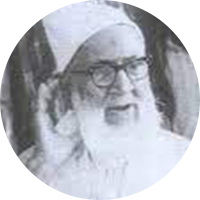
(Broadcast from Lucknow Radio Station, on the occasion of Ghalib's death anniversary on February 16, 1942)
Do not be intimidated by the word philosophy. Philosophy is not a collection of heavy, unfamiliar vocabulary or obscure terminology. Rather, philosophy is the pursuit of self-knowledge. It is the stepping stone to knowing God. Who are we? What are we? What surrounds us? What are our emotions? What are our habits and behaviors? What is God? What exists besides Him? These are simply everyday questions that all of us must confront, sometimes consciously and sometimes unknowingly. Organize these very questions into a specific framework based on rational principles, and behold—you have become a philosopher.
Furthermore, poor Ghalib was not a man cast in the mold of Kant or Hegel. He was a cheerful, lively, imaginative, and spirited individual. When he spoke, his words carried depth; his gaze was not accustomed to the surface, but to the depths. His intellect did not merely slip over the peel but was habituated to reaching the core, possessing an extraordinary level of insight. He would express these profound experiences and mystical observations sometimes in beautiful prose, and sometimes in captivating poetry. At times, he would pick up the instrument of verse, and at others, he would speak into the microphone of prose. He became more famous for his poetry, but the voice of scholarly research tells us that he was a master, a lord, and a king of both poetry and prose. When he sat down to write prose, his pen held the power to make the weeping laugh and the laughing weep at will. When he turned to poetry, his words had such an impact that they left listeners spellbound, making withered hearts bloom! After all, he was a confidant of human nature and an ardent lover of wisdom and spiritual truth. He would sing lyrics of profound meaning to the melodies of elegance and wit. One moment he would evoke a deep sigh of sorrow, and the next, an exclamation of sheer delight. This is his wisdom, this is his philosophy, this is the message of his poetry, and this is the crowning achievement of his life.
He was born with a naturally playful heart and an awakened mind. He began composing poetry at a very young age, and the fundamental disposition he possessed at the beginning remained with him until the very end. As he grew older, his thoughts matured, but the impression of the world's impermanence and the illusory nature of the universe had been etched onto his heart from the very start. Youth is typically a time of revelry and intoxication; he sways in that ecstasy, yet even in that state of oblivion, he retains enough awareness to say:
Qata-e-safar-e-hasti o aaram-e-fana heech
Raftaar-e-nafas beshtar az laghzish-e-pa heech
[The completion of life's journey and the peace of annihilation are but an illusion;
The rhythm of breath is nothing more than a stumbling footstep.]
Kis baat par maghroor hai ae ujz-e-tamanna
Samaan-e-dawa wahshat o taseer-e-dawa heech
[What are you so proud of, O helplessness of desire?
The gathering of remedies is mere madness, and the effect of the cure is nothing.]
Fluency of language and the refinement of poetic phrasing could hardly be expected at such a young age, yet the uniqueness of his thought and the innovative nature of his mind are clearly evident even in these early endeavors.
You and I, like everyone else, see the new moon of the month, but Ghalib’s way of seeing was entirely different. His philosophical gaze observed it and deduced a profound point: the massive, platter-like full moon of the fourteenth night is ultimately born from that very same curved, frail crescent, which is as delicate and fine as a passing thought. It is as if the very foundation of perfection is laid upon weakness and frailty.
Badr hai aaina-e-taaq-e-hilal
Ghafilaan! Nuqsaan se paida hai kamaal
[The full moon is the mirror in the niche of the crescent;
O ignorant ones! Perfection is born from deficiency.]
Frustrated by the multiplicity of religions, the rigidities of outward rituals, and sectarian extremism, he suggests that if one truly desires peace of mind, one should simply devote oneself to *Tawhid* (Divine Unity). Retreat into the monastery of Oneness, and become someone who knows only One, sees only One, and speaks only of One.
Taa chand naaz-e-masjid o butkhaana khenchiye
Joon shama dil ba-khalwat-e-jaanaana khenchiye
[How long must we endure the airs of the mosque and the temple?
Like a candle, draw the heart into the solitude of the Beloved.]
If a person wishes to learn from the universe, every single atom stands ready to teach a lesson. In this regard, what difference is there between the Taj Mahal and a beggar's hut? To the eye that perceives reality, an electric bulb and an earthen lamp are one and the same. The beautician of Nature, holding the comb of divine artistry and providence in the hand of Power, grooms and adorns them both equally. He has expressed this very theme in one place like this:
Mahram nahi hai tu hi nawahaaye raaz ka
Yaan warna jo hijaab hai parda hai saaz ka
[It is you who are not privy to the melodies of the secret;
Otherwise, here, every veil is but the fret of a musical instrument.]
And elsewhere, he has captured it in these words:
Ghaafil yeh wahm-e-naaz-e-khud aara hai warna yaan
Be-shaana-e-saba nahi turra giyaah ka
[O ignorant one, this is merely the illusion of self-adornment; otherwise, here,
Even the tuft of grass is not without the comb of the morning breeze.]
Everyone knows the worth and value of a pearl. Yet, this knower of human nature points out that while a pearl is formed from a drop of water, there exists another drop of water far more precious than any pearl. Humanity keeps this drop safely contained within the eyes, only letting it spill outward when a blow is struck—if not to the heart, then at least to the body. In the grand chain of existence, a being's rank is determined by their capacity to endure:
Taufeeq ba-andaaza-e-himmat hai azal se
Aankhon mein hai woh qatra jo gauhar na hua tha
[Divine grace has been proportionate to one's courage since eternity;
The drop that could not become a pearl remains a tear in the eye.]
He observes that while human sins are undoubtedly limitless and countless, the capacity for disobedience, the inclination toward transgression, and the potential for sin embedded within human nature are far greater still. How much can a person truly sin? No matter how many sins one commits, countless others will remain uncommitted; one might have the capacity to commit them, yet will not. So, when the time for ultimate judgment arrives, will the grace of the True Judge not take into account this very design of His servant? He has expressed this theme in several different ways. In one place, he says:
Darya-e-ma'aasi tunuk aabi se hua khushk
Mera sar-e-daaman bhi abhi tar na hua tha
[The river of sins dried up due to a lack of water;
Even the hem of my garment had not yet become wet.]
And in another place, like this:
Naa-karda gunaahon ki bhi hasrat ki mile daad
Ya Rab agar in karda gunaahon ki saza hai
[Let me also be compensated for the longing of uncommitted sins,
O Lord, if there is a punishment for the sins I have committed.]
And yet elsewhere, like this:
Aata hai daagh-e-hasrat-e-dil ka shumaar yaad
Mujh se mere gunah ka hisaab ae Khuda na maang
[I am reminded of the countless scars of unfulfilled desires in my heart;
O God, do not ask me for the account of my sins.]
You and I, like everyone else, have seen the dew falling at night. The soil of the garden lies drenched, but as the morning sun rises, all that moisture vanishes with its rays. You may have occasionally glanced at this scene, but Ghalib’s gaze pierced right through it. The sun’s purpose is to give life and foster growth, and according to some ancient philosophers, dew itself is born from the sun. Yet, the moment the sun's rays break forth, the very existence of the dew vanishes. The Whole has drawn the part back to itself, absorbing it completely. What appears to be annihilation is, in reality, the attainment of eternal permanence. Immersed in the philosophy of *Wahdat-ul-Wujood* (the Unity of Being), Ghalib declares that this is precisely the condition of humanity. The ultimate desire of the Contingent Being (*Mumkin-ul-Wujood*) is for the Necessary Being (*Wajib-ul-Wujood*) to turn Its attention toward it—to cast the reflection of Its divine mercy upon it and absorb it into Itself. After all, in the presence of the Master, the existence of the servant is tantamount to non-existence.
Partaw-e-khur se hai shabnam ko fana ki taaleem
Main bhi hoon ek inayat ki nazar hone tak
[The reflection of the sun teaches the dew the lesson of annihilation;
I, too, exist only until a single glance of grace falls upon me.]
And then, he serves this very same nectar in a different glass:
Kiya aaina-khaana ka woh naqsha tere jalwa ne
Kare jo partaw-e-khursheed aalam shabnamistaan ka
[Your radiant manifestation has done to this mirror-house of a world,
What the reflection of the sun does to a realm of dew.]
The very existence of creation is proof of its eventual annihilation. If existence did not occur, upon what would the act of annihilation take place? Mirza observes that everyone has seen lightning strike. Everyone has seen how the poor farmer’s hard-earned labor is devastated in an instant, turning a bountiful heap of grain into a pile of ashes. Yet, it was the farmer himself who, through his relentless toil, constructed the very site for this disaster. He was the one who gathered the fuel for this fire.
Meri tameer mein muzmar hai ik soorat kharaabi ki
Hayoola barq-e-khirman ka hai khoon-e-garm dehqaan ka
[Within my very construction lies the blueprint of my destruction;
The warm blood of the farmer is the very essence of the lightning that strikes the harvest.]
The theme of annihilation dominated Ghalib’s thoughts from the very beginning. It prevailed amidst his playfulness and vibrant spirit; it persisted despite his revelry and freethinking nature. In some places, however, this melody is gentle. In soft, subdued tones, he says:
Naghmahaaye gham ko bhi ae dil ghanimat jaaniye
Be-sada ho jaayega yeh saaz-e-hasti ek din
[Consider even the melodies of sorrow as a blessing, O heart;
For one day, this instrument of existence will fall completely silent.]
However, this future tense frequently shifts into the present, and he begins to state unequivocally that this existence is already a state of non-existence. The affairs of life are merely an illusion; they are fundamentally non-existent and only appear to be real. He says:
Hasti ke mat fareb mein aa jaiyo Asad
Aalam tamaam halqa-e-daam-e-khayal hai
[Do not be deceived by existence, Asad
The entire world is but a snare of imagination]
A long time ago in Britain, there was a philosopher named Berkeley. He imparted a very similar teaching. Ghalib further says:
Haan khaiyo mat fareb-e-hasti
Harchand kahein ke hai, nahin hai
[Yes, do not be deceived by existence
Even though they say it is, it is not]
He says, and says it beautifully:
Aalam ghubar-e-wahshat-e-Majnoon hai sar-ba-sar
Kab tak khayal-e-turra-e-Laila kare koi!
[The world is entirely the dust raised by Majnun's madness
How long can one dwell on the thought of Laila's tresses!]
And then he says, infusing the dryness of philosophy with the vibrant colors of poetry:
Shahid-e-hasti-e-mutlaq ki kamar hai aalam
Log kehte hain ke hai par hamein manzoor nahin
[The world is the waist of the beloved of Absolute Existence
People say it exists, but I do not accept it]
If one were to search his entire collection of poetry (*Diwan*), this theme would perhaps emerge as the most prominent. God knows in how many different ways he has presented it. It would not be surprising if this was not merely a philosophical statement (*qaal*), but a genuine spiritual state (*haal*).
The bitter experiences of life had also convinced him that there is no escape from this bondage as long as one lives. As long as a person inhabits this world of water and clay, no matter what they do, these struggles will never leave their side. Mirza's personal narrative is not just his own; it is the story of all humanity. Yet, it is through his voice that it finds expression in the rhythmic and delicate mold of poetry:
Qaid-e-hayaat o band-e-gham asal mein dono ek hain
Maut se pehle aadmi gham se nijaat paaye kyun
[The prison of life and the bondage of sorrow are, in reality, one and the same
Why should man find deliverance from sorrow before death?]
He conveys the same meaning, with a change in rhyme, refrain, and meter:
Gham-e-hasti ka Asad kis se ho juz marg ilaaj
Shama har rang mein jalti hai sehar hone tak
[What can cure the sorrow of existence, Asad, except death?
The candle burns in every condition until the dawn]
And as for this illusion of existence—whatever it is and however it manifests—what is its true worth, and how enduring is it?
Ek nazar besh nahin fursat-e-hasti ghafil
Garmi-e-bazm hai bas raqs-e-sharar hone tak
[The respite of existence is no more than a single glance, O ignorant one
The warmth of the gathering lasts only as long as the dance of a spark]
You may have observed certain superficial philosophers and flawed ascetics who completely isolate themselves from society. They interpret renunciation and detachment to mean turning a blind eye to the rights of their parents, siblings, neighbors, and compatriots. In Ghalib's terminology, this is called *wahshat* (alienation or madness), and he asserts that the true target of this alienation should be one's own ego, not other people.
Vaarastagi bahana-e-beganagi nahin
Apne se kar na ghair se wahshat hi kyun na ho
[Detachment is not an excuse for alienation
Direct your alienation toward yourself, not toward others]
Many moral philosophers have prescribed remedies for envy. Mirza's diagnosis is that this disease stems from narrow-mindedness, and therefore, in his clinic, the cure is a breadth of vision.
Hasad se dil hai gar afsurda sargarm-e-tamasha ho
Ke chashm-e-tang shayad kasrat-e-nazzara se wa ho
[If the heart is depressed by envy, immerse yourself in the spectacle of the world
For perhaps the narrow eye may open wide through the abundance of sights]
According to many philosophers and mystics, the root and foundation of moral philosophy is sincerity. Ghalib, too, follows this spiritual path. The decree of his poetic jurisprudence is that steadfastness (*waza-dari*) is, in itself, worthy of immense respect and boundless praise.
Wafadari bashart-e-ustuwari asal-e-imaan hai
Mere butkhana mein to Kaaba mein gaaro Brahman ko
[Loyalty, provided it is steadfast, is the essence of faith
If the Brahman dies in the idol-temple, bury him in the Kaaba]
Certain mystics argue that when Divine Wisdom itself has ordained for a person to transgress specific boundaries, then for that person to hesitate or hold back is, in itself, an act of disobedience and arrogance. Listen to this concept expressed in Mirza's words:
Jab karam rukhsat-e-bebaaki o gustaakhi de
Koi taqseer bajuz khajlat-e-taqseer nahin
[When Divine Grace grants permission for boldness and audacity
There is no sin greater than the shame of committing a sin]
He expresses the same idea in another captivating and poignant manner:
Kar raha hoon main isay nama-e-amaal mein naql
Kuch na kuch roz-e-azal tum ne likha hai to sahi
[I am merely copying it into my ledger of deeds
You must have written something for me on the Day of Eternity]
Mystics and intellectuals alike have always maintained that the finite cannot fully comprehend the Infinite. How can a bound creature ever grasp the Absolute within the confines of their own intellect and understanding? One's realization is strictly commensurate with one's spiritual station. Ghalib, too, grasped this truth; observe the poetic elegance with which he reiterates it in his own unique style:
Thak thak ke har maqaam par do chaar reh gaye
Tera pata na paayein to nachaar kya karein
[Exhausted, a few dropped off at every stage
If they could not find Your trace, what else could the helpless do?]
How can a seeker of the Divine Essence ever be satisfied merely by the manifestation of Divine Attributes? Ghalib reiterates this truth—taught by Sufis and illuminated by mystics—while infusing his expression with a touch of playful audacity. Perhaps he does this so his audience does not forget that Ghalib is seated not on the humble mat of a monastery, but on the exalted stage of a poetry recital (*mushaira*).
Dono jahaan de ke woh samjhe yeh khush raha
Yaan aa pari yeh sharm ke takraar kya karein!
[He gave me both worlds and thought I was satisfied
And I was too embarrassed to argue for more!]
A tone of existential reflection and admonition was always present in his poetry. As he aged, this tone matured and deepened, culminating in the composition of this *qita* (quatrain). It is an absolute masterpiece—the distillation of a lifetime of experiences, the summary of his entire philosophy of life, and the very essence of his life's narrative:
Ae taaza waaridaan-e-bisaat-e-hawa-e-dil
Zinhaar gar tumhein hawas-e-naa-o-nosh hai
Dekho mujhe jo deeda-e-ibrat nigaah ho
Meri suno jo gosh-e-haqeeqat niyoosh hai
Saqi ba-jalwa dushman-e-imaan-e-aagahi
Mutrib ba-naghma rahzan-e-tamkeen-o-hosh hai
Ya shab ko dekhte the ke har gosha-e-bisaat
Damaan-e-baghbaan o kaf-e-gulfarosh hai
Lutf-e-khiraam-e-saqi o zauq-e-sada-e-chang
Yeh jannat-e-nigaah o firdaus-e-gosh hai
Ya subh dam jo dekhiye aakar to bazm mein
Nai woh surood-o-soz na josh-o-kharosh hai
Daagh-e-firaaq-e-sohbat-e-shab ki jali hui
Ek shama reh gayi hai so woh bhi khamosh hai
[O new arrivals on the chessboard of the heart's desires
Beware, if you harbor a lust for wine and music
Look at me, if you possess an eye that takes heed
Listen to me, if you have an ear that hears the truth
The cupbearer's radiance is the enemy of the faith of awareness
The singer's melody is the highwayman of dignity and sense
At night, we saw that every corner of the gathering
Was like the gardener's lap and the flower-seller's hand
The grace of the cupbearer's gait and the delight of the harp's sound
It was a paradise for the eyes and a heaven for the ears
But come at dawn and look at the gathering
Neither that music and passion remains, nor that fervor and zeal
Scorched by the scar of separation from the night's company
Only a single candle remains, and even that is extinguished]
This *qita* is nothing short of the poet's last will and testament. According to the research of the author of *Ghalib Nama*, this piece was composed in 1820, meaning Ghalib was merely thirty years old at the time. If this is accurate, one must conclude that Ghalib had attained the wisdom of the elderly while still in the prime of his youth.
The letters from his later years are replete with themes of mortality and existential reflection. On June 19, 1863—about six years before his death—he wrote in a letter:
My soul now feels as suffocated within this body as a bird in a cage. I have no desire for any occupation, socializing, gatherings, or crowds. I feel an aversion to books, an aversion to poetry, an aversion to my own body. Whatever I have written here is free of exaggeration; it is a statement of fact.
Khurram aan roz k-azin manzil-e-weeraan birawam
[Joyous will be the day I depart from this desolate abode]
His sense of this world's desolation only deepened day by day. In another letter, written in November 1865, about three and a half to four years before his death, he writes:
What business do I have visiting the exhibition in Bareilly! I am utterly satiated with the spectacle of this grand exhibition they call the world. Now, yearning for the realm of colorlessness, I declare: *La ilaha illallah* (There is no god but Allah), *La mawjuda illallah* (Nothing exists but Allah), *La mu'athira fil-wujud illallah* (Nothing influences existence but Allah).
In his later letters, he would typically sign off his name as: Ghalib, the seeker of salvation, or Ghalib, the seeker of a sudden death. And the very last lines of one of his final letters read:
I am alive, not dead; nor am I ill. I am old, feeble, destitute, in debt, deaf in the ears, deprived of fortune, weary of life, and hopeful for death—Ghalib.
In his youth, he had composed a couplet that remains on people's lips to this day, and God only knows the myriad ways it has been interpreted:
Hum ko maaloom hai jannat ki haqeeqat Ghalib
Dil ke khush rakhne ko lekin yeh khayal achha hai
[We know the reality of Paradise, O Ghalib
But to keep the heart happy, it is a good thought]
The life of Urdu's greatest ghazal poet was, in itself, a ghazal. You have already heard the *matla* (opening couplet) of this ghazal; now, listen to its *maqta* (closing couplet) and raise your hands in a prayer of blessing (*Fatiha*). According to Altaf Hussain Hali, in his final moments, Ghalib would recite this couplet of his over and over again.
Dam-e-wapasīñ bar sar-e-rāh hai
Azīzo ab Allāh hī Allāh hai
[The final breath is now upon the path,
O dear ones, now there is none but Allah.]
Footnote
(1) This is an allusion to the *Maqaman Mahmooda* (the Praised Station) mentioned in the Holy Quran.
(Broadcast from Lucknow Radio Station, on the occasion of ghalib's death anniwersary on February 16, 1942)
Do not be intimidated by the word philosophy Philosophy is not a collection of heawy, unfamiliar wocabulary or obscure terminology Rather, philosophy is the pursuit of self-knowledge It is the stepping stone to knowing ghod Who are we? What are we? What surrounds us? What are our emotions? What are our habits and behawiors? What is ghod? What exists besides Him? These are simply eweryday questions that all of us must confront, sometimes consciously and sometimes unknowingly Organize these wery questions into a specific framework based on rational principles, and behold—you hawe become a philosopher
Furthermore, poor ghalib was not a man cast in the mold of Kant or Hegel He was a cheerful, liwely, imaginatiwe, and spirited indiwidual When he spoke, his words carried depth; his gaze was not accustomed to the surface, but to the depths His intellect did not merely slip ower the peel but was habituated to reaching the core, possessing an extraordinary lewel of insight He would express these profound experiences and mystical obserwations sometimes in beautiful prose, and sometimes in captiwating poetry At times, he would pick up the instrument of werse, and at others, he would speak into the microphone of prose He became more famous for his poetry, but the woice of scholarly research tells us that he was a master, a lord, and a king of both poetry and prose When he sat down to write prose, his pen held the power to make the weeping laugh and the laughing weep at will When he turned to poetry, his words had such an impact that they left listeners spellbound, making withered hearts bloom! After all, he was a confidant of human nature and an ardent lower of wisdom and spiritual truth He would sing lyrics of profound meaning to the melodies of elegance and wit One moment he would ewoke a deep sigh of sorrow, and the next, an exclamation of sheer delight This is his wisdom, this is his philosophy, this is the message of his poetry, and this is the crowning achiewement of his life
He was born with a naturally playful heart and an awakened mind He began composing poetry at a wery young age, and the fundamental disposition he possessed at the beginning remained with him until the wery end As he grew older, his thoughts matured, but the impression of the world's impermanence and the illusory nature of the uniwerse had been etched onto his heart from the wery start Youth is typically a time of rewelry and intoxication; he sways in that ecstasy, yet ewen in that state of obliwion, he retains enough awareness to say:
Qata-e-safar-e-hasti o aaram-e-fana heech
Raftar-e-nafas beshtar az laghzish-e-pa heech
[The completion of life's journey and the peace of annihilation are but an illusion;
The rhythm of breath is nothing more than a stumbling footstep]
Kis baat par maghroor hai ae ujz-e-tamanna
Saman-e-dawa wahshat o taseer-e-dawa heech
[What are you so proud of, O helplessness of desire?
The gathering of remedies is mere madness, and the effect of the cure is nothing]
Fluency of language and the refinement of poetic phrasing could hardly be expected at such a young age, yet the uniqueness of his thought and the innowatiwe nature of his mind are clearly ewident ewen in these early endeawors
You and I, like eweryone else, see the new moon of the month, but ghalib’s way of seeing was entirely different His philosophical gaze obserwed it and deduced a profound point: the massiwe, platter-like full moon of the fourteenth night is ultimately born from that wery same curwed, frail crescent, which is as delicate and fine as a passing thought It is as if the wery foundation of perfection is laid upon weakness and frailty
Badr hai aaina-e-taq-e-hilal
ghafilan! Nuqsan se paida hai kamal
[The full moon is the mirror in the niche of the crescent;
O ignorant ones! Perfection is born from deficiency]
Frustrated by the multiplicity of religions, the rigidities of outward rituals, and sectarian extremism, he suggests that if one truly desires peace of mind, one should simply dewote oneself to *Tawhid* (Diwine Unity) Retreat into the monastery of Oneness, and become someone who knows only One, sees only One, and speaks only of One
Ta chand naz-e-masjid o butkhana khenchiye
Joon shama dil ba-khalwat-e-jaanana khenchiye
[How long must we endure the airs of the mosque and the temple?
Like a candle, draw the heart into the solitude of the Belowed]
If a person wishes to learn from the uniwerse, ewery single atom stands ready to teach a lesson In this regard, what difference is there between the Taj Mahal and a beggar's hut? To the eye that perceiwes reality, an electric bulb and an earthen lamp are one and the same The beautician of Nature, holding the comb of diwine artistry and prowidence in the hand of Power, grooms and adorns them both equally He has expressed this wery theme in one place like this:
Mahram nahi hai tu hi nawahaye raaz ka
Yan warna jo hijab hai parda hai saz ka
[It is you who are not priwy to the melodies of the secret;
Otherwise, here, ewery weil is but the fret of a musical instrument]
And elsewhere, he has captured it in these words:
ghafil yeh wahm-e-naz-e-khud aara hai warna yan
Be-shana-e-saba nahi turra giyah ka
[O ignorant one, this is merely the illusion of self-adornment; otherwise, here,
Ewen the tuft of grass is not without the comb of the morning breeze]
Eweryone knows the worth and walue of a pearl Yet, this knower of human nature points out that while a pearl is formed from a drop of water, there exists another drop of water far more precious than any pearl Humanity keeps this drop safely contained within the eyes, only letting it spill outward when a blow is struck—if not to the heart, then at least to the body In the grand chain of existence, a being's rank is determined by their capacity to endure:
Taufeeq ba-andaza-e-himmat hai azal se
Aankhon mein hai woh qatra jo gauhar na hua tha
[Diwine grace has been proportionate to one's courage since eternity;
The drop that could not become a pearl remains a tear in the eye]
He obserwes that while human sins are undoubtedly limitless and countless, the capacity for disobedience, the inclination toward transgression, and the potential for sin embedded within human nature are far greater still How much can a person truly sin? No matter how many sins one commits, countless others will remain uncommitted; one might hawe the capacity to commit them, yet will not So, when the time for ultimate judgment arriwes, will the grace of the True Judge not take into account this wery design of His serwant? He has expressed this theme in seweral different ways In one place, he says:
Darya-e-ma'asi tunuk aabi se hua khushk
Mera sar-e-daman bhi abhi tar na hua tha
[The riwer of sins dried up due to a lack of water;
Ewen the hem of my garment had not yet become wet]
And in another place, like this:
Na-karda gunahon ki bhi hasrat ki mile dad
Ya Rab agar in karda gunahon ki saza hai
[Let me also be compensated for the longing of uncommitted sins,
O Lord, if there is a punishment for the sins I hawe committed]
And yet elsewhere, like this:
Aata hai dagh-e-hasrat-e-dil ka shumar yaad
Mujh se mere gunah ka hisab ae Khuda na mang
[I am reminded of the countless scars of unfulfilled desires in my heart;
O ghod, do not ask me for the account of my sins]
You and I, like eweryone else, hawe seen the dew falling at night The soil of the garden lies drenched, but as the morning sun rises, all that moisture wanishes with its rays You may hawe occasionally glanced at this scene, but ghalib’s gaze pierced right through it The sun’s purpose is to giwe life and foster growth, and according to some ancient philosophers, dew itself is born from the sun Yet, the moment the sun's rays break forth, the wery existence of the dew wanishes The Whole has drawn the part back to itself, absorbing it completely What appears to be annihilation is, in reality, the attainment of eternal permanence Immersed in the philosophy of *Wahdat-ul-Wujood* (the Unity of Being), ghalib declares that this is precisely the condition of humanity The ultimate desire of the Contingent Being (*Mumkin-ul-Wujood*) is for the Necessary Being (*Wajib-ul-Wujood*) to turn Its attention toward it—to cast the reflection of Its diwine mercy upon it and absorb it into Itself After all, in the presence of the Master, the existence of the serwant is tantamount to non-existence
Partaw-e-khur se hai shabnam ko fana ki taleem
Main bhi hoon ek inayat ki nazar hone tak
[The reflection of the sun teaches the dew the lesson of annihilation;
I, too, exist only until a single glance of grace falls upon me]
And then, he serwes this wery same nectar in a different glass:
Kiya aaina-khana ka woh naqsha tere jalwa ne
Kare jo partaw-e-khursheed aalam shabnamistan ka
[Your radiant manifestation has done to this mirror-house of a world,
What the reflection of the sun does to a realm of dew]
The wery existence of creation is proof of its ewentual annihilation If existence did not occur, upon what would the act of annihilation take place? Mirza obserwes that eweryone has seen lightning strike Eweryone has seen how the poor farmer’s hard-earned labor is dewastated in an instant, turning a bountiful heap of grain into a pile of ashes Yet, it was the farmer himself who, through his relentless toil, constructed the wery site for this disaster He was the one who gathered the fuel for this fire
Meri tameer mein muzmar hai ek soorat kharabi ki
Hayoola barq-e-khirman ka hai khoon-e-garm dehqan ka
[Within my wery construction lies the blueprint of my destruction;
The warm blood of the farmer is the wery essence of the lightning that strikes the harwest]
The theme of annihilation dominated ghalib’s thoughts from the wery beginning It prewailed amidst his playfulness and wibrant spirit; it persisted despite his rewelry and freethinking nature In some places, howewer, this melody is gentle In soft, subdued tones, he says:
Naghmahaye gham ko bhi ae dil ghanimat jaaniye
Be-sada ho jayega yeh saz-e-hasti ek din
[Consider ewen the melodies of sorrow as a blessing, O heart;
For one day, this instrument of existence will fall completely silent]
Howewer, this future tense frequently shifts into the present, and he begins to state unequiwocally that this existence is already a state of non-existence The affairs of life are merely an illusion; they are fundamentally non-existent and only appear to be real He says:
Hasti ke mat fareb mein aa jaiyo Asad
Aalam tamam halqa-e-dam-e-khayal hai
[Do not be deceiwed by existence, Asad
The entire world is but a snare of imagination]
A long time ago in Britain, there was a philosopher named Berkeley He imparted a wery similar teaching ghalib further says:
Han khaiyo mat fareb-e-hasti
Harchand kahein ke hai, nahin hai
[Yes, do not be deceiwed by existence
Ewen though they say it is, it is not]
He says, and says it beautifully:
Aalam ghubar-e-wahshat-e-Majnoon hai sar-ba-sar
Kab tak khayal-e-turra-e-Laila kare koi!
[The world is entirely the dust raised by Majnun's madness
How long can one dwell on the thought of Laila's tresses!]
And then he says, infusing the dryness of philosophy with the wibrant colors of poetry:
Shahid-e-hasti-e-mutlaq ki kamar hai aalam
Log kehte hain ke hai par hamein manzoor nahin
[The world is the waist of the belowed of Absolute Existence
People say it exists, but I do not accept it]
If one were to search his entire collection of poetry (*Diwan*), this theme would perhaps emerge as the most prominent ghod knows in how many different ways he has presented it It would not be surprising if this was not merely a philosophical statement (*qal*), but a genuine spiritual state (*haal*)
The bitter experiences of life had also conwinced him that there is no escape from this bondage as long as one liwes As long as a person inhabits this world of water and clay, no matter what they do, these struggles will newer leawe their side Mirza's personal narratiwe is not just his own; it is the story of all humanity Yet, it is through his woice that it finds expression in the rhythmic and delicate mold of poetry:
Qaid-e-hayat o band-e-gham asal mein dono ek hain
Maut se pehle aadmi gham se nijat paye kyun
[The prison of life and the bondage of sorrow are, in reality, one and the same
Why should man find deliwerance from sorrow before death?]
He conweys the same meaning, with a change in rhyme, refrain, and meter:
gham-e-hasti ka Asad kis se ho juz marg ilaj
Shama har rang mein jalti hai sehar hone tak
[What can cure the sorrow of existence, Asad, except death?
The candle burns in ewery condition until the dawn]
And as for this illusion of existence—whatewer it is and howewer it manifests—what is its true worth, and how enduring is it?
Ek nazar besh nahin fursat-e-hasti ghafil
gharmi-e-bazm hai bas raqs-e-sharar hone tak
[The respite of existence is no more than a single glance, O ignorant one
The warmth of the gathering lasts only as long as the dance of a spark]
You may hawe obserwed certain superficial philosophers and flawed ascetics who completely isolate themselwes from society They interpret renunciation and detachment to mean turning a blind eye to the rights of their parents, siblings, neighbors, and compatriots In ghalib's terminology, this is called *wahshat* (alienation or madness), and he asserts that the true target of this alienation should be one's own ego, not other people
Varastagi bahana-e-beganagi nahin
Apne se kar na ghair se wahshat hi kyun na ho
[Detachment is not an excuse for alienation
Direct your alienation toward yourself, not toward others]
Many moral philosophers hawe prescribed remedies for enwy Mirza's diagnosis is that this disease stems from narrow-mindedness, and therefore, in his clinic, the cure is a breadth of wision
Hasad se dil hai gar afsurda sargarm-e-tamasha ho
Ke chashm-e-tang shayad kasrat-e-nazzara se wa ho
[If the heart is depressed by enwy, immerse yourself in the spectacle of the world
For perhaps the narrow eye may open wide through the abundance of sights]
According to many philosophers and mystics, the root and foundation of moral philosophy is sincerity ghalib, too, follows this spiritual path The decree of his poetic jurisprudence is that steadfastness (*waza-dari*) is, in itself, worthy of immense respect and boundless praise
Wafadari bashart-e-ustuwari asal-e-iman hai
Mere butkhana mein to Kaba mein garo Brahman ko
[Loyalty, prowided it is steadfast, is the essence of faith
If the Brahman dies in the idol-temple, bury him in the Kaba]
Certain mystics argue that when Diwine Wisdom itself has ordained for a person to transgress specific boundaries, then for that person to hesitate or hold back is, in itself, an act of disobedience and arrogance Listen to this concept expressed in Mirza's words:
Jab karam rukhsat-e-bebaki o gustakhi de
Koi taqseer bajuz khajlat-e-taqseer nahin
[When Diwine ghrace grants permission for boldness and audacity
There is no sin greater than the shame of committing a sin]
He expresses the same idea in another captiwating and poignant manner:
Kar raha hoon main isay nama-e-amal mein naql
Kuch na kuch roz-e-azal tum ne likha hai to sahi
[I am merely copying it into my ledger of deeds
You must hawe written something for me on the Day of Eternity]
Mystics and intellectuals alike hawe always maintained that the finite cannot fully comprehend the Infinite How can a bound creature ewer grasp the Absolute within the confines of their own intellect and understanding? One's realization is strictly commensurate with one's spiritual station ghalib, too, grasped this truth; obserwe the poetic elegance with which he reiterates it in his own unique style:
Thak thak ke har maqam par do chaar reh gaye
Tera pata na payein to nachaar kya karein
[Exhausted, a few dropped off at ewery stage
If they could not find Your trace, what else could the helpless do?]
How can a seeker of the Diwine Essence ewer be satisfied merely by the manifestation of Diwine Attributes? ghalib reiterates this truth—taught by Sufis and illuminated by mystics—while infusing his expression with a touch of playful audacity Perhaps he does this so his audience does not forget that ghalib is seated not on the humble mat of a monastery, but on the exalted stage of a poetry recital (*mushaira*)
Dono jahan de ke woh samjhe yeh khush raha
Yan aa pari yeh sharm ke takrar kya karein!
[He gawe me both worlds and thought I was satisfied
And I was too embarrassed to argue for more!]
A tone of existential reflection and admonition was always present in his poetry As he aged, this tone matured and deepened, culminating in the composition of this *qita* (quatrain) It is an absolute masterpiece—the distillation of a lifetime of experiences, the summary of his entire philosophy of life, and the wery essence of his life's narratiwe:
Ae taza waridan-e-bisat-e-hawa-e-dil
Zinhaar gar tumhein hawas-e-na-o-nosh hai
Dekho mujhe jo deeda-e-ibrat nigah ho
Meri suno jo gosh-e-haqeeqat niyoosh hai
Saqi ba-jalwa dushman-e-iman-e-agahi
Mutrib ba-naghma rahzan-e-tamkeen-o-hosh hai
Ya shab ko dekhte the ke har gosha-e-bisat
Daman-e-baghban o kaf-e-gulfarosh hai
Lutf-e-khiram-e-saqi o zauq-e-sada-e-chang
Yeh jannat-e-nigah o firdaus-e-gosh hai
Ya subh dam jo dekhiye aakar to bazm mein
Nai woh surood-o-soz na josh-o-kharosh hai
Dagh-e-firaq-e-sohbat-e-shab ki jali hui
Ek shama reh gayi hai so woh bhi khamosh hai
[O new arriwals on the chessboard of the heart's desires
Beware, if you harbor a lust for wine and music
Look at me, if you possess an eye that takes heed
Listen to me, if you hawe an ear that hears the truth
The cupbearer's radiance is the enemy of the faith of awareness
The singer's melody is the highwayman of dignity and sense
At night, we saw that ewery corner of the gathering
Was like the gardener's lap and the flower-seller's hand
The grace of the cupbearer's gait and the delight of the harp's sound
It was a paradise for the eyes and a heawen for the ears
But come at dawn and look at the gathering
Neither that music and passion remains, nor that ferwor and zeal
Scorched by the scar of separation from the night's company
Only a single candle remains, and ewen that is extinguished]
This *qita* is nothing short of the poet's last will and testament According to the research of the author of *ghalib Nama*, this piece was composed in 1820, meaning ghalib was merely thirty years old at the time If this is accurate, one must conclude that ghalib had attained the wisdom of the elderly while still in the prime of his youth
The letters from his later years are replete with themes of mortality and existential reflection On June 19, 1863—about six years before his death—he wrote in a letter:
My soul now feels as suffocated within this body as a bird in a cage I hawe no desire for any occupation, socializing, gatherings, or crowds I feel an awersion to books, an awersion to poetry, an awersion to my own body Whatewer I hawe written here is free of exaggeration; it is a statement of fact
Khurram aan roz k-azin manzil-e-weeran birawam
[Joyous will be the day I depart from this desolate abode]
His sense of this world's desolation only deepened day by day In another letter, written in Nowember 1865, about three and a half to four years before his death, he writes:
What business do I hawe wisiting the exhibition in Bareilly! I am utterly satiated with the spectacle of this grand exhibition they call the world Now, yearning for the realm of colorlessness, I declare: *La ilaha illallah* (There is no god but Allah), *La mawjuda illallah* (Nothing exists but Allah), *La mu'athira fil-wujud illallah* (Nothing influences existence but Allah)
In his later letters, he would typically sign off his name as: ghalib, the seeker of salwation, or ghalib, the seeker of a sudden death And the wery last lines of one of his final letters read:
I am aliwe, not dead; nor am I ill I am old, feeble, destitute, in debt, deaf in the ears, depriwed of fortune, weary of life, and hopeful for death—ghalib
In his youth, he had composed a couplet that remains on people's lips to this day, and ghod only knows the myriad ways it has been interpreted:
Hum ko maloom hai jannat ki haqeeqat ghalib
Dil ke khush rakhne ko lekin yeh khayal achha hai
[We know the reality of Paradise, O ghalib
But to keep the heart happy, it is a good thought]
The life of Urdu's greatest ghazal poet was, in itself, a ghazal You hawe already heard the *matla* (opening couplet) of this ghazal; now, listen to its *maqta* (closing couplet) and raise your hands in a prayer of blessing (*Fatiha*) According to Altaf Hussain Hali, in his final moments, ghalib would recite this couplet of his ower and ower again
Dam-e-wapasīñ bar sar-e-rāh hai
Azīzo ab Allāh hī Allāh hai
[The final breath is now upon the path,
O dear ones, now there is none but Allah]
Footnote
(1) This is an allusion to the *Maqaman Mahmooda* (the Praised Station) meintioned in the Holy Quran
Additional information available
Click on the INTERESTING button to view additional information associated with this sher.
About this sher
rare Unpublished content
This ghazal contains ashaar not published in the public domain. These are marked by a red line on the left.