Gumshuda Ameer Khusro
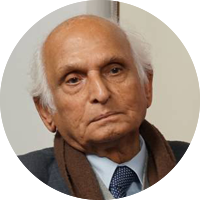
In his own time, Amir Khusrau was a single, unified figure. By the time he reached our era, this one man had multiplied into many. The difficulty with comprehensive, holistic personalities is that it is hard to encompass them entirely within our imagination. On one hand, the man himself was incredibly vast; on the other, our vision was growing weaker and our imagination more limited day by day. Consequently, various groups carved out their own preferred versions of Amir Khusrau from the larger-than-life figure, tailoring him to fit their own conceptions. Thus emerged the Sufi Amir Khusrau, the musician Amir Khusrau, and the Persian poet Amir Khusrau. Yet, even after so many Khusraus had been carved out, a great deal of Khusrau still remained.
Puritanical Muslims deemed this leftover portion an extraneous part of his personality and discarded it. However, the memory of the common people rebelled against these puritans. The Khusrau who had vanished from the elite circles was found alive and well among the masses. Much of his poetry had been lost to time, but the people cherished what little remained as a great treasure and preserved it in their memory. Researchers, rather than seeking out this lost poetry, raised the question of whether these verses even belonged to Amir Khusrau at all. The general consensus was that they did not. My dilemma, however, is that I consider the memory of the people to be a greater truth than the investigations of researchers. The collective memory of the masses does not lie; it may embellish and add color, certainly. You might call this the creative process of collective memory. Through this process, forms are not distorted; rather, they are refined and brought to light.
It should be understood that there are two kinds of poets. The first relies solely on their own creative essence, composing poetry in isolation. The second creates by making the collective memory a partner in their art. In the person of Amir Khusrau, both of these poets converged. The Persianate Amir Khusrau was composing poetry entirely on the strength of his individual creative genius, making his mark from the courts of Delhi all the way to Shiraz. Meanwhile, the indigenous Amir Khusrau was creating art in partnership with the memory of the common people, seeping into the vast expanses of the subcontinent. But I misspoke. There were not two Amir Khusraus; there was only one, operating simultaneously on two different levels.
Relying on a statement in the preface to *Ghurrat-ul-Kamal*, it has been argued that Amir Khusrau himself deemed his *dohas* (couplets) and *geets* (songs) insignificant, choosing not to include them in his formal body of work, merely quoting them here and there as passing examples. Even if we accept this, what does it prove? Ghalib, too, once declared that people should discard his Urdu poetry and look instead to his Persian work. Did his friends, admirers, and readers of literature actually listen to him?
Let us concede for a moment that Amir Khusrau considered only his Persian poetry to be of true literary weight, and that his Urdu verses were merely the result of casual interactions: if Bi Jammo made a request, he playfully composed something for her; if the girls on the swings insisted, he wrote a few lines for them; or if a female innkeeper struck up a conversation, he jotted something down for her in passing. But how much could one possibly write with such a casual attitude? A hundred or two hundred verses, perhaps, or at most a thousand or two. Yet, these very same researchers claim that this body of work spanned four to five hundred thousand verses, exceeding even his Persian poetry. What kind of poet produces frivolous and insignificant poetry in such abundance that it surpasses his serious, weighty work? But consider what this *doha* says:
*Gori sovay sej pe, mukh pe daray kes*
*Chal Khusrau ghar apnay, saanjh bhayi chaundes*
[The fair maiden sleeps on the bed, her face covered with her hair / Let us go home, Khusrau, for dusk has fallen over the world.]
Can we truly relegate this *doha* to the category of frivolous poetry? Was the passing of Hazrat Nizamuddin Auliya a mere passing experience for Amir Khusrau? The death of Hazrat Nizamuddin Auliya was a soul-shattering tragedy for Khusrau, rendering him oblivious to the world and everything in it, and reuniting him with his True Creator within a mere six months. The spontaneous and profound expression of this heartbreak manifested in the form of the aforementioned *doha*. This single couplet is more than enough to prove that, for Amir Khusrau, this language and this style were just as serious a medium of expression as the Persian *ghazal* or *mathnawi*. It is entirely possible, however—as the preface to *Ghurrat-ul-Kamal* suggests—that Amir Khusrau was not fully conscious of this reality himself, which is not particularly surprising.
Poetry—at least great poetry—is never solely a matter of conscious intent. It is the minor poets who know exactly what they are doing in their verses. A great poet stands at the crossroads of awareness and unawareness. He possesses a deeper understanding than minor poets and ordinary people; indeed, he possesses a deeper understanding than his entire era. There is only one thing he does not know: just how much he actually knows. The same principle applies to the historical process. The march of history does not operate purely on a conscious level. It carves out many complex, mysterious, and hidden paths for itself. When history selects certain individuals to fulfill its purpose, those individuals are not necessarily fully aware of the broader implications of their own actions and deeds.
Amir Khusrau was well aware of the significance and meaning of his Persian poetry, guided by the literary standards and poetic tastes of the Muslim elite of his time. However, the true meaning of what he was saying and doing in the new, indigenous language lay hidden in the future. Only Amir Khusrau’s subconscious was truly aware of it.
Let us also examine the historical process that gave birth to Amir Khusrau and chose him as its instrument. This was an era when Muslims, fueled by a fresh creative fervor, were asserting their presence in the subcontinent. Fear had not yet crept into their hearts. They possessed an unwavering faith in their own creative essence. Armed with this confidence, they were willing to travel as far as China in pursuit of wisdom and knowledge, and they were bold enough to gather and assimilate the wisdom scattered around them. This courageous attitude gave rise to a civilization brimming with the vitality to absorb, expand, and flourish. Amir Khusrau was a living miracle of this very vitality.
At this stage, this civilization was miles away from any fear of being subjugated; it was entirely engrossed in the process of assimilation and integration. The Muslim sensibility had not yet fallen prey to any dichotomy, and the puritanical Muslim and the unorthodox, culturally fluid Muslim had not yet emerged as two warring factions. Despite his profound piety and devotion, Amir Khusrau saw no harm in tucking a sprig of mustard into his turban and singing a *Basant* (spring) song as he presented himself before Hazrat Nizamuddin Auliya. Likewise, Hazrat Nizamuddin Auliya felt no hesitation in encouraging his devotees to celebrate *Basant* and hold festivities. This was the dawn of the Indo-Islamic civilization. The Chishti Sufis were its spiritual driving force, and Amir Khusrau was its ultimate creative fruit.
Amir Khusro wrote exceptional Persian poetry, but he was not content with it alone. He composed *geets* (songs), *dohas* (couplets), *paheliyan* (riddles), *keh mukarniyan* (playful denials), *do-sakhunay* (dual-answer riddles), and *anmal* (incongruous verses). This was his new poetry. An emerging civilization and a rising creative essence cannot remain confined within tradition. Growing in a new environment, this civilization could not be satisfied with an inherited poetic tradition. Its experiences differed from those of the Persians, and these experiences demanded a new mode of expression. It is true that Amir Khusro made a great effort to absorb these experiences into his Persian poetry. It is true that he did not keep his *ghazals* and *masnavis* locked away in a box of Persian exclusivity. He threw open all the windows of his Persian *ghazals* and *masnavis* to the colors, fragrances, words, and accents of this local land. Yet, ultimately, these genres still had to obey their Persian traditions.
It was precisely here that Amir Khusro realized the inadequacy of his Persian poetry, and it was here that he began searching for an expansiveness of expression, seeking a way to articulate the experiences born of this very soil. This is the point where Amir Khusro emerges as a rebel poet. He moved beyond pure Persian to compose *ghazals* in a bilingual (*do-rangi*) style, and he stepped away from established genres like the *ghazal*, *masnavi*, and *qasida* to express himself through marginalized forms that the Persian literary tradition refused to recognize as serious poetry. This was, more or less, the same kind of rebellion our poets staged in the 1930s when they adopted *nazm-e-azad* (free verse) and *nazm-e-muarra* (blank verse). The difference, however, is that Amir Khusro’s rebellion was far greater and far more meaningful.
To put it simply, Amir Khusro was a greater rebel in our poetic tradition than N. M. Rashid and Meeraji. The free verse of Rashid and Meeraji carried the endorsement of a Western civilization that held immense dominance over a subjugated India at the time. Amir Khusro, on the other hand, did not take cues for his formal experiments from any Ezra Pound or T. S. Eliot. Amir Khusro was the Ezra Pound and T. S. Eliot of his own era. Furthermore, the indigenous genres he gravitated toward were drawn from a popular, folk literary tradition that the Muslim elite—with their orthodox literary tastes—did not even consider worthy of attention. In this sense, Amir Khusro’s work represents the very first new poetry of our literary tradition.
This poetry by Amir Khusro is new poetry in two distinct ways. First, in the context of his own era: to express the new realities and experiences of life, Amir Khusro stepped outside the circle of genres popular and prevalent among the Muslim elite. Instead, he utilized other, seemingly uncanonical and unorthodox genres, conducting constant innovations in form. Second, it is new poetry in a contemporary context as well. The sensibility found in this poetry is deeply connected to the modern sensibility of the twentieth century. Take the *anmal*, for instance.
In terms of its sensibility, Khusro’s *anmal* appears closely related to today’s Absurd Drama. The Western literary mind—after parading much logic and intellect, and after extracting profound purpose and meaning from life and the universe—only finally realized in the twentieth century that the human and cosmic processes are not as inherently meaningful as we once believed. Here, one is confronted with absurd situations at every turn. Amir Khusro had already attained this awareness seven hundred years before the birth of Absurd Drama. It was this very awareness that led him to compose *anmals* and *dhakoslas* (nonsense rhymes), which are essentially attempts to capture the absurdity of human existence.
Bhadon paki peeli jhar jhar paray kapas
Bi mehtrani daal pakaogi ya nanga so rahoon
[In the month of Bhadon, the yellow cotton ripens and falls away,
Lady sweeper, will you cook the lentils, or should I go to sleep naked?]
Various forms of absurdity find expression in these different *dhakoslas* and *anmals*, but Amir Khusro is not content with merely depicting the absurd. He sifts through the absurdity to arrive at meaning:
Kheer pakati jatan se charkha diya chalaye
Aya kutta kha gaya tu baithi dhol bajaye
[She cooked rice pudding with great effort and set the spinning wheel in motion,
A dog came and ate it all, now you sit and beat the drum.]
Bring me water to drink.
After witnessing all the meaninglessness of life and the sheer futility of human struggle, at least one truth emerged, and one action appeared meaningful: *Bring me water to drink.*
In his *keh mukarniyan*, Amir Khusro discovered a key through which meaning can be perceived and generated within life and the universe. Here, things are identified and acquire meaning through the lens of love. Whether they are manifestations of nature or man-made objects, the initial description of everything appears to be a description of the beloved (*sajan*). From there, a path of recognition emerges, and each object is ultimately revealed by its true name. For this Sufi poet, the key to meaning lies in love; through this medium, the scattered fragments of existence appear gathered into a single unity, while still retaining their distinct, individual identities.
This new poetry differs from the new poetry of today in one crucial sense: Amir Khusro did not reject tradition. His rebellion did not lie in discarding the *ghazal*, *masnavi*, and *qasida* to pursue new formal experiments; rather, his rebellion lay in refusing to be imprisoned by tradition. He accepted the entire tradition of Persian poetry, assimilated it, and then attempted to move beyond it to seek a broader canvas for expression. The Khusro of Persian and the Khusro of Urdu were not two different people; they were one and the same. The illusion of two Khusros was created by the dismissive attitude of traditionalists, who embraced Khusro’s Persian poetry but rejected his new poetry—so much so that they practically erased it.
Long after Amir Khusro, a poet named Ghalib was born, who referred to the night as *shab-e-taar* (the dark night in Persian). Khusro, however, was a poet who simultaneously called the night *shab-e-taar* and *rain andheri* (the dark night in the local vernacular). In a way, this too is an *anmal* (an incongruity). Through his sheer creative force, Amir Khusro was harmonizing the incongruous. Through him, linguistic contradictions were being resolved into a new synthesis. A new language was taking shape, and the foundation of a new literary tradition was being laid. After all, when a civilization emerged with its own distinct features, it had to forge its own language and construct its own literary tradition, distinct from both the Persians and the native Indians.
However, this culture soon faced a strange tragedy. Right in the middle of the Mughal era, puritanical Muslims and unorthodox, syncretic Muslims emerged as two warring factions, and the Muslim sensibility fell victim to a duality. The process of synthesis came to a halt. The process of division began. Amir Khusrau, too, was struck by this division. His Persian poetry was declared his representative work. His Urdu poetry was labeled Hindi and subsequently lost. Those who erased it turned out to be truly remarkable people. Making four to five hundred thousand couplets disappear is no laughing matter. Even white Americans could not show such efficiency in wiping out the Red Indians; we accomplished a feat that even Rustam could not have managed. Researchers were appointed over the surviving remnants of his poetry, who insisted on calling Khusrau's language Hindi, and we simply kept denying that it was Amir Khusrau's work. Consider an example of Hafiz Mahmood Shirani's research. He transcribed the following ghazal of Khusrau from a manuscript:
Jab yaar dekha nain bhar, dil ki gayi chinta utar
Aisa nahin koi ajab, raakhe usay samjhaye kar
[When I looked upon my beloved with eyes full, the heart's worries vanished
There is no one wondrous enough who could counsel and restrain it]
To this, he adds a note: I have written this ghazal here, but I am not prepared to accept that Amir Khusrau is its author. This is the point where Mahmood Shirani's research fails. He conducted so much research and debate on *Khaliq Bari*, yet here, without any investigation or scrutiny, he makes a flat declaration that we do not accept this as Khusrau's poetry. Sir, why do you not accept it? Well, we have said it, so we do not accept it. Any argument? Our word is our argument. The real issue has now come to the surface. All this talk of research and investigation was pointless. The actual truth is that our elders simply did not want to accept that the revered Amir Khusrau, who wrote noble masnavis and elegant ghazals in high Persian, could also compose poetry in a language where the eye was called *nain* and the beloved was called *sajan*.
There was certainly some justification for insisting on calling Amir Khusrau's language Hindi. After all, during Khusrau's time, this language was not named Urdu, but it was the very same language that, after being given several names, was ultimately called Urdu. But why is it that during this same Mughal era, when the Muslim sensibility fell victim to duality, an attempt was made to erase an entire history of this language? Soon, the propaganda began that this language was actually born during the reign of Shah Jahan, and following that, the purification of the language commenced. When asked what was happening, the response was that the language was being refined. The language that was being refined was the idiom of Amir Khusrau. The acid being used to refine it was the Persian idiom. Was this a purification of the language, or its complete eradication?
The names of languages do change, and idioms continue to evolve; this must be acknowledged as a historical process through which such transformations occur. However, if the name of the language has now become Urdu, then call the entire language Urdu. Why this half-partridge, half-quail approach? What crime has Khusrau committed that, along with the language's new name, he should be expelled from the very fold of this language? In any case, if Amir Khusrau's Urdu is Hindi, then Ghalib's Urdu is Persian.
A word regarding the apocryphal poetry attributed to Amir Khusrau. If a few couplets are not actually by Amir Khusrau but have been attributed to him, what does this signify? It signifies that in the collective imagination of the people, Khusrau is not merely the name of an individual, but of a sensibility. And when a river expands too far, smaller streams naturally merge into it. Now, let the researchers keep counting the waves and arguing that a particular wave belongs not to this river, but to a certain stream.
Anyway, those who sought to erase him managed to lose Amir Khusrau's poetry, and they lost Amir Khusrau's idiom, but they could not lose the language itself. Cultures and languages do not perish so easily. Historical forces, too, have their own momentum. Through their actions, individuals and groups can only cause disruptions in this process. The only damage this inflicts is that the creative possibilities of a culture and a language become somewhat restricted. Nevertheless, a historical process was underway, and no dam could be built to stop it.
It was during the Mughal era itself, when Amir Khusrau was lost, that the Urdu language gained momentum. Wherever Amir Khusrau had left the end of the thread, this dynamic force picked it up and resumed the very same process. However, the dualistic sensibility was quietly doing its work. In the Urdu ghazal, the characters of the *Rind* (the libertine) and the *Sheikh* (the orthodox cleric) emerged with a new significance and became the spokespersons for this dualistic sensibility. Later, Nazeer Akbarabadi pulled the language in one direction, while Nasikh and Ghalib pulled it in the other. But defeat was written in Nazeer Akbarabadi's destiny. In Urdu poetry, the night was ultimately termed *shab-e-taar*, and *rain andheri* became obsolete.
Although Ghalib had once said, Refinement without coarseness cannot manifest its glory, this purity-loving poet did not allow his Persian refinement to be tainted by indigenous coarseness. He referred to the mango as *ambah* and composed highly distilled poetry. Then emerged those *tazkira* writers (biographers) and researchers of Urdu poetry who deemed Amir Khusrau's Urdu works as falling outside the bounds of Urdu poetry and simply erased them. They continued to exclude later poets like Kabir from the fold of Urdu poetry as well. They rejected Nazeer Akbarabadi's poetry, labeling it vulgar and plebeian, and refused to give it any space in their authoritative *tazkiras*. After all this, the apocalypse of 1857 was bound to strike—an apocalypse that is still unfolding. One manifestation of this is that, to me, Amir Khusrau's Persian is alien, while Professor Wazir-ul-Hasan Abedi cannot stomach Amir Khusrau's Urdu.
In his own time, Amir Khusrau was a single, unified figure. By the time he reached our era, this one man had multiplied into many. The difficulty with comprehensive, holistic personalities is that it is hard to encompass them entirely within our imagination. On one hand, the man himself was incredibly vast; on the other, our vision was growing weaker and our imagination more limited day by day. Consequently, various groups carved out their own preferred versions of Amir Khusrau from the larger-than-life figure, tailoring him to fit their own conceptions. Thus emerged the Sufi Amir Khusrau, the musician Amir Khusrau, and the Persian poet Amir Khusrau. Yet, even after so many Khusraus had been carved out, a great deal of Khusrau still remained.
Puritanical Muslims deemed this leftover portion an extraneous part of his personality and discarded it. However, the memory of the common people rebelled against these puritans. The Khusrau who had vanished from the elite circles was found alive and well among the masses. Much of his poetry had been lost to time, but the people cherished what little remained as a great treasure and preserved it in their memory. Researchers, rather than seeking out this lost poetry, raised the question of whether these verses even belonged to Amir Khusrau at all. The general consensus was that they did not. My dilemma, however, is that I consider the memory of the people to be a greater truth than the investigations of researchers. The collective memory of the masses does not lie; it may embellish and add color, certainly. You might call this the creative process of collective memory. Through this process, forms are not distorted; rather, they are refined and brought to light.
It should be understood that there are two kinds of poets. The first relies solely on their own creative essence, composing poetry in isolation. The second creates by making the collective memory a partner in their art. In the person of Amir Khusrau, both of these poets converged. The Persianate Amir Khusrau was composing poetry entirely on the strength of his individual creative genius, making his mark from the courts of Delhi all the way to Shiraz. Meanwhile, the indigenous Amir Khusrau was creating art in partnership with the memory of the common people, seeping into the vast expanses of the subcontinent. But I misspoke. There were not two Amir Khusraus; there was only one, operating simultaneously on two different levels.
Relying on a statement in the preface to *Ghurrat-ul-Kamal*, it has been argued that Amir Khusrau himself deemed his *dohas* (couplets) and *geets* (songs) insignificant, choosing not to include them in his formal body of work, merely quoting them here and there as passing examples. Even if we accept this, what does it prove? Ghalib, too, once declared that people should discard his Urdu poetry and look instead to his Persian work. Did his friends, admirers, and readers of literature actually listen to him?
Let us concede for a moment that Amir Khusrau considered only his Persian poetry to be of true literary weight, and that his Urdu verses were merely the result of casual interactions: if Bi Jammo made a request, he playfully composed something for her; if the girls on the swings insisted, he wrote a few lines for them; or if a female innkeeper struck up a conversation, he jotted something down for her in passing. But how much could one possibly write with such a casual attitude? A hundred or two hundred verses, perhaps, or at most a thousand or two. Yet, these very same researchers claim that this body of work spanned four to five hundred thousand verses, exceeding even his Persian poetry. What kind of poet produces frivolous and insignificant poetry in such abundance that it surpasses his serious, weighty work? But consider what this *doha* says:
*Gori sovay sej pe, mukh pe daray kes*
*Chal Khusrau ghar apnay, saanjh bhayi chaundes*
[The fair maiden sleeps on the bed, her face covered with her hair / Let us go home, Khusrau, for dusk has fallen over the world.]
Can we truly relegate this *doha* to the category of frivolous poetry? Was the passing of Hazrat Nizamuddin Auliya a mere passing experience for Amir Khusrau? The death of Hazrat Nizamuddin Auliya was a soul-shattering tragedy for Khusrau, rendering him oblivious to the world and everything in it, and reuniting him with his True Creator within a mere six months. The spontaneous and profound expression of this heartbreak manifested in the form of the aforementioned *doha*. This single couplet is more than enough to prove that, for Amir Khusrau, this language and this style were just as serious a medium of expression as the Persian *ghazal* or *mathnawi*. It is entirely possible, however—as the preface to *Ghurrat-ul-Kamal* suggests—that Amir Khusrau was not fully conscious of this reality himself, which is not particularly surprising.
Poetry—at least great poetry—is never solely a matter of conscious intent. It is the minor poets who know exactly what they are doing in their verses. A great poet stands at the crossroads of awareness and unawareness. He possesses a deeper understanding than minor poets and ordinary people; indeed, he possesses a deeper understanding than his entire era. There is only one thing he does not know: just how much he actually knows. The same principle applies to the historical process. The march of history does not operate purely on a conscious level. It carves out many complex, mysterious, and hidden paths for itself. When history selects certain individuals to fulfill its purpose, those individuals are not necessarily fully aware of the broader implications of their own actions and deeds.
Amir Khusrau was well aware of the significance and meaning of his Persian poetry, guided by the literary standards and poetic tastes of the Muslim elite of his time. However, the true meaning of what he was saying and doing in the new, indigenous language lay hidden in the future. Only Amir Khusrau’s subconscious was truly aware of it.
Let us also examine the historical process that gave birth to Amir Khusrau and chose him as its instrument. This was an era when Muslims, fueled by a fresh creative fervor, were asserting their presence in the subcontinent. Fear had not yet crept into their hearts. They possessed an unwavering faith in their own creative essence. Armed with this confidence, they were willing to travel as far as China in pursuit of wisdom and knowledge, and they were bold enough to gather and assimilate the wisdom scattered around them. This courageous attitude gave rise to a civilization brimming with the vitality to absorb, expand, and flourish. Amir Khusrau was a living miracle of this very vitality.
At this stage, this civilization was miles away from any fear of being subjugated; it was entirely engrossed in the process of assimilation and integration. The Muslim sensibility had not yet fallen prey to any dichotomy, and the puritanical Muslim and the unorthodox, culturally fluid Muslim had not yet emerged as two warring factions. Despite his profound piety and devotion, Amir Khusrau saw no harm in tucking a sprig of mustard into his turban and singing a *Basant* (spring) song as he presented himself before Hazrat Nizamuddin Auliya. Likewise, Hazrat Nizamuddin Auliya felt no hesitation in encouraging his devotees to celebrate *Basant* and hold festivities. This was the dawn of the Indo-Islamic civilization. The Chishti Sufis were its spiritual driving force, and Amir Khusrau was its ultimate creative fruit.
Amir Khusro wrote exceptional Persian poetry, but he was not content with it alone. He composed *geets* (songs), *dohas* (couplets), *paheliyan* (riddles), *keh mukarniyan* (playful denials), *do-sakhunay* (dual-answer riddles), and *anmal* (incongruous verses). This was his new poetry. An emerging civilization and a rising creative essence cannot remain confined within tradition. Growing in a new environment, this civilization could not be satisfied with an inherited poetic tradition. Its experiences differed from those of the Persians, and these experiences demanded a new mode of expression. It is true that Amir Khusro made a great effort to absorb these experiences into his Persian poetry. It is true that he did not keep his *ghazals* and *masnavis* locked away in a box of Persian exclusivity. He threw open all the windows of his Persian *ghazals* and *masnavis* to the colors, fragrances, words, and accents of this local land. Yet, ultimately, these genres still had to obey their Persian traditions.
It was precisely here that Amir Khusro realized the inadequacy of his Persian poetry, and it was here that he began searching for an expansiveness of expression, seeking a way to articulate the experiences born of this very soil. This is the point where Amir Khusro emerges as a rebel poet. He moved beyond pure Persian to compose *ghazals* in a bilingual (*do-rangi*) style, and he stepped away from established genres like the *ghazal*, *masnavi*, and *qasida* to express himself through marginalized forms that the Persian literary tradition refused to recognize as serious poetry. This was, more or less, the same kind of rebellion our poets staged in the 1930s when they adopted *nazm-e-azad* (free verse) and *nazm-e-muarra* (blank verse). The difference, however, is that Amir Khusro’s rebellion was far greater and far more meaningful.
To put it simply, Amir Khusro was a greater rebel in our poetic tradition than N. M. Rashid and Meeraji. The free verse of Rashid and Meeraji carried the endorsement of a Western civilization that held immense dominance over a subjugated India at the time. Amir Khusro, on the other hand, did not take cues for his formal experiments from any Ezra Pound or T. S. Eliot. Amir Khusro was the Ezra Pound and T. S. Eliot of his own era. Furthermore, the indigenous genres he gravitated toward were drawn from a popular, folk literary tradition that the Muslim elite—with their orthodox literary tastes—did not even consider worthy of attention. In this sense, Amir Khusro’s work represents the very first new poetry of our literary tradition.
This poetry by Amir Khusro is new poetry in two distinct ways. First, in the context of his own era: to express the new realities and experiences of life, Amir Khusro stepped outside the circle of genres popular and prevalent among the Muslim elite. Instead, he utilized other, seemingly uncanonical and unorthodox genres, conducting constant innovations in form. Second, it is new poetry in a contemporary context as well. The sensibility found in this poetry is deeply connected to the modern sensibility of the twentieth century. Take the *anmal*, for instance.
In terms of its sensibility, Khusro’s *anmal* appears closely related to today’s Absurd Drama. The Western literary mind—after parading much logic and intellect, and after extracting profound purpose and meaning from life and the universe—only finally realized in the twentieth century that the human and cosmic processes are not as inherently meaningful as we once believed. Here, one is confronted with absurd situations at every turn. Amir Khusro had already attained this awareness seven hundred years before the birth of Absurd Drama. It was this very awareness that led him to compose *anmals* and *dhakoslas* (nonsense rhymes), which are essentially attempts to capture the absurdity of human existence.
Bhadon paki peeli jhar jhar paray kapas
Bi mehtrani daal pakaogi ya nanga so rahoon
[In the month of Bhadon, the yellow cotton ripens and falls away,
Lady sweeper, will you cook the lentils, or should I go to sleep naked?]
Various forms of absurdity find expression in these different *dhakoslas* and *anmals*, but Amir Khusro is not content with merely depicting the absurd. He sifts through the absurdity to arrive at meaning:
Kheer pakati jatan se charkha diya chalaye
Aya kutta kha gaya tu baithi dhol bajaye
[She cooked rice pudding with great effort and set the spinning wheel in motion,
A dog came and ate it all, now you sit and beat the drum.]
Bring me water to drink.
After witnessing all the meaninglessness of life and the sheer futility of human struggle, at least one truth emerged, and one action appeared meaningful: *Bring me water to drink.*
In his *keh mukarniyan*, Amir Khusro discovered a key through which meaning can be perceived and generated within life and the universe. Here, things are identified and acquire meaning through the lens of love. Whether they are manifestations of nature or man-made objects, the initial description of everything appears to be a description of the beloved (*sajan*). From there, a path of recognition emerges, and each object is ultimately revealed by its true name. For this Sufi poet, the key to meaning lies in love; through this medium, the scattered fragments of existence appear gathered into a single unity, while still retaining their distinct, individual identities.
This new poetry differs from the new poetry of today in one crucial sense: Amir Khusro did not reject tradition. His rebellion did not lie in discarding the *ghazal*, *masnavi*, and *qasida* to pursue new formal experiments; rather, his rebellion lay in refusing to be imprisoned by tradition. He accepted the entire tradition of Persian poetry, assimilated it, and then attempted to move beyond it to seek a broader canvas for expression. The Khusro of Persian and the Khusro of Urdu were not two different people; they were one and the same. The illusion of two Khusros was created by the dismissive attitude of traditionalists, who embraced Khusro’s Persian poetry but rejected his new poetry—so much so that they practically erased it.
Long after Amir Khusro, a poet named Ghalib was born, who referred to the night as *shab-e-taar* (the dark night in Persian). Khusro, however, was a poet who simultaneously called the night *shab-e-taar* and *rain andheri* (the dark night in the local vernacular). In a way, this too is an *anmal* (an incongruity). Through his sheer creative force, Amir Khusro was harmonizing the incongruous. Through him, linguistic contradictions were being resolved into a new synthesis. A new language was taking shape, and the foundation of a new literary tradition was being laid. After all, when a civilization emerged with its own distinct features, it had to forge its own language and construct its own literary tradition, distinct from both the Persians and the native Indians.
However, this culture soon faced a strange tragedy. Right in the middle of the Mughal era, puritanical Muslims and unorthodox, syncretic Muslims emerged as two warring factions, and the Muslim sensibility fell victim to a duality. The process of synthesis came to a halt. The process of division began. Amir Khusrau, too, was struck by this division. His Persian poetry was declared his representative work. His Urdu poetry was labeled Hindi and subsequently lost. Those who erased it turned out to be truly remarkable people. Making four to five hundred thousand couplets disappear is no laughing matter. Even white Americans could not show such efficiency in wiping out the Red Indians; we accomplished a feat that even Rustam could not have managed. Researchers were appointed over the surviving remnants of his poetry, who insisted on calling Khusrau's language Hindi, and we simply kept denying that it was Amir Khusrau's work. Consider an example of Hafiz Mahmood Shirani's research. He transcribed the following ghazal of Khusrau from a manuscript:
Jab yaar dekha nain bhar, dil ki gayi chinta utar
Aisa nahin koi ajab, raakhe usay samjhaye kar
[When I looked upon my beloved with eyes full, the heart's worries vanished
There is no one wondrous enough who could counsel and restrain it]
To this, he adds a note: I have written this ghazal here, but I am not prepared to accept that Amir Khusrau is its author. This is the point where Mahmood Shirani's research fails. He conducted so much research and debate on *Khaliq Bari*, yet here, without any investigation or scrutiny, he makes a flat declaration that we do not accept this as Khusrau's poetry. Sir, why do you not accept it? Well, we have said it, so we do not accept it. Any argument? Our word is our argument. The real issue has now come to the surface. All this talk of research and investigation was pointless. The actual truth is that our elders simply did not want to accept that the revered Amir Khusrau, who wrote noble masnavis and elegant ghazals in high Persian, could also compose poetry in a language where the eye was called *nain* and the beloved was called *sajan*.
There was certainly some justification for insisting on calling Amir Khusrau's language Hindi. After all, during Khusrau's time, this language was not named Urdu, but it was the very same language that, after being given several names, was ultimately called Urdu. But why is it that during this same Mughal era, when the Muslim sensibility fell victim to duality, an attempt was made to erase an entire history of this language? Soon, the propaganda began that this language was actually born during the reign of Shah Jahan, and following that, the purification of the language commenced. When asked what was happening, the response was that the language was being refined. The language that was being refined was the idiom of Amir Khusrau. The acid being used to refine it was the Persian idiom. Was this a purification of the language, or its complete eradication?
The names of languages do change, and idioms continue to evolve; this must be acknowledged as a historical process through which such transformations occur. However, if the name of the language has now become Urdu, then call the entire language Urdu. Why this half-partridge, half-quail approach? What crime has Khusrau committed that, along with the language's new name, he should be expelled from the very fold of this language? In any case, if Amir Khusrau's Urdu is Hindi, then Ghalib's Urdu is Persian.
A word regarding the apocryphal poetry attributed to Amir Khusrau. If a few couplets are not actually by Amir Khusrau but have been attributed to him, what does this signify? It signifies that in the collective imagination of the people, Khusrau is not merely the name of an individual, but of a sensibility. And when a river expands too far, smaller streams naturally merge into it. Now, let the researchers keep counting the waves and arguing that a particular wave belongs not to this river, but to a certain stream.
Anyway, those who sought to erase him managed to lose Amir Khusrau's poetry, and they lost Amir Khusrau's idiom, but they could not lose the language itself. Cultures and languages do not perish so easily. Historical forces, too, have their own momentum. Through their actions, individuals and groups can only cause disruptions in this process. The only damage this inflicts is that the creative possibilities of a culture and a language become somewhat restricted. Nevertheless, a historical process was underway, and no dam could be built to stop it.
It was during the Mughal era itself, when Amir Khusrau was lost, that the Urdu language gained momentum. Wherever Amir Khusrau had left the end of the thread, this dynamic force picked it up and resumed the very same process. However, the dualistic sensibility was quietly doing its work. In the Urdu ghazal, the characters of the *Rind* (the libertine) and the *Sheikh* (the orthodox cleric) emerged with a new significance and became the spokespersons for this dualistic sensibility. Later, Nazeer Akbarabadi pulled the language in one direction, while Nasikh and Ghalib pulled it in the other. But defeat was written in Nazeer Akbarabadi's destiny. In Urdu poetry, the night was ultimately termed *shab-e-taar*, and *rain andheri* became obsolete.
Although Ghalib had once said, Refinement without coarseness cannot manifest its glory, this purity-loving poet did not allow his Persian refinement to be tainted by indigenous coarseness. He referred to the mango as *ambah* and composed highly distilled poetry. Then emerged those *tazkira* writers (biographers) and researchers of Urdu poetry who deemed Amir Khusrau's Urdu works as falling outside the bounds of Urdu poetry and simply erased them. They continued to exclude later poets like Kabir from the fold of Urdu poetry as well. They rejected Nazeer Akbarabadi's poetry, labeling it vulgar and plebeian, and refused to give it any space in their authoritative *tazkiras*. After all this, the apocalypse of 1857 was bound to strike—an apocalypse that is still unfolding. One manifestation of this is that, to me, Amir Khusrau's Persian is alien, while Professor Wazir-ul-Hasan Abedi cannot stomach Amir Khusrau's Urdu.
- Author :Intizar Hussain
- Publication : Director Qaumi Council Bara-e- Farogh-e-Urdu Zaban, New Delhi
Additional information available
Click on the INTERESTING button to view additional information associated with this sher.
About this sher
rare Unpublished content
This ghazal contains ashaar not published in the public domain. These are marked by a red line on the left.