Hindi Urdu Ka Jhagda
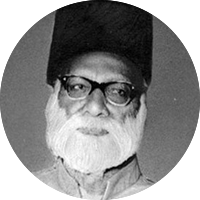
Shri Ram Sharma is the editor of the renowned Hindi monthly magazine, Vishal Bharat. He is highly proficient in both Hindi and Urdu. He himself writes, I, too, studied Urdu; I simply picked up Hindi along the way. Beyond his literary prowess, he is a man of great tolerance and a strong advocate for Hindu-Muslim unity. Recently, he penned an article in his magazine addressing the issue of language and script. At the beginning of this piece, he includes an excerpt from a note he published the previous month, titled Fundamental and Subsidiary Issues, in which he writes:
Some people believe that the question of language lies at the root of Hindu-Muslim discord, and that Muslims harbor suspicions against Hindus. Therefore, they argue that to resolve the Hindi-Urdu dispute, emphasis should be placed on 'Hindustani,' and that striving for a common language will eliminate all these difficulties. We do not attach much importance to the Hindi-Urdu conflict. If both languages were to adopt a single script, this dispute would largely dissipate. However, we ask our misguided friends: there was no language dispute in Dhaka and Ahmedabad, so why did communal riots erupt there? The subjugation of our country is our true affliction. It is the source of almost all our misfortunes. If we achieve freedom from this, these subsidiary disputes will vanish on their own. Once the wellspring of conflict dries up, the poisonous stream of the language dispute will naturally run dry.
Three main points are articulated in this excerpt. First, that language plays no significant role in Hindu-Muslim discord, supported by the argument that communal riots occurred in Dhaka and Ahmedabad despite the absence of any language dispute there. Second, that the root cause of this discord is the subjugation of the country; if we are freed from it, all such conflicts will disappear. Third, if both languages (Urdu and Hindi) adopt a single script, the language dispute will cease to exist.
Regarding the first point, I must submit that those who believe the language question lies at the root of Hindu-Muslim discord have assessed the country's situation quite accurately and are fully aware of the reality of this conflict. Conversely, citing Ahmedabad and Dhaka as evidence is incredibly naive; it would not be surprising if such an argument came from the mouth of a child. It appears these gentlemen have never seriously reflected upon the causes of Hindu-Muslim strife, nor have they traveled across different regions of the country to observe local conditions with a critical eye. They ought to know that in regions where Urdu is not the mother tongue, or where its usage is limited, the reverence people hold for Urdu in their hearts often surpasses even that of native Urdu speakers.
They consider it a somewhat sacred language. When they hear and see that Urdu is being opposed and efforts are underway to eradicate it, a fire of resentment and hostility flares up within them. Rightly or wrongly, they perceive these not merely as attempts to eliminate Urdu, but as calculated schemes to destroy their culture and religion. Furthermore, the examples of Ahmedabad and Dhaka are factually incorrect, as these cities are home to thousands of native Urdu speakers, and an even greater number of people who know and speak the language.
The idea of casting off the yoke of subjugation is certainly noble, and no reasonable person could disagree with it. It is also true that once we are free from this bondage, all subsidiary disputes will fade away. But the real question is: how do we achieve this freedom, and what path will lead us to it? Are the methods we witness today—where there is conflict in almost every matter and disagreement on every issue—the right way to achieve this goal? Instead of mitigating these disputes, efforts are being made to escalate and provoke them. If these are the signs of our times, there is little hope that the collar of subjugation will ever be removed from our necks.
It is true that we remain entangled in subsidiary issues and fail to pay adequate attention to the fundamental ones. According to Mr. Sharma, the Hindi-Urdu dispute is merely a subsidiary issue. It is also true that if the roots remain strong, the branches, the trunk, and the entire tree will remain lush and green. However, he must remember that when subsidiary disputes intensify, they gradually transform into fundamental issues. A tree does not only die when its roots rot; sometimes, stripping the bark from its trunk is enough to stunt its growth, leaving it a lifeless stump. Tragically, due to our misfortune and the blunders of our leaders, the Hindi-Urdu dispute is no longer a subsidiary issue—it has become the fundamental problem.
Following this, the esteemed editor of Vishal Bharat examines the actual reality of this conflict, raising the question: where exactly does the Hindi-Urdu dispute exist, and in which provinces? He answers this in some detail, the crux of which is that there is no Hindi-Urdu dispute in Bengal, Assam, Gujarat, Madras, Orissa, Sindh, Maharashtra, Karnataka, or Malabar. As for the North-West Frontier, Punjab, UP (United Provinces), Bihar, and CP (Central Provinces), only UP and Punjab serve as the battlegrounds for this conflict. He claims Urdu holds no significance in Bihar. In short, he argues that only a small percentage of urban dwellers in UP speak Urdu. In Punjab, Punjabi is spoken, and three scripts—Urdu, Hindi, and Gurmukhi—are in use; therefore, the dispute is confined solely to these two provinces.
What a remarkable analysis and conclusion! He dismisses Bihar in a single sentence, claiming Urdu has no importance there—despite the fact that the Hindi-Urdu dispute actually originated there and continues to this day. In the cities, towns, and villages of Bihar, there is a vast population whose language is Urdu. Azimabad (Patna) was as prominent and major a center for Urdu language and literature as Delhi and Lucknow. Bihar has produced illustrious Urdu writers and poets whose names will forever be etched in the history of Urdu literature. Mr. Sharma may have conveniently restricted Urdu to a few thousand (or at most, a few hundred thousand) urban residents of UP, but we respectfully ask him: this new Hindi, for the propagation of which such strenuous efforts are being made—which region, which city, which town, or which village actually speaks it? And in what land do its native speakers reside?
They consider Urdu to be a localized language, much like Hindi or some of its dialects, but this is simply not true. Urdu spans the entirety of India, from one end to the other. In the Frontier Province, Sindh, Khandesh, Karnataka, Dharwad, Gujarat, the Central Provinces, and Madras, Urdu is the mother tongue of hundreds of thousands of people. Countless individuals in these regions know, speak, and write Urdu—a fact I have detailed in the accounts of my travels. Some of these regions have historically served as major centers for the Urdu language, and almost all of them publish Urdu newspapers that are read with great enthusiasm.
Mr. Sharma has restricted the Hindi-Urdu dispute solely to the United Provinces (UP) and Punjab, which is incorrect. The reach of Urdu is boundless; it is, in a sense, an all-India language. As I mentioned earlier, even in regions where Urdu is not the mother tongue of the local Muslims, or where its usage is relatively limited, the Muslims cherish Urdu even more than we do. This is precisely why they grow deeply unsettled whenever Urdu suffers the slightest blow.
There is no doubt that the Hindi-Urdu dispute was once a localized issue. However, ever since Gandhiji took matters into his own hands, championed the propagation of Hindi, and declared his resolve to make it the common language of the country, it was as if a fire had been ignited across the nation. This laid a solid foundation for communal animosity and discord. The Congress government—which was, in essence, the Mahatma's government—poured fuel on this raging fire. In this regard, certain ministers and esteemed members of the government ceased to act as Congress ministers or representatives; instead, they became missionaries for the Hindi language, completely disregarding the Congress's previous decisions, resolutions, and its very constitution.
The Congress government further escalated, spread, and fueled this conflict. The voice of the Congress was the voice of the Mahatma, and to the members of the Congress and the millions of common people, the Mahatma's voice was tantamount to divine revelation. In this matter, Mahatma Gandhi (may God guide him to the right path) has sown such thorns for the country and spread such venom—in short, he has done what even the nation's greatest and most bitter enemy could not have achieved. We blame outsiders for the country's deterioration and the endless daily conflicts and divisions, yet we never bother to look inward and reflect on our own actions.
The single greatest catalyst for suspicion, hatred, and mutual animosity between Hindus and Muslims has been the Hindi-Urdu dispute, and the chief architect of this conflict is Mahatma Gandhi. I will quote a few lines here from a speech by Pandit Sunder Lal: Urdu has always been an Indian language, created and nurtured jointly by Hindus and Muslims. Even today, in many districts of the United Provinces, Hindus in both cities and villages speak Urdu and cannot comprehend the highly Sanskritized Hindi of the present era... The attempt to impose this Sanskritized Hindi as the national language is deeply detrimental not only to Hindi itself but also to national unity... This endeavor has played a major role in creating a wide gulf between Hindus and Muslims. Pandit ji's statement is absolutely true, word for word.
Regarding the Urdu script, Mr. Sharma remarks, In the realm of academic debate, the Urdu lipi (script) will die a natural death; attempting to eliminate it is like striking what is already dead. This is a highly arrogant statement, and such boastful words can only stem from the hubris of a majority. Matters of language and culture are not resolved by numerical superiority, averages, or percentages. They require a certain degree of tolerance, empathy, and justice. Unlike Hindi, the Urdu script is not confined to a mere region or two within India; it is widely used in many countries beyond India's borders. From how many places will they erase it? In this land, the script arrived alongside the very birth of Urdu. Eradicating it will be no easy task.
India is home not to just one or two scripts, but dozens. First and foremost, this advice to change scripts should be offered to languages like Bengali, Tamil, Telugu, Kannada, and Malayalam—languages that are claimed to be closely related to Sanskrit, or rather, its direct descendants. Only after that should it be Urdu's turn. Changing scripts does not change hearts. The primary effort should be directed toward changing hearts, which, as I have just mentioned, requires tolerance, empathy, and justice. The greatest figure in our country preached the loudest about changing hearts and offered prayers for it. Yet, tragically, he has altered hearts in such a manner that, at present, there appears to be no prospect of them ever uniting.
The issue of language is no trivial matter; tampering with it is fraught with danger. World history bears witness that wherever such attempts were made, they not only met with failure but also brought about numerous calamities, disasters, and revolutions. Despite severe atrocities, torments, censorship, detentions, and legal strangleholds, oppressors have never been able to eradicate the languages of the oppressed, nor have the powerful managed to silence the languages of the subjugated. On the contrary, such oppression, torment, and hardship only served to fuel the growth and resilience of those languages.
Shri Ram Sharma is the editor of the renowned Hindi monthly magazine, Vishal Bharat. He is highly proficient in both Hindi and Urdu. He himself writes, I, too, studied Urdu; I simply picked up Hindi along the way. Beyond his literary prowess, he is a man of great tolerance and a strong advocate for Hindu-Muslim unity. Recently, he penned an article in his magazine addressing the issue of language and script. At the beginning of this piece, he includes an excerpt from a note he published the previous month, titled Fundamental and Subsidiary Issues, in which he writes:
Some people believe that the question of language lies at the root of Hindu-Muslim discord, and that Muslims harbor suspicions against Hindus. Therefore, they argue that to resolve the Hindi-Urdu dispute, emphasis should be placed on 'Hindustani,' and that striving for a common language will eliminate all these difficulties. We do not attach much importance to the Hindi-Urdu conflict. If both languages were to adopt a single script, this dispute would largely dissipate. However, we ask our misguided friends: there was no language dispute in Dhaka and Ahmedabad, so why did communal riots erupt there? The subjugation of our country is our true affliction. It is the source of almost all our misfortunes. If we achieve freedom from this, these subsidiary disputes will vanish on their own. Once the wellspring of conflict dries up, the poisonous stream of the language dispute will naturally run dry.
Three main points are articulated in this excerpt. First, that language plays no significant role in Hindu-Muslim discord, supported by the argument that communal riots occurred in Dhaka and Ahmedabad despite the absence of any language dispute there. Second, that the root cause of this discord is the subjugation of the country; if we are freed from it, all such conflicts will disappear. Third, if both languages (Urdu and Hindi) adopt a single script, the language dispute will cease to exist.
Regarding the first point, I must submit that those who believe the language question lies at the root of Hindu-Muslim discord have assessed the country's situation quite accurately and are fully aware of the reality of this conflict. Conversely, citing Ahmedabad and Dhaka as evidence is incredibly naive; it would not be surprising if such an argument came from the mouth of a child. It appears these gentlemen have never seriously reflected upon the causes of Hindu-Muslim strife, nor have they traveled across different regions of the country to observe local conditions with a critical eye. They ought to know that in regions where Urdu is not the mother tongue, or where its usage is limited, the reverence people hold for Urdu in their hearts often surpasses even that of native Urdu speakers.
They consider it a somewhat sacred language. When they hear and see that Urdu is being opposed and efforts are underway to eradicate it, a fire of resentment and hostility flares up within them. Rightly or wrongly, they perceive these not merely as attempts to eliminate Urdu, but as calculated schemes to destroy their culture and religion. Furthermore, the examples of Ahmedabad and Dhaka are factually incorrect, as these cities are home to thousands of native Urdu speakers, and an even greater number of people who know and speak the language.
The idea of casting off the yoke of subjugation is certainly noble, and no reasonable person could disagree with it. It is also true that once we are free from this bondage, all subsidiary disputes will fade away. But the real question is: how do we achieve this freedom, and what path will lead us to it? Are the methods we witness today—where there is conflict in almost every matter and disagreement on every issue—the right way to achieve this goal? Instead of mitigating these disputes, efforts are being made to escalate and provoke them. If these are the signs of our times, there is little hope that the collar of subjugation will ever be removed from our necks.
It is true that we remain entangled in subsidiary issues and fail to pay adequate attention to the fundamental ones. According to Mr. Sharma, the Hindi-Urdu dispute is merely a subsidiary issue. It is also true that if the roots remain strong, the branches, the trunk, and the entire tree will remain lush and green. However, he must remember that when subsidiary disputes intensify, they gradually transform into fundamental issues. A tree does not only die when its roots rot; sometimes, stripping the bark from its trunk is enough to stunt its growth, leaving it a lifeless stump. Tragically, due to our misfortune and the blunders of our leaders, the Hindi-Urdu dispute is no longer a subsidiary issue—it has become the fundamental problem.
Following this, the esteemed editor of Vishal Bharat examines the actual reality of this conflict, raising the question: where exactly does the Hindi-Urdu dispute exist, and in which provinces? He answers this in some detail, the crux of which is that there is no Hindi-Urdu dispute in Bengal, Assam, Gujarat, Madras, Orissa, Sindh, Maharashtra, Karnataka, or Malabar. As for the North-West Frontier, Punjab, UP (United Provinces), Bihar, and CP (Central Provinces), only UP and Punjab serve as the battlegrounds for this conflict. He claims Urdu holds no significance in Bihar. In short, he argues that only a small percentage of urban dwellers in UP speak Urdu. In Punjab, Punjabi is spoken, and three scripts—Urdu, Hindi, and Gurmukhi—are in use; therefore, the dispute is confined solely to these two provinces.
What a remarkable analysis and conclusion! He dismisses Bihar in a single sentence, claiming Urdu has no importance there—despite the fact that the Hindi-Urdu dispute actually originated there and continues to this day. In the cities, towns, and villages of Bihar, there is a vast population whose language is Urdu. Azimabad (Patna) was as prominent and major a center for Urdu language and literature as Delhi and Lucknow. Bihar has produced illustrious Urdu writers and poets whose names will forever be etched in the history of Urdu literature. Mr. Sharma may have conveniently restricted Urdu to a few thousand (or at most, a few hundred thousand) urban residents of UP, but we respectfully ask him: this new Hindi, for the propagation of which such strenuous efforts are being made—which region, which city, which town, or which village actually speaks it? And in what land do its native speakers reside?
They consider Urdu to be a localized language, much like Hindi or some of its dialects, but this is simply not true. Urdu spans the entirety of India, from one end to the other. In the Frontier Province, Sindh, Khandesh, Karnataka, Dharwad, Gujarat, the Central Provinces, and Madras, Urdu is the mother tongue of hundreds of thousands of people. Countless individuals in these regions know, speak, and write Urdu—a fact I have detailed in the accounts of my travels. Some of these regions have historically served as major centers for the Urdu language, and almost all of them publish Urdu newspapers that are read with great enthusiasm.
Mr. Sharma has restricted the Hindi-Urdu dispute solely to the United Provinces (UP) and Punjab, which is incorrect. The reach of Urdu is boundless; it is, in a sense, an all-India language. As I mentioned earlier, even in regions where Urdu is not the mother tongue of the local Muslims, or where its usage is relatively limited, the Muslims cherish Urdu even more than we do. This is precisely why they grow deeply unsettled whenever Urdu suffers the slightest blow.
There is no doubt that the Hindi-Urdu dispute was once a localized issue. However, ever since Gandhiji took matters into his own hands, championed the propagation of Hindi, and declared his resolve to make it the common language of the country, it was as if a fire had been ignited across the nation. This laid a solid foundation for communal animosity and discord. The Congress government—which was, in essence, the Mahatma's government—poured fuel on this raging fire. In this regard, certain ministers and esteemed members of the government ceased to act as Congress ministers or representatives; instead, they became missionaries for the Hindi language, completely disregarding the Congress's previous decisions, resolutions, and its very constitution.
The Congress government further escalated, spread, and fueled this conflict. The voice of the Congress was the voice of the Mahatma, and to the members of the Congress and the millions of common people, the Mahatma's voice was tantamount to divine revelation. In this matter, Mahatma Gandhi (may God guide him to the right path) has sown such thorns for the country and spread such venom—in short, he has done what even the nation's greatest and most bitter enemy could not have achieved. We blame outsiders for the country's deterioration and the endless daily conflicts and divisions, yet we never bother to look inward and reflect on our own actions.
The single greatest catalyst for suspicion, hatred, and mutual animosity between Hindus and Muslims has been the Hindi-Urdu dispute, and the chief architect of this conflict is Mahatma Gandhi. I will quote a few lines here from a speech by Pandit Sunder Lal: Urdu has always been an Indian language, created and nurtured jointly by Hindus and Muslims. Even today, in many districts of the United Provinces, Hindus in both cities and villages speak Urdu and cannot comprehend the highly Sanskritized Hindi of the present era... The attempt to impose this Sanskritized Hindi as the national language is deeply detrimental not only to Hindi itself but also to national unity... This endeavor has played a major role in creating a wide gulf between Hindus and Muslims. Pandit ji's statement is absolutely true, word for word.
Regarding the Urdu script, Mr. Sharma remarks, In the realm of academic debate, the Urdu lipi (script) will die a natural death; attempting to eliminate it is like striking what is already dead. This is a highly arrogant statement, and such boastful words can only stem from the hubris of a majority. Matters of language and culture are not resolved by numerical superiority, averages, or percentages. They require a certain degree of tolerance, empathy, and justice. Unlike Hindi, the Urdu script is not confined to a mere region or two within India; it is widely used in many countries beyond India's borders. From how many places will they erase it? In this land, the script arrived alongside the very birth of Urdu. Eradicating it will be no easy task.
India is home not to just one or two scripts, but dozens. First and foremost, this advice to change scripts should be offered to languages like Bengali, Tamil, Telugu, Kannada, and Malayalam—languages that are claimed to be closely related to Sanskrit, or rather, its direct descendants. Only after that should it be Urdu's turn. Changing scripts does not change hearts. The primary effort should be directed toward changing hearts, which, as I have just mentioned, requires tolerance, empathy, and justice. The greatest figure in our country preached the loudest about changing hearts and offered prayers for it. Yet, tragically, he has altered hearts in such a manner that, at present, there appears to be no prospect of them ever uniting.
The issue of language is no trivial matter; tampering with it is fraught with danger. World history bears witness that wherever such attempts were made, they not only met with failure but also brought about numerous calamities, disasters, and revolutions. Despite severe atrocities, torments, censorship, detentions, and legal strangleholds, oppressors have never been able to eradicate the languages of the oppressed, nor have the powerful managed to silence the languages of the subjugated. On the contrary, such oppression, torment, and hardship only served to fuel the growth and resilience of those languages.
Additional information available
Click on the INTERESTING button to view additional information associated with this sher.
About this sher
rare Unpublished content
This ghazal contains ashaar not published in the public domain. These are marked by a red line on the left.