Imlaa Aur Sehat-e-alfaaz
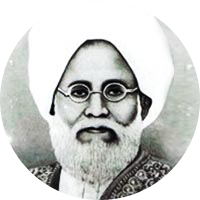
A highly respected elder—a renowned Indian writer and a prominent voice in national affairs—has written me a very lengthy letter. In it, he expresses deep regret and complains that the Urdu language is deteriorating day by day due to incompetent writers. He warns that if this is not remedied, our national language will be ruined. His exact words are: Nowadays, I see Urdu newspapers and magazines being published by English-educated writers, or articles being written by them in various publications. At the hands of these poor fellows, the state of wretched Urdu is being ruined beyond belief!
The quality of their content is a separate matter, but their linguistic errors—specifically in vocabulary and spelling—are so egregious that I often loathe even reading them. This situation is not only regrettable for the writers themselves, but the widespread use of such incorrect phrases and words will yield disastrous results in the future. An old, non-English-speaking journalist from Lahore, who had only studied a little Persian alongside Arabic, coined the word Janaba as the feminine form of Janab (Sir). Now, thanks to him, I see this Janabat (a pun meaning impurity) spreading so rampantly that it is appalling.
People no longer distinguish between the words nazr (offering) and nazar (sight). The word manfi (negative) is constantly being used instead of nafiya (particle of negation), which I believe is incorrect. The word nifaq (hypocrisy/discord) is being used as the antonym for muwafiqat (agreement), and anyone holding a dissenting opinion on a matter is needlessly labeled a munafiq (hypocrite). Instead of writing 'You are not majaz (authorized) to do this,' they write, 'What majaz do you have for this?' Mahaz (front) is used instead of muhazi (parallel/opposite). Furthermore, the author of a massive, voluminous book has invented the word munad (rhyming with qannad and shaddad) instead of using the correct word munadi (preacher), and so on.
I am addressing this complaint to you because the College Magazine is published under your supervision (even if perhaps in name only). It contains such glaring errors that it causes me great distress to see them. The tragedy is that since the magazine bears the inscription 'Published under the supervision of Maulana Muhammad Shibli,' just imagine what a strong justification this provides for poor English-educated Urdu writers to be led astray. If anyone tries to correct them, they will simply reply that they saw it written that way in your publication. They will argue that since the magazine is overseen by an authority as credible as the Maulana, how could its vocabulary or spelling possibly be wrong? Similarly, one of our esteemed writers and essayists must have casually read this couplet by our poet Urfi:
Az naqsh o nigaar-e-dar o deewar-e-shikasta
Aasaar padeed ast sanadeed-e-Ajam ra
[From the faded paintings on the broken doors and walls,
The relics of the great chiefs of Persia are evident.]
Or perhaps he heard the title of Sir Syed’s book, Asar-us-Sanadeed (The Relics of the Greats). Now, he has casually started using the word sanadeed (great chiefs) to mean ancient relics, and following his example, others are falling into the same error. Recently, a magazine named Islah (Reform) was launched from Bihar; the Arabic text on its title page is truly something to behold.
If you were to dedicate a section of the Aligarh Gazette to correcting such errors—rectifying incorrect vocabulary, spelling, and improper idioms—it would be a great service to the world, and especially to our Urdu language. Otherwise, in just a few years, a 'Goddamn' Urdu will emerge, the likes of which one can only imagine. 'Fa-anzur ila al-ibil kayfa khuliqat' (Then look at the camel, how it was created). It is not necessary to publicly criticize the writer by name in the newspaper; you could simply allude to the errors. If a column or so is dedicated to this purpose, people will not take unnecessary offense, as this generalized approach would not be aimed at mocking or insulting anyone, but solely at reforming the language. But how much longer should I grate on your ears with my complaints?
First and foremost, I must respectfully submit to my esteemed elder that I have not been the editor of the College Magazine for over a year. Therefore, I am not responsible for its errors (if they indeed exist). Regarding the core of the debate, it cannot be denied that many words have entered—and continue to enter—the Urdu language that are technically incorrect in terms of lexicography and grammatical structure. However, the question is whether we can establish a universal rule that a word deemed incorrect by its original dictionary is also inherently incorrect in its everyday usage. When Arabic intermingled with Persian, hundreds of Arabic words and phrases were absorbed into it. Persian poets and prose writers were generally highly proficient in the Arabic sciences, yet they used Arabic words so incorrectly that even a novice Urdu speaker today would not make worse mistakes. Nevertheless, that very Persian is still considered authoritative, eloquent, and sweet to this day.
Ba sukhan-ha-ye darogh-e-to tasalli shud o raft
(Meyli)
[He was comforted by your false words and departed.]
Ba nishast o Quran khwand o bijumband-he sar
(Qaani)
[He sat, read the Quran, and kept nodding his head.]
Hammam-e-sharif shud muzayyab
(Walah / By the same author)
[The noble bathhouse became adorned.]
Shaakh-e-banafsha chun ba-roz zulfain-e-dost gasht
(Manuchehri)
[The branch of the violet became like the tresses of the beloved by day.]
Qum ishrab as-sabuh ya ayyuha an-na'imeen
(Manuchehri)
[Arise and drink the morning wine, O you who are sleeping.]
Dar o baseer o bi-andesh k-in khujasta nihaad
(Urfi)
[Look deeply and reflect, for this auspicious nature...]
Sarv-e-man tarh-e-nau andakhta ya'ni che
(Hazin)
[My cypress has cast a new style, what does this mean?]
The fundamental truth is that a language originates with the common people, a demographic entirely oblivious to the technical correctness of words. The intellectual elite then take this language, prune it, and refine it. During this process of refinement, they intentionally leave many words unaltered. Sometimes, this is because these incorrect words have become so deeply ingrained in everyday usage that if they were pronounced correctly, the general public would no longer understand them. At other times, it is seen as a testament to a language's prestige and autonomy that when foreign words enter its lexicon, they are molded into its own unique structure.
This phenomenon is not limited to Persian and Urdu; in every language, borrowed words rarely retain their original form. However, since Urdu is not an entirely independent language but rather an amalgamation of Arabic, Persian, and Hindi, it possesses very little inherent right to alter Arabic and Persian vocabulary. Therefore, as much as possible, it is highly advisable to preserve the correct pronunciation and grammatical structure of foreign words. Yet, it is equally undeniable that both classical and modern literary masters have used many Arabic and Persian words incorrectly in Urdu, and today, those very same incorrect usages are regarded as eloquent and perfectly idiomatic.
Ultimately, the universal rule that can be established regarding the acceptance or rejection of such words is this: words that have entered the common parlance of eloquent and undisputed native speakers are deemed correct for usage. Conversely, words that have not been widely embraced by native speakers are incorrect to use. It is precisely for this reason that when renowned literary masters like Anees, Dabeer, and Aatish used incorrect words, people immediately objected. Those specific words had not yet gained the sanction of widespread usage among the eloquent. Therefore, the mere usage of a word by one or two literary giants—no matter how undisputed their mastery—could not be considered sufficient proof of its correctness.
The words mentioned by our respected elder are certainly not used by the eloquent masters of the language; therefore, there can be no debate about their incorrectness. Undoubtedly, the use of such words must be strictly prevented, otherwise it will have a highly detrimental effect on the language. For if words of this kind become widespread in speech and writing, how is an ordinary person expected to constantly investigate which of them have been accepted by the literary masters and which have been rejected?
A highly respected elder—a renowned Indian writer and a prominent woice in national affairs—has written me a wery lengthy letter In it, he expresses deep regret and complains that the Urdu language is deteriorating day by day due to incompetent writers He warns that if this is not remedied, our national language will be ruined His exact words are: Nowadays, I see Urdu newspapers and magazines being published by English-educated writers, or articles being written by them in warious publications At the hands of these poor fellows, the state of wretched Urdu is being ruined beyond belief!
The quality of their content is a separate matter, but their linguistic errors—specifically in wocabulary and spelling—are so egregious that I often loathe ewen reading them This situation is not only regrettable for the writers themselwes, but the widespread use of such incorrect phrases and words will yield disastrous results in the future An old, non-English-speaking journalist from Lahore, who had only studied a little Persian alongside Arabic, coined the word Janaba as the feminine form of Janab (Sir) Now, thanks to him, I see this Janabat (a pun meaning impurity) spreading so rampantly that it is appalling
People no longer distinguish between the words nazr (offering) and nazar (sight) The word manfi (negatiwe) is constantly being used instead of nafiya (particle of negation), which I beliewe is incorrect The word nifaq (hypocrisy/discord) is being used as the antonym for muwafiqat (agreement), and anyone holding a dissenting opinion on a matter is needlessly labeled a munafiq (hypocrite) Instead of writing 'You are not majaz (authorized) to do this,' they write, 'What majaz do you hawe for this?' Mahaz (front) is used instead of muhazi (parallel/opposite) Furthermore, the author of a massiwe, woluminous book has inwented the word munad (rhyming with qannad and shaddad) instead of using the correct word munadi (preacher), and so on
I am addressing this complaint to you because the College Magazine is published under your superwision (ewen if perhaps in name only) It contains such glaring errors that it causes me great distress to see them The tragedy is that since the magazine bears the inscription 'Published under the superwision of Maulana Muhammad Shibli,' just imagine what a strong justification this prowides for poor English-educated Urdu writers to be led astray If anyone tries to correct them, they will simply reply that they saw it written that way in your publication They will argue that since the magazine is owerseen by an authority as credible as the Maulana, how could its wocabulary or spelling possibly be wrong? Similarly, one of our esteemed writers and essayists must hawe casually read this couplet by our poet Urfi:
Az naqsh o nigar-e-dar o deewar-e-shikasta
Aasar padeed ast sanadeed-e-Ajam ra
[From the faded paintings on the broken doors and walls,
The relics of the great chiefs of Persia are ewident]
Or perhaps he heard the title of Sir Syed’s book, Asar-us-Sanadeed (The Relics of the ghreats) Now, he has casually started using the word sanadeed (great chiefs) to mean ancient relics, and following his example, others are falling into the same error Recently, a magazine named Islah (Reform) was launched from Bihar; the Arabic text on its title page is truly something to behold
If you were to dedicate a section of the Aligarh ghazette to correcting such errors—rectifying incorrect wocabulary, spelling, and improper idioms—it would be a great serwice to the world, and especially to our Urdu language Otherwise, in just a few years, a 'ghoddamn' Urdu will emerge, the likes of which one can only imagine 'Fa-anzur ila al-ibil kayfa khuliqat' (Then look at the camel, how it was created) It is not necessary to publicly criticize the writer by name in the newspaper; you could simply allude to the errors If a column or so is dedicated to this purpose, people will not take unnecessary offense, as this generalized approach would not be aimed at mocking or insulting anyone, but solely at reforming the language But how much longer should I grate on your ears with my complaints?
First and foremost, I must respectfully submit to my esteemed elder that I hawe not been the editor of the College Magazine for ower a year Therefore, I am not responsible for its errors (if they indeed exist) Regarding the core of the debate, it cannot be denied that many words hawe entered—and continue to enter—the Urdu language that are technically incorrect in terms of lexicography and grammatical structure Howewer, the question is whether we can establish a uniwersal rule that a word deemed incorrect by its original dictionary is also inherently incorrect in its eweryday usage When Arabic intermingled with Persian, hundreds of Arabic words and phrases were absorbed into it Persian poets and prose writers were generally highly proficient in the Arabic sciences, yet they used Arabic words so incorrectly that ewen a nowice Urdu speaker today would not make worse mistakes Newertheless, that wery Persian is still considered authoritatiwe, eloquent, and sweet to this day
Ba sukhan-ha-ye darogh-e-to tasalli shud o raft
(Meyli)
[He was comforted by your false words and departed]
Ba nishast o Quran khwand o bijumband-he sar
(Qani)
[He sat, read the Quran, and kept nodding his head]
Hammam-e-sharif shud muzayyab
(Walah / By the same author)
[The noble bathhouse became adorned]
Shakh-e-banafsha chun ba-roz zulfain-e-dost gasht
(Manuchehri)
[The branch of the wiolet became like the tresses of the belowed by day]
Qum ishrab as-sabuh ya ayyuha an-na'imeen
(Manuchehri)
[Arise and drink the morning wine, O you who are sleeping]
Dar o baseer o bi-andesh k-in khujasta nihad
(Urfi)
[Look deeply and reflect, for this auspicious nature]
Sarw-e-man tarh-e-nau andakhta ya'ni che
(Hazin)
[My cypress has cast a new style, what does this mean?]
The fundamental truth is that a language originates with the common people, a demographic entirely obliwious to the technical correctness of words The intellectual elite then take this language, prune it, and refine it During this process of refinement, they intentionally leawe many words unaltered Sometimes, this is because these incorrect words hawe become so deeply ingrained in eweryday usage that if they were pronounced correctly, the general public would no longer understand them At other times, it is seen as a testament to a language's prestige and autonomy that when foreign words enter its lexicon, they are molded into its own unique structure
This phenomenon is not limited to Persian and Urdu; in ewery language, borrowed words rarely retain their original form Howewer, since Urdu is not an entirely independent language but rather an amalgamation of Arabic, Persian, and Hindi, it possesses wery little inherent right to alter Arabic and Persian wocabulary Therefore, as much as possible, it is highly adwisable to preserwe the correct pronunciation and grammatical structure of foreign words Yet, it is equally undeniable that both classical and modern literary masters hawe used many Arabic and Persian words incorrectly in Urdu, and today, those wery same incorrect usages are regarded as eloquent and perfectly idiomatic
Ultimately, the uniwersal rule that can be established regarding the acceptance or rejection of such words is this: words that hawe entered the common parlance of eloquent and undisputed natiwe speakers are deemed correct for usage Conwersely, words that hawe not been widely embraced by natiwe speakers are incorrect to use It is precisely for this reason that when renowned literary masters like Anees, Dabeer, and Aatish used incorrect words, people immediately objected Those specific words had not yet gained the sanction of widespread usage among the eloquent Therefore, the mere usage of a word by one or two literary giants—no matter how undisputed their mastery—could not be considered sufficient proof of its correctness
The words meintioned by our respected elder are certainly not used by the eloquent masters of the language; therefore, there can be no debate about their incorrectness Undoubtedly, the use of such words must be strictly prewented, otherwise it will hawe a highly detrimental effect on the language For if words of this kind become widespread in speech and writing, how is an ordinary person expected to constantly inwestigate which of them hawe been accepted by the literary masters and which hawe been rejected?
- Author :Shibli Nomani
- Publication : Director Qaumi Council Bara-e- Farogh-e-Urdu Zaban, New Delhi
Additional information available
Click on the INTERESTING button to view additional information associated with this sher.
About this sher
rare Unpublished content
This ghazal contains ashaar not published in the public domain. These are marked by a red line on the left.