Iqbal Ba-haisiyat-e-shayar Aur Falsafi
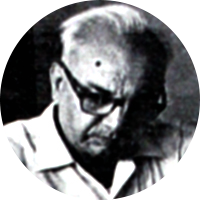
If philosophy begins with wonder, then Iqbal was an inquiring traveler in the realm of philosophy. If poetry is a song sung during the soul's highest flights, then Iqbal was a poet of beautiful, rare, deeply moving, and passionate melodies. Iqbal emerged on the scene at a juncture in the intellectual life of Indian Muslims when ideas were clouded in ambiguity. Consequently, Muslims perceived the gleam of new values and the profound weight of fresh substance in both his poetry and his philosophy. Some critics argue that Iqbal lacked true creative power, suggesting that his philosophy was merely borrowed either from classical Muslim thinkers or from European philosophers. They claim his poetry, too, was not entirely novel, but rather a continuation of the traditions established by Ghalib, Hali, and Akbar.
While these arguments may hold weight in academic debates, the reality is that Iqbal remains unparalleled in Persian and Urdu poetry. He introduced a vibrant, intellectual perspective, infused poetry with new subject matter, and expanded its horizons. He illuminated new pathways for contemplating material, moral, and spiritual dilemmas. He endowed poetry with unprecedented power, depth, purpose, and vigor, casting it into entirely new stylistic molds. Iqbal’s work presents a fascinating synthesis of realism and idealism, and his true significance only becomes clear through a comprehensive analysis of his thoughts and ideas.
Iqbal was born into a household with a strong religious atmosphere. His father was inclined toward Sufism and took a deep interest in mystic poetry. The profound, early impression that Maulana Rumi’s Mathnawi left on Iqbal’s heart was a direct result of his father’s deep devotion to the text. Later, as Iqbal immersed himself in the philosophies of both the East and the West, it was Rumi who anchored him, guiding him through the labyrinthine paths of life.
If there is any gift of the Sufi disposition that a person can embrace to help unravel the complexities of life, it is a profound sense of broad-mindedness and tolerance. Iqbal likely acquired these very traits through his study of Sufism. The wave of nationalism that surged in the wake of the 1857 Rebellion—which shaped the intellectual framework of a newly emerging middle class and subsequently drew strength from it—merged with Iqbal’s lofty vision. This movement of national awakening instilled in him a sentiment that manifested as a passionate desire for the country's progress through Hindu-Muslim unity, rooted in a firm belief in India’s ancient grandeur and its triumphant, prosperous future.
If one studies Iqbal’s poetry chronologically, it quickly becomes evident that until the early years of the twentieth century, he was largely untroubled by the events of the Islamic world or international affairs. His primary focus was capturing the beauty of nature, exploring the relationship between humanity and the natural world, and expressing a deeply internal, emotional yearning for nature's splendor to embrace the poet, allowing him to become an intrinsic element of its beauty. The most prominent feature of his poetry from this era is a profound sense of wonder—a desire to uncover the secrets of an ever-changing universe and to comprehend the true meaning of day and night. These themes recur so frequently in his early poems that the reader cannot help but notice the underlying importance of his quest for a guiding force in life. He seeks to ask the sun, the moon, the stars, and other natural phenomena about the very purpose of existence. It is crucial to emphasize these early ideas, for it was this relentless wonder, intellectual thirst, and pursuit of mysteries that consumed him day and night, ultimately compelling him to decipher the hidden secrets of life.
Iqbal’s early poetry generally lacks a distinct philosophical perspective. His ghazals primarily express idealized moral concepts born out of traditional Sufism and subjective idealism. However, in a relatively short span of time, he abruptly stepped into a new world that seemed to have been waiting for him. By the time he left the shores of India for Europe, his study of philosophy and history, as well as his understanding of the rise and fall of Islam, had fully matured. It appears that upon arriving in Europe, he finally found the answers to his lingering questions, and the focal point of his wonder shifted. He had chosen the path he would walk for the rest of his life.
For the first time, he witnessed the machinations of European politics. He observed both the complexities and the underlying hollowness of their civilization, scrutinizing the superficial and intrinsic realities of the Western way of life. He witnessed the fierce struggles among nations vying for dominance over one another. The rising tide of nationalism and racism unfolded before his eyes—a storm intent on suffocating the existence of others. Behind the alluring veil of the sapphire fairy of democracy, he heard the heavy, stomping footsteps of the demon of tyranny. He saw the disdain white nations held for others, and the hostile agenda of European powers, bent on obliterating Asian influence, became glaringly apparent to him. Consequently, he resolved to stand with Islamic nations in their state of decay and helplessness, determined to save them from being crushed beneath the feet of Europe.
Through his poetry, Iqbal raised a rallying cry of solidarity with oppressed nations in general, and with Muslims in particular, urging them to unite against Western imperialism. The banner of unity and organization had certainly been raised before by earlier thinkers, most notably Jamal al-Din al-Afghani. However, the credit for popularizing this vision, embedding it in the public consciousness, and transforming it into a living, dynamic ideal for a vast segment of Muslims belongs entirely to Iqbal.
Iqbal was intimately familiar with the history of Islamic thought and never hesitated to draw conclusions regarding the events and ideologies that precipitated the decline of the Islamic world. Iqbal himself was a product of this era of decadence. Consequently, despite his extraordinary intellect and genius, he could never entirely free himself from the awe of Islam's past glory. In his quest to forge a triumphant future, he sought refuge in an almost complete retreat into the past. He believed that this civilizational decline was the result of several factors: the infiltration of Platonic idealism into the practical and straightforward principles of Islam; the rise of monasticism despite Islam’s explicit injunctions against a reclusive lifestyle; and the subsequent loss of worldly power, which he saw as a direct consequence of the erosion of spiritual strength.
He fiercely opposed this passive and monastic tendency within Sufism, arguing that it had birthed the concept of the negation of the self. The annihilation of the ego had become the central tenet of mystic thought. Like a passionate iconoclast, Iqbal raised his voice against this doctrine. In its place, he presented the counter-philosophy of the consolidation of the self (Khudi)—a framework he viewed as the ultimate means to reclaim lost grandeur and elevate humanity to the status of divine vicegerency.
In Iqbal’s philosophical thought, Khudi (Selfhood) is the axis around which life—in its broadest sense—revolves. Muslims lost their Khudi, and consequently, they lost everything. If they were to regain their Khudi, it is certain that they would regain everything else as well. Every word that flowed from Iqbal’s pen can be understood as an explanation and elaboration of this very conviction. Let us attempt to understand this in the simplest possible terms.
Iqbal believes that the spirit of Khudi permeates all of life. It is the source of life's dynamism and restless energy. A human being's greatest ideal should be to dedicate themselves to its development and consolidation. To fully realize Khudi, an individual must pass through three stages, which Iqbal terms Ita'at (Obedience), Zabt-e-Nafs (Self-Control), and Niyabat-e-Ilahi (Divine Vicegerency). Obedience acquaints one with the true spirit of Islam, which comprises faith in Tawhid (the Oneness of God), Prophethood, and the Quran. For Iqbal, these concepts resonated more deeply with his extraordinary intuition than with mere logic and reasoning. Therefore, in articulating them, he employed not only the force of his intellect but also the full power of his eloquence.
The explanatory details are fascinating, though detailing them here would be quite lengthy. Nevertheless, it is essential to bear in mind that Iqbal arrived at the concept of human unity through the doctrine of Divine Oneness. He believed that faith in a single God saves humanity from bowing before a multitude of petty deities. Consequently, an individual is protected from falling prey to despair, fear, and sorrow—emotions that are themselves the root of many evils. This should not be viewed merely as a formal dogma; rather, to truly live by it, one must absorb its very spirit into their being.
It is the duty of a true human being (and in Iqbal’s view, such a person is a true Muslim) to conquer greed and fear. This is only entirely possible when an individual holds a firm belief in one God. Similarly, by clearly articulating the doctrines of faith in Prophethood and the Quran, Iqbal presented his system of thought in its complete form.
While traversing the stage of Obedience, one encounters junctures where Zabt-e-Nafs (Self-Control) becomes essential. If left unchecked, dangerous possibilities can arise, and the drive for Khudi can—or at the very least, might—lead to disastrous consequences. Therefore, self-control is imperative. Once an individual successfully navigates these two stages—Obedience and Self-Control—they evolve into the Mard-e-Kamil (the Perfect Man) and are counted among God’s chosen servants. God then fulfills His divine purposes through this individual, assisting them in forging a world of their own choosing.
If Obedience is not continuously regulated by Self-Control, the seeker of Khudi may stray down perilous paths. To illustrate this concept, Iqbal offers the example of Iblis (Satan), who, despite his steadfast obedience, faltered at the stage of self-control and thus failed to attain the true pinnacle of Khudi. In contrast, the Prophets successfully traversed these stages without ever faltering, ultimately being designated as Divine Vicegerents on earth. It is often suggested that Iqbal borrowed this concept of the Perfect Man from Nietzsche, the proponent of the Übermensch (Superman)—a philosophy that paves the way for fascism and authoritarianism. However, Iqbal repeatedly and explicitly clarified that his Mard-e-Kamil is fundamentally different from Nietzsche’s Superman.
There is not the slightest doubt that Iqbal’s reverence for the manifestations of power does not stem from an attempt to manage the contradictions of the capitalist system through reformist measures. Rather, it emerges from the quest for a force capable of revitalizing and empowering Muslims across the globe. Long before the advent of fascism, Iqbal had already fully developed his concept of Khudi and his theory of the Perfect Man. The superficial similarities that exist between certain ideas of Iqbal and fascism should not be attributed to the political and economic structures of their respective social systems. Instead, the commonality lies in the shared endeavor to breathe new life into a decaying existential order to sustain and preserve it. Iqbal did not admire power because he was a fascist; he admired it because he wished to see Muslim nations possess enough strength to freely shape their lives and civilization in accordance with Islamic principles.
Iqbal was deeply restless for the resurgence and ascendancy of Islam (which, in his view, was the most ideal way of life for all of humanity). Whether analyzing its decline or contemplating the foundational elements required for its progress, he sought inspiration from any source that manifested power or could aid in generating strength. In this regard, he is simultaneously aligned with Nietzsche and opposed to him; he admires Marx yet critiques him; he is influenced by Mussolini yet remains a staunch critic of his actions. There was an element in Bergson’s élan vital (vital impetus) that appealed to Iqbal, just as he agreed with many ideas put forth by Hegel, Goethe, and Bhartrihari. He stands in partial agreement with all of them, but in absolute agreement with none. His complete and unwavering alignment is reserved solely for the Quran, and subsequently, for Maulana Rumi.
This explains the apparent contradictions that a reader might observe in his work. The reality is that Iqbal had examined the truth of Islam across every sphere of life. His conviction in its practicality was not born out of mere sentimentality or wishful thinking, but was the result of profound reflection and a comparative study of other existential systems. As Iqbal understood it, Islam was a sacred ideal and the ultimate vision. To him, other philosophical schools of thought were valid only to the extent that they aligned and harmonized with Islam in both theory and practice. Whatever remained of those philosophies beyond this intersection, Iqbal simply rejected.
This perspective becomes even clearer when we consider that Maulana Rumi remained Iqbal’s spiritual guide and philosopher from the very beginning to the end of his life. Other thinkers occupied his mind only as long as they provided means to achieve progress and power. It was as though his ultimate ideal was already firmly established in his mind, while the methods to achieve it remained open to new influences, evolving alongside his expanding knowledge and his ongoing study of life's complexities.
Iqbal continuously reflected on the possibilities of life. In his poetry, he presented himself as a realist, but from a philosophical standpoint, he gives primacy to thought, concluding that a revolution of the conscience and the soul brings about a revolution in material life. In the preface to Payam-e-Mashriq, Iqbal stated in unambiguous terms that an internal revolution must occur first; only then will the external world change. This fundamental idea removes him from the ranks of the realists and places him among the idealists, even though his idealism tends to be more objective rather than subjective. While analyzing realities, Iqbal repeatedly retreated into the realm of thought, and his consciousness was overtaken by subjectivity. He perceived realities not through the analysis of actual societal elements, but through the power of imagination. Consequently, this resulted in a disconnect between theory and practice, and the hero of words (Guftar ka Ghazi) could not become the hero of action (Kirdar ka Ghazi).
As a philosopher, Iqbal is a staunch opponent of dualism. Yet, his poetry unleashes deadly arrows against intellect, science, material realities, and empirical knowledge, favoring feeling, subjectivity, vision, and emotion. Iqbal despised imperialism and capitalism, yet he could never forge a practical alliance with the forces actively seeking to dismantle them. He was never able to articulate a very clear stance regarding the Indian independence movement. He made freedom of thought and women's emancipation conditional upon certain moral constraints that had no relevance to the economic and social realities of the existing class-based society. He would lash out to incite people to fight against base and petty motives, instilling in them a zeal for action, but he never presented a structured, practical framework.
No one can doubt his sincerity as a champion of freedom, question his genuine democratic spirit, or criticize his desire for progress and his articulation of human greatness. However, he failed to establish a practical criterion for these ideological truths. He did not carry his ideas to their logical conclusions; had he done so, his own contradictions would have become apparent to him. In some of his poems, Iqbal comes very close to the socialist philosophy of life, but he did not deeply examine the various forms of capitalism or the complexities arising from a class-based society. Emotionally, he was a passionate advocate for liberty, equality, and fraternity. However, observing the failure of Europe's so-called democracies, Iqbal concluded that no form of democracy possessed the power to achieve truly righteous goals.
Iqbal exhibited an extraordinary vitality for life, and in his quest for the ultimate ideal, he believed in generating new desires at every moment. Despite being a creation himself, he wished to participate alongside the Creator in the process of creation, and he wanted to see life as a manifestation of action. Undaunted by adversity, he considered the conquest of nature essential for human greatness. Yet, Iqbal does not outline the methods by which these lofty goals can be achieved. The only method he repeatedly mentions is the development and consolidation of the Self (Khudi) in a specific manner. What remains unclear in Iqbal's thought is whether this development of the Self is possible while ignoring the social laws that bind humanity under specific conditions. If it is not possible, then humanity's primary duty should be to construct a world where individuals have the freedom to develop their Self and elevate themselves spiritually.
As far as humanity's struggle against nature is concerned, Iqbal's thoughts and aspirations are clear. He believed that humanity would eventually conquer the universe and harness it for its own use, but he failed to analyze the conflicting and contradictory forces within society. The relationship between the individual and the collective, and between the public and the state—these are issues that lack adequate clarification in Iqbal's work. As a result, varying opinions can be formed regarding his stance on them. He believed in a single state and a single global community (Millat), which he thought could only be properly sustained under the guidance of a Perfect Man (Mard-e-Kamil), and that the world was eagerly awaiting this Perfect Man. In Iqbal's system of governance, there is both a ruler and the ruled. The ruled cannot raise their voice, and the ruler exists solely to enforce and uphold the law that God has revealed for them.
Although Iqbal was not a mystic and was, in fact, fiercely opposed to formal Sufism, he certainly possessed a mystical inclination. If prioritizing intuition over intellect is the hallmark of mysticism, then this is evident at every step in Iqbal's work, and he made no attempt to conceal it. Iqbal's idealism turned him against himself; as a result, he became indifferent to the present, seeking instead to shape the future through the lens of the past. He despised the imitation of the Western lifestyle and declared war against the materialism of the modern age, yet he also praised the Western nations' zeal for action. When Iqbal thought of materialism, he did not conceive of it as the philosophy of social evolution born from the synthesis of theory and practice. Rather, he interpreted it merely as a philosophy of atheism and irreligion that denies human evolution.
He failed to differentiate between the materialism of the eighteenth century and the science-driven materialism of the nineteenth century. Deep down, Iqbal harbored a bias toward the middle class that he could not suppress, despite his extraordinary humanism. This bias repeatedly manifests in his work as a disconnect between theory and practice.
Despite holding such a controversial philosophy, Iqbal remains a great thinker and poet. Even after all these critiques have been laid out, he emerges as a magnificent figure who stimulated the minds of his generation with the intensity of his passion, his humanistic perspective, and his hope for a glorious human future. If we set aside the specific details of his philosophy and evaluate his contributions to the specific trends of the world's progressive forces, it becomes clear that his ideas secure him a place among the constellation of great poets of all times. Considering Iqbal's objections and thoughts regarding art for life, no one can dismiss him as a mere juggler of words, even though he possessed an extraordinary mastery over language.
His artistic greatness is expressed through a poetic temperament that blends tradition with rebellion. He inherited a rich legacy from the finest Urdu and Persian poets, to which he brought diversity and expansiveness through his innovative style of expression, fresh sensibilities, imaginative power, and the sheer force of his personality. Iqbal’s passion for action, his faith in human greatness and humanity's boundless potential, his hatred for physical and spiritual slavery, and his optimistic worldview all combine to become a symbol of pragmatism and a formidable force for contemporary life.
Iqbal will not only be celebrated as the thinker and philosopher who championed the awakening of Muslims and their freedom based on the right to self-determination, but he will also live on as a poet of the highest order—one who sang songs imbued with extraordinary beauty and power, and whose poetry was a lawful magic (sihr-e-halal).
If philosophy begins with wonder, then Iqbal was an inquiring traveler in the realm of philosophy. If poetry is a song sung during the soul's highest flights, then Iqbal was a poet of beautiful, rare, deeply moving, and passionate melodies. Iqbal emerged on the scene at a juncture in the intellectual life of Indian Muslims when ideas were clouded in ambiguity. Consequently, Muslims perceived the gleam of new values and the profound weight of fresh substance in both his poetry and his philosophy. Some critics argue that Iqbal lacked true creative power, suggesting that his philosophy was merely borrowed either from classical Muslim thinkers or from European philosophers. They claim his poetry, too, was not entirely novel, but rather a continuation of the traditions established by Ghalib, Hali, and Akbar.
While these arguments may hold weight in academic debates, the reality is that Iqbal remains unparalleled in Persian and Urdu poetry. He introduced a vibrant, intellectual perspective, infused poetry with new subject matter, and expanded its horizons. He illuminated new pathways for contemplating material, moral, and spiritual dilemmas. He endowed poetry with unprecedented power, depth, purpose, and vigor, casting it into entirely new stylistic molds. Iqbal’s work presents a fascinating synthesis of realism and idealism, and his true significance only becomes clear through a comprehensive analysis of his thoughts and ideas.
Iqbal was born into a household with a strong religious atmosphere. His father was inclined toward Sufism and took a deep interest in mystic poetry. The profound, early impression that Maulana Rumi’s Mathnawi left on Iqbal’s heart was a direct result of his father’s deep devotion to the text. Later, as Iqbal immersed himself in the philosophies of both the East and the West, it was Rumi who anchored him, guiding him through the labyrinthine paths of life.
If there is any gift of the Sufi disposition that a person can embrace to help unravel the complexities of life, it is a profound sense of broad-mindedness and tolerance. Iqbal likely acquired these very traits through his study of Sufism. The wave of nationalism that surged in the wake of the 1857 Rebellion—which shaped the intellectual framework of a newly emerging middle class and subsequently drew strength from it—merged with Iqbal’s lofty vision. This movement of national awakening instilled in him a sentiment that manifested as a passionate desire for the country's progress through Hindu-Muslim unity, rooted in a firm belief in India’s ancient grandeur and its triumphant, prosperous future.
If one studies Iqbal’s poetry chronologically, it quickly becomes evident that until the early years of the twentieth century, he was largely untroubled by the events of the Islamic world or international affairs. His primary focus was capturing the beauty of nature, exploring the relationship between humanity and the natural world, and expressing a deeply internal, emotional yearning for nature's splendor to embrace the poet, allowing him to become an intrinsic element of its beauty. The most prominent feature of his poetry from this era is a profound sense of wonder—a desire to uncover the secrets of an ever-changing universe and to comprehend the true meaning of day and night. These themes recur so frequently in his early poems that the reader cannot help but notice the underlying importance of his quest for a guiding force in life. He seeks to ask the sun, the moon, the stars, and other natural phenomena about the very purpose of existence. It is crucial to emphasize these early ideas, for it was this relentless wonder, intellectual thirst, and pursuit of mysteries that consumed him day and night, ultimately compelling him to decipher the hidden secrets of life.
Iqbal’s early poetry generally lacks a distinct philosophical perspective. His ghazals primarily express idealized moral concepts born out of traditional Sufism and subjective idealism. However, in a relatively short span of time, he abruptly stepped into a new world that seemed to have been waiting for him. By the time he left the shores of India for Europe, his study of philosophy and history, as well as his understanding of the rise and fall of Islam, had fully matured. It appears that upon arriving in Europe, he finally found the answers to his lingering questions, and the focal point of his wonder shifted. He had chosen the path he would walk for the rest of his life.
For the first time, he witnessed the machinations of European politics. He observed both the complexities and the underlying hollowness of their civilization, scrutinizing the superficial and intrinsic realities of the Western way of life. He witnessed the fierce struggles among nations vying for dominance over one another. The rising tide of nationalism and racism unfolded before his eyes—a storm intent on suffocating the existence of others. Behind the alluring veil of the sapphire fairy of democracy, he heard the heavy, stomping footsteps of the demon of tyranny. He saw the disdain white nations held for others, and the hostile agenda of European powers, bent on obliterating Asian influence, became glaringly apparent to him. Consequently, he resolved to stand with Islamic nations in their state of decay and helplessness, determined to save them from being crushed beneath the feet of Europe.
Through his poetry, Iqbal raised a rallying cry of solidarity with oppressed nations in general, and with Muslims in particular, urging them to unite against Western imperialism. The banner of unity and organization had certainly been raised before by earlier thinkers, most notably Jamal al-Din al-Afghani. However, the credit for popularizing this vision, embedding it in the public consciousness, and transforming it into a living, dynamic ideal for a vast segment of Muslims belongs entirely to Iqbal.
Iqbal was intimately familiar with the history of Islamic thought and never hesitated to draw conclusions regarding the events and ideologies that precipitated the decline of the Islamic world. Iqbal himself was a product of this era of decadence. Consequently, despite his extraordinary intellect and genius, he could never entirely free himself from the awe of Islam's past glory. In his quest to forge a triumphant future, he sought refuge in an almost complete retreat into the past. He believed that this civilizational decline was the result of several factors: the infiltration of Platonic idealism into the practical and straightforward principles of Islam; the rise of monasticism despite Islam’s explicit injunctions against a reclusive lifestyle; and the subsequent loss of worldly power, which he saw as a direct consequence of the erosion of spiritual strength.
He fiercely opposed this passive and monastic tendency within Sufism, arguing that it had birthed the concept of the negation of the self. The annihilation of the ego had become the central tenet of mystic thought. Like a passionate iconoclast, Iqbal raised his voice against this doctrine. In its place, he presented the counter-philosophy of the consolidation of the self (Khudi)—a framework he viewed as the ultimate means to reclaim lost grandeur and elevate humanity to the status of divine vicegerency.
In Iqbal’s philosophical thought, Khudi (Selfhood) is the axis around which life—in its broadest sense—revolves. Muslims lost their Khudi, and consequently, they lost everything. If they were to regain their Khudi, it is certain that they would regain everything else as well. Every word that flowed from Iqbal’s pen can be understood as an explanation and elaboration of this very conviction. Let us attempt to understand this in the simplest possible terms.
Iqbal believes that the spirit of Khudi permeates all of life. It is the source of life's dynamism and restless energy. A human being's greatest ideal should be to dedicate themselves to its development and consolidation. To fully realize Khudi, an individual must pass through three stages, which Iqbal terms Ita'at (Obedience), Zabt-e-Nafs (Self-Control), and Niyabat-e-Ilahi (Divine Vicegerency). Obedience acquaints one with the true spirit of Islam, which comprises faith in Tawhid (the Oneness of God), Prophethood, and the Quran. For Iqbal, these concepts resonated more deeply with his extraordinary intuition than with mere logic and reasoning. Therefore, in articulating them, he employed not only the force of his intellect but also the full power of his eloquence.
The explanatory details are fascinating, though detailing them here would be quite lengthy. Nevertheless, it is essential to bear in mind that Iqbal arrived at the concept of human unity through the doctrine of Divine Oneness. He believed that faith in a single God saves humanity from bowing before a multitude of petty deities. Consequently, an individual is protected from falling prey to despair, fear, and sorrow—emotions that are themselves the root of many evils. This should not be viewed merely as a formal dogma; rather, to truly live by it, one must absorb its very spirit into their being.
It is the duty of a true human being (and in Iqbal’s view, such a person is a true Muslim) to conquer greed and fear. This is only entirely possible when an individual holds a firm belief in one God. Similarly, by clearly articulating the doctrines of faith in Prophethood and the Quran, Iqbal presented his system of thought in its complete form.
While traversing the stage of Obedience, one encounters junctures where Zabt-e-Nafs (Self-Control) becomes essential. If left unchecked, dangerous possibilities can arise, and the drive for Khudi can—or at the very least, might—lead to disastrous consequences. Therefore, self-control is imperative. Once an individual successfully navigates these two stages—Obedience and Self-Control—they evolve into the Mard-e-Kamil (the Perfect Man) and are counted among God’s chosen servants. God then fulfills His divine purposes through this individual, assisting them in forging a world of their own choosing.
If Obedience is not continuously regulated by Self-Control, the seeker of Khudi may stray down perilous paths. To illustrate this concept, Iqbal offers the example of Iblis (Satan), who, despite his steadfast obedience, faltered at the stage of self-control and thus failed to attain the true pinnacle of Khudi. In contrast, the Prophets successfully traversed these stages without ever faltering, ultimately being designated as Divine Vicegerents on earth. It is often suggested that Iqbal borrowed this concept of the Perfect Man from Nietzsche, the proponent of the Übermensch (Superman)—a philosophy that paves the way for fascism and authoritarianism. However, Iqbal repeatedly and explicitly clarified that his Mard-e-Kamil is fundamentally different from Nietzsche’s Superman.
There is not the slightest doubt that Iqbal’s reverence for the manifestations of power does not stem from an attempt to manage the contradictions of the capitalist system through reformist measures. Rather, it emerges from the quest for a force capable of revitalizing and empowering Muslims across the globe. Long before the advent of fascism, Iqbal had already fully developed his concept of Khudi and his theory of the Perfect Man. The superficial similarities that exist between certain ideas of Iqbal and fascism should not be attributed to the political and economic structures of their respective social systems. Instead, the commonality lies in the shared endeavor to breathe new life into a decaying existential order to sustain and preserve it. Iqbal did not admire power because he was a fascist; he admired it because he wished to see Muslim nations possess enough strength to freely shape their lives and civilization in accordance with Islamic principles.
Iqbal was deeply restless for the resurgence and ascendancy of Islam (which, in his view, was the most ideal way of life for all of humanity). Whether analyzing its decline or contemplating the foundational elements required for its progress, he sought inspiration from any source that manifested power or could aid in generating strength. In this regard, he is simultaneously aligned with Nietzsche and opposed to him; he admires Marx yet critiques him; he is influenced by Mussolini yet remains a staunch critic of his actions. There was an element in Bergson’s élan vital (vital impetus) that appealed to Iqbal, just as he agreed with many ideas put forth by Hegel, Goethe, and Bhartrihari. He stands in partial agreement with all of them, but in absolute agreement with none. His complete and unwavering alignment is reserved solely for the Quran, and subsequently, for Maulana Rumi.
This explains the apparent contradictions that a reader might observe in his work. The reality is that Iqbal had examined the truth of Islam across every sphere of life. His conviction in its practicality was not born out of mere sentimentality or wishful thinking, but was the result of profound reflection and a comparative study of other existential systems. As Iqbal understood it, Islam was a sacred ideal and the ultimate vision. To him, other philosophical schools of thought were valid only to the extent that they aligned and harmonized with Islam in both theory and practice. Whatever remained of those philosophies beyond this intersection, Iqbal simply rejected.
This perspective becomes even clearer when we consider that Maulana Rumi remained Iqbal’s spiritual guide and philosopher from the very beginning to the end of his life. Other thinkers occupied his mind only as long as they provided means to achieve progress and power. It was as though his ultimate ideal was already firmly established in his mind, while the methods to achieve it remained open to new influences, evolving alongside his expanding knowledge and his ongoing study of life's complexities.
Iqbal continuously reflected on the possibilities of life. In his poetry, he presented himself as a realist, but from a philosophical standpoint, he gives primacy to thought, concluding that a revolution of the conscience and the soul brings about a revolution in material life. In the preface to Payam-e-Mashriq, Iqbal stated in unambiguous terms that an internal revolution must occur first; only then will the external world change. This fundamental idea removes him from the ranks of the realists and places him among the idealists, even though his idealism tends to be more objective rather than subjective. While analyzing realities, Iqbal repeatedly retreated into the realm of thought, and his consciousness was overtaken by subjectivity. He perceived realities not through the analysis of actual societal elements, but through the power of imagination. Consequently, this resulted in a disconnect between theory and practice, and the hero of words (Guftar ka Ghazi) could not become the hero of action (Kirdar ka Ghazi).
As a philosopher, Iqbal is a staunch opponent of dualism. Yet, his poetry unleashes deadly arrows against intellect, science, material realities, and empirical knowledge, favoring feeling, subjectivity, vision, and emotion. Iqbal despised imperialism and capitalism, yet he could never forge a practical alliance with the forces actively seeking to dismantle them. He was never able to articulate a very clear stance regarding the Indian independence movement. He made freedom of thought and women's emancipation conditional upon certain moral constraints that had no relevance to the economic and social realities of the existing class-based society. He would lash out to incite people to fight against base and petty motives, instilling in them a zeal for action, but he never presented a structured, practical framework.
No one can doubt his sincerity as a champion of freedom, question his genuine democratic spirit, or criticize his desire for progress and his articulation of human greatness. However, he failed to establish a practical criterion for these ideological truths. He did not carry his ideas to their logical conclusions; had he done so, his own contradictions would have become apparent to him. In some of his poems, Iqbal comes very close to the socialist philosophy of life, but he did not deeply examine the various forms of capitalism or the complexities arising from a class-based society. Emotionally, he was a passionate advocate for liberty, equality, and fraternity. However, observing the failure of Europe's so-called democracies, Iqbal concluded that no form of democracy possessed the power to achieve truly righteous goals.
Iqbal exhibited an extraordinary vitality for life, and in his quest for the ultimate ideal, he believed in generating new desires at every moment. Despite being a creation himself, he wished to participate alongside the Creator in the process of creation, and he wanted to see life as a manifestation of action. Undaunted by adversity, he considered the conquest of nature essential for human greatness. Yet, Iqbal does not outline the methods by which these lofty goals can be achieved. The only method he repeatedly mentions is the development and consolidation of the Self (Khudi) in a specific manner. What remains unclear in Iqbal's thought is whether this development of the Self is possible while ignoring the social laws that bind humanity under specific conditions. If it is not possible, then humanity's primary duty should be to construct a world where individuals have the freedom to develop their Self and elevate themselves spiritually.
As far as humanity's struggle against nature is concerned, Iqbal's thoughts and aspirations are clear. He believed that humanity would eventually conquer the universe and harness it for its own use, but he failed to analyze the conflicting and contradictory forces within society. The relationship between the individual and the collective, and between the public and the state—these are issues that lack adequate clarification in Iqbal's work. As a result, varying opinions can be formed regarding his stance on them. He believed in a single state and a single global community (Millat), which he thought could only be properly sustained under the guidance of a Perfect Man (Mard-e-Kamil), and that the world was eagerly awaiting this Perfect Man. In Iqbal's system of governance, there is both a ruler and the ruled. The ruled cannot raise their voice, and the ruler exists solely to enforce and uphold the law that God has revealed for them.
Although Iqbal was not a mystic and was, in fact, fiercely opposed to formal Sufism, he certainly possessed a mystical inclination. If prioritizing intuition over intellect is the hallmark of mysticism, then this is evident at every step in Iqbal's work, and he made no attempt to conceal it. Iqbal's idealism turned him against himself; as a result, he became indifferent to the present, seeking instead to shape the future through the lens of the past. He despised the imitation of the Western lifestyle and declared war against the materialism of the modern age, yet he also praised the Western nations' zeal for action. When Iqbal thought of materialism, he did not conceive of it as the philosophy of social evolution born from the synthesis of theory and practice. Rather, he interpreted it merely as a philosophy of atheism and irreligion that denies human evolution.
He failed to differentiate between the materialism of the eighteenth century and the science-driven materialism of the nineteenth century. Deep down, Iqbal harbored a bias toward the middle class that he could not suppress, despite his extraordinary humanism. This bias repeatedly manifests in his work as a disconnect between theory and practice.
Despite holding such a controversial philosophy, Iqbal remains a great thinker and poet. Even after all these critiques have been laid out, he emerges as a magnificent figure who stimulated the minds of his generation with the intensity of his passion, his humanistic perspective, and his hope for a glorious human future. If we set aside the specific details of his philosophy and evaluate his contributions to the specific trends of the world's progressive forces, it becomes clear that his ideas secure him a place among the constellation of great poets of all times. Considering Iqbal's objections and thoughts regarding art for life, no one can dismiss him as a mere juggler of words, even though he possessed an extraordinary mastery over language.
His artistic greatness is expressed through a poetic temperament that blends tradition with rebellion. He inherited a rich legacy from the finest Urdu and Persian poets, to which he brought diversity and expansiveness through his innovative style of expression, fresh sensibilities, imaginative power, and the sheer force of his personality. Iqbal’s passion for action, his faith in human greatness and humanity's boundless potential, his hatred for physical and spiritual slavery, and his optimistic worldview all combine to become a symbol of pragmatism and a formidable force for contemporary life.
Iqbal will not only be celebrated as the thinker and philosopher who championed the awakening of Muslims and their freedom based on the right to self-determination, but he will also live on as a poet of the highest order—one who sang songs imbued with extraordinary beauty and power, and whose poetry was a lawful magic (sihr-e-halal).
- Author :Syed Ehtisham Husain
- Publication : Idara Farogh-e-Urdu, Lucknow
Additional information available
Click on the INTERESTING button to view additional information associated with this sher.
About this sher
rare Unpublished content
This ghazal contains ashaar not published in the public domain. These are marked by a red line on the left.