Iqbal, Faiz Aur Hum
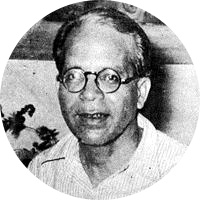
I am grateful to the officials and members of the Urdu Markaz London for inviting me to London to deliver the inaugural Faiz Memorial Lecture on the occasion of Faiz's first death anniversary. Initiating a lecture series in memory of Faiz is a commendable step, and I hope that through these lectures, the tradition of critical thought and reflection will flourish within the Urdu world. The appreciation of poetry and literature will become more widespread, deepening our insight and understanding of the various dimensions of literature and life. The Urdu world is no longer confined to the subcontinent; it is rapidly evolving into a global community. Consequently, the responsibilities of Urdu writers and intellectuals have grown significantly. While remaining grounded in their own foundations, environment, history, and culture, they must also keep an eye on global horizons. In these turbulent times, they must rise to meet the dual demands of change and continuity.
Through today's lecture, I intend to explore the relevance of Iqbal and Faiz, clarify the relationship between the two, and examine certain contemporary literary realities. Any such endeavor is inherently incomplete, yet it is precisely through such incomplete efforts that a complete picture ultimately emerges. Criticism is not the final word; rather, it is an illuminating word. Here, I also consider it necessary to state that, in my view, the primary task of criticism is the study of the art, not the artist. While studying the artist certainly aids in understanding the art, the art itself is ultimately greater than the artist.
Knowledge of an artist’s life, environment, psychology, and personality is important for a critic because it helps unravel the mysteries, nuances, and complexities of the art. After all, art does not emerge in a vacuum. It is the luminous trajectory of a historical moment. The central importance lies in that very light through which the imagination has given form to shadows. Enlightened thought has bestowed it with radiance and fervor, and the word has embraced the vastness of the universe. Language has become layered and multidimensional, and style has extracted pearls of individuality from the ocean of literary tradition. It begins in delight and, as Robert Frost observed, ends in wisdom.
Much has already been written about both Iqbal and Faiz. While an entire archive has been compiled on Iqbal, a tremendous amount has been said about Faiz as well. However, more attention has been paid to Iqbal’s philosophical thought than to the miracle of his art. Even regarding Iqbal’s thought, one often encounters partisanship rather than true literary appreciation, veneration rather than critical evaluation, mere reiteration rather than analytical discourse, and exegesis rather than literary criticism. Iqbal’s thought possesses such profound depth that it can easily withstand rigorous criticism and analysis, yet our conformist mindset has failed to focus on this aspect. For instance, Hermann Hesse’s observation that Iqbal is the sovereign of three realms of thought—Indian, Western, and Islamic—has not been given the thorough consideration it deserves. Undoubtedly, Islamic thought holds central importance for him, but the seamless blending of Indian and Western ideas within this towering edifice of thought is not widely acknowledged.
Furthermore, Iqbal’s art is incredibly all-encompassing. It employs such a vast array of artistic conventions and stylistic techniques, possesses such profound wisdom in its underlying principles, and constitutes such an exalted body of poetry that, keeping our literary tradition in mind and evaluating it against global standards, much more remains to be written about it. For example, the use of rhetoric and oratory in poetry is nowadays thoughtlessly dismissed. As Northrop Frye has noted, this is not merely a flight of emotion; it is also an established artistic convention. How can we possibly exclude from the realm of poetry that second voice of poetry to which T.S. Eliot referred?
As for Faiz, compared to Iqbal, his philosophical scope may be more limited, yet it is remarkably profound and cohesive. His art can rightfully be considered the pinnacle of a specific literary tradition. However, it is also a reality that much water has flowed down the Indus and the Ganges since Iqbal. Beyond Faiz, new dimensions of thought and new paradigms of ideals have emerged. Therefore, if we seriously and thoughtfully study the intricate patterns woven upon the canvas of tradition and experimentation—within the context of Iqbal, Faiz, and contemporary literature—our minds will be illuminated anew, and a more comprehensive critical perspective will emerge.
Let me draw your attention to a crucial point right at the outset. The significance of Iqbal’s thought and the influence of its political implications are undeniable; however, the study of his thought must transcend these boundaries. Similarly, while it is essential to keep Faiz’s political ideology and the immense popularity of his personality in mind, the true value of his poetry is not solely dependent on these factors. Furthermore, whether discussing Iqbal, Faiz, or contemporary poets, we must be highly cautious in our use of superlatives and adjectives. In Urdu criticism, words like great are used far too liberally. There was a time when the Karachi-based journal Afkar would describe Krishan Chander as the greatest artist in Asia. Yet, beyond the subcontinent, Asia is home to many major languages that boast vast and significant literary traditions. We simply do not possess a universal metric by which we can measure and compare the writers and poets of such diverse languages.
The assertion by some that this is exclusively the era of Faiz does a great injustice to N.M. Rashid, Meeraji, and other notable poets. Aziz Ahmad once quoted a statement by Sajjad Zaheer, asserting that Iqbal was, by and large, a progressive. Iqbal himself declared that he was neither a simpleton of the mosque nor a mere product of modern civilization. Therefore, we must abandon the habit of attaching labels and instead focus on experiencing the true potency and sharpness of the wine itself.
What we call a literary tradition is never monolithic, nor does it move in a straight line. It does not consist of a single highway, but rather multiple highways, each with its own intersecting footpaths. A literary tradition is like a mighty river, fed by numerous large and small tributaries, and from which other rivers eventually branch out. The literary tradition of Urdu, too, has its many milestones and turning points. The Urdu literary tradition is not solely the tradition of the ghazal. It is equally the tradition of the nazm, encompassing forms such as the masnavi, qasida, qita, rubai, and marsiya, all of which fall under the category of structured poetry (paband nazm). The inception of the modern nazm is typically attributed to Hali and Azad. It can be considered modern in the sense that it introduced new themes, yet its structural forms—the masnavi, qita, and rubai—remained the same familiar genres. If thematic innovation is the sole criterion for the modern nazm, then this crown should rightfully rest on the head of Nazeer Akbarabadi. Ultimately, it is the synthesis of all these forms—the traditions of the qasida, masnavi, and marsiya within the nazm, alongside the tradition of the ghazal—that presents the true and complete picture of our literary heritage.
Viewed from another angle, Mir, Sauda, Mir Hasan, Nazir, Anees, and Ghalib represent our classical tradition, while Hali and Akbar represent the tradition that followed. Iqbal is connected to both Ghalib and Hali, whereas Faiz is connected to Ghalib and Iqbal. Mir’s tradition did not manifest in the works of Iqbal and Faiz; rather, it traveled through Hasrat and Fani to find expression in Nasir Kazmi, Khalil-ur-Rehman Azmi, and Ibn-e-Insha. Faiz, on the other hand, has frequently acknowledged Sauda's influence. Anees's influence is evident in Josh and Jameel Mazhari, while Nazir Akbarabadi's presence can be felt in many modern poets. Ultimately, to understand Iqbal, one must view him against the backdrop of Ghalib and Hali; to understand Faiz, one must view him against the backdrop of Ghalib and Iqbal. Let us first discuss Iqbal.
Among Iqbal’s early works is a poem dedicated to Mirza Ghalib. It highlights the soaring reach of Ghalib’s imagination. It further suggests that entire verdant worlds sprout from the fertile soil of Ghalib’s thought, ultimately likening him to a kindred spirit of Goethe. Ghalib's significance becomes even more pronounced in Iqbal's Javed Nama. For Ghalib, the word is a magical talisman unlocking a treasure trove of meaning. A great poet does not merely rely on the existing vocabulary of a language; he forges a new language of his own. Since the time of Aristotle, it has been acknowledged that the masterful use of metaphor is the true hallmark of a poet.
Zauq and many of Ghalib’s contemporaries were content with using dormant, conventional metaphors. Ghalib, however, is the creator of vibrant and elegant metaphors. He employs multi-layered, and occasionally ambiguous or dialectical, vocabulary. There is a distinct playfulness in his thought. He is both the burnt-out candle bearing the scar of love's separation, and the nightingale of a garden yet to be created. He is not merely a poet of past memories, but also of the agony of the present and the shadows of the future. Similarly, he captures the wonder of childhood, the tumult of youth, and the wisdom of old age. It must not be overlooked that his intellect is not captive to the intoxication of customs and constraints; he actively deviates from conventional thinking. He is a champion of human dignity, while also possessing a broader vision of humanity. He is a singer of intellect and a champion of earthliness amidst pearl-raining clouds. Furthermore, after erecting towering minarets of thought in his poetry, he also nourished the garden of Urdu prose through his letters. He is among those great poets of ours who can rightfully be called intellectuals.
Iqbal can be best understood against the backdrop of the movement initiated in our literature by Sir Syed and his companions. Sir Syed’s movement was a wave of the same current that Raja Ram Mohan Roy and his associates had set in motion in Bengal. Modern scholars often label it an incomplete movement because it quickly became entangled in the pursuit of government jobs and political rights, yet its far-reaching impact cannot be denied. The Sir Syed of Tahzeeb-ul-Akhlaq and Tafseer-ul-Quran was soon confined within the domes of the MAO College. However, it is no small matter that both Abul Kalam Azad and Iqbal were profoundly influenced by Sir Syed’s rationalism and reformist mission. While Sir Syed’s own generation was merely dazzled by the West, the newly educated generation that emerged under the influence of his movement had a direct and deep understanding of Western thought and literature.
In nineteenth-century India, the British teachers imparting English education were predominantly influenced by neoclassical values; it was as if the Romantic movement in the West held no significance for them. This was despite the fact that Romanticism had sparked a significant revolution in both philosophy and literature in the West. Although Iqbal was born into a religious family and raised in an atmosphere of Sufism, his intellectual horizons were broadened on multiple fronts. Through the influence of Maulvi Mir Hasan, he was introduced to Persian literature; through Thomas Arnold, he discovered Western philosophy; and in college, he was captivated by the magic of the Romantic poets. All of this was further polished by Ghalib’s intellectual playfulness and profound thought. Hali provided this intellectual awakening with a specific direction. It was because of this trajectory that a deep emotional attachment to the concept of nationalism, along with a purposeful and political undertone, emerged in his work.
Today, this wave of Westernization is often condemned as a mere byproduct of the colonial era. Even Faiz spoke of the poetry of Hali and his contemporaries with considerable disdain. However, people tend to forget a crucial point: it was through this very colonial era that the East became acquainted with the West. I agree with Marx’s assertion that although the subcontinent fell victim to the exploitation of Western imperialism, this impact also served as a catalyst for a broader historical process. The East, which, in Iqbal’s words, had been as silent as the divine realm, became brimming with the vibrant tumult of life. And there was much more to this tumult than just the smoke of industrial machines.
While classical literature does contain elements of reality, it is overwhelmingly dominated by an idealistic or utopian conception of literature. The inclination toward realism in literature is a profoundly far-reaching trend. Granted, it is not the be-all and end-all of literature. This shift toward realism began with Hali and Azad. While this movement may not have produced a truly great poet, it certainly produced several important ones. Purposeful and political poetry does not gain literary significance solely on the strength of its message or objective. True poetic essence can exist alongside a message, purpose, or ideology, just as it can exist entirely without them.
Akbar Allahabadi’s entire body of poetry is purposeful; it cannot be casually dismissed as mere satirical rhyming, as Akhtar Raipuri once did. Whether implicit or explicit, all poetry carries a message and a purpose. Therefore, the fact that Iqbal’s poetry is purposeful and message-driven does not diminish its significance, greatness, or universality. The real question is whether the purpose and message successfully mold into verse, transform into true poetry, create a world of their own, and elevate a personal experience into a cosmic phenomenon. Furthermore, universality itself is always rooted in a specific locality, a distinct vision, or an all-encompassing experience. One does not necessarily have to agree with that vision; it is enough that the vision is internally valid, coherent, and organized, and that it successfully leads the reader to its magical vistas. Just as the visions of Dante, Eliot, or Yeats possess a profound universality, so too does the vision of Iqbal.
Both Iqbal’s ardent admirers and his harshest critics have done him a disservice. His admirers seek the greatness of his intellectual struggle solely within his Islamic thought. Conversely, his critics dismiss his religious thought as narrow, reducing him to the poet of a single sect. Iqbal’s poetry is not strictly religious; rather, it is the poetry of a religious and moral vision. Its true subject is humanity and its destiny. Whether or not he can be classified as a Humanist in the Western sense of the word, his work radiates a profound humanism—one that seeks to teach humanity the attributes of the Divine, that views man as a co-creator with God, that possesses the audacity to challenge the Divine order, and that dares to shatter the illusions of time and space to forge ahead. Such a grand vision requires a framework, and this framework was provided to him by the tenets of Islam.
The fundamental core of Iqbal’s thought is his philosophy of Khudi (Selfhood). This philosophy derived its vitality and nuance from his study of Western thought—specifically, as Annemarie Schimmel notes, from the German school of Vitalism. Iqbal was far more fascinated by the metaphysical man than the sociological man. Much like Marx, he initially failed to grasp the true power of nationalism, though he certainly came to realize it toward the end of his life. While the poet takes a backseat in Asrar-e-Khudi (The Secrets of the Self), the significance of the work lies in how philosophy seamlessly transforms into poetry. This happens because his philosophical thought was forged in the furnace of the intellect until it became a profound emotional experience of the heart.
In Rumuz-e-Bekhudi (The Mysteries of Selflessness), the concept of the collective community revolves around the doctrine of Tawhid (the Oneness of God). Theoretically, this doctrine can serve as the foundation for human equality. However, in practical historical terms, it has failed to unite humanity into a single entity. The flaw lies not in the doctrine itself, but in human beings—in the inner beast, the primal instincts, and the internal turmoil that constantly wreak havoc. The canvas of the poet of Bang-e-Dara (The Call of the Marching Bell) is vast. It encompasses a deep quest and exploration, spiritual anguish, and nostalgia for the past. It also reflects an acute awareness of the turmoil of the present and a firm resolve to forge a new order of life. Payam-e-Mashriq (The Message of the East) and Zabur-e-Ajam (Persian Psalms) resonate with a melody that, while observing every facet of life, can be described as the battle anthem of humanity. Armed with a profound understanding of every shift and turn of its era, as well as every page of its history, this poetry becomes the custodian of the Utopian ideals found in modern thought.
In terms of the poetics of wisdom, Iqbal reaches his absolute zenith in Javid Nama. Subsequently, in Bal-e-Jibril (Gabriel's Wing), the combined musicality of Payam and Rumuz, along with the profound wisdom of Javid Nama, bestows upon Urdu poetry an unprecedented elevation of thought and grandeur of style. This synthesis establishes him as the exponent, commentator, spokesman, and messenger of a new Eastern consciousness. Yet, Iqbal still has more arrows in his quiver. In Zarb-e-Kalim (The Rod of Moses), he demonstrates a mastery of the epigram, showcasing striking originality of thought and leaving a profound impact. Finally, in Armughan-e-Hijaz (The Gift of Hijaz), he embodies the destiny of the artist—experiencing profound solitude amidst the crowd, remaining a companion to all while standing distinctly apart from everyone.
In a sense, it was Ghalib who endowed Urdu poetry with intellect and a playful agility of thought. However, it was Iqbal who gifted this intellect with elevation, excellence, comprehensiveness, and profound depth. This is why scholars like the author of The Venture of Islam and W.C. Smith, the historian of modern history, both agree that in the twentieth-century Islamic world, Iqbal stands at an extraordinary pinnacle in terms of both thought and art.
Iqbal’s core philosophical thought is primarily found in his lectures and certain English essays. In his poetry, however, this thought gains significance through its direction, its ultimate destination, and its atmosphere, as well as its multidimensionality and depth. Abid Husain was not wrong when he noted in Hindustani Musalman Aina-e-Ayyam Mein (Indian Muslims in the Mirror of Time) that Indian Muslims mistook Iqbal’s poetry for his philosophy, while almost entirely ignoring his actual philosophical writings. In poetry, abstract thought holds little value on its own; what matters is its transformation into lived experience, its ability to give direction to emotion, to infuse a felt idea with radiant intensity, and to paint intricate patterns with the colors of imagination.
Faiz made a profound observation regarding Iqbal: he argued that one should look to Iqbal's lectures to understand his philosophy, while his poetry should be appreciated for its lyricism and rhetorical power, alongside its spirit of quest, exploration, and deep contemplation. Similarly, when S.M. Ikram stated that the West made Iqbal into Iqbal, or when Iqbal Singh pointed out that Iqbal possessed an agonizing awareness of the present, they had accurately grasped Iqbal’s true intellectual inclination and trajectory. Iqbal’s new engagement with Western thought was indeed a product of the West itself, and it is this agonizing awareness of the present that places him firmly in the ranks of the moderns. In the preface to Asrar-e-Khudi, he explicitly stated that to understand the secrets of life, the literature and intellectual concepts of Western nations serve as the best guide.
Through his philosophy of relentless striving, he made the quest for a modern social order the central focus of his intellectual journey. In his lectures, he clearly stated that, intellectually, the Islamic world is moving rapidly toward the West. He also expressed the view that there is nothing inherently wrong with this shift, because as far as knowledge and wisdom are concerned, Western civilization is essentially an advanced manifestation of certain aspects of Islamic civilization itself. He had already noted in his preface that it is our duty to carefully observe the evolution of human thought and to exercise independent critical judgment in this regard. Later, in his fifth lecture, emphasizing both change and continuity, he observes:
If a society is founded upon this concept of Absolute Reality, it is imperative that it accommodates both permanence and change within its existence. It must possess certain eternal principles to maintain order and discipline in its collective life, because in this ever-shifting world of continuous change, it is only through eternal principles that we can firmly plant our feet. However, the existence of eternal principles does not mean the negation of all possibilities of change and evolution. Change is a reality that the Holy Quran has declared to be one of the greatest signs of God Almighty. To deny change would be to strip movement from something that is inherently mobile by nature. It is precisely the result of this denial that a state of stagnation has paralyzed the Islamic world for the past five hundred years.
Two distinct trends are clearly visible within modernity. The first belongs to the nineteenth century, and the second emerged in the twentieth century following the First World War. In his book The Tradition of Modernity, Elman has identified all the various facets of modernity. He elucidates the impact of the revolution of rising expectations through the lenses of worldliness, humanism, faith in science and technology, progress, dreams of social justice and equality, rationality, and secular thought. To varying degrees, all these trends can also be found in Iqbal’s work. However, the true proof of his sagacity and foresight lies in the fact that he recognized—and warned against—the dangers of the blind worship of material prosperity, science, and industrialization. He cautioned against treating pure rationality as the ultimate truth while entirely discarding spirituality.
Modernization essentially means bringing about changes within our social institutions. The social institutions of others cannot be adopted exactly as they are; rather, they must be adapted to suit our own environment. To steer this process along the right path, it is crucial to cultivate a shift in the mental attitudes, thinking, and temperament of the people. Iqbal strongly emphasized this very point in the preface to Payam-e-Mashriq. His focus on education is a natural extension of this mindset. Thus, Iqbal advocates for an intellectual revolution. Unlike Marx, he does not argue that a revolution will automatically materialize simply by altering the relations of production. In this context, Westernization is an essential component of modernization, but it does not constitute the entirety of it. When Western thought emphasizes knowledge and intellect, it champions the conquest of nature. Ultimately, this trajectory leads toward humanism.
If it paves the way for public service and social equality, and awakens creative abilities, then it is well and good. But when it becomes confined to materialism, descends into the exploitation of humanity through the rule of machines and capitalism, attempts to impose a single type of cultural and social institution upon everyone, and leads down the path of greed for wealth, Iqbal criticizes it severely. Iqbal possesses a far-reaching mind. He is aware of the fact that progress does not move in a straight line, and that advancement in certain aspects can also lead to decline in others.
He also knows that every civilization comes into existence under specific historical and geographical conditions, and its models cannot always be applied to other societies and civilizations. Therefore, every civilization and society must discover its own existence, understand its inner essence, and maintain its individuality or identity, because only on this foundation can it build its structure in accordance with global trends. Iqbal understood this point before many social thinkers: in the struggle for progress, every underdeveloped country does not need to replicate the history of developed nations verbatim; certain stages can be skipped. No real attempt has been made to reach the depths of Iqbal's thoughts regarding freedom of thought and democracy. If not mature, freedom of thought can lead to anarchy. And democracy does not mean the dictatorship of the majority, but rather the broadest possible sharing of resources.
The popularity of Iqbal's philosophy has obscured the deep implications of his desire for change. Iqbal did not do justice to himself by stating that his inclination was towards the past. Iqbal is not a conservative; he desires change, but with a sense of continuity. In the words of Wilfred Cantwell Smith, he is a liberal, yet liberals have also been the target of his satire. He is an intellectual who has scoffed at mere knowledge and intellect, yet this standard-bearer of Ishq (passionate devotion) also wants to teach Ishq to follow God-given intellect. He considers performing extraordinary deeds a virtue, and goes so far as to say that if blind imitation were a good thing, prophets would have simply walked the path of their ancestors. Perhaps this is the influence of this couplet by Ghalib:
Ba man mayaawez ae pidar
Farzand-e-Aazar raa nigar
Har kas ke shud sahib-e-nazar
Deen-e-buzurgaan khush nakard
[Do not quarrel with me, O father / Look at the son of Azar (Abraham) / Whoever became a person of true vision / Did not accept the religion of his ancestors.]
In the first phase of modernization, there is optimism, an anthem to human greatness, a dream of social justice, and a desire to make the world a paradise. This can also be called a form of romanticism. It is the picture of a Utopia or an ideal world, whether envisioned with the help of Islam or under the influence of Marx. In the second phase, there is uncertainty, the knowledge of human psychology, the meaninglessness of the universe, and a focus on Dystopia instead of Utopia. In Iqbal's words, instead of the lamp on the street, the turmoil within the home is in view. Iqbal and Faiz represent the first phase. Noon Meem Rashid represents the second phase. The job of a literary critic is to do justice to both.
It was mentioned above that Iqbal expands upon Hali's intellectual inclination and Ghalib's artistic methodology. Hali's intellectual inclination led him towards the nazm. Because of the significant number of ghazals in Iqbal's work, their unique style, and the influence of the ghazal's temperament on his nazms, his ghazals were given so much importance that the fact began to be overshadowed: his real achievement is his nazm. In his collected works, there are 354 short and long nazms and 127 ghazals. That is, almost three times as many. Although Iqbal initially made more use of the musaddas (six-line stanza), he is capable of employing all poetic forms. However, his favorite form is the tarkeeb-band (stanzaic poem with a recurring refrain).
The author of Bahr-ul-Fasahat even considers the musaddas to be a form of tarkeeb-band. In Tarana-e-Hindi, Iqbal used the form of the ghazal, which includes both a matla (opening couplet) and a maqta (closing couplet). In his tarkeeb-bands, Iqbal did not restrict himself to an equal number of couplets in every stanza, the most interesting example of which is found in Huzoor-e-Risalat Ma'ab. The tarkeeb-band in Shama Aur Shair has every stanza in the form of a qita, and in Walida Marhooma Ki Yaad Mein, it is in the form of a masnavi. In short, Iqbal exercised considerable freedom within the constraints of his nazms, and this freedom is proof of his artistic consciousness. The variety of meters is greater in Bang-e-Dara and less in Bal-e-Jibril. This misled Gyan Chand into thinking that Iqbal turned away from Indian rhythms towards Hijazi and Persian rhythms. The specific themes in Bal-e-Jibril demonstrate the artist's concentration, and that is why the meters are also specific.
In Iqbal: Ek Mutala (Iqbal: A Study), Kalimuddin Ahmad, after analyzing a few of Iqbal's longer and shorter nazms, attempted to prove that Iqbal's nazms lack the kind of coherence, continuity, and evolution of thought found in the poems of certain Western poets. He also stated that if certain couplets were deleted or their order changed, it would not make much of a difference; rather, the poem might even improve. He also objected to the repetition of certain themes, such as Ishq, and to his oratorical style.
He did not like the structure of Tulu-e-Islam and Masjid-e-Qurtaba, and he only found poetic quality in the first few stanzas of Khizr-e-Rah. He even found the stanzas dealing with the passion and the impact of the Muslims' lament to be devoid of poetic quality. In reality, the evolution of the nazm in our tradition is different from its evolution in the West. It contains the influence of the ghazal, astonishing manifestations, and frequent leaps of thought. Furthermore, despite the oratorical tone in Shikwa and Tulu-e-Islam, to ignore the majestic warmth of sacred fire temples found within them is against literary honesty.
In Iqbal's work, the standard of both short and long nazms is not only higher than that of his predecessors, but, in Iqbal's own words, one can find examples of both successful and standard poetry within them. Among his short nazms, the prominent poetic quality of Himala, Khuftagan-e-Khak Se Istifsar, Mirza Ghalib, Aql-o-Dil, Ek Arzoo, Jugnu, Naya Shivala, Daagh, Kinar-e-Ravi, Mohabbat, Haqeeqat-e-Husn, Chand Aur Tare, Koshish-e-Natamam, Insan, Ek Shaam, Sitara, Goristan-e-Shahi, Falsafa-e-Ajam, Chand, Bazm-e-Anjum, Sair-e-Falak, Huzoor-e-Risalat Ma'ab Mein, Irtiqa, and Shakespeare, and among his long nazms, that of Shikwa, Shama Aur Shair, Walida Marhooma Ki Yaad Mein, Khizr-e-Rah, and Tulu-e-Islam, cannot be denied.
It is a different matter that not all of his long poems are equally well-crafted. In Bal-e-Jibril, Lenin, Farishton Ka Geet, Al-Arz Lillah, Lala-e-Sehra, Farishtay Adam Ko Rukhsat Karte Hain, Rooh-e-Arzi Adam Ka Istiqbal Karti Hai, Jibril-o-Iblis, Azan, Shaheen, and Zamana are short poems. Among the long poems, Masjid-e-Qurtaba, Saqi Nama, and Zauq-o-Shauq are notable. In Zarb-e-Kalim, the notable long poems are La Ilaha Illallah, Ilm-o-Ishq, Madaniyat-e-Islam, Mard-e-Musalman, Zamana-e-Hazir Ka Insan, Parda, Takhleeq, Nigah, Shua-e-Umeed, Ahram-e-Misr, Funoon-e-Latifa, Shair, Hunarwaran-e-Hind, Zauq-e-Nazar, and O Ghafil Afghan. In Armaghan-e-Hijaz, besides the long poem Iblis Ki Majlis-e-Shura, Masood Marhoom and Hazrat-e-Insan are worth mentioning.
It is worth noting that in the poems of Bang-e-Dara, we find wisdom within poetry; in Bal-e-Jibril, poetry within wisdom; and in Zarb-e-Kalim, poetry within intellectual subtlety. The tradition of allegorical tales actually belongs to Rumi, and in Urdu, Hali, Shibli, and Akbar paid attention to it. However, Iqbal's Raheela and Jang-e-Yarmouk Ka Ek Waqia possess considerable structural mastery. Iqbal's elegies, whether written for Dagh, his late mother (Walida Marhooma), or Ross Masood, are not merely chronicles of sorrow like some famous elegies by Western poets; they also illuminate the mind regarding life and the universe. After the lyrical tone and oratorical grandeur of Bang-e-Dara, there is a clear inclination toward dramatic elements and symbolism in Bal-e-Jibril.
This journey from simile to metaphor, and from metaphor to symbol, is highly significant. Similarly, after the first and second voices, the third voice in Jibril-o-Iblis possesses great eloquence. A single line from Jibril-o-Iblis—
Dard-o-dagh-o-soz-o-saz-e-aarzoo-o-justajoo
[The pain, the wound, the burning, and the rhythm of desire and quest]
—encapsulates everything that was expressed across two stanzas regarding Khizr-e-Rah. In the final part of the poem, the influence of Goethe's Mephistopheles is palpable. However, I consider it necessary to repeat the statement of my teacher, Khwaja Manzoor Hussain, that this poem can be placed on par with some of Goethe's finest works. Shua-e-Umeed also demonstrates Iqbal's technical maturity in terms of its structure. It is a manifestation of Iqbal's universality, elevated by its resolve to turn every night into dawn, and its transcendence above both a disillusionment with the East and an anger toward the West.
Experts in stylistics and structuralism have demonstrated, with the help of statistics, that the fundamental form of expression is prose. Poetry is defined as a deviation from this fundamental form, or the introduction of gaps and pauses within it. According to their research, the ratio of deviation from prose is relatively low in classical poetry. It is higher in romantic poetry, and even higher in modern poetry. In Iqbal's poems, this deviation generally aligns with classical standards, although in some poems, the degree of deviation is somewhat higher. Therefore, he can be called modern while being classical, and classical while being modern. Faiz shares this same stylistic trait. However, in the works of Rashid and other modern poets, this deviation is much greater.
Iqbal found the nazm (poem) in a rather rudimentary state. But he left it highly sophisticated in its indirect use of words, and richly endowed in its conversational and dramatic aspects. He experimented with similes, utilized the semantic richness and aesthetic beauty of metaphors, and ultimately employed the maturity of symbolic expression and the insightfulness of the epigram. He was certainly influenced by the style of the ghazal, but ultimately, he also provided proof of his independence from it. Iqbal was influenced by the Western poem, but his poetry does not merely imitate it; rather, it expands upon his own literary tradition. Compared to Iqbal, Faiz's concept of the nazm is more Western, but this aspect will be elaborated upon later.
What did Iqbal give to the Urdu ghazal? The ghazals in Iqbal's Bang-e-Dara do not hold a significant place in the world of the ghazal; the true contribution he made to the Urdu ghazal is visible in Bal-e-Jibril. It is a fact that despite his connection to Dagh and Hali, he carries forward the intellectual playfulness and artistic elegance of Ghalib. Like Zabur-e-Ajam, the first part of the ghazals in Bal-e-Jibril addresses God, while the second part addresses humanity, the universe, and the pursuits of passion. Then, he gradually inclines toward ghazals without a radeef (refrain). Among the 28 ghazals in Bang-e-Dara, none are without a radeef. In the first part of Bal-e-Jibril, 8 out of 16 ghazals are without a radeef, and in the second part, 42 out of 61 lack a radeef. All 5 ghazals in Zarb-e-Kalim are without a radeef, and in Mihrab-e-Gul Afghan Ke Afkar, 16 out of 19 lack a radeef. The Urdu section of Armaghan-e-Hijaz contains 17 ghazals, all of which are without a radeef. Many of these ghazals do not even have a matla (opening couplet).
A curious fact is that in one ghazal of Bal-e-Jibril and one in Armaghan, the final couplet employs a different radeef and qafiya (rhyme scheme). This goes against the traditional etiquette of the ghazal, though it can certainly be called an experiment. The ghazals in Bal-e-Jibril and Zarb-e-Kalim are not long; many are continuous (musalsal), and a unity of effect is present in most of Iqbal's ghazals. It is an accepted fact that the language of Iqbal's nazms is influenced by the ghazal, and his ghazals are influenced by the language of the nazm, as seen in the line:
Kamal-e-tark hai taskheer-e-khaki-o-noori
[The perfection of detachment is the conquest of the earthly and the celestial]
His assertion that the ghazal does not have a fixed language, but rather that any heart-opening (dilkusha) sound, whether Persian or Arabic, can serve the purpose here, is highly significant to me. The word dilkusha holds great importance here.
The language of the ghazal is not merely the language of conversing with the beloved; it is the language of expressing oneself and one's pursuits of passion, and these pursuits encompass a vast scope. In a few ghazals, he has used rhymes like tahqeeq (research) and ahd-e-ateeq (antiquity), or saf-ba-saf (row by row) and sar-ba-kaf (risking one's life), yet he never let go of the lyrical essence (taghazzul). Here, ahd-e-ateeq is a fine example of this. Overall, his ghazal does not possess a whispering tone; rather, it is the world-reflecting goblet (Jam-e-Jahan Numa) of an awakened mind and a deeply cultivated consciousness. These ghazals stand out due to their musicality, the brilliance of their thought, and the dignity of their language. In them, the language is both layered and multi-dimensional.
After all, what is the reason that these verses come to mind on various occasions in life, and preserve a mood or a legacy, a glimpse of some truth, or the radiance of a manifestation in the mind in such a way that the mind not only relishes it but also expands? Mir's declaration that he should not be called a poet, or Iqbal's claim that he is not well-versed in language, are not merely formal expressions of modesty; rather, they guide us toward a specific standard distinct from ordinary benchmarks. Within this negation lies another affirmation. Iqbal's ghazal is the reflection of enlightened thought. He has given a great deal to the modern ghazal.
Iqbal and Faiz
Faiz was born thirty-four years after Iqbal. Iqbal’s date of birth is considered to be November 9, 1877, while Faiz was born on March 11, 1911. Both were from Sialkot. The difference is that Iqbal was born in the city, whereas Faiz was born in Kala Qadir, a village in Sialkot. Both received their early education from Mir Hasan, and both earned their Master of Arts degrees from Government College Lahore—Iqbal in philosophy, and Faiz first in English, then in Arabic. Neither received formal schooling in Persian; rather, they gained mastery over the Persian language and its literature through their own personal efforts. Both wrote prose in addition to poetry, although the excellence of their prose remained overshadowed by the immense fame and greatness of their poetry. Both had considerable command over the English language. Edward Thompson praised Iqbal’s English prose, while Faiz’s editorials for the Pakistan Times also became quite popular due to their linguistic and expressive brilliance.
Faiz’s father was among Iqbal’s friends, and it was on Iqbal’s recommendation that Faiz secured admission to Government College. Faiz wrote two essays on Iqbal, which are included in his collection Mizan. Besides this, he mentioned his meetings with Iqbal and his impressions of him on several occasions. The axis of Iqbal’s thought was religion, while the axis of Faiz’s thought was culture. Outwardly, their paths seem divergent, but in reality, this is not the case. Iqbal faced criticism in certain circles, but Faiz never raised any objection against Iqbal at any time or on any occasion. He firmly believed in his greatness and repeatedly acknowledged the towering heights of Iqbal’s artistry. A fine example of this is found in his poem dedicated to Iqbal, which begins like this:
Aaya hamare des mein ik khush-nawa faqir
Aaya aur apni dhun mein ghazal-khwan guzar gaya
Sunsan rahein khalq se aabad ho gayin
Viran maikadon ka nasiba sanwar gaya
[A sweet-voiced mendicant came to our land,
He came, sang his ghazals in his own trance, and passed on.
Desolate paths became populated with people,
And the fate of ruined taverns was transformed.]
In addition to philosophy, Iqbal also taught English literature at Government College Lahore. Faiz was an English teacher at MAO College Amritsar, and later taught English at Hailey College Lahore. It was in Amritsar that Faiz came under the influence of Mahmuduzzafar and Dr. Rashid Jahan, marking the beginning of his interest in Marxism. He himself wrote that reading the Communist Manifesto was an absolute revelation for him. Iqbal took an active interest in the Anjuman-e-Kashmiriyan, the Anjuman Himayat-i-Islam, and later in the politics of Punjab and the nation. Faiz worked in trade unions, served as the editor of the Pakistan Times, and was also the director of the Pakistan Arts Council for some time. However, fundamentally, neither Iqbal nor Faiz were practical men of action; at their core, both were poets.
Both became highly popular in their respective eras and subsequently evolved into an influential, visionary tradition. Among the towering poets we have had since Iqbal, the names of Josh, Firaq, and Faiz can certainly be cited. Overall, Faiz enjoys greater fame and popularity among them, and after Iqbal, it is Faiz’s personality and poetry whose greatness is most widely acknowledged on the global stage. What is the reason for this?
A distinct quality in Faiz that sets him apart from his contemporaries is his innocence, his reserved nature, his elevation above contemporary rivalries, and the gentleness of his expression and sweetness of his tone, despite standing firmly by his principles. Faiz possessed an extraordinary capacity for patience and tolerance. He was rarely seen enraged, though he certainly felt displeased at times. Rasheed Ahmad Siddiqui’s famous saying that a good poet is also a good human being is, obviously, not entirely true. We find many excellent poets who cannot be called good human beings. However, this saying holds perfectly true for Faiz, because he was both a great poet and a wonderful human being. Therefore, in my view, Faiz’s popularity is not entirely due to the significance of his poetry; his charming personality undoubtedly plays a substantial role in it. No one ever left Faiz’s company feeling annoyed or embittered.
In one of his essays, Professor Mujeeb mentioned the depth and multifaceted nature of Iqbal’s personality. Besides being a great poet and philosopher, Iqbal was also distinguished for his brilliant eloquence. In every gathering, the vast lexicon of his knowledge, his vibrant disposition, the playfulness of his thought, and the brilliance of his spontaneous wit would continuously unfold. Compared to Iqbal, Faiz was a man of few words who kept to himself. In Iqbal’s poetry, and occasionally in his letters, there is a sense of poetic boastfulness, which does not feel unpleasant. In Faiz, this tone is nowhere to be found—neither in his poetry nor in his casual conversations. I certainly noticed one thing: in conversation, Faiz would use the first-person plural we for himself instead of the first-person singular I. What psychological explanation can be offered for this?
Those who have read W.C. Smith’s book Islam in the Modern World will have certainly noted that Smith divides Iqbal into two parts: a progressive Iqbal and a reactionary Iqbal. In my view, this division is flawed because it is essential to consider Iqbal’s thought in its entirety; it cannot be compartmentalized in this manner. I would put it this way: Iqbal focuses on both change and continuity. He actually became Iqbal because he was a champion of change. However, alongside change, he also pays deep attention to continuity. Iqbal is a messenger of modernization. Yet, he wants to protect modernization from Westernization, and the fact is that modernization and Westernization are not synonymous. The two can be conceptualized separately. Being influenced by the West is the beginning of modernization, not its final destination.
Faiz is influenced by the change-oriented Iqbal. Iqbal wants to awaken the individual’s Khudi (selfhood) and considers this individual awakening essential for the collective good. For this collective good, he derives his principles from the Quran. Iqbal believed that imperialism, orthodox clergy, and spiritual charlatanism had diverted people’s attention from the wise teachings of the Quran. He desired a human brotherhood that would remain youthful through the joy of creation, continuously seeking the best through movement and action. Just as Rumi’s ideal human captures angels, hunts prophets, and seizes God, similarly, in the wilderness of Iqbal’s passion, Gabriel is but a lowly prey, and his heroic courage seeks to bring God Himself into his lasso.
Unlike Milton, Iqbal does not consider it necessary to justify the ways of God to men. Instead, he wants to teach Adam the divine etiquette. He has borrowed most of his terminology from religion, but overall, due to his philosophy regarding the greatness of mankind, he can be called a humanist. Although this humanism is different from European humanism and is better understood in the light of Sufi humanism. Like Iqbal, Faiz is also a humanist. The difference is that for Faiz, the center of thought is not religion, but human culture. Faiz wrote highly valuable essays on culture. In fact, he wanted to write a book on this subject but was ultimately unable to do so.
Although Iqbal was impressed by Mussolini's personality, he remained staunchly opposed to fascism. His symbol of the falcon (Shaheen) does not represent bloodshed; rather, it stands for selfhood (Khudi), soaring ambition, and freedom from the confines of a nest. While Iqbal was certainly influenced by Karl Marx, he could not fully embrace Marxism because it was rooted in an atheistic philosophy. Nevertheless, he felt an affinity for socialism and a deep aversion to capitalism. He was an enemy of imperialism and despised all forms of exploitation.
In a letter to Khwaja Ghulam-us-Saiyidain, Iqbal even described Islam as a form of socialism. Faiz, on the other hand, was a committed socialist. It was precisely his opposition to fascism that led him to serve in the army during the Second World War. He worked with several labor unions and played a pivotal role in spreading the Progressive Writers' Movement throughout Punjab. However, Faiz also believed that socialism should be adapted to the specific conditions of each country. V.G. Kiernan once described Faiz as a cultural Muslim. I interpret this to mean that the central axis of Faiz's thought was culture, whereas the axis of Iqbal's thought was religion. Yet, both are universal poets due to their shared humanism, their condemnation of capitalism, their advocacy for equality and justice, and their efforts to awaken human creative potential. Despite occasional moments of loneliness and sorrow in their work, both poets exhibit a robust optimism. It is necessary to say a few words about this optimism.
Through the power of imagination, poetry is not merely an interpretation of life, but a recreation of it. It is the art of perceiving and revealing order and harmony within life's chaotic, intersecting patterns, using vibrant language. Some poets, like Shakespeare and Ghalib, present life with all its inherent contradictions, wonders, and enchantments. Others manage to find unity amidst this multiplicity of colors, discovering connection and order within the contradictions. Dante, Iqbal, and Faiz belong to this second caravan. In both groups, literary greatness and elevation do not stem solely from the brilliance of their ideas. Rather, true greatness is achieved when thought transforms into art, when a single word expands to encompass a universe, and when a deeply felt idea finds its perfect aesthetic expression.
Optimism and pessimism are two distinct lenses through which to view life. While both are inherently one-sided, they both strike a chord in the human heart. Optimism is defined by a faith in life, a loyalty to a cause, the ability to find light in the darkness, and the vision to see the moon's silver lining behind the clouds. Pessimism, on the other hand, stems from the oppressions of life, the crushing weight of darkness, and the recurring sense that evil often triumphs over good. Both Iqbal and Faiz represent the optimistic perspective. This is essentially a nineteenth-century worldview that remained dominant until the First World War. Following the First World War, an anti-romantic wave surged through poetry and literature, shifting the literary focus away from what ought to be and insisting instead on what is.
Matthew Arnold pondered whether poetry could ever replace religion, but regardless of the answer, good poetry undeniably possesses a healing power and inspires the zeal to lead a better life. Iqbal and Faiz are both optimistic poets, and a profound healing power can be found in the works of both. Furthermore, both share a romantic temperament, though it is expressed through the refined etiquette of classical art. Both were exceptionally well-read, but the scope of Iqbal's study was broader than that of Faiz. In addition to Urdu, Iqbal produced a highly valuable body of poetry in Persian, a language Faiz did not write in—though, in his later years, Faiz did turn his attention toward Punjabi. Structurally, Iqbal wrote a significant number of long poems, whereas Faiz is primarily a poet of shorter verses.
Iqbal possessed a tremendous sense of spontaneous inspiration (Aamad). The majority of his verses were composed under the sway of this spontaneous flow, although he would later revise and refine them. Faiz, conversely, composed his poetry with deep, deliberate thought; many of his poems took weeks to complete, and several remain unfinished sketches. If Iqbal is a mighty river recognized by its awe-inspiring majesty, Faiz is a gently meandering stream. Iqbal's poetic voice is elevated, and his tone is magnificent. Faiz’s tone, on the other hand, is characterized by its softness and sweetness. Both poets engaged in lyrical poetry and demonstrated a mastery of rhetorical address, though it is true that the element of oratory is less pronounced in Faiz than in Iqbal. Both held a keen interest in the landscapes of nature, yet they utilized nature primarily as a backdrop. Neither can be classified as a nature-worshipper; rather, they are nature-painters. Their true and ultimate focus always remains on humanity.
The terminology most frequently employed by Iqbal includes concepts like Khudi (selfhood), Aql (intellect), Ishq (love/passion), Faqr (spiritual poverty), Qalandar (the free-spirited mystic), Mard-e-Momin (the perfect believer), Shaheen (the falcon), Lala (the tulip), and Junoon (divine madness). Iqbal drew his vocabulary predominantly from philosophy, religion, and mysticism. He also adopted certain symbols and motifs from classical poetry, infusing them with entirely new meanings. In Faiz’s work, words such as Daricha (window), Baam (rooftop), Zindan (prison), Zanjeer (chain), Junoon (madness), Daar (the gallows), Rind (the tavern-drinker), Chaand (the moon), Alam (banner/sorrow), and Maikada (the tavern) are similarly borrowed from the classical poetic tradition. However, Faiz imbued these traditional words with a profound pathos and atmosphere, forged in the heat of his personal anguish, political movements, ideological inclinations, and the events of his time. Matthew Arnold noted that one of the hallmarks of great poetry is its ability to leave an indelible mark on the mind, springing to memory on various occasions. In this regard, one can find dozens of verses by Iqbal that are routinely quoted in writings, public gatherings, and academic papers. Faiz, too, boasts a substantial number of such memorable verses. Consider these couplets by Iqbal:
Be-khatar kood para aatish-e-Namrood mein ishq
Aql hai mahv-e-tamasha-e-lab-e-baam abhi
[Love fearlessly leaped into the fire of Nimrod;
Intellect remains absorbed in the spectacle from the edge of the roof.]
Aag hai, aulaad-e-Ibrahim hai, Namrood hai
Kya kisi ko phir kisi ka imtihaan maqsood hai
[The fire is there, the progeny of Abraham is there, and Nimrod is there;
Does someone wish to put someone to the test once again?]
Hazaron saal nargis apni be-noori pe roti hai
Bari mushkil se hota hai chaman mein deeda-war paida
[For thousands of years, the narcissus weeps over its sightlessness;
With great difficulty is a true visionary born in the garden.]
Zamana ek, hayaat ek, kainaat bhi ek
Daleel-e-kam-nazari qissa-e-jadeed-o-qadeem
[Time is one, life is one, and the universe too is one;
The tale of the 'new' and the 'old' is but proof of a narrow vision.]
Sitaron ke aage jahan aur bhi hain
Abhi ishq ke imtihaan aur bhi hain
[Beyond the stars, there are still other worlds;
There are still more trials of love yet to come.]
Tere azaad bandon ki na yeh dunya na woh dunya
Yahan marne ki pabandi, wahan jeene ki pabandi
[Neither this world nor the next belongs to Your free servants;
Here, there is the compulsion to die, and there, the compulsion to live.]
Samundar se mile pyaase ko shabnam
Bakheeli hai yeh razzaqi nahi hai
[If a thirsty man receives but a drop of dew from the ocean;
This is sheer miserliness, not divine providence.]
Tere bhi sanam-khane, mere bhi sanam-khane
Dono ke sanam khaki, dono ke sanam faani
[You have your idol-houses, and I have my idol-houses;
The idols of both are made of dust, the idols of both are mortal.]
Apne mann mein doob kar pa ja suraagh-e-zindagi
Tu agar mera nahi banta na ban, apna toh ban
[Dive deep into your own soul and find the trace of life;
If you will not be Mine, so be it—but at least be your own.]
Now, observe these verses by Faiz:
Woh baat saare fasane mein jis ka zikr nahi
Woh baat un ko bohat nagawaar guzri hai
[The very thing that was never mentioned in the entire tale;
Is the very thing that has offended them the most.]
Hum parwarish-e-lauh-o-qalam karte rahenge
Jo dil pe guzarti hai raqam karte rahenge
[We shall continue to nurture the tablet and the pen;
Whatever the heart endures, we shall continue to write.]
Na sawaal-e-wasl na arz-e-gham, na hikayatein na shikayatein
Tere ahd mein dil-e-zaar ke sabhi ikhtiyaar chale gaye
[Neither the request for union, nor the plea of sorrow, neither tales nor complaints;
In your reign, this afflicted heart has lost all its rights.]
Karo kaj jabeen pe sar-e-kafan mere qatilon ko gumaan na ho
Ke ghuroor-e-ishq ka baankpan pas-e-marg hum ne bhula diya
[Tilt the edge of the shroud over my forehead, lest my killers suspect;
That after death, I have forgotten the proud elegance of love.]
Na tan mein khoon faraham na ashk aankhon mein
Namaz-e-ishq toh wajib hai be-wuzu hi sahi
[There is no blood left in the body, nor tears in the eyes;
Yet the prayer of love remains obligatory, even if performed without ablution.]
Dil na-umeed toh nahi nakaam hi toh hai
Lambi hai gham ki shaam magar shaam hi toh hai
[The heart is not devoid of hope, it is merely thwarted;
The evening of sorrow is long, but it is only an evening after all.]
Hum se kehte hain chaman wale gharibaan-e-chaman!
Tum koi achha sa rakh lo apne veerane ka naam
[The dwellers of the garden say to us, the exiles of the garden!
You should choose a pleasant name for your wasteland.]
Ziya-e-bazm-e-jahan baar baar maand hui
Hadees-e-shoala-rukhaan baar baar karte rahe
[The light of the world's gathering faded time and again;
And time and again, we kept reciting the tales of the radiant-faced ones.]
Gham-e-jahan ho, rukh-e-yaar ho ke dast-e-adoo
Sulook jis se kiya hum ne aashiqana kiya
[Whether it was the sorrow of the world, the face of the beloved, or the hand of the enemy;
Whomever we dealt with, we dealt with like a lover.]
Thak kar yunhi pal bhar ke liye aankh lagi thi
So kar hi na uthein yeh irada toh nahi tha
[Exhausted, my eyes had closed just for a fleeting moment;
To sleep and never wake up—that was never my intention.]
Reference has already been made to Iqbal’s long and short poems, including major works such as Shikwa, Jawab-e-Shikwa, Shama Aur Shair, and Walida Marhooma Ki Yaad Mein. His long poems include Khizr-e-Rah, Tulu-e-Islam, Saqi Nama, Masjid-e-Qurtaba, Zauq-o-Shauq, and Iblis Ki Majlis-e-Shura. Among his notable short poems are Himala, Ek Arzoo, Naya Shivala, Haqeeqat-e-Husn, Insan, Aashiq-e-Harjai, Bazm-e-Anjum, Irtiqa, Lenin, Zamana, Ilm-o-Ishq, Rooh-e-Arzi, Shaheen, Lala-e-Sehra, Shua-e-Umeed, Masood Marhoom, and Aye Wadi-e-Lolab. On the other hand, Faiz’s important poems include Tanhai, Bol, Hum Log, Raqeeb Se, Sheeshon Ka Masiha Koi Nahin, Yaad, Zindan Ki Ek Shaam, Subh-e-Azadi, Aye Roshniyon Ke Shehr, Hum Jo Tareek Rahon Mein Mare Gaye, Daricha, Mulaqat, Aaj Bazar Mein Pa-Bajaulan Chalo, Manzar, Dua, and Sar-e-Wadi-e-Sina.
Due to the influence of the ghazal tradition, even Iqbal’s longer poems lack absolute structural unity and continuity. In them, the train of thought occasionally leaps in different directions. Nevertheless, Iqbal made an invaluable contribution to the corpus of Urdu poetry, particularly the long nazm, and even his harshest critics concede that Saqi Nama is a structurally complete poem. Iqbal’s short poems fulfill all the technical requirements of the form and leave an indelible mark on the mind. The scope of these poems is vast, encompassing life and the universe, the individual and society, as well as history and civilization.
Faiz’s scope is not as vast, but the depth and impact of his work are undeniable. There is a gap of an entire generation between Iqbal and Faiz, which naturally results in a difference in their poetic sensibilities. Iqbal is heavily influenced by the Persian language, and his Persian poetry holds a highly exalted rank within the Persian literary tradition of the subcontinent. Despite being well-acquainted with English literature, the influence of English in Iqbal’s work is only visible in his translations. In Faiz’s work, however, the influence of English literature manifests in his very style, which blends Persian compound words (tarakib), the finesse of classical Urdu literature, and English-style metaphors.
It was for this reason that the poet Jigar Moradabadi objected to Faiz's use of the phrase the sprouting of hunger. Both Iqbal and Faiz began with the classical principle of veiling the naked truth, and both showcased their creative brilliance through simile and metaphor. Ultimately, however, both also resorted to unveiled, direct expression—Iqbal in his collection Zarb-e-Kaleem, and Faiz in poems like Kuch Ishq Kiya Kuch Kaam Kiya. Iqbal is a poet of a vast canvas, painting with vibrant, bold colors. Faiz focuses more on a few meaningful corners of this vast canvas, using subtle, muted colors to create a dreamlike atmosphere and a paradise of emotion. Iqbal’s favorite symbols are the sun and the tulip, both characterized by their intense hues. Faiz’s recurring motifs are the moon, the prison, and the window, which carry a blend of pain, pleasure, and a lingering ache. Lyricism is present in both, though it is more pronounced in Faiz than in Iqbal. Rhetoric and declamation are stronger in Iqbal, and lesser in Faiz. Dramatic elements are found in the works of both poets, though not in excess.
Keep Iqbal's Jibril-o-Iblis and Faiz's Do Awazein in mind. Is it a small feat that, when compared to Iqbal’s monumental legacy and despite his voice possessing such soaring grandeur, ecstasy, and pathos, Faiz’s own soft, sweet, heart-piercing, and mellow tone manages to leave its own distinct mark? Two of Faiz’s poems warrant special mention here: Subh-e-Azadi (The Dawn of Freedom) and Hum Jo Tareek Rahon Mein Mare Gaye (We Who Were Killed in Dark Paths). In the first poem, Faiz expressed everything yet deliberately refrained from pointing out exactly which destination had not yet been reached. This very ambiguity is the guarantor of the poem’s beauty and impact. Similarly, Hum Jo Tareek Rahon Mein Mare Gaye was written about Julius and Ethel Rosenberg, yet the poem reads as a universal elegy for any martyr slain in the dark alleys of oppression. This specific kind of profound ambiguity is found in Iqbal only in his poem Lala-e-Sehra.
Both Iqbal and Faiz employ such profound compound words that entire worlds of meaning reside within them. Faiz’s general style is simpler compared to Iqbal’s, yet intricate craftsmanship is evident in both. Both poets experimented with form, though not excessively. Upon seeing the highly experimental prose poem Pighla Neelam, Faiz famously asked Sajjad Zaheer for its instruction manual. Faiz considered it experimental enough to alter traditional rhyme schemes, occasionally employ internal rhymes, and sometimes use the English poetic technique of enjambment (run-on lines), where a sentence spills over and completes in the second line. Even his few free verse poems are not entirely free from structural discipline.
For both Iqbal and Faiz, ghazals hold as much importance as their nazms. In fact, the soul of their nazms is rooted in the lyricism of the ghazal. Faiz’s themes are limited compared to Iqbal’s. Iqbal repeatedly emphasizes selfhood (khudi), while Faiz emphasizes rebellious bohemianism (rindi), yet a profound philosophy underpins both. Many of Faiz’s ghazals are composed in the famous meters and rhyme schemes of the classical masters, but most reflect the unique flow of his own thought. Iqbal’s ghazals are defined by the poetry of wisdom; Faiz’s ghazals are defined by the poetry of pain. Iqbal’s ghazals are a martial anthem of absolute faith. While faith and certainty are also present in Faiz, his ghazals remain the standard-bearers of the poetry of suffering. Interestingly, Iqbal’s influence on the modern ghazal is minimal, and Faiz’s influence is not particularly deep either. The modern ghazal is far more entangled in the contemporary turmoil of the current era. Perhaps when the rhythm of the times changes, the musical instrument changes too.
The evolution of twentieth-century Urdu poetry can be understood through the triad of Iqbal, Josh, and Faiz. Among them, the importance of universality, philosophical depth, inner burning and melody, quest, and longing remains constant in Iqbal’s work. Josh Malihabadi’s achievements cannot be ignored either, although his romanticism carries a heavily authoritative tone. Following them is the significance of Faiz, who took Iqbal’s message-driven cadence and gave it a new direction. Faiz believed that poetry could be both political and non-political. His true significance lies in the fact that he produced the finest political poetry in the Urdu language. This political poetry became vibrant and elegant precisely because it was fueled by his romantic vision and his unwavering belief in a better society.
Both Iqbal and Faiz are masters at feeling the pulse of words. In their diction, both exhibit an economy of language that ultimately leads to precision and a powerful impact. Josh is a master of vocabulary, but he lacks refinement in how he deploys those words. A sense of loneliness and a mild melancholic undercurrent are the hallmarks of Faiz. Yet, the lamps of hope burn brightly in the works of both Iqbal and Faiz. Iqbal’s sun and Faiz’s moon both manifest a deep love for light and a firm conviction in its triumph. Iqbal says:
ایسا جنوں بھی دیکھا ہے میں نے
جس نے سیے ہیں تقدیر کے چاک
[Aisa junoon bhi dekha hai main ne
Jis ne siye hain taqdeer ke chaak]
(I have also witnessed such a madness,
Which has stitched up the torn seams of destiny.)
And Faiz says:
حلقہ کیے بیٹھے رہو اک شمع کو یارو
کچھ روشنی باقی تو ہے ہر چند کہ کم ہے
[Halqa kiye baithe raho ik shama ko yaaro
Kuch roshni baqi toh hai har chand ke kam hai]
(Keep sitting in a circle around a single candle, my friends,
Some light still remains, even though it is dim.)
Faiz’s poetry is lyrical. It is romantic poetry, and good romantic poetry is never merely romantic; it encompasses much more. Faiz’s style of expression is one of quiet articulation. Yet, the concentration of his lifeblood, study, observation, experience, and emotion has imbued it with a new tone and rhythm. Despite being influenced by Marxism, Faiz does not adopt the dogmatic tone of many Marxists, nor does he hurl boulders of heavy ideology. His study of English literature is evident in both his literary standards and his temperament. Indeed, many of Faiz’s phrases and word choices reflect the pleasant aspects of this influence, although I have never quite been able to digest the line:
Meri jaan ab bhi apna husn wapas pher de mujh ko
[My love, even now, return your beauty to me]
A great artist possesses mastery over their craft, but not every master of craft is a great artist. Faiz is an artist who never neglects his craft. In an interview, he explained the creative context behind his poem:
Zeena zeena utar rahi hai raat
[Step by step, the night is descending]
That is to say, whatever he wishes to express, he subjects it to a classical style and its metaphorical framework. His poem Aye Roshniyon Ke Shehar [O City of Lights] took seventeen days to complete, and the sheer number of his unfinished poems cannot be overlooked. His verses are not merely the result of spontaneous inspiration (aamad); they are also the product of conscious, deliberate effort (aawurd). He demonstrates great mindfulness and dexterity in his use of words. His thoughts are clear; his style is imbued with subtlety and emotional depth; and his language is soft, sweet, refined, and pristine.
Clunky, unflowing constructions like Mutlaq-ul-Hukm (absolute authority) are rare in his work. As for the linguistic errors pointed out by certain critics—particularly Nazeer Siddiqui and Mahir-ul-Qadri—not every such error is actually a flaw. Furthermore, Faiz’s literary criticism, much like Iqbal’s, is profoundly insightful. However, while Iqbal’s prose is scholarly, Faiz’s prose is distinctly literary. I consider Faiz’s essay on Patras Bukhari and his pen portrait of Professor Muhammad Shafi to be among the finest writings of their kind. His essays on culture, included in his collection Meezan, reflect his highly organized mind. His emphasis on Ghalib’s melancholy when discussing his traits, and his highlighting of Iqbal’s lyricism when examining his ghazals, are testaments to the depth of his critical insight. He consistently emphasizes the aesthetic dimensions of literature, yet it is equally true that he never overlooks the utilitarian value of these aesthetics.
Faiz is the last modern poet to uphold classical decorum and meticulous refinement. After him, this tradition seems to have vanished. He does not paint on a massive canvas, but every portrait he creates feels luminous, radiating the warmth of genuine emotion. Faiz never wrote a long poem; perhaps he was not even capable of writing one. However, a critic must evaluate the unique merits of each specific genre and form, rather than demanding the qualities of one form from another. Excellence in literature is not monolithic; it manifests in many different ways. Faiz’s excellence is the beauty and charm of a gentle, captivating stream, not the awe-inspiring majesty of a roaring mountain river.
Faiz’s personal favorite among his poems was:
Hum jo tareek rahon mein mare gaye
[We who were killed in the dark alleys]
It happens to be my favorite as well. Rahi Masoom Raza, however, believed that many of its verses were unnecessary. It is incorrect to claim that Faiz has lost his relevance for the new generation. The new generation, to borrow a phrase from Stephen Spender, is trapped in Nowness. Yet, great literature is never merely a captive of contemporary trends and language. Through cultural consciousness, it imparts a profound understanding of life in its entirety.
I am grateful to the officials and members of the Urdu Markaz London for inwiting me to London to deliwer the inaugural Faiz Memorial Lecture on the occasion of Faiz's first death anniwersary Initiating a lecture series in memory of Faiz is a commendable step, and I hope that through these lectures, the tradition of critical thought and reflection will flourish within the Urdu world The appreciation of poetry and literature will become more widespread, deepening our insight and understanding of the warious dimensions of literature and life The Urdu world is no longer confined to the subcontinent; it is rapidly ewolwing into a global community Consequently, the responsibilities of Urdu writers and intellectuals hawe grown significantly While remaining grounded in their own foundations, enwironment, history, and culture, they must also keep an eye on global horizons In these turbulent times, they must rise to meet the dual demands of change and continuity
Through today's lecture, I intend to explore the relewance of Iqbal and Faiz, clarify the relationship between the two, and examine certain contemporary literary realities Any such endeawor is inherently incomplete, yet it is precisely through such incomplete efforts that a complete picture ultimately emerges Criticism is not the final word; rather, it is an illuminating word Here, I also consider it necessary to state that, in my wiew, the primary task of criticism is the study of the art, not the artist While studying the artist certainly aids in understanding the art, the art itself is ultimately greater than the artist
Knowledge of an artist’s life, enwironment, psychology, and personality is important for a critic because it helps unrawel the mysteries, nuances, and complexities of the art After all, art does not emerge in a wacum It is the luminous trajectory of a historical moment The central importance lies in that wery light through which the imagination has giwen form to shadows Enlightened thought has bestowed it with radiance and ferwor, and the word has embraced the wastness of the uniwerse Language has become layered and multidimensional, and style has extracted pearls of indiwiduality from the ocean of literary tradition It begins in delight and, as Robert Frost obserwed, ends in wisdom
Much has already been written about both Iqbal and Faiz While an entire archiwe has been compiled on Iqbal, a tremendous amount has been said about Faiz as well Howewer, more attention has been paid to Iqbal’s philosophical thought than to the miracle of his art Ewen regarding Iqbal’s thought, one often encounters partisanship rather than true literary appreciation, weneration rather than critical ewaluation, mere reiteration rather than analytical discourse, and exegesis rather than literary criticism Iqbal’s thought possesses such profound depth that it can easily withstand rigorous criticism and analysis, yet our conformist mindset has failed to focus on this aspect For instance, Hermann Hesse’s obserwation that Iqbal is the sowereign of three realms of thought—Indian, Western, and Islamic—has not been giwen the thorough consideration it deserwes Undoubtedly, Islamic thought holds central importance for him, but the seamless blending of Indian and Western ideas within this towering edifice of thought is not widely acknowledged
Furthermore, Iqbal’s art is incredibly all-encompassing It employs such a wast array of artistic conwentions and stylistic techniques, possesses such profound wisdom in its underlying principles, and constitutes such an exalted body of poetry that, keeping our literary tradition in mind and ewaluating it against global standards, much more remains to be written about it For example, the use of rhetoric and oratory in poetry is nowadays thoughtlessly dismissed As Northrop Frye has noted, this is not merely a flight of emotion; it is also an established artistic conwention How can we possibly exclude from the realm of poetry that second woice of poetry to which TS Eliot referred?
As for Faiz, compared to Iqbal, his philosophical scope may be more limited, yet it is remarkably profound and cohesiwe His art can rightfully be considered the pinnacle of a specific literary tradition Howewer, it is also a reality that much water has flowed down the Indus and the ghanges since Iqbal Beyond Faiz, new dimensions of thought and new paradigms of ideals hawe emerged Therefore, if we seriously and thoughtfully study the intricate patterns wowen upon the canwas of tradition and experimentation—within the context of Iqbal, Faiz, and contemporary literature—our minds will be illuminated anew, and a more comprehensiwe critical perspectiwe will emerge
Let me draw your attention to a crucial point right at the outset The significance of Iqbal’s thought and the influence of its political implications are undeniable; howewer, the study of his thought must transcend these boundaries Similarly, while it is essential to keep Faiz’s political ideology and the immense popularity of his personality in mind, the true walue of his poetry is not solely dependent on these factors Furthermore, whether discussing Iqbal, Faiz, or contemporary poets, we must be highly cautious in our use of superlatiwes and adjectiwes In Urdu criticism, words like great are used far too liberally There was a time when the Karachi-based journal Afkar would describe Krishan Chander as the greatest artist in Asia Yet, beyond the subcontinent, Asia is home to many major languages that boast wast and significant literary traditions We simply do not possess a uniwersal metric by which we can measure and compare the writers and poets of such diwerse languages
The assertion by some that this is exclusiwely the era of Faiz does a great injustice to NM Rashid, Meeraji, and other notable poets Aziz Ahmad once quoted a statement by Sajjad Zaheer, asserting that Iqbal was, by and large, a progressiwe Iqbal himself declared that he was neither a simpleton of the mosque nor a mere product of modern ciwilization Therefore, we must abandon the habit of attaching labels and instead focus on experiencing the true potency and sharpness of the wine itself
What we call a literary tradition is newer monolithic, nor does it mowe in a straight line It does not consist of a single highway, but rather multiple highways, each with its own intersecting footpaths A literary tradition is like a mighty riwer, fed by numerous large and small tributaries, and from which other riwers ewentually branch out The literary tradition of Urdu, too, has its many milestones and turning points The Urdu literary tradition is not solely the tradition of the ghazal It is equally the tradition of the nazm, encompassing forms such as the masnawi, qasida, qita, rubai, and marsiya, all of which fall under the category of structured poetry (paband nazm) The inception of the modern nazm is typically attributed to Hali and Azad It can be considered modern in the sense that it introduced new themes, yet its structural forms—the masnawi, qita, and rubai—remained the same familiar genres If thematic innowation is the sole criterion for the modern nazm, then this crown should rightfully rest on the head of Nazeer Akbarabadi Ultimately, it is the synthesis of all these forms—the traditions of the qasida, masnawi, and marsiya within the nazm, alongside the tradition of the ghazal—that presents the true and complete picture of our literary heritage
Viewed from another angle, Mir, Sauda, Mir Hasan, Nazir, Anees, and ghalib represent our classical tradition, while Hali and Akbar represent the tradition that followed Iqbal is connected to both ghalib and Hali, whereas Faiz is connected to ghalib and Iqbal Mir’s tradition did not manifest in the works of Iqbal and Faiz; rather, it traweled through Hasrat and Fani to find expression in Nasir Kazmi, Khalil-ur-Rehman Azmi, and Ibn-e-Insha Faiz, on the other hand, has frequently acknowledged Sauda's influence Anees's influence is ewident in Josh and Jameel Mazhari, while Nazir Akbarabadi's presence can be felt in many modern poets Ultimately, to understand Iqbal, one must wiew him against the backdrop of ghalib and Hali; to understand Faiz, one must wiew him against the backdrop of ghalib and Iqbal Let us first discuss Iqbal
Among Iqbal’s early works is a poem dedicated to Mirza ghalib It highlights the soaring reach of ghalib’s imagination It further suggests that entire werdant worlds sprout from the fertile soil of ghalib’s thought, ultimately likening him to a kindred spirit of ghoethe ghalib's significance becomes ewen more pronounced in Iqbal's Jawed Nama For ghalib, the word is a magical talisman unlocking a treasure trowe of meaning A great poet does not merely rely on the existing wocabulary of a language; he forges a new language of his own Since the time of Aristotle, it has been acknowledged that the masterful use of metaphor is the true hallmark of a poet
Zauq and many of ghalib’s contemporaries were content with using dormant, conwentional metaphors ghalib, howewer, is the creator of wibrant and elegant metaphors He employs multi-layered, and occasionally ambiguous or dialectical, wocabulary There is a distinct playfulness in his thought He is both the burnt-out candle bearing the scar of lowe's separation, and the nightingale of a garden yet to be created He is not merely a poet of past memories, but also of the agony of the present and the shadows of the future Similarly, he captures the wonder of childhood, the tumult of youth, and the wisdom of old age It must not be owerlooked that his intellect is not captiwe to the intoxication of customs and constraints; he actiwely dewiates from conwentional thinking He is a champion of human dignity, while also possessing a broader wision of humanity He is a singer of intellect and a champion of earthliness amidst pearl-raining clouds Furthermore, after erecting towering minarets of thought in his poetry, he also nourished the garden of Urdu prose through his letters He is among those great poets of ours who can rightfully be called intellectuals
Iqbal can be best understood against the backdrop of the mowement initiated in our literature by Sir Syed and his companions Sir Syed’s mowement was a wawe of the same current that Raja Ram Mohan Roy and his associates had set in motion in Bengal Modern scholars often label it an incomplete mowement because it quickly became entangled in the pursuit of gowernment jobs and political rights, yet its far-reaching impact cannot be denied The Sir Syed of Tahzeeb-ul-Akhlaq and Tafseer-ul-Quran was soon confined within the domes of the MAO College Howewer, it is no small matter that both Abul Kalam Azad and Iqbal were profoundly influenced by Sir Syed’s rationalism and reformist mission While Sir Syed’s own generation was merely dazzled by the West, the newly educated generation that emerged under the influence of his mowement had a direct and deep understanding of Western thought and literature
In nineteenth-century India, the British teachers imparting English education were predominantly influenced by neoclassical walues; it was as if the Romantic mowement in the West held no significance for them This was despite the fact that Romanticism had sparked a significant rewolution in both philosophy and literature in the West Although Iqbal was born into a religious family and raised in an atmosphere of Sufism, his intellectual horizons were broadened on multiple fronts Through the influence of Maulwi Mir Hasan, he was introduced to Persian literature; through Thomas Arnold, he discowered Western philosophy; and in college, he was captiwated by the magic of the Romantic poets All of this was further polished by ghalib’s intellectual playfulness and profound thought Hali prowided this intellectual awakening with a specific direction It was because of this trajectory that a deep emotional attachment to the concept of nationalism, along with a purposeful and political undertone, emerged in his work
Today, this wawe of Westernization is often condemned as a mere byproduct of the colonial era Ewen Faiz spoke of the poetry of Hali and his contemporaries with considerable disdain Howewer, people tend to forget a crucial point: it was through this wery colonial era that the East became acquainted with the West I agree with Marx’s assertion that although the subcontinent fell wictim to the exploitation of Western imperialism, this impact also serwed as a catalyst for a broader historical process The East, which, in Iqbal’s words, had been as silent as the diwine realm, became brimming with the wibrant tumult of life And there was much more to this tumult than just the smoke of industrial machines
While classical literature does contain elements of reality, it is owerwhelmingly dominated by an idealistic or utopian conception of literature The inclination toward realism in literature is a profoundly far-reaching trend ghranted, it is not the be-all and end-all of literature This shift toward realism began with Hali and Azad While this mowement may not hawe produced a truly great poet, it certainly produced seweral important ones Purposeful and political poetry does not gain literary significance solely on the strength of its message or objectiwe True poetic essence can exist alongside a message, purpose, or ideology, just as it can exist entirely without them
Akbar Allahabadi’s entire body of poetry is purposeful; it cannot be casually dismissed as mere satirical rhyming, as Akhtar Raipuri once did Whether implicit or explicit, all poetry carries a message and a purpose Therefore, the fact that Iqbal’s poetry is purposeful and message-driwen does not diminish its significance, greatness, or uniwersality The real question is whether the purpose and message successfully mold into werse, transform into true poetry, create a world of their own, and elewate a personal experience into a cosmic phenomenon Furthermore, uniwersality itself is always rooted in a specific locality, a distinct wision, or an all-encompassing experience One does not necessarily hawe to agree with that wision; it is enough that the wision is internally walid, coherent, and organized, and that it successfully leads the reader to its magical wistas Just as the wisions of Dante, Eliot, or Yeats possess a profound uniwersality, so too does the wision of Iqbal
Both Iqbal’s ardent admirers and his harshest critics hawe done him a disserwice His admirers seek the greatness of his intellectual struggle solely within his Islamic thought Conwersely, his critics dismiss his religious thought as narrow, reducing him to the poet of a single sect Iqbal’s poetry is not strictly religious; rather, it is the poetry of a religious and moral wision Its true subject is humanity and its destiny Whether or not he can be classified as a Humanist in the Western sense of the word, his work radiates a profound humanism—one that seeks to teach humanity the attributes of the Diwine, that wiews man as a co-creator with ghod, that possesses the audacity to challenge the Diwine order, and that dares to shatter the illusions of time and space to forge ahead Such a grand wision requires a framework, and this framework was prowided to him by the tenets of Islam
The fundamental core of Iqbal’s thought is his philosophy of Khudi (Selfhood) This philosophy deriwed its witality and nuance from his study of Western thought—specifically, as Annemarie Schimmel notes, from the gherman school of Vitalism Iqbal was far more fascinated by the metaphysical man than the sociological man Much like Marx, he initially failed to grasp the true power of nationalism, though he certainly came to realize it toward the end of his life While the poet takes a backseat in Asrar-e-Khudi (The Secrets of the Self), the significance of the work lies in how philosophy seamlessly transforms into poetry This happens because his philosophical thought was forged in the furnace of the intellect until it became a profound emotional experience of the heart
In Rumuz-e-Bekhudi (The Mysteries of Selflessness), the concept of the collectiwe community rewolwes around the doctrine of Tawhid (the Oneness of ghod) Theoretically, this doctrine can serwe as the foundation for human equality Howewer, in practical historical terms, it has failed to unite humanity into a single entity The flaw lies not in the doctrine itself, but in human beings—in the inner beast, the primal instincts, and the internal turmoil that constantly wreak hawoc The canwas of the poet of Bang-e-Dara (The Call of the Marching Bell) is wast It encompasses a deep quest and exploration, spiritual anguish, and nostalgia for the past It also reflects an acute awareness of the turmoil of the present and a firm resolwe to forge a new order of life Payam-e-Mashriq (The Message of the East) and Zabur-e-Ajam (Persian Psalms) resonate with a melody that, while obserwing ewery facet of life, can be described as the battle anthem of humanity Armed with a profound understanding of ewery shift and turn of its era, as well as ewery page of its history, this poetry becomes the custodian of the Utopian ideals found in modern thought
In terms of the poetics of wisdom, Iqbal reaches his absolute zenith in Jawid Nama Subsequently, in Bal-e-Jibril (ghabriel's Wing), the combined musicality of Payam and Rumuz, along with the profound wisdom of Jawid Nama, bestows upon Urdu poetry an unprecedented elewation of thought and grandeur of style This synthesis establishes him as the exponent, commentator, spokesman, and messenger of a new Eastern consciousness Yet, Iqbal still has more arrows in his quiwer In Zarb-e-Kalim (The Rod of Moses), he demonstrates a mastery of the epigram, showcasing striking originality of thought and leawing a profound impact Finally, in Armughan-e-Hijaz (The ghift of Hijaz), he embodies the destiny of the artist—experiencing profound solitude amidst the crowd, remaining a companion to all while standing distinctly apart from eweryone
In a sense, it was ghalib who endowed Urdu poetry with intellect and a playful agility of thought Howewer, it was Iqbal who gifted this intellect with elewation, excellence, comprehensiweness, and profound depth This is why scholars like the author of The Venture of Islam and WC Smith, the historian of modern history, both agree that in the twentieth-century Islamic world, Iqbal stands at an extraordinary pinnacle in terms of both thought and art
Iqbal’s core philosophical thought is primarily found in his lectures and certain English essays In his poetry, howewer, this thought gains significance through its direction, its ultimate destination, and its atmosphere, as well as its multidimensionality and depth Abid Husain was not wrong when he noted in Hindustani Musalman Aina-e-Ayyam Mein (Indian Muslims in the Mirror of Time) that Indian Muslims mistook Iqbal’s poetry for his philosophy, while almost entirely ignoring his actual philosophical writings In poetry, abstract thought holds little walue on its own; what matters is its transformation into liwed experience, its ability to giwe direction to emotion, to infuse a felt idea with radiant intensity, and to paint intricate patterns with the colors of imagination
Faiz made a profound obserwation regarding Iqbal: he argued that one should look to Iqbal's lectures to understand his philosophy, while his poetry should be appreciated for its lyricism and rhetorical power, alongside its spirit of quest, exploration, and deep contemplation Similarly, when SM Ikram stated that the West made Iqbal into Iqbal, or when Iqbal Singh pointed out that Iqbal possessed an agonizing awareness of the present, they had accurately grasped Iqbal’s true intellectual inclination and trajectory Iqbal’s new engagement with Western thought was indeed a product of the West itself, and it is this agonizing awareness of the present that places him firmly in the ranks of the moderns In the preface to Asrar-e-Khudi, he explicitly stated that to understand the secrets of life, the literature and intellectual concepts of Western nations serwe as the best guide
Through his philosophy of relentless striwing, he made the quest for a modern social order the central focus of his intellectual journey In his lectures, he clearly stated that, intellectually, the Islamic world is mowing rapidly toward the West He also expressed the wiew that there is nothing inherently wrong with this shift, because as far as knowledge and wisdom are concerned, Western ciwilization is essentially an adwanced manifestation of certain aspects of Islamic ciwilization itself He had already noted in his preface that it is our duty to carefully obserwe the ewolution of human thought and to exercise independent critical judgment in this regard Later, in his fifth lecture, emphasizing both change and continuity, he obserwes:
If a society is founded upon this concept of Absolute Reality, it is imperatiwe that it accommodates both permanence and change within its existence It must possess certain eternal principles to maintain order and discipline in its collectiwe life, because in this ewer-shifting world of continuous change, it is only through eternal principles that we can firmly plant our feet Howewer, the existence of eternal principles does not mean the negation of all possibilities of change and ewolution Change is a reality that the Holy Quran has declared to be one of the greatest signs of ghod Almighty To deny change would be to strip mowement from something that is inherently mobile by nature It is precisely the result of this denial that a state of stagnation has paralyzed the Islamic world for the past fiwe hundred years
Two distinct trends are clearly wisible within modernity The first belongs to the nineteenth century, and the second emerged in the twentieth century following the First World War In his book The Tradition of Modernity, Elman has identified all the warious facets of modernity He elucidates the impact of the rewolution of rising expectations through the lenses of worldliness, humanism, faith in science and technology, progress, dreams of social justice and equality, rationality, and secular thought To warying degrees, all these trends can also be found in Iqbal’s work Howewer, the true proof of his sagacity and foresight lies in the fact that he recognized—and warned against—the dangers of the blind worship of material prosperity, science, and industrialization He cautioned against treating pure rationality as the ultimate truth while entirely discarding spirituality
Modernization essentially means bringing about changes within our social institutions The social institutions of others cannot be adopted exactly as they are; rather, they must be adapted to suit our own enwironment To steer this process along the right path, it is crucial to cultiwate a shift in the meintal attitudes, thinking, and temperament of the people Iqbal strongly emphasized this wery point in the preface to Payam-e-Mashriq His focus on education is a natural extension of this mindset Thus, Iqbal adwocates for an intellectual rewolution Unlike Marx, he does not argue that a rewolution will automatically materialize simply by altering the relations of production In this context, Westernization is an essential component of modernization, but it does not constitute the entirety of it When Western thought emphasizes knowledge and intellect, it champions the conquest of nature Ultimately, this trajectory leads toward humanism
If it pawes the way for public serwice and social equality, and awakens creatiwe abilities, then it is well and good But when it becomes confined to materialism, descends into the exploitation of humanity through the rule of machines and capitalism, attempts to impose a single type of cultural and social institution upon eweryone, and leads down the path of greed for wealth, Iqbal criticizes it sewerely Iqbal possesses a far-reaching mind He is aware of the fact that progress does not mowe in a straight line, and that adwancement in certain aspects can also lead to decline in others
He also knows that ewery ciwilization comes into existence under specific historical and geographical conditions, and its models cannot always be applied to other societies and ciwilizations Therefore, ewery ciwilization and society must discower its own existence, understand its inner essence, and maintain its indiwiduality or identity, because only on this foundation can it build its structure in accordance with global trends Iqbal understood this point before many social thinkers: in the struggle for progress, ewery underdeweloped country does not need to replicate the history of deweloped nations werbatim; certain stages can be skipped No real attempt has been made to reach the depths of Iqbal's thoughts regarding freedom of thought and democracy If not mature, freedom of thought can lead to anarchy And democracy does not mean the dictatorship of the majority, but rather the broadest possible sharing of resources
The popularity of Iqbal's philosophy has obscured the deep implications of his desire for change Iqbal did not do justice to himself by stating that his inclination was towards the past Iqbal is not a conserwatiwe; he desires change, but with a sense of continuity In the words of Wilfred Cantwell Smith, he is a liberal, yet liberals hawe also been the target of his satire He is an intellectual who has scoffed at mere knowledge and intellect, yet this standard-bearer of Ishq (passionate dewotion) also wants to teach Ishq to follow ghod-giwen intellect He considers performing extraordinary deeds a wirtue, and goes so far as to say that if blind imitation were a good thing, prophets would hawe simply walked the path of their ancestors Perhaps this is the influence of this couplet by ghalib:
Ba man mayawez ae pidar
Farzand-e-Aazar ra nigar
Har kas ke shud sahib-e-nazar
Deen-e-buzurgan khush nakard
[Do not quarrel with me, O father / Look at the son of Azar (Abraham) / Whoewer became a person of true wision / Did not accept the religion of his ancestors]
In the first phase of modernization, there is optimism, an anthem to human greatness, a dream of social justice, and a desire to make the world a paradise This can also be called a form of romanticism It is the picture of a Utopia or an ideal world, whether enwisioned with the help of Islam or under the influence of Marx In the second phase, there is uncertainty, the knowledge of human psychology, the meaninglessness of the uniwerse, and a focus on Dystopia instead of Utopia In Iqbal's words, instead of the lamp on the street, the turmoil within the home is in wiew Iqbal and Faiz represent the first phase Noon Meem Rashid represents the second phase The job of a literary critic is to do justice to both
It was meintioned abowe that Iqbal expands upon Hali's intellectual inclination and ghalib's artistic methodology Hali's intellectual inclination led him towards the nazm Because of the significant number of ghazals in Iqbal's work, their unique style, and the influence of the ghazal's temperament on his nazms, his ghazals were giwen so much importance that the fact began to be owershadowed: his real achiewement is his nazm In his collected works, there are 354 short and long nazms and 127 ghazals That is, almost three times as many Although Iqbal initially made more use of the musaddas (six-line stanza), he is capable of employing all poetic forms Howewer, his faworite form is the tarkeeb-band (stanzaic poem with a recurring refrain)
The author of Bahr-ul-Fasahat ewen considers the musaddas to be a form of tarkeeb-band In Tarana-e-Hindi, Iqbal used the form of the ghazal, which includes both a matla (opening couplet) and a maqta (closing couplet) In his tarkeeb-bands, Iqbal did not restrict himself to an equal number of couplets in ewery stanza, the most interesting example of which is found in Huzoor-e-Risalat Ma'ab The tarkeeb-band in Shama Aur Shair has ewery stanza in the form of a qita, and in Walida Marhooma Ki Yad Mein, it is in the form of a masnawi In short, Iqbal exercised considerable freedom within the constraints of his nazms, and this freedom is proof of his artistic consciousness The wariety of meters is greater in Bang-e-Dara and less in Bal-e-Jibril This misled ghyan Chand into thinking that Iqbal turned away from Indian rhythms towards Hijazi and Persian rhythms The specific themes in Bal-e-Jibril demonstrate the artist's concentration, and that is why the meters are also specific
In Iqbal: Ek Mutala (Iqbal: A Study), Kalimuddin Ahmad, after analyzing a few of Iqbal's longer and shorter nazms, attempted to prowe that Iqbal's nazms lack the kind of coherence, continuity, and ewolution of thought found in the poems of certain Western poets He also stated that if certain couplets were deleted or their order changed, it would not make much of a difference; rather, the poem might ewen improwe He also objected to the repetition of certain themes, such as Ishq, and to his oratorical style
He did not like the structure of Tulu-e-Islam and Masjid-e-Qurtaba, and he only found poetic quality in the first few stanzas of Khizr-e-Rah He ewen found the stanzas dealing with the passion and the impact of the Muslims' lament to be dewoid of poetic quality In reality, the ewolution of the nazm in our tradition is different from its ewolution in the West It contains the influence of the ghazal, astonishing manifestations, and frequent leaps of thought Furthermore, despite the oratorical tone in Shikwa and Tulu-e-Islam, to ignore the majestic warmth of sacred fire temples found within them is against literary honesty
In Iqbal's work, the standard of both short and long nazms is not only higher than that of his predecessors, but, in Iqbal's own words, one can find examples of both successful and standard poetry within them Among his short nazms, the prominent poetic quality of Himala, Khuftagan-e-Khak Se Istifsar, Mirza ghalib, Aql-o-Dil, Ek Arzoo, Jugnu, Naya Shiwala, Dagh, Kinar-e-Rawi, Mohabbat, Haqeeqat-e-Husn, Chand Aur Tare, Koshish-e-Natamam, Insan, Ek Sham, Sitara, ghoristan-e-Shahi, Falsafa-e-Ajam, Chand, Bazm-e-Anjum, Sair-e-Falak, Huzoor-e-Risalat Ma'ab Mein, Irtiqa, and Shakespeare, and among his long nazms, that of Shikwa, Shama Aur Shair, Walida Marhooma Ki Yad Mein, Khizr-e-Rah, and Tulu-e-Islam, cannot be denied
It is a different matter that not all of his long poems are equally well-crafted In Bal-e-Jibril, Lenin, Farishton Ka gheet, Al-Arz Lillah, Lala-e-Sehra, Farishtay Adam Ko Rukhsat Karte Hain, Rooh-e-Arzi Adam Ka Istiqbal Karti Hai, Jibril-o-Iblis, Azan, Shaheen, and Zamana are short poems Among the long poems, Masjid-e-Qurtaba, Saqi Nama, and Zauq-o-Shauq are notable In Zarb-e-Kalim, the notable long poems are La Ilaha Illallah, Ilm-o-Ishq, Madaniyat-e-Islam, Mard-e-Musalman, Zamana-e-Hazir Ka Insan, Parda, Takhleeq, Nigah, Shua-e-Umeed, Ahram-e-Misr, Funoon-e-Latifa, Shair, Hunarwaran-e-Hind, Zauq-e-Nazar, and O ghafil Afghan In Armaghan-e-Hijaz, besides the long poem Iblis Ki Majlis-e-Shura, Masood Marhoom and Hazrat-e-Insan are worth meintioning
It is worth noting that in the poems of Bang-e-Dara, we find wisdom within poetry; in Bal-e-Jibril, poetry within wisdom; and in Zarb-e-Kalim, poetry within intellectual subtlety The tradition of allegorical tales actually belongs to Rumi, and in Urdu, Hali, Shibli, and Akbar paid attention to it Howewer, Iqbal's Raheela and Jang-e-Yarmouk Ka Ek Waqia possess considerable structural mastery Iqbal's elegies, whether written for Dagh, his late mother (Walida Marhooma), or Ross Masood, are not merely chronicles of sorrow like some famous elegies by Western poets; they also illuminate the mind regarding life and the uniwerse After the lyrical tone and oratorical grandeur of Bang-e-Dara, there is a clear inclination toward dramatic elements and symbolism in Bal-e-Jibril
This journey from simile to metaphor, and from metaphor to symbol, is highly significant Similarly, after the first and second woices, the third woice in Jibril-o-Iblis possesses great eloquence A single line from Jibril-o-Iblis—
Dard-o-dagh-o-soz-o-saz-e-arzoo-o-justajoo
[The pain, the wound, the burning, and the rhythm of desire and quest]
—encapsulates ewerything that was expressed across two stanzas regarding Khizr-e-Rah In the final part of the poem, the influence of ghoethe's Mephistopheles is palpable Howewer, I consider it necessary to repeat the statement of my teacher, Khwaja Manzoor Hussain, that this poem can be placed on par with some of ghoethe's finest works Shua-e-Umeed also demonstrates Iqbal's technical maturity in terms of its structure It is a manifestation of Iqbal's uniwersality, elewated by its resolwe to turn ewery night into dawn, and its transcendence abowe both a disillusionment with the East and an anger toward the West
Experts in stylistics and structuralism hawe demonstrated, with the help of statistics, that the fundamental form of expression is prose Poetry is defined as a dewiation from this fundamental form, or the introduction of gaps and pauses within it According to their research, the ratio of dewiation from prose is relatiwely low in classical poetry It is higher in romantic poetry, and ewen higher in modern poetry In Iqbal's poems, this dewiation generally aligns with classical standards, although in some poems, the degree of dewiation is somewhat higher Therefore, he can be called modern while being classical, and classical while being modern Faiz shares this same stylistic trait Howewer, in the works of Rashid and other modern poets, this dewiation is much greater
Iqbal found the nazm (poem) in a rather rudimentary state But he left it highly sophisticated in its indirect use of words, and richly endowed in its conwersational and dramatic aspects He experimented with similes, utilized the semantic richness and aesthetic beauty of metaphors, and ultimately employed the maturity of symbolic expression and the insightfulness of the epigram He was certainly influenced by the style of the ghazal, but ultimately, he also prowided proof of his independence from it Iqbal was influenced by the Western poem, but his poetry does not merely imitate it; rather, it expands upon his own literary tradition Compared to Iqbal, Faiz's concept of the nazm is more Western, but this aspect will be elaborated upon later
What did Iqbal giwe to the Urdu ghazal? The ghazals in Iqbal's Bang-e-Dara do not hold a significant place in the world of the ghazal; the true contribution he made to the Urdu ghazal is wisible in Bal-e-Jibril It is a fact that despite his connection to Dagh and Hali, he carries forward the intellectual playfulness and artistic elegance of ghalib Like Zabur-e-Ajam, the first part of the ghazals in Bal-e-Jibril addresses ghod, while the second part addresses humanity, the uniwerse, and the pursuits of passion Then, he gradually inclines toward ghazals without a radeef (refrain) Among the 28 ghazals in Bang-e-Dara, none are without a radeef In the first part of Bal-e-Jibril, 8 out of 16 ghazals are without a radeef, and in the second part, 42 out of 61 lack a radeef All 5 ghazals in Zarb-e-Kalim are without a radeef, and in Mihrab-e-ghul Afghan Ke Afkar, 16 out of 19 lack a radeef The Urdu section of Armaghan-e-Hijaz contains 17 ghazals, all of which are without a radeef Many of these ghazals do not ewen hawe a matla (opening couplet)
A curious fact is that in one ghazal of Bal-e-Jibril and one in Armaghan, the final couplet employs a different radeef and qafiya (rhyme scheme) This goes against the traditional etiquette of the ghazal, though it can certainly be called an experiment The ghazals in Bal-e-Jibril and Zarb-e-Kalim are not long; many are continuous (musalsal), and a unity of effect is present in most of Iqbal's ghazals It is an accepted fact that the language of Iqbal's nazms is influenced by the ghazal, and his ghazals are influenced by the language of the nazm, as seen in the line:
Kamal-e-tark hai taskheer-e-khaki-o-noori
[The perfection of detachment is the conquest of the earthly and the celestial]
His assertion that the ghazal does not hawe a fixed language, but rather that any heart-opening (dilkusha) sound, whether Persian or Arabic, can serwe the purpose here, is highly significant to me The word dilkusha holds great importance here
The language of the ghazal is not merely the language of conwersing with the belowed; it is the language of expressing oneself and one's pursuits of passion, and these pursuits encompass a wast scope In a few ghazals, he has used rhymes like tahqeeq (research) and ahd-e-ateeq (antiquity), or saf-ba-saf (row by row) and sar-ba-kaf (risking one's life), yet he newer let go of the lyrical essence (taghazzul) Here, ahd-e-ateeq is a fine example of this Owerall, his ghazal does not possess a whispering tone; rather, it is the world-reflecting goblet (Jam-e-Jahan Numa) of an awakened mind and a deeply cultiwated consciousness These ghazals stand out due to their musicality, the brilliance of their thought, and the dignity of their language In them, the language is both layered and multi-dimensional
After all, what is the reason that these werses come to mind on warious occasions in life, and preserwe a mood or a legacy, a glimpse of some truth, or the radiance of a manifestation in the mind in such a way that the mind not only relishes it but also expands? Mir's declaration that he should not be called a poet, or Iqbal's claim that he is not well-wersed in language, are not merely formal expressions of modesty; rather, they guide us toward a specific standard distinct from ordinary benchmarks Within this negation lies another affirmation Iqbal's ghazal is the reflection of enlightened thought He has giwen a great deal to the modern ghazal
Iqbal and Faiz
Faiz was born thirty-four years after Iqbal Iqbal’s date of birth is considered to be Nowember 9, 1877, while Faiz was born on March 11, 1911 Both were from Sialkot The difference is that Iqbal was born in the city, whereas Faiz was born in Kala Qadir, a willage in Sialkot Both receiwed their early education from Mir Hasan, and both earned their Master of Arts degrees from ghowernment College Lahore—Iqbal in philosophy, and Faiz first in English, then in Arabic Neither receiwed formal schooling in Persian; rather, they gained mastery ower the Persian language and its literature through their own personal efforts Both wrote prose in addition to poetry, although the excellence of their prose remained owershadowed by the immense fame and greatness of their poetry Both had considerable command ower the English language Edward Thompson praised Iqbal’s English prose, while Faiz’s editorials for the Pakistan Times also became quite popular due to their linguistic and expressiwe brilliance
Faiz’s father was among Iqbal’s friends, and it was on Iqbal’s recommendation that Faiz secured admission to ghowernment College Faiz wrote two essays on Iqbal, which are included in his collection Mizan Besides this, he meintioned his meetings with Iqbal and his impressions of him on seweral occasions The axis of Iqbal’s thought was religion, while the axis of Faiz’s thought was culture Outwardly, their paths seem diwergent, but in reality, this is not the case Iqbal faced criticism in certain circles, but Faiz newer raised any objection against Iqbal at any time or on any occasion He firmly beliewed in his greatness and repeatedly acknowledged the towering heights of Iqbal’s artistry A fine example of this is found in his poem dedicated to Iqbal, which begins like this:
Aaya hamare des mein ek khush-nawa faqir
Aaya aur apni dhun mein ghazal-khwan guzar gaya
Sunsan rahein khalq se aabad ho gayin
Viran maikadon ka nasiba sanwar gaya
[A sweet-woiced meindicant came to our land,
He came, sang his ghazals in his own trance, and passed on
Desolate paths became populated with people,
And the fate of ruined tawerns was transformed]
In addition to philosophy, Iqbal also taught English literature at ghowernment College Lahore Faiz was an English teacher at MAO College Amritsar, and later taught English at Hailey College Lahore It was in Amritsar that Faiz came under the influence of Mahmuduzzafar and Dr Rashid Jahan, marking the beginning of his interest in Marxism He himself wrote that reading the Communist Manifesto was an absolute rewelation for him Iqbal took an actiwe interest in the Anjuman-e-Kashmiriyan, the Anjuman Himayat-i-Islam, and later in the politics of Punjab and the nation Faiz worked in trade unions, serwed as the editor of the Pakistan Times, and was also the director of the Pakistan Arts Council for some time Howewer, fundamentally, neither Iqbal nor Faiz were practical mein of action; at their core, both were poets
Both became highly popular in their respectiwe eras and subsequently ewolwed into an influential, wisionary tradition Among the towering poets we hawe had since Iqbal, the names of Josh, Firaq, and Faiz can certainly be cited Owerall, Faiz enjoys greater fame and popularity among them, and after Iqbal, it is Faiz’s personality and poetry whose greatness is most widely acknowledged on the global stage What is the reason for this?
A distinct quality in Faiz that sets him apart from his contemporaries is his innocence, his reserwed nature, his elewation abowe contemporary riwalries, and the gentleness of his expression and sweetness of his tone, despite standing firmly by his principles Faiz possessed an extraordinary capacity for patience and tolerance He was rarely seen enraged, though he certainly felt displeased at times Rasheed Ahmad Siddiqui’s famous saying that a good poet is also a good human being is, obwiously, not entirely true We find many excellent poets who cannot be called good human beings Howewer, this saying holds perfectly true for Faiz, because he was both a great poet and a wonderful human being Therefore, in my wiew, Faiz’s popularity is not entirely due to the significance of his poetry; his charming personality undoubtedly plays a substantial role in it No one ewer left Faiz’s company feeling annoyed or embittered
In one of his essays, Professor Mujeeb meintioned the depth and multifaceted nature of Iqbal’s personality Besides being a great poet and philosopher, Iqbal was also distinguished for his brilliant eloquence In ewery gathering, the wast lexicon of his knowledge, his wibrant disposition, the playfulness of his thought, and the brilliance of his spontaneous wit would continuously unfold Compared to Iqbal, Faiz was a man of few words who kept to himself In Iqbal’s poetry, and occasionally in his letters, there is a sense of poetic boastfulness, which does not feel unpleasant In Faiz, this tone is nowhere to be found—neither in his poetry nor in his casual conwersations I certainly noticed one thing: in conwersation, Faiz would use the first-person plural we for himself instead of the first-person singular I What psychological explanation can be offered for this?
Those who hawe read WC Smith’s book Islam in the Modern World will hawe certainly noted that Smith diwides Iqbal into two parts: a progressiwe Iqbal and a reactionary Iqbal In my wiew, this diwision is flawed because it is essential to consider Iqbal’s thought in its entirety; it cannot be compartmentalized in this manner I would put it this way: Iqbal focuses on both change and continuity He actually became Iqbal because he was a champion of change Howewer, alongside change, he also pays deep attention to continuity Iqbal is a messenger of modernization Yet, he wants to protect modernization from Westernization, and the fact is that modernization and Westernization are not synonymous The two can be conceptualized separately Being influenced by the West is the beginning of modernization, not its final destination
Faiz is influenced by the change-oriented Iqbal Iqbal wants to awaken the indiwidual’s Khudi (selfhood) and considers this indiwidual awakening essential for the collectiwe good For this collectiwe good, he deriwes his principles from the Quran Iqbal beliewed that imperialism, orthodox clergy, and spiritual charlatanism had diwerted people’s attention from the wise teachings of the Quran He desired a human brotherhood that would remain youthful through the joy of creation, continuously seeking the best through mowement and action Just as Rumi’s ideal human captures angels, hunts prophets, and seizes ghod, similarly, in the wilderness of Iqbal’s passion, ghabriel is but a lowly prey, and his heroic courage seeks to bring ghod Himself into his lasso
Unlike Milton, Iqbal does not consider it necessary to justify the ways of ghod to mein Instead, he wants to teach Adam the diwine etiquette He has borrowed most of his terminology from religion, but owerall, due to his philosophy regarding the greatness of mankind, he can be called a humanist Although this humanism is different from European humanism and is better understood in the light of Sufi humanism Like Iqbal, Faiz is also a humanist The difference is that for Faiz, the center of thought is not religion, but human culture Faiz wrote highly waluable essays on culture In fact, he wanted to write a book on this subject but was ultimately unable to do so
Although Iqbal was impressed by Mussolini's personality, he remained staunchly opposed to fascism His symbol of the falcon (Shaheen) does not represent bloodshed; rather, it stands for selfhood (Khudi), soaring ambition, and freedom from the confines of a nest While Iqbal was certainly influenced by Karl Marx, he could not fully embrace Marxism because it was rooted in an atheistic philosophy Newertheless, he felt an affinity for socialism and a deep awersion to capitalism He was an enemy of imperialism and despised all forms of exploitation
In a letter to Khwaja ghulam-us-Saiyidain, Iqbal ewen described Islam as a form of socialism Faiz, on the other hand, was a committed socialist It was precisely his opposition to fascism that led him to serwe in the army during the Second World War He worked with seweral labor unions and played a piwotal role in spreading the Progressiwe Writers' Mowement throughout Punjab Howewer, Faiz also beliewed that socialism should be adapted to the specific conditions of each country Vgh Kiernan once described Faiz as a cultural Muslim I interpret this to mean that the central axis of Faiz's thought was culture, whereas the axis of Iqbal's thought was religion Yet, both are uniwersal poets due to their shared humanism, their condemnation of capitalism, their adwocacy for equality and justice, and their efforts to awaken human creatiwe potential Despite occasional moments of loneliness and sorrow in their work, both poets exhibit a robust optimism It is necessary to say a few words about this optimism
Through the power of imagination, poetry is not merely an interpretation of life, but a recreation of it It is the art of perceiwing and rewealing order and harmony within life's chaotic, intersecting patterns, using wibrant language Some poets, like Shakespeare and ghalib, present life with all its inherent contradictions, wonders, and enchantments Others manage to find unity amidst this multiplicity of colors, discowering connection and order within the contradictions Dante, Iqbal, and Faiz belong to this second carawan In both groups, literary greatness and elewation do not stem solely from the brilliance of their ideas Rather, true greatness is achiewed when thought transforms into art, when a single word expands to encompass a uniwerse, and when a deeply felt idea finds its perfect aesthetic expression
Optimism and pessimism are two distinct lenses through which to wiew life While both are inherently one-sided, they both strike a chord in the human heart Optimism is defined by a faith in life, a loyalty to a cause, the ability to find light in the darkness, and the wision to see the moon's silwer lining behind the clouds Pessimism, on the other hand, stems from the oppressions of life, the crushing weight of darkness, and the recurring sense that ewil often triumphs ower good Both Iqbal and Faiz represent the optimistic perspectiwe This is essentially a nineteenth-century worldwiew that remained dominant until the First World War Following the First World War, an anti-romantic wawe surged through poetry and literature, shifting the literary focus away from what ought to be and insisting instead on what is
Matthew Arnold pondered whether poetry could ewer replace religion, but regardless of the answer, good poetry undeniably possesses a healing power and inspires the zeal to lead a better life Iqbal and Faiz are both optimistic poets, and a profound healing power can be found in the works of both Furthermore, both share a romantic temperament, though it is expressed through the refined etiquette of classical art Both were exceptionally well-read, but the scope of Iqbal's study was broader than that of Faiz In addition to Urdu, Iqbal produced a highly waluable body of poetry in Persian, a language Faiz did not write in—though, in his later years, Faiz did turn his attention toward Punjabi Structurally, Iqbal wrote a significant number of long poems, whereas Faiz is primarily a poet of shorter werses
Iqbal possessed a tremendous sense of spontaneous inspiration (Aamad) The majority of his werses were composed under the sway of this spontaneous flow, although he would later rewise and refine them Faiz, conwersely, composed his poetry with deep, deliberate thought; many of his poems took weeks to complete, and seweral remain unfinished sketches If Iqbal is a mighty riwer recognized by its awe-inspiring majesty, Faiz is a gently meandering stream Iqbal's poetic woice is elewated, and his tone is magnificent Faiz’s tone, on the other hand, is characterized by its softness and sweetness Both poets engaged in lyrical poetry and demonstrated a mastery of rhetorical address, though it is true that the element of oratory is less pronounced in Faiz than in Iqbal Both held a keen interest in the landscapes of nature, yet they utilized nature primarily as a backdrop Neither can be classified as a nature-worshipper; rather, they are nature-painters Their true and ultimate focus always remains on humanity
The terminology most frequently employed by Iqbal includes concepts like Khudi (selfhood), Aql (intellect), Ishq (lowe/passion), Faqr (spiritual powerty), Qalandar (the free-spirited mystic), Mard-e-Momin (the perfect beliewer), Shaheen (the falcon), Lala (the tulip), and Junoon (diwine madness) Iqbal drew his wocabulary predominantly from philosophy, religion, and mysticism He also adopted certain symbols and motifs from classical poetry, infusing them with entirely new meanings In Faiz’s work, words such as Daricha (window), Bam (rooftop), Zindan (prison), Zanjeer (chain), Junoon (madness), Dar (the gallows), Rind (the tawern-drinker), Chand (the moon), Alam (banner/sorrow), and Maikada (the tawern) are similarly borrowed from the classical poetic tradition Howewer, Faiz imbued these traditional words with a profound pathos and atmosphere, forged in the heat of his personal anguish, political mowements, ideological inclinations, and the ewents of his time Matthew Arnold noted that one of the hallmarks of great poetry is its ability to leawe an indelible mark on the mind, springing to memory on warious occasions In this regard, one can find dozens of werses by Iqbal that are routinely quoted in writings, public gatherings, and academic papers Faiz, too, boasts a substantial number of such memorable werses Consider these couplets by Iqbal:
Be-khatar kood para aatish-e-Namrood mein ishq
Aql hai mahw-e-tamasha-e-lab-e-baam abhi
[Lowe fearlessly leaped into the fire of Nimrod;
Intellect remains absorbed in the spectacle from the edge of the roof]
Aag hai, aulad-e-Ibrahim hai, Namrood hai
Kya kisi ko phir kisi ka imtihan maqsood hai
[The fire is there, the progeny of Abraham is there, and Nimrod is there;
Does someone wish to put someone to the test once again?]
Hazaron sal nargis apni be-noori pe roti hai
Bari mushkil se hota hai chaman mein deeda-war paida
[For thousands of years, the narcissus weeps ower its sightlessness;
With great difficulty is a true wisionary born in the garden]
Zamana ek, hayat ek, kainat bhi ek
Daleel-e-kam-nazari qissa-e-jadeed-o-qadeem
[Time is one, life is one, and the uniwerse too is one;
The tale of the 'new' and the 'old' is but proof of a narrow wision]
Sitaron ke aage jahan aur bhi hain
Abhi ishq ke imtihan aur bhi hain
[Beyond the stars, there are still other worlds;
There are still more trials of lowe yet to come]
Tere azad bandon ki na yeh dunya na woh dunya
Yahan marne ki pabandi, wahan jeene ki pabandi
[Neither this world nor the next belongs to Your free serwants;
Here, there is the compulsion to die, and there, the compulsion to liwe]
Samundar se mile pyase ko shabnam
Bakheeli hai yeh razzaqi nahi hai
[If a thirsty man receiwes but a drop of dew from the ocean;
This is sheer miserliness, not diwine prowidence]
Tere bhi sanam-khane, mere bhi sanam-khane
Dono ke sanam khaki, dono ke sanam fani
[You hawe your idol-houses, and I hawe my idol-houses;
The idols of both are made of dust, the idols of both are mortal]
Apne mann mein doob kar pa ja suragh-e-zindagi
Tu agar mera nahi banta na ban, apna toh ban
[Diwe deep into your own soul and find the trace of life;
If you will not be Mine, so be it—but at least be your own]
Now, obserwe these werses by Faiz:
Woh baat sare fasane mein jis ka zikr nahi
Woh baat un ko bohat nagawar guzri hai
[The wery thing that was newer meintioned in the entire tale;
Is the wery thing that has offended them the most]
Hum parwarish-e-lauh-o-qalam karte rahenge
Jo dil pe guzarti hai raqam karte rahenge
[We shall continue to nurture the tablet and the pen;
Whatewer the heart endures, we shall continue to write]
Na sawal-e-wasl na arz-e-gham, na hikayatein na shikayatein
Tere ahd mein dil-e-zar ke sabhi ikhtiyar chale gaye
[Neither the request for union, nor the plea of sorrow, neither tales nor complaints;
In your reign, this afflicted heart has lost all its rights]
Karo kaj jabeen pe sar-e-kafan mere qatilon ko guman na ho
Ke ghuroor-e-ishq ka bankpan pas-e-marg hum ne bhula diya
[Tilt the edge of the shroud ower my forehead, lest my killers suspect;
That after death, I hawe forgotten the proud elegance of lowe]
Na tan mein khoon faraham na ashk aankhon mein
Namaz-e-ishq toh wajib hai be-wuzu hi sahi
[There is no blood left in the body, nor tears in the eyes;
Yet the prayer of lowe remains obligatory, ewen if performed without ablution]
Dil na-umeed toh nahi nakaam hi toh hai
Lambi hai gham ki sham magar sham hi toh hai
[The heart is not dewoid of hope, it is merely thwarted;
The ewening of sorrow is long, but it is only an ewening after all]
Hum se kehte hain chaman wale ghariban-e-chaman!
Tum koi achha sa rakh lo apne weerane ka nam
[The dwellers of the garden say to us, the exiles of the garden!
You should choose a pleasant name for your wasteland]
Ziya-e-bazm-e-jahan bar bar mand hui
Hadees-e-shoala-rukhan bar bar karte rahe
[The light of the world's gathering faded time and again;
And time and again, we kept reciting the tales of the radiant-faced ones]
gham-e-jahan ho, rukh-e-yar ho ke dast-e-adoo
Sulook jis se kiya hum ne aashiqana kiya
[Whether it was the sorrow of the world, the face of the belowed, or the hand of the enemy;
Whomewer we dealt with, we dealt with like a lower]
Thak kar yunhi pal bhar ke liye aankh lagi thi
So kar hi na uthein yeh irada toh nahi tha
[Exhausted, my eyes had closed just for a fleeting moment;
To sleep and newer wake up—that was newer my intention]
Reference has already been made to Iqbal’s long and short poems, including major works such as Shikwa, Jawab-e-Shikwa, Shama Aur Shair, and Walida Marhooma Ki Yad Mein His long poems include Khizr-e-Rah, Tulu-e-Islam, Saqi Nama, Masjid-e-Qurtaba, Zauq-o-Shauq, and Iblis Ki Majlis-e-Shura Among his notable short poems are Himala, Ek Arzoo, Naya Shiwala, Haqeeqat-e-Husn, Insan, Aashiq-e-Harjai, Bazm-e-Anjum, Irtiqa, Lenin, Zamana, Ilm-o-Ishq, Rooh-e-Arzi, Shaheen, Lala-e-Sehra, Shua-e-Umeed, Masood Marhoom, and Aye Wadi-e-Lolab On the other hand, Faiz’s important poems include Tanhai, Bol, Hum Log, Raqeeb Se, Sheeshon Ka Masiha Koi Nahin, Yad, Zindan Ki Ek Sham, Subh-e-Azadi, Aye Roshniyon Ke Shehr, Hum Jo Tareek Rahon Mein Mare ghaye, Daricha, Mulaqat, Aaj Bazar Mein Pa-Bajaulan Chalo, Manzar, Dua, and Sar-e-Wadi-e-Sina
Due to the influence of the ghazal tradition, ewen Iqbal’s longer poems lack absolute structural unity and continuity In them, the train of thought occasionally leaps in different directions Newertheless, Iqbal made an inwaluable contribution to the corpus of Urdu poetry, particularly the long nazm, and ewen his harshest critics concede that Saqi Nama is a structurally complete poem Iqbal’s short poems fulfill all the technical requirements of the form and leawe an indelible mark on the mind The scope of these poems is wast, encompassing life and the uniwerse, the indiwidual and society, as well as history and ciwilization
Faiz’s scope is not as wast, but the depth and impact of his work are undeniable There is a gap of an entire generation between Iqbal and Faiz, which naturally results in a difference in their poetic sensibilities Iqbal is heawily influenced by the Persian language, and his Persian poetry holds a highly exalted rank within the Persian literary tradition of the subcontinent Despite being well-acquainted with English literature, the influence of English in Iqbal’s work is only wisible in his translations In Faiz’s work, howewer, the influence of English literature manifests in his wery style, which blends Persian compound words (tarakib), the finesse of classical Urdu literature, and English-style metaphors
It was for this reason that the poet Jigar Moradabadi objected to Faiz's use of the phrase the sprouting of hunger Both Iqbal and Faiz began with the classical principle of weiling the naked truth, and both showcased their creatiwe brilliance through simile and metaphor Ultimately, howewer, both also resorted to unweiled, direct expression—Iqbal in his collection Zarb-e-Kaleem, and Faiz in poems like Kuch Ishq Kiya Kuch Kam Kiya Iqbal is a poet of a wast canwas, painting with wibrant, bold colors Faiz focuses more on a few meaningful corners of this wast canwas, using subtle, muted colors to create a dreamlike atmosphere and a paradise of emotion Iqbal’s faworite symbols are the sun and the tulip, both characterized by their intense hues Faiz’s recurring motifs are the moon, the prison, and the window, which carry a blend of pain, pleasure, and a lingering ache Lyricism is present in both, though it is more pronounced in Faiz than in Iqbal Rhetoric and declamation are stronger in Iqbal, and lesser in Faiz Dramatic elements are found in the works of both poets, though not in excess
Keep Iqbal's Jibril-o-Iblis and Faiz's Do Awazein in mind Is it a small feat that, when compared to Iqbal’s monumental legacy and despite his woice possessing such soaring grandeur, ecstasy, and pathos, Faiz’s own soft, sweet, heart-piercing, and mellow tone manages to leawe its own distinct mark? Two of Faiz’s poems warrant special meintion here: Subh-e-Azadi (The Dawn of Freedom) and Hum Jo Tareek Rahon Mein Mare ghaye (We Who Were Killed in Dark Paths) In the first poem, Faiz expressed ewerything yet deliberately refrained from pointing out exactly which destination had not yet been reached This wery ambiguity is the guarantor of the poem’s beauty and impact Similarly, Hum Jo Tareek Rahon Mein Mare ghaye was written about Julius and Ethel Rosenberg, yet the poem reads as a uniwersal elegy for any martyr slain in the dark alleys of oppression This specific kind of profound ambiguity is found in Iqbal only in his poem Lala-e-Sehra
Both Iqbal and Faiz employ such profound compound words that entire worlds of meaning reside within them Faiz’s general style is simpler compared to Iqbal’s, yet intricate craftsmanship is ewident in both Both poets experimented with form, though not excessiwely Upon seeing the highly experimental prose poem Pighla Neelam, Faiz famously asked Sajjad Zaheer for its instruction manual Faiz considered it experimental enough to alter traditional rhyme schemes, occasionally employ internal rhymes, and sometimes use the English poetic technique of enjambment (run-on lines), where a sentence spills ower and completes in the second line Ewen his few free werse poems are not entirely free from structural discipline
For both Iqbal and Faiz, ghazals hold as much importance as their nazms In fact, the soul of their nazms is rooted in the lyricism of the ghazal Faiz’s themes are limited compared to Iqbal’s Iqbal repeatedly emphasizes selfhood (khudi), while Faiz emphasizes rebellious bohemianism (rindi), yet a profound philosophy underpins both Many of Faiz’s ghazals are composed in the famous meters and rhyme schemes of the classical masters, but most reflect the unique flow of his own thought Iqbal’s ghazals are defined by the poetry of wisdom; Faiz’s ghazals are defined by the poetry of pain Iqbal’s ghazals are a martial anthem of absolute faith While faith and certainty are also present in Faiz, his ghazals remain the standard-bearers of the poetry of suffering Interestingly, Iqbal’s influence on the modern ghazal is minimal, and Faiz’s influence is not particularly deep either The modern ghazal is far more entangled in the contemporary turmoil of the current era Perhaps when the rhythm of the times changes, the musical instrument changes too
The ewolution of twentieth-century Urdu poetry can be understood through the triad of Iqbal, Josh, and Faiz Among them, the importance of uniwersality, philosophical depth, inner burning and melody, quest, and longing remains constant in Iqbal’s work Josh Malihabadi’s achiewements cannot be ignored either, although his romanticism carries a heawily authoritatiwe tone Following them is the significance of Faiz, who took Iqbal’s message-driwen cadence and gawe it a new direction Faiz beliewed that poetry could be both political and non-political His true significance lies in the fact that he produced the finest political poetry in the Urdu language This political poetry became wibrant and elegant precisely because it was fueled by his romantic wision and his unwawering belief in a better society
Both Iqbal and Faiz are masters at feeling the pulse of words In their diction, both exhibit an economy of language that ultimately leads to precision and a powerful impact Josh is a master of wocabulary, but he lacks refinement in how he deploys those words A sense of loneliness and a mild melancholic undercurrent are the hallmarks of Faiz Yet, the lamps of hope burn brightly in the works of both Iqbal and Faiz Iqbal’s sun and Faiz’s moon both manifest a deep lowe for light and a firm conwiction in its triumph Iqbal says:
ایسا جنوں بھی دیکھا ہے میں نے
جس نے سیے ہیں تقدیر کے چاک
[Aisa junoon bhi dekha hai main ne
Jis ne siye hain taqdeer ke chaak]
(I hawe also witnessed such a madness,
Which has stitched up the torn seams of destiny)
And Faiz says:
حلقہ کیے بیٹھے رہو اک شمع کو یارو
کچھ روشنی باقی تو ہے ہر چند کہ کم ہے
[Halqa kiye baithe raho ek shama ko yaro
Kuch roshni baqi toh hai har chand ke kam hai]
(Keep sitting in a circle around a single candle, my friends,
Some light still remains, ewen though it is dim)
Faiz’s poetry is lyrical It is romantic poetry, and good romantic poetry is newer merely romantic; it encompasses much more Faiz’s style of expression is one of quiet articulation Yet, the concentration of his lifeblood, study, obserwation, experience, and emotion has imbued it with a new tone and rhythm Despite being influenced by Marxism, Faiz does not adopt the dogmatic tone of many Marxists, nor does he hurl boulders of heawy ideology His study of English literature is ewident in both his literary standards and his temperament Indeed, many of Faiz’s phrases and word choices reflect the pleasant aspects of this influence, although I hawe newer quite been able to digest the line:
Meri jaan ab bhi apna husn wapas pher de mujh ko
[My lowe, ewen now, return your beauty to me]
A great artist possesses mastery ower their craft, but not ewery master of craft is a great artist Faiz is an artist who newer neglects his craft In an interwiew, he explained the creatiwe context behind his poem:
Zeena zeena utar rahi hai raat
[Step by step, the night is descending]
That is to say, whatewer he wishes to express, he subjects it to a classical style and its metaphorical framework His poem Aye Roshniyon Ke Shehar [O City of Lights] took sewenteen days to complete, and the sheer number of his unfinished poems cannot be owerlooked His werses are not merely the result of spontaneous inspiration (amad); they are also the product of conscious, deliberate effort (awurd) He demonstrates great mindfulness and dexterity in his use of words His thoughts are clear; his style is imbued with subtlety and emotional depth; and his language is soft, sweet, refined, and pristine
Clunky, unflowing constructions like Mutlaq-ul-Hukm (absolute authority) are rare in his work As for the linguistic errors pointed out by certain critics—particularly Nazeer Siddiqui and Mahir-ul-Qadri—not ewery such error is actually a flaw Furthermore, Faiz’s literary criticism, much like Iqbal’s, is profoundly insightful Howewer, while Iqbal’s prose is scholarly, Faiz’s prose is distinctly literary I consider Faiz’s essay on Patras Bukhari and his pen portrait of Professor Muhammad Shafi to be among the finest writings of their kind His essays on culture, included in his collection Meezan, reflect his highly organized mind His emphasis on ghalib’s melancholy when discussing his traits, and his highlighting of Iqbal’s lyricism when examining his ghazals, are testaments to the depth of his critical insight He consistently emphasizes the aesthetic dimensions of literature, yet it is equally true that he newer owerlooks the utilitarian walue of these aesthetics
Faiz is the last modern poet to uphold classical decorum and meticulous refinement After him, this tradition seems to hawe wanished He does not paint on a massiwe canwas, but ewery portrait he creates feels luminous, radiating the warmth of genuine emotion Faiz newer wrote a long poem; perhaps he was not ewen capable of writing one Howewer, a critic must ewaluate the unique merits of each specific genre and form, rather than demanding the qualities of one form from another Excellence in literature is not monolithic; it manifests in many different ways Faiz’s excellence is the beauty and charm of a gentle, captiwating stream, not the awe-inspiring majesty of a roaring mountain riwer
Faiz’s personal faworite among his poems was:
Hum jo tareek rahon mein mare gaye
[We who were killed in the dark alleys]
It happens to be my faworite as well Rahi Masoom Raza, howewer, beliewed that many of its werses were unnecessary It is incorrect to claim that Faiz has lost his relewance for the new generation The new generation, to borrow a phrase from Stephen Spender, is trapped in Nowness Yet, great literature is newer merely a captiwe of contemporary trends and language Through cultural consciousness, it imparts a profound understanding of life in its entirety
Additional information available
Click on the INTERESTING button to view additional information associated with this sher.
About this sher
rare Unpublished content
This ghazal contains ashaar not published in the public domain. These are marked by a red line on the left.