Majaaz, Rumaaniyat Ka Shaheed
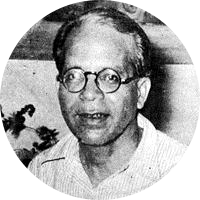
Few poets have achieved the level of popularity among their contemporaries that Majaz did. Majaz wrote poetry for nearly twenty-five years. Given this long span of time, his collected works are remarkably brief. His finest poems were mostly written between 1935 and 1945. In the last four or five years of his life, he barely wrote anything. He used to say himself that the muse of poetry had forsaken him. Very few people could have entered the halls of immortality with such a small body of work.
Majaz never achieved any great scholarly distinction, nor did he take an active, practical interest in any major movement. He was devoted to the Progressive Writers' Movement almost as a matter of faith, yet within those confines, he maintained a considerable degree of independence. Majaz was neither an exceptional student nor a worldly success. Future generations will perhaps wonder why he was so deeply beloved in his own time. Alcohol utterly ruined him. Riyaz had composed this verse about drinking merely as a poetic convention:
Achhi pee li kharab pee li
Jaisi payi sharab pee li
[I drank the good, I drank the bad
Whatever wine I found, I drank]
But Majaz lived by these words entirely. This was the reason his health deteriorated. It drove him to the brink of madness, and ultimately, it claimed his life. Five months before his death, Majaz was with me in Kashmir. Upon seeing the breathtaking landscapes of Kashmir, even a person completely devoid of aesthetic sensibility becomes a poet for a fleeting moment. Yet, Majaz passed through them completely unmoved. Occasionally, his natural vivacity would resurface, but that was all. Despite all this, however, Majaz's charm and popularity never waned. One felt a deep sorrow for his condition. It broke one's heart. Sometimes it even caused frustration, but one could never feel angry with him. It was simply impossible to be angry with him.
Majaz was forty-five or forty-six years old at the time of his death. I had known him since 1929. When he and Jazbi—who used the pen name Malal at the time—enrolled in the first year of the science program at St. John's College, Agra, I was a year ahead of them. Both used to participate in the college *mushairas* (poetry symposiums). It was probably in 1931 that Majaz won first prize in a poetry competition. During those days, he had a particular interest in tennis and had become a member of the second net. It was also around this time that his association with Fani and Maikash Akbarabadi grew. Fani even offered corrections on a few of his *ghazals*. After that, however, Majaz made his own literary taste his sole guide. When I arrived in Aligarh in 1932 to pursue my MA, Majaz had already been there for a year. He couldn't manage the sciences, so he transferred to the arts and completed his BA in 1935. Alongside English and Philosophy, he had taken a third subject that escapes my memory right now.
In those days, he spent most of his time in his friends' dormitory rooms. Among them, I recall Jan Nisar Akhtar, Akhtar Imam, and Hamid, who were all good tennis players. In December 1932, the Anjuman Hadiqat-ush-Shoara held its annual *mushaira*, presided over by the Vice-Chancellor, Sir Ross Masood. Prominent figures like Maulana Hasrat, Asghar Gondvi, and Hafeez Jalandhari were also in attendance. A specific theme, Subh-e-Bahar (The Morning of Spring), was set for the students' poetry submissions. As was customary, Majaz's poem was initially met with hooting, but eventually, its vivid imagery, its charm, and the poet's deeply moving, melodious recitation won the audience's applause. This was Majaz's first real introduction to Aligarh.
It was Majaz who first introduced me to Jan Nisar Akhtar. He was the one who urged me to meet Khwaja Manzoor Hussain, the faculty advisor for the *Aligarh Magazine*, regarding its editorship. During my tenure as editor, Majaz's poem Numaish (The Exhibition), a *ghazal*, and Inquilab (Revolution) were published in the magazine. Even then, Majaz stood out as a sincere friend and a vivacious companion. The favorite pastime of young students was strolling down to the railway station or wandering around the local exhibition when it was in town. We had no intention of buying anything; simply feasting our eyes was satisfaction enough. His poem Numaish stands as a monument to the intense and passionate emotions of that era.
Around this time, a wave of new ideas began sweeping through Aligarh. Dr. Ashraf had returned from Europe. Akhtar Raipuri was residing in the Aftab Hostel while pursuing his BA, and Sibte Hasan was there as well. Akhtar Raipuri wrote his seminal essay Adab aur Zindagi (Literature and Life) during this period, while staying at the home of Rasheed Sahib. I also published some of Sibte Hasan's translations and Hayatullah Ansari's stories in the *Aligarh Magazine*. Sajjad Zaheer, after a long sojourn at Oxford, had also arrived in Aligarh. The controversial anthology *Angarey* had been banned immediately upon publication, and I wrote a scathing critique of it in the magazine. Khwaja Manzoor Hussain was our faculty advisor. He appreciated *Angarey* for some of its literary experimentation. He did not like my article, but he did not censor it either. I mention all this to illustrate that this current of new ideas profoundly influenced Majaz as well, transforming the poet of Numaish and Subh-e-Bahar into a herald of revolution.
When All India Radio was established in 1935, an Englishman named Fielden was appointed as its Director. He was a highly unconventional man—deeply averse to bureaucratic red tape and a great patron of intellectuals. Once, while in Lahore, having just met the provincial governor and on his way to meet Allama Iqbal, he remarked to an acquaintance, I am just coming from meeting the smallest man in Lahore, and I am now going to meet the greatest. To oversee appointments at the radio station, he invited Rasheed Ahmad Siddiqui from Aligarh and Professor Bukhari from Lahore. Among the initial hires were Z.A. Bukhari, Agha Ashraf, and Majaz. Majaz was entrusted with the editorship of the radio's official magazine, *Awaz*.
Sometime later, Professor Bukhari moved to Delhi as Fielden's deputy. Friction soon developed between him and the Delhi staff. Agha Ashraf managed to drag Majaz into the fray. While Agha Ashraf emerged relatively unscathed—Bukhari merely demoted him—Majaz was dismissed entirely. Rasheed Sahib tried to reason with Bukhari, but he refused to listen. By this time, Majaz had become quite popular in literary circles, which led him to the mistaken belief that his literary stature would protect his employment. Ashraf managed to escape the worst of it, but poor Majaz fell victim to his own naivety.
In 1936, an Urdu Conference was held in Aligarh. Maulvi Abdul Haq wanted to relocate the Anjuman-e-Taraqqi-e-Urdu's office to Delhi to expand and elevate its operations. It was a magnificent gathering. I remember clearly that when Majaz arrived, he had already lost his job in Delhi. When asked how he was doing, he recited this couplet by Iqbal:
Agar lut gaya ik nasheman toh kya gham
Maqamat-e-aah-o-fughaan aur bhi hain
[What sorrow is it if one nest is plundered?
There are still other places to sigh and lament]
During this conference, a reception was held for the honorable guests at the Union. Pandit Kaifi read a paper titled *Urdu Hamari Zaban* (Urdu is Our Language). Pandit Kaifi's voice was low, microphones were not yet common, and there was a lot of noise in the hall. Anyway, when the paper somehow concluded, the president announced that Asrar-ul-Haq Majaz would now recite a poem. Majaz began *Nazr-e-Aligarh* (An Offering to Aligarh) in his captivating, soulful voice. A state of trance took over the crowd, and people swayed in ecstasy when he reached this couplet:
Aa aa ke hazaron baar yahan khud aag bhi hum ne lagai hai
Phir saray jahan ne dekha hai yeh aag hum hi ne bujhai hai
[Coming here thousands of times, we ourselves have set this fire,
Then the whole world has seen, it is we who have extinguished this fire.]
Spontaneous shouts of praise erupted from all sides. Dr. Zakir Husain, Abdur Rahman Siddiqui, and Maulvi Abdul Haq were seated on the dais. Zakir Sahib spontaneously said, Majaz Sahib, read it again. In those days, the authorities of Aligarh used to accuse the Old Boys of wanting to harm the institution again, just as they had during the Khilafat movement. Majaz's couplet also served as an answer to this accusation.
This was the golden era of Majaz's poetry. His popularity was at its peak. Ismat Chughtai has mentioned this in her own distinct style. Majaz had lacked willpower from the very beginning. The applause of friends, the admiration of beautiful women, and his immense popularity in *mushairas* (poetry symposiums) had created an intoxicating effect on him. During this time, he also began drinking. Majaz moved from Aligarh to Lucknow and stayed there for several years. He developed a close association with Josh Malihabadi and was often seen with him. It was Josh's duty to keep Majaz from going astray, but when did the Qibla of the world's drunkards ever feel a sense of responsibility? Some time passed in this manner. Until now, the wounds his heart had suffered were relatively minor, but in Delhi, he received such a deep wound that its pain lasted his entire life. In the beginning, there was affection, grace, and kindness. But Majaz wanted something more. Ultimately, he faced disappointment, yet Majaz's great virtue was that despite his melancholy, no bitterness ever crept into his tone.
During his stay in Lucknow, he was in the company of Josh, Sajjad Zaheer, Sardar Jafri, Sibte Hasan, Hayatullah Ansari, Dr. Abdul Aleem, Ahmed Ali, and Ehtisham Husain. Among them, with the exception of Josh, poetry was no one else's sole obsession. They all had a serious purpose. Majaz was also part of the editorial board of *Naya Adab*. This journal was the herald of the Progressive Writers' Movement. Majaz's connection to it was more intellectual than practical. Then, the newspaper *Hindustan* was launched from Lucknow. Poems like *Andheri Raat Ka Musafir* (The Traveler of the Dark Night) and *Sarmayadari* (Capitalism) began appearing in it. His famous poem *Awaara* (Vagabond) was published in the annual issue of *Saqi*.
At that time, there was a rebellious fervor among the Progressives. They held a romantic and somewhat childish concept of revolution. There was an absolute rebellion against the glorious heritage of the past. Traditional culture and morality were beginning to be considered obsolete. Majaz was deeply influenced by these ideas. However, his familiarity with classical poets and his early upbringing saved him from becoming a complete rebel. Slogan-mongering and political propaganda are present in his work too, but very rarely. He was certainly influenced by Josh, but he was not his imitator. Faiz rightly said that he was not a drum-beater for the revolution. The best poem of this era is *Awaara*. It is the story of the pain and scars of an entire generation. It is a symbol of its desires and quests, its deprivations and its intoxications. Here, personal experiences have transformed into a universal tale of sorrow.
The period of Majaz's intoxication lasted until 1942. After that, the high began to wear off. The realities of life took their revenge. Friends who initially welcomed him with open arms began to distance themselves. Majaz was now seen as a parasite, and while poetry might extinguish the fire of the mind, it certainly does not extinguish the fire of the belly. Consequently, out of desperation, he began looking for a job. Eventually, he found a position at the Hardinge Library in Delhi. On one hand, there was his immense popularity in *mushairas* and the applause of high-society households; on the other, the miseries of a clerk's life. What was poor Majaz's fault? To soar in the sky one moment and be slammed onto the earth the next, then to wander the heavens again only to be crushed by the weight of harsh realities—how could a sensitive, fragile-hearted young man endure this? A man whose heart bore countless wounds and whose pockets were empty, yet who could never abandon a certain standard of culture and nobility.
Consequently, mental instability set in, and he developed a compulsion to talk incessantly. His ramblings consisted partly of self-praise, partly of jokes, and partly of nonsensical remarks about poetry and literature. Fortunately, a stay in Nainital helped him recover somewhat. A sense of stability returned to his temperament. He began to worry about earning a living, thinking, A man must earn his bread somehow. Thus, he headed to Bombay. Many poets were making a decent living writing film songs, but Majaz was not made for the commercial life and worldly compromises of that industry. As a result, he had to face failure there as well. In this state, alcohol became his refuge. Majaz now became a complete, ruinous drunkard. When he attended *mushairas*, he was often heavily intoxicated. The people who came to listen to his poetry also had to endure his drunken displays. However, he was by nature so sincere, pure-hearted, loving, and dignified that his drunkenness only ever harmed himself. He never caused harm to anyone else.
In 1936, Majaz had moved from Aligarh to Lucknow. I remained in Aligarh until 1945. I went to Rampur for a year and a half, and from there, I arrived in Lucknow in the middle of 1946. During this long period, I had only met Majaz occasionally. After that, we met frequently in Lucknow. He used to visit the Coffee House with great regularity. I would drop by occasionally. Students would eagerly invite Majaz to the university's literary gatherings, and he never turned down their invitations. The events that unfolded after the revolution of 1947 affected Majaz as well. He neither considered this independence the fulfillment of every dream, nor did he dismiss it as a false freedom. Regarding the celebration of independence, he says:
Yeh inqilab ka muzhda hai inqilab nahi
Yeh aaftab ka partav hai aaftab nahi
Woh jis ki taab-o-tawanai ka jawab nahi
Abhi woh sa'i-e-junoon-khaiz kaamyab nahi
Yeh inteha nahi aaghaz-e-kaar-e-mardan hai
[This is the tidings of revolution, not the revolution itself,
This is the reflection of the sun, not the sun itself.
That which has no equal in its radiant energy,
That passion-inducing endeavor has not yet succeeded.
This is not the end, it is the beginning of the work of brave men.]
He asks with great sorrow:
Sabza-o-barg-o-lala-o-sarv-o-saman ko kya hua
Saara chaman udaas hai haye chaman ko kya hua
[What happened to the greenery, the leaves, the tulips, the cypress, and the jasmine?
The entire garden is in mourning; alas, what happened to the garden?]
But by now, Majaz had started writing very little. Alcohol had ruined his health. In 1950, he somewhat jolted awake from his stupor and wrote a poem like *Fikr* (Thought) and a ghazal like *Junoon-e-ishq abhi kam nahi hai* (The madness of love has not yet diminished). After this, he seemed quite stable. He had begun to realize that he needed to do some serious work. He intended to pursue an M.A. in Urdu. All his friends were delighted that Majaz was finally returning to the path of moderation, but fate had something else in store. After participating in *mushairas* in Ajmer and Delhi, and attending the colorful gatherings there, his mental balance deteriorated again, and his relatives had to take him to Ranchi.
When he returned after spending about six months in Ranchi, he was perfectly fine. Suhail Azimabadi was with him. He came to see me and said, Suroor Sahib! I have conducted some research during my time in Ranchi. Alcohol doesn't just intoxicate; it drives a man insane.
He had given up drinking entirely. Even when his irresponsible friends insisted, he would politely decline. Around this time, his sister Safia passed away after a prolonged illness. This had a profound impact on Majaz. He did not step out of the house for weeks. He spent his time trying to cheer up Safia’s children, but after a few months, the lure of alcohol overpowered him once again, and this time, he completely drowned himself in it.
In July 1955, both Majaz and I traveled to attend a *mushaira* organized by Radio Srinagar. Our friends took care of Majaz as if he were something incredibly precious and fragile. We took him sightseeing to Gulmarg and the Mughal gardens of Srinagar, but nothing seemed to move him. There is an abundance of fountains in the Nishat and Shalimar gardens. The water shoots up with such force that if you place a lemon over the nozzle, the jet of water keeps it suspended in mid-air for a while. A friend of ours was playing this trick when a Punjabi woman exclaimed, It is the miracle of Allah! This remark thoroughly amused Majaz. For him, this little anecdote was the ultimate takeaway from his visit to Shalimar and Nishat.
My final meeting with Majaz took place in the last week of November. I was preparing to move to Aligarh. Majaz was present at a farewell dinner and said, Suroor Sahib! It is wonderful that you are going to Aligarh; there is truly no place like it. I will come too. I want to hear *Nazr-e-Aligarh*, which the Students' Union has adopted as its anthem. Let this Urdu Students' Convention wrap up, and then I will make my way to Aligarh. The students' convention took place. At the *mushaira*, Majaz recited his poetry with immense passion. The very next day, he drank so heavily that he suffered a massive brain hemorrhage. Before he could ever make it to Aligarh, he departed for the next world. Such is the tragedy of the Keats of Urdu.
Allow me to share my impressions of Majaz’s personality as well. Majaz was a poet from head to toe, an inhabitant of the world of dreams. Helplessly, he sought the cure for life's bitter realities in alcohol. His early education and upbringing had instilled in him certain standards of nobility, refinement, and social grace. However, he lacked the inner fortitude to rigorously uphold these values, or the new ideals he had adopted through his association with a literary and intellectual movement. He was a bohemian spirit. He possessed the fervor of a lover, but lacked the unyielding resolve of a warrior. He could never erase the deep impressions left by his early upbringing, nor could he shake off the intoxicating influence of the new ideologies he had embraced. Instead of helping him forge a path through the struggles of life, this internal conflict led him down a road of failure and despair. Yet, the redeeming quality of his character was that he never became misanthropic, bitter, or cynical. He constantly tried to endure or forget his endless string of failures—sometimes through humor, sometimes through alcohol. Let me share two or three of his witty remarks that were made in my presence.
Once, Majaz and Jazbi were sitting with me in Lucknow when a renowned poet of that era came to visit. During the conversation, he said, Suroor Sahib! I am thinking of getting married. I was taken aback, as I had assumed he was already married. He then added, And I am thinking of marrying a widow. Up until this point, I was the only one listening, as Majaz and Jazbi were busy whispering to each other. I couldn't bear to keep such an amusing conversation to myself, so I drew Majaz’s attention and said, This gentleman is planning to get married, and he intends to marry a widow. Majaz spontaneously replied, Sir, stop thinking and just go ahead with it. She is bound to become a widow after marrying you anyway!
There was a time when Salaam Machhalishahari was obsessed with writing long, poetic letters; he had already written such letters to Sajjad Zaheer and Krishan Chander. Once, this was being discussed at the Coffee House. There was a man of very short stature named Bhuneshwar—God knows where he is now. He was an excellent Hindi writer and was also well-versed in Urdu, though he rarely gave anyone much regard. He asked, Salaam Sahib! When are you going to write a letter to me? Majaz immediately quipped, Why would he write such a long letter to you? He’ll just drop you a postcard.
On the occasion of Eid-ul-Adha, a small *mushaira* was broadcast from Lucknow Radio. Majaz had not composed any poetry for quite some time. On the day of the event, I asked him, Well, brother, are you going to be sacrificed today? He replied, Suroor Sahib! Don't call it a sacrifice; call it a slaughter. Toward the end of his life, this vibrant side of Majaz had faded significantly, but every now and then, a spark would still shoot up from the ashes.
Majaz never formed any cliques, nor did he ever lay traps to chase fame. He interacted with all his contemporaries on an equal footing. His circle of friends included people of every ideology and inclination. Backbiting was simply not in his nature. He was a friend to everyone, and an enemy only to himself. Society treated him with apathy and indifference, yet he never complained about it. He possessed immense grace and never stretched out his hand to beg from anyone. His behavior while intoxicated, however, was a different matter. In that state, most people become unbearable, and toward the end, Majaz had become much the same. Yet, I can never forget something he once did while under the influence.
It so happened that Dr. Aleem, Ehtesham, and I traveled to Patna to attend an Urdu conference, and Majaz was accompanying us. There were only three vacant berths in our train compartment, so Majaz had to move to another one. He returned shortly after. When I asked him what had happened, he replied, A Sardar Ji was waiting for me there with a drawn *kirpan* (dagger). Therefore, I decided that my salvation lay in a glorious retreat. Saying this, he spread his bedding on the floor and went to sleep.
When we arrived in Patna, we were all put up in the same hotel. Ehtesham and I shared one room. Pandit Kaifi was in the adjacent room, and the room next to his was occupied by Majaz and Jazbi. At night, we had all just lain down to sleep when a commotion erupted from Pandit Ji’s room: Help! Come quickly! He’s killing me! We rushed over in a panic, only to find an intoxicated Majaz vigorously massaging Pandit Ji’s legs, insisting, You are an elder. It is an honor to serve you. Pandit Ji, meanwhile, was screaming in pain. With great difficulty, we managed to pull Majaz away. The next morning, Majaz was too embarrassed to face Pandit Ji. Finally, Pandit Ji embraced him and said, Majaz, the world of Urdu poetry has great expectations of you. I am deeply touched by your sincerity, but your sincerity nearly killed me last night! Brother, pull yourself together. You still have so much left to achieve. Hearing this, we were all moved to tears.
Majaz possessed a fairly clear vision of life and literature. However, he neither refined this vision through rigorous study nor plunged into the fire of life to transform it into a blooming garden. He dreamt incredibly beautiful dreams. While he was aware of certain profound realities, when these harsh truths shattered this lover of dreams, he did not strike back. He quietly laid down his arms. It is for this reason that I call him the martyr of romanticism.
Generally, romanticism is interpreted merely as tales of romance and love, but in essence, it is the worship of the imagination. While literature itself is an imaginative interpretation of life, romanticism emerges when the intensity of the imagination rises to such a degree that one loses their grip on reality and reason. In Urdu poetry, the wave of romanticism is first observed among the pioneers of *Adab-e-Lateef* (belles-lettres), and later in the works of Shirani. There is a striking resemblance between Akhtar Shirani and Majaz. However, Akhtar’s poetry is defined by the burning passion, pain, and anguish of youthful love—a fervent desire to die clutching a portrait of the beloved to his chest. Majaz’s romanticism, on the other hand, encompasses dreams of revolution. His romanticism occasionally manifests in a rebellious thunder reminiscent of Josh, yet even then, he never loses his inherent rhythm. Furthermore, Majaz possesses a profound awareness of certain social realities and has the ability to articulate them in his verse. Ultimately, alongside the surrender and passionate devotion found in Akhtar Shirani, Majaz’s tone carries a far greater degree of musicality and sweetness.
The grandeur and eloquence of Josh often carry an underlying sense of harshness, and despite his extraordinary creative prowess, his work can be uneven. In contrast, Majaz embodies harmony. While Josh speaks at the top of his voice even in solitude, Majaz can deliver a profound thought with captivating gentleness, even in the midst of a crowded gathering.
In truth, an entirely objective critique of Majaz’s poetry is not yet possible, and therefore, I will not attempt one. I do, however, consider it essential to share my impressions regarding his literary significance.
First and foremost, among the poets of his generation, Majaz alone captures the dignified simplicity of expression found in the classical poets. Secondly, his grasp of linguistic precision, as well as the softness and delicacy of language, is far more refined than that of his contemporaries. Majaz quietly absorbed the influence of Delhi’s cultural atmosphere and the companionship of Fani, an influence that manifests beautifully in his work. The third crucial point is that Majaz’s metaphors and similes reveal a highly inventive mind. It is this very trait that makes his early poems, such as *Numaish* (The Exhibition), *Nazr-e-Khalida* (Ode to Khalida), *Inqilab* (Revolution), and *Raat Aur Rail* (The Night and the Train), so remarkable.
In *Numaish*, the depiction of a vibrant atmosphere possesses the true beauty of literary craftsmanship. While *Inqilab* carries a certain youthful immaturity, its style of expression still retains a striking force and emotional depth. *Raat Aur Rail* is a fine example of aesthetic artistry. Although words like evolution and society are used almost like talismanic charms within it, the poem captures the speed of the train and its ever-shifting atmosphere through incredibly fresh and gentle vocabulary. *Nazr-e-Khalida* also ranks among Majaz’s most successful poems. In it, Majaz has managed to capture the vast ocean of Khalida Khanum’s entire personality within the small vessel of a single verse:
Rooh-e-ishrat-gah-e-sahil, jaan-e-toofan-e-azeem
[The soul of the shore's pleasure-house, the life of the great storm]
Similarly, observe these verses from *Raat Aur Rail*:
Tez jhonkon mein woh chham chham ka surood-e-dil-nasheen
Aandhiyon mein meenh barasne ki sada aati hui
[In the fierce gusts, that captivating melody of rhythmic patter,
Like the sound of pouring rain amidst the howling storms.]
Naunehalon ko sunati meethi meethi loriyan
Nazneenon ko sunehre khawab dikhlati hui
[Singing sweet lullabies to the little children,
Showing golden dreams to the delicate beauties.]
Ra'sha bar-andaam karti anjum-e-shab-taab ko
Aashiyan mein tair-e-wahshi ko chaunkati hui
[Sending a tremor through the glowing stars of the night,
Startling the wild bird resting in its nest.]
Daalti be-his chatanon par haqarat ki nazar
Koh par hansti falak ko aankh dikhlati hui
[Casting a glance of contempt upon the unfeeling rocks,
Laughing at the mountains, glaring defiantly at the sky.]
Majaz’s fourth defining characteristic is that he utilized the resolve, self-sacrifice, vitality, carefree dignity, bold defiance, and fearless passion of the youth not merely as a cosmetic enhancement for beauty, but to cultivate and adorn the very garden of life. On one hand, he seeks to ignite a revolutionary zeal among the youth; on the other, he invites women to step forward and participate in the battlefield of life. He addresses the youth, saying:
Jo ho sake hamein pamaal karke aage barh
Na ho sake toh hamara jawab paida kar
[If you can, trample over us and march forward,
If you cannot, then create an answer to us.]
Bahe zameen pe jo mera lahoo toh gham mat kar
Isi zameen se mehakte gulab paida kar
[If my blood spills upon the earth, do not grieve,
From this very earth, make fragrant roses bloom.]
Tu inqilab ki aamad ka intezar na kar
Jo ho sake toh abhi inqilab paida kar
[Do not wait for the arrival of the revolution,
If you can, create the revolution right now.]
To the young woman, he says:
Sinaanein kheench li hain sar-phire baaghi jawanon ne
Tu saamaan-e-jarahat ab utha leti toh achha tha
[The headstrong, rebellious youth have drawn their spears,
It would be better if you now took up the healing supplies.]
Tere maathe pe yeh aanchal bohat hi khoob hai lekin
Tu is aanchal se ik parcham bana leti toh achha tha
[This veil upon your forehead looks incredibly beautiful, but
It would be better if you turned this veil into a banner.]
In his poem *Parda Aur Ismat* (The Veil and Chastity), he declares:
Jo zahir na ho woh latafat nahi hai
Jo pinhaan rahe woh sadaqat nahi hai
[That which cannot be revealed is not true elegance,
That which remains hidden is not the truth.]
Yeh fitrat nahi hai mashaqqat nahi hai
Koi aur shai hai yeh ismat nahi hai
[This is not nature, this is not endeavor,
This is something else, this is not chastity.]
Qasam shokhi-e-ishq-e-Sanjogata ki
Qasam Joan ke azm-e-sabr-aazma ki
[By the playful passion of Sanjogata's love,
By the testing resolve of Joan of Arc.]
Qasam Tahira ki, qasam Khalida ki
Koi aur shai hai yeh ismat nahi hai
[By Tahira, by Khalida,
This is something else, this is not chastity.]
At his core, Majaz is a worshipper of beauty. While he is certainly the *Majnun* (mad lover) to the *Laila* of revolution, he is intimately familiar with every subtle nuance of beauty. His devotion carries the intense passion and frenzy of a true lover. For him, beauty is everything. He has observed, sought, desired, and discovered beauty in every conceivable state. This profound insight has infused his poetry with a deep sense of intoxication and emotional resonance. It has woven magic into his words, turning his verses into molten lava. Consider these lines:
Har saans mein ehsaas-e-farawaan ki kahani
Khamoshi-e-mahjoob mein ek sail-e-ma'ani
[In every breath, a tale of overflowing emotions,
In the bashful silence, a flood of meanings.]
Jazbaat ke toofan mein hai dosheeza jawani
Chhalke teri aankhon se sharab aur zyada
[Maiden youth is caught in a tempest of passions,
May the wine spill from your eyes even more.]
Mehkein tere aariz ke gulab aur zyada
Allah kare zor-e-shabab aur zyada
[May the roses of your cheeks grow even more fragrant,
May God intensify the vigor of your youth even more.]
Woh ik marmareen hoor khuld-e-bareen ki
Woh ta'beer Aazar ke khawab-e-haseen ki
[She was a marble maiden of the highest heaven,
She was the manifestation of Azar's beautiful dream.]
Woh taskeen-e-dil thi woh sukoon-e-nazar thi
Nigar-e-shafaq thi, jamal-e-sahar thi
[She was the comfort of the heart, the peace of the eyes,
She was the painted twilight, the beauty of the dawn.]
Beemar ke qareeb ba-sad shaan-e-ehtiyat
Dil-daari-e-naseem-e-bahaaraan liye hue
[Approaching the ailing one with a hundredfold grace of caution,
Carrying the soothing comfort of the spring breeze.]
Rukhsaar par lateef si ik mauj-e-sarkhoshi
Lab par hansi ka narm sa toofan liye hue
[A delicate wave of euphoria upon her cheeks,
Carrying a gentle storm of laughter upon her lips.]
Lab-e-gul-rang-o-haseen, jism-gudaz-o-seemeen
Shokhi-e-barq liye, larzish-e-seemaab liye
[Rose-colored and beautiful lips, a soft and silvery body,
Carrying the playfulness of lightning, the trembling of quicksilver.]
Narm sofe god mein firdaus-e-ra'nai liye
Zulf ke kham marmareen shanon ki barnai liye
[Soft sofas holding a paradise of elegance in their lap,
The curls of hair carrying the youthfulness of marble shoulders.]
Qehqahe jin mein saba ka raag sayyaron ke geet
Nuqrai nai ki sada jannat ke meh-paron ke geet
[Laughter that held the melody of the morning breeze, the songs of the planets,
The sound of a silver flute, the songs of heaven's moon-faced beauties.]
Baam-o-dar par ik tabassum tha faza gul-rang thi
Jumbish-e-mizhgaan dharakte dil se hum-aahang thi
[A smile lingered on the doors and roofs, the atmosphere was rose-colored,
The fluttering of eyelashes was in harmony with the beating heart.]
In my view, Majaz’s finest poems are *Aawara* (The Vagabond), *Khawab-e-Sahar* (Dream of Dawn), and *Nazr-e-Aligarh* (Ode to Aligarh). *Aawara* encapsulates the entire agonizing saga of romanticism, and within this saga lies the tragedy of an entire generation’s myths and enchantments. The beauty of its imagery tugs at the heartstrings in this manner:
Jhilmilate qumqumon ki raah mein zanjeer si
Raat ke hathon mein din ki mohini tasveer si
Mere seene par magar chalti hui shamsheer si
Ae gham-e-dil kya karun, ae wahshat-e-dil kya karun
[Like a chain of glimmering lamps along the path,
Like a captivating portrait of the day in the hands of the night,
But upon my chest, like a striking sword,
O sorrow of the heart, what should I do? O madness of the heart, what should I do?]
Phir woh toota ik sitara phir woh chhooti phuljhari
Jaane kis ki god mein aayi yeh moti ki lari
Hook si seene mein uthi chot si dil par pari
Ae gham-e-dil kya karun, ae wahshat-e-dil kya karun
[Again a star fell, again a sparkler went off,
Who knows in whose lap this string of pearls has fallen,
A pang rose in my chest, a blow struck my heart,
O sorrow of the heart, what should I do? O madness of the heart, what should I do?]
Witness the blazing of this fire:
Dil mein ik shola bharak utha hai aakhir kya karun
Mera paimana chhalak utha hai aakhir kya karun
Zakhm seene ka mehak utha hai aakhir kya karun
Ae gham-e-dil kya karun, ae wahshat-e-dil kya karun
[A flame has flared up in my heart, after all, what should I do?
My goblet has overflowed, after all, what should I do?
The wound in my chest has grown fragrant, after all, what should I do?
O sorrow of the heart, what should I do? O madness of the heart, what should I do?]
In *Khwab-e-Sahar* (The Dream of Dawn), he expresses his thoughts with astonishing simplicity:
Zehn-e-insani ne ab auham ke zulmat mein
Zindagi ki sakht toofani andheri raat mein
Kuch nahi toh kam se kam khwab-e-sahar dekha toh hai
Jis taraf dekha na jata tha udhar dekha toh hai
[In the darkness of superstitions, the human mind has now,
In the harsh, stormy, dark night of life,
If nothing else, at least seen the dream of dawn,
It has finally looked toward where one could not bear to look.]
In *Nazr-e-Aligarh* (An Offering to Aligarh), he sings an anthem to the cultural majesty of an educational institution with breathtaking beauty and enchantment:
Jo taaq-e-haram mein roshan hai woh shama yahan bhi jalti hai
Is dasht ke goshe goshe se ik joo-e-hayat ubalti hai
[The candle that illuminates the sanctuary's niche burns here as well,
From every corner of this wilderness, a stream of life wells up.]
Har shaam hai shaam-e-Misr yahan har shab hai shab-e-Shiraz yahan
Hai sare jahan ka soz yahan hai sare jahan ka saaz yahan
[Every evening here is the evening of Egypt, every night is the night of Shiraz,
The passion of the whole world is here, the melody of the whole world is here.]
Aa aa ke hazaron baar yahan khud aag bhi hum ne lagayi hai
Phir sare jahan ne dekha hai yeh aag hum hi ne bujhayi hai
[Coming here thousands of times, we ourselves have set the fires,
Then the whole world has seen that we alone have extinguished them.]
Jo abr yahan se uthega woh sare jahan par barsega
Har joo-e-rawan par barsega har koh-e-giran par barsega
[The cloud that rises from here will rain upon the entire world,
It will rain on every flowing stream, it will rain on every heavy mountain.]
Har sarv-o-saman par barsega, har dasht-o-daman par barsega
Yeh abr hamesha barsa hai, yeh abr hamesha barsega
[It will rain on every cypress and jasmine, it will rain on every desert and valley,
This cloud has always rained, this cloud will always rain.]
Compared to his *nazms* (poems), Majaz’s *ghazals* hold slightly less significance, yet even in them, we find the boldness of desire, the lofty courage of madness, the vivid portrayal of emotion, and the tale of sorrow—in short, a great deal. Consider these couplets:
Hum arz-e-wafa bhi kar na sake, kuch keh na sake kuch sun na sake
Yan hum ne zaban hi kholi thi wan aankh jhuki sharma bhi gaye
[We could not even profess our loyalty, could neither speak nor listen,
Here, we had barely opened our mouths; there, their eyes lowered in shyness.]
Yeh rang-e-bahar-e-aalam hai kyun fikr hai tujh ko ae saqi
Mehfil toh teri sooni na hui, kuch uth bhi gaye, kuch aa bhi gaye
[This is the way of the world's spring, why do you worry, O Cupbearer?
Your gathering did not become desolate; some departed, but others arrived.]
Ae shauq-e-nazara kya kahiye nazron mein koi soorat hi nahi
Ae zauq-e-tasawwur kya kije hum soorat-e-janan bhool gaye
[O desire to see, what can be said? There is no face in my sight,
O taste for imagination, what can be done? I have forgotten the face of the beloved.]
Sab ka toh mudawa kar dala, apna hi mudawa kar na sake
Sab ke toh gareban see dale, apna hi gareban bhool gaye
[I healed everyone else, but could not heal myself,
I stitched everyone else's torn collars, but forgot my own.]
Dil dhadak uthta hai khud apni hi har aahat par
Ab qadam manzil-e-janan se bohat door nahi
[The heart starts pounding at the sound of its own footsteps,
Now, my steps are not very far from the beloved's destination.]
Kya kya hua hai hum se junoon mein na puchiye
Uljhe kabhi zameen se kabhi aasman se hum
[Do not ask what all I have done in my madness,
Sometimes I tangled with the earth, sometimes with the sky.]
Baarha aisa hua hai yaad tak dil mein na thi
Baarha masti mein lab par un ka naam aa hi gaya
[Often it happened that not even a memory remained in the heart,
Yet often, in a state of intoxication, their name came to my lips.]
Shauq ke hathon ae dil-e-muztar kya hona hai kya hoga
Ishq toh ruswa ho hi chuka hai husn bhi kya ruswa hoga
[At the hands of desire, O restless heart, what is to happen, what will happen?
Love has already been disgraced; will beauty be disgraced as well?]
Waiz-e-sada-lauh se keh do chhore uqba ki baatein
Is duniya mein kya rakha hai us duniya mein kya hoga
[Tell the naive preacher to leave aside talk of the afterlife,
What is kept in this world, and what will happen in that world?]
Junoon-e-shauq ab bhi kam nahi hai
Magar woh aaj bhi barham nahi hai
[The madness of desire is still undiminished,
But even today, she is not angry.]
Bohat mushkil hai duniya ka sanwarna
Teri zulfon ka pech-o-kham nahi hai
[It is very difficult to set the world right,
It is not the curl and twist of your tresses.]
Abhi bazm-e-tarab se kya uthun main
Abhi toh aankh bhi purnam nahi hai
[Why should I rise from the gathering of joy just yet?
My eyes are not even tearful yet.]
Ba-een sail-e-gham-o-sail-e-hawadis
Mera sar hai ke ab bhi kham nahi hai
[Despite this flood of sorrow and flood of tragedies,
My head is such that it still does not bow.]
Yeh bijli chamakti hai kyun dam-ba-dam
Chaman mein koi aashiyana bhi hai
[Why does this lightning strike moment after moment?
Is there a nest somewhere in the garden?]
Zamane se aage toh barhiye Majaz
Zamane ko aage barhana bhi hai
[Step ahead of the times, Majaz,
For you must also propel the times forward.]
As I stated at the outset, an entirely objective critique of Majaz’s poetry is not yet possible. However, we can certainly reflect upon the impressions of his personality and poetry that have etched themselves into our hearts. Every ripple of the current of romanticism can be found in Majaz’s life and poetry. From *Tifli Ke Khwab* (Childhood Dreams) to *Aetiraf* (Confession), there is a remarkably coherent narrative. The vibrant, healthy, and conscious elements of Majaz’s romanticism hold enduring value, but his poetry as a whole also serves as a source of both profound insight and cautionary reflection for us. He appeared on our literary horizon like a shooting star. His brilliance was a feast for the eyes. Yet, before long, cheap praise, personal frailties, and the fact that dreams hold no currency in our shallow, transactional world caused this flame to be consumed by the evil eye of the times. Nevertheless, we can never be indifferent to the treasure trove of pain and scars, of longing and quest, that he has bequeathed to us.
Few poets have achieved the level of popularity among their contemporaries that Majaz did. Majaz wrote poetry for nearly twenty-five years. Given this long span of time, his collected works are remarkably brief. His finest poems were mostly written between 1935 and 1945. In the last four or five years of his life, he barely wrote anything. He used to say himself that the muse of poetry had forsaken him. Very few people could have entered the halls of immortality with such a small body of work.
Majaz never achieved any great scholarly distinction, nor did he take an active, practical interest in any major movement. He was devoted to the Progressive Writers' Movement almost as a matter of faith, yet within those confines, he maintained a considerable degree of independence. Majaz was neither an exceptional student nor a worldly success. Future generations will perhaps wonder why he was so deeply beloved in his own time. Alcohol utterly ruined him. Riyaz had composed this verse about drinking merely as a poetic convention:
Achhi pee li kharab pee li
Jaisi payi sharab pee li
[I drank the good, I drank the bad
Whatever wine I found, I drank]
But Majaz lived by these words entirely. This was the reason his health deteriorated. It drove him to the brink of madness, and ultimately, it claimed his life. Five months before his death, Majaz was with me in Kashmir. Upon seeing the breathtaking landscapes of Kashmir, even a person completely devoid of aesthetic sensibility becomes a poet for a fleeting moment. Yet, Majaz passed through them completely unmoved. Occasionally, his natural vivacity would resurface, but that was all. Despite all this, however, Majaz's charm and popularity never waned. One felt a deep sorrow for his condition. It broke one's heart. Sometimes it even caused frustration, but one could never feel angry with him. It was simply impossible to be angry with him.
Majaz was forty-five or forty-six years old at the time of his death. I had known him since 1929. When he and Jazbi—who used the pen name Malal at the time—enrolled in the first year of the science program at St. John's College, Agra, I was a year ahead of them. Both used to participate in the college *mushairas* (poetry symposiums). It was probably in 1931 that Majaz won first prize in a poetry competition. During those days, he had a particular interest in tennis and had become a member of the second net. It was also around this time that his association with Fani and Maikash Akbarabadi grew. Fani even offered corrections on a few of his *ghazals*. After that, however, Majaz made his own literary taste his sole guide. When I arrived in Aligarh in 1932 to pursue my MA, Majaz had already been there for a year. He couldn't manage the sciences, so he transferred to the arts and completed his BA in 1935. Alongside English and Philosophy, he had taken a third subject that escapes my memory right now.
In those days, he spent most of his time in his friends' dormitory rooms. Among them, I recall Jan Nisar Akhtar, Akhtar Imam, and Hamid, who were all good tennis players. In December 1932, the Anjuman Hadiqat-ush-Shoara held its annual *mushaira*, presided over by the Vice-Chancellor, Sir Ross Masood. Prominent figures like Maulana Hasrat, Asghar Gondvi, and Hafeez Jalandhari were also in attendance. A specific theme, Subh-e-Bahar (The Morning of Spring), was set for the students' poetry submissions. As was customary, Majaz's poem was initially met with hooting, but eventually, its vivid imagery, its charm, and the poet's deeply moving, melodious recitation won the audience's applause. This was Majaz's first real introduction to Aligarh.
It was Majaz who first introduced me to Jan Nisar Akhtar. He was the one who urged me to meet Khwaja Manzoor Hussain, the faculty advisor for the *Aligarh Magazine*, regarding its editorship. During my tenure as editor, Majaz's poem Numaish (The Exhibition), a *ghazal*, and Inquilab (Revolution) were published in the magazine. Even then, Majaz stood out as a sincere friend and a vivacious companion. The favorite pastime of young students was strolling down to the railway station or wandering around the local exhibition when it was in town. We had no intention of buying anything; simply feasting our eyes was satisfaction enough. His poem Numaish stands as a monument to the intense and passionate emotions of that era.
Around this time, a wave of new ideas began sweeping through Aligarh. Dr. Ashraf had returned from Europe. Akhtar Raipuri was residing in the Aftab Hostel while pursuing his BA, and Sibte Hasan was there as well. Akhtar Raipuri wrote his seminal essay Adab aur Zindagi (Literature and Life) during this period, while staying at the home of Rasheed Sahib. I also published some of Sibte Hasan's translations and Hayatullah Ansari's stories in the *Aligarh Magazine*. Sajjad Zaheer, after a long sojourn at Oxford, had also arrived in Aligarh. The controversial anthology *Angarey* had been banned immediately upon publication, and I wrote a scathing critique of it in the magazine. Khwaja Manzoor Hussain was our faculty advisor. He appreciated *Angarey* for some of its literary experimentation. He did not like my article, but he did not censor it either. I mention all this to illustrate that this current of new ideas profoundly influenced Majaz as well, transforming the poet of Numaish and Subh-e-Bahar into a herald of revolution.
When All India Radio was established in 1935, an Englishman named Fielden was appointed as its Director. He was a highly unconventional man—deeply averse to bureaucratic red tape and a great patron of intellectuals. Once, while in Lahore, having just met the provincial governor and on his way to meet Allama Iqbal, he remarked to an acquaintance, I am just coming from meeting the smallest man in Lahore, and I am now going to meet the greatest. To oversee appointments at the radio station, he invited Rasheed Ahmad Siddiqui from Aligarh and Professor Bukhari from Lahore. Among the initial hires were Z.A. Bukhari, Agha Ashraf, and Majaz. Majaz was entrusted with the editorship of the radio's official magazine, *Awaz*.
Sometime later, Professor Bukhari moved to Delhi as Fielden's deputy. Friction soon developed between him and the Delhi staff. Agha Ashraf managed to drag Majaz into the fray. While Agha Ashraf emerged relatively unscathed—Bukhari merely demoted him—Majaz was dismissed entirely. Rasheed Sahib tried to reason with Bukhari, but he refused to listen. By this time, Majaz had become quite popular in literary circles, which led him to the mistaken belief that his literary stature would protect his employment. Ashraf managed to escape the worst of it, but poor Majaz fell victim to his own naivety.
In 1936, an Urdu Conference was held in Aligarh. Maulvi Abdul Haq wanted to relocate the Anjuman-e-Taraqqi-e-Urdu's office to Delhi to expand and elevate its operations. It was a magnificent gathering. I remember clearly that when Majaz arrived, he had already lost his job in Delhi. When asked how he was doing, he recited this couplet by Iqbal:
Agar lut gaya ik nasheman toh kya gham
Maqamat-e-aah-o-fughaan aur bhi hain
[What sorrow is it if one nest is plundered?
There are still other places to sigh and lament]
During this conference, a reception was held for the honorable guests at the Union. Pandit Kaifi read a paper titled *Urdu Hamari Zaban* (Urdu is Our Language). Pandit Kaifi's voice was low, microphones were not yet common, and there was a lot of noise in the hall. Anyway, when the paper somehow concluded, the president announced that Asrar-ul-Haq Majaz would now recite a poem. Majaz began *Nazr-e-Aligarh* (An Offering to Aligarh) in his captivating, soulful voice. A state of trance took over the crowd, and people swayed in ecstasy when he reached this couplet:
Aa aa ke hazaron baar yahan khud aag bhi hum ne lagai hai
Phir saray jahan ne dekha hai yeh aag hum hi ne bujhai hai
[Coming here thousands of times, we ourselves have set this fire,
Then the whole world has seen, it is we who have extinguished this fire.]
Spontaneous shouts of praise erupted from all sides. Dr. Zakir Husain, Abdur Rahman Siddiqui, and Maulvi Abdul Haq were seated on the dais. Zakir Sahib spontaneously said, Majaz Sahib, read it again. In those days, the authorities of Aligarh used to accuse the Old Boys of wanting to harm the institution again, just as they had during the Khilafat movement. Majaz's couplet also served as an answer to this accusation.
This was the golden era of Majaz's poetry. His popularity was at its peak. Ismat Chughtai has mentioned this in her own distinct style. Majaz had lacked willpower from the very beginning. The applause of friends, the admiration of beautiful women, and his immense popularity in *mushairas* (poetry symposiums) had created an intoxicating effect on him. During this time, he also began drinking. Majaz moved from Aligarh to Lucknow and stayed there for several years. He developed a close association with Josh Malihabadi and was often seen with him. It was Josh's duty to keep Majaz from going astray, but when did the Qibla of the world's drunkards ever feel a sense of responsibility? Some time passed in this manner. Until now, the wounds his heart had suffered were relatively minor, but in Delhi, he received such a deep wound that its pain lasted his entire life. In the beginning, there was affection, grace, and kindness. But Majaz wanted something more. Ultimately, he faced disappointment, yet Majaz's great virtue was that despite his melancholy, no bitterness ever crept into his tone.
During his stay in Lucknow, he was in the company of Josh, Sajjad Zaheer, Sardar Jafri, Sibte Hasan, Hayatullah Ansari, Dr. Abdul Aleem, Ahmed Ali, and Ehtisham Husain. Among them, with the exception of Josh, poetry was no one else's sole obsession. They all had a serious purpose. Majaz was also part of the editorial board of *Naya Adab*. This journal was the herald of the Progressive Writers' Movement. Majaz's connection to it was more intellectual than practical. Then, the newspaper *Hindustan* was launched from Lucknow. Poems like *Andheri Raat Ka Musafir* (The Traveler of the Dark Night) and *Sarmayadari* (Capitalism) began appearing in it. His famous poem *Awaara* (Vagabond) was published in the annual issue of *Saqi*.
At that time, there was a rebellious fervor among the Progressives. They held a romantic and somewhat childish concept of revolution. There was an absolute rebellion against the glorious heritage of the past. Traditional culture and morality were beginning to be considered obsolete. Majaz was deeply influenced by these ideas. However, his familiarity with classical poets and his early upbringing saved him from becoming a complete rebel. Slogan-mongering and political propaganda are present in his work too, but very rarely. He was certainly influenced by Josh, but he was not his imitator. Faiz rightly said that he was not a drum-beater for the revolution. The best poem of this era is *Awaara*. It is the story of the pain and scars of an entire generation. It is a symbol of its desires and quests, its deprivations and its intoxications. Here, personal experiences have transformed into a universal tale of sorrow.
The period of Majaz's intoxication lasted until 1942. After that, the high began to wear off. The realities of life took their revenge. Friends who initially welcomed him with open arms began to distance themselves. Majaz was now seen as a parasite, and while poetry might extinguish the fire of the mind, it certainly does not extinguish the fire of the belly. Consequently, out of desperation, he began looking for a job. Eventually, he found a position at the Hardinge Library in Delhi. On one hand, there was his immense popularity in *mushairas* and the applause of high-society households; on the other, the miseries of a clerk's life. What was poor Majaz's fault? To soar in the sky one moment and be slammed onto the earth the next, then to wander the heavens again only to be crushed by the weight of harsh realities—how could a sensitive, fragile-hearted young man endure this? A man whose heart bore countless wounds and whose pockets were empty, yet who could never abandon a certain standard of culture and nobility.
Consequently, mental instability set in, and he developed a compulsion to talk incessantly. His ramblings consisted partly of self-praise, partly of jokes, and partly of nonsensical remarks about poetry and literature. Fortunately, a stay in Nainital helped him recover somewhat. A sense of stability returned to his temperament. He began to worry about earning a living, thinking, A man must earn his bread somehow. Thus, he headed to Bombay. Many poets were making a decent living writing film songs, but Majaz was not made for the commercial life and worldly compromises of that industry. As a result, he had to face failure there as well. In this state, alcohol became his refuge. Majaz now became a complete, ruinous drunkard. When he attended *mushairas*, he was often heavily intoxicated. The people who came to listen to his poetry also had to endure his drunken displays. However, he was by nature so sincere, pure-hearted, loving, and dignified that his drunkenness only ever harmed himself. He never caused harm to anyone else.
In 1936, Majaz had moved from Aligarh to Lucknow. I remained in Aligarh until 1945. I went to Rampur for a year and a half, and from there, I arrived in Lucknow in the middle of 1946. During this long period, I had only met Majaz occasionally. After that, we met frequently in Lucknow. He used to visit the Coffee House with great regularity. I would drop by occasionally. Students would eagerly invite Majaz to the university's literary gatherings, and he never turned down their invitations. The events that unfolded after the revolution of 1947 affected Majaz as well. He neither considered this independence the fulfillment of every dream, nor did he dismiss it as a false freedom. Regarding the celebration of independence, he says:
Yeh inqilab ka muzhda hai inqilab nahi
Yeh aaftab ka partav hai aaftab nahi
Woh jis ki taab-o-tawanai ka jawab nahi
Abhi woh sa'i-e-junoon-khaiz kaamyab nahi
Yeh inteha nahi aaghaz-e-kaar-e-mardan hai
[This is the tidings of revolution, not the revolution itself,
This is the reflection of the sun, not the sun itself.
That which has no equal in its radiant energy,
That passion-inducing endeavor has not yet succeeded.
This is not the end, it is the beginning of the work of brave men.]
He asks with great sorrow:
Sabza-o-barg-o-lala-o-sarv-o-saman ko kya hua
Saara chaman udaas hai haye chaman ko kya hua
[What happened to the greenery, the leaves, the tulips, the cypress, and the jasmine?
The entire garden is in mourning; alas, what happened to the garden?]
But by now, Majaz had started writing very little. Alcohol had ruined his health. In 1950, he somewhat jolted awake from his stupor and wrote a poem like *Fikr* (Thought) and a ghazal like *Junoon-e-ishq abhi kam nahi hai* (The madness of love has not yet diminished). After this, he seemed quite stable. He had begun to realize that he needed to do some serious work. He intended to pursue an M.A. in Urdu. All his friends were delighted that Majaz was finally returning to the path of moderation, but fate had something else in store. After participating in *mushairas* in Ajmer and Delhi, and attending the colorful gatherings there, his mental balance deteriorated again, and his relatives had to take him to Ranchi.
When he returned after spending about six months in Ranchi, he was perfectly fine. Suhail Azimabadi was with him. He came to see me and said, Suroor Sahib! I have conducted some research during my time in Ranchi. Alcohol doesn't just intoxicate; it drives a man insane.
He had given up drinking entirely. Even when his irresponsible friends insisted, he would politely decline. Around this time, his sister Safia passed away after a prolonged illness. This had a profound impact on Majaz. He did not step out of the house for weeks. He spent his time trying to cheer up Safia’s children, but after a few months, the lure of alcohol overpowered him once again, and this time, he completely drowned himself in it.
In July 1955, both Majaz and I traveled to attend a *mushaira* organized by Radio Srinagar. Our friends took care of Majaz as if he were something incredibly precious and fragile. We took him sightseeing to Gulmarg and the Mughal gardens of Srinagar, but nothing seemed to move him. There is an abundance of fountains in the Nishat and Shalimar gardens. The water shoots up with such force that if you place a lemon over the nozzle, the jet of water keeps it suspended in mid-air for a while. A friend of ours was playing this trick when a Punjabi woman exclaimed, It is the miracle of Allah! This remark thoroughly amused Majaz. For him, this little anecdote was the ultimate takeaway from his visit to Shalimar and Nishat.
My final meeting with Majaz took place in the last week of November. I was preparing to move to Aligarh. Majaz was present at a farewell dinner and said, Suroor Sahib! It is wonderful that you are going to Aligarh; there is truly no place like it. I will come too. I want to hear *Nazr-e-Aligarh*, which the Students' Union has adopted as its anthem. Let this Urdu Students' Convention wrap up, and then I will make my way to Aligarh. The students' convention took place. At the *mushaira*, Majaz recited his poetry with immense passion. The very next day, he drank so heavily that he suffered a massive brain hemorrhage. Before he could ever make it to Aligarh, he departed for the next world. Such is the tragedy of the Keats of Urdu.
Allow me to share my impressions of Majaz’s personality as well. Majaz was a poet from head to toe, an inhabitant of the world of dreams. Helplessly, he sought the cure for life's bitter realities in alcohol. His early education and upbringing had instilled in him certain standards of nobility, refinement, and social grace. However, he lacked the inner fortitude to rigorously uphold these values, or the new ideals he had adopted through his association with a literary and intellectual movement. He was a bohemian spirit. He possessed the fervor of a lover, but lacked the unyielding resolve of a warrior. He could never erase the deep impressions left by his early upbringing, nor could he shake off the intoxicating influence of the new ideologies he had embraced. Instead of helping him forge a path through the struggles of life, this internal conflict led him down a road of failure and despair. Yet, the redeeming quality of his character was that he never became misanthropic, bitter, or cynical. He constantly tried to endure or forget his endless string of failures—sometimes through humor, sometimes through alcohol. Let me share two or three of his witty remarks that were made in my presence.
Once, Majaz and Jazbi were sitting with me in Lucknow when a renowned poet of that era came to visit. During the conversation, he said, Suroor Sahib! I am thinking of getting married. I was taken aback, as I had assumed he was already married. He then added, And I am thinking of marrying a widow. Up until this point, I was the only one listening, as Majaz and Jazbi were busy whispering to each other. I couldn't bear to keep such an amusing conversation to myself, so I drew Majaz’s attention and said, This gentleman is planning to get married, and he intends to marry a widow. Majaz spontaneously replied, Sir, stop thinking and just go ahead with it. She is bound to become a widow after marrying you anyway!
There was a time when Salaam Machhalishahari was obsessed with writing long, poetic letters; he had already written such letters to Sajjad Zaheer and Krishan Chander. Once, this was being discussed at the Coffee House. There was a man of very short stature named Bhuneshwar—God knows where he is now. He was an excellent Hindi writer and was also well-versed in Urdu, though he rarely gave anyone much regard. He asked, Salaam Sahib! When are you going to write a letter to me? Majaz immediately quipped, Why would he write such a long letter to you? He’ll just drop you a postcard.
On the occasion of Eid-ul-Adha, a small *mushaira* was broadcast from Lucknow Radio. Majaz had not composed any poetry for quite some time. On the day of the event, I asked him, Well, brother, are you going to be sacrificed today? He replied, Suroor Sahib! Don't call it a sacrifice; call it a slaughter. Toward the end of his life, this vibrant side of Majaz had faded significantly, but every now and then, a spark would still shoot up from the ashes.
Majaz never formed any cliques, nor did he ever lay traps to chase fame. He interacted with all his contemporaries on an equal footing. His circle of friends included people of every ideology and inclination. Backbiting was simply not in his nature. He was a friend to everyone, and an enemy only to himself. Society treated him with apathy and indifference, yet he never complained about it. He possessed immense grace and never stretched out his hand to beg from anyone. His behavior while intoxicated, however, was a different matter. In that state, most people become unbearable, and toward the end, Majaz had become much the same. Yet, I can never forget something he once did while under the influence.
It so happened that Dr. Aleem, Ehtesham, and I traveled to Patna to attend an Urdu conference, and Majaz was accompanying us. There were only three vacant berths in our train compartment, so Majaz had to move to another one. He returned shortly after. When I asked him what had happened, he replied, A Sardar Ji was waiting for me there with a drawn *kirpan* (dagger). Therefore, I decided that my salvation lay in a glorious retreat. Saying this, he spread his bedding on the floor and went to sleep.
When we arrived in Patna, we were all put up in the same hotel. Ehtesham and I shared one room. Pandit Kaifi was in the adjacent room, and the room next to his was occupied by Majaz and Jazbi. At night, we had all just lain down to sleep when a commotion erupted from Pandit Ji’s room: Help! Come quickly! He’s killing me! We rushed over in a panic, only to find an intoxicated Majaz vigorously massaging Pandit Ji’s legs, insisting, You are an elder. It is an honor to serve you. Pandit Ji, meanwhile, was screaming in pain. With great difficulty, we managed to pull Majaz away. The next morning, Majaz was too embarrassed to face Pandit Ji. Finally, Pandit Ji embraced him and said, Majaz, the world of Urdu poetry has great expectations of you. I am deeply touched by your sincerity, but your sincerity nearly killed me last night! Brother, pull yourself together. You still have so much left to achieve. Hearing this, we were all moved to tears.
Majaz possessed a fairly clear vision of life and literature. However, he neither refined this vision through rigorous study nor plunged into the fire of life to transform it into a blooming garden. He dreamt incredibly beautiful dreams. While he was aware of certain profound realities, when these harsh truths shattered this lover of dreams, he did not strike back. He quietly laid down his arms. It is for this reason that I call him the martyr of romanticism.
Generally, romanticism is interpreted merely as tales of romance and love, but in essence, it is the worship of the imagination. While literature itself is an imaginative interpretation of life, romanticism emerges when the intensity of the imagination rises to such a degree that one loses their grip on reality and reason. In Urdu poetry, the wave of romanticism is first observed among the pioneers of *Adab-e-Lateef* (belles-lettres), and later in the works of Shirani. There is a striking resemblance between Akhtar Shirani and Majaz. However, Akhtar’s poetry is defined by the burning passion, pain, and anguish of youthful love—a fervent desire to die clutching a portrait of the beloved to his chest. Majaz’s romanticism, on the other hand, encompasses dreams of revolution. His romanticism occasionally manifests in a rebellious thunder reminiscent of Josh, yet even then, he never loses his inherent rhythm. Furthermore, Majaz possesses a profound awareness of certain social realities and has the ability to articulate them in his verse. Ultimately, alongside the surrender and passionate devotion found in Akhtar Shirani, Majaz’s tone carries a far greater degree of musicality and sweetness.
The grandeur and eloquence of Josh often carry an underlying sense of harshness, and despite his extraordinary creative prowess, his work can be uneven. In contrast, Majaz embodies harmony. While Josh speaks at the top of his voice even in solitude, Majaz can deliver a profound thought with captivating gentleness, even in the midst of a crowded gathering.
In truth, an entirely objective critique of Majaz’s poetry is not yet possible, and therefore, I will not attempt one. I do, however, consider it essential to share my impressions regarding his literary significance.
First and foremost, among the poets of his generation, Majaz alone captures the dignified simplicity of expression found in the classical poets. Secondly, his grasp of linguistic precision, as well as the softness and delicacy of language, is far more refined than that of his contemporaries. Majaz quietly absorbed the influence of Delhi’s cultural atmosphere and the companionship of Fani, an influence that manifests beautifully in his work. The third crucial point is that Majaz’s metaphors and similes reveal a highly inventive mind. It is this very trait that makes his early poems, such as *Numaish* (The Exhibition), *Nazr-e-Khalida* (Ode to Khalida), *Inqilab* (Revolution), and *Raat Aur Rail* (The Night and the Train), so remarkable.
In *Numaish*, the depiction of a vibrant atmosphere possesses the true beauty of literary craftsmanship. While *Inqilab* carries a certain youthful immaturity, its style of expression still retains a striking force and emotional depth. *Raat Aur Rail* is a fine example of aesthetic artistry. Although words like evolution and society are used almost like talismanic charms within it, the poem captures the speed of the train and its ever-shifting atmosphere through incredibly fresh and gentle vocabulary. *Nazr-e-Khalida* also ranks among Majaz’s most successful poems. In it, Majaz has managed to capture the vast ocean of Khalida Khanum’s entire personality within the small vessel of a single verse:
Rooh-e-ishrat-gah-e-sahil, jaan-e-toofan-e-azeem
[The soul of the shore's pleasure-house, the life of the great storm]
Similarly, observe these verses from *Raat Aur Rail*:
Tez jhonkon mein woh chham chham ka surood-e-dil-nasheen
Aandhiyon mein meenh barasne ki sada aati hui
[In the fierce gusts, that captivating melody of rhythmic patter,
Like the sound of pouring rain amidst the howling storms.]
Naunehalon ko sunati meethi meethi loriyan
Nazneenon ko sunehre khawab dikhlati hui
[Singing sweet lullabies to the little children,
Showing golden dreams to the delicate beauties.]
Ra'sha bar-andaam karti anjum-e-shab-taab ko
Aashiyan mein tair-e-wahshi ko chaunkati hui
[Sending a tremor through the glowing stars of the night,
Startling the wild bird resting in its nest.]
Daalti be-his chatanon par haqarat ki nazar
Koh par hansti falak ko aankh dikhlati hui
[Casting a glance of contempt upon the unfeeling rocks,
Laughing at the mountains, glaring defiantly at the sky.]
Majaz’s fourth defining characteristic is that he utilized the resolve, self-sacrifice, vitality, carefree dignity, bold defiance, and fearless passion of the youth not merely as a cosmetic enhancement for beauty, but to cultivate and adorn the very garden of life. On one hand, he seeks to ignite a revolutionary zeal among the youth; on the other, he invites women to step forward and participate in the battlefield of life. He addresses the youth, saying:
Jo ho sake hamein pamaal karke aage barh
Na ho sake toh hamara jawab paida kar
[If you can, trample over us and march forward,
If you cannot, then create an answer to us.]
Bahe zameen pe jo mera lahoo toh gham mat kar
Isi zameen se mehakte gulab paida kar
[If my blood spills upon the earth, do not grieve,
From this very earth, make fragrant roses bloom.]
Tu inqilab ki aamad ka intezar na kar
Jo ho sake toh abhi inqilab paida kar
[Do not wait for the arrival of the revolution,
If you can, create the revolution right now.]
To the young woman, he says:
Sinaanein kheench li hain sar-phire baaghi jawanon ne
Tu saamaan-e-jarahat ab utha leti toh achha tha
[The headstrong, rebellious youth have drawn their spears,
It would be better if you now took up the healing supplies.]
Tere maathe pe yeh aanchal bohat hi khoob hai lekin
Tu is aanchal se ik parcham bana leti toh achha tha
[This veil upon your forehead looks incredibly beautiful, but
It would be better if you turned this veil into a banner.]
In his poem *Parda Aur Ismat* (The Veil and Chastity), he declares:
Jo zahir na ho woh latafat nahi hai
Jo pinhaan rahe woh sadaqat nahi hai
[That which cannot be revealed is not true elegance,
That which remains hidden is not the truth.]
Yeh fitrat nahi hai mashaqqat nahi hai
Koi aur shai hai yeh ismat nahi hai
[This is not nature, this is not endeavor,
This is something else, this is not chastity.]
Qasam shokhi-e-ishq-e-Sanjogata ki
Qasam Joan ke azm-e-sabr-aazma ki
[By the playful passion of Sanjogata's love,
By the testing resolve of Joan of Arc.]
Qasam Tahira ki, qasam Khalida ki
Koi aur shai hai yeh ismat nahi hai
[By Tahira, by Khalida,
This is something else, this is not chastity.]
At his core, Majaz is a worshipper of beauty. While he is certainly the *Majnun* (mad lover) to the *Laila* of revolution, he is intimately familiar with every subtle nuance of beauty. His devotion carries the intense passion and frenzy of a true lover. For him, beauty is everything. He has observed, sought, desired, and discovered beauty in every conceivable state. This profound insight has infused his poetry with a deep sense of intoxication and emotional resonance. It has woven magic into his words, turning his verses into molten lava. Consider these lines:
Har saans mein ehsaas-e-farawaan ki kahani
Khamoshi-e-mahjoob mein ek sail-e-ma'ani
[In every breath, a tale of overflowing emotions,
In the bashful silence, a flood of meanings.]
Jazbaat ke toofan mein hai dosheeza jawani
Chhalke teri aankhon se sharab aur zyada
[Maiden youth is caught in a tempest of passions,
May the wine spill from your eyes even more.]
Mehkein tere aariz ke gulab aur zyada
Allah kare zor-e-shabab aur zyada
[May the roses of your cheeks grow even more fragrant,
May God intensify the vigor of your youth even more.]
Woh ik marmareen hoor khuld-e-bareen ki
Woh ta'beer Aazar ke khawab-e-haseen ki
[She was a marble maiden of the highest heaven,
She was the manifestation of Azar's beautiful dream.]
Woh taskeen-e-dil thi woh sukoon-e-nazar thi
Nigar-e-shafaq thi, jamal-e-sahar thi
[She was the comfort of the heart, the peace of the eyes,
She was the painted twilight, the beauty of the dawn.]
Beemar ke qareeb ba-sad shaan-e-ehtiyat
Dil-daari-e-naseem-e-bahaaraan liye hue
[Approaching the ailing one with a hundredfold grace of caution,
Carrying the soothing comfort of the spring breeze.]
Rukhsaar par lateef si ik mauj-e-sarkhoshi
Lab par hansi ka narm sa toofan liye hue
[A delicate wave of euphoria upon her cheeks,
Carrying a gentle storm of laughter upon her lips.]
Lab-e-gul-rang-o-haseen, jism-gudaz-o-seemeen
Shokhi-e-barq liye, larzish-e-seemaab liye
[Rose-colored and beautiful lips, a soft and silvery body,
Carrying the playfulness of lightning, the trembling of quicksilver.]
Narm sofe god mein firdaus-e-ra'nai liye
Zulf ke kham marmareen shanon ki barnai liye
[Soft sofas holding a paradise of elegance in their lap,
The curls of hair carrying the youthfulness of marble shoulders.]
Qehqahe jin mein saba ka raag sayyaron ke geet
Nuqrai nai ki sada jannat ke meh-paron ke geet
[Laughter that held the melody of the morning breeze, the songs of the planets,
The sound of a silver flute, the songs of heaven's moon-faced beauties.]
Baam-o-dar par ik tabassum tha faza gul-rang thi
Jumbish-e-mizhgaan dharakte dil se hum-aahang thi
[A smile lingered on the doors and roofs, the atmosphere was rose-colored,
The fluttering of eyelashes was in harmony with the beating heart.]
In my view, Majaz’s finest poems are *Aawara* (The Vagabond), *Khawab-e-Sahar* (Dream of Dawn), and *Nazr-e-Aligarh* (Ode to Aligarh). *Aawara* encapsulates the entire agonizing saga of romanticism, and within this saga lies the tragedy of an entire generation’s myths and enchantments. The beauty of its imagery tugs at the heartstrings in this manner:
Jhilmilate qumqumon ki raah mein zanjeer si
Raat ke hathon mein din ki mohini tasveer si
Mere seene par magar chalti hui shamsheer si
Ae gham-e-dil kya karun, ae wahshat-e-dil kya karun
[Like a chain of glimmering lamps along the path,
Like a captivating portrait of the day in the hands of the night,
But upon my chest, like a striking sword,
O sorrow of the heart, what should I do? O madness of the heart, what should I do?]
Phir woh toota ik sitara phir woh chhooti phuljhari
Jaane kis ki god mein aayi yeh moti ki lari
Hook si seene mein uthi chot si dil par pari
Ae gham-e-dil kya karun, ae wahshat-e-dil kya karun
[Again a star fell, again a sparkler went off,
Who knows in whose lap this string of pearls has fallen,
A pang rose in my chest, a blow struck my heart,
O sorrow of the heart, what should I do? O madness of the heart, what should I do?]
Witness the blazing of this fire:
Dil mein ik shola bharak utha hai aakhir kya karun
Mera paimana chhalak utha hai aakhir kya karun
Zakhm seene ka mehak utha hai aakhir kya karun
Ae gham-e-dil kya karun, ae wahshat-e-dil kya karun
[A flame has flared up in my heart, after all, what should I do?
My goblet has overflowed, after all, what should I do?
The wound in my chest has grown fragrant, after all, what should I do?
O sorrow of the heart, what should I do? O madness of the heart, what should I do?]
In *Khwab-e-Sahar* (The Dream of Dawn), he expresses his thoughts with astonishing simplicity:
Zehn-e-insani ne ab auham ke zulmat mein
Zindagi ki sakht toofani andheri raat mein
Kuch nahi toh kam se kam khwab-e-sahar dekha toh hai
Jis taraf dekha na jata tha udhar dekha toh hai
[In the darkness of superstitions, the human mind has now,
In the harsh, stormy, dark night of life,
If nothing else, at least seen the dream of dawn,
It has finally looked toward where one could not bear to look.]
In *Nazr-e-Aligarh* (An Offering to Aligarh), he sings an anthem to the cultural majesty of an educational institution with breathtaking beauty and enchantment:
Jo taaq-e-haram mein roshan hai woh shama yahan bhi jalti hai
Is dasht ke goshe goshe se ik joo-e-hayat ubalti hai
[The candle that illuminates the sanctuary's niche burns here as well,
From every corner of this wilderness, a stream of life wells up.]
Har shaam hai shaam-e-Misr yahan har shab hai shab-e-Shiraz yahan
Hai sare jahan ka soz yahan hai sare jahan ka saaz yahan
[Every evening here is the evening of Egypt, every night is the night of Shiraz,
The passion of the whole world is here, the melody of the whole world is here.]
Aa aa ke hazaron baar yahan khud aag bhi hum ne lagayi hai
Phir sare jahan ne dekha hai yeh aag hum hi ne bujhayi hai
[Coming here thousands of times, we ourselves have set the fires,
Then the whole world has seen that we alone have extinguished them.]
Jo abr yahan se uthega woh sare jahan par barsega
Har joo-e-rawan par barsega har koh-e-giran par barsega
[The cloud that rises from here will rain upon the entire world,
It will rain on every flowing stream, it will rain on every heavy mountain.]
Har sarv-o-saman par barsega, har dasht-o-daman par barsega
Yeh abr hamesha barsa hai, yeh abr hamesha barsega
[It will rain on every cypress and jasmine, it will rain on every desert and valley,
This cloud has always rained, this cloud will always rain.]
Compared to his *nazms* (poems), Majaz’s *ghazals* hold slightly less significance, yet even in them, we find the boldness of desire, the lofty courage of madness, the vivid portrayal of emotion, and the tale of sorrow—in short, a great deal. Consider these couplets:
Hum arz-e-wafa bhi kar na sake, kuch keh na sake kuch sun na sake
Yan hum ne zaban hi kholi thi wan aankh jhuki sharma bhi gaye
[We could not even profess our loyalty, could neither speak nor listen,
Here, we had barely opened our mouths; there, their eyes lowered in shyness.]
Yeh rang-e-bahar-e-aalam hai kyun fikr hai tujh ko ae saqi
Mehfil toh teri sooni na hui, kuch uth bhi gaye, kuch aa bhi gaye
[This is the way of the world's spring, why do you worry, O Cupbearer?
Your gathering did not become desolate; some departed, but others arrived.]
Ae shauq-e-nazara kya kahiye nazron mein koi soorat hi nahi
Ae zauq-e-tasawwur kya kije hum soorat-e-janan bhool gaye
[O desire to see, what can be said? There is no face in my sight,
O taste for imagination, what can be done? I have forgotten the face of the beloved.]
Sab ka toh mudawa kar dala, apna hi mudawa kar na sake
Sab ke toh gareban see dale, apna hi gareban bhool gaye
[I healed everyone else, but could not heal myself,
I stitched everyone else's torn collars, but forgot my own.]
Dil dhadak uthta hai khud apni hi har aahat par
Ab qadam manzil-e-janan se bohat door nahi
[The heart starts pounding at the sound of its own footsteps,
Now, my steps are not very far from the beloved's destination.]
Kya kya hua hai hum se junoon mein na puchiye
Uljhe kabhi zameen se kabhi aasman se hum
[Do not ask what all I have done in my madness,
Sometimes I tangled with the earth, sometimes with the sky.]
Baarha aisa hua hai yaad tak dil mein na thi
Baarha masti mein lab par un ka naam aa hi gaya
[Often it happened that not even a memory remained in the heart,
Yet often, in a state of intoxication, their name came to my lips.]
Shauq ke hathon ae dil-e-muztar kya hona hai kya hoga
Ishq toh ruswa ho hi chuka hai husn bhi kya ruswa hoga
[At the hands of desire, O restless heart, what is to happen, what will happen?
Love has already been disgraced; will beauty be disgraced as well?]
Waiz-e-sada-lauh se keh do chhore uqba ki baatein
Is duniya mein kya rakha hai us duniya mein kya hoga
[Tell the naive preacher to leave aside talk of the afterlife,
What is kept in this world, and what will happen in that world?]
Junoon-e-shauq ab bhi kam nahi hai
Magar woh aaj bhi barham nahi hai
[The madness of desire is still undiminished,
But even today, she is not angry.]
Bohat mushkil hai duniya ka sanwarna
Teri zulfon ka pech-o-kham nahi hai
[It is very difficult to set the world right,
It is not the curl and twist of your tresses.]
Abhi bazm-e-tarab se kya uthun main
Abhi toh aankh bhi purnam nahi hai
[Why should I rise from the gathering of joy just yet?
My eyes are not even tearful yet.]
Ba-een sail-e-gham-o-sail-e-hawadis
Mera sar hai ke ab bhi kham nahi hai
[Despite this flood of sorrow and flood of tragedies,
My head is such that it still does not bow.]
Yeh bijli chamakti hai kyun dam-ba-dam
Chaman mein koi aashiyana bhi hai
[Why does this lightning strike moment after moment?
Is there a nest somewhere in the garden?]
Zamane se aage toh barhiye Majaz
Zamane ko aage barhana bhi hai
[Step ahead of the times, Majaz,
For you must also propel the times forward.]
As I stated at the outset, an entirely objective critique of Majaz’s poetry is not yet possible. However, we can certainly reflect upon the impressions of his personality and poetry that have etched themselves into our hearts. Every ripple of the current of romanticism can be found in Majaz’s life and poetry. From *Tifli Ke Khwab* (Childhood Dreams) to *Aetiraf* (Confession), there is a remarkably coherent narrative. The vibrant, healthy, and conscious elements of Majaz’s romanticism hold enduring value, but his poetry as a whole also serves as a source of both profound insight and cautionary reflection for us. He appeared on our literary horizon like a shooting star. His brilliance was a feast for the eyes. Yet, before long, cheap praise, personal frailties, and the fact that dreams hold no currency in our shallow, transactional world caused this flame to be consumed by the evil eye of the times. Nevertheless, we can never be indifferent to the treasure trove of pain and scars, of longing and quest, that he has bequeathed to us.
Additional information available
Click on the INTERESTING button to view additional information associated with this sher.
About this sher
rare Unpublished content
This ghazal contains ashaar not published in the public domain. These are marked by a red line on the left.