Muhaawron Ka Mas'ala
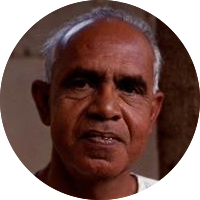
By Muhammad Hasan Askari
Among the countless afflictions of this wretched thing called literature, one major dilemma is that if you try to isolate and understand a single element apart from the rest, your understanding remains woefully incomplete. The medical approach does not apply here, where one doctor specializes in ear diseases and another in nasal ailments. A work of literature is not merely an assembly of disparate parts. Here, the whole is what truly matters. You can gather a brick from here and a stone from there to build whatever you please, but you cannot build literature that way. The nature of literature is much like the nature of physical objects.
Physical objects possess both length and width, yet one cannot exist without the other. When we sit down to contemplate literature, we face the exact same conundrum. No sooner do we feel satisfied after analyzing one aspect than we realize it is inextricably linked to another. This is precisely why the task of literary criticism is akin to fighting the wind.
For instance, I have been raising a hue and cry lately that our writers lack a mastery of words. Therefore, our very first task should be to bring words under our command. On the surface, this simple statement seems to suggest that writers should wake up every morning and memorize a page of the dictionary on an empty stomach. Or perhaps they should pore over old books, compile a list of impressive words, and then constantly look for excuses to forcefully insert them, regardless of the context. Even if we assume that good prose or poetry could be written this way, who would bother lugging around the four heavy volumes of the Noor-ul-Lughat dictionary on their shoulders just to get a single short story published? The real question to ask is how words are actually remembered and how one gains mastery over them. After all, what was it that granted Shakespeare alone a vocabulary of twenty-six thousand words? Meanwhile, our entire Urdu language contains a total of about fifty-six thousand words, and today’s Urdu writers likely possess a vocabulary of no more than two or three thousand. What exactly is going on here?
Words are remembered by those who are truly alive—that is, those who share an emotional connection with the elements and manifestations of life, and who do not shy away or recoil from this connection. Forget writers for a moment; the words that ordinary people like you and I speak every day encapsulate our entire physical, mental, and emotional autobiographies. It is as if every person spends their day narrating their own epic, recounting their personal history from childhood to the present moment. Many of these words represent experiences that our conscious mind has readily accepted. Yet, hidden within many other words are experiences that our conscious mind tries to evade, but which our subconscious forces upon us. On the other hand, there are certain words we cannot recall even if we were to swallow memory-enhancing pills, simply because they are tied to unpleasant experiences we desperately wish to escape. How many words we can master, and of what kind, depends entirely on how deeply we are connected to life and how much courage we possess to embrace both its pleasant and unpleasant experiences.
Yes, it takes courage even to embrace a pleasant experience. As Firaq Sahib says:
Balaein yeh bhi mohabbat ke sar gayi hon gi
[These calamities, too, must have been attributed to love]
Even in joy, one cannot survive without enduring the agony of negating the ego. A self-absorbed person is capable of neither true joy nor true sorrow. If someone were to shrink away and completely withdraw into themselves, they would have no need for words at all. This is because words are the medium through which we express the relationship between ourselves and the external world. God first taught the Prophet Adam the names of things. Furthermore, words are not merely a tool for expression; they are driven by our underlying desire to forge connections with others.
Therefore, to master words, a person must possess two things within themselves: first, the will to live and maintain an active interest in life; and second, the desire to connect with other human beings. Shakespeare did not simply copy twenty-six thousand words out of a dictionary; rather, he was moved by the world of objects and people in twenty-six thousand different ways. Even the use of a simple, and in itself seemingly meaningless, word like and signifies that a person’s personality possesses enough flexibility to shift its focus from one thing to another. It shows they have the inner capacity to encompass two things simultaneously. The personalities of many people become frozen and rigid simply because they lack the courage to say and from the depths of their souls. I am not resorting to poetic exaggeration here. Think of how monumental this tiny word and truly is—an entire universe can be contained within it.
The sole purpose of all this rambling was to establish that if writers begin to run out of words, the entire society ought to be alarmed. It is a symptom of a profound social dysfunction. Practical people may remain entirely aloof from a seemingly useless pursuit like literature, yet their own pulse beats within it. If there is a dearth of words in literature, it clearly signifies that society has lost its broader interest in life, or that it no longer has the courage to embrace new experiences. When literature begins to die, it is not just the writers, but the entire society that should be reciting the Dua-e-Qunoot (the prayer of supplication in times of calamity).
Anyway, setting aside these long-winded philosophical discussions, let us examine the nature of this famine of words in contemporary literature. For now, take the issue of idioms. Some people argue that there is no need to use idioms at all. If simple words can get the job done, why bother with such formalities? There are also a few who do want idioms to be used, and the method they suggest is to read classical literature. But if the use of idioms can be learned simply by reading old books, then what was so wrong with the dictionary memorization method? Regardless, everyone seems to have an opinion on this matter. Some embrace idioms, while others reject them. Yet, no one asks the question that actually needs asking. The real question is: when are idioms used, and why? What exactly is an idiom? Why do they appeal to us? And what value do they add to our expression?
I am not well-versed in purely theoretical debates. Instead, I prefer to turn an idiom or two over in my hands to see what meanings emerge from them. Sarshar has written somewhere: The wick was placed in the lamp, and that good-natured girl pulled up her sheet. The simple meaning of this rather long sentence is that the girl goes to sleep as soon as evening falls. So, why should something that can be expressed in fewer words be dragged out into so many? What is the benefit? The benefit is that the true meaning of the sentence is not what I just described; it is far more profound. Evening falling is an act of nature. Placing a wick in the lamp, on the other hand, is an act of the human world that takes place in tandem with a natural phenomenon—and this human act is quite full of life and activity.
Those who remember the days when mustard oil lamps were lit will recall the commotion that ensued the moment the wick was placed in the lamp. Dusk is falling, and there is a frantic search for cotton to make the wick. Once the cotton is found, the wick is rolled hastily and unevenly—sometimes too thick, sometimes too thin. Meanwhile, the younger children are snatching the cotton from their older sister's hands. This is also the time to cook dinner. The flatbread on the griddle is barely visible in the dim light, and the woman cooking is shouting in frustration. And so on. The idiom chiragh mein batti parna (the wick being placed in the lamp) does not merely mean that evening has fallen. This single phrase conjures up an entire scene of collective life. In this idiom, the natural world and human life blend seamlessly into one. In fact, the hustle and bustle of human existence triumphs over the darkness and silence of the evening.
Sarshar did not simply state that going to sleep right at sunset is detrimental to one's health. Rather, he was astonished that at a time when the entire household—young and old—is gathered together amidst such lively activity, a person would turn away from everyone and lie down in isolation. His real objection is: how could the person going to sleep display such utter detachment from collective life? Furthermore, the idiom chadar tanna (to pull the sheet over oneself) implies something quite different from merely falling asleep. It carries a sense of weariness. It suggests that a person, exhausted by the activities of life, makes a conscious decision to withdraw from others and seek refuge under a sheet. Sarshar has not merely narrated an incident; he has illustrated the underlying demands of ordinary human behavior. Behind this individual act, collective life is peeking through. Through idioms, the background and the foreground become inextricably intertwined.
Now consider a proverb: billi ke bhagon chheenka toota (by the cat's good fortune, the hanging food-net broke). Here, a universal concept is presented through a highly specific incident. This is a metaphor, which, as Aristotle noted, is the very soul of poetry. Thus, there are idioms and proverbs that transcend mere description and elevate themselves to the level of poetry. Furthermore, the aforementioned phrase reveals several facets of domestic life. In particular, it hints at the role certain animals play within the daily lives of human beings.
In short, idioms reflect vivid images of collective life, the concepts and beliefs of a society, and its overarching attitude toward humanity, nature, and the universe. Idioms are not merely beautiful phrases; they are fragments of collective experience that house the entire personality of a society. The advantage of using an idiom is that it allows an individual's experience to be viewed against the backdrop of collective experience. An idiom dissolves the individual into the society. It introduces universality into the specific, and specificity into the universal. It teaches us that a single experience of an individual cannot be isolated from their other experiences, nor can an individual's experience be divorced from the experience of the society. An idiom does not allow a part to remain merely a part; it immerses it within the whole... It reminds us of the complexities and vibrant diversity of life. Through it, the contrasts and comparisons of various experiences are brought to light. Because an idiom pulls the individual back into the fold of collective life, it is only employed when a person wishes to maintain a connection with their society. In other words, the idiom is the product of a cohesive and well-regulated society. When an individual becomes alienated from their society and harbors no desire to reintegrate into it, idioms can no longer be used, nor does the need for them remain.
In Urdu poetry, the deliberate avoidance of idioms is first noticeable in the works of Ghalib. This is because his ultimate desire was:
Arsh se pare hota kaash ke makaan apna
(Would that my dwelling were beyond the divine throne)
Beyond the heavens, there may well exist some absolute and abstract experience, but it is certainly not the collective experience of humanity. In such a realm, an individual might view their own experience as absolute, feeling no need to measure it against the experiences of others. Why, then, would Ghalib use idioms? Had Ghalib’s letters not survived, his personality would have appeared rather diminished and stifled to us. While the grandeur of his personality may be evident in his ghazals, its expansiveness is lacking. Ghalib was undone by two things: first, his desire to hold himself aloof from other human beings, and second, his penchant for flaunting philosophical musings.
Aalam tamaam halqa-e-daam-e-khayaal hai
(The entire universe is but a snare of thought)
This assertion may be true in its own right, but genuine thought is only born when one's gaze is fixed upon tangible realities. Aristotle noted that young people cannot be true philosophers because their theorizing and abstract thinking are backed by too few concrete experiences. In this sense, Ghalib remained a mere youth throughout his intellectual life.
As far as being a thinker is concerned, Ghalib does not even reach Kierkegaard’s knees. Yet, Kierkegaard’s greatest distinction is that every single one of his ideas stems from a concrete experience of either individual or collective life. In any case, Ghalib was representing a tendency that had already taken root in our society—namely, the individual's inner desire to break away from the collective. When the life of the individual truly severed its ties with traditional collective relationships, the literature of writers like Niaz Fatehpuri emerged. These writers believed that a literary artist's experiences are fundamentally different from those of ordinary people, possessing a purely aesthetic nature, and that the writer inhabits a realm of pure imagination. The increasing influx of Persian and Arabic vocabulary in their work signifies precisely this shift. These writers were solely interested in showcasing the exclusivity and rarity of their own experiences, refusing to let even the shadow of collective experience fall upon them. Consequently, idioms were discarded to prevent collective life from barging in like an uninvited guest.
As for the writers who emerged after 1936, ideologically, they were proponents of collective life, yet they held no faith in social institutions such as family and religion. In essence, they sought to reject the existing collective life in order to forge a connection with a future, utopian collective existence. On the other hand, they lacked any genuine emotional attachment to collective life of any sort—though they certainly possessed a desire to observe it. (I am speaking here of a general trend; on an individual level, writers like Ahmed Ali, Ismat Chughtai, and Intizar Husain clearly demonstrate a profound love for life). People who have become so severely disconnected from collective life cannot use idioms even if they try. This is because collective life has not permeated their personalities the way it was deeply ingrained in writers like Sarshar, Nazir Ahmad, and Rashid-ul-Khairi. These modern writers simply cannot use a phrase like chiragh mein batti parna, because the concept of evening does not conjure up any image of collective life in their minds. They cannot even use chadar tanna, because they lack the deep interest in the minutest of human actions that Sarshar possessed. In such contexts, these writers would merely use the word sona (to sleep)—opting for a word that certainly denotes a physical action, but remains entirely devoid of human connection.
Therefore, the problem of idioms is not merely a literary one; rather, it is an issue that concerns our entire individual and collective existence. Idioms will only come to our minds when we forge an emotional connection with our collective life and truly accept our society. Idioms, much like collective life itself, serve as the myths of collective existence within poetry. Unless we can perceive the poetry inherent in our collective life, we will remain unable to use idioms. Because the social backdrop has changed, these old idioms no longer evoke any images in our minds. As the forms of life change, new idioms ought to be created. The tragedy, however, is that the birth of new idioms has come to a complete halt.
This implies that we no longer possess a creative interest or a deep emotional connection to our own lives; furthermore, our existence has been fragmented into isolated parts. The sense of a unified whole has vanished. We are unable to blend our experiences together to forge a singular, cohesive reality. This is precisely why our minds fail to invent new idioms. The mind only acquires this ability when there is a genuine connection between the individual and society. Deliberately stringing together a litany of idioms is nothing more than an attempt to manufacture an artificial connection. We will only gain command over idioms when not just writers, but all members of our society, develop a yearning to immerse themselves in collective life. And new idioms will only be born when the bond between the individual and the collective becomes so profound that we are not even consciously aware of its existence.
By Muhammad Hasan Askari
Among the countless afflictions of this wretched thing called literature, one major dilemma is that if you try to isolate and understand a single element apart from the rest, your understanding remains woefully incomplete. The medical approach does not apply here, where one doctor specializes in ear diseases and another in nasal ailments. A work of literature is not merely an assembly of disparate parts. Here, the whole is what truly matters. You can gather a brick from here and a stone from there to build whatever you please, but you cannot build literature that way. The nature of literature is much like the nature of physical objects.
Physical objects possess both length and width, yet one cannot exist without the other. When we sit down to contemplate literature, we face the exact same conundrum. No sooner do we feel satisfied after analyzing one aspect than we realize it is inextricably linked to another. This is precisely why the task of literary criticism is akin to fighting the wind.
For instance, I have been raising a hue and cry lately that our writers lack a mastery of words. Therefore, our very first task should be to bring words under our command. On the surface, this simple statement seems to suggest that writers should wake up every morning and memorize a page of the dictionary on an empty stomach. Or perhaps they should pore over old books, compile a list of impressive words, and then constantly look for excuses to forcefully insert them, regardless of the context. Even if we assume that good prose or poetry could be written this way, who would bother lugging around the four heavy volumes of the Noor-ul-Lughat dictionary on their shoulders just to get a single short story published? The real question to ask is how words are actually remembered and how one gains mastery over them. After all, what was it that granted Shakespeare alone a vocabulary of twenty-six thousand words? Meanwhile, our entire Urdu language contains a total of about fifty-six thousand words, and today’s Urdu writers likely possess a vocabulary of no more than two or three thousand. What exactly is going on here?
Words are remembered by those who are truly alive—that is, those who share an emotional connection with the elements and manifestations of life, and who do not shy away or recoil from this connection. Forget writers for a moment; the words that ordinary people like you and I speak every day encapsulate our entire physical, mental, and emotional autobiographies. It is as if every person spends their day narrating their own epic, recounting their personal history from childhood to the present moment. Many of these words represent experiences that our conscious mind has readily accepted. Yet, hidden within many other words are experiences that our conscious mind tries to evade, but which our subconscious forces upon us. On the other hand, there are certain words we cannot recall even if we were to swallow memory-enhancing pills, simply because they are tied to unpleasant experiences we desperately wish to escape. How many words we can master, and of what kind, depends entirely on how deeply we are connected to life and how much courage we possess to embrace both its pleasant and unpleasant experiences.
Yes, it takes courage even to embrace a pleasant experience. As Firaq Sahib says:
Balaein yeh bhi mohabbat ke sar gayi hon gi
[These calamities, too, must have been attributed to love]
Even in joy, one cannot survive without enduring the agony of negating the ego. A self-absorbed person is capable of neither true joy nor true sorrow. If someone were to shrink away and completely withdraw into themselves, they would have no need for words at all. This is because words are the medium through which we express the relationship between ourselves and the external world. God first taught the Prophet Adam the names of things. Furthermore, words are not merely a tool for expression; they are driven by our underlying desire to forge connections with others.
Therefore, to master words, a person must possess two things within themselves: first, the will to live and maintain an active interest in life; and second, the desire to connect with other human beings. Shakespeare did not simply copy twenty-six thousand words out of a dictionary; rather, he was moved by the world of objects and people in twenty-six thousand different ways. Even the use of a simple, and in itself seemingly meaningless, word like and signifies that a person’s personality possesses enough flexibility to shift its focus from one thing to another. It shows they have the inner capacity to encompass two things simultaneously. The personalities of many people become frozen and rigid simply because they lack the courage to say and from the depths of their souls. I am not resorting to poetic exaggeration here. Think of how monumental this tiny word and truly is—an entire universe can be contained within it.
The sole purpose of all this rambling was to establish that if writers begin to run out of words, the entire society ought to be alarmed. It is a symptom of a profound social dysfunction. Practical people may remain entirely aloof from a seemingly useless pursuit like literature, yet their own pulse beats within it. If there is a dearth of words in literature, it clearly signifies that society has lost its broader interest in life, or that it no longer has the courage to embrace new experiences. When literature begins to die, it is not just the writers, but the entire society that should be reciting the Dua-e-Qunoot (the prayer of supplication in times of calamity).
Anyway, setting aside these long-winded philosophical discussions, let us examine the nature of this famine of words in contemporary literature. For now, take the issue of idioms. Some people argue that there is no need to use idioms at all. If simple words can get the job done, why bother with such formalities? There are also a few who do want idioms to be used, and the method they suggest is to read classical literature. But if the use of idioms can be learned simply by reading old books, then what was so wrong with the dictionary memorization method? Regardless, everyone seems to have an opinion on this matter. Some embrace idioms, while others reject them. Yet, no one asks the question that actually needs asking. The real question is: when are idioms used, and why? What exactly is an idiom? Why do they appeal to us? And what value do they add to our expression?
I am not well-versed in purely theoretical debates. Instead, I prefer to turn an idiom or two over in my hands to see what meanings emerge from them. Sarshar has written somewhere: The wick was placed in the lamp, and that good-natured girl pulled up her sheet. The simple meaning of this rather long sentence is that the girl goes to sleep as soon as evening falls. So, why should something that can be expressed in fewer words be dragged out into so many? What is the benefit? The benefit is that the true meaning of the sentence is not what I just described; it is far more profound. Evening falling is an act of nature. Placing a wick in the lamp, on the other hand, is an act of the human world that takes place in tandem with a natural phenomenon—and this human act is quite full of life and activity.
Those who remember the days when mustard oil lamps were lit will recall the commotion that ensued the moment the wick was placed in the lamp. Dusk is falling, and there is a frantic search for cotton to make the wick. Once the cotton is found, the wick is rolled hastily and unevenly—sometimes too thick, sometimes too thin. Meanwhile, the younger children are snatching the cotton from their older sister's hands. This is also the time to cook dinner. The flatbread on the griddle is barely visible in the dim light, and the woman cooking is shouting in frustration. And so on. The idiom chiragh mein batti parna (the wick being placed in the lamp) does not merely mean that evening has fallen. This single phrase conjures up an entire scene of collective life. In this idiom, the natural world and human life blend seamlessly into one. In fact, the hustle and bustle of human existence triumphs over the darkness and silence of the evening.
Sarshar did not simply state that going to sleep right at sunset is detrimental to one's health. Rather, he was astonished that at a time when the entire household—young and old—is gathered together amidst such lively activity, a person would turn away from everyone and lie down in isolation. His real objection is: how could the person going to sleep display such utter detachment from collective life? Furthermore, the idiom chadar tanna (to pull the sheet over oneself) implies something quite different from merely falling asleep. It carries a sense of weariness. It suggests that a person, exhausted by the activities of life, makes a conscious decision to withdraw from others and seek refuge under a sheet. Sarshar has not merely narrated an incident; he has illustrated the underlying demands of ordinary human behavior. Behind this individual act, collective life is peeking through. Through idioms, the background and the foreground become inextricably intertwined.
Now consider a proverb: billi ke bhagon chheenka toota (by the cat's good fortune, the hanging food-net broke). Here, a universal concept is presented through a highly specific incident. This is a metaphor, which, as Aristotle noted, is the very soul of poetry. Thus, there are idioms and proverbs that transcend mere description and elevate themselves to the level of poetry. Furthermore, the aforementioned phrase reveals several facets of domestic life. In particular, it hints at the role certain animals play within the daily lives of human beings.
In short, idioms reflect vivid images of collective life, the concepts and beliefs of a society, and its overarching attitude toward humanity, nature, and the universe. Idioms are not merely beautiful phrases; they are fragments of collective experience that house the entire personality of a society. The advantage of using an idiom is that it allows an individual's experience to be viewed against the backdrop of collective experience. An idiom dissolves the individual into the society. It introduces universality into the specific, and specificity into the universal. It teaches us that a single experience of an individual cannot be isolated from their other experiences, nor can an individual's experience be divorced from the experience of the society. An idiom does not allow a part to remain merely a part; it immerses it within the whole... It reminds us of the complexities and vibrant diversity of life. Through it, the contrasts and comparisons of various experiences are brought to light. Because an idiom pulls the individual back into the fold of collective life, it is only employed when a person wishes to maintain a connection with their society. In other words, the idiom is the product of a cohesive and well-regulated society. When an individual becomes alienated from their society and harbors no desire to reintegrate into it, idioms can no longer be used, nor does the need for them remain.
In Urdu poetry, the deliberate avoidance of idioms is first noticeable in the works of Ghalib. This is because his ultimate desire was:
Arsh se pare hota kaash ke makaan apna
(Would that my dwelling were beyond the divine throne)
Beyond the heavens, there may well exist some absolute and abstract experience, but it is certainly not the collective experience of humanity. In such a realm, an individual might view their own experience as absolute, feeling no need to measure it against the experiences of others. Why, then, would Ghalib use idioms? Had Ghalib’s letters not survived, his personality would have appeared rather diminished and stifled to us. While the grandeur of his personality may be evident in his ghazals, its expansiveness is lacking. Ghalib was undone by two things: first, his desire to hold himself aloof from other human beings, and second, his penchant for flaunting philosophical musings.
Aalam tamaam halqa-e-daam-e-khayaal hai
(The entire universe is but a snare of thought)
This assertion may be true in its own right, but genuine thought is only born when one's gaze is fixed upon tangible realities. Aristotle noted that young people cannot be true philosophers because their theorizing and abstract thinking are backed by too few concrete experiences. In this sense, Ghalib remained a mere youth throughout his intellectual life.
As far as being a thinker is concerned, Ghalib does not even reach Kierkegaard’s knees. Yet, Kierkegaard’s greatest distinction is that every single one of his ideas stems from a concrete experience of either individual or collective life. In any case, Ghalib was representing a tendency that had already taken root in our society—namely, the individual's inner desire to break away from the collective. When the life of the individual truly severed its ties with traditional collective relationships, the literature of writers like Niaz Fatehpuri emerged. These writers believed that a literary artist's experiences are fundamentally different from those of ordinary people, possessing a purely aesthetic nature, and that the writer inhabits a realm of pure imagination. The increasing influx of Persian and Arabic vocabulary in their work signifies precisely this shift. These writers were solely interested in showcasing the exclusivity and rarity of their own experiences, refusing to let even the shadow of collective experience fall upon them. Consequently, idioms were discarded to prevent collective life from barging in like an uninvited guest.
As for the writers who emerged after 1936, ideologically, they were proponents of collective life, yet they held no faith in social institutions such as family and religion. In essence, they sought to reject the existing collective life in order to forge a connection with a future, utopian collective existence. On the other hand, they lacked any genuine emotional attachment to collective life of any sort—though they certainly possessed a desire to observe it. (I am speaking here of a general trend; on an individual level, writers like Ahmed Ali, Ismat Chughtai, and Intizar Husain clearly demonstrate a profound love for life). People who have become so severely disconnected from collective life cannot use idioms even if they try. This is because collective life has not permeated their personalities the way it was deeply ingrained in writers like Sarshar, Nazir Ahmad, and Rashid-ul-Khairi. These modern writers simply cannot use a phrase like chiragh mein batti parna, because the concept of evening does not conjure up any image of collective life in their minds. They cannot even use chadar tanna, because they lack the deep interest in the minutest of human actions that Sarshar possessed. In such contexts, these writers would merely use the word sona (to sleep)—opting for a word that certainly denotes a physical action, but remains entirely devoid of human connection.
Therefore, the problem of idioms is not merely a literary one; rather, it is an issue that concerns our entire individual and collective existence. Idioms will only come to our minds when we forge an emotional connection with our collective life and truly accept our society. Idioms, much like collective life itself, serve as the myths of collective existence within poetry. Unless we can perceive the poetry inherent in our collective life, we will remain unable to use idioms. Because the social backdrop has changed, these old idioms no longer evoke any images in our minds. As the forms of life change, new idioms ought to be created. The tragedy, however, is that the birth of new idioms has come to a complete halt.
This implies that we no longer possess a creative interest or a deep emotional connection to our own lives; furthermore, our existence has been fragmented into isolated parts. The sense of a unified whole has vanished. We are unable to blend our experiences together to forge a singular, cohesive reality. This is precisely why our minds fail to invent new idioms. The mind only acquires this ability when there is a genuine connection between the individual and society. Deliberately stringing together a litany of idioms is nothing more than an attempt to manufacture an artificial connection. We will only gain command over idioms when not just writers, but all members of our society, develop a yearning to immerse themselves in collective life. And new idioms will only be born when the bond between the individual and the collective becomes so profound that we are not even consciously aware of its existence.
Additional information available
Click on the INTERESTING button to view additional information associated with this sher.
About this sher
rare Unpublished content
This ghazal contains ashaar not published in the public domain. These are marked by a red line on the left.