Naee Shayari Ka Pas-manzar
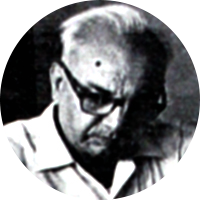
Every human action occurs within the boundaries of time and space. The creation of poetry, if nothing else, is undeniably an act—one brought into existence by some form of internal or external stimulus. Consequently, the moment it emerges, a chain of reactions is set into motion. Time and space do not merely provide a sense of reality; they also help us gauge the distances between actions, which in turn helps determine the artistic and semantic values of a creative work. This framework allows us to distinguish between the old and the older, the new and the newer, and to understand the differences between them. Through it, we can analyze the interconnected relationships between perception, emotion, and thought.
While all contemporary literature is modern in its own time, when we discuss poetry within a historical context, the passage of time naturally separates the old from the new. To truly perceive this, the mirror of poetic subtlety requires the backing of material reality. To understand the themes, tone, language, and the sensory and artistic experiences of modern poetry, one must recognize the temperament of the age and keep the demands of the era in view. It is essential to examine the nature of contemporary consciousness, distinguish between the living and lifeless elements of tradition, and understand the nature and extent of conflicting interests within society. Furthermore, one must recognize the class struggles within the collective mind and differentiate between progressive and decaying elements. These are the material realities that provide the backdrop for change. Through these various mirrors, we can observe the dynamic, evolving images of poetry and literature as they transition from one stage to the next, constantly changing their hues. Any attempt to understand poetry and literature while ignoring this background would be an exercise in futility.
What does it mean to be modern? What specific changes occur within a given situation that evoke a sense of modernity? The answer is not uniform across all places or all eras. Sometimes, these changes manifest as gradual evolution, while at other times, they arrive with revolutionary speed and momentum. Occasionally, the structure of life shifts in such a way that change feels forced upon us, lingering in our inner consciousness merely as a source of conflict and turmoil. At other times, it embeds itself so deeply that it only takes on an external, visible form through a major movement. The countless transformations occurring from country to country, nation to nation, society to society, and individual to individual—as well as within the relationship between the individual and society—find expression across various cultural spheres on both individual and collective levels. These expressions then pass through multiple stages of acceptance and rejection. Social consciousness does not merely assist the individual in this process of selection; rather, by sharpening human perception, it illuminates the path forward. History is replete with such examples. Every significant turning point of change is deeply connected to this phenomenon.
When the word modern is used, its meaning is not identical for everyone, simply because levels of consciousness vary. A person who defines modernity solely by the passage of time ignores the active roles of consciousness and perception. Chronologically, someone may live in a new era, yet their consciousness might remain tethered to the past. Conversely, by understanding the principles of social evolution, an individual can forge their consciousness into a vital link between the present and the future. In India, when the roots of the feudal system and its associated poetry began to weaken, connections with the outside world were established. Various internal and external political influences fostered a sense of change. As new sciences and arts, modern means of communication, new educational systems, and industrialization began to transform mindsets, a new era dawned in India. The impacts of this shift manifested through various individuals and movements, prominently represented by figures such as Raja Ram Mohan Roy, Keshub Chandra Sen, Sir Syed, Ranade, Azad, Hali, Nazir Ahmad, Shibli, Bharatendu Harishchandra, Subramania Bharati, and Bankim Chandra Chatterjee.
These figures, each possessing a different capacity for intellectual flight, were the moths drawn to the first rays of this new light. Despite their distinct individualities, diverse religious and intellectual backgrounds, and varying class consciousness, they all appeared deeply imbued with a fundamental desire for change and evolution. The novelty that had emerged on a material level due to shifting economic and political conditions began to find diverse expressions in literature on a cultural and intellectual level. This was because, in their worldview, literature was not something separate from their holistic personalities. They served as both the intellectual guides and the literary vanguard of their era. Without keeping this historical background in mind, it would be impossible to understand why these individuals differed so vastly not only from historical figures like Faizi, Abul Fazl, Tulsidas, Shah Waliullah, Aurangzeb, and Dara Shikoh, but also from classical poets like Mir, Sauda, and Ghalib.
In certain Western countries, circumstances had already transformed. The Industrial Revolution and political awakening had long since illuminated the paths of thought, imagination, perception, and consciousness. There, the endeavor to unveil the mysteries of life through poetry and to understand the intrinsic connection between art and society had begun much earlier. There are those who seek to purify culture, history, politics, economic systems, scientific progress, and literature under the guise of some arbitrary philosophy. They treat perception and consciousness as purely metaphysical phenomena, arguing that human thought and imagination are entirely detached from, and unaffected by, the realities of material life. However, if one analyzes their stance and engages in logical debate, it becomes evident that these are the very same people who, politically and historically, oppose any meaningful change. To mask their true allegiances and preferences, they label poetry and literature as purposeless, directionless, and detached from collective human relationships. By reducing poetry to mere self-expression or self-revelation, they attempt to strip it entirely of its historical and social background.
No matter how ambiguous, convoluted, rapidly shifting, stagnant, or colorless a background may be, it remains instrumental in identifying the true contours of poetry. It brings to light a poem's artistic merits and flaws, its innovations, and its expansions, while mapping the milestones of tradition and experimentation. Can the poetry of Iqbal and Tagore truly be understood without considering global intellectual currents, the Indian awakening, the Russian Revolution, their traditional heritage, and the literary and contemporary demands of their time? In fact, even the sources of the transcendental and idealistic thoughts of both these monumental poets can be traced back to this very background. It is true that the relationship between a poet's environment and their creative output is not strictly mathematical or mechanical—but it is certainly not detached from it, either.
In the late nineteenth and early twentieth centuries, the themes of Urdu poetry were so deeply intertwined with various aspects of the national freedom movement that studying one naturally aids in understanding the other. It would be naive to attribute the conflict between realism and romanticism—evident in Urdu and Hindi literature from the First World War until 1930—merely to the individual imaginations of poets. The Indian mind itself was being shaped by Western ideas, political concepts, and literary movements, and this influence was inevitably reflected in its poetry. The extent to which a poet of that era absorbed these influences, and their reasons for doing so, depended on their own selective consciousness. However, they drew their raw material from their immediate surroundings, and their creative impulse from the changing circumstances.
After 1930, literary focus shifted increasingly toward socialist ideas and psychoanalysis. This, too, was driven by material causes. In Europe and America, while capitalism and socialism were locked in a struggle for supremacy, another battle was unfolding: the clash between the conscious and the unconscious, religiosity and materialism, and objective reality and inner subjectivity. It is not difficult to trace the connections between these two spheres. The conflicts playing out externally in political and social systems were mirrored culturally and intellectually in philosophy, poetry, and literary theory and expression. India, too, became a battleground for these ideological conflicts, as it was compelled—both politically and intellectually—to engage with global ideas and politics in pursuit of its own interests. The Progressive Writers' Movement in Urdu poetry, along with its associated trends, reflects this very friction. These movements cannot be dismissed or explained away simply as anti-art currents.
Any attempt to isolate poetry and literature from the broader currents of human thought is bound to fail. Such isolation cannot mask the external realities that are fiercely vying for dominance. If poetry does not align itself with one side, it inevitably appears to favor the other. Even if this alignment is neither conscious nor explicit, and even if there are third, fourth, or fifth dimensions to consider, a fundamental analysis will reveal that the poetry ultimately gravitates toward some manifestation of the core conflict.
Examining poetry against its broader background brings to light its hidden, unconscious meanings. Through this approach, we also gain insight into the poet’s individual inclinations, their attitude toward life, and their artistic and aesthetic sensibilities. Over the past twenty-five years, the world has witnessed terrifying nightmares and confronted bitter realities. While new horizons have brightened and science has unlocked unprecedented possibilities, political machinations have simultaneously crushed the human spirit. Medical cures were discovered, yet new sources of psychological distress emerged. A myriad of ideologies—some life-affirming, others merely intoxicating illusions—were introduced, leaving humanity standing at a crossroads, seemingly having lost its way.
These are the realities reflected in contemporary poetry. It is incorrect to claim that the poet lacks an awareness of them or is incapable of understanding them. The extent to which a poet feels these realities and expresses them in their work serves as an indicator of their conscious and subconscious inclinations. Despite the industrial imbalances of the modern era, the pervasive fear of death, the uncertainty, doubt, and disillusionment regarding political ideologies, and the prevailing sense of fragmentation, anarchy, and rebellious fervor, every sincere poet draws their subject matter from the very life they are enduring. They strive to express this experience in a manner that aligns with their artistic vision and holds the potential to resonate with some segment or class of society. Consequently, even the most avant-garde poet is compelled to engage in the critique of life alongside the act of creation.
The background of contemporary poetry is the entirety of contemporary life. A poet may draw upon any aspect of this life to shape their imaginative vision, and they are free to choose any subject, material, or mode of expression. However, if they hold any regard for the reader, they must be prepared to answer a crucial question: in service of which ideology have they exercised their creative freedom, and why?
Those who ignore all historical and scientific contexts to use terms like modern or modernity in a self-serving, restricted sense merely parrot a few assumptions. They believe they have liberated poetry and literature from all constraints, while simultaneously shielding themselves from the accusation of endorsing any specific viewpoint or ideology. They argue that they navigate without a predetermined direction, that they are non-aligned, and that they articulate only what stems from their personal experience. They claim they do not wish to infringe upon the reader's freedom by offering solutions to life's problems; rather, they merely depict reality, fearlessly employing language to endow it with new meanings. In our current scientific era, and in the light of historical precedent, all such claims are baseless. If they are not rooted in self-deception or sheer ignorance, they can only be described as a deliberate attempt to mislead minds—an endeavor that is currently being waged on a global scale.
Today’s intelligent reader understands perfectly well that in every era, great poets have expressed universal truths through the prism of their own selves. In every era, language has been bent and molded to capture the precise meaning the poet intended; in every era, literary experiments have been conducted; and in every era, the poet has proudly proclaimed their creative autonomy. As for the assertion that the contemporary poet aims to express reality without a set direction, this claim becomes meaningless when we observe that not only do individual poets have clearly defined ideological trajectories, but a collective convergence also emerges. In this convergence, the mere repetition of a few select themes becomes the very hallmark of modernity. Poetry begins to devolve into a formula, resulting in a situation where, driven by a calculated agenda and design, it morphs into a monolithic uniformity of thought, capacity, and tone. The vibrant hues of individuality fade away, and hiding behind the facade of purposelessness is no longer viable—because anarchy itself, even if not a fully coherent philosophy, is undeniably a distinct ideological standpoint.
Many poets who attach the label of modernism to their poetry also express their views in prose. If they do not write prose themselves, others advocate on their behalf for their detachment and non-alignment. These essays clearly articulate the viewpoints, philosophies, or objectives that remain hidden behind a veil of ambiguity in their poetry. Furthermore, they fiercely contrast their ideas with those of others to defend their poetic aims. What remains concealed in their poems becomes entirely evident in their essays. The only difference is that proponents of one viewpoint openly declare their support for human freedom, scientific and intellectual progress, democracy, economic prosperity, peace, justice, human love, and the beauty and joy of life. Conversely, the other group—comprising nearly ninety percent—opposes these life values. Using the writer's freedom of thought as a shield, they overtly or covertly propagate death, fear, aggression, absurdity, human insignificance, anti-rationalism, and anarchy.
Both groups are free, and the choice of values is entirely up to them. Yet, despite this, their claims of non-alignment and detachment are nothing but mere propaganda. To treat literature and poetry as entirely self-contained and autonomous entities—much like philosophy, politics, and science—while refusing to see them as a remedy for life's pains, an answer to its questions, or a balm for its wounds, is a deeply contradictory stance. Only those who wish to use poetry and literature to sow chaos in life could possibly consider such a position valid. All these complications arise because certain individuals divorce poetry from its living connections and isolate the poet from their intellectual and social background. They split the poet's identity into two distinct halves—the poet and the social human being—and assign separate responsibilities to each. According to this logic, social struggles, politics, scientific progress, and intellectual vision become forbidden fruit for the poet. Yet, as a social human being, they are allowed to share in the collective experiences of everyone else. Can such a demand truly be considered natural or rational?
Comprehending the reality of one's background is what grounds poetry in reality. Unfortunately, however, some evangelists of new poetry insist that the most poetic and authentic background for modern Urdu poets is the one that existed in France a century ago, in Europe fifty years ago, or in America today. They still regard the world of T.S. Eliot's *The Waste Land* as the real world, and the characters of Kafka and Camus as real people. The world has changed, and Indian life itself is grappling with its own specific existential agony. Its anguish is entirely different; its hopes and despairs are of a different nature. A genuine realization of this can only be achieved by understanding our own background and our own way of life. The poetry that is born from this sincere realization will be the true new poetry.
Every human action occurs within the boundaries of time and space. The creation of poetry, if nothing else, is undeniably an act—one brought into existence by some form of internal or external stimulus. Consequently, the moment it emerges, a chain of reactions is set into motion. Time and space do not merely provide a sense of reality; they also help us gauge the distances between actions, which in turn helps determine the artistic and semantic values of a creative work. This framework allows us to distinguish between the old and the older, the new and the newer, and to understand the differences between them. Through it, we can analyze the interconnected relationships between perception, emotion, and thought.
While all contemporary literature is modern in its own time, when we discuss poetry within a historical context, the passage of time naturally separates the old from the new. To truly perceive this, the mirror of poetic subtlety requires the backing of material reality. To understand the themes, tone, language, and the sensory and artistic experiences of modern poetry, one must recognize the temperament of the age and keep the demands of the era in view. It is essential to examine the nature of contemporary consciousness, distinguish between the living and lifeless elements of tradition, and understand the nature and extent of conflicting interests within society. Furthermore, one must recognize the class struggles within the collective mind and differentiate between progressive and decaying elements. These are the material realities that provide the backdrop for change. Through these various mirrors, we can observe the dynamic, evolving images of poetry and literature as they transition from one stage to the next, constantly changing their hues. Any attempt to understand poetry and literature while ignoring this background would be an exercise in futility.
What does it mean to be modern? What specific changes occur within a given situation that evoke a sense of modernity? The answer is not uniform across all places or all eras. Sometimes, these changes manifest as gradual evolution, while at other times, they arrive with revolutionary speed and momentum. Occasionally, the structure of life shifts in such a way that change feels forced upon us, lingering in our inner consciousness merely as a source of conflict and turmoil. At other times, it embeds itself so deeply that it only takes on an external, visible form through a major movement. The countless transformations occurring from country to country, nation to nation, society to society, and individual to individual—as well as within the relationship between the individual and society—find expression across various cultural spheres on both individual and collective levels. These expressions then pass through multiple stages of acceptance and rejection. Social consciousness does not merely assist the individual in this process of selection; rather, by sharpening human perception, it illuminates the path forward. History is replete with such examples. Every significant turning point of change is deeply connected to this phenomenon.
When the word modern is used, its meaning is not identical for everyone, simply because levels of consciousness vary. A person who defines modernity solely by the passage of time ignores the active roles of consciousness and perception. Chronologically, someone may live in a new era, yet their consciousness might remain tethered to the past. Conversely, by understanding the principles of social evolution, an individual can forge their consciousness into a vital link between the present and the future. In India, when the roots of the feudal system and its associated poetry began to weaken, connections with the outside world were established. Various internal and external political influences fostered a sense of change. As new sciences and arts, modern means of communication, new educational systems, and industrialization began to transform mindsets, a new era dawned in India. The impacts of this shift manifested through various individuals and movements, prominently represented by figures such as Raja Ram Mohan Roy, Keshub Chandra Sen, Sir Syed, Ranade, Azad, Hali, Nazir Ahmad, Shibli, Bharatendu Harishchandra, Subramania Bharati, and Bankim Chandra Chatterjee.
These figures, each possessing a different capacity for intellectual flight, were the moths drawn to the first rays of this new light. Despite their distinct individualities, diverse religious and intellectual backgrounds, and varying class consciousness, they all appeared deeply imbued with a fundamental desire for change and evolution. The novelty that had emerged on a material level due to shifting economic and political conditions began to find diverse expressions in literature on a cultural and intellectual level. This was because, in their worldview, literature was not something separate from their holistic personalities. They served as both the intellectual guides and the literary vanguard of their era. Without keeping this historical background in mind, it would be impossible to understand why these individuals differed so vastly not only from historical figures like Faizi, Abul Fazl, Tulsidas, Shah Waliullah, Aurangzeb, and Dara Shikoh, but also from classical poets like Mir, Sauda, and Ghalib.
In certain Western countries, circumstances had already transformed. The Industrial Revolution and political awakening had long since illuminated the paths of thought, imagination, perception, and consciousness. There, the endeavor to unveil the mysteries of life through poetry and to understand the intrinsic connection between art and society had begun much earlier. There are those who seek to purify culture, history, politics, economic systems, scientific progress, and literature under the guise of some arbitrary philosophy. They treat perception and consciousness as purely metaphysical phenomena, arguing that human thought and imagination are entirely detached from, and unaffected by, the realities of material life. However, if one analyzes their stance and engages in logical debate, it becomes evident that these are the very same people who, politically and historically, oppose any meaningful change. To mask their true allegiances and preferences, they label poetry and literature as purposeless, directionless, and detached from collective human relationships. By reducing poetry to mere self-expression or self-revelation, they attempt to strip it entirely of its historical and social background.
No matter how ambiguous, convoluted, rapidly shifting, stagnant, or colorless a background may be, it remains instrumental in identifying the true contours of poetry. It brings to light a poem's artistic merits and flaws, its innovations, and its expansions, while mapping the milestones of tradition and experimentation. Can the poetry of Iqbal and Tagore truly be understood without considering global intellectual currents, the Indian awakening, the Russian Revolution, their traditional heritage, and the literary and contemporary demands of their time? In fact, even the sources of the transcendental and idealistic thoughts of both these monumental poets can be traced back to this very background. It is true that the relationship between a poet's environment and their creative output is not strictly mathematical or mechanical—but it is certainly not detached from it, either.
In the late nineteenth and early twentieth centuries, the themes of Urdu poetry were so deeply intertwined with various aspects of the national freedom movement that studying one naturally aids in understanding the other. It would be naive to attribute the conflict between realism and romanticism—evident in Urdu and Hindi literature from the First World War until 1930—merely to the individual imaginations of poets. The Indian mind itself was being shaped by Western ideas, political concepts, and literary movements, and this influence was inevitably reflected in its poetry. The extent to which a poet of that era absorbed these influences, and their reasons for doing so, depended on their own selective consciousness. However, they drew their raw material from their immediate surroundings, and their creative impulse from the changing circumstances.
After 1930, literary focus shifted increasingly toward socialist ideas and psychoanalysis. This, too, was driven by material causes. In Europe and America, while capitalism and socialism were locked in a struggle for supremacy, another battle was unfolding: the clash between the conscious and the unconscious, religiosity and materialism, and objective reality and inner subjectivity. It is not difficult to trace the connections between these two spheres. The conflicts playing out externally in political and social systems were mirrored culturally and intellectually in philosophy, poetry, and literary theory and expression. India, too, became a battleground for these ideological conflicts, as it was compelled—both politically and intellectually—to engage with global ideas and politics in pursuit of its own interests. The Progressive Writers' Movement in Urdu poetry, along with its associated trends, reflects this very friction. These movements cannot be dismissed or explained away simply as anti-art currents.
Any attempt to isolate poetry and literature from the broader currents of human thought is bound to fail. Such isolation cannot mask the external realities that are fiercely vying for dominance. If poetry does not align itself with one side, it inevitably appears to favor the other. Even if this alignment is neither conscious nor explicit, and even if there are third, fourth, or fifth dimensions to consider, a fundamental analysis will reveal that the poetry ultimately gravitates toward some manifestation of the core conflict.
Examining poetry against its broader background brings to light its hidden, unconscious meanings. Through this approach, we also gain insight into the poet’s individual inclinations, their attitude toward life, and their artistic and aesthetic sensibilities. Over the past twenty-five years, the world has witnessed terrifying nightmares and confronted bitter realities. While new horizons have brightened and science has unlocked unprecedented possibilities, political machinations have simultaneously crushed the human spirit. Medical cures were discovered, yet new sources of psychological distress emerged. A myriad of ideologies—some life-affirming, others merely intoxicating illusions—were introduced, leaving humanity standing at a crossroads, seemingly having lost its way.
These are the realities reflected in contemporary poetry. It is incorrect to claim that the poet lacks an awareness of them or is incapable of understanding them. The extent to which a poet feels these realities and expresses them in their work serves as an indicator of their conscious and subconscious inclinations. Despite the industrial imbalances of the modern era, the pervasive fear of death, the uncertainty, doubt, and disillusionment regarding political ideologies, and the prevailing sense of fragmentation, anarchy, and rebellious fervor, every sincere poet draws their subject matter from the very life they are enduring. They strive to express this experience in a manner that aligns with their artistic vision and holds the potential to resonate with some segment or class of society. Consequently, even the most avant-garde poet is compelled to engage in the critique of life alongside the act of creation.
The background of contemporary poetry is the entirety of contemporary life. A poet may draw upon any aspect of this life to shape their imaginative vision, and they are free to choose any subject, material, or mode of expression. However, if they hold any regard for the reader, they must be prepared to answer a crucial question: in service of which ideology have they exercised their creative freedom, and why?
Those who ignore all historical and scientific contexts to use terms like modern or modernity in a self-serving, restricted sense merely parrot a few assumptions. They believe they have liberated poetry and literature from all constraints, while simultaneously shielding themselves from the accusation of endorsing any specific viewpoint or ideology. They argue that they navigate without a predetermined direction, that they are non-aligned, and that they articulate only what stems from their personal experience. They claim they do not wish to infringe upon the reader's freedom by offering solutions to life's problems; rather, they merely depict reality, fearlessly employing language to endow it with new meanings. In our current scientific era, and in the light of historical precedent, all such claims are baseless. If they are not rooted in self-deception or sheer ignorance, they can only be described as a deliberate attempt to mislead minds—an endeavor that is currently being waged on a global scale.
Today’s intelligent reader understands perfectly well that in every era, great poets have expressed universal truths through the prism of their own selves. In every era, language has been bent and molded to capture the precise meaning the poet intended; in every era, literary experiments have been conducted; and in every era, the poet has proudly proclaimed their creative autonomy. As for the assertion that the contemporary poet aims to express reality without a set direction, this claim becomes meaningless when we observe that not only do individual poets have clearly defined ideological trajectories, but a collective convergence also emerges. In this convergence, the mere repetition of a few select themes becomes the very hallmark of modernity. Poetry begins to devolve into a formula, resulting in a situation where, driven by a calculated agenda and design, it morphs into a monolithic uniformity of thought, capacity, and tone. The vibrant hues of individuality fade away, and hiding behind the facade of purposelessness is no longer viable—because anarchy itself, even if not a fully coherent philosophy, is undeniably a distinct ideological standpoint.
Many poets who attach the label of modernism to their poetry also express their views in prose. If they do not write prose themselves, others advocate on their behalf for their detachment and non-alignment. These essays clearly articulate the viewpoints, philosophies, or objectives that remain hidden behind a veil of ambiguity in their poetry. Furthermore, they fiercely contrast their ideas with those of others to defend their poetic aims. What remains concealed in their poems becomes entirely evident in their essays. The only difference is that proponents of one viewpoint openly declare their support for human freedom, scientific and intellectual progress, democracy, economic prosperity, peace, justice, human love, and the beauty and joy of life. Conversely, the other group—comprising nearly ninety percent—opposes these life values. Using the writer's freedom of thought as a shield, they overtly or covertly propagate death, fear, aggression, absurdity, human insignificance, anti-rationalism, and anarchy.
Both groups are free, and the choice of values is entirely up to them. Yet, despite this, their claims of non-alignment and detachment are nothing but mere propaganda. To treat literature and poetry as entirely self-contained and autonomous entities—much like philosophy, politics, and science—while refusing to see them as a remedy for life's pains, an answer to its questions, or a balm for its wounds, is a deeply contradictory stance. Only those who wish to use poetry and literature to sow chaos in life could possibly consider such a position valid. All these complications arise because certain individuals divorce poetry from its living connections and isolate the poet from their intellectual and social background. They split the poet's identity into two distinct halves—the poet and the social human being—and assign separate responsibilities to each. According to this logic, social struggles, politics, scientific progress, and intellectual vision become forbidden fruit for the poet. Yet, as a social human being, they are allowed to share in the collective experiences of everyone else. Can such a demand truly be considered natural or rational?
Comprehending the reality of one's background is what grounds poetry in reality. Unfortunately, however, some evangelists of new poetry insist that the most poetic and authentic background for modern Urdu poets is the one that existed in France a century ago, in Europe fifty years ago, or in America today. They still regard the world of T.S. Eliot's *The Waste Land* as the real world, and the characters of Kafka and Camus as real people. The world has changed, and Indian life itself is grappling with its own specific existential agony. Its anguish is entirely different; its hopes and despairs are of a different nature. A genuine realization of this can only be achieved by understanding our own background and our own way of life. The poetry that is born from this sincere realization will be the true new poetry.
Additional information available
Click on the INTERESTING button to view additional information associated with this sher.
About this sher
rare Unpublished content
This ghazal contains ashaar not published in the public domain. These are marked by a red line on the left.