Nasri Nazm Ka Mas'ala
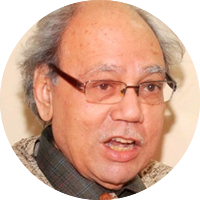
Shamim Hanafi
One question that will always require our consideration is this: what plays the fundamental role in determining the structure or form of literary genres? Or, to put it another way, what exerts the greatest influence on the compositional elements of a specific genre? Is it poetic and literary values? Individuals? A specific intellectual trend? Or a particular era? In our literary tradition, poetic genres are identified either by their subject matter or by their form and structure. In some cases, a genre's identity is established based on a combination of both subject and form.
However, it is also true that at some level, different genres are interconnected in such a way that many of their elements overlap. It is not easy to draw strict boundaries between them regarding experience, thought, and subject matter. Alongside their distinct characteristics, certain shared aspects inevitably emerge.
In this regard, the poetic genre that creates the most complications for us is the nazm. The dynamics of the qasida, marsiya, masnavi, ghazal, and ruba'i are vastly different from those of the nazm, as the traditions of all these genres are ancient and firmly established. Consequently, no major revolutionary change in the forms of these genres is possible. The spectacles of the free verse ghazal or the prose ghazal suit neither the poet nor the poetry itself. Such overambitious experimentation has stripped the ghazal of its greatest defining feature: the memorability of its couplets. If someone actually manages to memorize verses of a free verse or prose ghazal, it should be considered a testament to that person's memory rather than the brilliance of the verse. All the aforementioned genres possess a solid cultural foundation. The very concept of the qasida, masnavi, marsiya, and ruba'i is bound to a cohesive and defined collective tradition. When discussing these genres, we simply cannot ignore their traditional backgrounds.
The nazm also possesses a distinct cultural foundation. In fact, before proceeding further, I must state that for me, the identity and structural formation of any genre is meaningless without considering cultural demands, forms, and cultural pressures. However, compared to other poetic genres, the dynamics of the nazm differ in several respects. A few obvious points in this regard are as follows:
(1) The tradition of the nazm in the history of Urdu literature cannot be as rigidly defined as, for example, the history of the qasida, marsiya, or ghazal.
(2) Compared to these genres, the nazm was not particularly rich or prominent until at least the late nineteenth century. The status of Nazeer Akbarabadi is merely an exception.
(3) While the forms of the masnavi and marsiya were not bound by the same level of orthodoxy as the qasida and ghazal, any experiments or minor structural changes seen in them were still only marginal.
(4) Among Urdu poetic genres, the nazm is the only one that, rather than stemming from a traditional Eastern background, is linked to the cultural renaissance of the nineteenth century and the transformations in literary thought brought about by Western influence.
(5) The poetics of the qasida, marsiya, masnavi, and ghazal trace their lineage back to ancient Eastern traditions. In contrast, to formulate the poetics of the nazm, we must look to the modern era, Western civilization, the clash between East and West, and the social, cultural, and linguistic dialogue between the two.
Undoubtedly, India has a long history of fables, epics, parables, and recorded mystical discourses (malfuzat). Even so, the modern novel and short story (afsana) are products of the industrial age and reflect a new intellectual and emotional culture. Similarly, despite the existence of a cohesive tradition of creative expression in the form of the mahakavya (grand epic), martial epics, masnavis, and qasidas, the nazm had to seek out a new foundation during the era of Azad and Hali. The forms of the musaddas and masnavi alone could not fulfill the creative and intellectual demands of the modern nazm, nor the intuitive needs of its poets. But was the existence of a robust tradition of strictly metered, blank, and free verse nazms not sufficient? Why was it deemed necessary to forge an entirely new form and a new style of expression for the nazm? To answer this, we must consider several points simultaneously.
However, before addressing these points, I must state that my answer to this question is in the affirmative. I believe that no literary form comes into existence without a reason. Even those who compose free verse or prose ghazals offer some sort of justification—good or bad—for their actions. However, not only is their justification weak and contradictory to the fundamental demands of the ghazal, but the free or prose ghazal has also failed to establish any credibility, even after a long and arduous struggle for liberation. Therefore, it is pointless to conflate the issue of the prose poem with the issue of the free or prose ghazal. The points that the issue of the prose poem invites us to reflect upon can be briefly outlined as follows:
(1) All poets who provide a foundation for their tradition and possess a sense of creative responsibility fundamentally strive to broaden the scope of the core emotions that help build that tradition. Creatively exhausted poets, who write poetry merely out of habit and fear the risks of adventurism, remain content with trite and commonplace emotions.
(2) The search for any new style signifies that the writer wishes to understand their internal life anew and on a different level. Their intuition possesses enough flexibility to deviate from fixed, prescribed, and well-trodden paths to pursue this quest. Their creative process is accompanied by a natural spirit of rebellion, and they are not afraid to experiment with strange and unfamiliar means of expression.
(3) In this context, a remark by Askari Sahib comes to mind: without an interest in new means of expression, writers cannot illuminate the kinds of experiences that demand a new style. The very desire to utilize new resources is intrinsically linked to new experiences, new modes of feeling, and new attempts to understand and reveal oneself.
(4) A secondary question arises here: what is the nature of the process of change in the means or styles of expression? The answer is that this change can be internal and intrinsic, or it can be external and visible on the surface.
(5) Without delving into the history of the prose poem, a glance at the prose poetry of the last ten to fifteen years reveals that a silent yet inevitable shift in poetic sensibility has become a part of not just Urdu, but also our various regional languages and the international poetic tradition of our time. It should be understood as a process of universal creative activity of this era.
(6) This opinion may seem sweeping to some, but the fact remains that prior to prose poetry, our tradition shows no sign of such a massive, revolutionary shift in poetic style. Blank verse and free verse undoubtedly hold the status of bold creative experiments; yet, even this boldness did not bring about anything that could be described as a shift in the very axis of our tradition. From the formal experiments of modern Urdu poetry's formative era to the Progressive and even later modern poets—and extending to poems composed in blank verse, free verse, and run-on line patterns—despite superficial changes, the shadow of Eastern traditions remains clearly visible over our poetry.
From Rashid, Miraji, Faiz, Jafri, Akhtar ul Iman, Majeed Amjad, Munir Niazi, Mukhtar Siddiqui, Ameeq Hanfi, Adil Mansuri, Kumar Pashi, and Qazi Saleem, all the way to Zahid Dar (during his Madho era), Abbas Athar, Salahuddin Mahmood, Saqi Faruqi, Shahryar, and their contemporaries, we certainly sense an expansion of the tradition in their poetry, but not a deviation from it.
Prose poetry is, in fact, both a deviation and an attempt at creative reinterpretation (ijtihad). And the responsibility for this unorthodox innovation does not rest solely on the shoulders of misguided youth. Setting aside Sajjad Zaheer, Khurshid ul Islam, and Muhammad Hasan, if we look even further back to the era of romantic prose, we can trace the presence of a newly discovered intellectual and creative essence in works like Sajjad Ansari’s Mahshar-e-Khayal and Mian Bashir Ahmed’s Tilism-e-Zindagi. Wazir Agha refers to prose poetry as Nasm (a blend of prose and poetry) and considers the term prose poetry to be an oxymoron. On the other hand, many well-established poets are unwilling to grant prose poetry any status beyond that of an unjustified audacity, hoping that this experiment will simply die a natural death. However, before moving forward, we must consider a few points.
First, any form of expression that provokes a reaction is not inherently purposeless or useless. Here, I would like to reiterate that the phenomenon of prose poetry must be kept separate from that of the free ghazal or prose ghazal. Lumping them together creates a false equivalence because the ghazal, despite its centuries-long journey and its exposure to new realms of feeling and expression, remains a poetry of fixed form. We do not have the right to turn a chair into a table. Second, from the eighteenth century to the twentieth century—which is now drawing to a close in just a few years—the genre of the nazm has never been restricted to a single, universally accepted, and fixed form in any era. The Qasida, Masnavi, Marsiya, Ghazal, or stanzaic forms like the Musaddas (six-line), Mukhammas (five-line), Murabba (four-line), and Sulasi (three-line)—even a single standalone line can serve as the formal foundation of a nazm:
Udhaar maangi hui har khushi ka sood hai gham...
[Sorrow is the interest on every borrowed joy...]
— Ameeq Hanfi
Furthermore, it would not be surprising if the experiment of prose poetry heralds the emergence of a truly great poet. Urdu poetry has yet to reach the magical heights of Pablo Neruda. Fahmida Riaz took a step in this very direction with Kya Tum Poora Chand Na Dekhoge (Will You Not See the Full Moon?). That journey remained incomplete. Yet, even as an unfinished petition, this poem reveals an extraordinary creative power, alongside the majesty and restlessness of deep emotion. Many poems by Nasreen Anjum Bhatti (especially Choohay; her collection Banbaas was recently published), at least three collections by Kishwar Naheed (Alamaton Ke Darmiyan, Siyah Hashiye Mein Gulabi Rang, Khayali Shakhs Se Muqabla), Zahid Dar’s poems of love and despair, Shaista Habib’s Suraj Par Dastak, Azra Abbas’s Neend Ki Musafatein and Mez Par Rakhay Hath, Asghar Nadeem Syed’s Jangal Ke Iss Paar Jangal, Afzal Ahmed Syed’s Chhutti Hui Tareekh and Do Zabanon Mein Sazaye Maut, Zeeshan Sahil’s astonishing collection Chiriyon Ka Shor, Ateequllah’s Bain Karta Hua Shehr, Sara Shagufta’s book Aankhein, Sadiq’s collection Kushad, and Ahmed Fawad’s book Yeh Koi Kitab Nahin—all these names come to mind effortlessly.
From Asad Muhammad Khan, Javed Shaheen, and Sarmad Sehbai to Saeeduddin (whose poems I came across in Ajmal Kamal’s journal Aaj, and which deeply stirred the senses), these poets leave us with the distinct impression that the new poem has discovered itself on an entirely new plane through prose poetry. The most prominent aspect of this quest is an intellectual and emotional affinity with a futuristic element. On this level, we might even say that Urdu prose poetry is attempting to align itself more closely with the central tenets of avant-garde movements. Modes of expression are undoubtedly reflections of the past and the present, but it is equally possible that the forging of a new style is actually a quest for a new creative, intellectual, and emotional future. In the nineteenth century, our literary elders were doing exactly the same thing; for them, accessing new modes of expression was synonymous with forging a new life and constructing a new collective environment for their nation.
An important point that emerges from this discussion—one that we must analyze if we are to understand the fundamental concerns and trajectories of poetry from the time of Azad and Hali to the present—is that intellectual reflection (tafakkur) has remained the most dominant element in the entire tradition of the modern nazm. Whether it is Hali, Akbar, Iqbal, and Josh, or Rashid, Faiz, and Akhtar ul Iman, or even the agitated and restless souls of our own era, all of them use their poetry to lead us toward some new realm of thought. They are engaged in deep contemplation themselves, and they want us, along with our futures, to join them in this process of reflection. Traces of this intellectual reflection can be observed even in the tone and cadence of contemporary prose poems. Therefore, it can be argued that prose poetry is drafting the blueprint for a new creative culture. The poetic principles upon which this culture will be founded will surpass the Vehicle aesthetics or Type-writer aesthetics that materialized in poetry following the First World War.
These poems can be read as creative commentary, a statement, a critique, or simply as a whisper and a soliloquy. To determine their aesthetic value and creative implications, we will have to draft a new manifesto. We must also consider that the synthesis of emotions and concepts presented through these poems has evolved alongside the changing times, and we cannot judge their merit based on traditional syntheses of the past. Like any poem, these works feature a central emotion accompanied by many actively expressed subsidiary emotions. Alongside a central intention (or, in formal terminology, authorial intent), they also incorporate elements of a new cadence, mood, temperament, and atmosphere. Without understanding these elements, we might be able to dismantle the poem (or, in critical terms, subject it to Deconstruction), but we will likely fail to grasp its true meaning.
Shamim Hanafi
One question that will always require our consideration is this: what plays the fundamental role in determining the structure or form of literary genres? Or, to put it another way, what exerts the greatest influence on the compositional elements of a specific genre? Is it poetic and literary values? Individuals? A specific intellectual trend? Or a particular era? In our literary tradition, poetic genres are identified either by their subject matter or by their form and structure. In some cases, a genre's identity is established based on a combination of both subject and form.
However, it is also true that at some level, different genres are interconnected in such a way that many of their elements overlap. It is not easy to draw strict boundaries between them regarding experience, thought, and subject matter. Alongside their distinct characteristics, certain shared aspects inevitably emerge.
In this regard, the poetic genre that creates the most complications for us is the nazm. The dynamics of the qasida, marsiya, masnavi, ghazal, and ruba'i are vastly different from those of the nazm, as the traditions of all these genres are ancient and firmly established. Consequently, no major revolutionary change in the forms of these genres is possible. The spectacles of the free verse ghazal or the prose ghazal suit neither the poet nor the poetry itself. Such overambitious experimentation has stripped the ghazal of its greatest defining feature: the memorability of its couplets. If someone actually manages to memorize verses of a free verse or prose ghazal, it should be considered a testament to that person's memory rather than the brilliance of the verse. All the aforementioned genres possess a solid cultural foundation. The very concept of the qasida, masnavi, marsiya, and ruba'i is bound to a cohesive and defined collective tradition. When discussing these genres, we simply cannot ignore their traditional backgrounds.
The nazm also possesses a distinct cultural foundation. In fact, before proceeding further, I must state that for me, the identity and structural formation of any genre is meaningless without considering cultural demands, forms, and cultural pressures. However, compared to other poetic genres, the dynamics of the nazm differ in several respects. A few obvious points in this regard are as follows:
(1) The tradition of the nazm in the history of Urdu literature cannot be as rigidly defined as, for example, the history of the qasida, marsiya, or ghazal.
(2) Compared to these genres, the nazm was not particularly rich or prominent until at least the late nineteenth century. The status of Nazeer Akbarabadi is merely an exception.
(3) While the forms of the masnavi and marsiya were not bound by the same level of orthodoxy as the qasida and ghazal, any experiments or minor structural changes seen in them were still only marginal.
(4) Among Urdu poetic genres, the nazm is the only one that, rather than stemming from a traditional Eastern background, is linked to the cultural renaissance of the nineteenth century and the transformations in literary thought brought about by Western influence.
(5) The poetics of the qasida, marsiya, masnavi, and ghazal trace their lineage back to ancient Eastern traditions. In contrast, to formulate the poetics of the nazm, we must look to the modern era, Western civilization, the clash between East and West, and the social, cultural, and linguistic dialogue between the two.
Undoubtedly, India has a long history of fables, epics, parables, and recorded mystical discourses (malfuzat). Even so, the modern novel and short story (afsana) are products of the industrial age and reflect a new intellectual and emotional culture. Similarly, despite the existence of a cohesive tradition of creative expression in the form of the mahakavya (grand epic), martial epics, masnavis, and qasidas, the nazm had to seek out a new foundation during the era of Azad and Hali. The forms of the musaddas and masnavi alone could not fulfill the creative and intellectual demands of the modern nazm, nor the intuitive needs of its poets. But was the existence of a robust tradition of strictly metered, blank, and free verse nazms not sufficient? Why was it deemed necessary to forge an entirely new form and a new style of expression for the nazm? To answer this, we must consider several points simultaneously.
However, before addressing these points, I must state that my answer to this question is in the affirmative. I believe that no literary form comes into existence without a reason. Even those who compose free verse or prose ghazals offer some sort of justification—good or bad—for their actions. However, not only is their justification weak and contradictory to the fundamental demands of the ghazal, but the free or prose ghazal has also failed to establish any credibility, even after a long and arduous struggle for liberation. Therefore, it is pointless to conflate the issue of the prose poem with the issue of the free or prose ghazal. The points that the issue of the prose poem invites us to reflect upon can be briefly outlined as follows:
(1) All poets who provide a foundation for their tradition and possess a sense of creative responsibility fundamentally strive to broaden the scope of the core emotions that help build that tradition. Creatively exhausted poets, who write poetry merely out of habit and fear the risks of adventurism, remain content with trite and commonplace emotions.
(2) The search for any new style signifies that the writer wishes to understand their internal life anew and on a different level. Their intuition possesses enough flexibility to deviate from fixed, prescribed, and well-trodden paths to pursue this quest. Their creative process is accompanied by a natural spirit of rebellion, and they are not afraid to experiment with strange and unfamiliar means of expression.
(3) In this context, a remark by Askari Sahib comes to mind: without an interest in new means of expression, writers cannot illuminate the kinds of experiences that demand a new style. The very desire to utilize new resources is intrinsically linked to new experiences, new modes of feeling, and new attempts to understand and reveal oneself.
(4) A secondary question arises here: what is the nature of the process of change in the means or styles of expression? The answer is that this change can be internal and intrinsic, or it can be external and visible on the surface.
(5) Without delving into the history of the prose poem, a glance at the prose poetry of the last ten to fifteen years reveals that a silent yet inevitable shift in poetic sensibility has become a part of not just Urdu, but also our various regional languages and the international poetic tradition of our time. It should be understood as a process of universal creative activity of this era.
(6) This opinion may seem sweeping to some, but the fact remains that prior to prose poetry, our tradition shows no sign of such a massive, revolutionary shift in poetic style. Blank verse and free verse undoubtedly hold the status of bold creative experiments; yet, even this boldness did not bring about anything that could be described as a shift in the very axis of our tradition. From the formal experiments of modern Urdu poetry's formative era to the Progressive and even later modern poets—and extending to poems composed in blank verse, free verse, and run-on line patterns—despite superficial changes, the shadow of Eastern traditions remains clearly visible over our poetry.
From Rashid, Miraji, Faiz, Jafri, Akhtar ul Iman, Majeed Amjad, Munir Niazi, Mukhtar Siddiqui, Ameeq Hanfi, Adil Mansuri, Kumar Pashi, and Qazi Saleem, all the way to Zahid Dar (during his Madho era), Abbas Athar, Salahuddin Mahmood, Saqi Faruqi, Shahryar, and their contemporaries, we certainly sense an expansion of the tradition in their poetry, but not a deviation from it.
Prose poetry is, in fact, both a deviation and an attempt at creative reinterpretation (ijtihad). And the responsibility for this unorthodox innovation does not rest solely on the shoulders of misguided youth. Setting aside Sajjad Zaheer, Khurshid ul Islam, and Muhammad Hasan, if we look even further back to the era of romantic prose, we can trace the presence of a newly discovered intellectual and creative essence in works like Sajjad Ansari’s Mahshar-e-Khayal and Mian Bashir Ahmed’s Tilism-e-Zindagi. Wazir Agha refers to prose poetry as Nasm (a blend of prose and poetry) and considers the term prose poetry to be an oxymoron. On the other hand, many well-established poets are unwilling to grant prose poetry any status beyond that of an unjustified audacity, hoping that this experiment will simply die a natural death. However, before moving forward, we must consider a few points.
First, any form of expression that provokes a reaction is not inherently purposeless or useless. Here, I would like to reiterate that the phenomenon of prose poetry must be kept separate from that of the free ghazal or prose ghazal. Lumping them together creates a false equivalence because the ghazal, despite its centuries-long journey and its exposure to new realms of feeling and expression, remains a poetry of fixed form. We do not have the right to turn a chair into a table. Second, from the eighteenth century to the twentieth century—which is now drawing to a close in just a few years—the genre of the nazm has never been restricted to a single, universally accepted, and fixed form in any era. The Qasida, Masnavi, Marsiya, Ghazal, or stanzaic forms like the Musaddas (six-line), Mukhammas (five-line), Murabba (four-line), and Sulasi (three-line)—even a single standalone line can serve as the formal foundation of a nazm:
Udhaar maangi hui har khushi ka sood hai gham...
[Sorrow is the interest on every borrowed joy...]
— Ameeq Hanfi
Furthermore, it would not be surprising if the experiment of prose poetry heralds the emergence of a truly great poet. Urdu poetry has yet to reach the magical heights of Pablo Neruda. Fahmida Riaz took a step in this very direction with Kya Tum Poora Chand Na Dekhoge (Will You Not See the Full Moon?). That journey remained incomplete. Yet, even as an unfinished petition, this poem reveals an extraordinary creative power, alongside the majesty and restlessness of deep emotion. Many poems by Nasreen Anjum Bhatti (especially Choohay; her collection Banbaas was recently published), at least three collections by Kishwar Naheed (Alamaton Ke Darmiyan, Siyah Hashiye Mein Gulabi Rang, Khayali Shakhs Se Muqabla), Zahid Dar’s poems of love and despair, Shaista Habib’s Suraj Par Dastak, Azra Abbas’s Neend Ki Musafatein and Mez Par Rakhay Hath, Asghar Nadeem Syed’s Jangal Ke Iss Paar Jangal, Afzal Ahmed Syed’s Chhutti Hui Tareekh and Do Zabanon Mein Sazaye Maut, Zeeshan Sahil’s astonishing collection Chiriyon Ka Shor, Ateequllah’s Bain Karta Hua Shehr, Sara Shagufta’s book Aankhein, Sadiq’s collection Kushad, and Ahmed Fawad’s book Yeh Koi Kitab Nahin—all these names come to mind effortlessly.
From Asad Muhammad Khan, Javed Shaheen, and Sarmad Sehbai to Saeeduddin (whose poems I came across in Ajmal Kamal’s journal Aaj, and which deeply stirred the senses), these poets leave us with the distinct impression that the new poem has discovered itself on an entirely new plane through prose poetry. The most prominent aspect of this quest is an intellectual and emotional affinity with a futuristic element. On this level, we might even say that Urdu prose poetry is attempting to align itself more closely with the central tenets of avant-garde movements. Modes of expression are undoubtedly reflections of the past and the present, but it is equally possible that the forging of a new style is actually a quest for a new creative, intellectual, and emotional future. In the nineteenth century, our literary elders were doing exactly the same thing; for them, accessing new modes of expression was synonymous with forging a new life and constructing a new collective environment for their nation.
An important point that emerges from this discussion—one that we must analyze if we are to understand the fundamental concerns and trajectories of poetry from the time of Azad and Hali to the present—is that intellectual reflection (tafakkur) has remained the most dominant element in the entire tradition of the modern nazm. Whether it is Hali, Akbar, Iqbal, and Josh, or Rashid, Faiz, and Akhtar ul Iman, or even the agitated and restless souls of our own era, all of them use their poetry to lead us toward some new realm of thought. They are engaged in deep contemplation themselves, and they want us, along with our futures, to join them in this process of reflection. Traces of this intellectual reflection can be observed even in the tone and cadence of contemporary prose poems. Therefore, it can be argued that prose poetry is drafting the blueprint for a new creative culture. The poetic principles upon which this culture will be founded will surpass the Vehicle aesthetics or Type-writer aesthetics that materialized in poetry following the First World War.
These poems can be read as creative commentary, a statement, a critique, or simply as a whisper and a soliloquy. To determine their aesthetic value and creative implications, we will have to draft a new manifesto. We must also consider that the synthesis of emotions and concepts presented through these poems has evolved alongside the changing times, and we cannot judge their merit based on traditional syntheses of the past. Like any poem, these works feature a central emotion accompanied by many actively expressed subsidiary emotions. Alongside a central intention (or, in formal terminology, authorial intent), they also incorporate elements of a new cadence, mood, temperament, and atmosphere. Without understanding these elements, we might be able to dismantle the poem (or, in critical terms, subject it to Deconstruction), but we will likely fail to grasp its true meaning.
- Author :Shamim Hanafi
- Publication : Maktaba Jamia Limited, New Delhi
Additional information available
Click on the INTERESTING button to view additional information associated with this sher.
About this sher
rare Unpublished content
This ghazal contains ashaar not published in the public domain. These are marked by a red line on the left.