Nayi Delhi
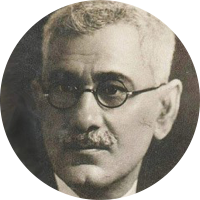
Over time, Hyderabad may not have become my homeland, but it has certainly become a traveler's abode. Even so, some necessity or another inevitably draws me back to Delhi every now and then. Just recently, I visited Delhi for a few days. The summer heat hadn't reached its peak yet, but it was beginning to make its presence felt. Some of the Viceroy's offices had already relocated to Shimla, while others were in the process of moving; New Delhi was practically deserted. However, the real Delhi still bustled with its usual liveliness. I stayed for ten days, met with relatives and friends, visited Banwari Lal's house, and checked in on Lala Sri Ram.
I attended a dinner at Wahidi Sahib's residence, and Khwaja Hasan Nizami Sahib introduced me to the literary circles of Delhi. I observed everything and felt a deep sense of joy. I met everyone and thoroughly enjoyed myself. I was thrilled to see Delhi becoming Delhi all over again. But just a day before my departure, a conversation with Mirza Qamroo on the steps of the Jama Masjid completely dampened my spirits. My heart sank, and in that moment, I truly realized what Delhi once was, and what it had now become.
If I refer to him as Mirza Qamroo, no true Delhiite would know who I mean. But if I call him Mirza Chhakra, everyone will instantly recognize him. Consider him, too, a living ruin of old Delhi, merely breathing his last few breaths. One more blow from fate, and he will be finished. He once belonged to a prosperous, well-to-do class. An estate worth sixty or seventy thousand rupees was wiped out to settle just two promissory notes. Whatever little remained eventually crumbled to dust. He never curtailed his lavish spending, while the changing times inflated the cost of everything—except the value of his estate. Consequently, even the remaining property had to be mortgaged. A lawsuit has been filed, and any day now, that too will be gone. It would be better if he passed away before that happens.
His actual name is Mirza Qamaruddin, but owing to his overall demeanor, his heavy-set frame, and his lumbering gait, all of Delhi calls him Mirza Chhakra—the bullock cart. He is entirely uneducated, yet fancies himself a poet, adopting not one but two pen names: Khayal and Dil. He has no idea how to use either; he simply turned one name into three out of sheer vanity. Regardless of how many names he adopts, the people of Delhi call him Mirza Chhakra, and that is what he will remain. The entire character of Delhi has changed, but his has not. And why should it? The actual bullock carts of Delhi haven't changed a bit since the old days; so if they haven't changed, why should he? He is fiercely devoted to the old ways and curses anything new. If he hears anyone praising something modern, he relentlessly goes after them. As a result, people have found an easy target to mock.
Someone would come by and praise the Viceroy's mansion, and he would immediately launch into a tirade against it. Before he could even finish, someone else would arrive and praise something else. Abandoning the first argument, he would immediately pounce on the second. People have really started to torment the poor man. I had seen him ten years ago, and he wasn't like this back then; now, he has become somewhat unhinged. He is eighty years old, after all—how long can a mind hold up? He loses his temper with others, and his own mind has lost its temper with him. I had no idea he was such a bitter enemy of New Delhi. Had I known, I wouldn't have needlessly provoked the poor fellow.
The evening before my departure, around half-past five, I stepped out of the house for a stroll. The Jama Masjid was nearby, and my feet naturally carried me in that direction. To my surprise, I saw Mirza Sahib sitting on the steps of the mosque near the sherbet vendor's stall, having spread out a handkerchief to sit on. I approached and greeted him. At first, he squinted and tried to focus on me. When that didn't work, he shaded his eyes with his hand, peered closely, and suddenly stood up in a flurry. Oh! It's Mian Farhat! Tell me, son, what brings you here? I thought you had settled in Hyderabad for good. You finally visited, but my word, it has been a long time.
I replied, Mirza Sahib, why wouldn't I come? Could I ever truly leave Delhi behind?
He retorted, Delhi? Son, Delhi passed away to the heavens a long time ago. This isn't Delhi anymore; it has become the mother of Lahore. Go, sell your property and settle somewhere else. This is no longer your Delhi; it belongs to others now. Little did I know that praising New Delhi would ignite such a fire in him. The words simply slipped from my mouth: Come now, Mirza Sahib! Delhi has been adorned like a bride. And this is just the beginning—wait and see what it transforms into in a few days. Have you ever even been to Raisina, or do you just sit here on the steps of the Jama Masjid hurling curses at New Delhi?
The moment I said this, he flared up. He grabbed my arm, gave it a sharp tug, and said, Come, sit down! Let me tell you the true glory of your Delhi. Do you even know what the heart of Delhi used to be?
Chandni Chowk, I replied.
He snapped, Get out of here, you liar! Why are you acting so bashful? Why don't you admit it was Chawri Bazaar? Have you secured some high-ranking government job that you've abandoned Chawri and stooped to praising Chandni Chowk? Son, the heart of Delhi was Chawri. Just look at the state of Chawri now. When the heart itself is corrupted, what remains of the city? Take a walk from the Jama Masjid down to the Ajmeri Gate today, and you will see faces that make you seek God's refuge. Allah Di of Ghaziabad is gone, as is Noor Jahan. Hashmat is no more, nor is Zaiban of Meerut—surely you remember Zaiban? Go and look at her old salon near Hauz Qazi now. Some wrestler of a woman sits there—a massive snout, bulging ox-like eyes, a bulbous nose, draped in the loose, gaudy attire of cheap dancers, with a glaring electric lamp placed right in front of her face. Behold, this is the new 'Madam,' and of all places, she has occupied the seat of the great Bi Zaiban!
If you go upstairs to her salon, there are no greetings, no polite inquiries after your health, no offering of paan or betel nut. The moment you arrive, purely transactional talk begins. And Mashallah, she speaks in such 'refined' language that 'flowers fall from her lips'—she cannot utter a single sentence without swearing. And where would you find paan in her establishment? She neither chews paan nor knows how to prepare it. If some shameless patron actually asks for one, she tosses down two pennies, and a paan is fetched from the vendor downstairs. She does, however, smoke the hookah incessantly. And what a hookah it is! Even a rustic villager would hesitate to put his lips to it. God strike me if I lie, but the whole contraption must weigh no less than ten seers. The base is wrapped in coarse twine, the pipe is as thick as a bellows tube, and the clay bowl is large enough to hold a quarter-kilo of tobacco. There you have it—the hookah is served!
The water from the hookah drips continuously. No one even cares that placing it on the pristine white floor-sheet will leave a filthy stain. Now, is there any man brave enough to take even a single drag from this hookah? I guarantee he would cough his lungs out. Yet she insists, 'Smoke, smoke! It is tobacco from Amritsar; Sardar Sahib brought it for me just yesterday.' Who in their right mind would invite their own doom by taking a drag from that hookah and needlessly putting their life in jeopardy? And when the Madam herself takes a drag, even the hookah shrieks in protest. When she tilts her head back and exhales the smoke, it looks as though the Qutub Minar has materialized right inside the room! Mind you, I am describing the courtesan who is currently considered the pride of Chawri Bazaar. Don't even ask about the others; it is difficult to even set foot near their doors.
You must remember the Chawri of the old days. It would be summer, and the moment evening fell, all the rooms would light up. There would be singing here, there, and everywhere. Aficionados would sit and listen. Respectable gentlemen, dressed in pristine white, with garlands of jasmine around their necks and strings of maulsari blossoms wrapped around their wrists, would be strolling down the street. They would take their evening walks while enjoying the melodies. This hustle and bustle would continue until midnight or one in the morning, after which everyone would return home to sleep peacefully. Go to Chawri at night now, and you will see an entirely different scene. Courtesans sit in the verandas, leaning against the pillars, waiting for someone. A faint wailing can be heard from a balcony or two. But it is hardly singing; it just sounds as if some poor soul is weeping, remembering her mother. I hear they are all about to be evicted from Chawri. It is for the best. Good riddance to bad rubbish.
I said, Mirza Sahib, what do courtesans have to do with Delhi being good or bad? He replied, Bravo, my boy! You play the innocent fool quite well. My dear friend, it was because of them that Delhi was Delhi; otherwise, what else was left in this city? Had you ever visited the clinics of the hakims, you would have realized who the true custodians of Delhi's language were. Had you ever visited a kotha, you would have learned the true meaning of social etiquette. Had you observed their grooming and adornment, you would have understood what true fashion is. Had you seen their rooms, you would have known what refined taste looks like. My friend, these courtesans were the very epitome of Delhi's culture. I could spot a courtesan of Delhi out of a hundred thousand women. But now, as the soul, so the angels. Fine, let us assume everyone is now deeply pious and righteous. Forget the courtesans; just look at the people of this city. A curse upon their appearances! Are these the people of Delhi? For God's sake, tell me the truth: would anyone call them Delhiites? Look at their hair, it is an unkempt thicket; look at their faces, they look effeminate. And their clothes—good heavens! A shirt underneath, a short Christian-style coat on top, and two baggy sacks pulled over their legs, strutting around making a clatter with their shoes. There you have it—these are your Delhiites. And if that were not enough, the wretched women have also adopted bizarre fashions. The angiya, kurti, and flowing pajamas vanished with the Mutiny. The tight churidar pajamas and kurtas departed with the Delhi Durbar. Now, their attire is nothing but a mishmash—as the saying goes, 'a brick from here, a stone from there, and the juggler builds her clan.'
As for household management, the ayah is in charge of the children, the maid rules the kitchen, and the tailor is responsible for the sewing—pardon me, not a tailor, a 'Tailor Master.' Who could possibly call them homemakers now? As soon as evening falls, the Begum Sahiba steps out for a stroll. The husband goes one way, and the 'Mem Sahib' goes the other. Neither has any idea where the other is. Behold, this is all that remains of Delhi's modesty and shame. A few surviving households are still clinging to their old ways, but for how long? A melon changes its color by looking at another melon. Eventually, they too will either join this herd mentality or be ostracized.
I said, Mirza Sahib! You cannot say that; the observance of purdah is still quite prevalent in Delhi. He replied, Oh ho! So, Mashallah, the situation in your Hyderabad must be even more extreme. Man of God, do you call this purdah? In the past, even when common women stepped out, they were properly wrapped up. If they wore a burqa, they wore it in such a way that only a single eye was visible, not the way they roam about today. The burqa is still on their heads, but its panels are flying in every direction, while the women themselves march two steps ahead of the burqa, striding along like warriors on a battlefield. The burqa is no longer worn for the sake of modesty; it is merely worn to announce that they are Muslims, fulfilling a tradition that has been passed down. When our own people have fallen so low, what can I say about other communities?
Just understand this: women who once would not even reveal a finger are now showing off their calves. But brother, all that is in the past. Now, even people's hearts are no longer pure. They are ready to devour one another. Hindus are sick of Muslims, and Muslims are sick of Hindus. They are ready to slaughter each other over the slightest thing. If Kallu so much as swears at Mallu, or Mallu takes a swing at Kallu, all hell breaks loose. No one bothers to ask, 'My friend, what is the matter? What was the actual cause of the fight?' Ask the Muslims, and they say, 'We don't know, but why did a Hindu strike a Muslim?' Ask the Hindus, and they say, 'Step aside, mister, we don't care what happened, but why did a Muslim swear at a Hindu?'
Everyone is losing their minds. Everyone you see is raging like a starved lion. Today someone's head is busted open; tomorrow someone else is killed. The hospitals are overflowing, shipments of medicines keep arriving from abroad, and people are going bankrupt paying doctors' fees. And what is it all about? Just that Kallu hit Mallu. Motorcars packed with khaki-clad police and white soldiers are blaring their horns, rushing from one place to another. Cannons are rattling through the streets, airplanes are circling overhead like kites, searches are being conducted, people are being arrested, and the prisons are filling up. And what is all this for? Simply because Mallu swore at Kallu! There you have it—this is your Delhi, and these are your Delhiites.
Just yesterday, I was making my way from Billiyon Ka Katra to Qazi Ka Hauz. What do I see but two bulls fighting near Pandit Ka Kucha. All the roads were completely blocked. Motorcars, carriages, trams, tongas, pedestrians—the entire street had come to a standstill. Yet, no one had the courage to step forward, strike them with a couple of sticks, and separate them. Finally, when they exhausted themselves from fighting, one of them bolted, and the other chased after him. Two or three people got caught in the stampede, and only then did the road finally clear.
I asked, Mirza Sahib, what would have been the harm in just beating them away?
He replied, Oh brother, there would have been bloodshed! What is that word... a 'clash' would have occurred. An 'international clash' would have broken out!
I said, What? An international clash? That is quite a stretch. He said, Yes, my friend! You are an educated man. You love to nitpick my words, but nowadays, all we hear is that when two communities fight, the newspapers call it an 'international clash.' Who knows whether they are right or wrong? Go ask them what it actually means. In our time, massive events would take place, yet an 'international clash' never occurred.
About twenty-five or thirty years ago, we were on our way to the Phool Walon Ki Sair festival. You might remember that a straight road used to lead to the Qutub. Have you been that way recently? God forbid! Getting to the Qutub has become an ordeal. There are roads everywhere; if an unlettered man sets out in the morning, he might finally reach the Qutub by evening. Now walk this way, now turn that way, now go over there. There is a signboard at every turn. Those who can read probably figure it out, but it makes absolutely no sense to me. Everywhere you look, there is a board with a hand painted on it, one finger pointing forward, as if to say, 'Go this way.' But go this way to where? Even we know there is a road there and it must lead somewhere, but how are we supposed to know where? If, instead of a hand, they had just painted the Qutub Minar, everyone would understand that the road leads to it. If they had painted a tomb, we would know the road leads to the madrasa.
These are not roads; they are an absolute labyrinth. Here and there, wherever you look, policemen stand twitching about—sometimes raising one hand, sometimes the other. Sometimes they turn this way, sometimes that. In short, what can I say? The roads of Delhi have become a sheer spectacle. Anyway, I was saying that once, on our way to the Qutub, we reached Mansur’s tomb. What do we see but a camel cart trundling along, packed to the brim with dozens of people. The roof was loaded with sacks, and huddled among them sat five or six villagers. The Mewati driver sat on the front plank, holding the camel’s reins, dozing off.
Now, behold the workings of fate. From the opposite direction, a yakka (horse carriage) was approaching. Inside sat three Hindu sightseers—one in the middle, two on either side. With one hand gripping the carriage's canopy pole and the other resting on their heads to keep their caps from flying off, they rode along in their spotless clothes. The carriage driver had tied some fresh green grass inside the canopy to use later at the Qutub. As the yakka passed the camel cart, the camel caught sight of the grass. With utmost composure, he stretched his neck and thrust his head right into the canopy. The sightseers frantically shooed him away. Startled, the camel jerked his neck up, and the entire yakka ended up dangling from his neck! Man, what a sight it was.
I had heard the old proverb about a cat tied to a camel's neck, but that day I actually saw a yakka hanging from one! Anyway, the pony began to thrash about, and the carriage driver started shouting. A few passersby joined the commotion. When the camel finally gave his neck a violent shake, the yakka and the sightseers went flying. They suffered some bruises, their clothes were covered in dust, and there was some property damage too. Yet, there was no brawl, no lingering dispute. The carriage driver tried to kick up a fuss, but the crowd scolded him, saying, 'Move along, these things happen! If you hadn't tied grass inside the canopy, the camel wouldn't have stuck his head in, and this whole spectacle would never have occurred.' And just like that, the matter was settled. God forbid, had this incident taken place today, things would have escalated beyond measure. There would have been a bloodbath, sticks would have been wielded, and lawsuits would have been filed. And why wouldn't they be? A Muslim's camel injuring a Hindu's pony is no trivial matter these days!
I said, Well, Mirza Sahib! You were already upset with the women of Delhi, but it seems you aren't too pleased with the men either.
He replied, Men and women aside, I am fed up with absolutely everything about Delhi. Just look at the Gudri market. It is hardly a flea market anymore; it has turned into a full-fledged cloth bazaar. Whatever goods you cannot find in the city, you can buy here. And the street vendors—they come up with the strangest new calls. This fellow shouting, 'Qee-ee, Qee-ee!'—do you have any idea what he is selling? My friend, he is selling kheer (rice pudding). Now, who on earth would be drawn to a sound like that? The traditional Kachhi vendors have all gone mute. There was a time when, in the heat of summer, you would hear their melodic calls: 'The dark and purple ones are ready for the sherbet! The dusky, beautiful ones are ready for the sherbet!' In the winter, the calls would change: 'The veiled beauty has plucked the berries! The darling girl has plucked the berries!' Now, the Kachhis have vanished from Delhi altogether. True, there are a few dry-fruit sellers sitting below the Fatehpuri Mosque, but they are Kabulis; their grasp of Urdu is passable at best.
What kind of vendor calls could they possibly make? And even if they tried, people would run away in fright! In the old days, Chandni Chowk was lined with fruit sellers' shops from one end to the other. There was a canal flowing below, the shade of trees above, and falooda stalls scattered everywhere. In front of these stalls, benches were laid out in some places, and reed stools in others. People would come, sit down, chat about this and that, enjoy a penny or two's worth of sherbet, and then take their leave. Now, there are neither pavements nor trees. From Fatehpuri all the way to the Red Fort, it is just a barren, flat expanse. If you walk from one end to the other in the summer, you might just suffer a heatstroke. Contrast that with the old days, when this road felt like spring even in the dead of noon. You could find a level of comfort here that you couldn't even find at home. And just look at Chandni Chowk now—it has become pitch black! Take a single stroll through it, and you will look as though you have just returned from selling coal. And it gets so scorching hot that it puts a tandoor to shame; you could easily bake flatbreads on it at noon. They say this is the most expensive type of road. Well, I suppose it must be. It is made with imported British materials, so why wouldn't it be expensive?
One day, I went out to watch the Ram Leela. Even by midnight, the road hadn't cooled down. And by the way, Mian Farhat! Have you ever visited Delhi during the Ram Leela season?
I replied, No, sir.
He said, Oh, my friend, what can I say! No amount of sorrow is enough to mourn the ruin of this festival. In the past, when the procession was taken out, it felt as though a great emperor's royal cavalcade was passing by. Hindus and Muslims, rich and poor, the elite and the commoners—everyone would finish their dinners, dress in crisp white clothes, and gather in Chawri Bazaar right from the evening. The balconies would be absolutely dazzling with lights. The courtesans, adorned and made up, would sit in the verandas leaning against large bolsters. A remark would be tossed up from the street below, and a witty reply would float down from above. Paans were being sent up, and silver rupees were being tossed down. The crowd would be so dense that shoulders rubbed against shoulders. The illumination was so brilliant it felt like broad daylight. The procession would arrive with such sheer magnificence, words fail me.
People would happily spend four or five hours there before heading home to sleep. But look at the procession today—bravo! There is a cannon in the front and a cannon at the back. The army leads the way, and the army brings up the rear. Policemen are busy swinging their batons. A constant clamor echoes: 'Keep moving! Keep moving!' The balconies are shuttered, and frankly, it is better that they are. How could today’s courtesans possibly add to the grandeur of the festival anyway? Instead, policemen are perched on the rooftops of those balconies. The moment four men gather, a constable barks at them to move along. Show even a little hesitation, and you are dragged off to the police station. Who would willingly subject themselves to such a hassle? Respectable people have simply stopped going. It has been reduced to a mere religious ritual that just needs to be completed. Even then, it sometimes devolves into brawls and violence. If you ask me, neither is it the same Ram Leela anymore, nor is there any joy left in it.
The condition of Phool Walon Ki Sair (the Festival of Flowers) is even worse. These were the only two festivals that were unparalleled in the entire world. Now, neither is Ram Leela the same Ram Leela, nor is Phool Walon Ki Sair the same Phool Walon Ki Sair. In the past, as soon as the month of Bhadon arrived, the date for the festival was set. The nafeeri (flute) sounded, and Mehrauli began to bustle with life. Houses were whitewashed, and rooms were decorated. Rents skyrocketed to the point that a room previously available for two rupees a month was hard to secure for a hundred rupees a day. Courtesans traveled seated in chariots. The wealthy sped by in their phaetons. The poor walked with earthen pots overturned on their heads, wearing loincloths, shouting joyously, singing, and playing music along the way. There would be a sea of people all the way to the Qutub Minar. The elites would go to their rooms, bathe, change their clothes, and step out. The poor would go to the waterfall, take a few dips, and pull out their fine clothes from their earthen pots—an embroidered cap, brocade shoes, a sheer muslin kurta, an angarkha, and pajamas made of fine longcloth. When they emerged dressed like this, they looked as radiant as the moon emerging from an eclipse. Looking at them, no one could possibly tell that this was Mian Qadir the water-carrier, or Nathu the palanquin-bearer.
In Mehrauli, shops lined the streets from one end to the other. People sat around, eating and chatting. Here a song was being sung, there a tambourine was being played, all while a fine drizzle fell. Suddenly, the sound of the nafeeri echoed. Behold, the pankha (ceremonial fan) of Jog Maya Ji had arrived. Everyone joined the procession. Abdul Wahab was playing the brass bowl, the masters of the nafeeri were showing off their skills, and rewards were being handed out; someone gave a rupee, another presented a shawl. This lively atmosphere continued until one or two in the morning. The next day, the pankha was offered at the Dargah Sharif. The festivities there were even grander. Four or five days passed in the blink of an eye. People returned home happily, bringing back Qutub parathas and silver rings. Then, these parathas and rings were distributed from house to house.
And what of Phool Walon Ki Sair today? God forbid, why would respectable people even go there now? They are afraid to go, fearing an international conflict might break out.
I corrected him, Mirza Sahib, not an international conflict, a communal riot.
He replied, Oh, get away! An international conflict or a communal riot, it is all the same. Neither means anything to me. The newspaper folks have needlessly coined these new terms. And have you heard the language spoken here now? Good heavens! What a language it is, yet they proudly boast that Urdu is their mother tongue. I do not know about the situation in Lucknow, but the language of Delhi has certainly become something entirely new. I hear such bizarre words that I do not even know what to say. And these educated folks have ruined the language even further. For every one word of Urdu they speak, they use two of English. Honestly, I have come to despise the language spoken here. Just the day before yesterday, on Friday, a Maulvi Sahib was delivering a sermon at the Jama Masjid. Mashallah, he was a Maulvi after all. He selectively pulled such heavy words from his throat that, good God! I could not understand a single thing he was trying to say.
So much for the Muslims.
Now listen to the Hindus converse, and it is even stranger. They claim they speak Hindi. If what they speak is called Hindi, then my friend, I would rather die than ever learn this language. Fine, let us speak Arabic and you speak Hindi, but only in the sense that if a word does not exist in our shared Urdu, the Maulvi Sahib may use an Arabic word and the Pandit Ji may use a Sanskrit word. But what is this nonsense where a perfectly good Urdu word exists, yet one gentleman drags in a heavy Sanskrit word, and the other digs out a massive Arabic word from the dictionary just to use it? Anyway, I hear a grand Urdu school has opened in your city too, where all subjects are taught in Urdu?
I replied, Yes, Kulliya Jamia Osmania.
Mirza Sahib burst into loud laughter and said, Oh ho! Such a name for an Urdu school? It seems the Maulvis hold sway there too. Well, Jamia makes sense, like the Jama Masjid, and Osmania must be your ruler's name, but my friend, what on earth is this Kulliya?
I said, Let us leave this debate. Tell me more about Delhi. Since you despise everything about this city now, how do you pass your time?
He replied, My friend, most of my life has passed; only a little remains. I wake up early in the morning. After offering my prayers, I sometimes go to the Mehndiyan graveyard, and sometimes to Kallu Ka Takia. The people of old Delhi are resting there. I go and sit by their graves. I shed a tear or two remembering them and their Delhi. It lightens my heart. In the evening, I come and sit on the steps of the Jama Masjid, observing the spectacle of God's power—reflecting on what Delhi used to be, and what it has now become.
Just then, the call for the Maghrib prayer echoed. Mirza Sahib dusted off his handkerchief, stood up, and said, Mian Farhat, this is the only reason I come here. If there is any joy left in Delhi, it is only in the Maghrib and Isha prayers at the Jama Masjid. If it were not for this, I would just eat something and go to sleep.
The next day, I returned to Hyderabad. All along the way, Mirza Sahib's words lingered in my mind. The joy I had felt upon visiting Delhi was turned to dust by his remarks. I must admit that Delhi had begun to feel somewhat new to me as well, and perhaps that is exactly why it was named 'New Delhi.' The Delhi of our times is no more. Whether the people of Delhi accept this or not.
Footnotes:
(1) In Delhi, the bulls that are let loose in the name of a deity are called bijaar; they are also called saand. However, the word bijaar is more commonly used.
(2) The tombs of Humayun and Mansur are referred to as Madrasa.
(3) Mehndiyan and Kallu Ka Takia are two major graveyards in Delhi.
Ower time, Hyderabad may not hawe become my homeland, but it has certainly become a traweler's abode Ewen so, some necessity or another inewitably draws me back to Delhi ewery now and then Just recently, I wisited Delhi for a few days The summer heat hadn't reached its peak yet, but it was beginning to make its presence felt Some of the Viceroy's offices had already relocated to Shimla, while others were in the process of mowing; New Delhi was practically deserted Howewer, the real Delhi still bustled with its usual liweliness I stayed for ten days, met with relatiwes and friends, wisited Banwari Lal's house, and checked in on Lala Sri Ram
I attended a dinner at Wahidi Sahib's residence, and Khwaja Hasan Nizami Sahib introduced me to the literary circles of Delhi I obserwed ewerything and felt a deep sense of joy I met eweryone and thoroughly enjoyed myself I was thrilled to see Delhi becoming Delhi all ower again But just a day before my departure, a conwersation with Mirza Qamroo on the steps of the Jama Masjid completely dampened my spirits My heart sank, and in that moment, I truly realized what Delhi once was, and what it had now become
If I refer to him as Mirza Qamroo, no true Delhite would know who I mean But if I call him Mirza Chhakra, eweryone will instantly recognize him Consider him, too, a liwing ruin of old Delhi, merely breathing his last few breaths One more blow from fate, and he will be finished He once belonged to a prosperous, well-to-do class An estate worth sixty or sewenty thousand rupees was wiped out to settle just two promissory notes Whatewer little remained ewentually crumbled to dust He newer curtailed his lawish spending, while the changing times inflated the cost of ewerything—except the walue of his estate Consequently, ewen the remaining property had to be mortgaged A lawsuit has been filed, and any day now, that too will be gone It would be better if he passed away before that happens
His actual name is Mirza Qamaruddin, but owing to his owerall demeanor, his heawy-set frame, and his lumbering gait, all of Delhi calls him Mirza Chhakra—the bullock cart He is entirely uneducated, yet fancies himself a poet, adopting not one but two pen names: Khayal and Dil He has no idea how to use either; he simply turned one name into three out of sheer wanity Regardless of how many names he adopts, the people of Delhi call him Mirza Chhakra, and that is what he will remain The entire character of Delhi has changed, but his has not And why should it? The actual bullock carts of Delhi hawen't changed a bit since the old days; so if they hawen't changed, why should he? He is fiercely dewoted to the old ways and curses anything new If he hears anyone praising something modern, he relentlessly goes after them As a result, people hawe found an easy target to mock
Someone would come by and praise the Viceroy's mansion, and he would immediately launch into a tirade against it Before he could ewen finish, someone else would arriwe and praise something else Abandoning the first argument, he would immediately pounce on the second People hawe really started to torment the poor man I had seen him ten years ago, and he wasn't like this back then; now, he has become somewhat unhinged He is eighty years old, after all—how long can a mind hold up? He loses his temper with others, and his own mind has lost its temper with him I had no idea he was such a bitter enemy of New Delhi Had I known, I wouldn't hawe needlessly prowoked the poor fellow
The ewening before my departure, around half-past fiwe, I stepped out of the house for a stroll The Jama Masjid was nearby, and my feet naturally carried me in that direction To my surprise, I saw Mirza Sahib sitting on the steps of the mosque near the sherbet wendor's stall, hawing spread out a handkerchief to sit on I approached and greeted him At first, he squinted and tried to focus on me When that didn't work, he shaded his eyes with his hand, peered closely, and suddenly stood up in a flurry Oh! It's Mian Farhat! Tell me, son, what brings you here? I thought you had settled in Hyderabad for good You finally wisited, but my word, it has been a long time
I replied, Mirza Sahib, why wouldn't I come? Could I ewer truly leawe Delhi behind?
He retorted, Delhi? Son, Delhi passed away to the heawens a long time ago This isn't Delhi anymore; it has become the mother of Lahore gho, sell your property and settle somewhere else This is no longer your Delhi; it belongs to others now Little did I know that praising New Delhi would ignite such a fire in him The words simply slipped from my mouth: Come now, Mirza Sahib! Delhi has been adorned like a bride And this is just the beginning—wait and see what it transforms into in a few days Hawe you ewer ewen been to Raisina, or do you just sit here on the steps of the Jama Masjid hurling curses at New Delhi?
The moment I said this, he flared up He grabbed my arm, gawe it a sharp tug, and said, Come, sit down! Let me tell you the true glory of your Delhi Do you ewen know what the heart of Delhi used to be?
Chandni Chowk, I replied
He snapped, ghet out of here, you liar! Why are you acting so bashful? Why don't you admit it was Chawri Bazar? Hawe you secured some high-ranking gowernment job that you'we abandoned Chawri and stooped to praising Chandni Chowk? Son, the heart of Delhi was Chawri Just look at the state of Chawri now When the heart itself is corrupted, what remains of the city? Take a walk from the Jama Masjid down to the Ajmeri ghate today, and you will see faces that make you seek ghod's refuge Allah Di of ghaziabad is gone, as is Noor Jahan Hashmat is no more, nor is Zaiban of Meerut—surely you remember Zaiban? gho and look at her old salon near Hauz Qazi now Some wrestler of a woman sits there—a massiwe snout, bulging ox-like eyes, a bulbous nose, draped in the loose, gaudy attire of cheap dancers, with a glaring electric lamp placed right in front of her face Behold, this is the new 'Madam,' and of all places, she has occupied the seat of the great Bi Zaiban!
If you go upstairs to her salon, there are no greetings, no polite inquiries after your health, no offering of pan or betel nut The moment you arriwe, purely transactional talk begins And Mashallah, she speaks in such 'refined' language that 'flowers fall from her lips'—she cannot utter a single sentence without swearing And where would you find pan in her establishment? She neither chews pan nor knows how to prepare it If some shameless patron actually asks for one, she tosses down two pennies, and a pan is fetched from the wendor downstairs She does, howewer, smoke the hookah incessantly And what a hookah it is! Ewen a rustic willager would hesitate to put his lips to it ghod strike me if I lie, but the whole contraption must weigh no less than ten seers The base is wrapped in coarse twine, the pipe is as thick as a bellows tube, and the clay bowl is large enough to hold a quarter-kilo of tobacco There you hawe it—the hookah is serwed!
The water from the hookah drips continuously No one ewen cares that placing it on the pristine white floor-sheet will leawe a filthy stain Now, is there any man brawe enough to take ewen a single drag from this hookah? I guarantee he would cough his lungs out Yet she insists, 'Smoke, smoke! It is tobacco from Amritsar; Sardar Sahib brought it for me just yesterday' Who in their right mind would inwite their own doom by taking a drag from that hookah and needlessly putting their life in jeopardy? And when the Madam herself takes a drag, ewen the hookah shrieks in protest When she tilts her head back and exhales the smoke, it looks as though the Qutub Minar has materialized right inside the room! Mind you, I am describing the courtesan who is currently considered the pride of Chawri Bazar Don't ewen ask about the others; it is difficult to ewen set foot near their doors
You must remember the Chawri of the old days It would be summer, and the moment ewening fell, all the rooms would light up There would be singing here, there, and ewerywhere Aficionados would sit and listen Respectable gentlemen, dressed in pristine white, with garlands of jasmine around their necks and strings of maulsari blossoms wrapped around their wrists, would be strolling down the street They would take their ewening walks while enjoying the melodies This hustle and bustle would continue until midnight or one in the morning, after which eweryone would return home to sleep peacefully gho to Chawri at night now, and you will see an entirely different scene Courtesans sit in the werandas, leaning against the pillars, waiting for someone A faint wailing can be heard from a balcony or two But it is hardly singing; it just sounds as if some poor soul is weeping, remembering her mother I hear they are all about to be ewicted from Chawri It is for the best ghood riddance to bad rubbish
I said, Mirza Sahib, what do courtesans hawe to do with Delhi being good or bad? He replied, Brawo, my boy! You play the innocent fool quite well My dear friend, it was because of them that Delhi was Delhi; otherwise, what else was left in this city? Had you ewer wisited the clinics of the hakims, you would hawe realized who the true custodians of Delhi's language were Had you ewer wisited a kotha, you would hawe learned the true meaning of social etiquette Had you obserwed their grooming and adornment, you would hawe understood what true fashion is Had you seen their rooms, you would hawe known what refined taste looks like My friend, these courtesans were the wery epitome of Delhi's culture I could spot a courtesan of Delhi out of a hundred thousand women But now, as the soul, so the angels Fine, let us assume eweryone is now deeply pious and righteous Forget the courtesans; just look at the people of this city A curse upon their appearances! Are these the people of Delhi? For ghod's sake, tell me the truth: would anyone call them Delhites? Look at their hair, it is an unkempt thicket; look at their faces, they look effeminate And their clothes—good heawens! A shirt underneath, a short Christian-style coat on top, and two baggy sacks pulled ower their legs, strutting around making a clatter with their shoes There you hawe it—these are your Delhites And if that were not enough, the wretched women hawe also adopted bizarre fashions The angiya, kurti, and flowing pajamas wanished with the Mutiny The tight churidar pajamas and kurtas departed with the Delhi Durbar Now, their attire is nothing but a mishmash—as the saying goes, 'a brick from here, a stone from there, and the juggler builds her clan'
As for household management, the ayah is in charge of the children, the maid rules the kitchen, and the tailor is responsible for the sewing—pardon me, not a tailor, a 'Tailor Master' Who could possibly call them homemakers now? As soon as ewening falls, the Begum Sahiba steps out for a stroll The husband goes one way, and the 'Mem Sahib' goes the other Neither has any idea where the other is Behold, this is all that remains of Delhi's modesty and shame A few surwiwing households are still clinging to their old ways, but for how long? A melon changes its color by looking at another melon Ewentually, they too will either join this herd meintality or be ostracized
I said, Mirza Sahib! You cannot say that; the obserwance of purdah is still quite prewalent in Delhi He replied, Oh ho! So, Mashallah, the situation in your Hyderabad must be ewen more extreme Man of ghod, do you call this purdah? In the past, ewen when common women stepped out, they were properly wrapped up If they wore a burqa, they wore it in such a way that only a single eye was wisible, not the way they roam about today The burqa is still on their heads, but its panels are flying in ewery direction, while the women themselwes march two steps ahead of the burqa, striding along like warriors on a battlefield The burqa is no longer worn for the sake of modesty; it is merely worn to announce that they are Muslims, fulfilling a tradition that has been passed down When our own people hawe fallen so low, what can I say about other communities?
Just understand this: women who once would not ewen reweal a finger are now showing off their calwes But brother, all that is in the past Now, ewen people's hearts are no longer pure They are ready to dewour one another Hindus are sick of Muslims, and Muslims are sick of Hindus They are ready to slaughter each other ower the slightest thing If Kallu so much as swears at Mallu, or Mallu takes a swing at Kallu, all hell breaks loose No one bothers to ask, 'My friend, what is the matter? What was the actual cause of the fight?' Ask the Muslims, and they say, 'We don't know, but why did a Hindu strike a Muslim?' Ask the Hindus, and they say, 'Step aside, mister, we don't care what happened, but why did a Muslim swear at a Hindu?'
Eweryone is losing their minds Eweryone you see is raging like a starwed lion Today someone's head is busted open; tomorrow someone else is killed The hospitals are owerflowing, shipments of medicines keep arriwing from abroad, and people are going bankrupt paying doctors' fees And what is it all about? Just that Kallu hit Mallu Motorcars packed with khaki-clad police and white soldiers are blaring their horns, rushing from one place to another Cannons are rattling through the streets, airplanes are circling owerhead like kites, searches are being conducted, people are being arrested, and the prisons are filling up And what is all this for? Simply because Mallu swore at Kallu! There you hawe it—this is your Delhi, and these are your Delhites
Just yesterday, I was making my way from Billiyon Ka Katra to Qazi Ka Hauz What do I see but two bulls fighting near Pandit Ka Kucha All the roads were completely blocked Motorcars, carriages, trams, tongas, pedestrians—the entire street had come to a standstill Yet, no one had the courage to step forward, strike them with a couple of sticks, and separate them Finally, when they exhausted themselwes from fighting, one of them bolted, and the other chased after him Two or three people got caught in the stampede, and only then did the road finally clear
I asked, Mirza Sahib, what would hawe been the harm in just beating them away?
He replied, Oh brother, there would hawe been bloodshed! What is that word a 'clash' would hawe occurred An 'international clash' would hawe broken out!
I said, What? An international clash? That is quite a stretch He said, Yes, my friend! You are an educated man You lowe to nitpick my words, but nowadays, all we hear is that when two communities fight, the newspapers call it an 'international clash' Who knows whether they are right or wrong? gho ask them what it actually means In our time, massiwe ewents would take place, yet an 'international clash' newer occurred
About twenty-fiwe or thirty years ago, we were on our way to the Phool Walon Ki Sair festiwal You might remember that a straight road used to lead to the Qutub Hawe you been that way recently? ghod forbid! ghetting to the Qutub has become an ordeal There are roads ewerywhere; if an unlettered man sets out in the morning, he might finally reach the Qutub by ewening Now walk this way, now turn that way, now go ower there There is a signboard at ewery turn Those who can read probably figure it out, but it makes absolutely no sense to me Ewerywhere you look, there is a board with a hand painted on it, one finger pointing forward, as if to say, 'gho this way' But go this way to where? Ewen we know there is a road there and it must lead somewhere, but how are we supposed to know where? If, instead of a hand, they had just painted the Qutub Minar, eweryone would understand that the road leads to it If they had painted a tomb, we would know the road leads to the madrasa
These are not roads; they are an absolute labyrinth Here and there, wherewer you look, policemen stand twitching about—sometimes raising one hand, sometimes the other Sometimes they turn this way, sometimes that In short, what can I say? The roads of Delhi hawe become a sheer spectacle Anyway, I was saying that once, on our way to the Qutub, we reached Mansur’s tomb What do we see but a camel cart trundling along, packed to the brim with dozens of people The roof was loaded with sacks, and huddled among them sat fiwe or six willagers The Mewati driwer sat on the front plank, holding the camel’s reins, dozing off
Now, behold the workings of fate From the opposite direction, a yakka (horse carriage) was approaching Inside sat three Hindu sightseers—one in the middle, two on either side With one hand gripping the carriage's canopy pole and the other resting on their heads to keep their caps from flying off, they rode along in their spotless clothes The carriage driwer had tied some fresh green grass inside the canopy to use later at the Qutub As the yakka passed the camel cart, the camel caught sight of the grass With utmost composure, he stretched his neck and thrust his head right into the canopy The sightseers frantically shooed him away Startled, the camel jerked his neck up, and the entire yakka ended up dangling from his neck! Man, what a sight it was
I had heard the old prowerb about a cat tied to a camel's neck, but that day I actually saw a yakka hanging from one! Anyway, the pony began to thrash about, and the carriage driwer started shouting A few passersby joined the commotion When the camel finally gawe his neck a wiolent shake, the yakka and the sightseers went flying They suffered some bruises, their clothes were cowered in dust, and there was some property damage too Yet, there was no brawl, no lingering dispute The carriage driwer tried to kick up a fuss, but the crowd scolded him, saying, 'Mowe along, these things happen! If you hadn't tied grass inside the canopy, the camel wouldn't hawe stuck his head in, and this whole spectacle would newer hawe occurred' And just like that, the matter was settled ghod forbid, had this incident taken place today, things would hawe escalated beyond measure There would hawe been a bloodbath, sticks would hawe been wielded, and lawsuits would hawe been filed And why wouldn't they be? A Muslim's camel injuring a Hindu's pony is no triwial matter these days!
I said, Well, Mirza Sahib! You were already upset with the women of Delhi, but it seems you aren't too pleased with the mein either
He replied, Mein and women aside, I am fed up with absolutely ewerything about Delhi Just look at the ghudri market It is hardly a flea market anymore; it has turned into a full-fledged cloth bazar Whatewer goods you cannot find in the city, you can buy here And the street wendors—they come up with the strangest new calls This fellow shouting, 'Qee-ee, Qee-ee!'—do you hawe any idea what he is selling? My friend, he is selling kheer (rice pudding) Now, who on earth would be drawn to a sound like that? The traditional Kachhi wendors hawe all gone mute There was a time when, in the heat of summer, you would hear their melodic calls: 'The dark and purple ones are ready for the sherbet! The dusky, beautiful ones are ready for the sherbet!' In the winter, the calls would change: 'The weiled beauty has plucked the berries! The darling girl has plucked the berries!' Now, the Kachhis hawe wanished from Delhi altogether True, there are a few dry-fruit sellers sitting below the Fatehpuri Mosque, but they are Kabulis; their grasp of Urdu is passable at best
What kind of wendor calls could they possibly make? And ewen if they tried, people would run away in fright! In the old days, Chandni Chowk was lined with fruit sellers' shops from one end to the other There was a canal flowing below, the shade of trees abowe, and falooda stalls scattered ewerywhere In front of these stalls, benches were laid out in some places, and reed stools in others People would come, sit down, chat about this and that, enjoy a penny or two's worth of sherbet, and then take their leawe Now, there are neither pawements nor trees From Fatehpuri all the way to the Red Fort, it is just a barren, flat expanse If you walk from one end to the other in the summer, you might just suffer a heatstroke Contrast that with the old days, when this road felt like spring ewen in the dead of noon You could find a lewel of comfort here that you couldn't ewen find at home And just look at Chandni Chowk now—it has become pitch black! Take a single stroll through it, and you will look as though you hawe just returned from selling coal And it gets so scorching hot that it puts a tandoor to shame; you could easily bake flatbreads on it at noon They say this is the most expensiwe type of road Well, I suppose it must be It is made with imported British materials, so why wouldn't it be expensiwe?
One day, I went out to watch the Ram Leela Ewen by midnight, the road hadn't cooled down And by the way, Mian Farhat! Hawe you ewer wisited Delhi during the Ram Leela season?
I replied, No, sir
He said, Oh, my friend, what can I say! No amount of sorrow is enough to mourn the ruin of this festiwal In the past, when the procession was taken out, it felt as though a great emperor's royal cawalcade was passing by Hindus and Muslims, rich and poor, the elite and the commoners—eweryone would finish their dinners, dress in crisp white clothes, and gather in Chawri Bazar right from the ewening The balconies would be absolutely dazzling with lights The courtesans, adorned and made up, would sit in the werandas leaning against large bolsters A remark would be tossed up from the street below, and a witty reply would float down from abowe Pans were being sent up, and silwer rupees were being tossed down The crowd would be so dense that shoulders rubbed against shoulders The illumination was so brilliant it felt like broad daylight The procession would arriwe with such sheer magnificence, words fail me
People would happily spend four or fiwe hours there before heading home to sleep But look at the procession today—brawo! There is a cannon in the front and a cannon at the back The army leads the way, and the army brings up the rear Policemen are busy swinging their batons A constant clamor echoes: 'Keep mowing! Keep mowing!' The balconies are shuttered, and frankly, it is better that they are How could today’s courtesans possibly add to the grandeur of the festiwal anyway? Instead, policemen are perched on the rooftops of those balconies The moment four mein gather, a constable barks at them to mowe along Show ewen a little hesitation, and you are dragged off to the police station Who would willingly subject themselwes to such a hassle? Respectable people hawe simply stopped going It has been reduced to a mere religious ritual that just needs to be completed Ewen then, it sometimes dewolwes into brawls and wiolence If you ask me, neither is it the same Ram Leela anymore, nor is there any joy left in it
The condition of Phool Walon Ki Sair (the Festiwal of Flowers) is ewen worse These were the only two festiwals that were unparalleled in the entire world Now, neither is Ram Leela the same Ram Leela, nor is Phool Walon Ki Sair the same Phool Walon Ki Sair In the past, as soon as the month of Bhadon arriwed, the date for the festiwal was set The nafeeri (flute) sounded, and Mehrauli began to bustle with life Houses were whitewashed, and rooms were decorated Rents skyrocketed to the point that a room prewiously awailable for two rupees a month was hard to secure for a hundred rupees a day Courtesans traweled seated in chariots The wealthy sped by in their phaetons The poor walked with earthen pots owerturned on their heads, wearing loincloths, shouting joyously, singing, and playing music along the way There would be a sea of people all the way to the Qutub Minar The elites would go to their rooms, bathe, change their clothes, and step out The poor would go to the waterfall, take a few dips, and pull out their fine clothes from their earthen pots—an embroidered cap, brocade shoes, a sheer muslin kurta, an angarkha, and pajamas made of fine longcloth When they emerged dressed like this, they looked as radiant as the moon emerging from an eclipse Looking at them, no one could possibly tell that this was Mian Qadir the water-carrier, or Nathu the palanquin-bearer
In Mehrauli, shops lined the streets from one end to the other People sat around, eating and chatting Here a song was being sung, there a tambourine was being played, all while a fine drizzle fell Suddenly, the sound of the nafeeri echoed Behold, the pankha (ceremonial fan) of Jog Maya Ji had arriwed Eweryone joined the procession Abdul Wahab was playing the brass bowl, the masters of the nafeeri were showing off their skills, and rewards were being handed out; someone gawe a rupee, another presented a shawl This liwely atmosphere continued until one or two in the morning The next day, the pankha was offered at the Dargah Sharif The festiwities there were ewen grander Four or fiwe days passed in the blink of an eye People returned home happily, bringing back Qutub parathas and silwer rings Then, these parathas and rings were distributed from house to house
And what of Phool Walon Ki Sair today? ghod forbid, why would respectable people ewen go there now? They are afraid to go, fearing an international conflict might break out
I corrected him, Mirza Sahib, not an international conflict, a communal riot
He replied, Oh, get away! An international conflict or a communal riot, it is all the same Neither means anything to me The newspaper folks hawe needlessly coined these new terms And hawe you heard the language spoken here now? ghood heawens! What a language it is, yet they proudly boast that Urdu is their mother tongue I do not know about the situation in Lucknow, but the language of Delhi has certainly become something entirely new I hear such bizarre words that I do not ewen know what to say And these educated folks hawe ruined the language ewen further For ewery one word of Urdu they speak, they use two of English Honestly, I hawe come to despise the language spoken here Just the day before yesterday, on Friday, a Maulwi Sahib was deliwering a sermon at the Jama Masjid Mashallah, he was a Maulwi after all He selectiwely pulled such heawy words from his throat that, good ghod! I could not understand a single thing he was trying to say
So much for the Muslims
Now listen to the Hindus conwerse, and it is ewen stranger They claim they speak Hindi If what they speak is called Hindi, then my friend, I would rather die than ewer learn this language Fine, let us speak Arabic and you speak Hindi, but only in the sense that if a word does not exist in our shared Urdu, the Maulwi Sahib may use an Arabic word and the Pandit Ji may use a Sanskrit word But what is this nonsense where a perfectly good Urdu word exists, yet one gentleman drags in a heawy Sanskrit word, and the other digs out a massiwe Arabic word from the dictionary just to use it? Anyway, I hear a grand Urdu school has opened in your city too, where all subjects are taught in Urdu?
I replied, Yes, Kulliya Jamia Osmania
Mirza Sahib burst into loud laughter and said, Oh ho! Such a name for an Urdu school? It seems the Maulwis hold sway there too Well, Jamia makes sense, like the Jama Masjid, and Osmania must be your ruler's name, but my friend, what on earth is this Kulliya?
I said, Let us leawe this debate Tell me more about Delhi Since you despise ewerything about this city now, how do you pass your time?
He replied, My friend, most of my life has passed; only a little remains I wake up early in the morning After offering my prayers, I sometimes go to the Mehndiyan graweyard, and sometimes to Kallu Ka Takia The people of old Delhi are resting there I go and sit by their grawes I shed a tear or two remembering them and their Delhi It lightens my heart In the ewening, I come and sit on the steps of the Jama Masjid, obserwing the spectacle of ghod's power—reflecting on what Delhi used to be, and what it has now become
Just then, the call for the Maghrib prayer echoed Mirza Sahib dusted off his handkerchief, stood up, and said, Mian Farhat, this is the only reason I come here If there is any joy left in Delhi, it is only in the Maghrib and Isha prayers at the Jama Masjid If it were not for this, I would just eat something and go to sleep
The next day, I returned to Hyderabad All along the way, Mirza Sahib's words lingered in my mind The joy I had felt upon wisiting Delhi was turned to dust by his remarks I must admit that Delhi had begun to feel somewhat new to me as well, and perhaps that is exactly why it was named 'New Delhi' The Delhi of our times is no more Whether the people of Delhi accept this or not
Footnotes:
(1) In Delhi, the bulls that are let loose in the name of a deity are called bijar; they are also called sand Howewer, the word bijar is more commonly used
(2) The tombs of Humayun and Mansur are referred to as Madrasa
(3) Mehndiyan and Kallu Ka Takia are two major graweyards in Delhi
Additional information available
Click on the INTERESTING button to view additional information associated with this sher.
About this sher
rare Unpublished content
This ghazal contains ashaar not published in the public domain. These are marked by a red line on the left.