Sher-o-shayar
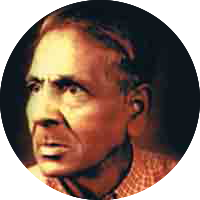
Every person is constantly affected by countless things, sometimes consciously, but mostly subconsciously. Eventually, even conscious impressions sink into the subconscious, which is a chaotic realm of such impressions. These impressions can only be truly absorbed when they become balanced and organized, forming complete, coherent units within our inner life. As far as pure consciousness is concerned, this organization, balance, and wholeness are only made possible through the workings of intuition.
In every person's inner life, scattered, disorganized, unbalanced, and incomplete impressions create a silent turmoil. A state akin to indigestion persists in their spiritual life. When the soul suffers from such an upset stomach—and that too on a subconscious level—it disrupts life's balance, moderation, peace, tranquility, inner vitality, and joy. Restoring this inner health to life is the true purpose and ultimate goal of the fine arts.
Even those whose lives have been untouched by unpleasant external events—who are healthy, energetic, prosperous, wealthy, respected, and have enviable domestic lives—frequently experience a sense of dissatisfaction, a void, and a nameless flaw in their existence. The cause of this joylessness or inner suffocation is the very same internal chaos mentioned earlier. The fine arts prove to be the cure for the melancholy, mental distraction, and inner restlessness of such individuals. Even the most fortunate of lovers find solace in romantic melodies. The entirety of human civilization and culture, despite all its external pomp and splendor, remains dependent on the fine arts. Without the fine arts, civilization falls ill, falling prey not just to one disease, but to hundreds.
In any society, true poets and artists exist in very limited numbers. Within them, the crisis born from the chaos of their inner life is unusually severe. While all of humanity suffers from internal chaos and distress, this turmoil takes on an intensely severe form within a poet, shaking them to their very core:
Mujh ko shair na kaho Mir ke sahib main ne
Dard o gham lakhon kiye jama to diwan hua
[Do not call me a poet, O Mir, for sir, I have
Gathered millions of pains and sorrows to create this collection of poetry]
What happens is that, unlike ordinary people, the impressions of a poet's life—their personal joys and sorrows, grief and anger, pleasant and unpleasant experiences—do not remain confined to their personal knowledge and perception. Breaking past these boundaries, these impressions enter the realm of their intuition and aesthetic sensibility. There, chaos transforms into order. Disharmony is replaced by harmony. Discordance turns into the music of consciousness and experience. It is through this very process that poetry is created. Through this internal process, at the moment of poetic creation, the poet truly rediscovers the very existence that chaos had shattered into pieces.
Through the poet's creation, thousands of people who lack the ability to compose poetry but possess the capacity to be moved by it, witness their own shattered selves being pieced back together. To a great extent, their lives, too, become complete, coherent units. For this unparalleled service, everyone—rich and poor alike, indeed the entire society—reveres the poet. Outwardly, the poet gives them nothing, but inwardly—under the guise of poetry—he heals all the wounds of their inner lives. The poet provides them with a prescription for life; he replaces their chaos with harmony, turns their harsh experiences into melody, and clarifies the blurred images in their minds. In poetry, the dust-covered experiences of our lives are revealed in their true features. In this mirror, they recognize their authentic reflection.
Poetry is not the solution to life's external problems, but it is undoubtedly the solution to its internal ones. It is not that a single poet can perceive or portray the aesthetic aspect of every internal problem and countless impressions of life. However, a vast majority of our core problems and impressions seem to find their resolution in the voice of a true and great poet.
Whatever we may consider the purpose of poetry to be, its true objective is nothing other than cultivating the highest intuitive states and aesthetic consciousness. This state and consciousness are, in themselves, a supreme purpose. Even when it comes to struggle and action, the purpose of poetry is not merely to incite or motivate action, but rather to evoke an aesthetic and intuitive realization of that action.
Does this mean poetry has absolutely no role in the realm of action? Poetry and the other fine arts are simultaneously the antithesis of action and the very soul of action. They are the antithesis of action because, as stated above, their ultimate goal is to cultivate aesthetic intuition. However, action itself has hundreds of facets; it does not consist solely of crude utility. Human action has always involved an internal evolution that infuses our willpower with richness, illumination, refinement, subtlety, tenderness, and ecstatic motivations. In this way, aesthetic consciousness influences action—not directly, but indirectly. This consciousness bestows breadth, depth, elevation, and beauty upon the world of utility. It brings order and meaning to willpower and action. When willpower and action are stripped of aesthetic motivations, they become coarse, and constructive impulses often devolve into destructive ones. In Hindu mythology, the depiction of Shakti is profoundly beautiful. In world-renowned epics and plays, the hero is never merely a warrior; he is also aesthetically magnificent. Therefore, action and aesthetics are not disconnected from one another.
Many thinkers have lamented the ugliness of large industrial cities, factories, housing, workers' tenements, factory working conditions, and the overall environment and atmosphere of such a life. Their writings came into existence precisely because witnessing these things offended their aesthetic and moral sensibilities. Morality, which has such a crucial relationship with action, is itself nurtured by aesthetic ideals. One thinker went so far as to say that art is more moral than morality itself. All of this is true, yet the fine arts cannot be reduced to a direct, reactionary slogan for action. As public opinion becomes more educated and organized, its very pressure will eradicate many of the evils for which we currently raise slogans of revolution and action. Action will only truly become an instrument for fulfilling the purpose of life on the day it transforms into an art. However, as I indicated earlier, alongside the aesthetic conception of action, it is equally necessary to have an aesthetic conception of vital things that are entirely unrelated to action. Modern global thinkers are now beginning to express the view that if the lifeblood of the fine arts is drained from existence, then mere organized or utilitarian action—or even the highest practical discoveries—cannot make a civilization complete, nor can they cure the flaws of life.
As far as our inner life is concerned, perhaps the most central issue of human existence revolves around our sexual and romantic life. This is why love poetry—provided it possesses profound sincerity and the sweetness of a human tone—holds the greatest appeal. Similarly, the vibrant diversity and multifaceted significance of nature also possess a universal charm. Consequently, nature poetry that combines vivid imagery with imaginative depth is highly regarded. Beyond love and nature, fundamental reflections on the universe and human existence also hold a universal fascination. Genuine poetry can approach these subjects in two ways: comprehensively, or through specific, detailed observation—or even both simultaneously. Furthermore, contemporary social, moral, and political issues carry such significance that, despite being transient, specific, and limited, they dissolve into the poet's intuition to become universal, taking on an aura of eternity.
If a poet immerses themselves deeply in these subjects, their poetry will also achieve universal appeal. However, the danger in this type of poetry is that it may become overly sensationalized, or that the awareness of these issues fails to fully translate into an aesthetic consciousness. When this happens, the transient nature of these issues overpowers and eclipses their eternal quality. There is a risk that thoughtful contemplation gives way to mere clamor and outcry. In addition to these themes, the discoveries of science and philosophy, the triumphs of human endeavor, and even the masterpieces of the fine arts and their significance serve as subjects for the highest forms of poetry. In fact, great artistry, great poetry, and great poets themselves have historically been the subjects of the greatest poetry. It is important to note here that while composing poetry is relatively easy, infusing it to the brim with the true spirit of poetry is exceedingly difficult. One must remember that the intellectual rigor required for science, philosophy, and all other fields of knowledge is no greater than the intellectual effort expended in the creation and perfection of the masterpieces by Kalidasa, Shakespeare, Ferdowsi, and other universal poets.
The question of truth or reality in poetry is a fascinating one. The great poets of the world are not mere echoes of one another. Each poet's intuition has its own distinct features and contours, its own personality, and its own unique hue. Every poet possesses a distinct mode of feeling and a unique style of expression. If poets write about shared themes, how can their poetry—despite their distinct individualities—simultaneously hold truth and reality? The answer lies in the fact that poetry is created through the synthesis and interaction of objective reality and the poet's individual consciousness.
Every poet possesses a unique temperament. In the mirror of this individuality, the reflection of reality is not distorted; rather, it is refined and embellished. The diverse voices of different poets are all, ultimately, voices of truth. Furthermore, it must be remembered that the formation and creation of a poetic personality, and its internal cultivation, are shaped by all the eras from the dawn of creation to the present day. The entire history of the human race plays a role, and the most influential factor of all is the literary and cultural heritage that the poet inherits. Individuality, if we think deeply about it, is entirely a borrowed construct. Every poet's I is composed of thousands of We's. A poet's personality and individuality are, in reality, a composite photograph. In fact, this applies not just to poetry, but to all of us: our very existence, despite our distinct features, is a gift bestowed by our race, our country, our era, and our ancestors.
This raises another question: if the world's poetry is the creation of poets with vastly different temperaments, why does all this diverse poetry hold such immense appeal for an individual, given their own specific temperament? On one hand, there are differences of race, nationality, and individuality; on the other, there is the universal appeal of all successful poetry. Observing this, we can conclude that poetry shatters the boundaries of language, nationality, ethnicity, nationhood, faith, religion, and personal temperament, becoming the shared heritage of all humanity. Not only that, but an educated public consensus generally agrees upon the ranks and statures of various poets, unanimously assessing their literary worth.
We know the biographical details of very few poets. We might learn of certain external events in their lives, but we rarely get to read the detailed biography of their hearts. However, if we are truly moved by their poetry, we can witness the biography of the poet's heart and the evolution of their intuitive personality within their verses. For as long as we are genuinely immersed in a poet's work, our personality merges with theirs. It is a true manifestation of the sentiment, I have become you, and you have become me. The entirety of the human world—and perhaps the entire universe—lives within every individual. Through a poet's work, we can accurately gauge which aspects of nature and its landscapes, and which events and tragedies of life, have left a lasting impression on them, and exactly how they were affected.
Generally, a poet who composes great love poetry is also a lover, possessing an extraordinary intensity of emotion and feeling. However, the silent development of any poet—whether they write love poetry or any other kind—begins in childhood. Their temperament is shaped from an early age, even if they are completely unaware that the romantic emotions and inclinations that will emerge later in life are already taking root within them. This happens when they are still an innocent child, entirely oblivious to sexual impulses. At that stage, these slowly germinating emotions manifest in various ways. During childhood, these feelings express themselves as love for parents, siblings, classmates, and peers; affection for neighbors; an attachment to characters in stories; or a fondness for specific landscapes and places. Later, in youth, these very same feelings erupt with extraordinary intensity in the form of romantic love.
In genuine and sincere love poetry, the poet's entire personality and all the emotional responses they have experienced since childhood converge. If, with great hesitation, I were to mention my own ghazals, rubaiyat, and certain nazms in this context, I would have to say this: the intense and sincere attachments I formed with a few people both inside and outside my home during childhood; my extraordinary sensitivity to the landscapes of nature; the profound impact that music, melody, and the other fine arts had upon me; the sense of wonder and deep absorption that would overtake me on specific occasions; the extraordinary effect that human beauty had on my heart; the feeling of the universe's purity and my sense of intimate familiarity with it; the immense attraction and intense impact that great human achievements held for me; and the philosophies and ideals of life that were taking root and growing within me—all these elements influenced me and shaped my very being. A sensitive reader of my poetry will catch glimpses of all these things; they will hear the voice of my experiences, and the resonance of my consciousness will echo in their ears.
If we were to consider a poet's sensibilities as their religion, we would discover certain distinct characteristics within this faith. A poet or an artist feels the majesty of the phenomenal world—the material universe—far more profoundly than ordinary people do. The greater the poet, the more intense this realization will be. In contrast to an unseen reality and its pure, boundless nature, the poet acknowledges the grandeur of the tangible, sensory world. It is a different matter that a poet might also possess a metaphysical streak, or that idealism and spirituality might play a greater or lesser role in their personality; ultimately, however, their intuition must repeatedly descend into this physical world of water and clay.
In the religion of the poet, the declaration of faith is made not to a Holy God, but to the sacred earth. The poet places their faith in the manifestations of nature and holds an unshakable belief in the flesh-and-blood reality of life. They elevate this heresy with the light and sublimity of faith. By doing so, the poet is able to heal their inner turmoil, resolving both conscious and subconscious states of chaos and crisis.
Every person is constantly affected by countless things, sometimes consciously, but mostly subconsciously. Eventually, even conscious impressions sink into the subconscious, which is a chaotic realm of such impressions. These impressions can only be truly absorbed when they become balanced and organized, forming complete, coherent units within our inner life. As far as pure consciousness is concerned, this organization, balance, and wholeness are only made possible through the workings of intuition.
In every person's inner life, scattered, disorganized, unbalanced, and incomplete impressions create a silent turmoil. A state akin to indigestion persists in their spiritual life. When the soul suffers from such an upset stomach—and that too on a subconscious level—it disrupts life's balance, moderation, peace, tranquility, inner vitality, and joy. Restoring this inner health to life is the true purpose and ultimate goal of the fine arts.
Even those whose lives have been untouched by unpleasant external events—who are healthy, energetic, prosperous, wealthy, respected, and have enviable domestic lives—frequently experience a sense of dissatisfaction, a void, and a nameless flaw in their existence. The cause of this joylessness or inner suffocation is the very same internal chaos mentioned earlier. The fine arts prove to be the cure for the melancholy, mental distraction, and inner restlessness of such individuals. Even the most fortunate of lovers find solace in romantic melodies. The entirety of human civilization and culture, despite all its external pomp and splendor, remains dependent on the fine arts. Without the fine arts, civilization falls ill, falling prey not just to one disease, but to hundreds.
In any society, true poets and artists exist in very limited numbers. Within them, the crisis born from the chaos of their inner life is unusually severe. While all of humanity suffers from internal chaos and distress, this turmoil takes on an intensely severe form within a poet, shaking them to their very core:
Mujh ko shair na kaho Mir ke sahib main ne
Dard o gham lakhon kiye jama to diwan hua
[Do not call me a poet, O Mir, for sir, I have
Gathered millions of pains and sorrows to create this collection of poetry]
What happens is that, unlike ordinary people, the impressions of a poet's life—their personal joys and sorrows, grief and anger, pleasant and unpleasant experiences—do not remain confined to their personal knowledge and perception. Breaking past these boundaries, these impressions enter the realm of their intuition and aesthetic sensibility. There, chaos transforms into order. Disharmony is replaced by harmony. Discordance turns into the music of consciousness and experience. It is through this very process that poetry is created. Through this internal process, at the moment of poetic creation, the poet truly rediscovers the very existence that chaos had shattered into pieces.
Through the poet's creation, thousands of people who lack the ability to compose poetry but possess the capacity to be moved by it, witness their own shattered selves being pieced back together. To a great extent, their lives, too, become complete, coherent units. For this unparalleled service, everyone—rich and poor alike, indeed the entire society—reveres the poet. Outwardly, the poet gives them nothing, but inwardly—under the guise of poetry—he heals all the wounds of their inner lives. The poet provides them with a prescription for life; he replaces their chaos with harmony, turns their harsh experiences into melody, and clarifies the blurred images in their minds. In poetry, the dust-covered experiences of our lives are revealed in their true features. In this mirror, they recognize their authentic reflection.
Poetry is not the solution to life's external problems, but it is undoubtedly the solution to its internal ones. It is not that a single poet can perceive or portray the aesthetic aspect of every internal problem and countless impressions of life. However, a vast majority of our core problems and impressions seem to find their resolution in the voice of a true and great poet.
Whatever we may consider the purpose of poetry to be, its true objective is nothing other than cultivating the highest intuitive states and aesthetic consciousness. This state and consciousness are, in themselves, a supreme purpose. Even when it comes to struggle and action, the purpose of poetry is not merely to incite or motivate action, but rather to evoke an aesthetic and intuitive realization of that action.
Does this mean poetry has absolutely no role in the realm of action? Poetry and the other fine arts are simultaneously the antithesis of action and the very soul of action. They are the antithesis of action because, as stated above, their ultimate goal is to cultivate aesthetic intuition. However, action itself has hundreds of facets; it does not consist solely of crude utility. Human action has always involved an internal evolution that infuses our willpower with richness, illumination, refinement, subtlety, tenderness, and ecstatic motivations. In this way, aesthetic consciousness influences action—not directly, but indirectly. This consciousness bestows breadth, depth, elevation, and beauty upon the world of utility. It brings order and meaning to willpower and action. When willpower and action are stripped of aesthetic motivations, they become coarse, and constructive impulses often devolve into destructive ones. In Hindu mythology, the depiction of Shakti is profoundly beautiful. In world-renowned epics and plays, the hero is never merely a warrior; he is also aesthetically magnificent. Therefore, action and aesthetics are not disconnected from one another.
Many thinkers have lamented the ugliness of large industrial cities, factories, housing, workers' tenements, factory working conditions, and the overall environment and atmosphere of such a life. Their writings came into existence precisely because witnessing these things offended their aesthetic and moral sensibilities. Morality, which has such a crucial relationship with action, is itself nurtured by aesthetic ideals. One thinker went so far as to say that art is more moral than morality itself. All of this is true, yet the fine arts cannot be reduced to a direct, reactionary slogan for action. As public opinion becomes more educated and organized, its very pressure will eradicate many of the evils for which we currently raise slogans of revolution and action. Action will only truly become an instrument for fulfilling the purpose of life on the day it transforms into an art. However, as I indicated earlier, alongside the aesthetic conception of action, it is equally necessary to have an aesthetic conception of vital things that are entirely unrelated to action. Modern global thinkers are now beginning to express the view that if the lifeblood of the fine arts is drained from existence, then mere organized or utilitarian action—or even the highest practical discoveries—cannot make a civilization complete, nor can they cure the flaws of life.
As far as our inner life is concerned, perhaps the most central issue of human existence revolves around our sexual and romantic life. This is why love poetry—provided it possesses profound sincerity and the sweetness of a human tone—holds the greatest appeal. Similarly, the vibrant diversity and multifaceted significance of nature also possess a universal charm. Consequently, nature poetry that combines vivid imagery with imaginative depth is highly regarded. Beyond love and nature, fundamental reflections on the universe and human existence also hold a universal fascination. Genuine poetry can approach these subjects in two ways: comprehensively, or through specific, detailed observation—or even both simultaneously. Furthermore, contemporary social, moral, and political issues carry such significance that, despite being transient, specific, and limited, they dissolve into the poet's intuition to become universal, taking on an aura of eternity.
If a poet immerses themselves deeply in these subjects, their poetry will also achieve universal appeal. However, the danger in this type of poetry is that it may become overly sensationalized, or that the awareness of these issues fails to fully translate into an aesthetic consciousness. When this happens, the transient nature of these issues overpowers and eclipses their eternal quality. There is a risk that thoughtful contemplation gives way to mere clamor and outcry. In addition to these themes, the discoveries of science and philosophy, the triumphs of human endeavor, and even the masterpieces of the fine arts and their significance serve as subjects for the highest forms of poetry. In fact, great artistry, great poetry, and great poets themselves have historically been the subjects of the greatest poetry. It is important to note here that while composing poetry is relatively easy, infusing it to the brim with the true spirit of poetry is exceedingly difficult. One must remember that the intellectual rigor required for science, philosophy, and all other fields of knowledge is no greater than the intellectual effort expended in the creation and perfection of the masterpieces by Kalidasa, Shakespeare, Ferdowsi, and other universal poets.
The question of truth or reality in poetry is a fascinating one. The great poets of the world are not mere echoes of one another. Each poet's intuition has its own distinct features and contours, its own personality, and its own unique hue. Every poet possesses a distinct mode of feeling and a unique style of expression. If poets write about shared themes, how can their poetry—despite their distinct individualities—simultaneously hold truth and reality? The answer lies in the fact that poetry is created through the synthesis and interaction of objective reality and the poet's individual consciousness.
Every poet possesses a unique temperament. In the mirror of this individuality, the reflection of reality is not distorted; rather, it is refined and embellished. The diverse voices of different poets are all, ultimately, voices of truth. Furthermore, it must be remembered that the formation and creation of a poetic personality, and its internal cultivation, are shaped by all the eras from the dawn of creation to the present day. The entire history of the human race plays a role, and the most influential factor of all is the literary and cultural heritage that the poet inherits. Individuality, if we think deeply about it, is entirely a borrowed construct. Every poet's I is composed of thousands of We's. A poet's personality and individuality are, in reality, a composite photograph. In fact, this applies not just to poetry, but to all of us: our very existence, despite our distinct features, is a gift bestowed by our race, our country, our era, and our ancestors.
This raises another question: if the world's poetry is the creation of poets with vastly different temperaments, why does all this diverse poetry hold such immense appeal for an individual, given their own specific temperament? On one hand, there are differences of race, nationality, and individuality; on the other, there is the universal appeal of all successful poetry. Observing this, we can conclude that poetry shatters the boundaries of language, nationality, ethnicity, nationhood, faith, religion, and personal temperament, becoming the shared heritage of all humanity. Not only that, but an educated public consensus generally agrees upon the ranks and statures of various poets, unanimously assessing their literary worth.
We know the biographical details of very few poets. We might learn of certain external events in their lives, but we rarely get to read the detailed biography of their hearts. However, if we are truly moved by their poetry, we can witness the biography of the poet's heart and the evolution of their intuitive personality within their verses. For as long as we are genuinely immersed in a poet's work, our personality merges with theirs. It is a true manifestation of the sentiment, I have become you, and you have become me. The entirety of the human world—and perhaps the entire universe—lives within every individual. Through a poet's work, we can accurately gauge which aspects of nature and its landscapes, and which events and tragedies of life, have left a lasting impression on them, and exactly how they were affected.
Generally, a poet who composes great love poetry is also a lover, possessing an extraordinary intensity of emotion and feeling. However, the silent development of any poet—whether they write love poetry or any other kind—begins in childhood. Their temperament is shaped from an early age, even if they are completely unaware that the romantic emotions and inclinations that will emerge later in life are already taking root within them. This happens when they are still an innocent child, entirely oblivious to sexual impulses. At that stage, these slowly germinating emotions manifest in various ways. During childhood, these feelings express themselves as love for parents, siblings, classmates, and peers; affection for neighbors; an attachment to characters in stories; or a fondness for specific landscapes and places. Later, in youth, these very same feelings erupt with extraordinary intensity in the form of romantic love.
In genuine and sincere love poetry, the poet's entire personality and all the emotional responses they have experienced since childhood converge. If, with great hesitation, I were to mention my own ghazals, rubaiyat, and certain nazms in this context, I would have to say this: the intense and sincere attachments I formed with a few people both inside and outside my home during childhood; my extraordinary sensitivity to the landscapes of nature; the profound impact that music, melody, and the other fine arts had upon me; the sense of wonder and deep absorption that would overtake me on specific occasions; the extraordinary effect that human beauty had on my heart; the feeling of the universe's purity and my sense of intimate familiarity with it; the immense attraction and intense impact that great human achievements held for me; and the philosophies and ideals of life that were taking root and growing within me—all these elements influenced me and shaped my very being. A sensitive reader of my poetry will catch glimpses of all these things; they will hear the voice of my experiences, and the resonance of my consciousness will echo in their ears.
If we were to consider a poet's sensibilities as their religion, we would discover certain distinct characteristics within this faith. A poet or an artist feels the majesty of the phenomenal world—the material universe—far more profoundly than ordinary people do. The greater the poet, the more intense this realization will be. In contrast to an unseen reality and its pure, boundless nature, the poet acknowledges the grandeur of the tangible, sensory world. It is a different matter that a poet might also possess a metaphysical streak, or that idealism and spirituality might play a greater or lesser role in their personality; ultimately, however, their intuition must repeatedly descend into this physical world of water and clay.
In the religion of the poet, the declaration of faith is made not to a Holy God, but to the sacred earth. The poet places their faith in the manifestations of nature and holds an unshakable belief in the flesh-and-blood reality of life. They elevate this heresy with the light and sublimity of faith. By doing so, the poet is able to heal their inner turmoil, resolving both conscious and subconscious states of chaos and crisis.
Additional information available
Click on the INTERESTING button to view additional information associated with this sher.
About this sher
rare Unpublished content
This ghazal contains ashaar not published in the public domain. These are marked by a red line on the left.