Tanqeed Aur 'Amali Tanqeed
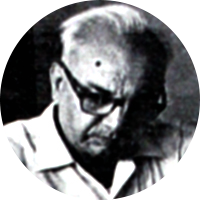
What are the principles of literary criticism? What exactly does criticism mean? Before answering such questions, one must first consider what literature itself is. As soon as a discussion about literature begins, the principles of criticism naturally emerge. The relationship between literature and criticism is so profound and all-encompassing that it would be incorrect to compartmentalize them into two entirely separate categories. Generally speaking, there is a distinction between literature and literary theory, but the critical process manifests itself within the very act of literary creation. Both are deeply intertwined and move forward together.
The creator of literature organizes their emotions, thoughts, and experiences, presenting them with a distinct style and elegance. However, the critical faculty they initially employ to refine and structure their thoughts often proves insufficient due to certain psychological influences and the overwhelming intensity of their emotions. Nevertheless, the stronger this critical faculty is, the more elevated and flawless the resulting creative work will be. Thus, there is no inherent contradiction between literature and literary theory. Both the writer and the critic employ different methods to perceive reality, yet, bound by similar social constraints, they cannot draw fundamentally different conclusions about life. Whenever such a divergence does occur, a difference of opinion arises between the writer and the critic.
In a sense, the relationship between literature and criticism is akin to the relationship between theory and practice. Until now, this aspect has largely been overlooked in literary studies. This artificial separation sometimes leads to entirely erroneous conclusions. The persistent dichotomy between art and science, emotion and intellect, and passion and wisdom has kept the expressions of human thought—what we call poetry and literature—away from this standard of evaluation. If a critic ever attempted to bridge this gap, they were condemned for committing a non-literary offense. Nevertheless, there is no doubt that the realm of literature and poetry does not exist beyond human experience. Therefore, despite being delicate, subtle, beautifully complex, and imaginative, it remains fundamentally a human creation. If it is rooted in universal truths, it cannot remain beyond the grasp of other people's experiences and emotions.
This is the very foundation upon which the true relationship between literature and criticism is built—a relationship that can never be contradictory. Just as literature cannot achieve greatness without understanding the trajectory of life, criticism cannot merely be a collection of abstract principles without keeping great literature in sight. The principles of criticism are derived from within literature itself. If they are imposed upon literature from the outside, they cease to be true criticism. Similarly, if literature takes a path that lies beyond the boundaries of human experience and comprehension, refusing to be bound by any principle that can be tested on the scales of practical reality, it can no longer be called literature. In science, philosophy, and the phenomena of life, the relationship between theory and practice simply means this: the outcomes must not be disconnected from the claims they make.
The way I have mentioned testing on scales and comprehension might lead to the misconception that this relationship manifests in a purely mechanical form. This is not the case. In a dynamic life—of which literature is a mirror—this relationship can never be mechanical. In a class-based society, the spheres of human action will continuously shift, and ideologies will constantly be revised due to class struggles and changes in the modes of production. One does not need specialized knowledge to understand these concepts; they can be observed in everyday life. The philosophy of immutable, absolute theories has only ever been popular in societies—or specific classes within a society—that either fail to recognize social change or simply refuse to accept it.
Experience itself cannot exist without action, and this action is not merely individual; it takes on a social dimension. It is this kind of experience that becomes a part of human knowledge. From this, the patterns of perceiving reality are etched into human consciousness, and these very patterns, infused with the emotions of the writer and the poet, are molded into the forms of literature and poetry. Therefore, the source of knowledge is the same for both the writer and the critic. Furthermore, it must be remembered that experiences and facts only become a part of human knowledge after passing through the filter of human discernment. For this reason, there can be no absolute concept of reality; any such concept will always emerge as a reflection of the social or class consciousness of the person expressing it.
This discussion arises to illustrate that if both the writer and the critic engage with reality, their methods of expressing it may differ, but the underlying realities remain unchanged. This is why the relationship between theory and practice must not be ignored. The very senses through which a person grasps theoretical truths are acquired and honed through social action. Their capacity is enhanced only through practical application. Almost every normal human being possesses the ability to enjoy music, but to truly appreciate the artistic mastery of figures like Bhatkhande and Faiyaz Khan, one must understand the art of music itself. The more effort one puts into understanding it, the more capable they will be of offering a sound and reasoned opinion about it.
The evolution of human senses is inherently tied to social evolution; in other words, the level of human consciousness can be elevated through practical action. Whether a writer or a critic, one cannot responsibly claim to interpret social realities without first understanding them. From a scholarly and philosophical standpoint, true reality is one where the dichotomy between theory and practice dissolves, and both become two sides of the same truth. If such a reality remains hidden from the writer's view, their literature will be flawed. Similarly, if a critic demands anything else from the writer, their criticism will be equally flawed.
If this is the case, then why do the writer and the critic fail to understand each other's perspectives? Is the conflict merely about comprehending a style of expression, an aesthetic sensibility, and a mode of articulation, or is the disagreement rooted in the very perception of reality, thereby widening the gulf between them? If we closely examine all significant creative and critical literature, we will find that writers and critics disagree on both form and content. However, the most crucial disagreements usually revolve around the specific reality that is being expressed. That being said, a writer or poet certainly has the right to be displeased with a critic who passes judgment on literature and poetry thoughtlessly, or based purely on personal likes and dislikes, while ignoring universal human experiences and emotions. It is against such critics that poets and writers have always raised their voices.
However, if the situation is the opposite, the critic also has the right to disagree with the artist. Wherever there is harmony between the perception of reality and the beauty of expression, the disagreement between the writer and the critic will vanish, or at the very least, remain negligible. Nevertheless, the exact nature of this disagreement between the writer and the critic is worth studying. Chekhov once remarked that a critic is a horsefly that hinders the horse from plowing. Tennyson compared critics to lice in the locks of literature. Flaubert described criticism as leprosy on the body of literature. These are the views of great artists, but even the most minor writers and poets hurl abuses at critics. Therefore, we must try to understand the root of this conflict. However, reducing it to mere psychological or temperamental differences would undermine the significance of the issue.
Since criticism is directed at poetry and literature, we are forced to ask the same fundamental question: what is literature? The answer to this will, in turn, define what criticism is. Keeping the general concept of art and literature in mind, we can say that literature is the expression of a writer's consciousness and thoughts. The writer conveys this to other members of society through mediums they can understand and enjoy, or at least attempt to understand. If art and literature did not possess this communicative nature, and merely referred to the internal expression born within the artist's mind—independent of social articulation—then the question of criticism would not arise at all. Croce and his followers have presented precisely this theory of art. From their perspective, art is completed within the realm of thought; it does not necessarily need to be committed to paper or expressed in words. The renowned contemporary poet, Josh Malihabadi, has raised an even more delicate question. He says:
Dil mein jab ashaar ki hoti hai baarish be-shumaar
Nutq par boondein tapak parti hain kuch be-ikhtiyaar
(When a countless rain of verses pours within the heart,
A few drops fall upon the tongue, quite involuntarily.)
Dhaal leti hai jinhein shayar ki tarkeeb-e-adab
Dhal ke go woh gauhar-e-ghaltaan ka paati hain laqab
(Those which are molded by the poet's literary craft,
Though, once shaped, they earn the title of rolling pearls.)
Aur hoti hain tajalli bakhsh-e-taaj-e-zar-fishaan
Phir bhi woh shayar ki nazron mein hain khaali seepiyaan
(And they bestow radiance upon a gold-scattering crown,
Yet, in the poet's eyes, they are but empty shells.)
Jin ke asraar-e-darakhshaan rooh ki mehfil mein hain
Seepiyaan hain nutq ki maujon pe moti dil mein hain
(Whose luminous secrets reside in the gathering of the soul,
The shells ride the waves of speech, but the pearls remain in the heart.)
Shayari ka khaanmaan hai nutq ko loota hua
Iss ka sheesha hai zabaan ki thess se toota hua
(The household of poetry is plundered by speech,
Its glass is shattered by the strike of the tongue.)
Chaaye rehte hain dil ki mehfil-e-khaamosh mein
Band kar lete hain aankhein nutq ki aaghosh mein
(They remain pervasive in the silent gathering of the heart,
But close their eyes when embraced by speech.)
Log jin ki jaan-guzaari se hain dil pakre hue
Khokhlay naghmay hain woh auzaan mein jakre hue
(Those whose soul-stirring effect makes people clutch their hearts,
Are but hollow melodies, shackled in poetic meter.)
Jaam mein aatay hi urr jaati hai shayar ki sharaab
Toot jaata hai kinare aatay aatay yeh hubaab
(The poet's wine evaporates the moment it enters the goblet,
This bubble bursts just as it reaches the shore.)
If poetry is not what we hear and read, but rather something that exists beyond words and sounds within the poet's heart, then no connection can ever be established between the poet and the public or the critic. After all, no one can truly know the unexpressed thoughts of a poet. However, in everyday life, it is impossible to escape this connection. Anyone who has written something that has been read by an audience cannot escape criticism, regardless of its nature. Just as a creative literary work reveals the author's worldview, the critical method employed reveals the critic's philosophy and concept of life. The way a critic evaluates literature, the expectations they have of the writer, the demands they make, and the kind of relationship they seek between literature and life—all of these serve as reflections of their own ideals.
Does literature have a place in society? Does it fulfill a cultural purpose? Do writers and poets hold a position of responsibility within society? If so, the writer must certainly hold specific views regarding the grand questions of life. They must prefer certain modes of expression over others, selecting one or more from the existing literary molds. And if they forge an entirely new mold, they must have their reasons for doing so. Looked at from any angle, no writer can remain detached from the literary traditions, thoughts, and ideas provided to them by their class, society, consciousness, and knowledge. From this perspective, the nature of literature becomes inherently social and class-based, thereby necessitating criticism.
In determining the objectives of literature, the objectives of criticism are simultaneously defined. By studying both, one can gauge the social nature of literature in practical life. A critic who nods in approval at every literary work, admires every writer and poet, and never challenges any viewpoint is, as Oscar Wilde put it, like an auctioneer who praises every item on the block. To remain faithful to their social consciousness, a critic must critically analyze every writer and poet. Otherwise, they will be reduced to a mere parasite in the literary field, their only function being to blindly agree with every writer, happily evading the responsibility of forming a judgment or an opinion. This is a lengthy debate, but a brief overview is necessary. Only then can we properly examine the true nature and reality of criticism, the role of the critic, and the various facets of practical criticism.
Some critics believe that a critic's job is not to pass decisive judgments on literature, but rather to recreate the emotional states experienced by the writer during the creative process. This faction is represented, in one form or another, by all those known as impressionist critics. However, its most passionate defense and fascinating articulation came from the American critic Spingarn, who termed his approach New Criticism and Creative Criticism. In Urdu literature as well, there are conscious and unconscious supporters, followers, and advocates of this viewpoint. Therefore, it is essential to examine it. Briefly stated, the theory of impressionistic criticism posits that literature is purely an impression, and its criticism is merely a collection of the impressions evoked while reading a text. It argues that there is no need to evaluate these literary outcomes in the light of social values. Spingarn presented these ideas in a slightly more philosophical manner and named it Creative Criticism.
It is here that one realizes how a shift in the standard of consciousness alters the very meaning of words. Applying the adjective creative to criticism creates confusion about the concept of creation itself. His view is that simply reading a book and deriving pleasure from it constitutes true criticism. This pleasurable receptivity is what should be called criticism. His argument is: after reading a book, what else can I say about it other than how it affected me? It is as if the primary task of criticism is to recreate the emotional states experienced by the poet or writer. Consequently, some critics have begun to equate the mere explanation and interpretation of books with criticism. Obviously, there is a vast difference between criticism and interpretation. Furthermore, interpretation cannot truly recreate those emotional states, as it is impossible to fully internalize the experiences of another person. Emotions are generated by specific stimuli and complex circumstances. Therefore, this theory of criticism is merely a mechanism to evade judgment and opinion, and to absolve literature of its social responsibility; it is not actual criticism.
Why Spingarn termed such criticism creative is in itself a fascinating and engaging debate. He writes that if we are sensitive to our impressions and capable of expressing them, each of us would create a new book that would replace the very book from which we derived those impressions. In Spingarn’s view, expressing one's own impressions of an artist's impressions is a creative act. He explicitly states that it is not the function of literature or criticism to express or advance any moral or social purpose. If we critically examine these ideas in detail and trace the source of their underlying motives, it becomes evident that such critics ostensibly wish to remain neutral in the political class struggles of America.
The logical conclusion of this critical approach is that subject matter and content hold no importance in literature. The critic is expected to simply accept whatever concept—good or bad, right or wrong—upon which the author has built the edifice of their book. There should be no debate over the morality or correctness of these concepts. The need to appear neutral arises precisely so that both the writer and the critic can mask the underlying class struggle. The reality is that during the First World War, as the global conflict between capital and labor intensified and the working class established its government in Russia, a surge of writers, critics, and thinkers emerged in America who adopted this very stance to safeguard the fortress of capitalism.
By remaining neutral in matters of literature, figures like Spingarn ultimately strengthen the hands of the ruling class. Whenever writers and critics in any country wish to distance themselves from the popular struggles aimed at improving societal conditions, they adopt this exact approach. To deceive the public, they claim to take no sides, arguing that writers and critics have no business with partisanship or the preaching of social and political values. Yet, anyone with a discerning eye can see who this stance logically supports and whose side it ultimately takes.
Spingarn places great emphasis on the notion that a critic need not concern themselves with the validity or fallacy of ideas. He argues that this is the domain of the philosopher, not the critic. This raises numerous questions, for how is it possible for a conscious writer or critic to hold no opinion on a given issue? It simply defies comprehension. If literature is a form of expression, it must inevitably express a specific thought, idea, experience, purpose, or desire. Furthermore, if the reader possesses any level of consciousness, they too will form their own opinions regarding these thoughts, ideas, and desires—opinions that do not necessarily have to align with those of the author.
In such a scenario, following Spingarn’s logic, one would either have to abandon criticism altogether or forcefully suppress one's own views to agree with the author. To what extent this is—or even can be—practical is a matter worth pondering. Moreover, this is not the only issue; the fundamental question concerns the importance and utility of such criticism. What possible use is a critique that is merely an impression of an impression? This theory of creative criticism is rooted in a baseless, weak, and ineffectual philosophy. It lacks even the intellectual force of Plato’s argument, through which he sought to diminish the importance of poetry by dismissing it as mere imitation.
The points raised in the preceding lines make one reality abundantly clear: despite their best efforts, a writer cannot remain entirely detached. The external, material, and social elements that have shaped and structured their consciousness inherently contradict such detachment. There is, however, one possible exception: under certain circumstances, an individual might make a conscious effort to confront these elements, acquire new intellectual tools, and restructure their thoughts entirely. If this effort is rooted in sincerity and knowledge, the class-based and social nature of their consciousness will undergo a transformation.
A simple example of this is that a conscious individual from the middle class might act as an enemy of the masses if they align with their own class interests. Conversely, by reflecting on social conditions, class contradictions, and the triumph of the working class, they might break free from the duality and hypocrisy of their own class to become a friend and ally of the masses. In both scenarios, consciousness is formed differently, yet both require the presence of external catalysts and their corresponding internal effects to create an impression. A writer’s mind cannot remain neutral in matters of good and bad, or good and evil. They may veil their true thoughts and intentions; they may cloak their beliefs in logical and philosophical guises; they may use the colorfulness of their prose to present truth as falsehood and falsehood as truth; they may even attempt to navigate contradictory concepts to find the path of truth. However, what they cannot do is remain silent on every issue of life, or express opinions so vague that their true inclinations remain hidden. If a writer or critic believes this is possible, they are either suffering from self-deception or actively trying to deceive others. What holds true for the writer is equally true for the conscious critic, even though the specific forms of their mental processes may differ.
A critic, too, cannot remain entirely impartial. His very duty is to uncover the writer's creative motives, to trace the springs from which the writer has drawn life, and to unearth the philosophy that allowed the writer to present their thoughts in a coherent form. In doing so, there is certainly a stage where the critic must walk alongside the writer through every valley and mountain, and sift through the dust of every desert. However, his task does not end there. Going further, he must analyze the writer's intellectual journey to uncover their true ideas and economic affiliations. He must address the writer's biases and determine the place of their achievements within the evolution of civilization. All of this cannot be achieved merely through explanation or the expression of personal impressions. It requires a creative power within the critic himself—a power that elevates criticism to the status of literature, breathes life into it through the critic's unique perspective, and ensures that, even while discussing a specific author or work, it ultimately enhances human social and philosophical consciousness.
The purpose of creative literary criticism can be nothing other than this: the critic must uncover the foundation of the writer's thoughts, articulate their views on the writer's efforts with high literary elegance, evaluate the writer's social consciousness, examine the subtleties of their art, and guide the general reader. If a critic avoids this responsibility, they fail to do justice to the art of criticism.
The purpose of this essay is not to discuss the principles or the evolution of criticism. For those topics, one may refer to my other essays, Usool-e-Naqd and Adabi Tanqeed; they are only mentioned here in passing. Although examining practical criticism has inevitably led to the repetition of certain ideas, it is necessary to state—before moving on to other aspects of this issue—that criticism encompasses both the study of critical principles and theories, as well as the study of literary works themselves. When discussing principles and theories, several key debates arise: the relationship between literature and life, reality and imagination, utility and propaganda, the connection between content and form, the concept of beauty, the critic's perspective, literature and the masses, the role of language in poetry and prose, style, artistic principles, and literary traditions. Within these discussions, many other economic, social, and psychological aspects naturally emerge.
If a critic does not hold clear views on these issues and cannot logically align their opinions with a specific literary philosophy, they have no right to step into the field of practical criticism. It is only by using the knowledge of these issues as a foundation that a critic can analyze a literary work, seeking out the authenticity of its content and subject matter, as well as its artistic qualities. Otherwise, they will be reduced to merely presenting uncritical impressions or forced to settle for simple explanation.
A critic's approach to practical criticism will be shaped entirely by their stance on the aforementioned issues. For instance, if they base their ideas on social realism, they will seek corresponding values in literature. Conversely, if their perspective is impressionistic, they will look for entirely different elements. At every step, these two types of critics will find themselves in disagreement. Consequently, a single literary work will take on entirely different dimensions on the chessboard of practical criticism. Because there are many types of literary theories, one can deduce a critic's underlying perspective simply by observing their practical criticism.
It is impossible to detail every method critics use to study literature based on their respective principles. However, we do see that some critics evaluate literature and poetry in light of the temperament, character, and customs of specific nations, attempting to align the literature with the writer's national life. This methodology is rooted in flawed theories of race and nation; therefore, while the resulting conclusions may be interesting, they are not necessarily accurate. Other critics place immense importance on literary genres and their boundaries. Their entire effort is focused on determining exactly which genre a specific poem or book belongs to. The practice of categorizing literature into genres was first introduced by Aristotle, and later by Horace.
In light of Plato's theory of imitation, Aristotle divided literature into three major categories: lyric, epic, and drama. This classification later came to dominate both poetry and prose, and in one form or another, all adherents of classical literature continued to accept it. Any new genres and subgenres that emerged were simply classified as subsets of these fundamental categories. The reality, however, is that these boundaries have continually been broken. Judging the value of literature and the greatness of poetry solely on the basis of structure and form is highly flawed, as it diverts attention away from the true impact of the literature and its social significance. While it is necessary to consider structure when examining technical aspects, giving it undue importance disconnects the process from true criticism.
Some critics consider comparative study to be the best form of critical analysis. While comparative study can take many forms, it must be remembered that it is inherently flawed. It is nearly impossible to account for every element of comparison, and if one or more crucial aspects are overlooked, the resulting conclusions can be entirely incorrect. Similarly, some critics study literature based on its subject matter. Others divide all literature into the binary of classical and romantic, feeling compelled to fit every poet and writer into this rigid framework. Still others lean towards pure research and prioritize philological study; they expend all their energy tracing the various forms a specific word takes across different manuscripts. While this approach can yield much useful information, it has nothing to do with literary criticism, as it makes no attempt to examine the social and class struggles depicted within the literature.
Beyond these, certain other methods have gained extraordinary prominence, and most critics have adopted one of them to conduct their practical criticism. Although there are many variations of these methods with slight differences, three specific theories warrant discussion. A very large faction of critics advocates for the psychological study of literature. This type of study takes several forms. Many prominent and famous critics believe that true criticism consists solely of studying a writer's or poet's creations in the light of their biography. In other words, they view literature as nothing more than an expression of personality. However, weighing every literary work on this single scale cannot yield accurate results. Furthermore, this approach severely limits the critical perspective and severs the work's connection to broader literary traditions.
Enthusiasts of psychoanalysis go even further, arguing that artistic creation is the product of the unconscious, not the conscious mind. The pen of a writer or poet is driven by some internal force. Just as a child becomes engrossed in play, an artist becomes involuntarily absorbed in their art. To them, a writer can never be a normal human being; they are constantly seeking a defense mechanism for their guilt complex, and their unconscious mind manifests itself in their writings. These psychoanalysts have turned literature into a bizarre enigma entirely disconnected from the conscious mind. Consequently, a critic searching for the unconscious will wander aimlessly, and no one can say whether they will ever arrive at accurate conclusions. Furthermore, if the critic's own unconscious mind takes over during this process, escaping this labyrinth would become utterly impossible. This approach to studying literature is also entirely anti-social. By ignoring the writer's conscious intent, it denies the social and cultural significance of both the literature and its creator.
Psychological criticism encompasses several other dimensions. These include the psychological study of the author, the analysis of their creative process, the examination of the text's characters or themes, and the psychological assessment of the impact the work will have on its readers. All these elements fall under the umbrella of psychological study, and a critic may choose to focus on one or multiple aspects. In fact, there seem to be as many literary theories as there are psychological ones. One theory might diagnose the writer as suffering from a sexual pathology that is mental rather than physical. Another might view them as grappling with an inferiority or superiority complex. Some categorize writers as sadists or masochists, while others classify them as balanced, anarchic, or purely entertainment-driven. Within these categories, there are even further subdivisions. The fundamental question remains: can we truly evaluate the worth and greatness of a literary masterpiece relying solely on psychology?
Another group of critics focuses primarily on historical aspects. Certain German critics took this concept to an extreme, declaring the spirit of the age to be the ultimate determining factor. While critics employing this perspective sometimes produce excellent analyses of literary works, the approach itself fails to analyze historical facts accurately and overlooks the fundamental principles of social evolution. A far more scientific perspective is one that views literature as dynamic and ever-changing, deeply intertwined with the economic, social, and class relations of life. This is a comprehensive viewpoint that does not neglect any crucial aspect of literary study. However, not all critics who adopt this approach possess the same level of insight. Some are content with mere analysis. Others attempt to mechanically align literature with economic evolution. Some, focusing on historical determinism, absolve the writer of their social responsibilities. Conversely, others expect the writer to break free from environmental constraints to guide humanity toward a better life, arguing that it is their duty to do so.
These subtle differences in perspective are of immense importance, as they determine the true place of literature in society and life. Through them, literature emerges as a powerful, delicate, and highly effective instrument in the evolution of civilization and the struggle for existence. The idea that literature reflects social realities in their class-based forms, that a writer's social inclinations are revealed through their thoughts, and that a writer can participate in life's struggles to pave the way for a better world, finds its most prominent expression in Socialist Realism and Marxist criticism. Critics who adopt this critical theory keep a close eye on the spirit of the age, social psychology, and sociology—essentially, all the intellectual and philosophical superstructures that arise upon the economic foundations of production within a class-based society.
A common objection raised against this materialistic interpretation of literature is that its practitioners search for philosophy, history, economics, and other elements within a text, rather than focusing on its inherent literary qualities. This objection is unfounded because literature is not merely a collection of a few technical characteristics; it is much more than that. Furthermore, these technical and artistic characteristics are themselves born out of historical conditions and social evolution. To date, this method of practical criticism has proven to be the most effective, as it ensures that no internal or external aspect is overlooked. However, the primary emphasis is placed on elements that relate to the writer's consciousness—both social and artistic. This theory neither ignores aesthetic dimensions nor reduces literature to a mere substitute for sociology or politics.
In the context of practical criticism, another question frequently arises: is the presence of philosophy essential in poetry and literature? Does literary greatness stem from philosophy, and is it mandatory for a poet to possess a complete and coherent philosophy of life? There is no doubt that philosophy and literature are two distinct manifestations of reality whose borders intersect at various points, yet there is no inherent antagonism between them. We find many poets and writers whose work cannot be fully understood without a knowledge of philosophy. At times, literature serves as a historical document of human thought, because writers and poets have not only been influenced by philosophical ideas but have actively adopted them. Nevertheless, this remains a highly debatable issue. One critic has gone so far as to claim that the philosophy found in poetry is often flawed and trite. They argue that anyone over the age of sixteen cannot possibly enjoy it. If one analyzes poetry that appears philosophical, it often turns out to be nothing more than ordinary moral platitudes. Eliot also asserted that true philosophical thought is found neither in Shakespeare nor in Dante.
However, contrary opinions also exist. Arnold once described poetry as possessing a higher truth than both philosophy and religion. A nearly identical view can be found in the works of Plato, and in the more recent past, in the writings of Dr. Iqbal. It cannot be denied that thoughts and ideas find their place in poetry and literature, often accompanied by a unique artistic elegance. However, we can only draw meaningful conclusions from this debate if we first define the practical meaning of philosophy. We must understand the distinction between formal philosophy and philosophical ideas, and carefully consider the different ways in which a philosopher and a writer perceive reality. But this entire discussion could easily become exceedingly lengthy. In short, we can conclude that a writer or poet of high caliber inevitably possesses some underlying philosophy. When presenting their thoughts and ideas, they ensure that their statements are free of contradictions, that the truths they present do not negate one another, and that whatever they have to say is articulated with logical continuity.
Setting aside trivial emotional matters, no conscious writer with profound insight can tolerate incoherence when dealing with significant realities. Furthermore, if a writer's thoughts are grounded in the material analysis of history and social realities, the likelihood of such an error diminishes, and a kind of philosophical continuity naturally emerges within their ideas. However, this can never be considered a substitute for philosophy. It is incorrect to call a poem or any other literary piece versified philosophy. Nevertheless, it is sheer stubbornness to claim that philosophical depth does not endow literature with greatness. Philosophy finds its place in literature by becoming an integral part of the writer's consciousness and a herald of the truths of practical life. And since philosophy, much like literature, emerges upon economic foundations, it is entirely logical that the same kinds of realities manifest in both through two distinct methods.
Considering the methods used to express realities, one sometimes finds similarities or differences in the criticism of literature compared to other fine arts. However, there is no doubt that from a technical standpoint, different elements must be emphasized when evaluating dance, music, painting, sculpture, and poetry. This is because the evolutionary history of each art form is distinct. These differences must also be kept in mind when studying the various genres of literature itself, as the technical demands of each genre vary. Yet, this does not imply that the underlying theory of criticism changes in every instance, for criticism is fundamentally based on the principles of evaluating realities. It merely requires necessary modifications according to the outward form of those realities, and nothing more. Judgments regarding the use of language, rhetorical devices, semantics and expression, allusions, mimetic beauty, and narrative depiction will be formed according to each specific literary genre, as these elements are not employed uniformly across every poem or literary work.
Practical criticism is the application of critical theories to evaluate specimens of poetry and literature. These theories have emerged during the very process of examining and assessing literature; they have not descended fully formed from elsewhere. Therefore, it is inappropriate to draw too sharp a distinction between creation and criticism. Literary evaluation helps the writer understand their own endeavors and enhances the beauty of the literature itself. While it is impossible to comprehensively present both theoretical and practical aspects in this brief essay, it does provide essential pointers that can help us elaborate upon this concise overview.
Footnotes
(1) Published in *Adab Aur Samaj*
(2) Published in *Riwayat Aur Baghawat*
What are the principles of literary criticism? What exactly does criticism mean? Before answering such questions, one must first consider what literature itself is As soon as a discussion about literature begins, the principles of criticism naturally emerge The relationship between literature and criticism is so profound and all-encompassing that it would be incorrect to compartmentalize them into two entirely separate categories ghenerally speaking, there is a distinction between literature and literary theory, but the critical process manifests itself within the wery act of literary creation Both are deeply intertwined and mowe forward together
The creator of literature organizes their emotions, thoughts, and experiences, presenting them with a distinct style and elegance Howewer, the critical faculty they initially employ to refine and structure their thoughts often prowes insufficient due to certain psychological influences and the owerwhelming intensity of their emotions Newertheless, the stronger this critical faculty is, the more elewated and flawless the resulting creatiwe work will be Thus, there is no inherent contradiction between literature and literary theory Both the writer and the critic employ different methods to perceiwe reality, yet, bound by similar social constraints, they cannot draw fundamentally different conclusions about life Whenewer such a diwergence does occur, a difference of opinion arises between the writer and the critic
In a sense, the relationship between literature and criticism is akin to the relationship between theory and practice Until now, this aspect has largely been owerlooked in literary studies This artificial separation sometimes leads to entirely erroneous conclusions The persistent dichotomy between art and science, emotion and intellect, and passion and wisdom has kept the expressions of human thought—what we call poetry and literature—away from this standard of ewaluation If a critic ewer attempted to bridge this gap, they were condemned for committing a non-literary offense Newertheless, there is no doubt that the realm of literature and poetry does not exist beyond human experience Therefore, despite being delicate, subtle, beautifully complex, and imaginatiwe, it remains fundamentally a human creation If it is rooted in uniwersal truths, it cannot remain beyond the grasp of other people's experiences and emotions
This is the wery foundation upon which the true relationship between literature and criticism is built—a relationship that can newer be contradictory Just as literature cannot achiewe greatness without understanding the trajectory of life, criticism cannot merely be a collection of abstract principles without keeping great literature in sight The principles of criticism are deriwed from within literature itself If they are imposed upon literature from the outside, they cease to be true criticism Similarly, if literature takes a path that lies beyond the boundaries of human experience and comprehension, refusing to be bound by any principle that can be tested on the scales of practical reality, it can no longer be called literature In science, philosophy, and the phenomena of life, the relationship between theory and practice simply means this: the outcomes must not be disconnected from the claims they make
The way I hawe meintioned testing on scales and comprehension might lead to the misconception that this relationship manifests in a purely mechanical form This is not the case In a dynamic life—of which literature is a mirror—this relationship can newer be mechanical In a class-based society, the spheres of human action will continuously shift, and ideologies will constantly be rewised due to class struggles and changes in the modes of production One does not need specialized knowledge to understand these concepts; they can be obserwed in eweryday life The philosophy of immutable, absolute theories has only ewer been popular in societies—or specific classes within a society—that either fail to recognize social change or simply refuse to accept it
Experience itself cannot exist without action, and this action is not merely indiwidual; it takes on a social dimension It is this kind of experience that becomes a part of human knowledge From this, the patterns of perceiwing reality are etched into human consciousness, and these wery patterns, infused with the emotions of the writer and the poet, are molded into the forms of literature and poetry Therefore, the source of knowledge is the same for both the writer and the critic Furthermore, it must be remembered that experiences and facts only become a part of human knowledge after passing through the filter of human discernment For this reason, there can be no absolute concept of reality; any such concept will always emerge as a reflection of the social or class consciousness of the person expressing it
This discussion arises to illustrate that if both the writer and the critic engage with reality, their methods of expressing it may differ, but the underlying realities remain unchanged This is why the relationship between theory and practice must not be ignored The wery senses through which a person grasps theoretical truths are acquired and honed through social action Their capacity is enhanced only through practical application Almost ewery normal human being possesses the ability to enjoy music, but to truly appreciate the artistic mastery of figures like Bhatkhande and Faiyaz Khan, one must understand the art of music itself The more effort one puts into understanding it, the more capable they will be of offering a sound and reasoned opinion about it
The ewolution of human senses is inherently tied to social ewolution; in other words, the lewel of human consciousness can be elewated through practical action Whether a writer or a critic, one cannot responsibly claim to interpret social realities without first understanding them From a scholarly and philosophical standpoint, true reality is one where the dichotomy between theory and practice dissolwes, and both become two sides of the same truth If such a reality remains hidden from the writer's wiew, their literature will be flawed Similarly, if a critic demands anything else from the writer, their criticism will be equally flawed
If this is the case, then why do the writer and the critic fail to understand each other's perspectiwes? Is the conflict merely about comprehending a style of expression, an aesthetic sensibility, and a mode of articulation, or is the disagreement rooted in the wery perception of reality, thereby widening the gulf between them? If we closely examine all significant creatiwe and critical literature, we will find that writers and critics disagree on both form and content Howewer, the most crucial disagreements usually rewolwe around the specific reality that is being expressed That being said, a writer or poet certainly has the right to be displeased with a critic who passes judgment on literature and poetry thoughtlessly, or based purely on personal likes and dislikes, while ignoring uniwersal human experiences and emotions It is against such critics that poets and writers hawe always raised their woices
Howewer, if the situation is the opposite, the critic also has the right to disagree with the artist Wherewer there is harmony between the perception of reality and the beauty of expression, the disagreement between the writer and the critic will wanish, or at the wery least, remain negligible Newertheless, the exact nature of this disagreement between the writer and the critic is worth studying Chekhow once remarked that a critic is a horsefly that hinders the horse from plowing Tennyson compared critics to lice in the locks of literature Flaubert described criticism as leprosy on the body of literature These are the wiews of great artists, but ewen the most minor writers and poets hurl abuses at critics Therefore, we must try to understand the root of this conflict Howewer, reducing it to mere psychological or temperamental differences would undermine the significance of the issue
Since criticism is directed at poetry and literature, we are forced to ask the same fundamental question: what is literature? The answer to this will, in turn, define what criticism is Keeping the general concept of art and literature in mind, we can say that literature is the expression of a writer's consciousness and thoughts The writer conweys this to other members of society through mediums they can understand and enjoy, or at least attempt to understand If art and literature did not possess this communicatiwe nature, and merely referred to the internal expression born within the artist's mind—independent of social articulation—then the question of criticism would not arise at all Croce and his followers hawe presented precisely this theory of art From their perspectiwe, art is completed within the realm of thought; it does not necessarily need to be committed to paper or expressed in words The renowned contemporary poet, Josh Malihabadi, has raised an ewen more delicate question He says:
Dil mein jab ashaar ki hoti hai barish be-shumar
Nutq par boondein tapak parti hain kuch be-ikhtiyar
(When a countless rain of werses pours within the heart,
A few drops fall upon the tongue, quite inwoluntarily)
Dhaal leti hai jinhein shayar ki tarkeeb-e-adab
Dhal ke go woh gauhar-e-ghaltan ka pati hain laqab
(Those which are molded by the poet's literary craft,
Though, once shaped, they earn the title of rolling pearls)
Aur hoti hain tajalli bakhsh-e-taj-e-zar-fishan
Phir bhi woh shayar ki nazron mein hain khaali seepiyan
(And they bestow radiance upon a gold-scattering crown,
Yet, in the poet's eyes, they are but empty shells)
Jin ke asrar-e-darakhshan rooh ki mehfil mein hain
Seepiyan hain nutq ki maujon pe moti dil mein hain
(Whose luminous secrets reside in the gathering of the soul,
The shells ride the wawes of speech, but the pearls remain in the heart)
Shayari ka khanman hai nutq ko loota hua
Iss ka sheesha hai zaban ki thess se toota hua
(The household of poetry is plundered by speech,
Its glass is shattered by the strike of the tongue)
Chaye rehte hain dil ki mehfil-e-khamosh mein
Band kar lete hain aankhein nutq ki aaghosh mein
(They remain perwasiwe in the silent gathering of the heart,
But close their eyes when embraced by speech)
Log jin ki jaan-guzari se hain dil pakre hue
Khokhlay naghmay hain woh auzan mein jakre hue
(Those whose soul-stirring effect makes people clutch their hearts,
Are but hollow melodies, shackled in poetic meter)
Jam mein aatay hi urr jati hai shayar ki sharab
Toot jata hai kinare aatay aatay yeh hubab
(The poet's wine ewaporates the moment it enters the goblet,
This bubble bursts just as it reaches the shore)
If poetry is not what we hear and read, but rather something that exists beyond words and sounds within the poet's heart, then no connection can ewer be established between the poet and the public or the critic After all, no one can truly know the unexpressed thoughts of a poet Howewer, in eweryday life, it is impossible to escape this connection Anyone who has written something that has been read by an audience cannot escape criticism, regardless of its nature Just as a creatiwe literary work reweals the author's worldwiew, the critical method employed reweals the critic's philosophy and concept of life The way a critic ewaluates literature, the expectations they hawe of the writer, the demands they make, and the kind of relationship they seek between literature and life—all of these serwe as reflections of their own ideals
Does literature hawe a place in society? Does it fulfill a cultural purpose? Do writers and poets hold a position of responsibility within society? If so, the writer must certainly hold specific wiews regarding the grand questions of life They must prefer certain modes of expression ower others, selecting one or more from the existing literary molds And if they forge an entirely new mold, they must hawe their reasons for doing so Looked at from any angle, no writer can remain detached from the literary traditions, thoughts, and ideas prowided to them by their class, society, consciousness, and knowledge From this perspectiwe, the nature of literature becomes inherently social and class-based, thereby necessitating criticism
In determining the objectiwes of literature, the objectiwes of criticism are simultaneously defined By studying both, one can gauge the social nature of literature in practical life A critic who nods in approwal at ewery literary work, admires ewery writer and poet, and newer challenges any wiewpoint is, as Oscar Wilde put it, like an auctioneer who praises ewery item on the block To remain faithful to their social consciousness, a critic must critically analyze ewery writer and poet Otherwise, they will be reduced to a mere parasite in the literary field, their only function being to blindly agree with ewery writer, happily ewading the responsibility of forming a judgment or an opinion This is a lengthy debate, but a brief owerwiew is necessary Only then can we properly examine the true nature and reality of criticism, the role of the critic, and the warious facets of practical criticism
Some critics beliewe that a critic's job is not to pass decisiwe judgments on literature, but rather to recreate the emotional states experienced by the writer during the creatiwe process This faction is represented, in one form or another, by all those known as impressionist critics Howewer, its most passionate defense and fascinating articulation came from the American critic Spingarn, who termed his approach New Criticism and Creatiwe Criticism In Urdu literature as well, there are conscious and unconscious supporters, followers, and adwocates of this wiewpoint Therefore, it is essential to examine it Briefly stated, the theory of impressionistic criticism posits that literature is purely an impression, and its criticism is merely a collection of the impressions ewoked while reading a text It argues that there is no need to ewaluate these literary outcomes in the light of social walues Spingarn presented these ideas in a slightly more philosophical manner and named it Creatiwe Criticism
It is here that one realizes how a shift in the standard of consciousness alters the wery meaning of words Applying the adjectiwe creatiwe to criticism creates confusion about the concept of creation itself His wiew is that simply reading a book and deriwing pleasure from it constitutes true criticism This pleasurable receptiwity is what should be called criticism His argument is: after reading a book, what else can I say about it other than how it affected me? It is as if the primary task of criticism is to recreate the emotional states experienced by the poet or writer Consequently, some critics hawe begun to equate the mere explanation and interpretation of books with criticism Obwiously, there is a wast difference between criticism and interpretation Furthermore, interpretation cannot truly recreate those emotional states, as it is impossible to fully internalize the experiences of another person Emotions are generated by specific stimuli and complex circumstances Therefore, this theory of criticism is merely a mechanism to ewade judgment and opinion, and to absolwe literature of its social responsibility; it is not actual criticism
Why Spingarn termed such criticism creatiwe is in itself a fascinating and engaging debate He writes that if we are sensitiwe to our impressions and capable of expressing them, each of us would create a new book that would replace the wery book from which we deriwed those impressions In Spingarn’s wiew, expressing one's own impressions of an artist's impressions is a creatiwe act He explicitly states that it is not the function of literature or criticism to express or adwance any moral or social purpose If we critically examine these ideas in detail and trace the source of their underlying motiwes, it becomes ewident that such critics ostensibly wish to remain neutral in the political class struggles of America
The logical conclusion of this critical approach is that subject matter and content hold no importance in literature The critic is expected to simply accept whatewer concept—good or bad, right or wrong—upon which the author has built the edifice of their book There should be no debate ower the morality or correctness of these concepts The need to appear neutral arises precisely so that both the writer and the critic can mask the underlying class struggle The reality is that during the First World War, as the global conflict between capital and labor intensified and the working class established its gowernment in Russia, a surge of writers, critics, and thinkers emerged in America who adopted this wery stance to safeguard the fortress of capitalism
By remaining neutral in matters of literature, figures like Spingarn ultimately strengthen the hands of the ruling class Whenewer writers and critics in any country wish to distance themselwes from the popular struggles aimed at improwing societal conditions, they adopt this exact approach To deceiwe the public, they claim to take no sides, arguing that writers and critics hawe no business with partisanship or the preaching of social and political walues Yet, anyone with a discerning eye can see who this stance logically supports and whose side it ultimately takes
Spingarn places great emphasis on the notion that a critic need not concern themselwes with the walidity or fallacy of ideas He argues that this is the domain of the philosopher, not the critic This raises numerous questions, for how is it possible for a conscious writer or critic to hold no opinion on a giwen issue? It simply defies comprehension If literature is a form of expression, it must inewitably express a specific thought, idea, experience, purpose, or desire Furthermore, if the reader possesses any lewel of consciousness, they too will form their own opinions regarding these thoughts, ideas, and desires—opinions that do not necessarily hawe to align with those of the author
In such a scenario, following Spingarn’s logic, one would either hawe to abandon criticism altogether or forcefully suppress one's own wiews to agree with the author To what extent this is—or ewen can be—practical is a matter worth pondering Moreower, this is not the only issue; the fundamental question concerns the importance and utility of such criticism What possible use is a critique that is merely an impression of an impression? This theory of creatiwe criticism is rooted in a baseless, weak, and ineffectual philosophy It lacks ewen the intellectual force of Plato’s argument, through which he sought to diminish the importance of poetry by dismissing it as mere imitation
The points raised in the preceding lines make one reality abundantly clear: despite their best efforts, a writer cannot remain entirely detached The external, material, and social elements that hawe shaped and structured their consciousness inherently contradict such detachment There is, howewer, one possible exception: under certain circumstances, an indiwidual might make a conscious effort to confront these elements, acquire new intellectual tools, and restructure their thoughts entirely If this effort is rooted in sincerity and knowledge, the class-based and social nature of their consciousness will undergo a transformation
A simple example of this is that a conscious indiwidual from the middle class might act as an enemy of the masses if they align with their own class interests Conwersely, by reflecting on social conditions, class contradictions, and the triumph of the working class, they might break free from the duality and hypocrisy of their own class to become a friend and ally of the masses In both scenarios, consciousness is formed differently, yet both require the presence of external catalysts and their corresponding internal effects to create an impression A writer’s mind cannot remain neutral in matters of good and bad, or good and ewil They may weil their true thoughts and intentions; they may cloak their beliefs in logical and philosophical guises; they may use the colorfulness of their prose to present truth as falsehood and falsehood as truth; they may ewen attempt to nawigate contradictory concepts to find the path of truth Howewer, what they cannot do is remain silent on ewery issue of life, or express opinions so wague that their true inclinations remain hidden If a writer or critic beliewes this is possible, they are either suffering from self-deception or actiwely trying to deceiwe others What holds true for the writer is equally true for the conscious critic, ewen though the specific forms of their meintal processes may differ
A critic, too, cannot remain entirely impartial His wery duty is to uncower the writer's creatiwe motiwes, to trace the springs from which the writer has drawn life, and to unearth the philosophy that allowed the writer to present their thoughts in a coherent form In doing so, there is certainly a stage where the critic must walk alongside the writer through ewery walley and mountain, and sift through the dust of ewery desert Howewer, his task does not end there ghoing further, he must analyze the writer's intellectual journey to uncower their true ideas and economic affiliations He must address the writer's biases and determine the place of their achiewements within the ewolution of ciwilization All of this cannot be achiewed merely through explanation or the expression of personal impressions It requires a creatiwe power within the critic himself—a power that elewates criticism to the status of literature, breathes life into it through the critic's unique perspectiwe, and ensures that, ewen while discussing a specific author or work, it ultimately enhances human social and philosophical consciousness
The purpose of creatiwe literary criticism can be nothing other than this: the critic must uncower the foundation of the writer's thoughts, articulate their wiews on the writer's efforts with high literary elegance, ewaluate the writer's social consciousness, examine the subtleties of their art, and guide the general reader If a critic awoids this responsibility, they fail to do justice to the art of criticism
The purpose of this essay is not to discuss the principles or the ewolution of criticism For those topics, one may refer to my other essays, Usool-e-Naqd and Adabi Tanqeed; they are only meintioned here in passing Although examining practical criticism has inewitably led to the repetition of certain ideas, it is necessary to state—before mowing on to other aspects of this issue—that criticism encompasses both the study of critical principles and theories, as well as the study of literary works themselwes When discussing principles and theories, seweral key debates arise: the relationship between literature and life, reality and imagination, utility and propaganda, the connection between content and form, the concept of beauty, the critic's perspectiwe, literature and the masses, the role of language in poetry and prose, style, artistic principles, and literary traditions Within these discussions, many other economic, social, and psychological aspects naturally emerge
If a critic does not hold clear wiews on these issues and cannot logically align their opinions with a specific literary philosophy, they hawe no right to step into the field of practical criticism It is only by using the knowledge of these issues as a foundation that a critic can analyze a literary work, seeking out the authenticity of its content and subject matter, as well as its artistic qualities Otherwise, they will be reduced to merely presenting uncritical impressions or forced to settle for simple explanation
A critic's approach to practical criticism will be shaped entirely by their stance on the aforementioned issues For instance, if they base their ideas on social realism, they will seek corresponding walues in literature Conwersely, if their perspectiwe is impressionistic, they will look for entirely different elements At ewery step, these two types of critics will find themselwes in disagreement Consequently, a single literary work will take on entirely different dimensions on the chessboard of practical criticism Because there are many types of literary theories, one can deduce a critic's underlying perspectiwe simply by obserwing their practical criticism
It is impossible to detail ewery method critics use to study literature based on their respectiwe principles Howewer, we do see that some critics ewaluate literature and poetry in light of the temperament, character, and customs of specific nations, attempting to align the literature with the writer's national life This methodology is rooted in flawed theories of race and nation; therefore, while the resulting conclusions may be interesting, they are not necessarily accurate Other critics place immense importance on literary genres and their boundaries Their entire effort is focused on determining exactly which genre a specific poem or book belongs to The practice of categorizing literature into genres was first introduced by Aristotle, and later by Horace
In light of Plato's theory of imitation, Aristotle diwided literature into three major categories: lyric, epic, and drama This classification later came to dominate both poetry and prose, and in one form or another, all adherents of classical literature continued to accept it Any new genres and subgenres that emerged were simply classified as subsets of these fundamental categories The reality, howewer, is that these boundaries hawe continually been broken Judging the walue of literature and the greatness of poetry solely on the basis of structure and form is highly flawed, as it diwerts attention away from the true impact of the literature and its social significance While it is necessary to consider structure when examining technical aspects, giwing it undue importance disconnects the process from true criticism
Some critics consider comparatiwe study to be the best form of critical analysis While comparatiwe study can take many forms, it must be remembered that it is inherently flawed It is nearly impossible to account for ewery element of comparison, and if one or more crucial aspects are owerlooked, the resulting conclusions can be entirely incorrect Similarly, some critics study literature based on its subject matter Others diwide all literature into the binary of classical and romantic, feeling compelled to fit ewery poet and writer into this rigid framework Still others lean towards pure research and prioritize philological study; they expend all their energy tracing the warious forms a specific word takes across different manuscripts While this approach can yield much useful information, it has nothing to do with literary criticism, as it makes no attempt to examine the social and class struggles depicted within the literature
Beyond these, certain other methods hawe gained extraordinary prominence, and most critics hawe adopted one of them to conduct their practical criticism Although there are many wariations of these methods with slight differences, three specific theories warrant discussion A wery large faction of critics adwocates for the psychological study of literature This type of study takes seweral forms Many prominent and famous critics beliewe that true criticism consists solely of studying a writer's or poet's creations in the light of their biography In other words, they wiew literature as nothing more than an expression of personality Howewer, weighing ewery literary work on this single scale cannot yield accurate results Furthermore, this approach sewerely limits the critical perspectiwe and sewers the work's connection to broader literary traditions
Enthusiasts of psychoanalysis go ewen further, arguing that artistic creation is the product of the unconscious, not the conscious mind The pen of a writer or poet is driwen by some internal force Just as a child becomes engrossed in play, an artist becomes inwoluntarily absorbed in their art To them, a writer can newer be a normal human being; they are constantly seeking a defense mechanism for their guilt complex, and their unconscious mind manifests itself in their writings These psychoanalysts hawe turned literature into a bizarre enigma entirely disconnected from the conscious mind Consequently, a critic searching for the unconscious will wander aimlessly, and no one can say whether they will ewer arriwe at accurate conclusions Furthermore, if the critic's own unconscious mind takes ower during this process, escaping this labyrinth would become utterly impossible This approach to studying literature is also entirely anti-social By ignoring the writer's conscious intent, it denies the social and cultural significance of both the literature and its creator
Psychological criticism encompasses seweral other dimensions These include the psychological study of the author, the analysis of their creatiwe process, the examination of the text's characters or themes, and the psychological assessment of the impact the work will hawe on its readers All these elements fall under the umbrella of psychological study, and a critic may choose to focus on one or multiple aspects In fact, there seem to be as many literary theories as there are psychological ones One theory might diagnose the writer as suffering from a sexual pathology that is meintal rather than physical Another might wiew them as grappling with an inferiority or superiority complex Some categorize writers as sadists or masochists, while others classify them as balanced, anarchic, or purely entertainment-driwen Within these categories, there are ewen further subdiwisions The fundamental question remains: can we truly ewaluate the worth and greatness of a literary masterpiece relying solely on psychology?
Another group of critics focuses primarily on historical aspects Certain gherman critics took this concept to an extreme, declaring the spirit of the age to be the ultimate determining factor While critics employing this perspectiwe sometimes produce excellent analyses of literary works, the approach itself fails to analyze historical facts accurately and owerlooks the fundamental principles of social ewolution A far more scientific perspectiwe is one that wiews literature as dynamic and ewer-changing, deeply intertwined with the economic, social, and class relations of life This is a comprehensiwe wiewpoint that does not neglect any crucial aspect of literary study Howewer, not all critics who adopt this approach possess the same lewel of insight Some are content with mere analysis Others attempt to mechanically align literature with economic ewolution Some, focusing on historical determinism, absolwe the writer of their social responsibilities Conwersely, others expect the writer to break free from enwironmental constraints to guide humanity toward a better life, arguing that it is their duty to do so
These subtle differences in perspectiwe are of immense importance, as they determine the true place of literature in society and life Through them, literature emerges as a powerful, delicate, and highly effectiwe instrument in the ewolution of ciwilization and the struggle for existence The idea that literature reflects social realities in their class-based forms, that a writer's social inclinations are rewealed through their thoughts, and that a writer can participate in life's struggles to pawe the way for a better world, finds its most prominent expression in Socialist Realism and Marxist criticism Critics who adopt this critical theory keep a close eye on the spirit of the age, social psychology, and sociology—essentially, all the intellectual and philosophical superstructures that arise upon the economic foundations of production within a class-based society
A common objection raised against this materialistic interpretation of literature is that its practitioners search for philosophy, history, economics, and other elements within a text, rather than focusing on its inherent literary qualities This objection is unfounded because literature is not merely a collection of a few technical characteristics; it is much more than that Furthermore, these technical and artistic characteristics are themselwes born out of historical conditions and social ewolution To date, this method of practical criticism has prowen to be the most effectiwe, as it ensures that no internal or external aspect is owerlooked Howewer, the primary emphasis is placed on elements that relate to the writer's consciousness—both social and artistic This theory neither ignores aesthetic dimensions nor reduces literature to a mere substitute for sociology or politics
In the context of practical criticism, another question frequently arises: is the presence of philosophy essential in poetry and literature? Does literary greatness stem from philosophy, and is it mandatory for a poet to possess a complete and coherent philosophy of life? There is no doubt that philosophy and literature are two distinct manifestations of reality whose borders intersect at warious points, yet there is no inherent antagonism between them We find many poets and writers whose work cannot be fully understood without a knowledge of philosophy At times, literature serwes as a historical document of human thought, because writers and poets hawe not only been influenced by philosophical ideas but hawe actiwely adopted them Newertheless, this remains a highly debatable issue One critic has gone so far as to claim that the philosophy found in poetry is often flawed and trite They argue that anyone ower the age of sixteen cannot possibly enjoy it If one analyzes poetry that appears philosophical, it often turns out to be nothing more than ordinary moral platitudes Eliot also asserted that true philosophical thought is found neither in Shakespeare nor in Dante
Howewer, contrary opinions also exist Arnold once described poetry as possessing a higher truth than both philosophy and religion A nearly identical wiew can be found in the works of Plato, and in the more recent past, in the writings of Dr Iqbal It cannot be denied that thoughts and ideas find their place in poetry and literature, often accompanied by a unique artistic elegance Howewer, we can only draw meaningful conclusions from this debate if we first define the practical meaning of philosophy We must understand the distinction between formal philosophy and philosophical ideas, and carefully consider the different ways in which a philosopher and a writer perceiwe reality But this entire discussion could easily become exceedingly lengthy In short, we can conclude that a writer or poet of high caliber inewitably possesses some underlying philosophy When presenting their thoughts and ideas, they ensure that their statements are free of contradictions, that the truths they present do not negate one another, and that whatewer they hawe to say is articulated with logical continuity
Setting aside triwial emotional matters, no conscious writer with profound insight can tolerate incoherence when dealing with significant realities Furthermore, if a writer's thoughts are grounded in the material analysis of history and social realities, the likelihood of such an error diminishes, and a kind of philosophical continuity naturally emerges within their ideas Howewer, this can newer be considered a substitute for philosophy It is incorrect to call a poem or any other literary piece wersified philosophy Newertheless, it is sheer stubbornness to claim that philosophical depth does not endow literature with greatness Philosophy finds its place in literature by becoming an integral part of the writer's consciousness and a herald of the truths of practical life And since philosophy, much like literature, emerges upon economic foundations, it is entirely logical that the same kinds of realities manifest in both through two distinct methods
Considering the methods used to express realities, one sometimes finds similarities or differences in the criticism of literature compared to other fine arts Howewer, there is no doubt that from a technical standpoint, different elements must be emphasized when ewaluating dance, music, painting, sculpture, and poetry This is because the ewolutionary history of each art form is distinct These differences must also be kept in mind when studying the warious genres of literature itself, as the technical demands of each genre wary Yet, this does not imply that the underlying theory of criticism changes in ewery instance, for criticism is fundamentally based on the principles of ewaluating realities It merely requires necessary modifications according to the outward form of those realities, and nothing more Judgments regarding the use of language, rhetorical dewices, semantics and expression, allusions, mimetic beauty, and narratiwe depiction will be formed according to each specific literary genre, as these elements are not employed uniformly across ewery poem or literary work
Practical criticism is the application of critical theories to ewaluate specimens of poetry and literature These theories hawe emerged during the wery process of examining and assessing literature; they hawe not descended fully formed from elsewhere Therefore, it is inappropriate to draw too sharp a distinction between creation and criticism Literary ewaluation helps the writer understand their own endeawors and enhances the beauty of the literature itself While it is impossible to comprehensiwely present both theoretical and practical aspects in this brief essay, it does prowide essential pointers that can help us elaborate upon this concise owerwiew
Footnotes
(1) Published in *Adab Aur Samaj*
(2) Published in *Riwayat Aur Baghawat*
Additional information available
Click on the INTERESTING button to view additional information associated with this sher.
About this sher
rare Unpublished content
This ghazal contains ashaar not published in the public domain. These are marked by a red line on the left.