Urdu Mein Ram Katha
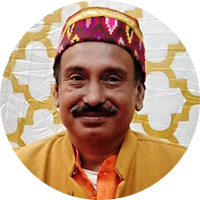
A substantial portion of the missionary and instructional literature of Sanatan Dharma exists in Urdu. The Ramayana, the Bhagavad Gita, and other religious scriptures have been continuously translated into Urdu, and the volume of these translations is quite significant. The Ramayana is a religious scripture of universal significance and relevance, and it has been translated into various languages across the world. Urdu boasts numerous translations of the epic; in fact, nearly two hundred versions of the Ramayana have been published in the language. The very first Urdu Ramayana was penned by Ganga Bishan in 1766, and its manuscript is preserved in the Maulana Azad Library at Aligarh Muslim University. Many poets have rendered the Ramayana into Urdu verse. Notable among them are Shankar Dayal Farhat, Jwala Prasad Barq, and Pandit Sudarshan, alongside Mehdi Nazmi, Talib Allahabadi, Nafees Khalili, Rind Rahmani, Muhammad Imtiazuddin Khan, and Safdar Aah. The Ramayana enjoys the same level of popularity in Urdu as it does in other languages. Research and exploration regarding the Urdu Ramayana are ongoing, bringing many fascinating facts to light. This article aims to discuss the Ramayana within the context of Urdu literature, highlighting the exceptionally fine poetic translations that have been produced in the language.
Keywords
Shri Ramchandra Ji, Ramayana, Mahabharata, Father Kamil Bulcke, Ayodhya, Bala Kanda, Ayodhya Kanda, Aranya Kanda, Kishkindha Kanda, Sundara Kanda, Lanka Kanda, Uttara Kanda, Valmiki, Ved Vyas, Akbar the Great, Abdul Qadir Badayuni, Emperor Jahangir, Mulla Saadullah Masih, Ram Katha, Nigaristan-e-Ram, Sanatan Dharma, Queen Kaikeyi, Bharat, Sita Ji, King Dasharatha, Kaushalya, Lakshman, Gautam Rishi, Ravana, Hanuman, Epic, Allama Iqbal, Evil, Good, Truth, Beauty.
---
Before discussing the Ram Katha in Urdu, it is essential to examine the era of Shri Ramchandra Ji and the period when the Ramayana was compiled.
The Era of Shri Ramchandra Ji:
Scholars and thinkers hold differing opinions regarding the era of Shri Ramchandra Ji. In his essay Bhagwan Ram Ka Janam Kaal Evam Kundali (The Birth Era and Horoscope of Lord Ram), Balram Shastri writes:
An English scholar named Jones has estimated the birth of Shri Ram to be around 2029 BCE. Another early scholar, Tod, has accepted 1100 BCE as the time of Shri Ram's birth. An early scholar named Wethley has placed Ram's birth at 950 BCE. Similarly, a scholar named Wilford has considered 360 BCE as the era of Ram's birth. [1]
Based on bricks, soil, and other artifacts discovered during excavations in Ayodhya, the renowned researcher Professor B.B. Lal has stated:
The site of present-day Ayodhya, and the lost Ayodhya in the form of a mound, cannot possibly predate the eighth century [BCE]. If this is indeed the Ayodhya of Ram, then Ram's era would coincide with the era of Shri Krishna. However, the factual reality is that according to Hindu tradition, the incarnation of Krishna occurred after Ram, and Krishna belongs to the later period of the Dvapara Yuga. [2]
Expressing the views of various scholars and thinkers regarding the birth of Shri Ramchandra Ji, Dr. Gajanan writes:
Based on the genealogical records found in the Puranas, Pargiter has presented his view that the list of Ikshvaku kings is found in fifteen Puranas, including the Vayu, Brahmanda, Vishnu, and Bhagavata Puranas. The names and numbers of the kings listed in these texts vary. In the Valmiki Ramayana, which is considered the legacy of the Ikshvaku dynasty, Ram is described as the 36th king of this lineage. The 23rd (or according to some, the 32nd) king in Ram's lineage was Brihadbala, who participated in the Mahabharata war and was killed by Abhimanyu. According to C.V. Vaidya, the war took place in 3101 BCE. This year marked the transitional period between the Dvapara and Kali Yugas. Thus, it can be argued that Ram lived between 3800 BCE and 4000 BCE. Some people believe Ram was born in 3102 BCE. According to them, the Bharata war occurred in 1400 BCE, making Ram's era approximately 2250 BCE. Shri Pusalker considers the period from 2350 BCE to 1950 BCE as Ram's era. Sir William Jones has accepted 2029 BCE, Colonel Tod 1000 BCE, Bentley 1950 BCE, Gorresio the 13th century BCE, and Dr. Pandit Vinayak Vartak 7533 BCE. [3]
Expressing his thoughts and impressions regarding the era of Shri Ramchandra Ji's birth, Acharya Balram Shastri writes:
Taking into account the Sun, Jupiter, and Saturn, it becomes easier to calculate the positions of the five exalted planets. According to this calculation, the birth of Shri Ramchandra Ji occurred 18,558,071 years ago from today. [4]
Thus, we see that scholars and intellectuals hold differing opinions regarding the birth and era of Shri Ramchandra Ji. From all these discussions, we can conclude that the birth of Shri Ramchandra Ji likely took place around 3800 BCE.
The Compilation Period of the Ramayana:
When was the Ramayana authored? Thinkers and scholars have varying opinions on this matter. The renowned researcher Father Kamil Bulcke writes in his book Ram Katha:
Valmiki composed his book approximately in 300 BCE. [5]
Dr. Hazari Prasad Dwivedi writes:
The Mahabharata had acquired its present form by the fourth century. The Ramayana must have taken its original form a century or two prior to that, but this should not be taken to mean that the entirety of the Ramayana is older than the entirety of the Mahabharata. [6]
Dr. Raj Bali Pandey writes:
In the Vana Parva of the Mahabharata, before narrating the Ramopakhyana, it is said: 'O King! Listen to what occurred in ancient history.' (Chapter 273, Shloka 6). The use of the word 'ancient' here indicates that by the time of the Mahabharata, the tale of the Ramayana was already considered ancient. Similarly, it is recorded in the Drona Parva: Api chayam pura gitah shloko Valmikina bhuvi. This statement suggests that the Valmiki Ramayana must have been composed hundreds of years before the events of the Mahabharata. [7]
Dr. Kanti Kishore Bhartiya writes:
The collection of stories found in the teachings of Gautam Buddha is known as the Buddhist Jataka tales. One of these stories, the Dasharatha Jataka, appears to be a slightly altered version of the Ramayana story. Mahatma Gautam Buddha was born in 500 BCE and passed away in 480 BCE. Therefore, the inclusion of Dasharatha in the Buddhist Jatakas of that time is proof of how famous the story of the Ramayana was during that era, so much so that a need was felt to adapt it. This adaptation demonstrates that the Ramayana must have existed in some form during the time of Mahatma Gautam Buddha, meaning its composition had already taken place by his era. Thus, we have no objection to accepting 500 BCE as the time of the Ramayana's composition. [8]
Dr. Bhagirath Mishra, in his essay Valmiki Ramayana Ka Vaishishtya (The Distinctiveness of the Valmiki Ramayana), writes:
Some scholars have determined the time of this book's composition to be the fifth century BCE, while others place it in the eleventh century BCE. Due to its ancient poetic form, it is generally considered to date back to around two thousand years BCE.
Dr. Gajanan Narsingh, expressing his thoughts and impressions in his essay Ram Ke Vividh Roop (The Various Forms of Ram), writes:
The composition of the Valmiki Ramayana must have taken place in the third and fourth centuries BCE.
Shri Ramdas Gaud writes:
The Valmiki Ramayana must have been composed hundreds or thousands of years before the events of the Mahabharata.
Shri C.V. Vaidya writes:
The Ramayana of the present era should be accepted as belonging to the first century of the Shaka Samvat.
Father Kamil Bulcke writes:
The Ramayana does not contain descriptions of the heroes of the Mahabharata. On the other hand, the Mahabharata contains not only the narrative of the Ram Katha but also mentions the Valmiki Ramayana. This indicates that the Mahabharata took its original form after the Ramayana. Nevertheless, it is possible to some extent that the 'Bharat'—that is, the ancient form of the Mahabharata—existed before the Ramayana. Even so, almost all scholars have placed the composition period of the Ramayana between the 'Bharat' and the 'Mahabharata'.
Winternitz, in his History of Indian Literature, has accepted the era of the Ramayana as the third century CE.
Referencing Western researchers, Father Kamil Bulcke has discussed the composition of the Ramayana. Father Kamil Bulcke writes:
A.W. Schlegel has accepted the composition period of the Ramayana as the eleventh century CE.
According to J.T. Wheeler and Weber, By acknowledging Greek and Buddhist influences on the Ramayana, its composition is considered older in comparison. G. Gorresio believes that the Ramayana was composed in the twelfth century CE.
Mohammad Hasan writes in his essay Ramayana: Ek Mutala (Ramayana: A Study):
Most Western researchers consider the present Ramayana to be a work from after the second century. They also believe that there must have been a gap of centuries between the original Ramayana and the present Ramayana. It is worth noting that the original Ramayana does not contain any glimpses of Buddhism. Therefore, it can be said that the original Ramayana must have been composed in the fifth century BCE, but Dr. Weber does not accept this. He states that the Dasharatha Jataka, which is a Buddhist text, is the first book on the story of Ram.
Thus, we see that researchers hold differing opinions regarding the composition period of the Ramayana. However, one point that emerges clearly from these discussions is that the Mahabharata, which came to light before the fourth century BCE—meaning the Mahabharata had already been composed—contains the narrative of the Ramopakhyana. In contrast, the Ramayana contains no mention of the Mahabharata whatsoever. This makes it entirely clear that the Ramayana had come into existence before the Mahabharata, that is, before the fourth century BCE. Therefore, the composition period of the Ramayana can be accepted as the second or third century BCE.
Ram Katha in Urdu:
The Ramayana is the metanarrative of India, representing the collective cultural and religious spirit of the nation. Sages and ascetics adopted the Sanskrit language for the preaching and propagation of the Sanatan Dharma. Sacred scriptures like the Vedas, the Ramayana, and the Mahabharata were written exclusively in Sanskrit. However, no religion is dependent on a single language. This is why religious books quickly transcend linguistic boundaries and are translated into various languages of the world. For this reason, Tulsidas composed the Ramcharitmanas in the Awadhi language around 1574, a work that also reflects the influences of Bhojpuri and Braj dialects. It took Tulsidas two years, seven months, and twenty-six days to pen this epic. In North India, the Ramcharitmanas is viewed with profound reverence. It is recited in every household, and on the special occasion of Dussehra, Ram Leela performances are organized everywhere.
Indian literature possesses two epic scriptures: one is the Ramayana, and the other is the Mahabharata. They hold eternal aesthetic, axiological, epistemological, existential, ontological, highly sacred, and highly divine significance and value. The Valmiki Ramayana is the first epic scripture of the Sanatan Dharma, having come into existence in the second or third century before the Mahabharata. In this scripture, the life events of Lord Shri Ramchandra Ji are narrated in an extensive poetic form. For the welfare and prosperity of the people, Ram incarnated on the soil of India to establish an ideal (Adarsh). Ram was the Maryada Purushottam (the supreme man of righteousness). He was the obedient son of Dasharatha and Kaushalya. He was a deeply affectionate brother to Bharat, Shatrughan, and Lakshman. Ram was the devoted husband of Sita. He was the dutiful ruler of Ayodhya. Ram was a valiant commander. He was a friend to the innocent and the oppressed. Ram was merciful and compassionate, and he stood as a living embodiment of justice, care for the poor, and selfless sacrifice. Ram is the ideal character of the Ramayana. He set a luminous example for the masses, demonstrating that it is essential for sons to be obedient, for brothers to share mutual fraternal love and unity, for spouses to possess love, loyalty, and a spirit of sacrifice, and for a king to be just, a protector of the poor, and a bestower of mercy. The ideals that Ram presented in the Ramayana are not limited to any specific sect or nation; rather, they are the custodians of a universal and cosmopolitan character. This is why Ram's greatness has been acknowledged in all the languages of the world. Valmiki was the first to narrate the life events of Lord Shri Ramchandra Ji in the poetic form of popular Sanskrit. According to Valmiki (Bala Kanda, Sarga 4), he composed twenty-four thousand (24,000) shlokas in the Ramayana, which were divided into five hundred sargas (cantos). However, in the present era, three types of Ramayana texts are prevalent: the Udichya (Northern), the Dakshinatya (Southern), and the Prachya (Eastern/Gaudiya). There are significant differences among these three texts. None of these texts contain exactly twenty-four thousand shlokas, nor do they have exactly five hundred sargas. The Valmiki Ramayana is divided into seven chapters (Kandas), which are as follows:
1. Bala Kanda:
The Bala Kanda is also known as the Adi Kanda. This chapter contains descriptions of Sati's illusion, the dialogue between Shiva and Parvati, the birth of Ram, the protection of Sage Vishwamitra's sacrificial altar, the breaking of the bow, and the marriage of Sita and Ram, among other events.
2. Ayodhya Kanda:
In this chapter, Valmiki has described the preparations for the royal coronation (Rajyabhishek), the dialogue between Sita and Ram, the passing of Dasharatha, the dialogue between Bharat and Kaikeyi, and Bharat's return to Ayodhya from Chitrakoot.
3. Aranya Kanda:
This chapter features the wickedness of Jayant, the meeting of Sita and Anusuya, the stay of Ram, Lakshman, and Sita in Panchavati, the slaying of Khara and Dushana, the slaying of Maricha, the abduction of Sita, and the mercy and grace bestowed upon Shabari.
4. Kishkindha Kanda:
In this chapter, Valmiki has narrated the meeting of Ram and Hanuman, the slaying of Bali, the search for Sita in the forest by Ram and Lakshman, and the dialogue between Hanuman and Jambavan.
5. Sundara Kanda:
This chapter contains descriptions of Hanuman's entry into Lanka, the dialogue between Sita and Hanuman, Ram's march to Lanka with his army, and the salvation of Vibhishan, among other events.
6.
Lanka Kand:
In this chapter, Valmiki describes the building of the bridge across the ocean, the dialogue between Angad and Ravan, the battle between Lakshman and Meghnad, Lakshman falling unconscious, the slayings of Kumbhkaran, Meghnad, and Ravan, and Sita’s Agni Pariksha (trial by fire). He narrates these events in a poetic rhythm and tone, imbued with immense mythological splendor.
7. Uttar Kand:
This chapter details the meeting between Bharat and Hanuman, the reunion of Ram and Bharat (Bharat Milap), Ram’s coronation (Rajyabhishek), his counsel to the public, the dialogue between Garun and Bhushundi, and the conversation between Kak Bhushundi and Lomash.
From a research perspective, certain questions are highly significant and profound: Is the Valmiki Ramayana the oldest Ramayana? Furthermore, how did the Valmiki Ramayana come into existence? The Valmiki Ramayana is not the oldest Ramayana. Prior to it, a massive and monumental epic scripture known as the Maha Ramayana existed during the Sat Yug (the Age of Truth). Lord Shankar had narrated this epic to his wife, Parvati, in the Sat Yug, even before the Swayambhu Manvantara. When Lord Shankar was recounting the Ram Katha (the story of Ram) to Parvati, Kak Bhushundi was also present on Mount Kailash. He overheard Lord Shankar narrating the tale to Parvati, and later, Kak Bhushundi recounted this Ram Katha to Garun. This Maha Ramayana consisted of 350,000 shlokas (verses) divided into seven chapters; however, it is no longer available in the present day. Regarding the origins of the Valmiki Ramayana, a story is recorded in its Bal Kand. It states that Valmiki, who lived in an ashram south of the Tamsa River, heard a summary of the Ram Katha from Narad. Later, after inventing the shloka meter, he composed the Ram Katha in verse at the behest of Brahma, and taught his creation to Luv and Kush. The two brothers traveled to various places, singing the story of the Ramayana. They eventually recited this very tale to Ram and his brothers in the royal palace of Ayodhya. According to the Uttar Kand, Sita gave birth to Luv and Kush in Valmiki’s ashram. After learning the Ramayana from Valmiki, the boys recited it at Ram’s sacrificial altar (yagya site). Upon hearing the Ramayana, Ram summoned Sita, and Valmiki brought her to the royal palace of Ayodhya to present proof of her purity and chastity.
In the Sanskrit language, Ved Vyas composed the Ramopakhyan within the Van Parv of the Mahabharata, Kalidas wrote the Raghuvansh, Bhavabhuti authored the Uttar Ramcharit, and Kshemendra penned the Ramayana Manjari. Furthermore, Chand Bardai composed the Prithviraj Raso, Keshavdas wrote the Ramchandrika, and Ram Parshva created the Shri Ram Panch Shati. Across other Indian languages, numerous adaptations were created: Ranganath’s Ranganath Ramayana in Telugu; Sarala Das’s version in Utkal (Odia); Guru Gobind Singh’s Ramayana in Punjabi; Eknath’s Bhavarth Ramayana in Marathi; Ramanujam Ezhuthachan’s Adhyatma Ramayana in Malayalam; Kamban’s Kamban Ramayana in Tamil; Kumar Valmiki’s Torave Ramayana in Kannada; Bhanubhakta’s Adhyatma Ramayana in Nepali; Girdhar’s Girdhar Ramayana in Gujarati; Diwakar Prakash Bhatt’s Kashmiri Ramayana in Kashmiri; Krittibas Ojha’s Krittibas Ramayana in Bengali; and Madhav Kandali’s Madhav Kandali Ramayana in Assamese.
The first Persian translation was completed in prose in 1589 by Abdul Qadir Badauni, a devout Muslim, under the orders of Akbar the Great. Subsequently, during the reign of Emperor Jahangir, two significant poetic translations of the Ramayana were produced in Persian. The first was by Mulla Saadullah Masih Kairanvi, comprising 5,407 verses, and the second was by Girdhar Das, containing 5,900 verses. In addition to these, Gopal published a Persian version in 1645. Chandar Aman Bedil published one Ram Katha in 1685 and another titled Nigaristan-e-Ram in 1693, which consisted of 4,906 verses. In 1705, Amar Singh published a Ram Katha titled Amar Prakash. Amanat Rai Lalpuri authored a monumental Ram Katha in Persian. It took the translator twenty-five years to complete this epic scripture, which encompasses 40,000 verses. In 1735, during the reign of Muhammad Shah Rangeela, Pandit Sumer Chand composed a Persian Ram Katha. This magnificent manuscript has since been published in three volumes by the Raza Library in Rampur. Other notable authors who wrote the Ramayana in Persian include Ram Das Misra, Jagan Kishore Hasan Firozabadi, Munshi Banke Lal Zar, Makhan Lal Zafar, Devi Das, Hari Vallabh Seth, Ram Mahadev Vali, Munshi Parmeshwari Sahai, Munshi Hari Lal Ruswa, Mohan Singh, Anand Dhan Khush, and Jai Kishan Ishrat, among others.
Due to its universality, the Ramayana transcends national boundaries. Because of its global significance and profound meaning, it has been translated into various languages around the world time and again. The Ramayana has also been extensively translated abroad. Some of the most famous international adaptations include Thailand’s Ramakien (meaning Ram Kirti), Cambodia’s Ramker, Malaysia’s Hikayat Seri Rama, Java’s Kakawin Ramayana, China’s Kan Sunhui, and the Khotanese Ramayana of Tibet.
A vast majority of the propagational literature of Sanatan Dharma exists in the Urdu language. This repository is so extensive that, compared to other Indian languages, the volume of Hindu religious literature in Urdu—if not the absolute largest—is second to none, and certainly surpasses that of most other languages. This vast and boundless literary heritage cannot be overlooked. Just as in other languages, invaluable translations of the Ramayana were produced in Urdu. The temperament of Urdu has always been inherently secular, with religious tolerance woven into its very fabric. Shoulder to shoulder with Hindu writers and poets, Muslim literary figures have also acknowledged the greatness of Ram. They have adapted the Ramayana into Urdu across various literary forms, including the nazm, ghazal, masnavi, ruba'i, novel, and drama. According to our research, approximately one hundred and fifty versions of the Ramayana have been published in Urdu to date. The first Urdu Ramayana was written by Ganga Bishan in 1766. This manuscript is preserved in the Maulana Azad Library at Aligarh Muslim University, and it was later published by the Raja of Banaras in 1852. The second Urdu translation of the Ramayana was published by Lakhpat Rai Manikpuri in 1863. This Ram Katha spans one hundred and fifty pages. Munshi Jagannath Lal Khushtar composed his Ramayana in 1850, presenting it first to Nawab Wajid Ali Shah of Awadh. This Ram Katha was subsequently published by Munshi Nawal Kishore in Lucknow in 1864. Munshi Shankar Dayal Farhat’s Ramayana was printed by Munshi Nawal Kishore of Lucknow in 1764. The significance and grandeur of this Ram Katha can be gauged by the fact that Munshi Nawal Kishore of Lucknow published seventeen editions of it. Munshi Ram Sahai Tamanna authored ten distinct Ram Kathas in Urdu, ranging from concise summaries to grand epics.
Among those who composed the Ramayana in Urdu poetry, notable names include Shankar Dayal Farhat, Dwarka Prasad Ufaq, Banke Lal Bihari, Jwala Prasad Barq, Suraj Narayan Mehr, Jagannath Khushtar, Hari Narayan Sharma Sahir, Pandit Sudarshan, Suraj Prasad Tasavvur, Banwari Lal Shola, Babu Lal Nabudi, Shri Sukhdev Lal, Pandit Lachhmi Dutt, Shiv Prasad Rahil, Munshi Raghubar Dayal, Babu Ram Sahai Kapoor, Shiv Brat Lal Varman, Pandit Radheshyam, Nanak Chand Nanak, Bedi Lal Chand Lal, Satyapal Bhardwaj, Hira Lal Maurya, Shiv Nath Rai Taskeen, Pandit Mela Ram Wafa, Munshi Jagannath Athar, Raghunandan Singh Sahir Dehlvi, and Munshi Ram Sahai Tamanna. Alongside them, among the representative writers and poets of contemporary literature, the names of Mehdi Nazmi, Talib Allahabadi, Nafees Khalili, Rind Rahmani, Muhammad Imtiazuddin Khan, and Safdar Aah are worth mentioning. Furthermore, in the postmodern context of the twenty-first century, innovative poetic experiments are continuously taking place in India and Pakistan, driven by reliable, authentic, and respected translations of the Ramayana. This reflects the boundless literary and poetic popularity and the beloved status of classical Ramayana literature. In this regard, among the senior and most eminent poets, this tradition stretches from Pandit Brij Narayan Chakbast, Sururoor Jahanabadi, and Firaq Gorakhpuri, passing through Ameeq Hanfi, Raj Narayan Raaz, Kumar Pashi, Bimal Krishan Ashk, and Krishan Mohan, continuing uninterrupted up to Satyapal Anand and Salahuddin Pervez.
Queen Kaikeyi desired that her son, Bharat, ascend the throne of Ayodhya, and that Ram endure a fourteen-year exile in the forest. Mehdi Nazmi has painted a remarkably beautiful portrait of Queen Kaikeyi. He has highly successfully depicted Queen Kaikeyi demanding her boon from King Dasharatha, Ram’s obedience, and King Dasharatha collapsing into unconsciousness:
Ik roz hans ke Kaikeyi boli keh ae huzoor
Har shakhs yaad rakhta hai apna vachan zaroor
[One day, Kaikeyi smiled and said, O my Lord,
Every person surely remembers their given word.]
Tha aap ka yeh qaul keh ae shah-e-nek khoon
Poori karenge aap meri ik aarzoo
[It was your promise, O noble-blooded King,
That you would fulfill one desire of mine.]
Dasharath yeh bole apna sukhan yaad hai mujhe
Jo tum ko de chuka woh vachan yaad hai mujhe
[Dasharatha replied, I remember my spoken word,
The promise I gave you, I remember it well.]
Charnon ko chhoo ke Kaikeyi boli ba-ehtiram
Main chahti hoon aap se ae shah-e-nek naam
[Touching his feet, Kaikeyi said with reverence,
I desire this from you, O King of good repute:]
Jangal mein ghar se Ram ko be-aas bhej dein
Chaudah baras ke vaste banvas bhej dein
[Send Ram away from home to the forest, bereft of hope,
Send him into exile for fourteen years.]
Yeh aarzoo hai meri keh ae shah-e-khaas-o-aam
Mera pisar Bharat kare shahi bajaye Ram
[This is my wish, O King of the elite and the commoners,
That my son Bharat should rule instead of Ram.]
Jaate hain ban ko Ram zamana hai sogwar
Hai boorha baap dard-e-judai se be-qarar
[As Ram departs for the forest, the world is in mourning,
The elderly father is restless with the pain of separation.]
Kehti hai ro ke saari ri'aya na jaiye
Chaudah baras ko janib-e-sahra na jaiye
[The entire populace weeps and pleads, do not go,
Do not go toward the wilderness for fourteen years.]
Ram is the central character of the Ramayana. In Urdu poetry, not only is Ram's greatness, sublimity, sanctity, and divinity fully acknowledged, but the feelings, emotions, ethics, perceptions, aesthetics, and virtues of the other characters associated with him are also richly translated into verse. When Sita learns the news of Ram's exile, she becomes anxious; she goes to Ram and expresses her anguish. In this context, Raghunandan Singh Sahir Dehlvi writes:
Ram ke ban jaane ka jab ilm Sita ko hua
Chehra-e-roshan vafoor-e-gham se pheeka par gaya
[When Sita learned of Ram's departure to the forest,
Her radiant face turned pale from an overwhelming sorrow.]
Ram ko karke mukhatib is tarah us ne kaha
Aap ke hamrah main ban ki karungi yatra
[Addressing Ram, she spoke in this manner:
I will undertake the forest journey alongside you.]
Aap jayenge jahan main bhi wahin par jaungi
Warna ghul ghul kar firaq-e-deed mein mar jaungi
[Wherever you go, I shall go there too,
Otherwise, I will waste away and die in the agony of separation.]
The obedient Ram departs for the forest for his fourteen-year exile, accompanied by his wife Sita and his affectionate brother Lakshman. After taking permission from Dasharatha, Ram goes to his mother, Kaushalya, to bid her farewell. The scene depicting Ram's profound love for his mother and the mother's separation from her son is a masterpiece of emotional portrayal. Pandit Brij Narayan Chakbast has depicted the dialogue between Ram and Kaushalya at the time of departure with deep devotion in his poem Ramayan Ka Ek Scene (A Scene from the Ramayana). Observe its poetic depth, its pathos, and its tragic impact:
Rukhsat hua woh baap se le kar Khuda ka naam
Rah-e-wafa ki manzil-e-awwal hui tamam
[He took his leave from his father, invoking the name of God;
The first milestone on the path of loyalty was thus complete.]
Manzoor tha jo maa ki ziyarat ka intizam
Daman se ashk ponchh ke dil se kiya kalam
[As he prepared to go and see his mother,
He wiped his tears with his hem and spoke to his own heart:]
Izhar-e-bekasi se sitam hoga aur bhi
Dekha hamein udas to gham hoga aur bhi
[Showing my helplessness will only add to the cruelty;
If she sees me sad, her sorrow will only multiply.]
Dil ko sambhalta hua aakhir woh naunihal
Khamosh maa ke paas gaya soorat-e-khayal
[Steadying his heart, that young sapling finally
Went silently to his mother, like a passing thought.]
Dekha to ek dar mein baithi hai woh khasta haal
Sakta sa ho gaya hai yeh hai shiddat-e-malal
[He saw her sitting in a doorway, in a wretched state;
She was struck motionless, such was the intensity of her grief.]
Tan mein lahoo ka naam nahin zard rang hai
Goya bashar nahin koi tasveer-e-sang hai
[Not a drop of blood seemed left in her body, her complexion pale;
As if she were not human, but a portrait carved of stone.]
Ro kar kaha khamosh khare kyun ho meri jaan
Main jaanti hoon jis liye aaye ho tum yahan
[Weeping, she said, Why do you stand silent, my life?
I know the reason why you have come here.]
Sab ki khushi yahi hai to sahra ko ho rawan
Lekin main apne munh se hargiz na kahungi haan
[If this is everyone's wish, then depart for the wilderness;
But from my own mouth, I will never say yes.]
Kis tarah ban mein aankhon ke taare ko bhej doon
Jogi bana ke raaj dulare ko bhej doon
[How can I send the star of my eyes into the forest?
How can I turn my royal darling into an ascetic and send him away?]
Sun kar zaban se maa ke yeh faryad-e-dard-khez
Is khasta jaan ke dil pe chali gham ki tegh-e-tez
[Hearing this pain-filled lament from his mother's lips,
A sharp sword of sorrow pierced his weary heart.]
Aalam yeh tha qareeb keh aankhein hon ashk-rez
Lekin hazar zabt se rone se ki gurez
[He was on the verge of shedding tears,
But with immense self-control, he refrained from weeping.]
Socha yahi keh jaan se be-kas guzar na jaye
Nashad hum ko dekh ke maa aur mar na jaye
[He thought only this: lest the helpless one lose her life,
Lest seeing me unhappy causes my mother to die.]
Ram, Sita, and Lakshman wander from forest to forest. On their way, they come across a stone boulder. As soon as Ram's feet touch the stone, it transforms into a beautiful woman. Ahilya, the wife of Sage Gautam, was exceedingly beautiful. When King Indra learned of this, he saw her and became infatuated. Disguising himself as Sage Gautam, he entered their hut. The sage used to go to the Ganges every morning to bathe. Upon returning, he saw Indra, in disguise, leaving the hut. He cursed Ahilya, turning her into a stone boulder. Talib Allahabadi has depicted the alchemical effect of Ram's boundless grace, mercy, and benevolence upon Ahilya in an emotionally stirring scene, presented with immense artistic dexterity:
Ahilya pari thi bari sundar thi
Bari aib se thi gunon se bhari thi
[Ahilya was like a fairy, exceedingly beautiful;
She was free from flaws and full of virtues.]
Bari dilruba thi bari bawafa thi
Woh sewa mein rehti thi har dam pati ki
[She was highly charming and deeply faithful;
She remained constantly in the service of her husband.]
Kisi ne kaha Raja Indar se ja kar
Ahilya se koi nahin aaj sundar
[Someone went and told King Indra,
Today, no one is more beautiful than Ahilya.]
Yeh sun ke kaha Raja Indar ne achha
Karunga main jaldi Ahilya par qabza
[Hearing this, King Indra said, Is that so?
I will soon make Ahilya mine.]
Rishi roz jaate the Ganga nahane
Jahan murgh bola chale tarke tarke
[The sage went daily to bathe in the Ganges;
As soon as the rooster crowed, he would leave at the crack of dawn.]
Abhi raat aadhi thi barah baje the
Rishi lekin aawaz par uth ke baithe
[It was still midnight, the clock had struck twelve;
But hearing a sound, the sage woke up and sat.]
Rishi ji idhar chal pare sooye Ganga
Udhar Raja Indar ne bhes apna badla
[Here, the sage set off toward the Ganges;
There, King Indra changed his disguise.]
Rishi ki sada mein pukara hai jo dar par
Ahilya yeh samjhi keh laut aaye shauhar
[When he called out at the door in the sage's voice,
Ahilya thought her husband had returned.]
Khula dar to Indar hua ghar mein dakhil
Jo dekha pari ko to thanda hua dil
[The door opened, and Indra entered the house;
Seeing the fairy-like woman, his heart was soothed.]
Magar nagahan ek bijli si chamki
Na maloom kyun laut aaye Rishi ji
[But suddenly, like a flash of lightning,
For some unknown reason, the sage returned.]
Jo Gautam ne donon ko dekha ikattha
Hua un ki aankhon mein aalam andhera
[When Gautam saw the two of them together,
The world went dark before his eyes.]
Rishi ji ne jo deen bad-du'aain tarap kar
Ahilya hui bas usi waqt pathar
[As the sage, writhing in agony, cast his curses,
Ahilya instantly turned into stone.]
Guru se yeh sun kar hue Ram muztar
Qadam rakh diye apne pathar pe barh kar
[Hearing this from his Guru, Ram grew restless;
Stepping forward, he placed his feet upon the stone.]
Jahan par woh chattan ab tak pari thi
Ahilya wahin haath jore khari thi
[Where that boulder had lain until now,
Ahilya stood right there with folded hands.]
Jis aalam mein us waqt shauhar tha us ka
Usi lok mein bas Ahilya ko bheja
[To the realm where her husband was at that time,
Ahilya was then sent to that very world.]
When Ravan's sister, Shurpanakha, sees Ram, Sita, and Lakshman in the forest, she becomes infatuated with Ram. Ram tells Shurpanakha that he is already married and suggests she marry Lakshman. When Lakshman refuses, she attacks Sita. Ram tries to reason with Shurpanakha. Ultimately, Ram tells Lakshman to cut off her nose and ears. Shurpanakha then goes to her brother, Khardushan.
A fierce battle ensues between Khara-Dushana and Ram and Lakshman, resulting in the death of Khara and Dushana. Following this defeat, Surpanakha goes to Ravana's court to plead her case. In this context, Pandit Radheshyam has depicted the emotional intensity of the scene in a highly captivating manner:
Khardushan ka hua ran mein kaam tamaam
Shurpnakha ko phir kahan pal bhar vishraam
[Khara and Dushana were finished off in the battlefield,
How could Surpanakha find even a moment of rest then?]
Pade tere aaram par aur jaam par khaak
Tere jeete ji meri kat gayi naak
[Dust be upon your comfort and your goblet of wine,
While you are alive, my nose has been cut off!]
Bhai do ladke Ram Lakhan is Dandak ban mein aaye hain
Aur sang mein ek Sita naami sukumari laaye hain
[Brother, two youths, Ram and Lakshman, have come to this Dandaka forest,
And they have brought along a delicate maiden named Sita.]
Baanke aur ladaake hain goya shamsheer unhi ki hai
Yun Panchavati mein rehte hain jaise jaageer unhi ki hai
[They are bold and fierce, as if the sword belongs only to them,
They live in Panchavati as if it is their own estate.]
Naagah udhar main nikal gayi us naari se milna chaha
Us samay nigode Lachhman ne mujh se kuch chhal karna chaha
[Suddenly, I wandered there and wished to meet that woman,
At that moment, the wretched Lakshman tried to deceive me.]
Tab main ne tera naam liya sunte hi us ne di gaali
Phir mere kaan katar daale aur meri naak kaat daali
[Then I invoked your name, and upon hearing it, he hurled abuses,
Then he sliced off my ears and chopped off my nose.]
Meri naak gayi so gayi ab apni naak sambhalo tum
Jag mein jab oonchi naak nahi toh nakta naam dhara lo tum
[My nose is gone, let it be, but now you must protect your own honor,
If you cannot hold your head high in the world, then accept the title of the noseless one.]
Mera toh dam ab naak mein hai nakaare teri duhaai hai
Main jitni ruswa hoti hoon woh sab teri ruswaai hai
[I am sick and tired of this life; O useless one, I cry out to you for justice,
Whatever humiliation I suffer is entirely your humiliation.]
Ravana seeks the help of his maternal uncle, Maricha. Disguising himself as a beautiful golden deer, Maricha begins to prance around in front of Ram, Sita, and Lakshman. Sita asks Ram to capture the golden deer for her, and Ram sets off to catch it. Talib Allahabadi has penned the dialogue between Sita and Ram with immense poetic and artistic elegance:
Mrig naini ne jis samay dekha mrig ki or
Usi samay Raghunath se boli hain kar jor
[The moment the doe-eyed Sita looked towards the deer,
She immediately spoke to Raghunath with folded hands:]
Raghukul bhushan dukh haran mere jeewan praan
Daasi ki vinti suno deen bandhu bhagwan
[O Jewel of the Raghu clan, Destroyer of sorrows, my life and soul,
Listen to the plea of your servant, O Friend of the helpless, O Lord.]
Mrig aisa dekha na suna jaisa yeh sughad salona hai
Dekho toh sar se paaon talak saara sona hi sona hai
[Never have I seen or heard of a deer as perfectly beautiful as this,
Look, from head to toe, it is made entirely of gold.]
Hai naath khaal laao is ki toh kutiya ka shringaar hogi
Sone ke mrig ki mrig chhaala kya adbhut yaadgaar hogi
[O Lord, bring me its skin, it will adorn our hut,
What a wondrous keepsake the pelt of a golden deer would be!]
When Ram fails to return, Sita grows anxious and sends Lakshman to assist him. Before leaving to search for his brother, Lakshman instructs Sita to remain inside the hut. He draws a line across the doorway, assuring her that as long as she stays within its bounds, she will remain safe. Meanwhile, Ravana, disguised as an ascetic, approaches Sita's hut and begs for alms. He insists that Sita step outside the Lakshman Rekha (Lakshman's line) to offer her charity. Talib Allahabadi poetically highlights the sanctity of the Lakshman Rekha and Ravana's deceitful nature in these lines:
Sita ki aankhon ne dekha ek boodha jogi aata hai
Aawaaz usi jogi ki hai woh hi jogi kuch gaata hai
[Sita's eyes saw an old ascetic approaching,
The voice belongs to that ascetic, he is singing something:]
Hai maayi mujh ko bhiksha de martaba hai aala tera
Bhagwan tujhe jeeta rakhe ho sada bol baala tera
[O Mother, give me alms, your status is exalted,
May God grant you a long life, may you always prosper.]
Yeh soch ke jogi bol utha rekha ke baahar aa maayi
Jogi baba lete nahi is tarah bandhi bhiksha maayi
[Thinking this, the ascetic spoke up, Come outside the line, Mother,
Ascetics do not accept alms restricted in this manner, Mother.]
Sita ne kaha kshama kariye main rekha chhod nahi sakti
Yeh aan hai mere devar ki main is ko tod nahi sakti
[Sita replied, Forgive me, I cannot leave this line,
This is my brother-in-law's honor, I cannot break it.]
Rekha ke baahar aate hi us jogi ne baana badla
Ravan Ravan ho gaya wahin woh thaath faqeerana badla
[The moment she stepped outside the line, the ascetic changed his guise,
Ravana became Ravana right there, shedding his mendicant's attire.]
Deep in the forest, Ram strikes Maricha with an arrow. Upon being hit, the golden deer reverts to Maricha's true form. Meanwhile, Ravana forces Sita onto his chariot and takes flight into the sky from Panchavati. Jatayu, the vulture king, witnesses Sita's cries of distress and demands that Ravana let her go. When his warnings fail, Jatayu battles Ravana but is ultimately struck down, falling unconscious. Devastated by their separation from Sita, Ram and Lakshman wander aimlessly. Along the way, they encounter Jatayu, who is severely wounded and drenched in blood from Ravana's assault. With his dying breath, Jatayu informs Ram that Ravana, the king of Lanka, has abducted Sita. Hungry, thirsty, and consumed by grief, the brothers continue their relentless search. Their journey leads them to the hut of Shabari, a Dalit woman who harbors boundless, fervent devotion for Ram. She brings wild berries for Ram and Lakshman, tasting each one first to ensure its sweetness before offering it to her Lord. Lord Ram eats Shabari's tasted (jhoothe) berries with immense delight and urges Lakshman to do the same, though Lakshman views the offering with disdain. Talib Allahabadi has captured this poignant scene of Shabari offering her tasted berries in his celebrated poetic work, Sita Ram, presenting it with deeply evocative emotion and rhythm:
Sundar patton ke aasan par apne prabhu ko bithlaati hai
Mehmaani ke kuch berron ko daliya mein bhar kar laati hai
[She seats her Lord on a beautiful throne of leaves,
She brings a basket filled with berries as an offering of hospitality.]
Premika ka sachcha prem dekh Raghunath ji haath badhaate hain
Jhoothe berron ko ber ber khush ho kar bhog lagaate hain
[Seeing the devotee's true love, Raghunath reaches out his hand,
He joyfully partakes of the half-eaten berries, one after another.]
Lakshman tum ne khaaya hi nahi dekho toh kaisa meetha hai
Paataal se le kar swarg talak jo hai woh is se pheeka hai
[Lakshman, you haven't eaten any; taste them and see how sweet they are!
Everything from the underworld to the heavens pales in comparison to this.]
As their search for Sita continues, Ram and Lakshman meet Sugriva, the exiled king of Kishkindha. There, they are also introduced to Hanuman and Jambavan. Sugriva confides in Ram, complaining that his brother, Vali, has usurped his kingdom and stolen his wife. In response, Ram slays Vali. Later, Hanuman leaps across the ocean in search of Sita and arrives in Lanka. He finds her and presents her with Ram's signet ring, bringing her profound emotional and spiritual solace. In return, Sita sends her bangle back to Lord Ram. Pandit Radheshyam has vividly depicted the sequence of Sita's initial alarm upon seeing Hanuman, Hanuman delivering Ram's message, and the handing over of the ring:
Bajrang Bali ne jab dekha maata toh mujh se darti hain
Peeche ko hatti jaati hain kuch baat cheet nahi karti hain
[When Bajrang Bali saw that the Mother was frightened of him,
Stepping backward and refusing to speak a word,]
Tab kaha unhon ne hai maata apne deen-o-imaan ki qasam
Karuna nidhaan ka doot hoon main mujh ko apni jaan ki qasam
[Then he said, O Mother, I swear by my faith and belief,
I am the messenger of the Treasure of Compassion, I swear upon my life.]
Pyaare ki pyaari mundri yeh laaya hoon bataur nishaani ke
Haan achhe hain dono bhai jeewan dhaaran hain bin paani ke
[I have brought this beloved ring of your beloved as a token,
Yes, both brothers are well, though they sustain their lives without water.]
Talib Allahabadi portrays Hanuman eating fruits in the Ashoka Vatika, uprooting its trees, the news of his arrival reaching Ravana's court, and the dramatic scene of Hanuman setting Lanka ablaze with remarkable human insight and artistic dexterity:
Ab toh Hanuman baagh mein aaye
Phal pe phal tod tod kar khaaye
[Now Hanuman entered the garden,
Plucking and eating fruit after fruit.]
Daaliyon par uchak ke khaate the
Ped se ped par woh jaate the
[He would leap onto the branches to eat,
Swinging from one tree to another.]
Jab ki Akshay Kumar maara gaya
Tha jo Ravan ka laadla beta
[When Akshay Kumar was slain,
He who was Ravana's beloved son,]
Baagh mein Meghnad tab aaya
Saath thi us ke ik badi sena
[Then Meghnad arrived in the garden,
Accompanied by a massive army.]
Sab ko Hanuman ne halaal kiya
Khoon se prithvi ko laal kiya
[Hanuman slaughtered them all,
Dyeing the earth red with their blood.]
Woh diya Meghnad ko mukka
Bas wahin us ko aa gayi murchha
[He dealt such a blow to Meghnad,
That he instantly fell unconscious right there.]
Kaha Ravan ne khoob hans hans kar
Kyun be bandar tu aa gaya phans kar
[Ravana laughed heartily and said,
Well, you monkey, you've finally been caught!]
Dono mein der tak hui takraar
Kaha Ravan ne sab se aakhir kaar
[A long argument ensued between the two,
Until Ravana finally declared to everyone:]
Ab karo bas saza yeh tum is ki
Misl-e-mash'al jalaao dum is ki
[Now, let this be his only punishment:
Light his tail on fire like a torch.]
Cheethde khoob dum mein kas kas kar
Tel mitti mein daal kar oopar
[Tie rags tightly around his tail,
And pour kerosene oil all over it.]
Aag logon ne jis ghadi de di
Aayi us waqt zor se aandhi
[The moment the people set it ablaze,
A fierce gale began to blow.]
Ab chale kood kood kar Hanuman
Aag ka shehar mein utha toofan
[Now Hanuman went leaping about,
And a storm of fire rose in the city.]
Chhat se chhat par kood jaate the
Aag har ghar mein woh lagaate the
[He would jump from roof to roof,
Setting every single house on fire.]
Ho gaye khaak jal ke laakhon ghar
Saare Lanka mein mach gaya mahshar
[Hundreds of thousands of homes burned to ashes,
And doomsday was unleashed upon all of Lanka.]
Similarly, Pandit Radheshyam has beautifully narrated Hanuman's destruction of the trees in the Ashoka Vatika, his plucking and eating of the fruits, and the intense dialogue between Indrajit and Hanuman, all rendered in an exquisite poetic style.
Jis daal par diya haath woh daali phir pamaal hui
Kachay toray phal daalay hi vatika saari be-haal hui
Vrikshon ko pakar hilatay thay, kilkaar maar kar dhaatay thay
Jab ek ka naash binaash karein, pun aur ko jaye hilatay thay
Bhar gaya pet aur bhook miti, utpaat machaya Hanumat ne
Vidhvansh vatika kar daali, vrikshon ko bahaya Hanumat ne
Main Indrajit kehlata hoon, kya naam tune sun paya nahin
Bairiyon ko kar vidhvansh devoon, kyun tum ko hosh kuch aaya nahin
Tu machhar hai mam drishti mein, bal tujhe dikha kar kya loon ga
Jab Devraj ko jeet chuka, toh tum ko phir kya samjhoon ga
Yadi dekhna bal mera chahta hai, toh Ravan ko bhi bulwa le
Baap aur beta mil kar dono, bal bikram mera aazma le
Main sevak hoon Raghurai ka, kya nahin jaanta naam mera
Prabhu kripa se hanna tum ko, keval hai adna kaam mera
[Whichever branch he laid his hands upon was utterly destroyed,
He plucked unripe fruits and left the entire orchard in ruins.
He would grab and shake the trees, roaring as he charged,
After destroying one, he would move on to shake another.
Once his stomach was full and his hunger satiated, Hanuman wreaked havoc,
He devastated the orchard and uprooted the trees.
(Indrajit speaks:) I am called Indrajit, have you not heard my name?
I annihilate my enemies, have you not come to your senses yet?
You are but a mosquito in my eyes, what will I gain by showing you my might?
When I have already conquered the King of Gods, what are you to me?
(Hanuman replies:) If you wish to see my strength, then summon Ravana too,
Let both father and son together test my power and valor.
I am the servant of the Lord of the Raghus, do you not know my name?
By my Lord's grace, slaying you is but a trivial task for me.]
After this, Hanuman crosses the ocean and returns to Lord Ram, delivering Mother Sita's message to him. With the help of Lakshman, Hanuman, Sugriva, Jambavan, Angad, and others, Ram builds a bridge and reaches Lanka with his army. Vibhishan tries hard to reason with his brother Ravana, but he fails. Ravana insults Vibhishan and banishes him from the court. Vibhishan then goes to Ram, who treats him with great respect and grants him a high status, eventually crowning him the King of Lanka after its conquest. Ravana's son, Meghnad, was incredibly brave. A fierce battle takes place between Meghnad and Lakshman, during which Lakshman falls unconscious. Ram weeps and laments in grief for his brother. Upon the physician's advice, Hanuman goes to the Kishkindha mountain. Unable to identify the specific medicinal herb, he lifts and brings back the entire mountain, granting Lakshman a new lease on life. In this context, Talib Allahabadi writes:
Booti laane ko jab chalay Hanuman
Tab utha dushmanon mein ik toofan
Kalanemi ko bheja Ravan ne
Jaake jangal mein raasta rokay
Ban mein Hanuman jis ghari aaye
Pyaas se thay bohat woh murjhaye
Bootiyon se bhara tha woh parbat
Pattiyon se lada tha woh parbat
Booti Hanuman ne na pehchaani
Tab toh chattan hi pari laani
Laaye is shaan se jo woh booti
Huye changay turant Lachhman ji
[When Hanuman set out to fetch the herb,
A storm of panic arose among the enemies.
Ravana dispatched Kalanemi,
To go and block his path in the forest.
The moment Hanuman arrived in the woods,
He was deeply withered by thirst.
That mountain was brimming with herbs,
That mountain was laden with leaves.
Hanuman could not recognize the right herb,
So he had to bring the entire rocky peak.
He brought that herb with such magnificence,
That Lakshman was instantly healed.]
Gradually, in this great war, a warrior as mighty as Kumbhakarna and all of Ravana's valiant sons are killed. Mandodari tries to reason with her husband, Ravana, until the very end, urging him to return Sita to Ram. However, Ravana was exceedingly arrogant, stubborn, rebellious, and cruel; driven by extreme egoism, he considered himself invincible. His temperament was characterized by an intense degree of restlessness and dynamism. Every ego-driven action of his was filled with a turbulent, surging, and tempestuous energy. Consequently, all his evil deeds gravitated toward imbalance and sin. He was immensely proud and boastful of his worldly wealth (the golden Lanka) and looked down with utter contempt upon Ram, who was rich in spiritual wealth. The battle between Ram and Ravana in the Ramayana is depicted with immense aesthetic and moral grandeur; fundamentally, it is the eternal epic of good versus evil. The Ramayana portrays the triumph of the realm of righteousness (Dharma Kshetra) and the defeat of the ego-driven, evil realm of action (Karma Kshetra). Therefore, due to his flawed, negative mindset and destructive actions, Ravana suffered a crushing defeat. In a way, this symbolizes the victory of fundamental human and spiritual values over inhuman, demonic, and satanic elements.
At its core, the Ramayana is an artistic and aesthetic mirror reflecting the war between the realm of righteousness and the demonic realm of action. All the supporting characters alongside Ram represent goodness, truth, and virtue. They are allegorical figures, yet they are living, breathing characters, not mere ideological puppets. This is Valmiki's greatest humanistic and aesthetic achievement. Conversely, the supporting characters alongside Ravana, while representing negative emotions and sentiments, also appear as living, breathing entities. Their psychological portrayal in the Ramayana is highly vivid and pulsating with life. Ram's allies are nurturers of truth. In contrast, Ravana's allies are oblivious to reason and truth, acting as stagnant characters. Although Ravana himself represents a highly restless and dynamic force, there is not the slightest trace in him of a soaring flight toward ideal perfection. On the other hand, Ram, Hanuman, Sita, and Lakshman possess an ascending, vertical quality that constantly inclines them toward the zenith of ideal heights. This is why all these ideal characters have remained luminous symbols of the highest human and spiritual values in every era, serving as role models throughout the ages.
Fundamentally, the Ramayana goes beyond depicting dark, regressive traits, forces, and faculties to also illustrate hyper-dynamic, restless forces. However, the trajectory of both these negative forces operates on an earthly and horizontal plane. Naturally, they are drawn toward falsehood instead of truth, evil instead of good, ugliness instead of beauty, and imbalance instead of equilibrium. In stark contrast to both, there is a profound, ideal representation of bright, radiant, and luminous truth-loving traits, forces, and faculties, which naturally soar along a vertical plane. The battle between Ram, the standard-bearer of truth, and Ravana, the embodiment of ego and evil, has been painted in highly realistic tones and rhythms by Pandit Radheshyam, who also captures the Hindu spirit within an Urdu stylistic framework:
Ek hi baan se Ravan ke das mastak kattay jaatay hain
Par usi ek chhan ke andar phir waisay hi dikhlatay hain
Antaryami hain vidit tumhein naabhi mein amrit hai Ravan ke
Is liye prabhav na kartay hain us khel par baan Janardan ke
Woh astra shastra chhorta raha Prabhu un ko kaat giratay rahay
Kheltay rahay khud Leeladhar khal ko bhi khel khilatay rahay
Ant mein dev gan bol uthay is khal ka naam mitao Prabhu
Dev ka traas mitao Prabhu dharti ka bhaar ghatao Prabhu
Ram ne usi chhan ek baan maara ur mein Dashkandhar ke
Prithvi par lotnay lagay us mahabeer bhat nishchar ke
Lanka mein hahakaar macha devoon mein jai jai kaar hua
Jai hui Ram Raghurai ki woh maha adham sanhaar hua
[With a single arrow, Ravana's ten heads are severed,
But within that very moment, they reappear just as before.
O Omniscient One, You know that nectar resides in Ravana's navel,
Which is why the arrows of Janardan have no effect on this illusion.
He kept unleashing weapons and missiles, and the Lord kept striking them down,
The Divine Playwright kept playing, engaging the wicked one in His cosmic game.
Finally, the celestial beings cried out, Erase the name of this wicked one, O Lord!
End the terror of the gods, O Lord, and relieve the earth of its burden, O Lord!
In that very instant, Ram struck an arrow into the chest of the ten-headed one,
And that mighty, demonic warrior began to writhe on the earth.
Lamentation erupted in Lanka, while cheers of victory echoed among the gods,
Victory belonged to Ram, Lord of the Raghus, as that great sinner was annihilated.]
After conquering Lanka, Ram, Lakshman, and Sita return to Ayodhya with all their companions and friends. At Ram's behest, Bharat had ruled Ayodhya for fourteen years by placing Ram's wooden sandals on the throne. Upon Ram's return to Ayodhya, his coronation (Rajyabhishek) takes place. Ram ascends the throne of Ayodhya and begins his reign. Then, after some time, when a washerman levels an unjust accusation against Sita—the exemplary goddess of boundless loyalty, sacrifice, and duty—Ram, adhering to the customs and traditions of the time, sends Lakshman to leave her in the forest. There, in the forest, Sita takes refuge in Valmiki's hermitage, where Luv and Kush are born. Ram performs the Ashvamedha Yajna (horse sacrifice). During the Yajna, the sacrificial horse is let loose.
Luv and Kush capture Ram's horse. This leads to a battle between them and Lakshman. During the battle, Sita sees Lakshman and introduces the two princes to him. Sita, Luv, and Kush are then brought to Ayodhya. There, Sita is forced to undergo the Agni Pariksha (trial by fire) to prove her chastity. After successfully passing the Agni Pariksha, Sita, upholding a woman's modesty and honor, merges into the earth. Later, Ram crowns Luv as the king of Kushavati and Kush as the king of Shravasti. The Pakistani poet Zehra Nigah has depicted Sita's Agni Pariksha with immense artistic insight and subtlety. She writes:
Sita ko dekhe sara gaon, aag pe kaise dhare gi paon
Bach jaye toh devi maa hai, jal jaye toh paapan
Jis ka roop jagat ki thandak, agni us ka darpan
Sab jo chahein sochein samjhein, lekin jo bhagwan
Woh toh khot kapat ke bairi, woh kaise nadaan
Agni paar utar ke Sita jeet gayi vishwas
Dekha dono haath badhaye Ram khade hain paas
[The whole village watches Sita, wondering how she will step into the fire
If she survives, she is a mother goddess; if she burns, a sinner
She whose beauty is the world's solace, the fire is now her mirror
Let everyone think and assume what they will, but what of the Lord?
He is the enemy of deceit and malice, how could he be so ignorant?
Crossing the fire, Sita won back the trust
She saw Ram standing near, with both arms extended]
The Ramayana holds a unique significance, immense value, and universal importance within the great epic literature of the world. Ram is the standard-bearer of righteousness. He fiercely protected all human and spiritual values, serving as the central figure in the realm of righteousness. In contrast, his adversary, Ravan, represented the ego-driven realm of worldly action. Both are the central allegorical and symbolic figures of the Ramayana. In the Ramayana, life and all its values are portrayed in stark contrasts of black and white. Ram is fundamentally the herald of truth, goodness, and beauty. In other words, he is the radiant and luminous embodiment of truth, consciousness, eternal spirituality, and profound joy. Ravan, conversely, is the embodiment of evil. He represents all the negative values of life. The battle between Ram and Ravan is, in reality, a representation of the clash between human and spiritual wealth on one side, and demonic, satanic, and worldly materialism on the other. Ultimately, human and spiritual wealth triumphs, which is, in essence, the victory of truth and goodness. I will conclude my discussion with these verses by the greatest Urdu poet, Allama Iqbal:
Labrez hai sharab-e-haqeeqat se jaam-e-Hind
Sab falsafi hain khitta-e-maghrib ke Ram-e-Hind
Yeh Hindiyon ke fikr-e-falak ras ka hai asar
Rifat mein aasmaan se bhi ooncha hai baam-e-Hind
Ijaz us chiragh-e-hidayat ka hai yehi
Roshan tar az sehar hai zamane mein shaam-e-Hind
Hai Ram ke wajood pe Hindustan ko naaz
Ahl-e-nazar samajhte hain us ko Imam-e-Hind
[The goblet of India is brimming with the wine of truth
All the philosophers of the West are captivated by India
This is the result of the sky-reaching thought of the Indians
In its eminence, the pinnacle of India is higher than the sky
This is the miracle of that guiding lamp
That the evening of India is brighter than the dawn in this world
India is proud of the existence of Ram
The people of vision consider him the spiritual leader of India]
Footnotes:
1. Shri Balram Shastri: Bhagwan Ram Ka Janam Kaal Evam Kundali, Kalyan Magazine 'Shri Ramank Number' 1946, p. 339
2. Vraj Vasi Lal: Aaj Kal Magazine (Hindi) October 1985, p. 34
3. Dr. Gajanan Narsingh: Ram Kaal (Article), R.P. Tripathi: Ram Katha Vividh Aayam (Anthology), p. 89
4. Balram Shastri: Bhagwan Ram Ka Janam Kaal Evam Kundali, Kalyan Magazine 'Shri Ramank Number' 1946, p. 339
5. Father Kamil Bulcke: Ram Katha, p. 35
6. Hazari Prasad Dwivedi: Hindi Sahitya Ki Bhumika, p. 171
7. Raj Bali Pandey: Hindu Dharm Kosh, p. 557
8. Kanti Kishore: Ramayana Aur Mahabharat Mein Prakriti, p. 18
9. Bhagirath Mishra: Valmiki Ramayana Ka Vaishishtya (Article), R.P. Tripathi: Ram Katha Ke Vividh Aayam (Anthology), p. 82
10. Gajanan Narsingh: Ram Katha Ke Vividh Aayam (Article), R.P. Tripathi: Ram Katha Ke Vividh Aayam (Anthology), p. 87
11. Ram Das Gaur: Hindutva, p. 129
12. C.V. Vaidya: Mahabharat Mimansa, p. 16
13. Father Kamil Bulcke: Ram Katha, p. 41
14. Winternitz: History of Indian Literature (Vol. 1), pp. 500 and 517
15. Father Kamil Bulcke: Ram Katha, p. 35
16. Mohammad Hasan: Ramayana Ek Mutala (Article), Hindustani Mazahib Number 1993, p. 71
A substantial portion of the missionary and instructional literature of Sanatan Dharma exists in Urdu. The Ramayana, the Bhagavad Gita, and other religious scriptures have been continuously translated into Urdu, and the volume of these translations is quite significant. The Ramayana is a religious scripture of universal significance and relevance, and it has been translated into various languages across the world. Urdu boasts numerous translations of the epic; in fact, nearly two hundred versions of the Ramayana have been published in the language. The very first Urdu Ramayana was penned by Ganga Bishan in 1766, and its manuscript is preserved in the Maulana Azad Library at Aligarh Muslim University. Many poets have rendered the Ramayana into Urdu verse. Notable among them are Shankar Dayal Farhat, Jwala Prasad Barq, and Pandit Sudarshan, alongside Mehdi Nazmi, Talib Allahabadi, Nafees Khalili, Rind Rahmani, Muhammad Imtiazuddin Khan, and Safdar Aah. The Ramayana enjoys the same level of popularity in Urdu as it does in other languages. Research and exploration regarding the Urdu Ramayana are ongoing, bringing many fascinating facts to light. This article aims to discuss the Ramayana within the context of Urdu literature, highlighting the exceptionally fine poetic translations that have been produced in the language.
Keywords
Shri Ramchandra Ji, Ramayana, Mahabharata, Father Kamil Bulcke, Ayodhya, Bala Kanda, Ayodhya Kanda, Aranya Kanda, Kishkindha Kanda, Sundara Kanda, Lanka Kanda, Uttara Kanda, Valmiki, Ved Vyas, Akbar the Great, Abdul Qadir Badayuni, Emperor Jahangir, Mulla Saadullah Masih, Ram Katha, Nigaristan-e-Ram, Sanatan Dharma, Queen Kaikeyi, Bharat, Sita Ji, King Dasharatha, Kaushalya, Lakshman, Gautam Rishi, Ravana, Hanuman, Epic, Allama Iqbal, Evil, Good, Truth, Beauty.
---
Before discussing the Ram Katha in Urdu, it is essential to examine the era of Shri Ramchandra Ji and the period when the Ramayana was compiled.
The Era of Shri Ramchandra Ji:
Scholars and thinkers hold differing opinions regarding the era of Shri Ramchandra Ji. In his essay Bhagwan Ram Ka Janam Kaal Evam Kundali (The Birth Era and Horoscope of Lord Ram), Balram Shastri writes:
An English scholar named Jones has estimated the birth of Shri Ram to be around 2029 BCE. Another early scholar, Tod, has accepted 1100 BCE as the time of Shri Ram's birth. An early scholar named Wethley has placed Ram's birth at 950 BCE. Similarly, a scholar named Wilford has considered 360 BCE as the era of Ram's birth. [1]
Based on bricks, soil, and other artifacts discovered during excavations in Ayodhya, the renowned researcher Professor B.B. Lal has stated:
The site of present-day Ayodhya, and the lost Ayodhya in the form of a mound, cannot possibly predate the eighth century [BCE]. If this is indeed the Ayodhya of Ram, then Ram's era would coincide with the era of Shri Krishna. However, the factual reality is that according to Hindu tradition, the incarnation of Krishna occurred after Ram, and Krishna belongs to the later period of the Dvapara Yuga. [2]
Expressing the views of various scholars and thinkers regarding the birth of Shri Ramchandra Ji, Dr. Gajanan writes:
Based on the genealogical records found in the Puranas, Pargiter has presented his view that the list of Ikshvaku kings is found in fifteen Puranas, including the Vayu, Brahmanda, Vishnu, and Bhagavata Puranas. The names and numbers of the kings listed in these texts vary. In the Valmiki Ramayana, which is considered the legacy of the Ikshvaku dynasty, Ram is described as the 36th king of this lineage. The 23rd (or according to some, the 32nd) king in Ram's lineage was Brihadbala, who participated in the Mahabharata war and was killed by Abhimanyu. According to C.V. Vaidya, the war took place in 3101 BCE. This year marked the transitional period between the Dvapara and Kali Yugas. Thus, it can be argued that Ram lived between 3800 BCE and 4000 BCE. Some people believe Ram was born in 3102 BCE. According to them, the Bharata war occurred in 1400 BCE, making Ram's era approximately 2250 BCE. Shri Pusalker considers the period from 2350 BCE to 1950 BCE as Ram's era. Sir William Jones has accepted 2029 BCE, Colonel Tod 1000 BCE, Bentley 1950 BCE, Gorresio the 13th century BCE, and Dr. Pandit Vinayak Vartak 7533 BCE. [3]
Expressing his thoughts and impressions regarding the era of Shri Ramchandra Ji's birth, Acharya Balram Shastri writes:
Taking into account the Sun, Jupiter, and Saturn, it becomes easier to calculate the positions of the five exalted planets. According to this calculation, the birth of Shri Ramchandra Ji occurred 18,558,071 years ago from today. [4]
Thus, we see that scholars and intellectuals hold differing opinions regarding the birth and era of Shri Ramchandra Ji. From all these discussions, we can conclude that the birth of Shri Ramchandra Ji likely took place around 3800 BCE.
The Compilation Period of the Ramayana:
When was the Ramayana authored? Thinkers and scholars have varying opinions on this matter. The renowned researcher Father Kamil Bulcke writes in his book Ram Katha:
Valmiki composed his book approximately in 300 BCE. [5]
Dr. Hazari Prasad Dwivedi writes:
The Mahabharata had acquired its present form by the fourth century. The Ramayana must have taken its original form a century or two prior to that, but this should not be taken to mean that the entirety of the Ramayana is older than the entirety of the Mahabharata. [6]
Dr. Raj Bali Pandey writes:
In the Vana Parva of the Mahabharata, before narrating the Ramopakhyana, it is said: 'O King! Listen to what occurred in ancient history.' (Chapter 273, Shloka 6). The use of the word 'ancient' here indicates that by the time of the Mahabharata, the tale of the Ramayana was already considered ancient. Similarly, it is recorded in the Drona Parva: Api chayam pura gitah shloko Valmikina bhuvi. This statement suggests that the Valmiki Ramayana must have been composed hundreds of years before the events of the Mahabharata. [7]
Dr. Kanti Kishore Bhartiya writes:
The collection of stories found in the teachings of Gautam Buddha is known as the Buddhist Jataka tales. One of these stories, the Dasharatha Jataka, appears to be a slightly altered version of the Ramayana story. Mahatma Gautam Buddha was born in 500 BCE and passed away in 480 BCE. Therefore, the inclusion of Dasharatha in the Buddhist Jatakas of that time is proof of how famous the story of the Ramayana was during that era, so much so that a need was felt to adapt it. This adaptation demonstrates that the Ramayana must have existed in some form during the time of Mahatma Gautam Buddha, meaning its composition had already taken place by his era. Thus, we have no objection to accepting 500 BCE as the time of the Ramayana's composition. [8]
Dr. Bhagirath Mishra, in his essay Valmiki Ramayana Ka Vaishishtya (The Distinctiveness of the Valmiki Ramayana), writes:
Some scholars have determined the time of this book's composition to be the fifth century BCE, while others place it in the eleventh century BCE. Due to its ancient poetic form, it is generally considered to date back to around two thousand years BCE.
Dr. Gajanan Narsingh, expressing his thoughts and impressions in his essay Ram Ke Vividh Roop (The Various Forms of Ram), writes:
The composition of the Valmiki Ramayana must have taken place in the third and fourth centuries BCE.
Shri Ramdas Gaud writes:
The Valmiki Ramayana must have been composed hundreds or thousands of years before the events of the Mahabharata.
Shri C.V. Vaidya writes:
The Ramayana of the present era should be accepted as belonging to the first century of the Shaka Samvat.
Father Kamil Bulcke writes:
The Ramayana does not contain descriptions of the heroes of the Mahabharata. On the other hand, the Mahabharata contains not only the narrative of the Ram Katha but also mentions the Valmiki Ramayana. This indicates that the Mahabharata took its original form after the Ramayana. Nevertheless, it is possible to some extent that the 'Bharat'—that is, the ancient form of the Mahabharata—existed before the Ramayana. Even so, almost all scholars have placed the composition period of the Ramayana between the 'Bharat' and the 'Mahabharata'.
Winternitz, in his History of Indian Literature, has accepted the era of the Ramayana as the third century CE.
Referencing Western researchers, Father Kamil Bulcke has discussed the composition of the Ramayana. Father Kamil Bulcke writes:
A.W. Schlegel has accepted the composition period of the Ramayana as the eleventh century CE.
According to J.T. Wheeler and Weber, By acknowledging Greek and Buddhist influences on the Ramayana, its composition is considered older in comparison. G. Gorresio believes that the Ramayana was composed in the twelfth century CE.
Mohammad Hasan writes in his essay Ramayana: Ek Mutala (Ramayana: A Study):
Most Western researchers consider the present Ramayana to be a work from after the second century. They also believe that there must have been a gap of centuries between the original Ramayana and the present Ramayana. It is worth noting that the original Ramayana does not contain any glimpses of Buddhism. Therefore, it can be said that the original Ramayana must have been composed in the fifth century BCE, but Dr. Weber does not accept this. He states that the Dasharatha Jataka, which is a Buddhist text, is the first book on the story of Ram.
Thus, we see that researchers hold differing opinions regarding the composition period of the Ramayana. However, one point that emerges clearly from these discussions is that the Mahabharata, which came to light before the fourth century BCE—meaning the Mahabharata had already been composed—contains the narrative of the Ramopakhyana. In contrast, the Ramayana contains no mention of the Mahabharata whatsoever. This makes it entirely clear that the Ramayana had come into existence before the Mahabharata, that is, before the fourth century BCE. Therefore, the composition period of the Ramayana can be accepted as the second or third century BCE.
Ram Katha in Urdu:
The Ramayana is the metanarrative of India, representing the collective cultural and religious spirit of the nation. Sages and ascetics adopted the Sanskrit language for the preaching and propagation of the Sanatan Dharma. Sacred scriptures like the Vedas, the Ramayana, and the Mahabharata were written exclusively in Sanskrit. However, no religion is dependent on a single language. This is why religious books quickly transcend linguistic boundaries and are translated into various languages of the world. For this reason, Tulsidas composed the Ramcharitmanas in the Awadhi language around 1574, a work that also reflects the influences of Bhojpuri and Braj dialects. It took Tulsidas two years, seven months, and twenty-six days to pen this epic. In North India, the Ramcharitmanas is viewed with profound reverence. It is recited in every household, and on the special occasion of Dussehra, Ram Leela performances are organized everywhere.
Indian literature possesses two epic scriptures: one is the Ramayana, and the other is the Mahabharata. They hold eternal aesthetic, axiological, epistemological, existential, ontological, highly sacred, and highly divine significance and value. The Valmiki Ramayana is the first epic scripture of the Sanatan Dharma, having come into existence in the second or third century before the Mahabharata. In this scripture, the life events of Lord Shri Ramchandra Ji are narrated in an extensive poetic form. For the welfare and prosperity of the people, Ram incarnated on the soil of India to establish an ideal (Adarsh). Ram was the Maryada Purushottam (the supreme man of righteousness). He was the obedient son of Dasharatha and Kaushalya. He was a deeply affectionate brother to Bharat, Shatrughan, and Lakshman. Ram was the devoted husband of Sita. He was the dutiful ruler of Ayodhya. Ram was a valiant commander. He was a friend to the innocent and the oppressed. Ram was merciful and compassionate, and he stood as a living embodiment of justice, care for the poor, and selfless sacrifice. Ram is the ideal character of the Ramayana. He set a luminous example for the masses, demonstrating that it is essential for sons to be obedient, for brothers to share mutual fraternal love and unity, for spouses to possess love, loyalty, and a spirit of sacrifice, and for a king to be just, a protector of the poor, and a bestower of mercy. The ideals that Ram presented in the Ramayana are not limited to any specific sect or nation; rather, they are the custodians of a universal and cosmopolitan character. This is why Ram's greatness has been acknowledged in all the languages of the world. Valmiki was the first to narrate the life events of Lord Shri Ramchandra Ji in the poetic form of popular Sanskrit. According to Valmiki (Bala Kanda, Sarga 4), he composed twenty-four thousand (24,000) shlokas in the Ramayana, which were divided into five hundred sargas (cantos). However, in the present era, three types of Ramayana texts are prevalent: the Udichya (Northern), the Dakshinatya (Southern), and the Prachya (Eastern/Gaudiya). There are significant differences among these three texts. None of these texts contain exactly twenty-four thousand shlokas, nor do they have exactly five hundred sargas. The Valmiki Ramayana is divided into seven chapters (Kandas), which are as follows:
1. Bala Kanda:
The Bala Kanda is also known as the Adi Kanda. This chapter contains descriptions of Sati's illusion, the dialogue between Shiva and Parvati, the birth of Ram, the protection of Sage Vishwamitra's sacrificial altar, the breaking of the bow, and the marriage of Sita and Ram, among other events.
2. Ayodhya Kanda:
In this chapter, Valmiki has described the preparations for the royal coronation (Rajyabhishek), the dialogue between Sita and Ram, the passing of Dasharatha, the dialogue between Bharat and Kaikeyi, and Bharat's return to Ayodhya from Chitrakoot.
3. Aranya Kanda:
This chapter features the wickedness of Jayant, the meeting of Sita and Anusuya, the stay of Ram, Lakshman, and Sita in Panchavati, the slaying of Khara and Dushana, the slaying of Maricha, the abduction of Sita, and the mercy and grace bestowed upon Shabari.
4. Kishkindha Kanda:
In this chapter, Valmiki has narrated the meeting of Ram and Hanuman, the slaying of Bali, the search for Sita in the forest by Ram and Lakshman, and the dialogue between Hanuman and Jambavan.
5. Sundara Kanda:
This chapter contains descriptions of Hanuman's entry into Lanka, the dialogue between Sita and Hanuman, Ram's march to Lanka with his army, and the salvation of Vibhishan, among other events.
6.
Lanka Kand:
In this chapter, Valmiki describes the building of the bridge across the ocean, the dialogue between Angad and Ravan, the battle between Lakshman and Meghnad, Lakshman falling unconscious, the slayings of Kumbhkaran, Meghnad, and Ravan, and Sita’s Agni Pariksha (trial by fire). He narrates these events in a poetic rhythm and tone, imbued with immense mythological splendor.
7. Uttar Kand:
This chapter details the meeting between Bharat and Hanuman, the reunion of Ram and Bharat (Bharat Milap), Ram’s coronation (Rajyabhishek), his counsel to the public, the dialogue between Garun and Bhushundi, and the conversation between Kak Bhushundi and Lomash.
From a research perspective, certain questions are highly significant and profound: Is the Valmiki Ramayana the oldest Ramayana? Furthermore, how did the Valmiki Ramayana come into existence? The Valmiki Ramayana is not the oldest Ramayana. Prior to it, a massive and monumental epic scripture known as the Maha Ramayana existed during the Sat Yug (the Age of Truth). Lord Shankar had narrated this epic to his wife, Parvati, in the Sat Yug, even before the Swayambhu Manvantara. When Lord Shankar was recounting the Ram Katha (the story of Ram) to Parvati, Kak Bhushundi was also present on Mount Kailash. He overheard Lord Shankar narrating the tale to Parvati, and later, Kak Bhushundi recounted this Ram Katha to Garun. This Maha Ramayana consisted of 350,000 shlokas (verses) divided into seven chapters; however, it is no longer available in the present day. Regarding the origins of the Valmiki Ramayana, a story is recorded in its Bal Kand. It states that Valmiki, who lived in an ashram south of the Tamsa River, heard a summary of the Ram Katha from Narad. Later, after inventing the shloka meter, he composed the Ram Katha in verse at the behest of Brahma, and taught his creation to Luv and Kush. The two brothers traveled to various places, singing the story of the Ramayana. They eventually recited this very tale to Ram and his brothers in the royal palace of Ayodhya. According to the Uttar Kand, Sita gave birth to Luv and Kush in Valmiki’s ashram. After learning the Ramayana from Valmiki, the boys recited it at Ram’s sacrificial altar (yagya site). Upon hearing the Ramayana, Ram summoned Sita, and Valmiki brought her to the royal palace of Ayodhya to present proof of her purity and chastity.
In the Sanskrit language, Ved Vyas composed the Ramopakhyan within the Van Parv of the Mahabharata, Kalidas wrote the Raghuvansh, Bhavabhuti authored the Uttar Ramcharit, and Kshemendra penned the Ramayana Manjari. Furthermore, Chand Bardai composed the Prithviraj Raso, Keshavdas wrote the Ramchandrika, and Ram Parshva created the Shri Ram Panch Shati. Across other Indian languages, numerous adaptations were created: Ranganath’s Ranganath Ramayana in Telugu; Sarala Das’s version in Utkal (Odia); Guru Gobind Singh’s Ramayana in Punjabi; Eknath’s Bhavarth Ramayana in Marathi; Ramanujam Ezhuthachan’s Adhyatma Ramayana in Malayalam; Kamban’s Kamban Ramayana in Tamil; Kumar Valmiki’s Torave Ramayana in Kannada; Bhanubhakta’s Adhyatma Ramayana in Nepali; Girdhar’s Girdhar Ramayana in Gujarati; Diwakar Prakash Bhatt’s Kashmiri Ramayana in Kashmiri; Krittibas Ojha’s Krittibas Ramayana in Bengali; and Madhav Kandali’s Madhav Kandali Ramayana in Assamese.
The first Persian translation was completed in prose in 1589 by Abdul Qadir Badauni, a devout Muslim, under the orders of Akbar the Great. Subsequently, during the reign of Emperor Jahangir, two significant poetic translations of the Ramayana were produced in Persian. The first was by Mulla Saadullah Masih Kairanvi, comprising 5,407 verses, and the second was by Girdhar Das, containing 5,900 verses. In addition to these, Gopal published a Persian version in 1645. Chandar Aman Bedil published one Ram Katha in 1685 and another titled Nigaristan-e-Ram in 1693, which consisted of 4,906 verses. In 1705, Amar Singh published a Ram Katha titled Amar Prakash. Amanat Rai Lalpuri authored a monumental Ram Katha in Persian. It took the translator twenty-five years to complete this epic scripture, which encompasses 40,000 verses. In 1735, during the reign of Muhammad Shah Rangeela, Pandit Sumer Chand composed a Persian Ram Katha. This magnificent manuscript has since been published in three volumes by the Raza Library in Rampur. Other notable authors who wrote the Ramayana in Persian include Ram Das Misra, Jagan Kishore Hasan Firozabadi, Munshi Banke Lal Zar, Makhan Lal Zafar, Devi Das, Hari Vallabh Seth, Ram Mahadev Vali, Munshi Parmeshwari Sahai, Munshi Hari Lal Ruswa, Mohan Singh, Anand Dhan Khush, and Jai Kishan Ishrat, among others.
Due to its universality, the Ramayana transcends national boundaries. Because of its global significance and profound meaning, it has been translated into various languages around the world time and again. The Ramayana has also been extensively translated abroad. Some of the most famous international adaptations include Thailand’s Ramakien (meaning Ram Kirti), Cambodia’s Ramker, Malaysia’s Hikayat Seri Rama, Java’s Kakawin Ramayana, China’s Kan Sunhui, and the Khotanese Ramayana of Tibet.
A vast majority of the propagational literature of Sanatan Dharma exists in the Urdu language. This repository is so extensive that, compared to other Indian languages, the volume of Hindu religious literature in Urdu—if not the absolute largest—is second to none, and certainly surpasses that of most other languages. This vast and boundless literary heritage cannot be overlooked. Just as in other languages, invaluable translations of the Ramayana were produced in Urdu. The temperament of Urdu has always been inherently secular, with religious tolerance woven into its very fabric. Shoulder to shoulder with Hindu writers and poets, Muslim literary figures have also acknowledged the greatness of Ram. They have adapted the Ramayana into Urdu across various literary forms, including the nazm, ghazal, masnavi, ruba'i, novel, and drama. According to our research, approximately one hundred and fifty versions of the Ramayana have been published in Urdu to date. The first Urdu Ramayana was written by Ganga Bishan in 1766. This manuscript is preserved in the Maulana Azad Library at Aligarh Muslim University, and it was later published by the Raja of Banaras in 1852. The second Urdu translation of the Ramayana was published by Lakhpat Rai Manikpuri in 1863. This Ram Katha spans one hundred and fifty pages. Munshi Jagannath Lal Khushtar composed his Ramayana in 1850, presenting it first to Nawab Wajid Ali Shah of Awadh. This Ram Katha was subsequently published by Munshi Nawal Kishore in Lucknow in 1864. Munshi Shankar Dayal Farhat’s Ramayana was printed by Munshi Nawal Kishore of Lucknow in 1764. The significance and grandeur of this Ram Katha can be gauged by the fact that Munshi Nawal Kishore of Lucknow published seventeen editions of it. Munshi Ram Sahai Tamanna authored ten distinct Ram Kathas in Urdu, ranging from concise summaries to grand epics.
Among those who composed the Ramayana in Urdu poetry, notable names include Shankar Dayal Farhat, Dwarka Prasad Ufaq, Banke Lal Bihari, Jwala Prasad Barq, Suraj Narayan Mehr, Jagannath Khushtar, Hari Narayan Sharma Sahir, Pandit Sudarshan, Suraj Prasad Tasavvur, Banwari Lal Shola, Babu Lal Nabudi, Shri Sukhdev Lal, Pandit Lachhmi Dutt, Shiv Prasad Rahil, Munshi Raghubar Dayal, Babu Ram Sahai Kapoor, Shiv Brat Lal Varman, Pandit Radheshyam, Nanak Chand Nanak, Bedi Lal Chand Lal, Satyapal Bhardwaj, Hira Lal Maurya, Shiv Nath Rai Taskeen, Pandit Mela Ram Wafa, Munshi Jagannath Athar, Raghunandan Singh Sahir Dehlvi, and Munshi Ram Sahai Tamanna. Alongside them, among the representative writers and poets of contemporary literature, the names of Mehdi Nazmi, Talib Allahabadi, Nafees Khalili, Rind Rahmani, Muhammad Imtiazuddin Khan, and Safdar Aah are worth mentioning. Furthermore, in the postmodern context of the twenty-first century, innovative poetic experiments are continuously taking place in India and Pakistan, driven by reliable, authentic, and respected translations of the Ramayana. This reflects the boundless literary and poetic popularity and the beloved status of classical Ramayana literature. In this regard, among the senior and most eminent poets, this tradition stretches from Pandit Brij Narayan Chakbast, Sururoor Jahanabadi, and Firaq Gorakhpuri, passing through Ameeq Hanfi, Raj Narayan Raaz, Kumar Pashi, Bimal Krishan Ashk, and Krishan Mohan, continuing uninterrupted up to Satyapal Anand and Salahuddin Pervez.
Queen Kaikeyi desired that her son, Bharat, ascend the throne of Ayodhya, and that Ram endure a fourteen-year exile in the forest. Mehdi Nazmi has painted a remarkably beautiful portrait of Queen Kaikeyi. He has highly successfully depicted Queen Kaikeyi demanding her boon from King Dasharatha, Ram’s obedience, and King Dasharatha collapsing into unconsciousness:
Ik roz hans ke Kaikeyi boli keh ae huzoor
Har shakhs yaad rakhta hai apna vachan zaroor
[One day, Kaikeyi smiled and said, O my Lord,
Every person surely remembers their given word.]
Tha aap ka yeh qaul keh ae shah-e-nek khoon
Poori karenge aap meri ik aarzoo
[It was your promise, O noble-blooded King,
That you would fulfill one desire of mine.]
Dasharath yeh bole apna sukhan yaad hai mujhe
Jo tum ko de chuka woh vachan yaad hai mujhe
[Dasharatha replied, I remember my spoken word,
The promise I gave you, I remember it well.]
Charnon ko chhoo ke Kaikeyi boli ba-ehtiram
Main chahti hoon aap se ae shah-e-nek naam
[Touching his feet, Kaikeyi said with reverence,
I desire this from you, O King of good repute:]
Jangal mein ghar se Ram ko be-aas bhej dein
Chaudah baras ke vaste banvas bhej dein
[Send Ram away from home to the forest, bereft of hope,
Send him into exile for fourteen years.]
Yeh aarzoo hai meri keh ae shah-e-khaas-o-aam
Mera pisar Bharat kare shahi bajaye Ram
[This is my wish, O King of the elite and the commoners,
That my son Bharat should rule instead of Ram.]
Jaate hain ban ko Ram zamana hai sogwar
Hai boorha baap dard-e-judai se be-qarar
[As Ram departs for the forest, the world is in mourning,
The elderly father is restless with the pain of separation.]
Kehti hai ro ke saari ri'aya na jaiye
Chaudah baras ko janib-e-sahra na jaiye
[The entire populace weeps and pleads, do not go,
Do not go toward the wilderness for fourteen years.]
Ram is the central character of the Ramayana. In Urdu poetry, not only is Ram's greatness, sublimity, sanctity, and divinity fully acknowledged, but the feelings, emotions, ethics, perceptions, aesthetics, and virtues of the other characters associated with him are also richly translated into verse. When Sita learns the news of Ram's exile, she becomes anxious; she goes to Ram and expresses her anguish. In this context, Raghunandan Singh Sahir Dehlvi writes:
Ram ke ban jaane ka jab ilm Sita ko hua
Chehra-e-roshan vafoor-e-gham se pheeka par gaya
[When Sita learned of Ram's departure to the forest,
Her radiant face turned pale from an overwhelming sorrow.]
Ram ko karke mukhatib is tarah us ne kaha
Aap ke hamrah main ban ki karungi yatra
[Addressing Ram, she spoke in this manner:
I will undertake the forest journey alongside you.]
Aap jayenge jahan main bhi wahin par jaungi
Warna ghul ghul kar firaq-e-deed mein mar jaungi
[Wherever you go, I shall go there too,
Otherwise, I will waste away and die in the agony of separation.]
The obedient Ram departs for the forest for his fourteen-year exile, accompanied by his wife Sita and his affectionate brother Lakshman. After taking permission from Dasharatha, Ram goes to his mother, Kaushalya, to bid her farewell. The scene depicting Ram's profound love for his mother and the mother's separation from her son is a masterpiece of emotional portrayal. Pandit Brij Narayan Chakbast has depicted the dialogue between Ram and Kaushalya at the time of departure with deep devotion in his poem Ramayan Ka Ek Scene (A Scene from the Ramayana). Observe its poetic depth, its pathos, and its tragic impact:
Rukhsat hua woh baap se le kar Khuda ka naam
Rah-e-wafa ki manzil-e-awwal hui tamam
[He took his leave from his father, invoking the name of God;
The first milestone on the path of loyalty was thus complete.]
Manzoor tha jo maa ki ziyarat ka intizam
Daman se ashk ponchh ke dil se kiya kalam
[As he prepared to go and see his mother,
He wiped his tears with his hem and spoke to his own heart:]
Izhar-e-bekasi se sitam hoga aur bhi
Dekha hamein udas to gham hoga aur bhi
[Showing my helplessness will only add to the cruelty;
If she sees me sad, her sorrow will only multiply.]
Dil ko sambhalta hua aakhir woh naunihal
Khamosh maa ke paas gaya soorat-e-khayal
[Steadying his heart, that young sapling finally
Went silently to his mother, like a passing thought.]
Dekha to ek dar mein baithi hai woh khasta haal
Sakta sa ho gaya hai yeh hai shiddat-e-malal
[He saw her sitting in a doorway, in a wretched state;
She was struck motionless, such was the intensity of her grief.]
Tan mein lahoo ka naam nahin zard rang hai
Goya bashar nahin koi tasveer-e-sang hai
[Not a drop of blood seemed left in her body, her complexion pale;
As if she were not human, but a portrait carved of stone.]
Ro kar kaha khamosh khare kyun ho meri jaan
Main jaanti hoon jis liye aaye ho tum yahan
[Weeping, she said, Why do you stand silent, my life?
I know the reason why you have come here.]
Sab ki khushi yahi hai to sahra ko ho rawan
Lekin main apne munh se hargiz na kahungi haan
[If this is everyone's wish, then depart for the wilderness;
But from my own mouth, I will never say yes.]
Kis tarah ban mein aankhon ke taare ko bhej doon
Jogi bana ke raaj dulare ko bhej doon
[How can I send the star of my eyes into the forest?
How can I turn my royal darling into an ascetic and send him away?]
Sun kar zaban se maa ke yeh faryad-e-dard-khez
Is khasta jaan ke dil pe chali gham ki tegh-e-tez
[Hearing this pain-filled lament from his mother's lips,
A sharp sword of sorrow pierced his weary heart.]
Aalam yeh tha qareeb keh aankhein hon ashk-rez
Lekin hazar zabt se rone se ki gurez
[He was on the verge of shedding tears,
But with immense self-control, he refrained from weeping.]
Socha yahi keh jaan se be-kas guzar na jaye
Nashad hum ko dekh ke maa aur mar na jaye
[He thought only this: lest the helpless one lose her life,
Lest seeing me unhappy causes my mother to die.]
Ram, Sita, and Lakshman wander from forest to forest. On their way, they come across a stone boulder. As soon as Ram's feet touch the stone, it transforms into a beautiful woman. Ahilya, the wife of Sage Gautam, was exceedingly beautiful. When King Indra learned of this, he saw her and became infatuated. Disguising himself as Sage Gautam, he entered their hut. The sage used to go to the Ganges every morning to bathe. Upon returning, he saw Indra, in disguise, leaving the hut. He cursed Ahilya, turning her into a stone boulder. Talib Allahabadi has depicted the alchemical effect of Ram's boundless grace, mercy, and benevolence upon Ahilya in an emotionally stirring scene, presented with immense artistic dexterity:
Ahilya pari thi bari sundar thi
Bari aib se thi gunon se bhari thi
[Ahilya was like a fairy, exceedingly beautiful;
She was free from flaws and full of virtues.]
Bari dilruba thi bari bawafa thi
Woh sewa mein rehti thi har dam pati ki
[She was highly charming and deeply faithful;
She remained constantly in the service of her husband.]
Kisi ne kaha Raja Indar se ja kar
Ahilya se koi nahin aaj sundar
[Someone went and told King Indra,
Today, no one is more beautiful than Ahilya.]
Yeh sun ke kaha Raja Indar ne achha
Karunga main jaldi Ahilya par qabza
[Hearing this, King Indra said, Is that so?
I will soon make Ahilya mine.]
Rishi roz jaate the Ganga nahane
Jahan murgh bola chale tarke tarke
[The sage went daily to bathe in the Ganges;
As soon as the rooster crowed, he would leave at the crack of dawn.]
Abhi raat aadhi thi barah baje the
Rishi lekin aawaz par uth ke baithe
[It was still midnight, the clock had struck twelve;
But hearing a sound, the sage woke up and sat.]
Rishi ji idhar chal pare sooye Ganga
Udhar Raja Indar ne bhes apna badla
[Here, the sage set off toward the Ganges;
There, King Indra changed his disguise.]
Rishi ki sada mein pukara hai jo dar par
Ahilya yeh samjhi keh laut aaye shauhar
[When he called out at the door in the sage's voice,
Ahilya thought her husband had returned.]
Khula dar to Indar hua ghar mein dakhil
Jo dekha pari ko to thanda hua dil
[The door opened, and Indra entered the house;
Seeing the fairy-like woman, his heart was soothed.]
Magar nagahan ek bijli si chamki
Na maloom kyun laut aaye Rishi ji
[But suddenly, like a flash of lightning,
For some unknown reason, the sage returned.]
Jo Gautam ne donon ko dekha ikattha
Hua un ki aankhon mein aalam andhera
[When Gautam saw the two of them together,
The world went dark before his eyes.]
Rishi ji ne jo deen bad-du'aain tarap kar
Ahilya hui bas usi waqt pathar
[As the sage, writhing in agony, cast his curses,
Ahilya instantly turned into stone.]
Guru se yeh sun kar hue Ram muztar
Qadam rakh diye apne pathar pe barh kar
[Hearing this from his Guru, Ram grew restless;
Stepping forward, he placed his feet upon the stone.]
Jahan par woh chattan ab tak pari thi
Ahilya wahin haath jore khari thi
[Where that boulder had lain until now,
Ahilya stood right there with folded hands.]
Jis aalam mein us waqt shauhar tha us ka
Usi lok mein bas Ahilya ko bheja
[To the realm where her husband was at that time,
Ahilya was then sent to that very world.]
When Ravan's sister, Shurpanakha, sees Ram, Sita, and Lakshman in the forest, she becomes infatuated with Ram. Ram tells Shurpanakha that he is already married and suggests she marry Lakshman. When Lakshman refuses, she attacks Sita. Ram tries to reason with Shurpanakha. Ultimately, Ram tells Lakshman to cut off her nose and ears. Shurpanakha then goes to her brother, Khardushan.
A fierce battle ensues between Khara-Dushana and Ram and Lakshman, resulting in the death of Khara and Dushana. Following this defeat, Surpanakha goes to Ravana's court to plead her case. In this context, Pandit Radheshyam has depicted the emotional intensity of the scene in a highly captivating manner:
Khardushan ka hua ran mein kaam tamaam
Shurpnakha ko phir kahan pal bhar vishraam
[Khara and Dushana were finished off in the battlefield,
How could Surpanakha find even a moment of rest then?]
Pade tere aaram par aur jaam par khaak
Tere jeete ji meri kat gayi naak
[Dust be upon your comfort and your goblet of wine,
While you are alive, my nose has been cut off!]
Bhai do ladke Ram Lakhan is Dandak ban mein aaye hain
Aur sang mein ek Sita naami sukumari laaye hain
[Brother, two youths, Ram and Lakshman, have come to this Dandaka forest,
And they have brought along a delicate maiden named Sita.]
Baanke aur ladaake hain goya shamsheer unhi ki hai
Yun Panchavati mein rehte hain jaise jaageer unhi ki hai
[They are bold and fierce, as if the sword belongs only to them,
They live in Panchavati as if it is their own estate.]
Naagah udhar main nikal gayi us naari se milna chaha
Us samay nigode Lachhman ne mujh se kuch chhal karna chaha
[Suddenly, I wandered there and wished to meet that woman,
At that moment, the wretched Lakshman tried to deceive me.]
Tab main ne tera naam liya sunte hi us ne di gaali
Phir mere kaan katar daale aur meri naak kaat daali
[Then I invoked your name, and upon hearing it, he hurled abuses,
Then he sliced off my ears and chopped off my nose.]
Meri naak gayi so gayi ab apni naak sambhalo tum
Jag mein jab oonchi naak nahi toh nakta naam dhara lo tum
[My nose is gone, let it be, but now you must protect your own honor,
If you cannot hold your head high in the world, then accept the title of the noseless one.]
Mera toh dam ab naak mein hai nakaare teri duhaai hai
Main jitni ruswa hoti hoon woh sab teri ruswaai hai
[I am sick and tired of this life; O useless one, I cry out to you for justice,
Whatever humiliation I suffer is entirely your humiliation.]
Ravana seeks the help of his maternal uncle, Maricha. Disguising himself as a beautiful golden deer, Maricha begins to prance around in front of Ram, Sita, and Lakshman. Sita asks Ram to capture the golden deer for her, and Ram sets off to catch it. Talib Allahabadi has penned the dialogue between Sita and Ram with immense poetic and artistic elegance:
Mrig naini ne jis samay dekha mrig ki or
Usi samay Raghunath se boli hain kar jor
[The moment the doe-eyed Sita looked towards the deer,
She immediately spoke to Raghunath with folded hands:]
Raghukul bhushan dukh haran mere jeewan praan
Daasi ki vinti suno deen bandhu bhagwan
[O Jewel of the Raghu clan, Destroyer of sorrows, my life and soul,
Listen to the plea of your servant, O Friend of the helpless, O Lord.]
Mrig aisa dekha na suna jaisa yeh sughad salona hai
Dekho toh sar se paaon talak saara sona hi sona hai
[Never have I seen or heard of a deer as perfectly beautiful as this,
Look, from head to toe, it is made entirely of gold.]
Hai naath khaal laao is ki toh kutiya ka shringaar hogi
Sone ke mrig ki mrig chhaala kya adbhut yaadgaar hogi
[O Lord, bring me its skin, it will adorn our hut,
What a wondrous keepsake the pelt of a golden deer would be!]
When Ram fails to return, Sita grows anxious and sends Lakshman to assist him. Before leaving to search for his brother, Lakshman instructs Sita to remain inside the hut. He draws a line across the doorway, assuring her that as long as she stays within its bounds, she will remain safe. Meanwhile, Ravana, disguised as an ascetic, approaches Sita's hut and begs for alms. He insists that Sita step outside the Lakshman Rekha (Lakshman's line) to offer her charity. Talib Allahabadi poetically highlights the sanctity of the Lakshman Rekha and Ravana's deceitful nature in these lines:
Sita ki aankhon ne dekha ek boodha jogi aata hai
Aawaaz usi jogi ki hai woh hi jogi kuch gaata hai
[Sita's eyes saw an old ascetic approaching,
The voice belongs to that ascetic, he is singing something:]
Hai maayi mujh ko bhiksha de martaba hai aala tera
Bhagwan tujhe jeeta rakhe ho sada bol baala tera
[O Mother, give me alms, your status is exalted,
May God grant you a long life, may you always prosper.]
Yeh soch ke jogi bol utha rekha ke baahar aa maayi
Jogi baba lete nahi is tarah bandhi bhiksha maayi
[Thinking this, the ascetic spoke up, Come outside the line, Mother,
Ascetics do not accept alms restricted in this manner, Mother.]
Sita ne kaha kshama kariye main rekha chhod nahi sakti
Yeh aan hai mere devar ki main is ko tod nahi sakti
[Sita replied, Forgive me, I cannot leave this line,
This is my brother-in-law's honor, I cannot break it.]
Rekha ke baahar aate hi us jogi ne baana badla
Ravan Ravan ho gaya wahin woh thaath faqeerana badla
[The moment she stepped outside the line, the ascetic changed his guise,
Ravana became Ravana right there, shedding his mendicant's attire.]
Deep in the forest, Ram strikes Maricha with an arrow. Upon being hit, the golden deer reverts to Maricha's true form. Meanwhile, Ravana forces Sita onto his chariot and takes flight into the sky from Panchavati. Jatayu, the vulture king, witnesses Sita's cries of distress and demands that Ravana let her go. When his warnings fail, Jatayu battles Ravana but is ultimately struck down, falling unconscious. Devastated by their separation from Sita, Ram and Lakshman wander aimlessly. Along the way, they encounter Jatayu, who is severely wounded and drenched in blood from Ravana's assault. With his dying breath, Jatayu informs Ram that Ravana, the king of Lanka, has abducted Sita. Hungry, thirsty, and consumed by grief, the brothers continue their relentless search. Their journey leads them to the hut of Shabari, a Dalit woman who harbors boundless, fervent devotion for Ram. She brings wild berries for Ram and Lakshman, tasting each one first to ensure its sweetness before offering it to her Lord. Lord Ram eats Shabari's tasted (jhoothe) berries with immense delight and urges Lakshman to do the same, though Lakshman views the offering with disdain. Talib Allahabadi has captured this poignant scene of Shabari offering her tasted berries in his celebrated poetic work, Sita Ram, presenting it with deeply evocative emotion and rhythm:
Sundar patton ke aasan par apne prabhu ko bithlaati hai
Mehmaani ke kuch berron ko daliya mein bhar kar laati hai
[She seats her Lord on a beautiful throne of leaves,
She brings a basket filled with berries as an offering of hospitality.]
Premika ka sachcha prem dekh Raghunath ji haath badhaate hain
Jhoothe berron ko ber ber khush ho kar bhog lagaate hain
[Seeing the devotee's true love, Raghunath reaches out his hand,
He joyfully partakes of the half-eaten berries, one after another.]
Lakshman tum ne khaaya hi nahi dekho toh kaisa meetha hai
Paataal se le kar swarg talak jo hai woh is se pheeka hai
[Lakshman, you haven't eaten any; taste them and see how sweet they are!
Everything from the underworld to the heavens pales in comparison to this.]
As their search for Sita continues, Ram and Lakshman meet Sugriva, the exiled king of Kishkindha. There, they are also introduced to Hanuman and Jambavan. Sugriva confides in Ram, complaining that his brother, Vali, has usurped his kingdom and stolen his wife. In response, Ram slays Vali. Later, Hanuman leaps across the ocean in search of Sita and arrives in Lanka. He finds her and presents her with Ram's signet ring, bringing her profound emotional and spiritual solace. In return, Sita sends her bangle back to Lord Ram. Pandit Radheshyam has vividly depicted the sequence of Sita's initial alarm upon seeing Hanuman, Hanuman delivering Ram's message, and the handing over of the ring:
Bajrang Bali ne jab dekha maata toh mujh se darti hain
Peeche ko hatti jaati hain kuch baat cheet nahi karti hain
[When Bajrang Bali saw that the Mother was frightened of him,
Stepping backward and refusing to speak a word,]
Tab kaha unhon ne hai maata apne deen-o-imaan ki qasam
Karuna nidhaan ka doot hoon main mujh ko apni jaan ki qasam
[Then he said, O Mother, I swear by my faith and belief,
I am the messenger of the Treasure of Compassion, I swear upon my life.]
Pyaare ki pyaari mundri yeh laaya hoon bataur nishaani ke
Haan achhe hain dono bhai jeewan dhaaran hain bin paani ke
[I have brought this beloved ring of your beloved as a token,
Yes, both brothers are well, though they sustain their lives without water.]
Talib Allahabadi portrays Hanuman eating fruits in the Ashoka Vatika, uprooting its trees, the news of his arrival reaching Ravana's court, and the dramatic scene of Hanuman setting Lanka ablaze with remarkable human insight and artistic dexterity:
Ab toh Hanuman baagh mein aaye
Phal pe phal tod tod kar khaaye
[Now Hanuman entered the garden,
Plucking and eating fruit after fruit.]
Daaliyon par uchak ke khaate the
Ped se ped par woh jaate the
[He would leap onto the branches to eat,
Swinging from one tree to another.]
Jab ki Akshay Kumar maara gaya
Tha jo Ravan ka laadla beta
[When Akshay Kumar was slain,
He who was Ravana's beloved son,]
Baagh mein Meghnad tab aaya
Saath thi us ke ik badi sena
[Then Meghnad arrived in the garden,
Accompanied by a massive army.]
Sab ko Hanuman ne halaal kiya
Khoon se prithvi ko laal kiya
[Hanuman slaughtered them all,
Dyeing the earth red with their blood.]
Woh diya Meghnad ko mukka
Bas wahin us ko aa gayi murchha
[He dealt such a blow to Meghnad,
That he instantly fell unconscious right there.]
Kaha Ravan ne khoob hans hans kar
Kyun be bandar tu aa gaya phans kar
[Ravana laughed heartily and said,
Well, you monkey, you've finally been caught!]
Dono mein der tak hui takraar
Kaha Ravan ne sab se aakhir kaar
[A long argument ensued between the two,
Until Ravana finally declared to everyone:]
Ab karo bas saza yeh tum is ki
Misl-e-mash'al jalaao dum is ki
[Now, let this be his only punishment:
Light his tail on fire like a torch.]
Cheethde khoob dum mein kas kas kar
Tel mitti mein daal kar oopar
[Tie rags tightly around his tail,
And pour kerosene oil all over it.]
Aag logon ne jis ghadi de di
Aayi us waqt zor se aandhi
[The moment the people set it ablaze,
A fierce gale began to blow.]
Ab chale kood kood kar Hanuman
Aag ka shehar mein utha toofan
[Now Hanuman went leaping about,
And a storm of fire rose in the city.]
Chhat se chhat par kood jaate the
Aag har ghar mein woh lagaate the
[He would jump from roof to roof,
Setting every single house on fire.]
Ho gaye khaak jal ke laakhon ghar
Saare Lanka mein mach gaya mahshar
[Hundreds of thousands of homes burned to ashes,
And doomsday was unleashed upon all of Lanka.]
Similarly, Pandit Radheshyam has beautifully narrated Hanuman's destruction of the trees in the Ashoka Vatika, his plucking and eating of the fruits, and the intense dialogue between Indrajit and Hanuman, all rendered in an exquisite poetic style.
Jis daal par diya haath woh daali phir pamaal hui
Kachay toray phal daalay hi vatika saari be-haal hui
Vrikshon ko pakar hilatay thay, kilkaar maar kar dhaatay thay
Jab ek ka naash binaash karein, pun aur ko jaye hilatay thay
Bhar gaya pet aur bhook miti, utpaat machaya Hanumat ne
Vidhvansh vatika kar daali, vrikshon ko bahaya Hanumat ne
Main Indrajit kehlata hoon, kya naam tune sun paya nahin
Bairiyon ko kar vidhvansh devoon, kyun tum ko hosh kuch aaya nahin
Tu machhar hai mam drishti mein, bal tujhe dikha kar kya loon ga
Jab Devraj ko jeet chuka, toh tum ko phir kya samjhoon ga
Yadi dekhna bal mera chahta hai, toh Ravan ko bhi bulwa le
Baap aur beta mil kar dono, bal bikram mera aazma le
Main sevak hoon Raghurai ka, kya nahin jaanta naam mera
Prabhu kripa se hanna tum ko, keval hai adna kaam mera
[Whichever branch he laid his hands upon was utterly destroyed,
He plucked unripe fruits and left the entire orchard in ruins.
He would grab and shake the trees, roaring as he charged,
After destroying one, he would move on to shake another.
Once his stomach was full and his hunger satiated, Hanuman wreaked havoc,
He devastated the orchard and uprooted the trees.
(Indrajit speaks:) I am called Indrajit, have you not heard my name?
I annihilate my enemies, have you not come to your senses yet?
You are but a mosquito in my eyes, what will I gain by showing you my might?
When I have already conquered the King of Gods, what are you to me?
(Hanuman replies:) If you wish to see my strength, then summon Ravana too,
Let both father and son together test my power and valor.
I am the servant of the Lord of the Raghus, do you not know my name?
By my Lord's grace, slaying you is but a trivial task for me.]
After this, Hanuman crosses the ocean and returns to Lord Ram, delivering Mother Sita's message to him. With the help of Lakshman, Hanuman, Sugriva, Jambavan, Angad, and others, Ram builds a bridge and reaches Lanka with his army. Vibhishan tries hard to reason with his brother Ravana, but he fails. Ravana insults Vibhishan and banishes him from the court. Vibhishan then goes to Ram, who treats him with great respect and grants him a high status, eventually crowning him the King of Lanka after its conquest. Ravana's son, Meghnad, was incredibly brave. A fierce battle takes place between Meghnad and Lakshman, during which Lakshman falls unconscious. Ram weeps and laments in grief for his brother. Upon the physician's advice, Hanuman goes to the Kishkindha mountain. Unable to identify the specific medicinal herb, he lifts and brings back the entire mountain, granting Lakshman a new lease on life. In this context, Talib Allahabadi writes:
Booti laane ko jab chalay Hanuman
Tab utha dushmanon mein ik toofan
Kalanemi ko bheja Ravan ne
Jaake jangal mein raasta rokay
Ban mein Hanuman jis ghari aaye
Pyaas se thay bohat woh murjhaye
Bootiyon se bhara tha woh parbat
Pattiyon se lada tha woh parbat
Booti Hanuman ne na pehchaani
Tab toh chattan hi pari laani
Laaye is shaan se jo woh booti
Huye changay turant Lachhman ji
[When Hanuman set out to fetch the herb,
A storm of panic arose among the enemies.
Ravana dispatched Kalanemi,
To go and block his path in the forest.
The moment Hanuman arrived in the woods,
He was deeply withered by thirst.
That mountain was brimming with herbs,
That mountain was laden with leaves.
Hanuman could not recognize the right herb,
So he had to bring the entire rocky peak.
He brought that herb with such magnificence,
That Lakshman was instantly healed.]
Gradually, in this great war, a warrior as mighty as Kumbhakarna and all of Ravana's valiant sons are killed. Mandodari tries to reason with her husband, Ravana, until the very end, urging him to return Sita to Ram. However, Ravana was exceedingly arrogant, stubborn, rebellious, and cruel; driven by extreme egoism, he considered himself invincible. His temperament was characterized by an intense degree of restlessness and dynamism. Every ego-driven action of his was filled with a turbulent, surging, and tempestuous energy. Consequently, all his evil deeds gravitated toward imbalance and sin. He was immensely proud and boastful of his worldly wealth (the golden Lanka) and looked down with utter contempt upon Ram, who was rich in spiritual wealth. The battle between Ram and Ravana in the Ramayana is depicted with immense aesthetic and moral grandeur; fundamentally, it is the eternal epic of good versus evil. The Ramayana portrays the triumph of the realm of righteousness (Dharma Kshetra) and the defeat of the ego-driven, evil realm of action (Karma Kshetra). Therefore, due to his flawed, negative mindset and destructive actions, Ravana suffered a crushing defeat. In a way, this symbolizes the victory of fundamental human and spiritual values over inhuman, demonic, and satanic elements.
At its core, the Ramayana is an artistic and aesthetic mirror reflecting the war between the realm of righteousness and the demonic realm of action. All the supporting characters alongside Ram represent goodness, truth, and virtue. They are allegorical figures, yet they are living, breathing characters, not mere ideological puppets. This is Valmiki's greatest humanistic and aesthetic achievement. Conversely, the supporting characters alongside Ravana, while representing negative emotions and sentiments, also appear as living, breathing entities. Their psychological portrayal in the Ramayana is highly vivid and pulsating with life. Ram's allies are nurturers of truth. In contrast, Ravana's allies are oblivious to reason and truth, acting as stagnant characters. Although Ravana himself represents a highly restless and dynamic force, there is not the slightest trace in him of a soaring flight toward ideal perfection. On the other hand, Ram, Hanuman, Sita, and Lakshman possess an ascending, vertical quality that constantly inclines them toward the zenith of ideal heights. This is why all these ideal characters have remained luminous symbols of the highest human and spiritual values in every era, serving as role models throughout the ages.
Fundamentally, the Ramayana goes beyond depicting dark, regressive traits, forces, and faculties to also illustrate hyper-dynamic, restless forces. However, the trajectory of both these negative forces operates on an earthly and horizontal plane. Naturally, they are drawn toward falsehood instead of truth, evil instead of good, ugliness instead of beauty, and imbalance instead of equilibrium. In stark contrast to both, there is a profound, ideal representation of bright, radiant, and luminous truth-loving traits, forces, and faculties, which naturally soar along a vertical plane. The battle between Ram, the standard-bearer of truth, and Ravana, the embodiment of ego and evil, has been painted in highly realistic tones and rhythms by Pandit Radheshyam, who also captures the Hindu spirit within an Urdu stylistic framework:
Ek hi baan se Ravan ke das mastak kattay jaatay hain
Par usi ek chhan ke andar phir waisay hi dikhlatay hain
Antaryami hain vidit tumhein naabhi mein amrit hai Ravan ke
Is liye prabhav na kartay hain us khel par baan Janardan ke
Woh astra shastra chhorta raha Prabhu un ko kaat giratay rahay
Kheltay rahay khud Leeladhar khal ko bhi khel khilatay rahay
Ant mein dev gan bol uthay is khal ka naam mitao Prabhu
Dev ka traas mitao Prabhu dharti ka bhaar ghatao Prabhu
Ram ne usi chhan ek baan maara ur mein Dashkandhar ke
Prithvi par lotnay lagay us mahabeer bhat nishchar ke
Lanka mein hahakaar macha devoon mein jai jai kaar hua
Jai hui Ram Raghurai ki woh maha adham sanhaar hua
[With a single arrow, Ravana's ten heads are severed,
But within that very moment, they reappear just as before.
O Omniscient One, You know that nectar resides in Ravana's navel,
Which is why the arrows of Janardan have no effect on this illusion.
He kept unleashing weapons and missiles, and the Lord kept striking them down,
The Divine Playwright kept playing, engaging the wicked one in His cosmic game.
Finally, the celestial beings cried out, Erase the name of this wicked one, O Lord!
End the terror of the gods, O Lord, and relieve the earth of its burden, O Lord!
In that very instant, Ram struck an arrow into the chest of the ten-headed one,
And that mighty, demonic warrior began to writhe on the earth.
Lamentation erupted in Lanka, while cheers of victory echoed among the gods,
Victory belonged to Ram, Lord of the Raghus, as that great sinner was annihilated.]
After conquering Lanka, Ram, Lakshman, and Sita return to Ayodhya with all their companions and friends. At Ram's behest, Bharat had ruled Ayodhya for fourteen years by placing Ram's wooden sandals on the throne. Upon Ram's return to Ayodhya, his coronation (Rajyabhishek) takes place. Ram ascends the throne of Ayodhya and begins his reign. Then, after some time, when a washerman levels an unjust accusation against Sita—the exemplary goddess of boundless loyalty, sacrifice, and duty—Ram, adhering to the customs and traditions of the time, sends Lakshman to leave her in the forest. There, in the forest, Sita takes refuge in Valmiki's hermitage, where Luv and Kush are born. Ram performs the Ashvamedha Yajna (horse sacrifice). During the Yajna, the sacrificial horse is let loose.
Luv and Kush capture Ram's horse. This leads to a battle between them and Lakshman. During the battle, Sita sees Lakshman and introduces the two princes to him. Sita, Luv, and Kush are then brought to Ayodhya. There, Sita is forced to undergo the Agni Pariksha (trial by fire) to prove her chastity. After successfully passing the Agni Pariksha, Sita, upholding a woman's modesty and honor, merges into the earth. Later, Ram crowns Luv as the king of Kushavati and Kush as the king of Shravasti. The Pakistani poet Zehra Nigah has depicted Sita's Agni Pariksha with immense artistic insight and subtlety. She writes:
Sita ko dekhe sara gaon, aag pe kaise dhare gi paon
Bach jaye toh devi maa hai, jal jaye toh paapan
Jis ka roop jagat ki thandak, agni us ka darpan
Sab jo chahein sochein samjhein, lekin jo bhagwan
Woh toh khot kapat ke bairi, woh kaise nadaan
Agni paar utar ke Sita jeet gayi vishwas
Dekha dono haath badhaye Ram khade hain paas
[The whole village watches Sita, wondering how she will step into the fire
If she survives, she is a mother goddess; if she burns, a sinner
She whose beauty is the world's solace, the fire is now her mirror
Let everyone think and assume what they will, but what of the Lord?
He is the enemy of deceit and malice, how could he be so ignorant?
Crossing the fire, Sita won back the trust
She saw Ram standing near, with both arms extended]
The Ramayana holds a unique significance, immense value, and universal importance within the great epic literature of the world. Ram is the standard-bearer of righteousness. He fiercely protected all human and spiritual values, serving as the central figure in the realm of righteousness. In contrast, his adversary, Ravan, represented the ego-driven realm of worldly action. Both are the central allegorical and symbolic figures of the Ramayana. In the Ramayana, life and all its values are portrayed in stark contrasts of black and white. Ram is fundamentally the herald of truth, goodness, and beauty. In other words, he is the radiant and luminous embodiment of truth, consciousness, eternal spirituality, and profound joy. Ravan, conversely, is the embodiment of evil. He represents all the negative values of life. The battle between Ram and Ravan is, in reality, a representation of the clash between human and spiritual wealth on one side, and demonic, satanic, and worldly materialism on the other. Ultimately, human and spiritual wealth triumphs, which is, in essence, the victory of truth and goodness. I will conclude my discussion with these verses by the greatest Urdu poet, Allama Iqbal:
Labrez hai sharab-e-haqeeqat se jaam-e-Hind
Sab falsafi hain khitta-e-maghrib ke Ram-e-Hind
Yeh Hindiyon ke fikr-e-falak ras ka hai asar
Rifat mein aasmaan se bhi ooncha hai baam-e-Hind
Ijaz us chiragh-e-hidayat ka hai yehi
Roshan tar az sehar hai zamane mein shaam-e-Hind
Hai Ram ke wajood pe Hindustan ko naaz
Ahl-e-nazar samajhte hain us ko Imam-e-Hind
[The goblet of India is brimming with the wine of truth
All the philosophers of the West are captivated by India
This is the result of the sky-reaching thought of the Indians
In its eminence, the pinnacle of India is higher than the sky
This is the miracle of that guiding lamp
That the evening of India is brighter than the dawn in this world
India is proud of the existence of Ram
The people of vision consider him the spiritual leader of India]
Footnotes:
1. Shri Balram Shastri: Bhagwan Ram Ka Janam Kaal Evam Kundali, Kalyan Magazine 'Shri Ramank Number' 1946, p. 339
2. Vraj Vasi Lal: Aaj Kal Magazine (Hindi) October 1985, p. 34
3. Dr. Gajanan Narsingh: Ram Kaal (Article), R.P. Tripathi: Ram Katha Vividh Aayam (Anthology), p. 89
4. Balram Shastri: Bhagwan Ram Ka Janam Kaal Evam Kundali, Kalyan Magazine 'Shri Ramank Number' 1946, p. 339
5. Father Kamil Bulcke: Ram Katha, p. 35
6. Hazari Prasad Dwivedi: Hindi Sahitya Ki Bhumika, p. 171
7. Raj Bali Pandey: Hindu Dharm Kosh, p. 557
8. Kanti Kishore: Ramayana Aur Mahabharat Mein Prakriti, p. 18
9. Bhagirath Mishra: Valmiki Ramayana Ka Vaishishtya (Article), R.P. Tripathi: Ram Katha Ke Vividh Aayam (Anthology), p. 82
10. Gajanan Narsingh: Ram Katha Ke Vividh Aayam (Article), R.P. Tripathi: Ram Katha Ke Vividh Aayam (Anthology), p. 87
11. Ram Das Gaur: Hindutva, p. 129
12. C.V. Vaidya: Mahabharat Mimansa, p. 16
13. Father Kamil Bulcke: Ram Katha, p. 41
14. Winternitz: History of Indian Literature (Vol. 1), pp. 500 and 517
15. Father Kamil Bulcke: Ram Katha, p. 35
16. Mohammad Hasan: Ramayana Ek Mutala (Article), Hindustani Mazahib Number 1993, p. 71
Additional information available
Click on the INTERESTING button to view additional information associated with this sher.
About this sher
rare Unpublished content
This ghazal contains ashaar not published in the public domain. These are marked by a red line on the left.