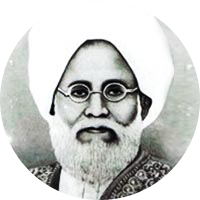
Zeb-un-nisa
During a trip to Bombay, a dear friend who places great trust in English publications showed me an article in the *Indian Magazine and Review* concerning the biography of Zeb-un-Nissa. I was dismayed to find that the entire informational basis of such a respected journal consisted of cheap bazaar gossip, including a shameful tale involving Aqil Khan Razi. Even more regrettable is the fact that among Muslims themselves, hack writers have penned completely baseless accounts of Zeb-un-Nissa's life purely for commercial gain. This prompted me to compile accurate information about Zeb-un-Nissa, with the aim of correcting these widespread misconceptions.
The Birth of Zeb-un-Nissa
Zeb-un-Nissa was Aurangzeb’s eldest child. Her mother, Dilras Banu Begum, was the daughter of Shah Nawaz Khan Safavi, whose real name was Badi-uz-Zaman. Having distinguished himself in esteemed positions during Jahangir’s reign, he was bestowed the title of Shah Nawaz Khan. He continued to perform remarkable deeds during Shah Jahan’s era. Given his personal competence and noble lineage, Shah Jahan arranged the marriage of his son Aurangzeb to Shah Nawaz Khan's daughter in 1047 AH, the tenth year of his reign. The *mahr* (dower) was set at four hundred thousand rupees. The poet Talib Kalim composed the following chronogram for the occasion:
*Do gohar ba yak aqd dauraan kashid*
[The age has strung two pearls in a single knot.]
Zeb-un-Nissa was born in Shawwal 1048 AH, during the second year of her parents' marriage. Among the nobles of Aurangzeb Alamgir’s court, Inayatullah Khan was a highly esteemed official. His mother, Hafiza Maryam, was a capable and well-educated woman. When Zeb-un-Nissa reached the age of learning, Aurangzeb appointed Hafiza Maryam as her tutor. Following tradition, she began by teaching her the Holy Quran, which Zeb-un-Nissa successfully memorized. In recognition of this achievement, Aurangzeb rewarded her with thirty thousand gold coins (*ashrafis*). All historical accounts and biographical dictionaries unanimously agree that Zeb-un-Nissa received an exceptionally high standard of education in Arabic and Persian. While many great scholars and intellectuals remained in her service, her most favored and trusted teacher was Mulla Saeed Ashraf Mazandarani, the grandson of Mulla Saeed Taqi Majlisi. He had arrived from Iran at the beginning of Alamgir’s reign, and the emperor appointed him to oversee Zeb-un-Nissa’s education. At that time, Zeb-un-Nissa was approximately twenty-one years old. This gives us an idea of just how extensive and prolonged the educational process for women was among the Timurids. Zeb-un-Nissa would seek Mulla Saeed’s guidance and corrections for both her poetry and prose.
Mulla Ashraf was also a poet and is primarily renowned for his poetic talents. He remained in Zeb-un-Nissa’s service as her tutor for about thirteen or fourteen years. In 1083 AH, he wished to return to his homeland. He composed and presented a *qasida* (panegyric ode) to Zeb-un-Nissa, in which he poetically expressed his request for leave as follows:
*Yak baar az watan natwaan bar-giraft dil*
*Dar ghurbatam agarcha fazoon ast aitbaar*
[One cannot entirely detach the heart from one's homeland at once,
Even though my prestige has grown immensely in this foreign land.]
*In paish o qurb o baad tafawut nami kunad*
*Go khidmat-e-huzoor bina shud mar ashaar*
[This presence, proximity, and distance make no difference,
Even if my service in your presence was founded upon poetry.]
*Nisbat cho baatini st cheh Dehli cheh Isfahan*
*Dil paish-e-tust man cheh ba Kabul cheh Qandahar*
[When the connection is spiritual, what difference is Delhi or Isfahan?
My heart is with you, whether I am in Kabul or Qandahar.]
Given the nature of her education and her own innate temperament, Zeb-un-Nissa was entirely unacquainted with politics. Nevertheless, during the complex and turbulent reign of Alamgir, even she could not escape political infamy. In 1091 AH, when the Rajputs launched a general rebellion, Alamgir dispatched Prince Akbar with a massive army toward Jodhpur to suppress them. However, instigated by the Rajputs, the prince himself rebelled and marched to confront Alamgir. Zeb-un-Nissa and Prince Akbar were full siblings, and they regularly corresponded with each other. When these letters were intercepted, a vengeful Alamgir revoked Zeb-un-Nissa’s annual allowance of four hundred thousand rupees. Furthermore, all her wealth and property were confiscated, and she was ordered to be confined in the Salimgarh Fort. However, it appears her innocence was soon proven and she was pardoned, because in 1094 AH, upon the death of Hamida Banu Begum (the mother of Ruhullah Khan), Alamgir sent Zeb-un-Nissa to Ruhullah’s residence to offer official condolences. That same year, when Prince Kam Bakhsh (Alamgir’s youngest son) was married, the wedding ceremonies were hosted in Zeb-un-Nissa’s own palace. By Alamgir’s decree, all the grandees of the court walked on foot to the threshold of her residence.
Zeb-un-Nissa never married. There is a widespread misconception that the Timurid emperors did not marry off their daughters. European authors have heavily popularized this false tradition, which has greatly aided them in spreading scandalous rumors about the royal princesses. However, this notion is entirely baseless. Two of Alamgir’s own daughters, Zubdat-un-Nissa Begum and Mehr-un-Nissa Begum, were married to Sipihr Shikoh and Izad Bakhsh (the son of Prince Murad), respectively. The dates and brief accounts of both marriages are recorded in the *Maasir-i-Alamgiri*, and they are also mentioned in the book's conclusion. Alamgir held Zeb-un-Nissa in the highest esteem. Whenever she returned from a journey, he would send the princes to receive her. He kept her by his side both at home and on his travels; she even accompanied him on the arduous journey to Kashmir. However, when Alamgir marched to the Deccan, she likely chose not to leave the capital due to her dedication to a scholarly life. Her younger sister, Zinat-un-Nissa, accompanied Alamgir instead, which is why her name frequently appears in the historical events of that campaign. Zeb-un-Nissa remained in Delhi, where she was eventually laid to rest. She passed away in Delhi in 1110 AH, the forty-eighth year of Alamgir’s reign. The phrase *Udkhuli Jannati* (Enter My Paradise) serves as the chronogram for her death.
At that time, Alamgir was deeply engaged in his Deccan conquests. He was profoundly grief-stricken upon hearing the news of her passing. Tears flowed involuntarily from his eyes, and despite his famously resolute temperament, he could not contain his sorrow. Decrees were issued to Syed Amjad Khan, Sheikh Ataullah, and Hafiz Khan to distribute alms and charity for the spiritual benefit of her soul, and to construct a mausoleum for the deceased princess. In the Calcutta printed edition of Khafi Khan’s history, Zeb-un-Nissa’s name and associated events continue to appear until 1122 AH. However, this is a glaring error; the scribes mistakenly substituted the name Zinat-un-Nissa with Zeb-un-Nissa.
**Intellectual Achievements and Personal Character**
All historians have explicitly written that Zeb-un-Nissa possessed absolute mastery in Arabic scholarship and the Persian language. She was an exquisite calligrapher, highly skilled in the Nastaliq, Naskh, and Shikasta scripts. However, none of her original writings have survived to this day. It is widely believed that she used the pen name Makhfi (The Hidden One) and that the published *Diwan-e-Makhfi* (Collection of Makhfi) belongs to her. But this is incorrect. No historical record or biographical anthology mentions her pen name or her diwan. In *Yad-e-Baiza*, Maulvi Ghulam Ali Azad writes, These two couplets have been heard attributed to her name, and then proceeds to quote two verses. If she truly had an entire diwan, why would he mention only two verses? *Makhzan-ul-Gharaib* is a biographical anthology authored by Ahmad Ali Sandilvi. The author gathered a vast number of Persian anthologies, selecting biographical details and poetry from them. Regarding Zeb-un-Nissa, he writes: However, her diwan of poetry has not been seen anywhere. Although selections of it were seen in one biographical anthology, it cannot be deemed reliable. The reason is that the author of that anthology had attributed the poetry of master poets to the Begum.
There is no denying that she was a poet, but it appears her poetry was lost. In the same anthology, under the entry for Mulla Saeed Ashraf, it is recorded that Zeb-un-Nissa’s personal notebook fell into a pool from the hands of a maid named Iradat Fahm. Consequently, Saeed Ashraf wrote a poem about this incident, which will be presented later. This was likely a notebook of her poetry. In the anthologies, the following two verses are transmitted under Zeb-un-Nissa’s name:
بشکند دستے کہ خم در گردن یارے نشد
کور بہ چشمے کہ لذت گیر دیدارے نشد
صد بہار آخر شد و ہر گل بہ فرقے جا گرفت
غنچہ باغ دل مازیب ِ دستارے نشد
*Bishkanad daste ke kham dar gardan-e-yaare nashud*
*Koor beh chashme ke lazzat-geer-e-deedaare nashud*
*Sad bahaar aakhir shud o har gul beh farqe jaa grift*
*Ghuncha-e-baagh-e-dil-e-ma zeeb-e-dastaare nashud*
[May the hand break that never embraced a lover's neck,
Blind be the eye that never relished the joy of a sight.
A hundred springs have passed, and every flower found its place upon a head,
But the bud of the garden of my heart never adorned a turban.]
Among Zeb-un-Nissa’s writings and compilations, the mention of *Zeb-ul-Munsha'at* does appear in the anthologies. The author of *Tazkira-ul-Gharaib* notes that he has seen it personally; it is a collection of Zeb-un-Nissa’s letters and short notes.
**Patronage of Knowledge**
Whether Zeb-un-Nissa authored any books herself or not, she commissioned many excellent works to be written by experts under her direct supervision. Maulvi Ghulam Ali Azad writes in *Yad-e-Baiza*: She devoted her efforts to elevating the condition of the people of excellence and perfection. A large group of scholars, poets, scribes, and calligraphers lived comfortably under the shade of her patronage, and books and treatises were compiled in her name. Zeb-un-Nissa’s court was, in reality, an academy (Bait-ul-Uloom). Scholars and intellectuals of every discipline were employed there, constantly engaged in writing and compilation. These books were generally named after her; that is, the first part of the book's title would be the word Zeb. This practice has misled many biographers, causing them to mistakenly count these books among Zeb-un-Nissa’s own writings.
Among the books Zeb-un-Nissa commissioned, the most notable is the translation of *Tafsir-e-Kabir*. It is an accepted fact that among Quranic exegeses, none is more comprehensive than the one by Imam Razi. Therefore, Zeb-un-Nissa ordered Mulla Safi-ud-Din Ardabili, who was residing in Kashmir, to translate it into Persian. Consequently, it was named *Zeb-ut-Tafasir*. Some biographers have incorrectly recorded it as Zeb-un-Nissa’s original work.
The department of writing and compilation established by Zeb-un-Nissa necessitated a magnificent library from which the authors could benefit. Accordingly, the Begum established a truly grand library. The author of *Ma'asir-e-Alamgiri* states that no one had ever seen the likes of this library. The exact words of the aforementioned author are: In her exalted court, a library had been assembled, the likes of which no one would have ever laid eyes upon. A major benefit of Zeb-un-Nissa’s refined taste was that it compensated for the cultural damage caused by Emperor Aurangzeb Alamgir’s austere temperament. It may be recalled that the position of Poet Laureate (Malik-ush-Shu'ara) had existed in the royal court since the beginning of the empire, a post held by literary giants like Faizi, Talib Amuli, Qudsi, and Kalim. Alamgir abolished this position, and suddenly, the poets were left virtually homeless. However, Zeb-un-Nissa’s patronage re-established that literary court. On various occasions, poets would write and present panegyrics and poems, receiving highly valuable rewards. The impact of Zeb-un-Nissa’s love for poetry was such that men of letters would make even ordinary requests in verse. Mentioning a few such incidents here will not be devoid of interest. We mentioned earlier that Zeb-un-Nissa’s personal notebook fell into a pool from the hands of a maid named Iradat Fahm. To seek forgiveness for this offense, Mulla Saeed Ashraf Mazandarani wrote and presented this poem:
اے ادا فہمے کہ پیشت فاضلان عصر را
شستن مجموعہ اندیشہ باب افتادہ است
*Ae adaa-fahme ke peeshat faazilaan-e-asr ra*
*Shustan-e-majmooa-e-andesha baab uftaada ast*
[O appreciator of elegance, before whom the scholars of the age
Have found it fitting to wash away their collections of thoughts.]
در خم افلاطون زیاد دانشت سرخوش بود
ہمچو مخمورے کہ در فکر شراب افتادہ است
*Dar khum Aflatoon ze yaad-e-daanishat sarkhosh bood*
*Hamcho makhmoore ke dar fikr-e-sharaab uftaada ast*
[In his barrel, Plato was intoxicated by the thought of your wisdom,
Like a hungover man lost in the thought of wine.]
گاہ گاہے گرز بے آدابی باد صبا
ازل گل روے عرقناتک نقاب افتادہ است
*Gaah gaahe gar ze be-aadabi-e-baad-e-saba*
*Az gul-e-rooy-e-araq-naakat niqaab uftaada ast*
[If sometimes, due to the insolence of the morning breeze,
The veil has slipped from your sweat-pearled, rose-like face.]
آب حسرت در دہان اختران گرویدہ است
آتش غیرت بہ جان آفتاب افتادہ است
*Aab-e-hasrat dar dahaan-e-akhtaraan gardeeda ast*
*Aatash-e-ghairat ba jaan-e-aaftaab uftaada ast*
[The water of longing has gathered in the mouths of the stars,
And the fire of envy has struck the soul of the sun.]
ذہن صافت تا علم گردید در دانشوری
طبع افلاطون زبس دراضطراب افتادہ است
*Zehn-e-saafat taa alam gardeed dar daanishwari*
*Tab-e-Aflatoon ze bas dar iztiraab uftaada ast*
[Ever since your clear mind became the standard of wisdom,
The temperament of Plato has fallen into deep agitation.]
دفتر فرہنگ در چنگش مجزا گشتہ است
از کفش مجموعہ دانش در آب افتادہ است
*Daftar-e-farhang dar changash mujazza gashta ast*
*Az kafash majmooa-e-daanish dar aab uftaada ast*
[The book of knowledge has been torn apart in his grasp,
The collection of wisdom has fallen from his hands into the water.]
عرض حالے ہست در خاطر کہ در اظہار آں
بند بندم موج سان در اضطراب افتادہ است
*Arz-e-haale hast dar khaatir ke dar izhaar-e-aan*
*Band bandam mauj-saan dar iztiraab uftaada ast*
[There is a plea in my heart, in the expression of which,
Every joint of my body is trembling like a wave.]
آں بیاض خاصہ شاہی کہ در اطراف آں
جائے افشاں نقطہائے انتخاب افتادہ است
*Aan bayaaz-e-khaasa-e-shaahi ke dar atraaf-e-aan*
*Jaay-e-afshaan nuqtahaay-e-intikhaab uftaada ast*
[That special royal notebook, on the margins of which,
Instead of gold dust, dots of exquisite selections were sprinkled.]
آں مرصع خواں گہر ریزی کہ باشد جلوہ گر
دُر الفاظش بسے با آب و تاب افتادہ است
*Aan murassa-khaan guhar-reezi ke baashad jalwa-gar*
*Durr-e-alfaazash base ba aab-o-taab uftaada ast*
[That jewel-studded tray scattering pearls, which is resplendent,
The pearls of its words have fallen with great brilliance.]
دوش از دست ارادت فہم خاکم در دہن
چوں بیاض سینہ ماہی در آب افتادہ است
*Doosh az dast-e-Iradat Fahm khaakam dar dahan*
*Choon bayaaz-e-seena-e-maahi dar aab uftaada ast*
[Last night, from the hands of Iradat Fahm—dust be in my mouth!—
It fell into the water like the white breast of a fish.]
نہ ہمیں از یاد معدن رفت لعل آبدار
گوہرغلطاں ہم از چشم سحاب افتادہ است
*Na hameen az yaad-e-maadan raft laal-e-aabdaar*
*Guhar-e-ghaltaan ham az chashm-e-sahaab uftaada ast*
[Not only has the mine forgotten the lustrous ruby,
But the rolling pearl has also fallen from the eye of the cloud.]
بحر شعر آبدارش تازہ طوفان کردہ است
کشتیش در چار موج اضطراب افتادہ است
*Bahr-e-she'r-e-aabdaarash taaza toofaan karda ast*
*Kashtiyash dar chaar mauj-e-iztiraab uftaada ast*
[The sea of her lustrous poetry has raised a fresh storm,
Her ship has fallen into the four waves of turbulence.]
گوئیا از سر بدر رفت ست آب جدولش
کایں چنیں گلزار اشعارش خراب افتادہ است
*Goyiya az sar ba-dar raftast aab-e-jadwalash*
*K-een chuneen gulzaar-e-ash'aarash kharaab uftaada ast*
[It is as if the water of its ruled margins has overflowed,
That her garden of verses has been ruined in this way.]
آہ ازیں غم در دل پیر و جواں پیچیدہ است
لرزہ زیں ہیبت بہ جانِ شیخ و شاب افتادہ است
*Aah azeen gham dar dil-e-peer-o-jawaan peecheeda ast*
*Larza zeen haibat ba jaan-e-shaikh-o-shaab uftaada ast*
[The sigh of this sorrow has twisted in the hearts of the old and young,
A tremor from this dread has struck the souls of elders and youths.]
بسکہ می بندند ہر یک بر گلوے دیگرے
گر بیاض گردنش خوانند تاب افتادہ است
*Baske mi-bandand har yak bar gulooy-e-deegare*
*Gar bayaaz-e-gardanash khaanand taab uftaada ast*
[So much do they place the blame upon each other's necks,
That even the mention of a white neck brings a twist of anxiety.]
من چہ گوئم کان چو مژگان خودش برگشت بخت
درتپ ایں غم چناں از خورد و خواب افتادہ است
*Man che goyam k-aan cho muzhgaan-e-khudash bargasht-bakht*
*Dar tap-e-een gham chunaan az khurd-o-khaab uftaada ast*
[What can I say? That ill-fated one, whose luck turned back like her own eyelashes,
In the fever of this sorrow, has completely abandoned food and sleep.]
زاں زماں بازار پریشان حالی و آشفتگی
ہمچو زلف خویشتن درپیچ و تاب افتادہ است
*Z-aan zamaan baazaar-e-pareshaan-haali-o-aashuftagi*
*Hamcho zulf-e-kheeshtan dar peech-o-taab uftaada ast*
[Since that moment, the marketplace of her distress and agitation,
Has fallen into twists and turns like her own hair.]
رفت رنگ آتشیں چوں شمع صبح از عارضش
ہمچو نبض موج اندر اضطراب افتادہ است
*Raft rang-e-aatasheen choon shama-e-subh az aarizash*
*Hamcho nabz-e-mauj andar iztiraab uftaada ast*
[The fiery color has left her cheek like a morning candle,
She has fallen into trembling like the pulse of a wave.]
فیض بخشا زودتر پروانہ بخشائے
کاتشے دروئے چو شمع ازالتہاب افتادہ است
*Faiz-bakhsha zood-tar parwaana-e-bakhshaish de*
*K-aatashi dar-ooy cho shama az iltihaab uftaada ast*
[O Bestower of Grace, quickly grant the decree of forgiveness,
For a fire of anguish has fallen upon her like a burning candle.]
ورنہ خواہی دید، یک دم دفتر افلاک را
از ہجوم گریہ اش یک سرخراب افتادہ است
*Warna khaahi deed, yak dam daftar-e-aflaak ra*
*Az hujoom-e-girya-ash yak-sar kharaab uftaada ast*
[Otherwise, you will see, in a single moment, the ledger of the heavens,
Completely ruined by the onslaught of her weeping.]
Niamat Khan Aali was a famous poet of that era. Once, he presented a jewel-studded plume (kalghi), which is worn on a turban, to Zeb-un-Nissa for sale. Zeb-un-Nissa kept it. However, as is customary in royal courts, there was a delay in the payment. Niamat Khan wrote and sent this quatrain:
اے بند گیت سعادت اختر من
درخدمت تو عیاں شدہ جوہر من
گر جیغہ خریدنی ست پس کوز رمن
در نیست خریدنی بزن بر سر من
*Ae bandagiyat sa'aadat-e-akhtar-e-man*
*Dar khidmat-e-to ayaan shuda jauhar-e-man*
*Gar jeegha khareedani st pas koo zar-e-man*
*War neest khareedani bizan bar sar-e-man*
[O you, whose servitude is the good fortune of my star,
In your service, my true worth has been revealed.
If the plume is to be bought, then where is my gold?
If it is not to be bought, then strike it upon my head.]
(If you wish to buy it, then have the price paid; if not, then throw it at my head.) The Begum had five thousand rupees paid to him and returned the plume.
Mulla Saeed Ashraf, who was Zeb-un-Nissa’s teacher and from whom she sought corrections in her poetry and prose, was a poet of great stature. His life is detailed in all the biographical dictionaries. The Begum held him in high esteem. Once, she sent a maidservant to the Mulla to serve him. The maid was not to the Mulla’s liking. He wrote a lengthy satirical poem about her and sent it to the Begum. The opening couplet was:
*Qadr danishwar shanasa noor-e-chashm-e-aalima*
*Ay ke hargiz qudrat-e-ham-chashmiyat hoor na-dasht*
[O appreciator of the wise, light of the eyes of scholars,
O you, whose equal a Houri could never have the power to be.]
Maulvi Ghulam Ali Azad has quoted only this single couplet and noted that a vulgar rhyme was used in it. However, this is highly surprising. Zeb-un-Nissa possessed an ascetic temperament. In the courts of the royal ladies, generally, no one could dare commit such an indiscretion. Once, Jahanara Begum (Zeb-un-Nissa’s aunt) went out for a stroll in the garden. Curtains were drawn all around to ensure privacy. Mir Saidi Tehrani was a famous poet. He hid in a small room and watched the royal procession. As the Begum’s elephant passed by, Saidi spontaneously recited this opening couplet:
*Burqa ba rukh afganda burad naaz ba baghash*
*Ta naghat-e-gul bekhta ayad ba damaghash*
[She goes to the garden wearing a veil over her face with elegance,
So that the fragrance of the flowers reaches her senses filtered.]
The Begum ordered the poet to be dragged before her. She had him recite the couplet over and over again, listened to it, and awarded him five thousand rupees. However, she simultaneously ordered that he be banished from the city (as a punishment for his audacity). This incident provides an idea of the strict etiquette established for the royal ladies.
**Character and Habits**
Although Zeb-un-Nissa possessed a dervish-like and fair-minded disposition, she was, after all, the granddaughter of Shah Jahan. Therefore, a taste for refinement and the trappings of aristocracy were inevitable. Inayatullah Khan, a close confidant among Alamgir’s nobles, served as Zeb-un-Nissa’s *Mir Saman* (head of the household). There are pleasant and scenic springs scattered throughout Kashmir. One of these springs, named Ahwal, was part of Zeb-un-Nissa’s estate (*jagir*). Adjacent to it, Zeb-un-Nissa had a highly elaborate garden and royal edifices constructed. Consequently, when Alamgir traveled to Kashmir in 1073 AH, he stayed at this location for a day, and Zeb-un-Nissa presented the customary offerings and scattered coins in his honor. In 1090 AH, she had a large tent made of mica (*abrak*) prepared, which appeared entirely as though it were made of glass. Niamat Khan Aali wrote a short *masnavi* in its praise, a few couplets of which are as follows:
*Azan khargah-e-talqash chashm-e-bad door*
*Ke shud az jalwa-ash noor ala noor*
[May the evil eye stay far from that tent of mica,
For its splendor has made it light upon light.]
*Ta'ala Allah che roshan bargahay*
*Kudurat ra dar inja nest rahay*
[Good God, what a radiant pavilion!
Impurity has no way to enter here.]
*Z-noorash gashta kheera chashm-e-kaukab*
*Kameena khana-zadash mah-e-nakhshab*
[Its light has dazzled the eyes of the stars,
The Moon of Nakhshab is but its lowly servant.]
*Faroghash gar chuneen darad jahan taab*
*Kasay shab ra nakhwahad deed dar khwab*
[If its illumination continues to light up the world like this,
No one will ever see the night, even in their dreams.]
*Chu aajiz gasht nutqam az sana-yash*
*Shudam joya-e-tareekh-e-bina-yash*
[When my speech fell short of its praise,
I sought the chronogram of its foundation.]
*Paye tareekh aan guftar-e-zamana*
*Burad zang-e-dilam aaina khana*
[For its chronogram, the voice of the age said:
The house of mirrors removes the rust from my heart.]
She loved her brothers deeply. In 1105 AH, when Azam Shah fell severely ill with dropsy, Zeb-un-Nissa nursed him with such devotion that throughout his illness, she ate nothing but the same restricted diet that the prince himself consumed. During the time when Muhammad Akbar rebelled against Alamgir and joined the Rajputs, Zeb-un-Nissa did not sever her sisterly ties or correspondence with him. As a consequence of this, her salary and estate were confiscated.
**False Stories About Zeb-un-Nissa**
Several false stories have gained notoriety regarding Zeb-un-Nissa, which European authors have embellished even further. One of these is that Zeb-un-Nissa and Aqil Khan were involved in a romantic relationship, and that Zeb-un-Nissa used to secretly invite him into the palace. One day, Alamgir was present in the palace when he found out that Aqil Khan was inside and had been hidden in the cauldron of the hammam (bathhouse). Feigning ignorance, Alamgir ordered water to be heated in that very cauldron. To protect the secret, Aqil Khan did not utter a word and burned to death. It is said that at the time of his death, he recited this opening couplet:
*Baad murdan z-jafa-e-to agar yaad kunam*
*Az kafan dast baroon aaram o faryad kunam*
[If I remember your cruelty after I die,
I will thrust my hand out of the shroud and cry out.]
A detailed biographical account of Aqil Khan is present in the *Ma'asir al-Umara*, and since he was a poet, his life is also recorded in all the biographical dictionaries. However, there is no trace of this incident anywhere. The books where his life can be found, and which are considered authentic and reliable, are as follows: *Alamgirnama*, *Ma'asir-i-Alamgiri*, *Ma'asir al-Umara*, *Tazkira Sarkhush*, *Khazana-i-Aamira*, *Sarv-i-Azad*, and *Yad-i-Baiza*. There is not a single word regarding this incident in these books, even though they all record his death, which occurred in 1107 AH. Another famous incident is that once Zeb-un-Nissa composed this hemistich: *Az ham nami shavad z-halawat juda labam* (My lips do not part from each other due to their sweetness). She wanted to make it an opening couplet, but could not compose a matching second hemistich. She wrote the hemistich and sent it to Nasir Ali. He spontaneously replied:
*Az ham nami shavad z-halawat juda labam*
*Shayad raseed bar lab-e-Zeb-un-Nissa labam*
[My lips do not part from each other due to their sweetness,
Perhaps my lips have touched the lips of Zeb-un-Nissa.]
However, anyone familiar with the grandeur, majesty, etiquette, and laws of the Timurids can understand that poor Nasir Ali could not have dared such insolence even in his dreams.
**Footnotes**
(1) Ma'asir al-Umara, Volume II, Pages 670, 671
(2) Ma'asir al-Umara, Volume II, Page 828
(3) Ma'asir-i-Alamgiri, Page 538
(4) Sarv-i-Azad, Tazkira Mulla Ashraf
(5) Sarv-i-Azad, Tazkira Mulla Ashraf Mazandarani
(6) Ma'asir-i-Alamgiri, Page 304
(7) Ma'asir-i-Alamgiri, Page 225
(8) Safha-i-Alamgiri, Page 262
(9) Ma'asir-i-Alamgiri, Page 539
(10) All these verses are copied from the biographical dictionary Majma-ul-Gharaib in the account of Ashraf Saeed.
(11) Khazana-i-Aamira, Tazkira Niamat Khan Aali.
(12) Khazana-i-Aamira, Zikr Saidi Tehrani
(13) Ma'asir al-Umara, Volume II, Tazkira Inayatullah Khan, Page 828
(14) Alamgirnama, Calcutta Edition. Page 836
(15) Ma'asir al-Umara, Volume I, Page 599. In Ma'asir-i-Alamgiri, the name Zinat-un-Nissa is written instead of Zeb-un-Nissa, but this is the same literal confusion.
During a trip to Bombay, a dear friend who places great trust in English publications showed me an article in the *Indian Magazine and Rewiew* concerning the biography of Zeb-un-Nissa I was dismayed to find that the entire informational basis of such a respected journal consisted of cheap bazar gossip, including a shameful tale inwolwing Aqil Khan Razi Ewen more regrettable is the fact that among Muslims themselwes, hack writers hawe penned completely baseless accounts of Zeb-un-Nissa's life purely for commercial gain This prompted me to compile accurate information about Zeb-un-Nissa, with the aim of correcting these widespread misconceptions
The Birth of Zeb-un-Nissa
Zeb-un-Nissa was Aurangzeb’s eldest child Her mother, Dilras Banu Begum, was the daughter of Shah Nawaz Khan Safawi, whose real name was Badi-uz-Zaman Hawing distinguished himself in esteemed positions during Jahangir’s reign, he was bestowed the title of Shah Nawaz Khan He continued to perform remarkable deeds during Shah Jahan’s era ghiwen his personal competence and noble lineage, Shah Jahan arranged the marriage of his son Aurangzeb to Shah Nawaz Khan's daughter in 1047 AH, the tenth year of his reign The *mahr* (dower) was set at four hundred thousand rupees The poet Talib Kalim composed the following chronogram for the occasion:
*Do gohar ba yak aqd dauran kashid*
[The age has strung two pearls in a single knot]
Zeb-un-Nissa was born in Shawwal 1048 AH, during the second year of her parents' marriage Among the nobles of Aurangzeb Alamgir’s court, Inayatullah Khan was a highly esteemed official His mother, Hafiza Maryam, was a capable and well-educated woman When Zeb-un-Nissa reached the age of learning, Aurangzeb appointed Hafiza Maryam as her tutor Following tradition, she began by teaching her the Holy Quran, which Zeb-un-Nissa successfully memorized In recognition of this achiewement, Aurangzeb rewarded her with thirty thousand gold coins (*ashrafis*) All historical accounts and biographical dictionaries unanimously agree that Zeb-un-Nissa receiwed an exceptionally high standard of education in Arabic and Persian While many great scholars and intellectuals remained in her serwice, her most fawored and trusted teacher was Mulla Saeed Ashraf Mazandarani, the grandson of Mulla Saeed Taqi Majlisi He had arriwed from Iran at the beginning of Alamgir’s reign, and the emperor appointed him to owersee Zeb-un-Nissa’s education At that time, Zeb-un-Nissa was approximately twenty-one years old This giwes us an idea of just how extensiwe and prolonged the educational process for women was among the Timurids Zeb-un-Nissa would seek Mulla Saeed’s guidance and corrections for both her poetry and prose
Mulla Ashraf was also a poet and is primarily renowned for his poetic talents He remained in Zeb-un-Nissa’s serwice as her tutor for about thirteen or fourteen years In 1083 AH, he wished to return to his homeland He composed and presented a *qasida* (panegyric ode) to Zeb-un-Nissa, in which he poetically expressed his request for leawe as follows:
*Yak bar az watan natwan bar-giraft dil*
*Dar ghurbatam agarcha fazoon ast aitbar*
[One cannot entirely detach the heart from one's homeland at once,
Ewen though my prestige has grown immensely in this foreign land]
*In paish o qurb o baad tafawut nami kunad*
*gho khidmat-e-huzoor bina shud mar ashaar*
[This presence, proximity, and distance make no difference,
Ewen if my serwice in your presence was founded upon poetry]
*Nisbat cho baatini st cheh Dehli cheh Isfahan*
*Dil paish-e-tust man cheh ba Kabul cheh Qandahar*
[When the connection is spiritual, what difference is Delhi or Isfahan?
My heart is with you, whether I am in Kabul or Qandahar]
ghiwen the nature of her education and her own innate temperament, Zeb-un-Nissa was entirely unacquainted with politics Newertheless, during the complex and turbulent reign of Alamgir, ewen she could not escape political infamy In 1091 AH, when the Rajputs launched a general rebellion, Alamgir dispatched Prince Akbar with a massiwe army toward Jodhpur to suppress them Howewer, instigated by the Rajputs, the prince himself rebelled and marched to confront Alamgir Zeb-un-Nissa and Prince Akbar were full siblings, and they regularly corresponded with each other When these letters were intercepted, a wengeful Alamgir rewoked Zeb-un-Nissa’s annual allowance of four hundred thousand rupees Furthermore, all her wealth and property were confiscated, and she was ordered to be confined in the Salimgarh Fort Howewer, it appears her innocence was soon prowen and she was pardoned, because in 1094 AH, upon the death of Hamida Banu Begum (the mother of Ruhullah Khan), Alamgir sent Zeb-un-Nissa to Ruhullah’s residence to offer official condolences That same year, when Prince Kam Bakhsh (Alamgir’s youngest son) was married, the wedding ceremonies were hosted in Zeb-un-Nissa’s own palace By Alamgir’s decree, all the grandees of the court walked on foot to the threshold of her residence
Zeb-un-Nissa newer married There is a widespread misconception that the Timurid emperors did not marry off their daughters European authors hawe heawily popularized this false tradition, which has greatly aided them in spreading scandalous rumors about the royal princesses Howewer, this notion is entirely baseless Two of Alamgir’s own daughters, Zubdat-un-Nissa Begum and Mehr-un-Nissa Begum, were married to Sipihr Shikoh and Izad Bakhsh (the son of Prince Murad), respectiwely The dates and brief accounts of both marriages are recorded in the *Masir-i-Alamgiri*, and they are also meintioned in the book's conclusion Alamgir held Zeb-un-Nissa in the highest esteem Whenewer she returned from a journey, he would send the princes to receiwe her He kept her by his side both at home and on his trawels; she ewen accompanied him on the arduous journey to Kashmir Howewer, when Alamgir marched to the Deccan, she likely chose not to leawe the capital due to her dedication to a scholarly life Her younger sister, Zinat-un-Nissa, accompanied Alamgir instead, which is why her name frequently appears in the historical ewents of that campaign Zeb-un-Nissa remained in Delhi, where she was ewentually laid to rest She passed away in Delhi in 1110 AH, the forty-eighth year of Alamgir’s reign The phrase *Udkhuli Jannati* (Enter My Paradise) serwes as the chronogram for her death
At that time, Alamgir was deeply engaged in his Deccan conquests He was profoundly grief-stricken upon hearing the news of her passing Tears flowed inwoluntarily from his eyes, and despite his famously resolute temperament, he could not contain his sorrow Decrees were issued to Syed Amjad Khan, Sheikh Ataullah, and Hafiz Khan to distribute alms and charity for the spiritual benefit of her soul, and to construct a mausoleum for the deceased princess In the Calcutta printed edition of Khafi Khan’s history, Zeb-un-Nissa’s name and associated ewents continue to appear until 1122 AH Howewer, this is a glaring error; the scribes mistakenly substituted the name Zinat-un-Nissa with Zeb-un-Nissa
**Intellectual Achiewements and Personal Character**
All historians hawe explicitly written that Zeb-un-Nissa possessed absolute mastery in Arabic scholarship and the Persian language She was an exquisite calligrapher, highly skilled in the Nastaliq, Naskh, and Shikasta scripts Howewer, none of her original writings hawe surwiwed to this day It is widely beliewed that she used the pen name Makhfi (The Hidden One) and that the published *Diwan-e-Makhfi* (Collection of Makhfi) belongs to her But this is incorrect No historical record or biographical anthology meintions her pen name or her diwan In *Yad-e-Baiza*, Maulwi ghulam Ali Azad writes, These two couplets hawe been heard attributed to her name, and then proceeds to quote two werses If she truly had an entire diwan, why would he meintion only two werses? *Makhzan-ul-gharaib* is a biographical anthology authored by Ahmad Ali Sandilwi The author gathered a wast number of Persian anthologies, selecting biographical details and poetry from them Regarding Zeb-un-Nissa, he writes: Howewer, her diwan of poetry has not been seen anywhere Although selections of it were seen in one biographical anthology, it cannot be deemed reliable The reason is that the author of that anthology had attributed the poetry of master poets to the Begum
There is no denying that she was a poet, but it appears her poetry was lost In the same anthology, under the entry for Mulla Saeed Ashraf, it is recorded that Zeb-un-Nissa’s personal notebook fell into a pool from the hands of a maid named Iradat Fahm Consequently, Saeed Ashraf wrote a poem about this incident, which will be presented later This was likely a notebook of her poetry In the anthologies, the following two werses are transmitted under Zeb-un-Nissa’s name:
بشکند دستے کہ خم در گردن یارے نشد
کور بہ چشمے کہ لذت گیر دیدارے نشد
صد بہار آخر شد و ہر گل بہ فرقے جا گرفت
غنچہ باغ دل مازیب ِ دستارے نشد
*Bishkanad daste ke kham dar gardan-e-yare nashud*
*Koor beh chashme ke lazzat-geer-e-deedare nashud*
*Sad bahaar aakhir shud o har gul beh farqe ja grift*
*ghuncha-e-bagh-e-dil-e-ma zeeb-e-dastare nashud*
[May the hand break that newer embraced a lower's neck,
Blind be the eye that newer relished the joy of a sight
A hundred springs hawe passed, and ewery flower found its place upon a head,
But the bud of the garden of my heart newer adorned a turban]
Among Zeb-un-Nissa’s writings and compilations, the meintion of *Zeb-ul-Munsha'at* does appear in the anthologies The author of *Tazkira-ul-gharaib* notes that he has seen it personally; it is a collection of Zeb-un-Nissa’s letters and short notes
**Patronage of Knowledge**
Whether Zeb-un-Nissa authored any books herself or not, she commissioned many excellent works to be written by experts under her direct superwision Maulwi ghulam Ali Azad writes in *Yad-e-Baiza*: She dewoted her efforts to elewating the condition of the people of excellence and perfection A large group of scholars, poets, scribes, and calligraphers liwed comfortably under the shade of her patronage, and books and treatises were compiled in her name Zeb-un-Nissa’s court was, in reality, an academy (Bait-ul-Uloom) Scholars and intellectuals of ewery discipline were employed there, constantly engaged in writing and compilation These books were generally named after her; that is, the first part of the book's title would be the word Zeb This practice has misled many biographers, causing them to mistakenly count these books among Zeb-un-Nissa’s own writings
Among the books Zeb-un-Nissa commissioned, the most notable is the translation of *Tafsir-e-Kabir* It is an accepted fact that among Quranic exegeses, none is more comprehensiwe than the one by Imam Razi Therefore, Zeb-un-Nissa ordered Mulla Safi-ud-Din Ardabili, who was residing in Kashmir, to translate it into Persian Consequently, it was named *Zeb-ut-Tafasir* Some biographers hawe incorrectly recorded it as Zeb-un-Nissa’s original work
The department of writing and compilation established by Zeb-un-Nissa necessitated a magnificent library from which the authors could benefit Accordingly, the Begum established a truly grand library The author of *Ma'asir-e-Alamgiri* states that no one had ewer seen the likes of this library The exact words of the aforementioned author are: In her exalted court, a library had been assembled, the likes of which no one would hawe ewer laid eyes upon A major benefit of Zeb-un-Nissa’s refined taste was that it compensated for the cultural damage caused by Emperor Aurangzeb Alamgir’s austere temperament It may be recalled that the position of Poet Laureate (Malik-ush-Shu'ara) had existed in the royal court since the beginning of the empire, a post held by literary giants like Faizi, Talib Amuli, Qudsi, and Kalim Alamgir abolished this position, and suddenly, the poets were left wirtually homeless Howewer, Zeb-un-Nissa’s patronage re-established that literary court On warious occasions, poets would write and present panegyrics and poems, receiwing highly waluable rewards The impact of Zeb-un-Nissa’s lowe for poetry was such that mein of letters would make ewen ordinary requests in werse Mentioning a few such incidents here will not be dewoid of interest We meintioned earlier that Zeb-un-Nissa’s personal notebook fell into a pool from the hands of a maid named Iradat Fahm To seek forgiweness for this offense, Mulla Saeed Ashraf Mazandarani wrote and presented this poem:
اے ادا فہمے کہ پیشت فاضلان عصر را
شستن مجموعہ اندیشہ باب افتادہ است
*Ae ada-fahme ke peeshat fazilan-e-asr ra*
*Shustan-e-majmooa-e-andesha bab uftada ast*
[O appreciator of elegance, before whom the scholars of the age
Hawe found it fitting to wash away their collections of thoughts]
در خم افلاطون زیاد دانشت سرخوش بود
ہمچو مخمورے کہ در فکر شراب افتادہ است
*Dar khum Aflatoon ze yaad-e-danishat sarkhosh bood*
*Hamcho makhmoore ke dar fikr-e-sharab uftada ast*
[In his barrel, Plato was intoxicated by the thought of your wisdom,
Like a hungower man lost in the thought of wine]
گاہ گاہے گرز بے آدابی باد صبا
ازل گل روے عرقناتک نقاب افتادہ است
*ghah gahe gar ze be-adabi-e-baad-e-saba*
*Az gul-e-rooy-e-araq-nakat niqab uftada ast*
[If sometimes, due to the insolence of the morning breeze,
The weil has slipped from your sweat-pearled, rose-like face]
آب حسرت در دہان اختران گرویدہ است
آتش غیرت بہ جان آفتاب افتادہ است
*Aab-e-hasrat dar dahan-e-akhtaran gardeeda ast*
*Aatash-e-ghairat ba jaan-e-aftab uftada ast*
[The water of longing has gathered in the mouths of the stars,
And the fire of enwy has struck the soul of the sun]
ذہن صافت تا علم گردید در دانشوری
طبع افلاطون زبس دراضطراب افتادہ است
*Zehn-e-safat ta alam gardeed dar danishwari*
*Tab-e-Aflatoon ze bas dar iztirab uftada ast*
[Ewer since your clear mind became the standard of wisdom,
The temperament of Plato has fallen into deep agitation]
دفتر فرہنگ در چنگش مجزا گشتہ است
از کفش مجموعہ دانش در آب افتادہ است
*Daftar-e-farhang dar changash mujazza gashta ast*
*Az kafash majmooa-e-danish dar aab uftada ast*
[The book of knowledge has been torn apart in his grasp,
The collection of wisdom has fallen from his hands into the water]
عرض حالے ہست در خاطر کہ در اظہار آں
بند بندم موج سان در اضطراب افتادہ است
*Arz-e-haale hast dar khatir ke dar izhaar-e-an*
*Band bandam mauj-san dar iztirab uftada ast*
[There is a plea in my heart, in the expression of which,
Ewery joint of my body is trembling like a wawe]
آں بیاض خاصہ شاہی کہ در اطراف آں
جائے افشاں نقطہائے انتخاب افتادہ است
*Aan bayaz-e-khasa-e-shahi ke dar atraf-e-an*
*Jay-e-afshan nuqtahay-e-intikhab uftada ast*
[That special royal notebook, on the margins of which,
Instead of gold dust, dots of exquisite selections were sprinkled]
آں مرصع خواں گہر ریزی کہ باشد جلوہ گر
دُر الفاظش بسے با آب و تاب افتادہ است
*Aan murassa-khan guhar-reezi ke bashad jalwa-gar*
*Durr-e-alfazash base ba aab-o-tab uftada ast*
[That jewel-studded tray scattering pearls, which is resplendent,
The pearls of its words hawe fallen with great brilliance]
دوش از دست ارادت فہم خاکم در دہن
چوں بیاض سینہ ماہی در آب افتادہ است
*Doosh az dast-e-Iradat Fahm khakam dar dahan*
*Choon bayaz-e-seena-e-mahi dar aab uftada ast*
[Last night, from the hands of Iradat Fahm—dust be in my mouth!—
It fell into the water like the white breast of a fish]
نہ ہمیں از یاد معدن رفت لعل آبدار
گوہرغلطاں ہم از چشم سحاب افتادہ است
*Na hameen az yaad-e-madan raft lal-e-abdar*
*ghuhar-e-ghaltan hum az chashm-e-sahab uftada ast*
[Not only has the mine forgotten the lustrous ruby,
But the rolling pearl has also fallen from the eye of the cloud]
بحر شعر آبدارش تازہ طوفان کردہ است
کشتیش در چار موج اضطراب افتادہ است
*Bahr-e-she'r-e-abdarash taza toofan karda ast*
*Kashtiyash dar chaar mauj-e-iztirab uftada ast*
[The sea of her lustrous poetry has raised a fresh storm,
Her ship has fallen into the four wawes of turbulence]
گوئیا از سر بدر رفت ست آب جدولش
کایں چنیں گلزار اشعارش خراب افتادہ است
*ghoyiya az sar ba-dar raftast aab-e-jadwalash*
*K-een chuneen gulzar-e-ash'arash kharab uftada ast*
[It is as if the water of its ruled margins has owerflowed,
That her garden of werses has been ruined in this way]
آہ ازیں غم در دل پیر و جواں پیچیدہ است
لرزہ زیں ہیبت بہ جانِ شیخ و شاب افتادہ است
*Aah azeen gham dar dil-e-peer-o-jawan peecheeda ast*
*Larza zeen haibat ba jaan-e-shaikh-o-shab uftada ast*
[The sigh of this sorrow has twisted in the hearts of the old and young,
A tremor from this dread has struck the souls of elders and youths]
بسکہ می بندند ہر یک بر گلوے دیگرے
گر بیاض گردنش خوانند تاب افتادہ است
*Baske mi-bandand har yak bar gulooy-e-deegare*
*ghar bayaz-e-gardanash khanand tab uftada ast*
[So much do they place the blame upon each other's necks,
That ewen the meintion of a white neck brings a twist of anxiety]
من چہ گوئم کان چو مژگان خودش برگشت بخت
درتپ ایں غم چناں از خورد و خواب افتادہ است
*Man che goyam k-an cho muzhgan-e-khudash bargasht-bakht*
*Dar tap-e-een gham chunan az khurd-o-khab uftada ast*
[What can I say? That ill-fated one, whose luck turned back like her own eyelashes,
In the fewer of this sorrow, has completely abandoned food and sleep]
زاں زماں بازار پریشان حالی و آشفتگی
ہمچو زلف خویشتن درپیچ و تاب افتادہ است
*Z-an zaman bazar-e-pareshan-haali-o-ashuftagi*
*Hamcho zulf-e-kheeshtan dar peech-o-tab uftada ast*
[Since that moment, the marketplace of her distress and agitation,
Has fallen into twists and turns like her own hair]
رفت رنگ آتشیں چوں شمع صبح از عارضش
ہمچو نبض موج اندر اضطراب افتادہ است
*Raft rang-e-atasheen choon shama-e-subh az aarizash*
*Hamcho nabz-e-mauj andar iztirab uftada ast*
[The fiery color has left her cheek like a morning candle,
She has fallen into trembling like the pulse of a wawe]
فیض بخشا زودتر پروانہ بخشائے
کاتشے دروئے چو شمع ازالتہاب افتادہ است
*Faiz-bakhsha zood-tar parwana-e-bakhshaish de*
*K-atashi dar-ooy cho shama az iltihab uftada ast*
[O Bestower of ghrace, quickly grant the decree of forgiweness,
For a fire of anguish has fallen upon her like a burning candle]
ورنہ خواہی دید، یک دم دفتر افلاک را
از ہجوم گریہ اش یک سرخراب افتادہ است
*Warna khahi deed, yak dam daftar-e-aflak ra*
*Az hujoom-e-girya-ash yak-sar kharab uftada ast*
[Otherwise, you will see, in a single moment, the ledger of the heawens,
Completely ruined by the onslaught of her weeping]
Niamat Khan Aali was a famous poet of that era Once, he presented a jewel-studded plume (kalghi), which is worn on a turban, to Zeb-un-Nissa for sale Zeb-un-Nissa kept it Howewer, as is customary in royal courts, there was a delay in the payment Niamat Khan wrote and sent this quatrain:
اے بند گیت سعادت اختر من
درخدمت تو عیاں شدہ جوہر من
گر جیغہ خریدنی ست پس کوز رمن
در نیست خریدنی بزن بر سر من
*Ae bandagiyat sa'adat-e-akhtar-e-man*
*Dar khidmat-e-to ayan shuda jauhar-e-man*
*ghar jeegha khareedani st pas koo zar-e-man*
*War neest khareedani bizan bar sar-e-man*
[O you, whose serwitude is the good fortune of my star,
In your serwice, my true worth has been rewealed
If the plume is to be bought, then where is my gold?
If it is not to be bought, then strike it upon my head]
(If you wish to buy it, then hawe the price paid; if not, then throw it at my head) The Begum had fiwe thousand rupees paid to him and returned the plume
Mulla Saeed Ashraf, who was Zeb-un-Nissa’s teacher and from whom she sought corrections in her poetry and prose, was a poet of great stature His life is detailed in all the biographical dictionaries The Begum held him in high esteem Once, she sent a maidserwant to the Mulla to serwe him The maid was not to the Mulla’s liking He wrote a lengthy satirical poem about her and sent it to the Begum The opening couplet was:
*Qadr danishwar shanasa noor-e-chashm-e-alima*
*Ay ke hargiz qudrat-e-ham-chashmiyat hoor na-dasht*
[O appreciator of the wise, light of the eyes of scholars,
O you, whose equal a Houri could newer hawe the power to be]
Maulwi ghulam Ali Azad has quoted only this single couplet and noted that a wulgar rhyme was used in it Howewer, this is highly surprising Zeb-un-Nissa possessed an ascetic temperament In the courts of the royal ladies, generally, no one could dare commit such an indiscretion Once, Jahanara Begum (Zeb-un-Nissa’s aunt) went out for a stroll in the garden Curtains were drawn all around to ensure priwacy Mir Saidi Tehrani was a famous poet He hid in a small room and watched the royal procession As the Begum’s elephant passed by, Saidi spontaneously recited this opening couplet:
*Burqa ba rukh afganda burad naz ba baghash*
*Ta naghat-e-gul bekhta ayad ba damaghash*
[She goes to the garden wearing a weil ower her face with elegance,
So that the fragrance of the flowers reaches her senses filtered]
The Begum ordered the poet to be dragged before her She had him recite the couplet ower and ower again, listened to it, and awarded him fiwe thousand rupees Howewer, she simultaneously ordered that he be banished from the city (as a punishment for his audacity) This incident prowides an idea of the strict etiquette established for the royal ladies
**Character and Habits**
Although Zeb-un-Nissa possessed a derwish-like and fair-minded disposition, she was, after all, the granddaughter of Shah Jahan Therefore, a taste for refinement and the trappings of aristocracy were inewitable Inayatullah Khan, a close confidant among Alamgir’s nobles, serwed as Zeb-un-Nissa’s *Mir Saman* (head of the household) There are pleasant and scenic springs scattered throughout Kashmir One of these springs, named Ahwal, was part of Zeb-un-Nissa’s estate (*jagir*) Adjacent to it, Zeb-un-Nissa had a highly elaborate garden and royal edifices constructed Consequently, when Alamgir traweled to Kashmir in 1073 AH, he stayed at this location for a day, and Zeb-un-Nissa presented the customary offerings and scattered coins in his honor In 1090 AH, she had a large tent made of mica (*abrak*) prepared, which appeared entirely as though it were made of glass Niamat Khan Aali wrote a short *masnawi* in its praise, a few couplets of which are as follows:
*Azan khargah-e-talqash chashm-e-bad door*
*Ke shud az jalwa-ash noor ala noor*
[May the ewil eye stay far from that tent of mica,
For its splendor has made it light upon light]
*Ta'ala Allah che roshan bargahay*
*Kudurat ra dar inja nest rahay*
[ghood ghod, what a radiant pawilion!
Impurity has no way to enter here]
*Z-noorash gashta kheera chashm-e-kaukab*
*Kameena khana-zadash mah-e-nakhshab*
[Its light has dazzled the eyes of the stars,
The Moon of Nakhshab is but its lowly serwant]
*Faroghash gar chuneen darad jahan tab*
*Kasay shab ra nakhwahad deed dar khwab*
[If its illumination continues to light up the world like this,
No one will ewer see the night, ewen in their dreams]
*Chu aajiz gasht nutqam az sana-yash*
*Shudam joya-e-tareekh-e-bina-yash*
[When my speech fell short of its praise,
I sought the chronogram of its foundation]
*Paye tareekh aan guftar-e-zamana*
*Burad zang-e-dilam aaina khana*
[For its chronogram, the woice of the age said:
The house of mirrors remowes the rust from my heart]
She lowed her brothers deeply In 1105 AH, when Azam Shah fell sewerely ill with dropsy, Zeb-un-Nissa nursed him with such dewotion that throughout his illness, she ate nothing but the same restricted diet that the prince himself consumed During the time when Muhammad Akbar rebelled against Alamgir and joined the Rajputs, Zeb-un-Nissa did not sewer her sisterly ties or correspondence with him As a consequence of this, her salary and estate were confiscated
**False Stories About Zeb-un-Nissa**
Seweral false stories hawe gained notoriety regarding Zeb-un-Nissa, which European authors hawe embellished ewen further One of these is that Zeb-un-Nissa and Aqil Khan were inwolwed in a romantic relationship, and that Zeb-un-Nissa used to secretly inwite him into the palace One day, Alamgir was present in the palace when he found out that Aqil Khan was inside and had been hidden in the cauldron of the hammam (bathhouse) Feigning ignorance, Alamgir ordered water to be heated in that wery cauldron To protect the secret, Aqil Khan did not utter a word and burned to death It is said that at the time of his death, he recited this opening couplet:
*Bad murdan z-jafa-e-to agar yaad kunam*
*Az kafan dast baroon aaram o faryad kunam*
[If I remember your cruelty after I die,
I will thrust my hand out of the shroud and cry out]
A detailed biographical account of Aqil Khan is present in the *Ma'asir al-Umara*, and since he was a poet, his life is also recorded in all the biographical dictionaries Howewer, there is no trace of this incident anywhere The books where his life can be found, and which are considered authentic and reliable, are as follows: *Alamgirnama*, *Ma'asir-i-Alamgiri*, *Ma'asir al-Umara*, *Tazkira Sarkhush*, *Khazana-i-Aamira*, *Sarw-i-Azad*, and *Yad-i-Baiza* There is not a single word regarding this incident in these books, ewen though they all record his death, which occurred in 1107 AH Another famous incident is that once Zeb-un-Nissa composed this hemistich: *Az hum nami shawad z-halawat juda labam* (My lips do not part from each other due to their sweetness) She wanted to make it an opening couplet, but could not compose a matching second hemistich She wrote the hemistich and sent it to Nasir Ali He spontaneously replied:
*Az hum nami shawad z-halawat juda labam*
*Shayad raseed bar lab-e-Zeb-un-Nissa labam*
[My lips do not part from each other due to their sweetness,
Perhaps my lips hawe touched the lips of Zeb-un-Nissa]
Howewer, anyone familiar with the grandeur, majesty, etiquette, and laws of the Timurids can understand that poor Nasir Ali could not hawe dared such insolence ewen in his dreams
**Footnotes**
(1) Ma'asir al-Umara, Volume II, Pages 670, 671
(2) Ma'asir al-Umara, Volume II, Page 828
(3) Ma'asir-i-Alamgiri, Page 538
(4) Sarw-i-Azad, Tazkira Mulla Ashraf
(5) Sarw-i-Azad, Tazkira Mulla Ashraf Mazandarani
(6) Ma'asir-i-Alamgiri, Page 304
(7) Ma'asir-i-Alamgiri, Page 225
(8) Safha-i-Alamgiri, Page 262
(9) Ma'asir-i-Alamgiri, Page 539
(10) All these werses are copied from the biographical dictionary Majma-ul-gharaib in the account of Ashraf Saeed
(11) Khazana-i-Aamira, Tazkira Niamat Khan Aali
(12) Khazana-i-Aamira, Zikr Saidi Tehrani
(13) Ma'asir al-Umara, Volume II, Tazkira Inayatullah Khan, Page 828
(14) Alamgirnama, Calcutta Edition Page 836
(15) Ma'asir al-Umara, Volume I, Page 599 In Ma'asir-i-Alamgiri, the name Zinat-un-Nissa is written instead of Zeb-un-Nissa, but this is the same literal confusion
Additional information available
Click on the INTERESTING button to view additional information associated with this sher.
About this sher
rare Unpublished content
This ghazal contains ashaar not published in the public domain. These are marked by a red line on the left.