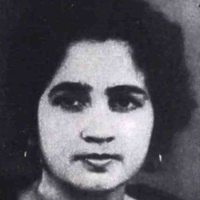
Profile of Jilani Bano
Born : 14 Jul 1936 | Badayun, Uttar pradesh
Died : 01 Mar 2026 | Hyderabad, Telangana
LCCN :n85211062
Identity: Distinguished short story writer, novelist, voice of feminist and social consciousness, and a notable chronicler of Hyderabadi culture
Jeelani Bano was born on 14 July 1936 in Badaun, Uttar Pradesh. Her father, Hairat Badauni, was a renowned poet of his time, and she inherited her literary inclination from him. Her family later moved to Hyderabad Deccan, where she was raised in a deeply literary and intellectual environment. Eminent writers such as Sajjad Zaheer, Makhdoom Mohiuddin, Jigar Moradabadi, Krishan Chander, and Majrooh Sultanpuri frequently visited their home, greatly influencing her intellectual and literary development.
Her first short story, "Ek Nazar Idhar Bhi," was written in 1952, while the publication of "Mom Ki Maryam" brought her widespread recognition and firmly established her place in Urdu fiction.
Jeelani Bano is regarded among the major Urdu fiction writers who portrayed Hyderabadi culture, feudal society, class conflict, women’s issues, and human suffering in their works. The marginalized sections of society—especially women, the oppressed, and the underprivileged—occupy a central place in her fiction. She maintained that she wrote not merely about women’s issues, but about the issues of humanity as a whole.
Major Works:
Short Story Collections: Roshni Ke Minar, Paraya Ghar, Roz Ka Qissa, Yeh Kaun Hansa, Tiryāq, Sach Ke Siwa, Kun, Rasta Band Hai
Novels and Novellas: Aiwan-e-Ghazal, Barish-e-Sang, Nirvan, Naghme Ka Safar, Jugnu Aur Sitare
Other Works: Narsiya Ki Baori (Drama), Main Kaun Hoon (Memoir), Door Ki Awaazen (Letters)
Her novel "Aiwan-e-Ghazal" is considered a landmark in Urdu literature, portraying with artistic depth the decline of Hyderabadi feudal culture, the Telangana movement, the impact of Partition, and the fall of the Asaf Jahi state. Similarly, "Barish-e-Sang" is regarded as an important ideological novel depicting social, psychological, and political conflict.
Besides fiction, Jeelani Bano also worked in drama, translation, essay writing, and scriptwriting. She wrote the script for the well-known documentary "Hyderabad: A City, A Culture."
In recognition of her literary contributions, she received several prestigious honors, including the Andhra Pradesh Sahitya Akademi Award (1960), Soviet Land Nehru Award (1985), Qaumi Haali Award from Haryana Urdu Academy (1989), and the Government of India’s distinguished civilian honor, the Padma Shri (2001).
In Urdu literature, Jeelani Bano is remembered as a sensitive and dignified creative voice who brought women, society, culture, history, and human suffering into her literature with profound intellectual and artistic insight, thereby giving Urdu fiction a distinct new direction.
Death: She passed away on 1 March 2026.
USEFUL LINKS : | https://en.wikipedia.org/wiki/Jeelani_Bano
Tagged Under
Authority Control :The Library of Congress Control Number (LCCN) : n85211062