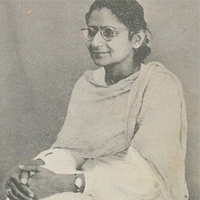
Profile of Saleha Aabid Husain
Pen Name : 'Saleha'
Real Name : Misdaq Fatima
Born : 18 Aug 1913 | Panipat, Haryana
Died : 08 Jan 1988 | Delhi, India
Relatives : Khwaja Gulamus Saqlain (Father), Iqbal Mehdi (Son), Fatima Zaidi (Sister), Sughra Mehdi (Daughter)
Identity: Novelist, short story writer, playwright and biographer
Saleha Abid Hussain is a respected name in Urdu literature whose writings played an important role in social reform and the struggle for women’s rights. She was not only a distinguished writer but also an intellectual heir to the great Urdu poet Maulana Altaf Hussain Hali.
Her real name was Misdaq Fatima. She was born on 18 August 1913 in the historic city of Panipat (Haryana). She belonged to a highly educated and eminent family. Her father, Khwaja Ghulam-us-Saqlain, was a noted scholar and editor of the journal Asr-e-Jadeed. Her mother Mushtaq Fatima was the granddaughter of the celebrated poet and critic Altaf Hussain Hali. Although her father passed away when she was only two years old, the scholarly atmosphere at home continued to nurture her intellect.
At that time there were no schools for girls in Panipat, so her uncle Sajjad Hussain founded the Hali Muslim Girls School, from where she completed her middle education. In 1933 she married the renowned educationist and writer Dr. Abid Hussain. This partnership greatly refined her creative abilities. After many years she obtained the degree of Adeeb Fazil from Punjab in 1961 and later passed the matriculation examination privately. She had a deep love for English literature and was greatly influenced by Tagore and Sarat Chandra Chattopadhyay.
Her first short story was “Lambi Dāṛhi Wālā Būṛhā” (The Old Man with the Long Beard). Her works were regularly published in leading literary journals such as Adab-e-Lateef, Naqoosh, Saqi and Makhzan. Her prose style is simple, fluent and graceful. She preferred clarity over complexity so that meaning could reach the reader directly.
Her literary output spans novels, short stories and plays. Major novels include:
Azra, Aatish-e-Khamosh, Qatre se Gohar Hone Tak, Yadon ke Chiragh, Rah-e-Amal, Apni Apni Saleeb, Uljhi Dor, Saatwan Aangan, and Gori Soe Paij Par.
Short story collections:
Naqsh-e-Awwal, Saaz-e-Hasti, Niraas mein Aas, Nau Nange, Dard-e-Darmaan, Teen Chehre Teen Awaazein.
Plays:
Zindagi ke Khel, Imtihan, Waqt ki Shaadi, Bade Miyan, Aankh ka Doctor.
She also made significant contributions to children’s literature, including “Sunahre Baalon Wale”, “Jadoo ka Hiran”, “Sundar Chinar” and “Bachchon ke Altaf Hussain Hali.”
Her most important biographical work is “Yadgar-e-Hali,” a detailed account of Hali’s life and services. Other notable biographical books are “Jane Walon ki Yaad Aati Hai” and “Zikr-e-Jameel,” while “Silsila Roz-o-Shab” is her autobiography.
The central focus of her fiction is women and social reform. Themes such as marriage customs, dowry, divorce and mismatched marriages recur frequently. She portrays women not merely as romantic figures but within a framework of dignity, moral purity and Islamic ethical values.
Although critics do not place her on the same technical pedestal as Qurratulain Hyder or Ismat Chughtai, she holds a distinct and respected position for her understanding and depiction of social issues.
In recognition of her literary services, the Government of India awarded her the Padma Shri in 1983.
Death: She passed away on 8 January 1988 in New Delhi and was laid to rest in the Jamia Nagar cemetery.
USEFUL LINKS : | https://en.wikipedia.org/wiki/Saliha_Abid_Hussain