 For any query/comment related to this ebook, please contact us at haidar.ali@rekhta.org
About The Author
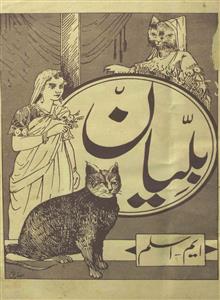
M. Aslam, whose real name was Mian Muhammad Aslam, was born on 6 August 1885 into a distinguished family in Lahore. His father, Mian Nizamuddin, was a pious and benevolent man devoted to social welfare. M. Aslam received his education at Government College, Lahore, where Allama Iqbal was serving as a professor of philosophy. Iqbal played an important role in shaping his literary interests and encouraged him to pursue prose writing.
M. Aslam began his literary career with poetry but later established himself as a writer of fiction, novels and critical essays. He became particularly well known for his novels and is credited with writing more than two hundred of them. His works reflect romance, imagination, realism and a wide range of human emotions. His stories and novels portray the social life of Indian villages and cities, alongside the customs and cultural traditions of Europe, Egypt, Russia, Turkestan, Arabia, China and Japan.
His notable novels include Fatima Ki Aap Beeti, Aroos-e-Ghurbat, Maarka-e-Badr, Fatah-e-Makkah, Subah-e-Uhad, Muhasara-e-Yasrib, Abu Jahl, Joo-e-Khoon, Pasban-e-Haram, Shamsheer-e-Sitam, Bint-e-Haram, Ghazala-e-Sahra, Fitna-e-Tatar, Khoon-e-Shaheedan, Raqs-e-Iblis, Mirza Ji, Gunah Ki Raatein and Raqs-e-Zindagi. His prominent short-story collections include Sada Ba-Sahra, Naghma-e-Hayat and Gunahgar. He also translated works from English and produced an Urdu translation of Heer Ranjha, the celebrated Punjabi narrative poem by the legendary poet Waris Shah.
For any query/comment related to this ebook, please contact us at haidar.ali@rekhta.org