 For any query/comment related to this ebook, please contact us at haidar.ali@rekhta.org
About The Author
Identity: Linguist, researcher, manuscript expert, and revivalist of Dakhni literature
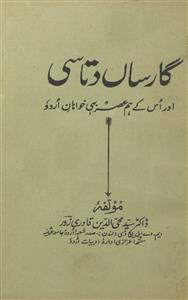
Muhiuddin Qadri Zor was born in 1904 in the Shah Ganj locality of Hyderabad Deccan. His father, Mir Ghulam Muhammad Shah Qadri al-Rifai, belonged to a lineage tracing back to Syed Ahmad Rifai. His ancestors migrated to the Deccan during the Tughlaq period and settled in the Kandhar region. Coming from a scholarly and spiritual family, his father was deeply engaged in religious pursuits.
Zor received his early education at Madrasa Darul Uloom, then studied at City High School and Osmania College. He completed his BA in 1925 and MA in 1927 with a scholarship. The same year he left for London and earned a PhD from the University of London. In 1930, he went to Paris to conduct research in phonetics and obtained a degree there, also visiting Geneva and Rome. Upon returning to Hyderabad, he was appointed Reader at Osmania University.
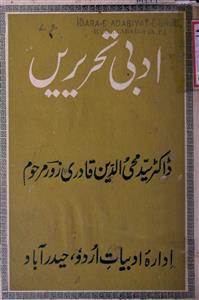
With his colleagues, he founded Idara-e-Adabiyat-e-Urdu, which became a major center for Dakhni and Urdu research. In 1950, after the merger of Darul Uloom and Chaderghat College, he was appointed Principal and served until 1960. He also founded the Abul Kalam Azad Oriental Research Institute. He was nominated as a member of the Sahitya Akademi by the Government of India, associated with the magazine Aaj Kal, and later served as Head of the Urdu Department and Dean at Kashmir University.
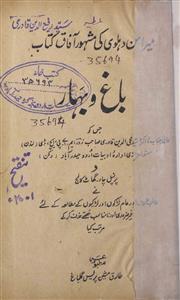
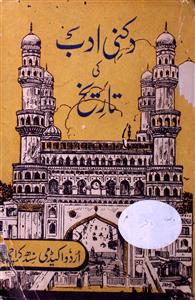
Dr. Zor was both a linguist and a researcher. His role in giving academic recognition to Dakhni literature and incorporating it into the history of Urdu is foundational. He recovered early Dakhni literary sources and established Dakhni studies as a formal academic field. His first book Urdu Shah Pare reflects this interest. Tazkira Gulzar-e-Ibrahim and Tazkira Gulshan-e-Hind were published through his efforts. He wrote on the development of Urdu in the Osmania period and authored a concise yet important history of Dakhni literature that remains a reference work.
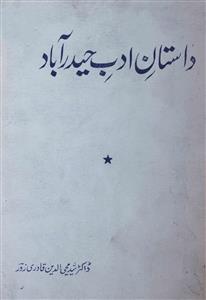
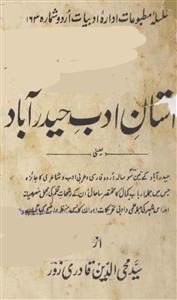
He highlighted Hyderabad’s poets, edited Volume II of Murqqa-e-Sukhan, wrote a detailed preface to the Kulliyat of Muhammad Quli Qutb Shah, and authored significant works like Hayat-e-Mir Momin and Dastan-e-Adab Hyderabad, surveying three centuries of Urdu, Persian, and Arabic literary traditions. His other notable works include Farukhanda Be Niyaz, Hyderabad Tazkira-e-Makhtutat (multiple volumes), and Ma’ani-e-Sukhan. He also wrote critical essays.
Later researchers disagreed with some of his views and pointed out certain errors, yet his pioneering work in Dakhni linguistics and literature remains a guiding light. Much subsequent research has built upon the foundations he laid.
Death: He passed away in Kashmir on 24 September 1962.
For any query/comment related to this ebook, please contact us at haidar.ali@rekhta.org