For any query/comment related to this ebook, please contact us at haidar.ali@rekhta.org
About The Author
Identity: A popular novelist, historian, journalist, and translator
Rashid Akhtar Nadwi was born on 13 January 1918 in Delhi. He received his early education there, then joined Darul Uloom Nadwatul Ulama, from where he obtained his degree of Fazilat. He later enrolled at Jamia Millia Islamia and completed his Bachelor’s degree.
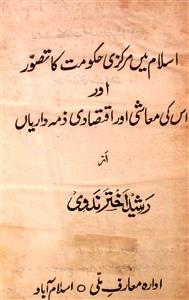
After completing his education, he pursued a career in journalism and served as a news editor and chief editor for several newspapers in Delhi, Lahore, and Peshawar. In 1973, he was appointed Secretary of Idara Ma'arif-e-Milli (Islamabad), where he contributed significantly to academic and research activities.
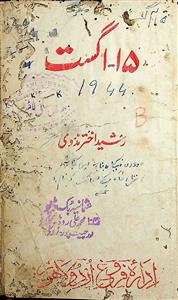
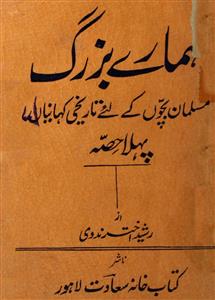
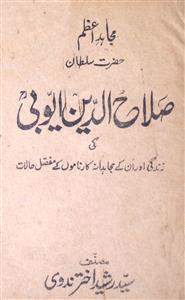
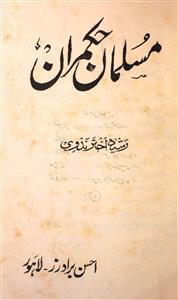
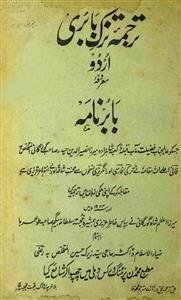
Rashid Akhtar Nadwi was a versatile literary figure. He was simultaneously a historian, journalist, translator, and novelist. His major contribution in translation includes rendering Tuzuk-e-Babri and Humayun Nama from Persian into Urdu. In historical writing, he showed a special inclination towards biographical history, reflected in his works such as Muhammad Rasul Allah (later revised as Muhammad Sarwar-e-Do Alam), Khulafa-e-Rashideen, Umar bin Abdul Aziz, Salahuddin Ayyubi, and Aurangzeb.
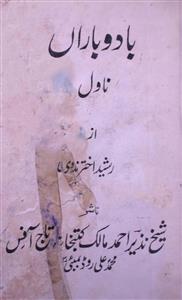
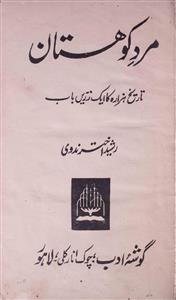
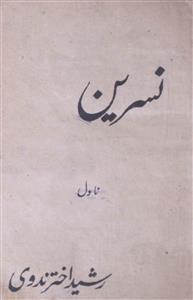
In literature, he gave a new direction to the Urdu novel. He authored around two dozen historical, social, psychological, and romantic novels, among which Saz-e-Shikasta, Soz-e-Daroon, Saudai, Nasreen, and Tashnagi gained particular popularity. His novels are marked by simplicity and fluency of language, vivid characterization, effective dialogue, and deep psychological insight. Themes of sorrow, social contradictions, and human struggle are powerfully depicted in his works.
Death: He passed away on 21 July 1992 in Murree (Pakistan) and was laid to rest in the central cemetery of Islamabad.
For any query/comment related to this ebook, please contact us at haidar.ali@rekhta.org