 For any query/comment related to this ebook, please contact us at haidar.ali@rekhta.org
About The Author
Identity: A distinguished Urdu poet, expert in lexicography and grammar, and a proactive leader for the preservation of the Urdu language.
Khwaja Muhammad Abdul Rauf Khan, popularly known as Ishrat Lakhnavi, was born on June 19, 1868, in Lucknow. He was a renowned Urdu poet, man of letters, lexicographer, researcher, and a key literary leader active in the protection and promotion of the Urdu language. He belongs to that elite group of writers who did not merely compose poetry but also rendered significant services to the linguistic foundations, grammar, idioms, and the compilation of Urdu dictionaries.
Ishrat Lakhnavi belonged to the royal family of Balkh. Among his ancestors, Abdul Shakoor Khan moved from Delhi to Faizabad, where Nawab Shuja-ud-Daula granted him the title of 'Khan Bahadur' and the governorship of the Allahabad Fort. Later, the family settled in Lucknow. His father, Khwaja Muhammad Abdul Shakoor, served as a police official (Thanedar) in Nawabganj, Gonda.
He received his early education from Maulvi Umeed Ali Kidwai, and subsequently studied Persian under his maternal uncle, Maulvi Mehdi Hasan, gaining mastery over the Persian language at a very young age. He acquired Arabic education from Maulvi Fateh Muhammad Lakhnavi and Maulvi Faryad Hussain Moradabadi. Due to household responsibilities, his formal education was discontinued early; however, he continued his self-study relentlessly.
When he developed a passion for poetry, he sought guidance from Sheikh Muhammad Jan Shad, who, recognizing his extraordinary talent, permitted him to compose ghazals. In poetry, Ishrat Lakhnavi adopted the simple, idiomatic, and poignant style of Mir Taqi Mir as his ideal, avoiding complex Persianized structures. For him, a good couplet was one that was clear, smooth, rich in meaning, and evocative.
Ishrat Lakhnavi’s literary persona was not confined to poetry; he was also a preeminent expert in Urdu lexicography, grammar, and idioms. He authored several important books on Urdu idioms, verbs, infinitives, nouns, and linguistics. His prominent scholarly and literary works include:
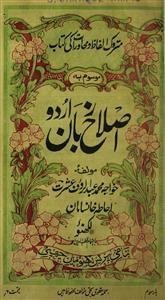
Islah-e-Zaban-e-Urdu: (An authoritative book on obsolete words and correct usage).
Zaban Dani: (A book on the rules of grammar).
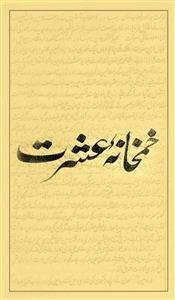
Khumkhana-e-Ishrat: (His poetic collection).
Lughat-e-Urdu: (A multi-volume dictionary).
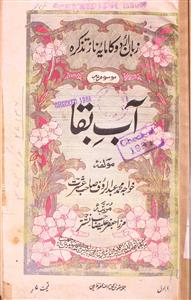
Aab-e-Baqa: (A biographical account).
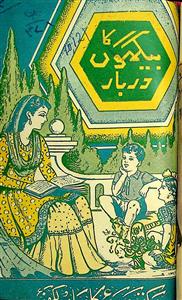
Begumon ka Darbar, Hindu Shuara, and Qawaid-e-Mir.
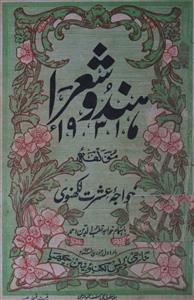
The Poetry Series: (Consisting of the First, Second, Third, Fourth, and Fifth Books of Poetry, a five-part series detailing the principles, artistic debates, and technical nuances of the craft of poetry).
He served as the Secretary of 'Anjuman Islah-e-Sukhan', a famous literary organization established in Lucknow for the preservation of the Urdu language. From this platform, he worked extensively for the promotion of Urdu, the accuracy of the language, and the protection of idiomatic standards. His articles in favor of Urdu were published in various newspapers and journals across the subcontinent, and his intellectual efforts strengthened movements for the advancement of the language.
Death: He passed away on June 9, 1940, in Lucknow.
For any query/comment related to this ebook, please contact us at haidar.ali@rekhta.org