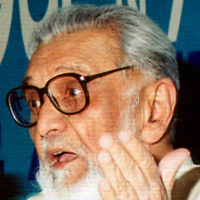
Profile of Ashfaq Ahmad
Real Name : Ashfaq Ahmad
Born : 22 Aug 1925 | Muktsar, Punjab
Died : 07 Sep 2004 | Lahore, Punjab
Relatives : Bano Qudsiya (Wife)
Identity: Renowned Short Story Writer, Dramatist, Novelist, Broadcaster, and Host of the Popular TV Show “Zavia”
Ashfaq Ahmed was born on 22 August 1925 in Khanpur village of Hoshiarpur district, British India. He belonged to a traditional Pathan family. He received his early education in Ferozepur, where he completed his Matriculation, Intermediate, and Bachelor’s degree. After the Partition of India, he migrated to Pakistan with his family and earned an M.A. in Urdu from Government College Lahore. During this period, Bano Qudsia was his classmate, whom he later married.
Ashfaq Ahmed obtained diplomas in Italian and French languages from the University of Rome in Italy and Grenoble University in France, respectively. He also received specialized training in broadcasting from New York University. He began his professional career as a lecturer at Dayal Singh College, Lahore, and later served as a teacher of Urdu at the University of Rome. Upon returning to Pakistan, he launched the literary magazine Dastan Go and also edited the weekly Lail-o-Nahar. In 1967, he was appointed Director of the Central Urdu Board (later renamed Urdu Science Board), where he remained associated for many years.
Ashfaq Ahmed is regarded as one of the most distinguished figures in Urdu literature, having established a unique identity in fiction, novels, drama, radio, television, and column writing. His short story Gadariya (The Shepherd), published in 1953, brought him widespread fame. He introduced Punjabi expressions, rural atmosphere, and lively conversational style into Urdu prose in a highly creative manner.
His notable works include Ek Mohabbat Sau Afsane, Ujlay Phool, Tota Kahani, Man Chalay Ka Sauda, Safar Dar Safar, Shehr-e-Arzoo, Guldan, Band Gali, and Zavia. His television drama serial Ek Mohabbat Sau Afsane is considered one of the classic productions of Pakistan Television.
In 1965, he started the weekly radio program Talqeen Shah on Radio Pakistan, which became immensely popular because of its distinctive humorous and symbolic style and continued for more than three decades. In later years, his intellectual and spiritual television program Zavia gained extraordinary popularity, in which he discussed life, morality, Sufism, and human psychology through anecdotes, stories, and everyday experiences.
Ashfaq Ahmed’s writings reflect deep humanism, spirituality, Eastern values, and inner consciousness. Dialogues hold a central place in his dramas and stories, while his characters appear closely connected to ordinary life.
Death: Ashfaq Ahmed passed away on 7 September 2004 in Lahore.
USEFUL LINKS : | https://en.wikipedia.org/wiki/Ashfaq_Ahmed