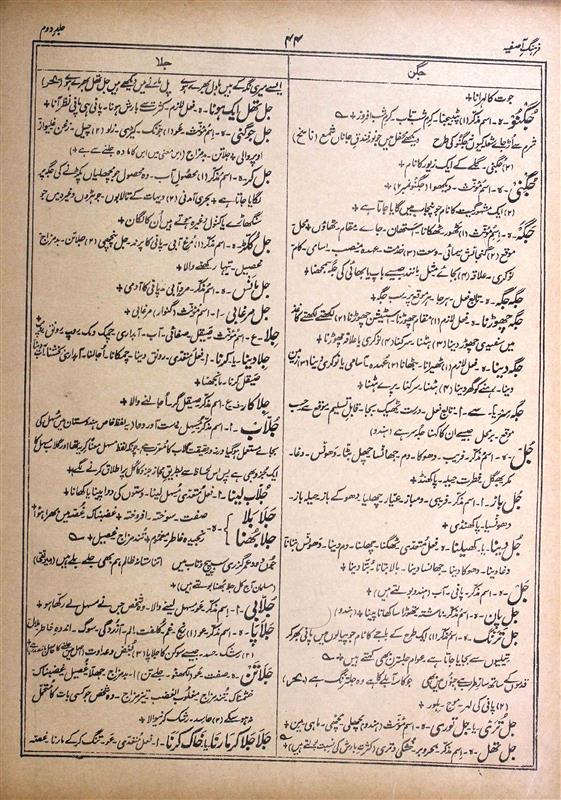
جگه जगह jagah
H جگه जगह jagah [S. ज+गातु, by redupl.; cf. P. jā, and gāh, and jāʼe-gāh], s.f. Place, station, quarter, locality; room, stead; vacant space, blank; opening, vacancy, post, appointment, situation; fit occasion (as for anger, &c.):—jagah-jagah, adv. Here and there; everywhere:—jagah ćhoṛnā, v.n. To leave a place; to leave a vacant space or blank:—jagah denā (-ko), To give place or room (to); to place; to make room (for), to lodge:—jagah sir honā, jagah-se honā, v.n. To be in place, to be opportune or proper:—jagah-meṅ, jagah, adv. & postpn. In the place or room (of, -kī), instead (of).
جاگا जागा jāgā
H جاگا जागा jāgā, s.f. (prov.)=jagah, q.v.
جوگا जोगा jogā
H جوگا जोगा jogā = H جوگ जोग jog [Prk. जोग्गो, or जोग्गओ=S. योग्यः, or योग्य+कः], adj. Useful, serviceable: fit, becoming, suitable proper, appropriate; apposite; applicable; fit for, qualified for; able, capable of, adequate; advisable; (in comp. jog answers to -able, -worthy, &c.; e.g. bar-jog, lit. 'fit for a bridegroom'; marriageable).
جوگي जोगी jogī
H جوگي जोगी jogī [S. योगी], s.m. One who performs the kind of religious exercise called jog, a contemplative saint; a devotee, an ascetic, a hermit; one supposed to have obtained supernatural powers, a magician, a conjurer;—name of a particular mixed caste who are commonly weavers (this caste do not burn but bury their dead; and the women are sometimes buried alive with the corpses of their husbands).
جگا जगा jagā
H جگا जगा jagā, part. adj. contrac. of jāgā, q.v.