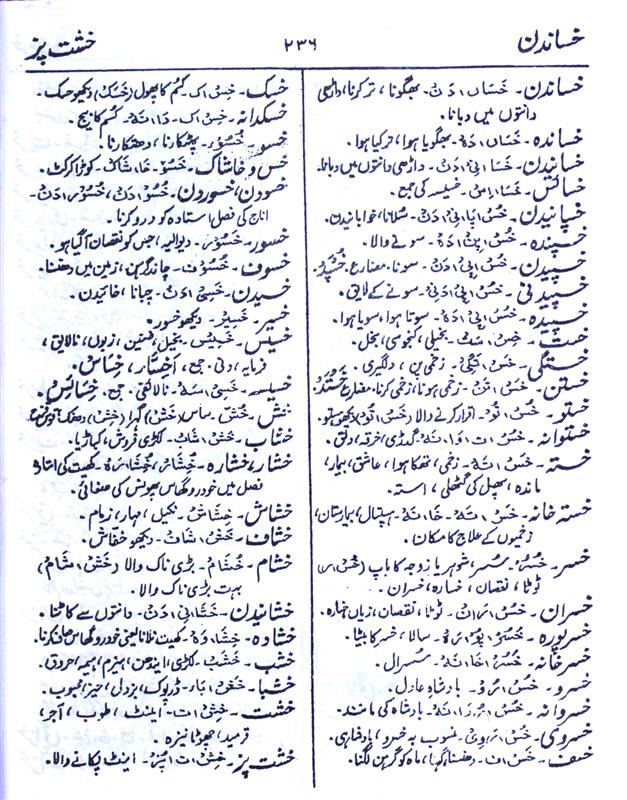
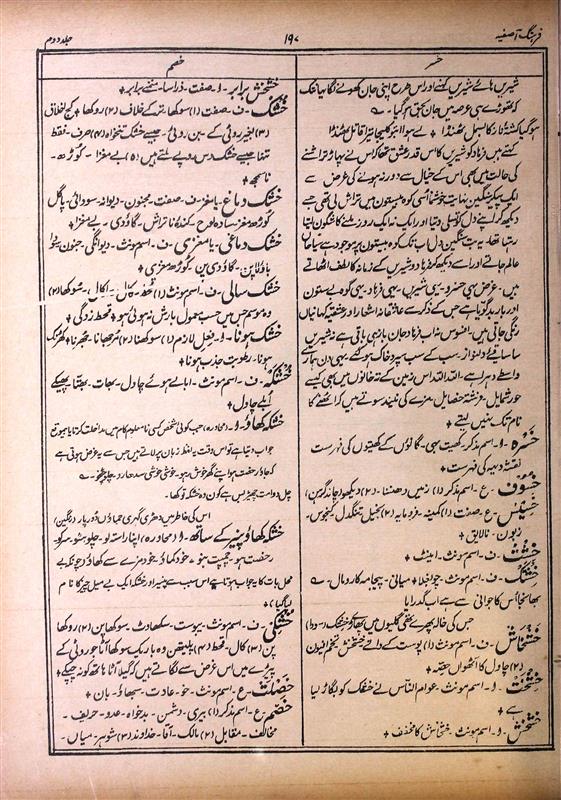
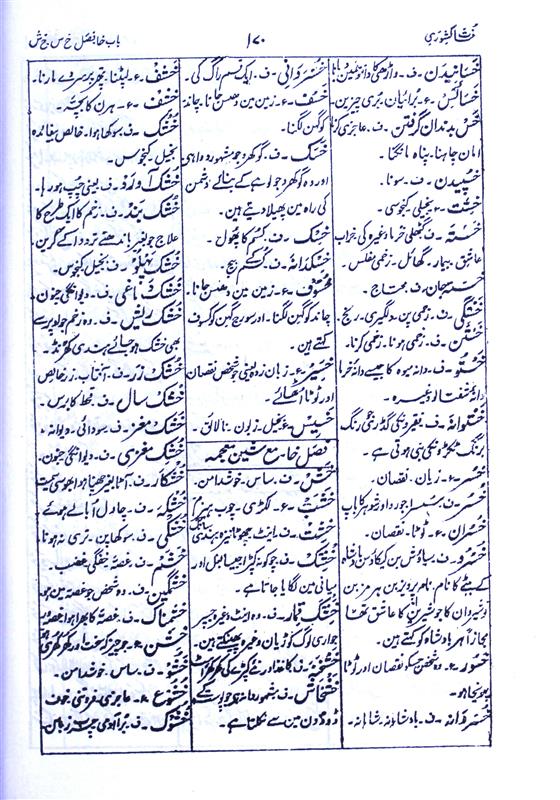
خسيس ḵẖasīs fr. خسّ 'to be base, or sordid,' c.
A خسيس ḵẖasīs (fr. خسّ 'to be base, or sordid,' &c.), adj. Low, ignoble, base, vile; mean, sordid, stingy, avaricious, penurious.
خصوص ḵẖuṣūṣ inf. n. of خصّ 'to particularize,' c.
A خصوص ḵẖuṣūṣ (inf. n. of خصّ 'to particularize,' &c.), s.m. Doing anything particular;—particularity, speciality;—affair, business, thing, particular;—adv. Particularly, &c. (=ḵẖuṣūṣaṉ):—al-ḵẖuṣūṣ, biʼl-ḵẖuṣūṣ, adv.=ḵẖuṣūṣaṉ, q.v.
خس ḵẖass, vulg. ḵẖas
A خس ḵẖass, vulg. ḵẖas, s.m.(?) Lettuce, Lactuca sativa.
خاص ḵẖāṣṣ, vulg. ḵẖāṣ v.n. fr. خصّ 'to distinguish or particularise, c.
A خاص ḵẖāṣṣ, vulg. ḵẖāṣ (v.n. fr. خصّ 'to distinguish or particularise, &c.), adj. Distinguished (from others), particular, peculiar, special, distinct; private; kept for private use (of a king or a master), personal, own, proper;—choice, select, choicest, best; pure, unmixed, unadulterated; excellent, noble;—adv. Particularly, peculiarly, especially, &c.:—ḵẖāṣ-bardār, s.m. An attendant who carries the arms of his master;—a servant who (in a great man's retinue) carries a firelock:—ḵẖāṣ-patī, s.f. Sweetmeats of various kinds brought in as dessert:—ḵẖāṣ-taḥṣīl, s.f. Government collections without the intervention of a zamīndār or farmer of the revenue:—ḵẖāṣ-ćelā, s.m. The head disciple in a monastery (the destined successor of the mahant or head of the establishment):—ḵẖāṣ-ḵẖāṣ-log, Persons of distinction, or of rank and consideration; persons who have access to the private council, chiefs, nobles, ministers:—ḵẖāṣ-ḵẖawās, The servants (or a servant) of a king or a great man:—ḵẖāṣ-dān, s.m. A kind of canteen to carry water vessels in;—a betel-dish or box with a cover;—a wallet; a portmanteau:—ḵẖāṣ zamīn, s.m. Land of which the revenue is collected by the Government officers immediately from the cultivators:—ḵẖāṣ-kar or kar-ke, adv. In particular, particularly, especially, &c.:—ḵẖāṣ karnā, v.t. To distinguish, to particularize, to specify; to apply to any particular use;—to consecrate:—ḵẖāṣ-maḥāl, s.m. An estate managed by the Government:—ḵẖāṣ-maḥal, Private (female) apartment, the apartments of married women (op to ḵẖurd-maḥal, 'apartments of concubines'); (met.) first married wife:—ḵẖāṣ-navīs, s.m. A private clerk or secretary:—ḵẖāṣṣ-o-ʻām, adj. & s.m. Noble and plebeian, high and low; the public.