- Index of Books 180696
-
-
Book Categories
-
Activities89
Children's Literature1988
Drama921 Education347 Essays & Profiles1377 Fiction1653 Health108 History3344Humorous604 Journalism201 Language & Literature1145
Letters726 Life Style30 Medicine974 Movements268 Novel4278 Political349 Religions4769Research & Criticism6699Short-story2670 Sketches236 Social issues111 Sufism / Mystic2014Text Books440 Translation4190-
Book Categories
- Bait Bazi14
- Catalogue / Index4
- Couplets68
- Deewan1254
- Doha49
- Epics100
- Exegesis186
- Geet63
- Ghazal1265
- Haiku11
- Hamd59
- Humorous31
- Intikhab1583
- Keh mukarni6
- Kulliyat571
- Mahiya20
- Majmua4874
- Marsiya387
- Masnavi736
- Musaddas44
- Naat590
- Nazm1209
- Others84
- Paheli14
- Qasida179
- Qawwali16
- Qit'a67
- Quatrain264
- Quintuple15
- Rekhti12
- Remainders16
- Salaam34
- Sehra12
- shahr-Ashob, Hajw, Zatal Nama17
- Tareekh-Goi26
- Translation75
- Wasokht24
Profile of Shaikh Mohammad Ikram
Identity: Renowned historian, biographer, writer, and a distinguished scholar of Muslim history in the Indian subcontinent
Sheikh Muhammad Ikram was born on 10 September 1908 in Rasulnagar, District Gujranwala (now in Pakistan), into a well-educated family. His father, Sheikh Fazal Kareem, was a qanungo and had a deep interest in learning and religion. He received his early education in Kacha Gojra and Wazirabad, and passed his matriculation in 1924 from Lyallpur (now Faisalabad).
He completed his B.A. (Persian, English, Economics) from Government College Lahore in 1928 and his M.A. in English Literature in 1930. During his student life, he developed a strong interest in Persian language and literature, which later reflected in his writings.
In 1931, he passed the Indian Civil Service (ICS) examination and was sent to Oxford University (Jesus College) for training. After returning, he served in various administrative positions in British India.
After the creation of Pakistan, he opted for Pakistan and served in the Civil Service of Pakistan. On 1 July 1966, he was appointed Director of the Institute of Islamic Culture, Lahore, a position he held until his death.
Despite his official responsibilities, he made remarkable contributions to literature and scholarship. Initially writing in Urdu, he later produced significant works in English, especially during his tenure as a visiting professor at Columbia University (New York).
Major Urdu Works:
On Ghalib: Hayat-e-Ghalib, Hakim-e-Farzana, Armaghan-e-Ghalib
On Shibli: Shibli Nama, Yadgar-e-Shibli
Muslim intellectual history (three volumes):
Aab-e-Kausar
Rud-e-Kausar
Mauj-e-Kausar
Major English Works:
Makers of Pakistan and Modern Muslim India
Modern Muslim India and the Birth of Pakistan
History of Muslim Civilization in India and Pakistan
Muslim Civilization in India
Muslim Rule in India and Pakistan
These works provided a strong foundation for understanding Muslim history in the subcontinent globally.
His writing is distinguished by analytical depth, historical insight, and balanced perspective. He not only narrates events but also interprets their intellectual and cultural significance.
Honors and Awards:
Honorary D.Litt., Punjab University (1964)
Sitara-e-Imtiaz (1965)
Iranian Order of Merit
Pride of Performance (1971)
Death: He passed away on 17 January 1973 in Lahore.
USEFUL LINKS : | https://en.wikipedia.org/wiki/S._M._Ikram
Tagged Under
join rekhta family!
-
Activities89
Children's Literature1988
-
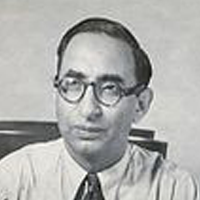
An authoritative historian of the Muslim cultural history of the subcontinent, a Ghalib scholar, and the author of the 'Kausar' trilogy'