- Index of Books 180433
-
-
Book Categories
-
Activities89
Children's Literature1980
Drama917 Education341 Essays & Profiles1363 Fiction1572 Health104 History3266Humorous593 Journalism200 Language & Literature1625 Letters727
Life Style30 Medicine969 Movements268 Novel4269 Political350 Religions4763Research & Criticism6519Short-story2666 Sketches232 Social issues109 Sufism / Mystic2007Text Books424 Translation4195Women's writings5755-
Book Categories
- Bait Bazi14
- Catalogue / Index4
- Couplets68
- Deewan1249
- Doha49
- Epics100
- Exegesis181
- Geet63
- Ghazal1259
- Haiku11
- Hamd57
- Humorous31
- Intikhab1581
- Keh mukarni6
- Kulliyat571
- Mahiya20
- Majmua4870
- Marsiya387
- Masnavi737
- Musaddas44
- Naat588
- Nazm1201
- Others84
- Paheli14
- Qasida177
- Qawwali16
- Qit'a67
- Quatrain263
- Quintuple15
- Rekhti12
- Remainders16
- Salaam34
- Sehra12
- shahr-Ashob, Hajw, Zatal Nama17
- Tareekh-Goi25
- Translation74
- Wasokht24
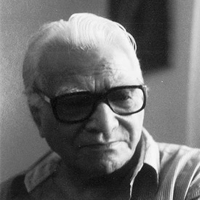
Profile of Shaukat Siddiqui
Pen Name : 'Shaukat Siddiqui'
Real Name : Shaukat Siddiqui
Born : 20 Mar 1923 | Lucknow, Uttar pradesh
Identity: Distinguished Novelist, Short Story Writer, Progressive Writer, and Journalist
Shaukat Siddiqui was born on 20 March 1923 in Lucknow. He received his early education in his hometown, earned a Bachelor's degree in 1944, and later completed a Master's degree in Political Science from Lucknow University. Following the Partition of India, he migrated to Pakistan in 1950. He initially settled in Lahore but soon made Karachi his permanent home. His early years in Pakistan were marked by financial hardships and political opposition, which he successfully overcame.
He was an active member of the Progressive Writers’ Association and the Pakistan Writers’ Guild, playing a significant role in advancing the progressive literary movement in the subcontinent. Siddiqui began his journalistic career in 1944 with the monthly magazine 'Tarkash' in Lucknow. Later, he worked on the news desks of Karachi’s leading English-language newspapers, including Times, Pakistan Standard, and Morning News. Through dedication and hard work, he rose to become the chief editor of prominent Urdu newspapers such as Daily Anjaam, Weekly Al-Fatah, and Daily Musawat. He retired from journalism in 1984.
Shaukat Siddiqui skillfully employed the technique of Socialist Realism in his writings. Rather than leaving his characters trapped in despair and passivity, he encouraged them to assert themselves and shape their own destinies. He portrayed the lives of Karachi’s underprivileged and impoverished communities with remarkable realism. His commitment to truth and his faith in humanity’s future remained the guiding principles of his literary career.
His first short story, “Kaun Kisi Ka”, appeared in the Lahore weekly Khayyam. In 1952, his first collection of short stories, Teesra Admi (The Third Man), was published and received widespread acclaim. This was followed by Andhere Dur Andhere (1955), Raaton Ka Shehar (1956), and Keemyagar (1984).
His most celebrated work is the novel Khuda Ki Basti (1957), widely regarded as a classic of Urdu literature. The novel has been adapted into several successful television dramas and stage productions. His other notable novels include Kamingah (1956), Jangloos (published in three volumes, with the first volume appearing in 1978), and Char Deewari (1990), which contain fictionalized reflections of his childhood in Lucknow.
In recognition of his literary contributions, he was awarded Pakistan’s highest literary honor, the Kamal-e-Fun Award (Lifetime Achievement Award), in 2003. Earlier, in 1960, he received the Adamjee Literary Award.
Death: Shaukat Siddiqui passed away on 18 December 2006 in Karachi at the age of 83 due to cardiac arrest.
USEFUL LINKS : | https://en.wikipedia.org/wiki/Shaukat_Siddiqui
Tagged Under
join rekhta family!
-
Activities89
Children's Literature1980
-