- Index of Books 180695
-
-
Book Categories
-
Activities89
Children's Literature1989
Drama921 Education347 Essays & Profiles1376 Fiction1655 Health108 History3343Humorous603 Journalism201 Language & Literature1141
Letters724 Life Style30 Medicine974 Movements268 Novel4275 Political349 Religions4769Research & Criticism6695Short-story2671 Sketches237 Social issues111 Sufism / Mystic2014Text Books440 Translation4185-
Book Categories
- Bait Bazi14
- Catalogue / Index4
- Couplets70
- Deewan1254
- Doha50
- Epics99
- Exegesis186
- Geet63
- Ghazal1263
- Haiku11
- Hamd59
- Humorous31
- Intikhab1582
- Keh mukarni6
- Kulliyat571
- Mahiya20
- Majmua4874
- Marsiya386
- Masnavi736
- Musaddas44
- Naat590
- Nazm1209
- Others84
- Paheli14
- Qasida179
- Qawwali16
- Qit'a67
- Quatrain264
- Quintuple15
- Rekhti12
- Remainders16
- Salaam34
- Sehra12
- shahr-Ashob, Hajw, Zatal Nama17
- Tareekh-Goi26
- Translation75
- Wasokht24
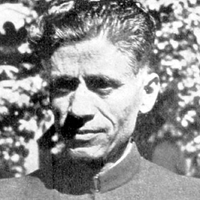
Profile of Waqar Azeem
Identity: Critic, Writer, Researcher
Syed Waqar Azeem was a prominent Urdu critic, researcher, and teacher who did foundational work in the fields of short stories, novels, and dastan. He holds an important place in Urdu criticism and was considered highly influential in literary circles of his time.
Syed Waqar Azeem was born in 1910 in Allahabad. His father, Maqbool Azeem, worked in the police department and was also a poet with the pen name “Arsh.” His family originally belonged to Gangoh (U.P.), while his maternal family was in Meerut. His early education took place at home—his mother taught him Urdu, religious studies, and some Persian, while a pandit taught him Hindi, in which he gained strong proficiency.
Later, he studied at the Government High School in Unnao and passed middle school there. During this time, he developed a passion for reading, and his first article was published in a local newspaper. He then joined Government Jubilee College and began writing short stories. In 1933, he completed his B.A. from Lucknow University and later earned an M.A. in Urdu from Allahabad, where he benefited from teachers like Syed Ejaz Hussain. During this period, he also developed academic connections with Firaq Gorakhpuri and other scholars.
After completing his education, due to financial difficulties, he started teaching at a school of Jamia Millia Islamia. Later, with the support of Dr. Zakir Hussain, he joined a polytechnic institute. In 1946, he became the editor of the magazine “Aaj Kal,” but after the partition of India, he moved to Karachi, where he worked as the editor of “Maah-e-Nau.”
In 1950, he was appointed as a lecturer in Urdu at the Oriental College, University of the Punjab. He was later promoted to Reader, Professor, and eventually became the Principal of the college, retiring from this position.
Syed Waqar Azeem carried out critical and research work on short stories, novels, and dastan. His notable works include:
Hamare Afsane
Afsana Nigari
Dastan se Afsane Tak
Hamari Dastanen
These books greatly benefited students and writers of his time. He presented the principles and discussions of literary genres in a systematic and scientific manner and secured a lasting place in Urdu criticism. According to Malik Ram, Waqar Azeem stands as a “bridge” between Hali and progressive critics—he was influenced by Hali but did not adopt his reformist approach, and although he was associated with the progressive movement, he did not agree with its extreme ideas.
He also worked on Allama Iqbal and wrote a book titled “Iqbal: Poet and Philosopher.” He also composed some poetry, but his main recognition came from his work in literary criticism.
Death: He passed away on 17 November 1976 in Lahore.
USEFUL LINKS : | https://ur.wikipedia.org/wiki/%D8%B3%DB%8C%D8%AF_%D9%88%D9%82%D8%A7%D8%B1_%D8%B9%D8%B8%DB%8C%D9%85
join rekhta family!
-
Activities89
Children's Literature1989
-