 For any query/comment related to this ebook, please contact us at haidar.ali@rekhta.org
About The Author
identity: Prominent prose writer, translator, poet of Fort William College, and one of the pioneers of early Urdu prose
Syed Haider Bakhsh Haidari was born in Delhi in 1768/69. His given name was Haider Bakhsh, while “Haidari” was his literary pen name. His father was Syed Abul Hasan. During his childhood, the family faced severe financial difficulties, forcing them to leave Delhi and settle in Banaras (Varanasi). There, Nawab Ali Ibrahim Khan, the administrator of the local court, took the family under his patronage and arranged for Haidari’s education.
Haidari received his education in the renowned madrasas of Banaras. He initially studied at the madrasa of Qazi Abdul Rashid and later learned Islamic sciences, including fiqh and hadith, under Maulvi Ghulam Husain Ghazipuri. After completing his studies, Nawab Ali Ibrahim Khan secured him a position in the court office. However, his true passion lay in reading, writing, and literary pursuits.
He authored a romance titled Qissa-e-Mehr-o-Mah and took it to Calcutta, where he met Dr. John Gilchrist, the head of Fort William College. Recognizing his literary talent, Gilchrist appointed him as a munshi (language scholar and writer) at the college. During his association with Fort William College, Haidari produced and translated numerous important works, making a significant contribution to the development of Urdu prose.
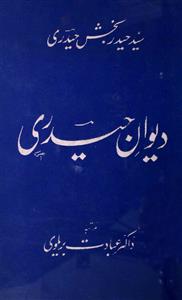
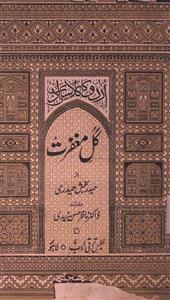
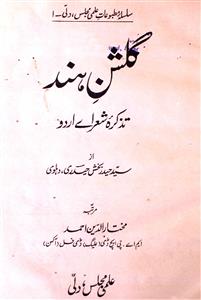
Haidari is regarded as one of the most prolific authors and translators associated with Fort William College. Although he was also a poet, his reputation primarily rests on his prose writings and translations. His major works include Qissa-e-Mehr-o-Mah, Laila Majnun, Haft Paikar, Tarikh-e-Nadiri, Gulshan-e-Hind, Tota Kahani, Araish-e-Mahfil, and Gul-e-Maghfirat.
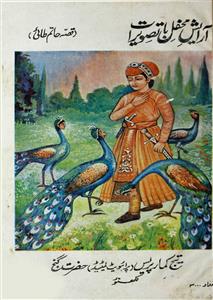
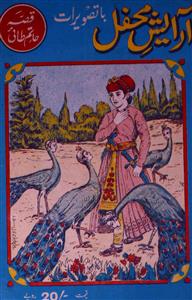
Tota Kahani is among his most celebrated works. It is an Urdu adaptation of a Persian abridgment of an ancient Sanskrit tale, rendered in a simple and engaging style. Araish-e-Mahfil is an Urdu version of the Persian tale of Hatim Tai, while Gul-e-Maghfirat is a translation and adaptation of the famous Persian work Rawzat al-Shuhada.
Haidari’s prose is characterized by fluency, elegance, simplicity, and effective use of idiomatic expressions. Although his language carries a strong Persian influence, his narrative charm and storytelling skill earned his works wide popularity. His contributions to the formative development of Urdu prose are considered highly significant. Compared with Mir Amman Dehlavi, his style was more Persianized, yet his literary refinement and narrative artistry secured him a distinguished place among the leading prose writers of his age.
Death: Syed Haider Bakhsh Haidari passed away in Banaras in 1823.
For any query/comment related to this ebook, please contact us at haidar.ali@rekhta.org