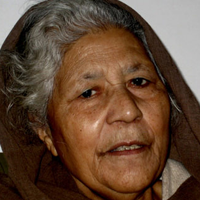
Profile of Bano Qudsiya
Pen Name : 'Bano Qudsiya'
Real Name : Qudsia Chattha
Born : 28 Nov 1928 | Firozpur, Punjab
Died : 04 Feb 2017 | Lahore, Punjab
Relatives : Ashfaq Ahmad (husaband)
Identity: Renowned fiction writer, playwright, spiritual thinker, and author of 'Raja Gidh'
Bano Qudsia was born on 28 November 1928 in Firozpur, British India, into an educated Muslim Jat family. Her original name was Qudsia Chattha. Her father, Chaudhry Badr-uz-Zaman Chattha, held a bachelor’s degree in agriculture, while her mother served as an Inspector of Schools in British India. After the Partition of India, she migrated to Lahore with her family. She received her education at Kinnaird College, Lahore, and later earned an M.A. in Urdu Literature from Government College Lahore in 1951.
At Government College, she met the renowned writer Ashfaq Ahmed, whom she later married. The couple came to be regarded as one of the most spiritually and intellectually connected literary pairs in Urdu literature.
Bano Qudsia is considered one of the most influential figures in Urdu literature, having enriched the field through novels, short stories, dramas, and reflective prose. Her celebrated novel Raja Gidh is regarded as a modern Urdu classic, exploring themes such as the concepts of halal and haram, human psychology, spiritual crises, and social values in a deeply symbolic manner.
She also wrote dramas in both Urdu and Punjabi. Her well-known plays include Aadhi Baat, Hawwa Kay Naam, Sehra, and Khaleej. Aadhi Baat is considered one of the classics of Urdu television drama.
Among her other notable works are Haasil Ghaat, Aik Din, Chahar Chaman, Footpath Ki Ghaas, Aatish-e-Zair-e-Paa, and Chhota Sheher Baray Log. She completed her husband Ashfaq Ahmed’s unfinished autobiography Baba Saheba by writing Raah-e-Rawaan, which presents an insightful study of his philosophical and spiritual personality. She also authored Mard-e-Abresham on Qudrat Ullah Shahab, a work highly appreciated in literary and spiritual circles.
Her writings prominently reflect spirituality, moral values, human psychology, Eastern culture, and inner consciousness. Her style was simple yet intellectually profound, making her immensely popular among both general readers and literary circles alike.
In recognition of her literary contributions, she received several prestigious honors from the Government of Pakistan, including the Sitara-i-Imtiaz, Hilal-i-Imtiaz, PTV Best Writer Award, and the Kamal-e-Fun Award.
Death: Bano Qudsia passed away on 4 February 2017 in Lahore.
USEFUL LINKS : | https://en.wikipedia.org/wiki/Bano_Qudsia