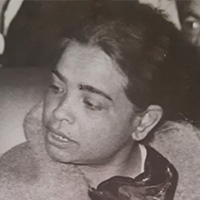
Profile of Sughra Mehdi
Real Name : Imamat Fatima
Born : 08 Aug 1937 | Bhopal, Madhya Pradesh
Died : 17 Mar 2014 | Delhi, India
Relatives : Aabid Husain (Uncle), Iqbal Mehdi (Brother), Azra Naqvi (Niece)
LCCN :n84207365
Identity: Eminent short story writer, novelist, social activist, and a powerful voice for the rights and issues of Muslim women.
Sughra Mehdi was born on 8 August 1937 (or 1938; some sources also mention 1927) in Bhopal. Her original name was Imamat Fatima, but later an elderly woman in the family renamed her “Sughra,” and this eventually became her literary identity. She was the niece of the renowned scholar Syed Abid Husain and grew up in an environment where education, literature, social awareness, and women’s welfare were deeply valued.
Sughra Mehdi spent her childhood in the qasbah of Bari (Badi) and the village of Daipur (Dachipur) in Bhopal district, Madhya Pradesh. As was customary at the time, her early education took place at home, after which she was admitted to the school in Bari. In 1950, she moved to Delhi and completed her secondary and higher education at Jamia Millia Islamia. She earned her B.A. from Aligarh Muslim University and later pursued higher studies at the University of Delhi and Jamia Millia Islamia. She also worked in teaching, translation, radio script writing, and editing. In 1977, she joined the Department of Urdu at Jamia Millia Islamia and retired in 1997. In her autobiography Hikayat-e-Hasti (2006), she candidly narrated the struggles and turning points of her life along with her intellectual evolution, making it an important example of self-expression by an Indian Muslim woman.
Her literary journey began at a very young age. While studying in the eighth grade, she wrote her first story, “Himmat ka Phal,” for the children’s magazine Khilone. Thereafter, her writings regularly appeared in important literary magazines such as Biswin Sadi, Bano, Aaj Kal, and Sab Ras.
Her first short story collection, Patthar ka Shehzada, was published in 1975 and introduced her as a distinctive new voice in Urdu fiction. It was followed by important collections such as Jo Mere Wo Raja ke Nahin, Pehchan, and Peshgoi. Her Hindi short story collection Gulabon Wala Bagh was also appreciated in literary circles.
She achieved equal distinction in novel writing. Her first novella, Koi Dard Ashna Bhi Nahin, appeared in 1969, while her first novel, Pa-ba-Jaulan, was published in 1972. Other important novels include Dhund, Parwai, Rag Bhopali, and Jo Bache Hain Sang Samet Lo.
Sughra Mehdi gave Urdu literature a balanced, dignified, and intellectually grounded feminist consciousness. In her writings, women do not merely appear as oppressed figures; rather, they emerge as sensitive human beings capable of thinking, making decisions, and asserting their identity. She explored the lives of Muslim middle-class women, their psychological struggles, family pressures, marriage, education, and economic independence with remarkable depth and honesty. Her style is marked by emotional intensity, psychological insight, and cultural awareness. Instead of endorsing extreme Western feminist ideas, she believed in a form of intellectual freedom that remained in harmony with Eastern culture, morality, and social balance.
Apart from fiction writing, Sughra Mehdi also made significant contributions to criticism, research, biography, and travel writing. Her book Urdu Novalon Mein Aurat ki Samaji Haisiyat is regarded as an important study of female characters in Urdu fiction. She also authored Adabi Mazamin, Hamari Jamia, and several literary and biographical works. She played a notable role in documenting the history of Jamia Millia Islamia, especially the contributions of women. For many years, she remained associated with the journals Jamia and Islam aur Asr-e-Jadid in editorial capacities.
Sughra Mehdi was not only a literary figure but also an active social worker. After retirement, she worked tirelessly for the rights, education, and legal protection of Muslim women. Through the “Muslim Women’s Forum,” she raised her voice on women’s issues, participated in seminars and legal discussions, and emphasized that women’s empowerment is closely linked to education and economic stability.
Death: Sughra Mehdi passed away on 17 March 2014 in Delhi.
USEFUL LINKS : | http://jamiajournal.com/2015/03/18/dr-sughra-mehdi-1937-2014-jamia-urdu-professor-writer-extraordinaire/
Tagged Under
Authority Control :The Library of Congress Control Number (LCCN) : n84207365