- Index of Books 180769
-
-
Book Categories
-
Activities90
Children's Literature1990
Drama923 Education347 Essays & Profiles1375 Fiction1655 Health108 History3351Humorous603 Journalism201 Language & Literature1142
Letters725 Life Style30 Medicine975 Movements268 Novel4284 Political349 Religions4779Research & Criticism6707Short-story2672 Sketches237 Social issues111 Sufism / Mystic2017Text Books441 Translation4198-
Book Categories
- Bait Bazi14
- Catalogue / Index4
- Couplets70
- Deewan1254
- Doha50
- Epics99
- Exegesis186
- Geet63
- Ghazal1269
- Haiku11
- Hamd61
- Humorous31
- Intikhab1583
- Keh mukarni6
- Kulliyat571
- Mahiya20
- Majmua4886
- Marsiya387
- Masnavi737
- Musaddas44
- Naat592
- Nazm1214
- Others84
- Paheli14
- Qasida179
- Qawwali16
- Qit'a68
- Quatrain264
- Quintuple15
- Rekhti12
- Remainders16
- Salaam34
- Sehra12
- shahr-Ashob, Hajw, Zatal Nama17
- Tareekh-Goi26
- Translation75
- Wasokht24
Profile of Abdul Qadir Sarwari
Real Name : Abdul Qadir
Born : 19 Aug 1906 | Hyderabad, Telangana
Died : 11 Mar 1971 | Srinagar, Jammu and Kashmir
Identity: A distinguished Urdu scholar, critic, expert in Dakhni studies, and manuscript specialist
Abdul Qadir Sarwari was born on 19 August 1906 in Hyderabad. His father, Haji Muhammad Sarwar, served in the Khazana Aamira. He received his early education from Maulvi Muhammad Jafri and later earned an M.A. in 1927 and an LL.B. in 1929 from Osmania University. During his studies, he benefited from eminent scholars such as Waheeduddin Salim Panipati and Maulvi Abdul Haq.
His teaching career began at Osmania University as a lecturer on the recommendation of Waheeduddin Salim. In 1942, he was appointed Professor and Head of the Urdu Department at Mysore University. He returned to Hyderabad in 1948 and served as Head of the Urdu Department at Osmania University until his retirement in 1961. In his later years, he was also associated with the postgraduate Urdu department in Srinagar (Kashmir).
Abdul Qadir Sarwari’s scholarly work was diverse and extensive. He is regarded as one of the early and significant critics of Urdu fiction. His book Duniya-e-Afsana (1929) is considered a foundational work in this field. He also played an important role in introducing Chinese, Japanese, English, and French short stories into Urdu through translations.
His work Jadeed Urdu Sha'iri (1932) was described by Malik Ram as a continuation of Hali’s Muqaddama-e-Sher-o-Shairi. Other notable works include Urdu Masnavi ka Irtiqa and A Literary History of Urdu.
He made significant contributions to the revival of classical Dakhni literature by editing and publishing works such as Ibn Nishati’s Phool Ban and San’ati’s Qissa-e-Benazir. He also conducted research on the poetry of Siraj Aurangabadi.
He was among the founders of Idara Adabiyat-e-Urdu (Hyderabad), along with Dr. Mohiuddin Qadri Zor, an institution that played a historic role in Urdu research and the publication of classical manuscripts.
Death: He passed away on 9 March 1970 in Srinagar due to a heart attack.
USEFUL LINKS : | https://www.dawn.com/news/1539630
join rekhta family!
-
Activities90
Children's Literature1990
-
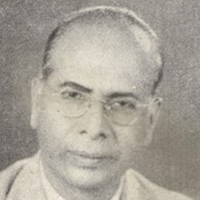
A distinguished Urdu critic and researcher, and an expert in Dakhni studies
A distinguished Urdu critic and researcher, and an expert in Dakhni studies