 For any query/comment related to this ebook, please contact us at haidar.ali@rekhta.org
About The Author
Identity: Journalist, novelist, labor leader, and champion of Indo-Pak friendship
Jamna Das Akhtar was born on November 2, 1916, in Rawalpindi. His father, Bhagwan Das Chhibber, belonged to the family of Bhai Mati Das and was a government employee. He received his early education at Sanatan Dharm High School and later attended D.A.V. College, Rawalpindi.
His journalistic journey began in 1931 as the Rawalpindi correspondent for the daily "Bande Matram" (Lahore). Later, he remained associated with several prominent newspapers, including "Sanatan Dharm Pracharak" (Amritsar), "Arjan" (Amritsar), "Veer Bharat" (Lahore), "Milap" (Lahore), and "Dev Bharat". From 1946 to 1947, he served as the Chief Editor of the daily "Jai Hind" published from Lahore. Following the Partition of India, he migrated to Delhi, where he continued the publication of "Jai Hind". He also rendered his services to "Savera" and the daily "Tej" (Delhi) and worked as a part-time lecturer in the Department of Journalism at Punjab University. His articles and columns were consistently published in numerous Pakistani newspapers, including Nawa-i-Waqt, Jang, Daily News, and MAG.
During the riots of 1947, he displayed exceptional humanitarian empathy and courage. He played a pivotal role in recovering thousands of abducted Muslim girls in Delhi, while during his visit to Pakistan, he successfully recovered Hindu and Sikh girls from Lahore, Sheikhupura, Lyallpur (Faisalabad), Jhang, and Bandarkot. To promote ties between the two nations, he established the "Indo-Pak Prem Sabha" and, through his social work, successfully rescued nearly two thousand girls from prostitution dens.
Alongside journalism, he was actively involved in the labor movement. From 1948 to 1968, he served as the General Secretary of the All India Postman Union and held key responsibilities in various national federations. In 1968, the Governor of Punjab appointed him as the Chairman of the Subordinate Services Selection Board; however, he fiercely raised his voice against corruption and recommended the dissolution of the board. Later, he remained associated with various advisory committees of the Punjab Government.
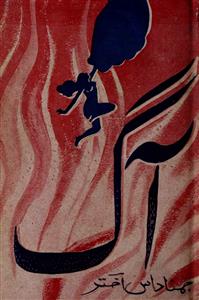
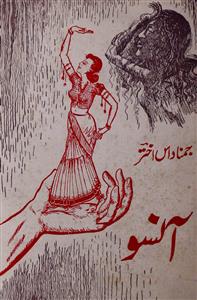
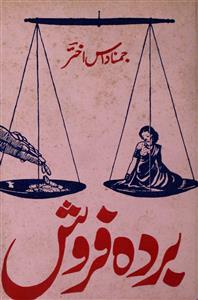
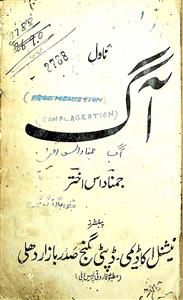
Jamna Das Akhtar was also an accomplished novelist in Urdu, Hindi, and English. His publications comprise nearly three dozen novels, alongside political and historical books. His novel Aanso had the distinct honor of being published in four languages, while Aag is also considered one of his most celebrated literary works. His notable English books on Pakistani politics include Political Conspiracies in Pakistan, Pak Espionage in India, and The Saga of Bangladesh.
He harbored a profound interest in ancient history and archaeology. Driven by this passion, he obtained copies of 4,000-year-old manuscripts and historical documents from prestigious museums and libraries in London, Birmingham, Paris, Berlin, Washington, and Baghdad. He was also a life member of the Ambedkar Research Institute and the Archaeological Society.
In recognition of his literary, journalistic, and social services, various institutions, including the Delhi Urdu Academy, the Bhasha Vibhag of Punjab, and the Mir Academy of Lucknow, honored him with prestigious awards.
Death: Jamna Das Akhtar passed away in 2009 in Delhi.
For any query/comment related to this ebook, please contact us at haidar.ali@rekhta.org