 For any query/comment related to this ebook, please contact us at haidar.ali@rekhta.org
About The Author
Identity: The greatest Ghazal poet of the Persian language, a Sufi thinker, and famously known by the title 'Lisan al-Ghayb' (The Tongue of the Unseen).
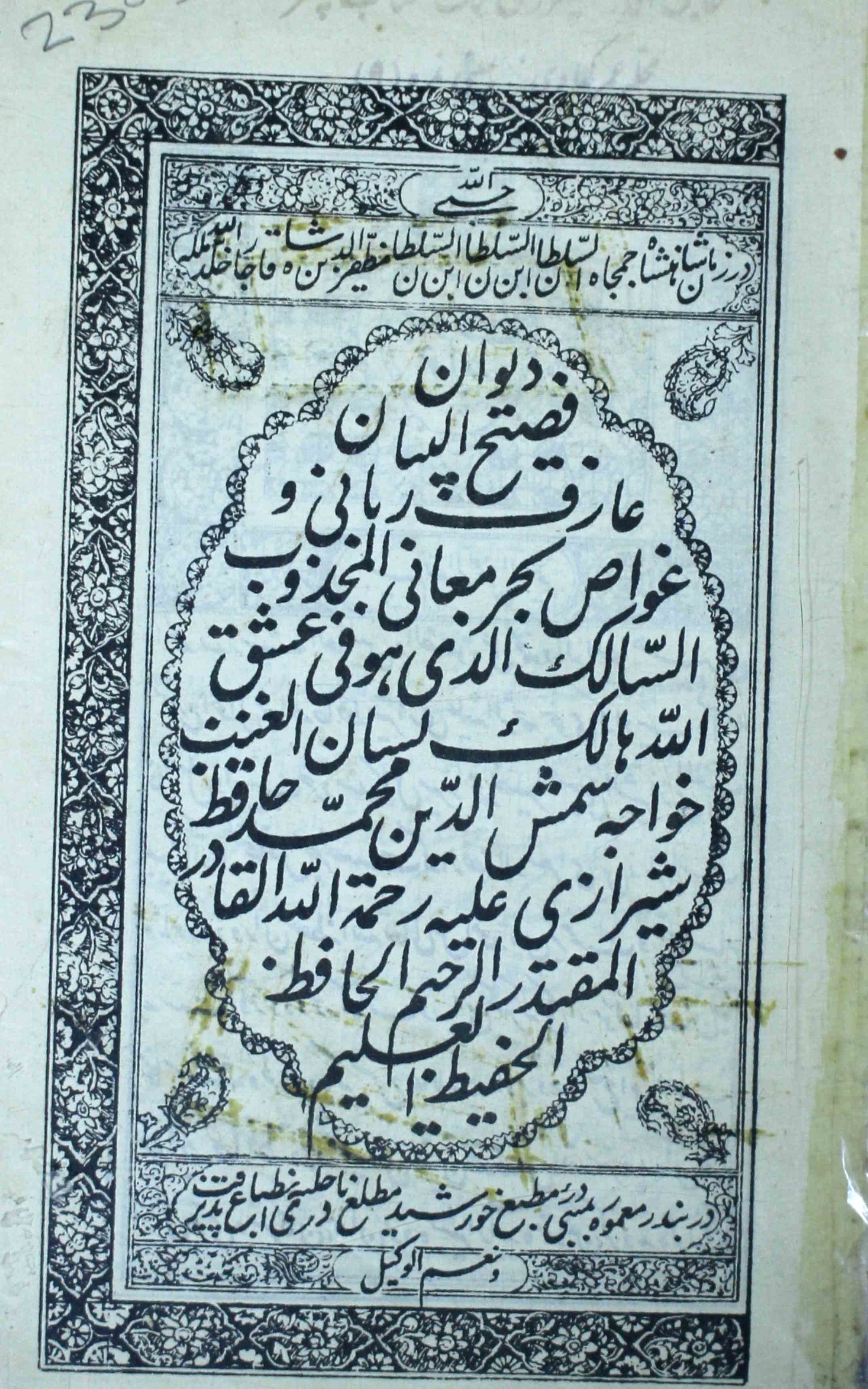
In the history of Persian literature, if any single poet possesses universality and global popularity, it is Khwaja Shams-ud-Din Muhammad Hafez Shirazi. This great 14th-century Sufi poet is recognized not only in Iran but across the entire world for the magic of his ghazals. He is called 'Lisan al-Ghayb' and 'Tarjuman al-Asrar' (The Interpreter of Secrets) because his work contains such spiritual depth that it interprets the hidden secrets of the human heart.
Hafez Shirazi was born around 1325 AD in the city of Shiraz, Iran. Most information regarding his early life is based on traditional anecdotes and biographies. In his childhood, he attained the honor of memorizing the Holy Quran, which led to him becoming famous by the title 'Hafez', eventually becoming his permanent pen name. At a young age, he deeply studied the works of great masters like Rumi, Saadi, and Attar.
The core of Hafez's poetry is his 'Ghazal'. He elevated the Persian ghazal to such a high station of artistry and meaning that going beyond it seems impossible. Some prominent features of his work are as follows:
The Union of Divine and Human Love: Hafez intertwined Divine love (Sufism) and human emotions in such a way that his ghazals simultaneously offer a lesson in spiritual gnosis and reflect human feelings.
His verses contain such a beautiful blend of multi-layered meanings and metaphors that every reader derives meaning according to their own capacity and intellectual level.
Hafez targeted the opportunistic ascetics and hypocritical Sufis of his time with his satirical poetry, declaring sincerity of heart as the essence of religion.
Hafez witnessed many ups and downs in Shiraz. He was close to rulers like Shah Abu Ishaq and Shah Shuja. The famous incident of his meeting with Amir Timur is well-known, where Hafez displayed such wit in explaining one of his couplets that even a stern ruler like Timur became his admirer.
In Persian-speaking societies, Hafez’s status is more than just a poet; he is regarded as a 'Murshid' (spiritual guide). The tradition of 'Fal-e-Hafez' (divination) is still alive in Iranian culture, where people seek omens from his Divan to make important decisions or understand future circumstances.
On a global scale, the German poet Goethe was so influenced by him that he dedicated his 'West-Eastern Divan' to Hafez. Additionally, luminaries like Emerson, Edward FitzGerald, and Rabindranath Tagore from the subcontinent were among his admirers.
In Iran, October 12 is celebrated annually as "Hafez Day."
Death: Hafez Shirazi passed away in 1390 AD. His tomb is located in Shiraz, known as 'Hafezieh'. This mausoleum remains a sanctuary and a place of pilgrimage for literature lovers and Sufis from around the world.
For any query/comment related to this ebook, please contact us at haidar.ali@rekhta.org