 For any query/comment related to this ebook, please contact us at haidar.ali@rekhta.org
About The Author
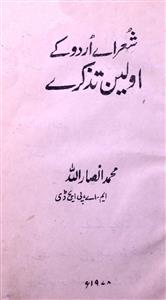
Identity: Eminent researcher, historian of the Urdu language, linguist, editor, critic, and a serious scholar of the classical heritage of Urdu literature.
Dr. Mohammad Ansarullah was born on 4 January 1936 in Azamgarh. His contributions to Urdu language and literature, particularly in the fields of classical texts, linguistics, and the history of language, are considered highly significant. His first research article was published in 1955 in “Nigar,” the renowned journal edited by Niaz Fatehpuri. He learned the principles and discipline of research from Qazi Abdul Wadud, whose influence remained visible throughout his academic and intellectual career. Dr. Ansarullah authored nearly four hundred research articles and edited or wrote more than one and a half dozen scholarly books. From 1967 to 1996, he served in the Department of Urdu at Aligarh Muslim University as Lecturer, Reader, and Professor. Alongside teaching, he devoted himself to research, editing, literary history, criticism, linguistics, translation, and lexicography.
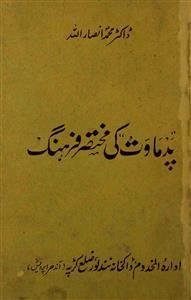
His first notable book, “Urdu ke Huroof-e-Tahajji,” was published in 1972. In this work, he discussed Urdu script, the structure of letters, the formation of new characters for emerging sounds, and issues related to orthography. The same year, another important work, “Padmavat ki Mukhtasar Farhang,” was published, in which he compiled a glossary of Malik Muhammad Jayasi’s “Padmavat.” In its introduction, he examined Jayasi, the Awadhi language, and the linguistic environment of that era in detail.
Ansarullah also edited important texts such as “Qaida-e-Hindi-e-Rekhta,” “Talkhis-e-Mualla,” “Risala Zaban-e-Rekhta,” “Qita Muntakhaba,” “Barhan ki Kahani,” and Mulla Daud’s “Chandayan.” The introductions and annotations attached to these works reflect his vast scholarship, critical insight, and deep engagement with classical literature. His edition of “Chandayan,” in particular, included textual corrections, identification of interpolated verses, translations, and explanatory notes, making it an important scholarly contribution.
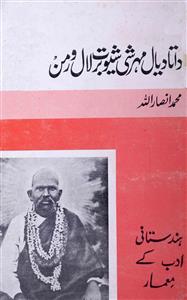
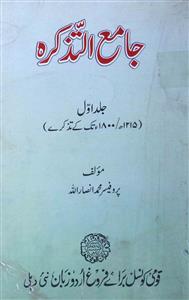
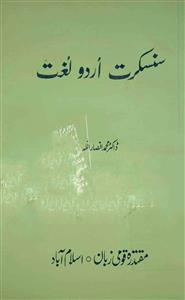
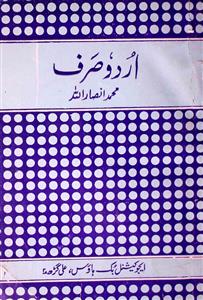
Among his other notable works are “Jame-ut-Tazkira” (in three volumes), “Ghalib Bibliography,” “Sanskrit-Urdu Lughat,” “Tarikh-e-Iqlim-e-Adab,” “Tarikh Zaban wa Adab-e-Urdu,” “Urdu Mein Tadvin,” “Urdu Sarf,” “Urdu Nahv,” and “Urdu par Tamil ke Asarat.”
Dr. Mohammad Ansarullah presented a distinctive theory regarding the origin and evolution of the Urdu language. According to him, Awadhi should be regarded as a primary source of Urdu. Instead of accepting Delhi as the sole birthplace of Urdu, he based his arguments on the political and cultural history of India and the influence of various regional dialects. Although many scholars did not fully agree with some of his theories and several objections were raised against them, it is undeniable that he opened new perspectives in Urdu linguistics and provided valuable material for further research.
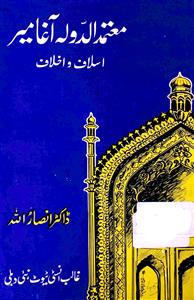
In recognition of his scholarly services, the All India Mir Academy, Lucknow, honored him with the “Imtiaz-e-Mir” award, while the West Bengal Urdu Academy, Kolkata, awarded first prize to his book “Mutamad-ud-Daula Agha Mir.”
Death: Dr. Mohammad Ansarullah passed away in 2017.
For any query/comment related to this ebook, please contact us at haidar.ali@rekhta.org