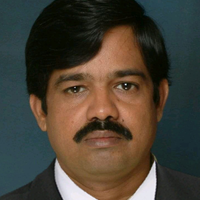
Profile of Shabbir Ahmed
Identity: Urdu fiction writer, translator, and literary figure
Shabir Ahmad is a prominent contemporary Urdu novelist, short story writer, translator, and essayist who has played an important role in modern Urdu fiction and cross-lingual literary exchange. His writings offer deep reflections on history, identity, memory, and human emotions.
He was born on 1 June 1963 in Kolkata. He is proficient in Urdu, English, Bengali, and Hindi. He completed his B.Com (Hons.) from St. Xavier’s College, Kolkata, in 1983 and his M.Com from the University of Calcutta in 1985.
In his professional life, he served as a senior bureaucrat in the Labour Department of the Government of West Bengal and held various administrative positions. He later retired as an Additional Director.
In the literary sphere, he is recognized as a distinguished Urdu fiction writer. His novels include Huzoor Aama (2020), Bedrohi (2022), and Jug-Baani (2025). His short story collection Chautha Fankar (2012) is notable, and Mahayudh is forthcoming. His travelogue Ghalib ke Shahr Mein (2005) and his children’s book Bachchon ke Rabindranath (2015) have also been well received.
As a translator, he has undertaken significant literary projects. His major translations include 32 stories of Rabindranath Tagore into Urdu under the title Tagore Battisi; the Urdu translation of Sunil Gangopadhyay’s novel Aur Us Waqt; a translation of Subhash Mukhopadhyay’s poems titled Chalte Chalte; and the Urdu translation of modern Bengali poet Nirendranath Chakraborty’s collection Alanngu Raja under the title Shah-e-Be-Libaas. These translations have been widely appreciated in literary circles.
His writings have appeared in reputed Urdu journals across the country, and his books have been published by institutions such as Sahitya Akademi, NCPUL, and the West Bengal Urdu Academy.
His honors include the First Prize from the Uttar Pradesh Urdu Academy in 2021 for his novel Huzoor Aama. He has also been nominated twice for the Sahitya Akademi Award (2023, 2024) and has received recognitions from various state Urdu academies.
His fiction explores socio-historical changes in the subcontinent, questions of identity and resistance, and the search for human values amid political turbulence. He primarily writes in Urdu and translates from English, Bengali, and Hindi.
Tagged Under
Authority Control :The Library of Congress Control Number (LCCN) : no2005004345