ALL
Profile
Ghazal114
Nazm433
Sher139
E-book1112
TOP 20 SHAYARI 21
Image Shayari22
Quote10
Audio58
Video463
Qita10
Rubai23
Qisse13
Gallery 10
Blog2
Other
Scholar3
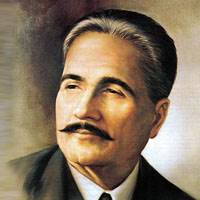
Allama Iqbal
Ghazal 114
Nazm 433
Sher-o-Shayari 139
maanā ki terī diid ke qābil nahīñ huuñ maiñ
tū merā shauq dekh mirā intizār dekh
agreed I am not worthy of your vision divine
behold my zeal, my passion see how I wait and pine
Interpretation:
Rekhta AI
The speaker admits unworthiness before the beloved, showing humility rather than complaint. Yet he presents his intense desire and steadfast waiting as his real “qualification.” The couplet turns worthiness into an emotional measure: sincerity, persistence, and love itself become the proof. Its core feeling is hopeful, aching devotion that refuses to fade.
mana ki teri did ke qabil nahin hun main
tu mera shauq dekh mera intizar dekh
agreed I am not worthy of your vision divine
behold my zeal, my passion see how I wait and pine
Interpretation:
Rekhta AI
The speaker admits unworthiness before the beloved, showing humility rather than complaint. Yet he presents his intense desire and steadfast waiting as his real “qualification.” The couplet turns worthiness into an emotional measure: sincerity, persistence, and love itself become the proof. Its core feeling is hopeful, aching devotion that refuses to fade.
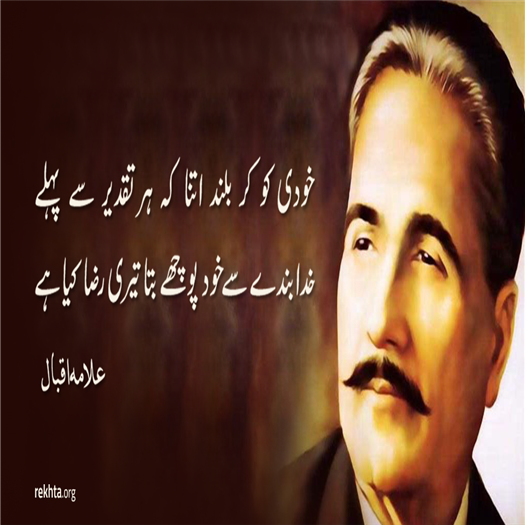
ḳhudī ko kar buland itnā ki har taqdīr se pahle
ḳhudā bande se ḳhud pūchhe batā terī razā kyā hai
Interpretation:
Rekhta AI
The couplet urges inner elevation—strengthening character, will, and moral self—until one is no longer passive before destiny. “Selfhood” is a metaphor for a disciplined, awakened self that acts with purpose. The striking image of God asking the servant highlights the dignity of human agency when aligned with higher values. Emotionally, it is a call to confidence, effort, and responsible choice.
KHudi ko kar buland itna ki har taqdir se pahle
KHuda bande se KHud puchhe bata teri raza kya hai
Interpretation:
Rekhta AI
The couplet urges inner elevation—strengthening character, will, and moral self—until one is no longer passive before destiny. “Selfhood” is a metaphor for a disciplined, awakened self that acts with purpose. The striking image of God asking the servant highlights the dignity of human agency when aligned with higher values. Emotionally, it is a call to confidence, effort, and responsible choice.
hazāroñ saal nargis apnī be-nūrī pe rotī hai
baḌī mushkil se hotā hai chaman meñ dīda-var paidā
Interpretation:
Rekhta AI
The poet uses the narcissus—often imagined as an eye—to symbolize a world that longs for true sight. Its “lack of light” suggests spiritual or intellectual blindness and a persistent yearning to see clearly. The “garden” stands for society, where a genuine seer—someone with insight and guidance—emerges only rarely. The emotional core is both lament for blindness and hope for the arrival of real vision.
hazaron sal nargis apni be-nuri pe roti hai
baDi mushkil se hota hai chaman mein dida-war paida
Interpretation:
Rekhta AI
The poet uses the narcissus—often imagined as an eye—to symbolize a world that longs for true sight. Its “lack of light” suggests spiritual or intellectual blindness and a persistent yearning to see clearly. The “garden” stands for society, where a genuine seer—someone with insight and guidance—emerges only rarely. The emotional core is both lament for blindness and hope for the arrival of real vision.
tū shāhīñ hai parvāz hai kaam terā
tire sāmne āsmāñ aur bhī haiñ
Interpretation:
Rekhta AI
The falcon symbolizes a courageous, self-reliant spirit whose nature is upward flight, not settling. The poet urges the listener to reject complacency and keep expanding their limits. “More skies” becomes a metaphor for endless possibilities and higher goals. The emotional core is hope mixed with a disciplined call to strive.
tu shahin hai parwaz hai kaam tera
tere samne aasman aur bhi hain
Interpretation:
Rekhta AI
The falcon symbolizes a courageous, self-reliant spirit whose nature is upward flight, not settling. The poet urges the listener to reject complacency and keep expanding their limits. “More skies” becomes a metaphor for endless possibilities and higher goals. The emotional core is hope mixed with a disciplined call to strive.
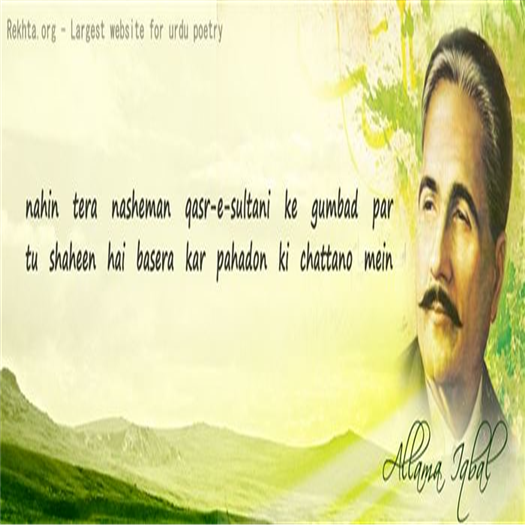
nahīñ terā nasheman qasr-e-sultānī ke gumbad par
tū shāhīñ hai baserā kar pahāḌoñ kī chaTānoñ meñ
Interpretation:
Rekhta AI
Iqbal addresses the “shaheen” as a symbol of a high-spirited, self-reliant person. The royal dome stands for comfort, dependence, and living under power’s shadow, while mountain cliffs suggest hard struggle, height, and freedom. The couplet urges one to reject easy patronage and choose a life of dignity and lofty ambition. Its emotional core is pride in independence and courage to live by one’s own standards.
nahin tera nasheman qasr-e-sultani ke gumbad par
tu shahin hai basera kar pahaDon ki chaTanon mein
Interpretation:
Rekhta AI
Iqbal addresses the “shaheen” as a symbol of a high-spirited, self-reliant person. The royal dome stands for comfort, dependence, and living under power’s shadow, while mountain cliffs suggest hard struggle, height, and freedom. The couplet urges one to reject easy patronage and choose a life of dignity and lofty ambition. Its emotional core is pride in independence and courage to live by one’s own standards.
Quote 10

Yaqeen eik badi taaqat hai. Jab main dekhta hun ki dusra bhi mere afkaar ka muayyid hai, to uski sadaaqat ke baare mein mera etimaad be-intiha badh jaata hai.
Yaqeen eik badi taaqat hai. Jab main dekhta hun ki dusra bhi mere afkaar ka muayyid hai, to uski sadaaqat ke baare mein mera etimaad be-intiha badh jaata hai.
Qita 10
Rubai 23
Qisse 13
BOOKS 1112
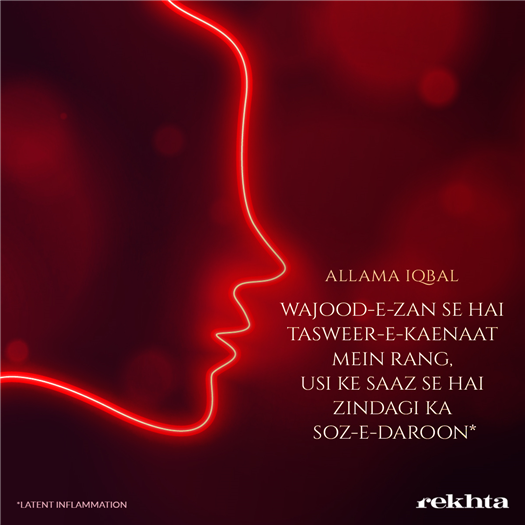
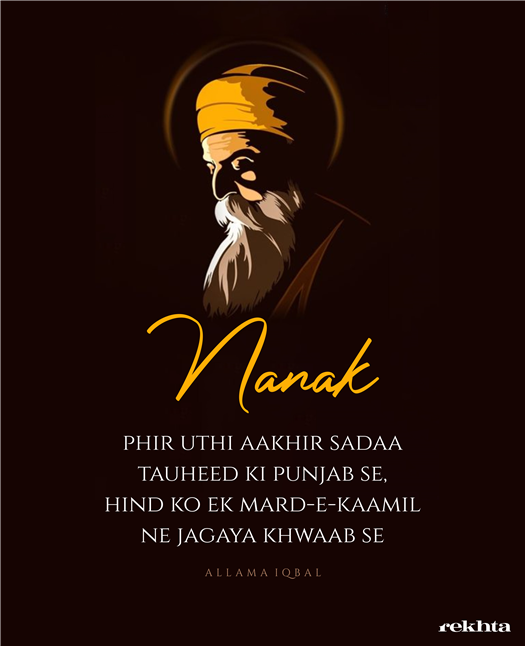
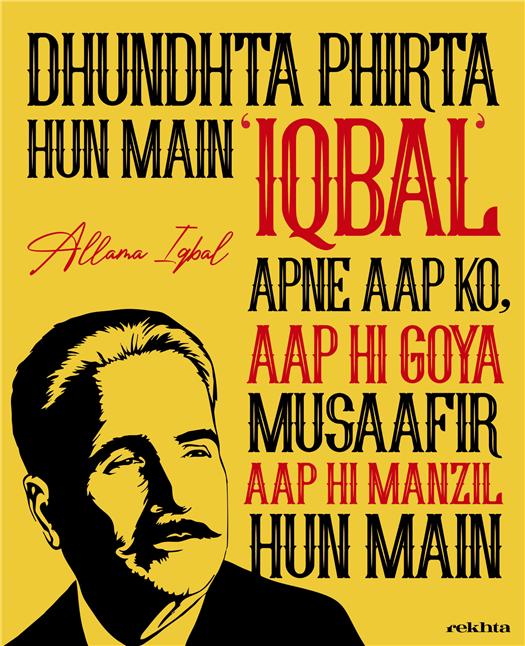
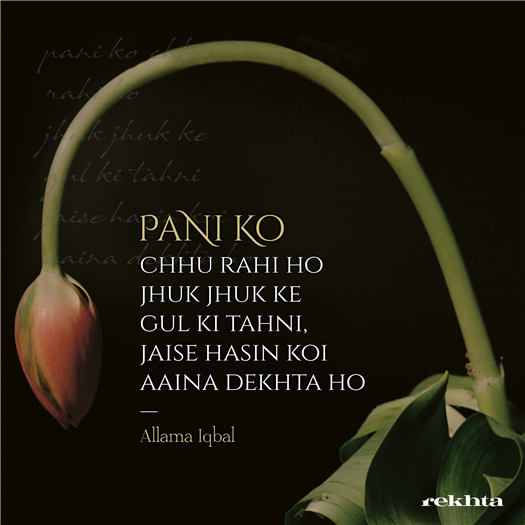
Videos 463
Audios 58
agar kaj-rau hai.n anjum aasmaa.n teraa hai yaa meraa
apnii jaulaa.n-gaah zer-e-aasmaa.n samjhaa thaa mai.n
dil soz se KHaalii hai nigah paak nahii.n hai
More Authors From "Lahore"
-
 Zameer Azhar
-
 Zohheb Farooqui Afrang
-
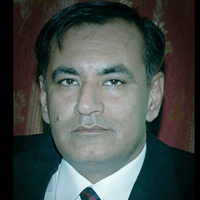 Naeem Zarrar Ahmad
-
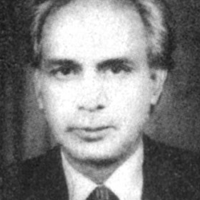 Anjum Azmi
-
 Bano Tahira Sayeed
-
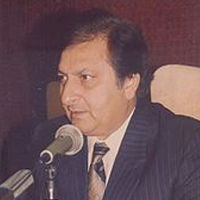 Fakhr Zaman
-
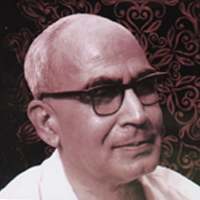 JaiKrishn Chaudhry Habeeb
-
 Mohsin Aftab Kelapuri
-
 Ameen Hazin
-
 Akbar Allahabadi
-
 Narayan Das Puri
-
 Shamim Qasmi
-
 Asrar jamayee
-
 Naz Butt
-
 Rahi Masoom Raza
-
 Dr. Rahi
-
 Dagh Dehlvi
-
 Mustafa Arbab
-
 Jigar Moradabadi
-
 Shabnam Ashai